

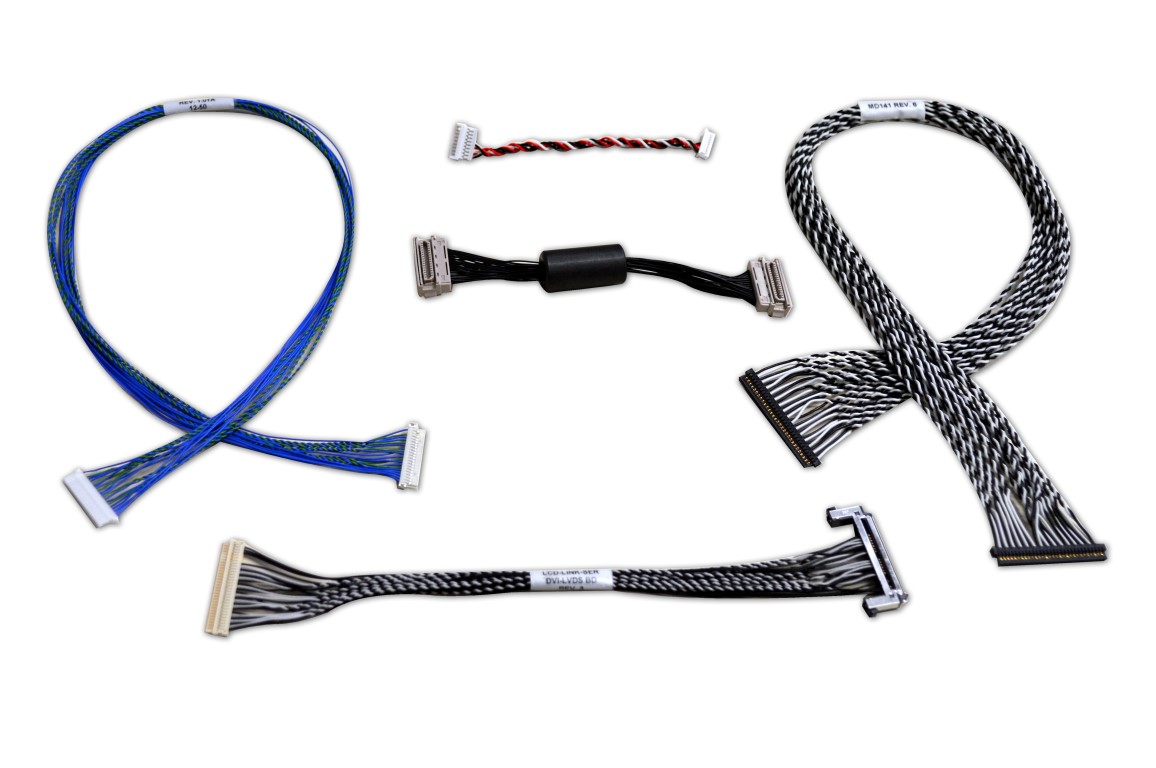
Discrete wire—also commonly referred to as lead wire or hookup wire—is the fundamental building block of virtually every electrical interconnect, wire harness, and cable assembly. From industrial automation and automotive systems to energy storage, data centers, і бытавой электронікі, discrete wire plays a critical role in ensuring electrical continuity, mechanical reliability, and long-term performance.
Understanding how discrete wire is manufactured, constructed, and specified enables engineers and purchasing professionals to make informed decisions that directly impact system reliability, safety compliance, and cost efficiency. This article provides a comprehensive overview of discrete wire anatomy, materials, and standards.
Introduction to Discrete Wire
Discrete wire is a single, insulated conductor designed to transmit electrical power or signals from one point to another. It may be used as a standalone conductor or combined with other wires to form multi-conductor or multi-pair cables.
Because discrete wire is the starting point for cable assemblies and wire harnesses, its characteristics—such as conductor type, strand configuration, insulation material, and certification—directly influence the performance of the final product. Selecting the correct wire is therefore a foundational step in any electrical or electronic design.
How Discrete Wire Is Manufactured
Wire Drawing Process
All electrical wire begins as a metal rod or coil with a diameter significantly larger than the finished product. During manufacturing, this rod is pulled through a series of precision dies, each of which reduces the wire’s diameter by a controlled percentage.
As the wire passes through the dies:
-
The volume of the metal remains constant
-
The diameter decreases
-
The length increases
In most cases, multiple drawing passes are required to reach the target diameter. Each successive pass uses a smaller die until the desired conductor size is achieved. This process directly determines the wire’s final American Wire Gauge (AWG) size.
American Wire Gauge (AWG) System
The American Wire Gauge system is a standardized method used primarily in North America to define the diameter of round, solid, current-carrying wires. First established in 1857, the AWG system remains the most widely used reference for wire sizing.
Key characteristics of the AWG system include:
-
Defined dimensions listed in ASTM B258
-
Higher AWG numbers correspond to smaller wire diameters
-
The gauge number historically reflects the number of drawing operations required
Understanding AWG sizing is essential for determining current-carrying capacity, resistance, and compatibility with terminals and connectors.
Solid vs. Stranded Wire Constructions
Solid Conductor Wire
Solid wire consists of a single, continuous metal conductor, typically copper or tinned copper. It is usually circular in cross-section but can also be manufactured in square, rectangular, or other shapes for specialized applications.
Advantages of solid wire include:
-
Lower manufacturing cost
-
Simpler construction
-
Consistent geometry
However, solid wire has limited flexibility and is more susceptible to fatigue and breakage when exposed to vibration or repeated movement. As a result, it is typically used in fixed installations where minimal motion is expected.
Stranded Conductor Wire
Stranded wire is constructed by bundling multiple smaller-diameter wires together to form a single conductor of a given AWG size. Compared to solid wire, stranded conductors offer significantly greater flexibility and mechanical resilience.
Benefits of stranded wire include:
-
Improved flexibility and bend radius
-
Greater resistance to vibration and fatigue
-
Enhanced durability in dynamic applications
Although stranded wire generally costs more to manufacture, it is preferred for applications involving motion, flexing, or frequent handling.
Strand Count and Mechanical Performance
The number of individual strands within a stranded conductor directly affects its mechanical and electrical performance.
Common strand counts include:
-
7 strands: One center strand surrounded by six strands
-
19 strands: Increased flexibility and smoother bending
-
Higher strand counts: Used in large-gauge or high-flex applications
As strand count increases, the wire becomes:
-
More flexible
-
More kink-resistant
-
Better suited for repeated movement
The trade-off is increased manufacturing complexity and cost, which must be balanced against application requirements.
Types of Stranded Conductor Designs
Concentric Strand
Concentric stranded conductors feature a central core wire surrounded by one or more helically applied layers. Each additional layer contains six more wires than the previous layer, and the lay direction typically alternates between layers.
This design provides good balance between mechanical stability and electrical performance.
Bunch Strand
Bunch stranded conductors consist of individual strands twisted together in the same direction without a specific geometric arrangement. This construction offers excellent flexibility and is commonly used in small-gauge hookup wires.
Rope Strand
Rope strand conductors are formed by twisting multiple concentric stranded groups together. This design is used primarily in large-gauge conductors requiring exceptional flexibility.
Sector Conductor
Sector conductors have a cross-section shaped like a segment of a circle. When used in multi-conductor cables, sector conductors reduce overall cable diameter and improve space efficiency.
Compact Strand
Compact stranded conductors are rolled or compressed to eliminate air gaps between strands. The result is a smoother surface and reduced conductor diameter while maintaining the same electrical cross-section.
Compact strands are ideal for high-density cable designs where space is limited.
Conductor Materials and Surface Coatings
Bare Conductors
Bare copper conductors offer excellent electrical conductivity but are more susceptible to oxidation and corrosion, particularly in harsh environments.
Common Conductor Coatings
To enhance performance, conductors may be plated with various materials:
-
Tin plating: Improves corrosion resistance, solderability, and reduces friction between strands
-
Silver plating: Suitable for high-temperature and high-frequency applications
-
Нікеляванасць: Designed for extreme temperature environments above 200°C, though it has higher resistance and poorer solderability
The choice of coating depends on environmental exposure, temperature requirements, and termination methods.
Insulation Materials and Electrical Isolation
Conductors must be electrically isolated from each other and from their surrounding environment to prevent short circuits and ensure safety. This is achieved through insulation, most commonly made from polymer materials.
Insulation selection depends on:
-
Operating temperature
-
Voltage rating
-
Current-carrying capacity (ampacity)
-
Chemical and environmental resistance
Different applications may require specialized insulation compounds designed for high heat, flame resistance, or enhanced mechanical protection.
Hookup Wires and UL Standards
What Is a Hookup Wire?
Hookup wires are discrete wires specifically designed for internal wiring of electrical and electronic equipment. They serve as the foundation for multi-conductor cables and wire harnesses.
UL Style Requirements
Most hookup wires are manufactured to meet specific UL (Underwriters Laboratories) Style requirements. Each UL Style defines exact construction parameters that all certified manufacturers must follow.
Напрыклад, UL Style 1061 specifies:
-
Semi-Rigid PVC (SR-PVC) insulation
-
80°C temperature rating
-
300 VAC voltage rating
-
Horizontal flame test compliance
-
Strict insulation thickness tolerances
Only wires that pass UL testing and certification may be marketed as UL-rated.
UL Certification and Compliance
To offer UL-rated wire, manufacturers must submit samples for testing and demonstrate consistent compliance with UL standards. This ensures global uniformity in performance, бяспекі, and quality across all certified suppliers.
Discrete Wire as the Foundation of Cable Assemblies
Every complex cable or wire harness begins with discrete hookup wire. Whether forming a multi-conductor control cable or a multi-pair signal cable, the properties of the individual wires determine the reliability of the finished assembly.
Selecting the appropriate discrete wire is therefore critical for achieving optimal electrical performance, mechanical durability, and regulatory compliance.
Заключэнне
Discrete wire is far more than a simple conductor—it is a carefully engineered component that underpins the performance of modern electrical systems. From the wire drawing process and AWG sizing to conductor construction, strand configuration, coatings, insulation, and UL certification, every design choice has a measurable impact.
By understanding the anatomy and specifications of discrete wire, engineers can confidently select solutions that balance performance, даўгавечнасць, бяспекі, and cost—ensuring reliable interconnects across a wide range of industrial and commercial applications.
FAQ
1. What is discrete wire?
Discrete wire is a single, insulated electrical conductor used to transmit power or signals. It can be used independently or combined with other wires to form multi-conductor or multi-pair cables in wire harnesses and cable assemblies.
2. What is the difference between discrete wire and cable?
Discrete wire consists of one insulated conductor, while a cable contains multiple insulated conductors bundled together under a common outer jacket. Discrete wire is the basic building block used to manufacture cables.
3. What does AWG mean in discrete wire?
AWG stands for American Wire Gauge, a standardized system that defines wire diameter. Higher AWG numbers indicate smaller wire diameters, which affects current capacity, resistance, and mechanical strength.
4. When should I use solid wire instead of stranded wire?
Solid wire is best suited for fixed installations where minimal movement is expected, such as internal panel wiring. Stranded wire is recommended for applications requiring flexibility, vibration resistance, or repeated motion.
5. Why is stranded wire more flexible than solid wire?
Stranded wire is composed of multiple smaller strands twisted together, allowing the conductor to bend more easily and withstand mechanical stress better than a single solid conductor of the same AWG size.
6. What are the common strand constructions used in discrete wire?
Common strand constructions include concentric strand, bunch strand, rope strand, sector conductor, and compact strand. Each design offers different advantages in terms of flexibility, space efficiency, and mechanical performance.
7. Why are conductors plated with tin, silver, or nickel?
Conductor plating improves performance in specific environments. Tin enhances corrosion resistance and solderability, silver supports high-temperature and high-frequency applications, and nickel is used for extreme temperature conditions above 200°C.
8. What insulation materials are commonly used for discrete wire?
Most discrete wires use polymer-based insulation such as PVC. Specialized insulation materials may be selected for higher temperature resistance, improved flame retardancy, or increased current-carrying capacity.
9. What is UL-rated hookup wire?
UL-rated hookup wire is discrete wire that has been tested and certified by Underwriters Laboratories to meet specific construction, электрычны, and flame-resistance requirements defined by a UL Style.
10. Why is UL certification important for discrete wire?
UL certification ensures consistent safety, performance, and compliance across manufacturers. Using UL-rated wire helps reduce risk, simplifies regulatory approval, and improves reliability in electrical systems.
