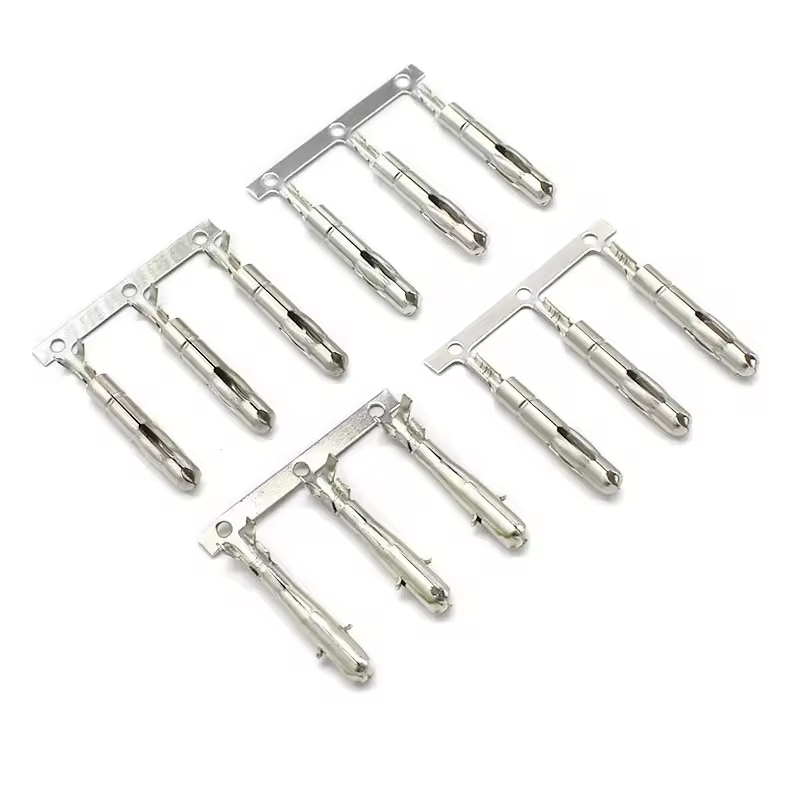
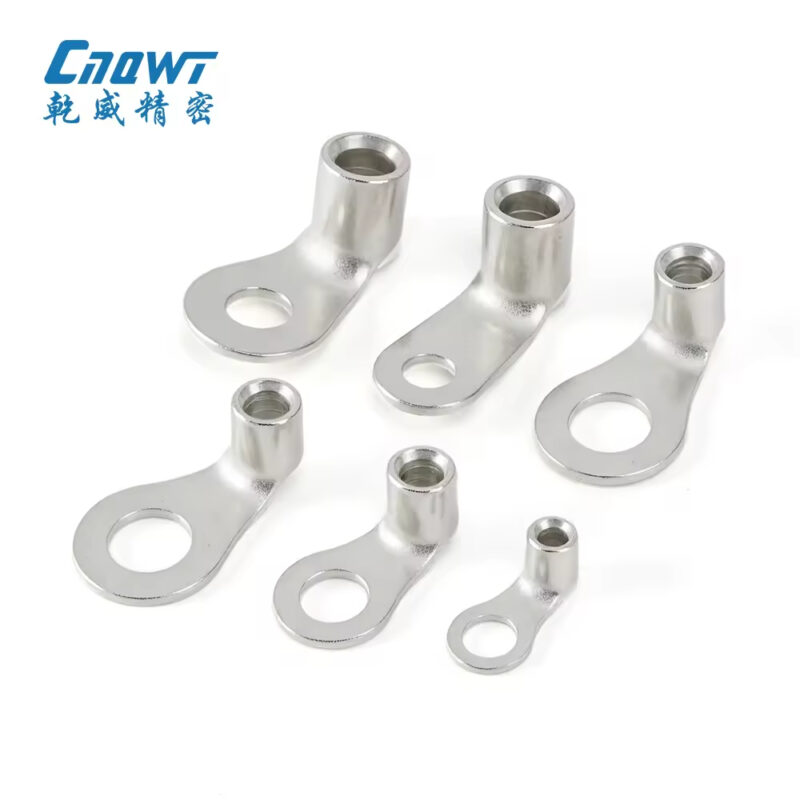
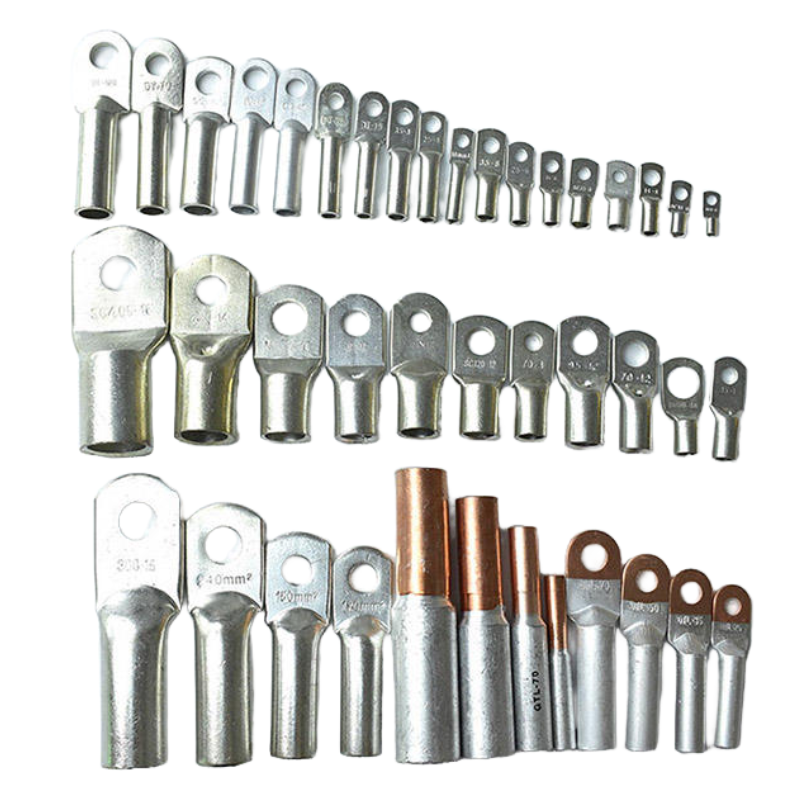
Lug terminals are important electrical interconnections for secure and effective transmission of power in high-current applications. They also give good interfaces between cables or wires and electrical equipment and guarantee electrical continuity as well as mechanical stability. Lugassembliess are extensively used in automotive, прамысловы, renewable energy, power distribution, and telecommunication applications, and are designed to resist mechanical stress, vibration, thermal, and environmental exposure.
Qianwei Precision specializes in manufacturing quality lug terminals that conform to high industry standards, providing both standardized and unique fits to OEM, industrial customers, and massive electrical projects.

What are Lug Terminals?
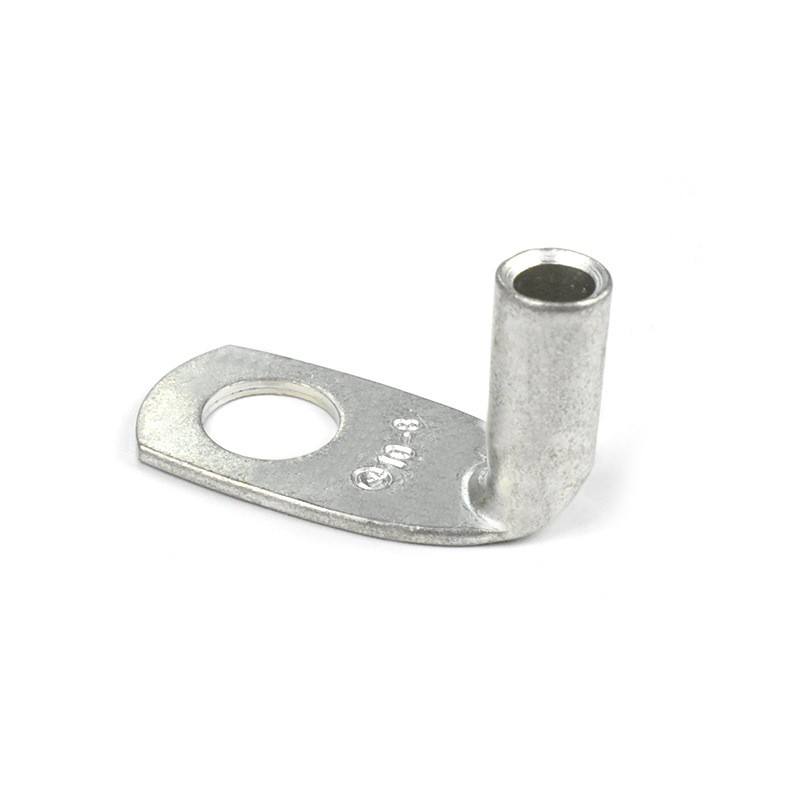
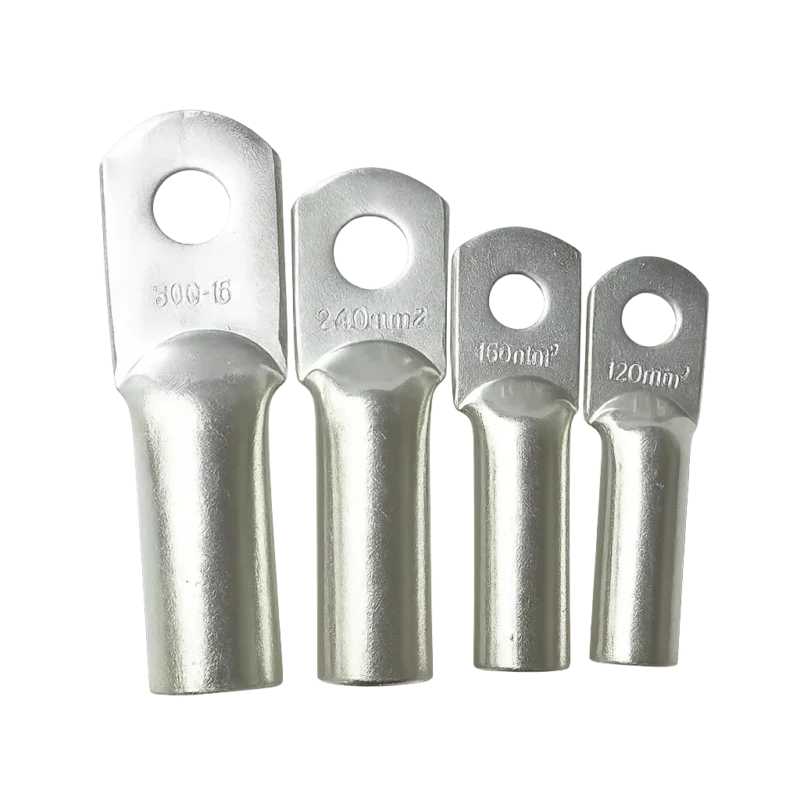
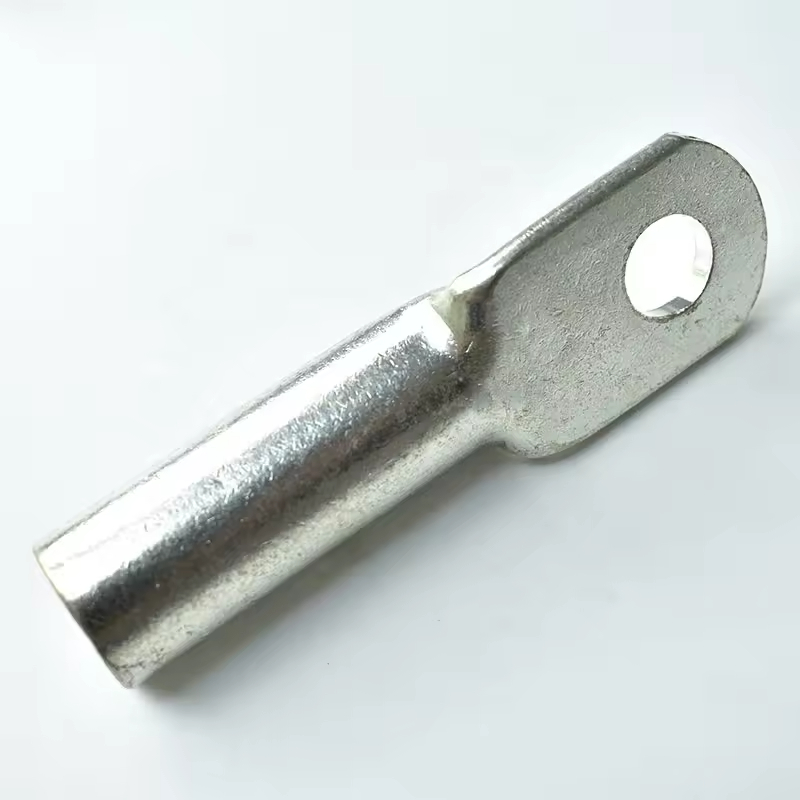
Lug terminals/cabling lug Lug terminals (also known as cable lug or crimp lug) are conductive fittings enabling electrical cables to be firmly fastened to electrical devices, bus bars, switch boards, battery contacts, and power distribution systems. They are usually composed of high-conductivity metals and can be plated to ensure corrosion resistance and improved performance.
These terminals consistently offer dependable, tool-supported or machine-assisted crimping to long-term electrical service, specifically in elevated current applications.
Engineering Design Principles for Lug Terminals
Lug terminal design needs to meet a number of important engineering requirements. So, they can be dependable over time, efficient in the use of electrical energy, and reliable in terms of mechanical performance.
1. Present Carrying Capacity and Electrical Efficacy
Lug terminals can be designed to operate with certain current ratings and to exclude as much electrical resistance as possible. The area of conductor cross-section, barrel geometry, and the contact surface area are designed to ensure minimal voltage drop, eliminate localized heating, and provide stable electrical operation at prolonged load conditions.
2. Mechanical Strength and Crimping Performance
The crimping design is essential to ensure the conductor is not damaged and is the only way to obtain maximum mechanical strength. Quality lug terminals have the right geometry, wall thickness, and tensile strength in order to offer stability over time, pull-out resistance, and micro-arcing.
3. Contact Surface Optimization
The area actually in contact between the terminal and the mating part is highly designed to ensure maximum conductivity and minimum contact resistance. Surface finishes, пакрыццё, and geometry are created to offer uniform electrical performance throughout the operation of the terminal.
4. Thermal Performance and Heat Dissipation
High current loads in lug terminals can cause heat at the connection point. Formal selection of material, пакрыццё, and barrel design enhances the heat dissipation and minimize a possibility of thermal degradation of cable insulation or the terminal itself.
5. Vibration Resistance and Long-Term Reliability
Аўтамабільны, прамысловы, and renewable energy environments also encounter ongoing vibration and mechanical strain. Lug terminals are designed to be very strong, and in cases where locking is necessary, they are equipped with locking facilities to prevent the connections from loosening over time.
Material We Use
Lug terminals are made of conductive high-metallic-content and engineered alloy sets. So, it can present optimum available current-carrying capacity, resistive corrosion, and mechanical stability under hostile surroundings.
| Матэрыял | Electrical Conductivity (% IACS) | Key Mechanical Properties | Typical Applications |
| Electrolytic Copper | 97–100% | Excellent ductility, high conductivity | Medium- and high-current automotive wiring, industrial power connections |
| Tinned Copper | 90–95% | Corrosion-resistant, easy soldering | Automotive terminals, electrical panels, battery connections |
| Aluminum | 61–65% | Lightweight, good tensile strength | Utility-scale power distribution, overhead lines, and renewable energy systems |
| Bimetallic (Copper-Aluminum) | 61–100% (combined) | Combines the conductivity of copper and lightweight aluminum, preventing galvanic corrosion | Connections between copper and aluminum conductors in power distribution, solar, and EV applications |
| High-Conductivity Alloys | 70–95% | High mechanical strength, wear-resistant | Heavy-duty industrial applications, high-current busbars, energy storage systems |
Overview of Manufacturing Processes for Lugs Terminal
Qianwei Precision has a very detailed and controlled manufacturing technology. So, we can meet dimensional stability, electrical stability, and uniformity of the product to both the industrial and OEM markets.
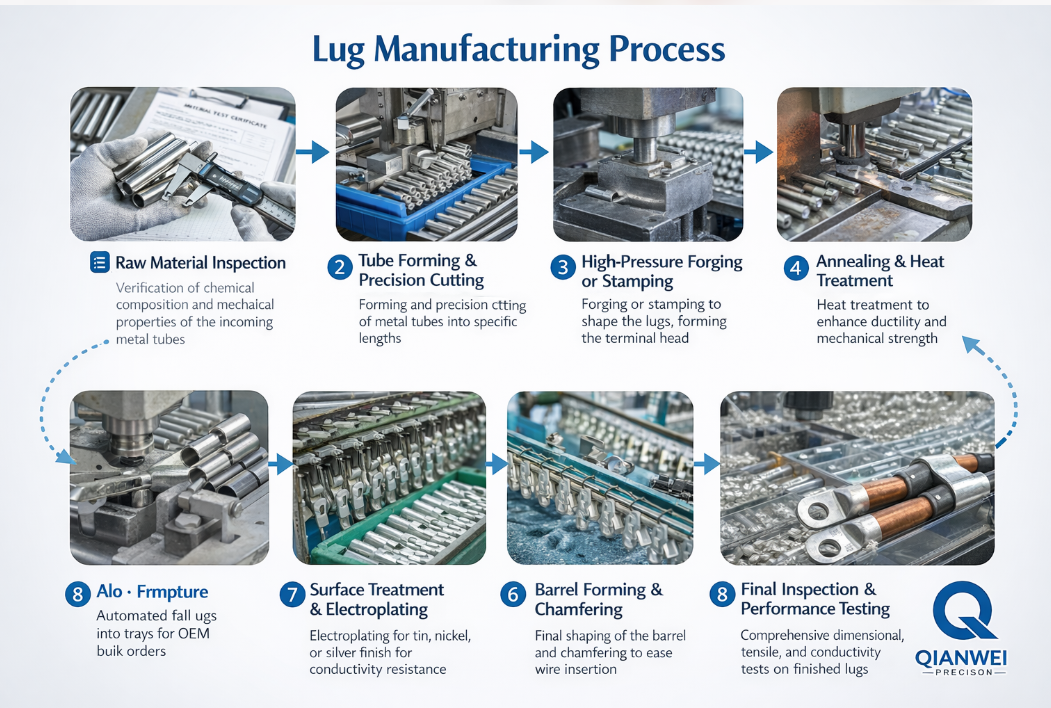
1. Raw Material Inspection
Any incoming copper, aluminum, or alloy material is carefully checked on the basis of chemical composition, conductivity, and mechanical strength. This makes them adhere to the electrical standards and ensures long-term reliability of the work.
2. Tube Bending and Trex Cutting
Conductive tubes are shaped into uniform barrel structures using highly accurate forming machines. Good cutting will provide stable crimping behavior as the length and wall thickness are uniform.
3. High-Pressure Stamping or Forging
Further forging or stamping operations characterize the geometry of the terminal. Such operations result in smooth contact surfaces, uniform dimensions, and an augmentation of mechanical strength.
4. Heat Treatment and Annealing
Controlled annealing enhances ductility and minimizes internal stress of the metal. This helps to improve the crimping flexibility, fatigue strength, and long-term mechanical strength.
5. Electroplating and Surface Treatment
Any finishes that are available include electroplating in tin, nickel, silver, and others to enhance resistance to corrosion as well as improve conductivity. The thickness of the plating is carefully regulated to maintain a constant quality of the surface and service life.
6. Barrel Shaping and Chamfering
Chamfered barrel entries allow the conduit to easily enter the barrels and also limit the amount of damage to the strands when crimping. Mechanical compression and maximum electrical contact are achieved through proper shaping of the barrel.
7. Final inspection and Performance Testing
All lug terminals are dimensionally verified, tensile strength checked, conductivity checked, and visually inspected. These certifications ensure adherence to IEC, УЛ, and other standards in the industry.
8. Automated Packaging and Production
Mass production lines are highly automated and guarantee homogeneity in quality and output that can be scaled. Manufactured products are thoroughly graded, packed, and labeled to fit in the OEM supply chain requirements.
Standard Sizes and Specifications
Lug terminals are available in various sizes to accommodate a wide range of wire gauges, current-carrying capacities, and usage requirements. Typical sizes include:
| Параметр | Typical Range |
| Conductor Size (AWG / mm²) | 2–500 mm² |
| Stud Hole Size | 4–36 mm |
| Current Rating | 10–1000 A |
| Voltage Rating | Да 1000 В |
| Operating Temperature Range | −40°C to +125°C |
| Barrel Length and Wall Thickness | Customized per conductor and crimping requirement |
| Crimping Standards Compliance | МЭК 61238-1, UL 486A-B |
Surface Finishes and Plating Technology
They mainly inlcude;
Common Surface Treatments
- Tin Plating:Offers protection against corrosion and increases solderability.
- Nickel Plating:Provides superior resistance to wear and adhesion, suitable for severe environmental conditions.
- Silver Plating: This is used in cases of high current or low resistance where thermal stability is needed.
- Bare Copper Finish: This is used in high-corrosion, high-conductivity applications where corrosion is low.
Corrosion Resistance and Oxidation Protection
Terminal preservatives ensure that the terminal is not affected by the environment, including water, salt, and chemical exposure, and extend the life of the terminals.
Enhanced Conductivity Technologies
High-level electroplating, control of grain structure, and smoothening of surfaces enhance contact conductivity and time variation in contact resistance.
Types of Lug Terminals
There are designs in lug terminals that fulfill various electrical, mechanical, and environmental needs in automotive, прамысловы, and energy industries.
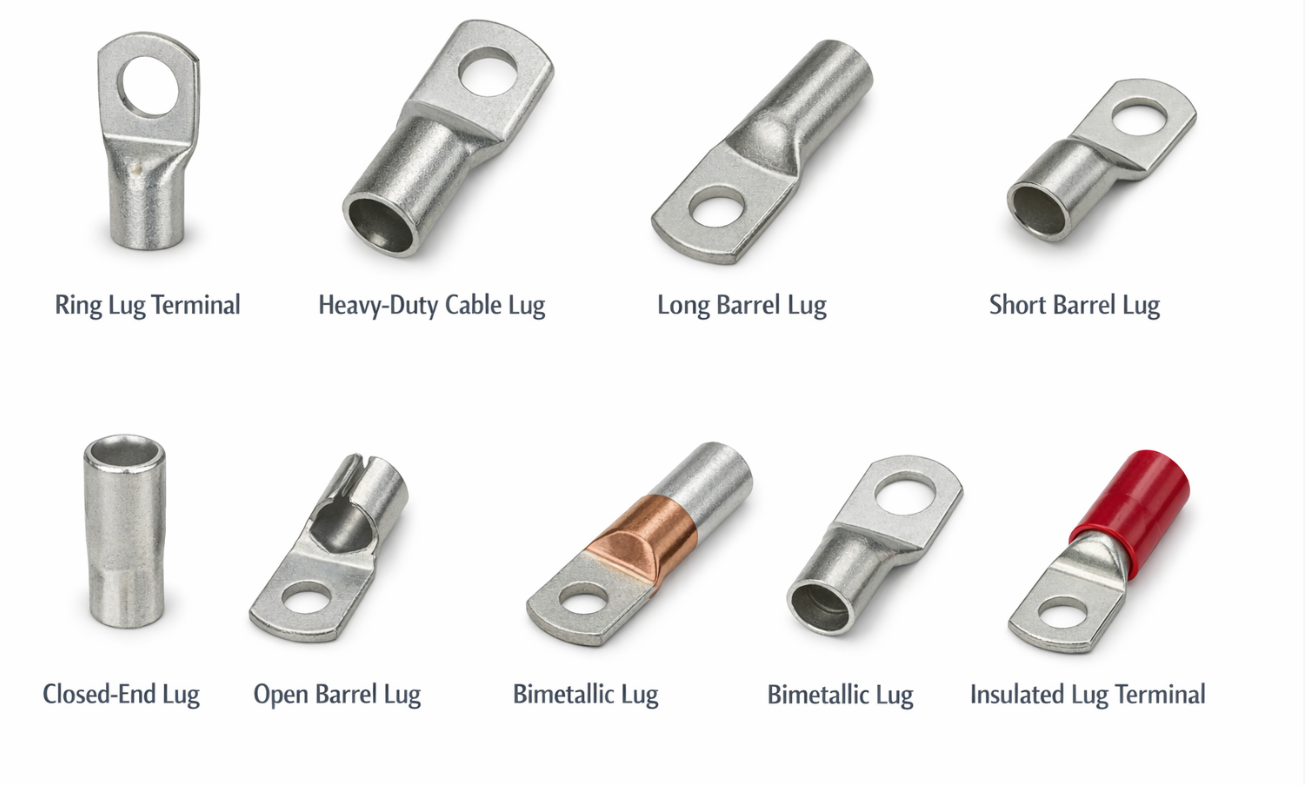
Ring Lug Terminals
Ring lug terminals have a circular form, which fits behind bolts or studs in order to give a good mechanical and electrical bond for high-current purposes. They have wide applications in power applications, automobiles, і прамысловае прымяненне.
Heavy-Duty Cable Lugs
Heavy-duty cable lugs are designed to withstand industrial and high-current capacity, but the lugs are stronger and have a high conductivity. They are applicable in large cables, switchgear, and power transmission systems.
Long Barrel Lugs
The long barrel lugs will offer a longer crimping length that will guarantee good pull-out resistance and greater mechanical stability. They can be utilized when cable security and electrical dependable contact is of the essence.
Short Barrel Lugs
Short barrel lugs are small in design to make installations that do not have much space. They provide ease of crimping and high levels of reliability in close spaces without jeopardizing the electrical performance.
Closed-End Lugs
Lugs are closed-ended to conceal the crimped connection against moisture, пыл, and corrosion. The sealed design guarantees a long-term reliability of use in the harsh environmental conditions and outdoor use.
Open Barrel Lugs
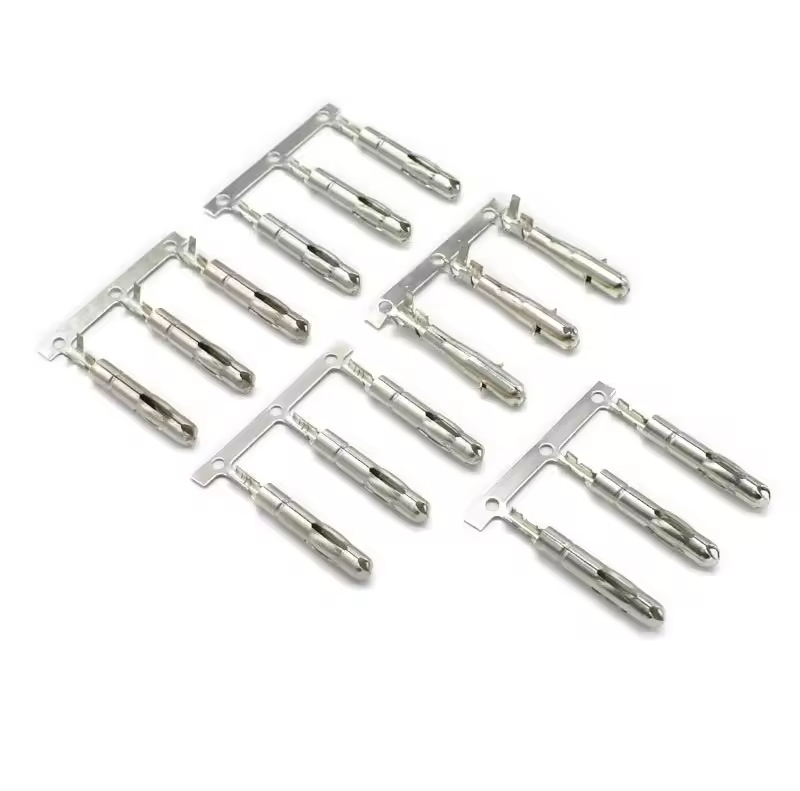
Open barrel lugs can be conveniently checked and crimped, and conductor insertion can be visually checked. Their use is generally in an industrial and car system, where they are useful to install and maintain quickly.
Bimetallic Lugs
The bimetallic lugs connect dissimilar metals such as copper and aluminum in a safe manner without causing galvanic corrosion. They find extensive applications in power distribution and renewable energy systems in which cross-metal connections are necessary.
Insulated Lug Terminals
Insulated lug terminals have polymer protection against incidental contact and short circuits. They offer increased safety and are commonly applied in high-voltage automotive, прамысловы, і энергетычныя прымянення.
Applications of Lug Terminals in Industries
Here are some of its important applications;
- Power Distribution Systems:Bring together cables in switchgear, transformers, and busbars. Besides this, we make sure the energy is transmitted reliably.
- Electrical Panels and Switchgear:Offer secure and high-conductivity connections in commercial and industrial panel boards.
- Solar and wind energy systems (RES): Combine photovoltaic arrays, wind turbines, and battery storage units, and can be stored outside the environment efficiently.
- Energy storage and Battery Banks:Make sure there are low-resistance connections in high-current battery systems in EVs, UPS, and utility storage.
- Commercial and Automotive Vehicles:Applied in battery terminals, starters, alternators, and high-current wiring harnesses.
- Industrial Machinery and Equipment:Reliably power heavy machinery, control systems, and industrial automation equipment.
- Telecommunications Infrastructure:Back-up power supply, telecom power systems, and high voltage distribution support.
OEM Solutions and Customization
These may include;
- Custom Lug Design: Custom-made solutions to unique applications, such as shape, size, and mechanical setup.
- Special Stud Hole Requirement: Cases with custom holes for OEM hardware or special electrical panels.
- Individual Barrel Length and Thickness: Maximized in crimping, conductor dimensions, and mechanical strength.
- Branding and Laser Marking: OEM identification and traceability, laser-etched logos, part numbers, and specifications.
- Special Plating Requirement: Special plating to achieve maximum corrosion resistance, high conductivity, or controlled environmental factors.
- Bulk Packaging and Supply Chain Solutions: Scalable packaging, automated sorting, and traceability to fulfill industrial and OEM supply chain needs.
Quality and Compliance
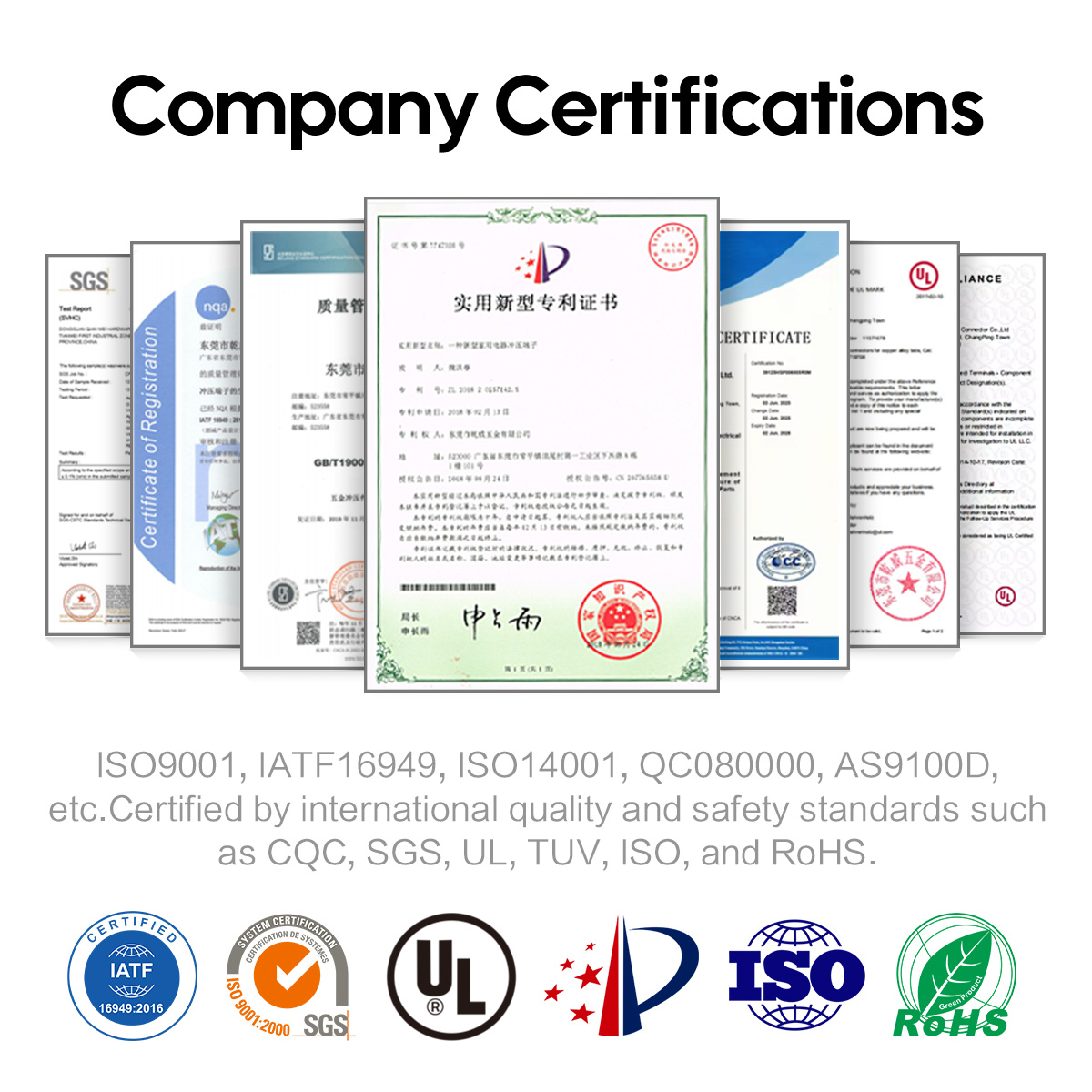
Qianwei Precision makes sure that each lug terminal goes through stringent test procedures, which assure durability, longevity, and international provision.
- IEC Standards Compliance
- UL Certification Support
- RoHS and REACH Compliance
- S.O Quality Management Systems.
- Electrical and Mechanical Performance Testing.
Why Choose Qianwei Precision for Lug Terminals?
Our properties may include;
- State-of-the-Art Conductive Material Expertise: 40 years of experience in copper, aluminum, bimetallic, as well as high-conductivity alloys.
- High-Precision Forming and Forging Technology: Guarantees constant dimensions, ideal crimping, and mechanical strength.
- Tight Quality Control and Testing:Multi-stage inspection and testing ensure that there are no violations of the electrical and mechanical requirements.
- Wide Product Lineup: Standard lugs through fully customized solutions for industrial and automotive use.
- High Automation and StableProduction: More than 98% automated operations guarantee standard output and effective production that is scalable.
- Global OEM and Industrial Supply Support: Worldwide reliable supply chain, traceability, and technical support.
Заключэнне
Lug terminals are important elective features in electric systems in various sectors. They offer fast, safe, and reliable connections that can withstand demanding conditions like high current and the environment. HQ lug terminals make sure automotive and renewable energy, as well as industrial machinery and power distribution, are safe and efficient, and long-lasting.
Integrating a decade of production experiences, the state-of-the-art forming and plating technology with high automation, Qianwei Precision is a supplier of high-quality and reliable lug terminals. Their solutions address high-end OEM and industrial applications and offer tailored solutions to unique applications.
FAQ
What is a lug terminal?
A lug terminal is a conductive connector that a cable or wire can be firmly connected to an electrical device or busbar.
Which are the principal lug terminals?
Ring, heavy-duty, long barrel, short barrel, closed-end, open barrel, bimetallic, and Insulated lug terminals.
What are the materials of the lug terminals?
медзь, tinned copper, aluminum, bimetallic (copper-aluminum), and high-conductivity alloys.
Are lug terminals possible with renewable energy systems?
так, they find extensive application in solar, wind, and battery energy storage systems.
Do you have customizable lug terminals?
так, custom designs may have special shapes, barrel length, stud sizes, пакрыццё, and insulation.
What is the most common operating range of lug terminals?
Lug terminals are generally -40 °C to +125 °C, depending on insulation and material.
Do the lug terminals meet international standards?
так, they comply with IEC, УЛ, RoHS, and REACH requirements and have electrical and mechanical performance tests.