

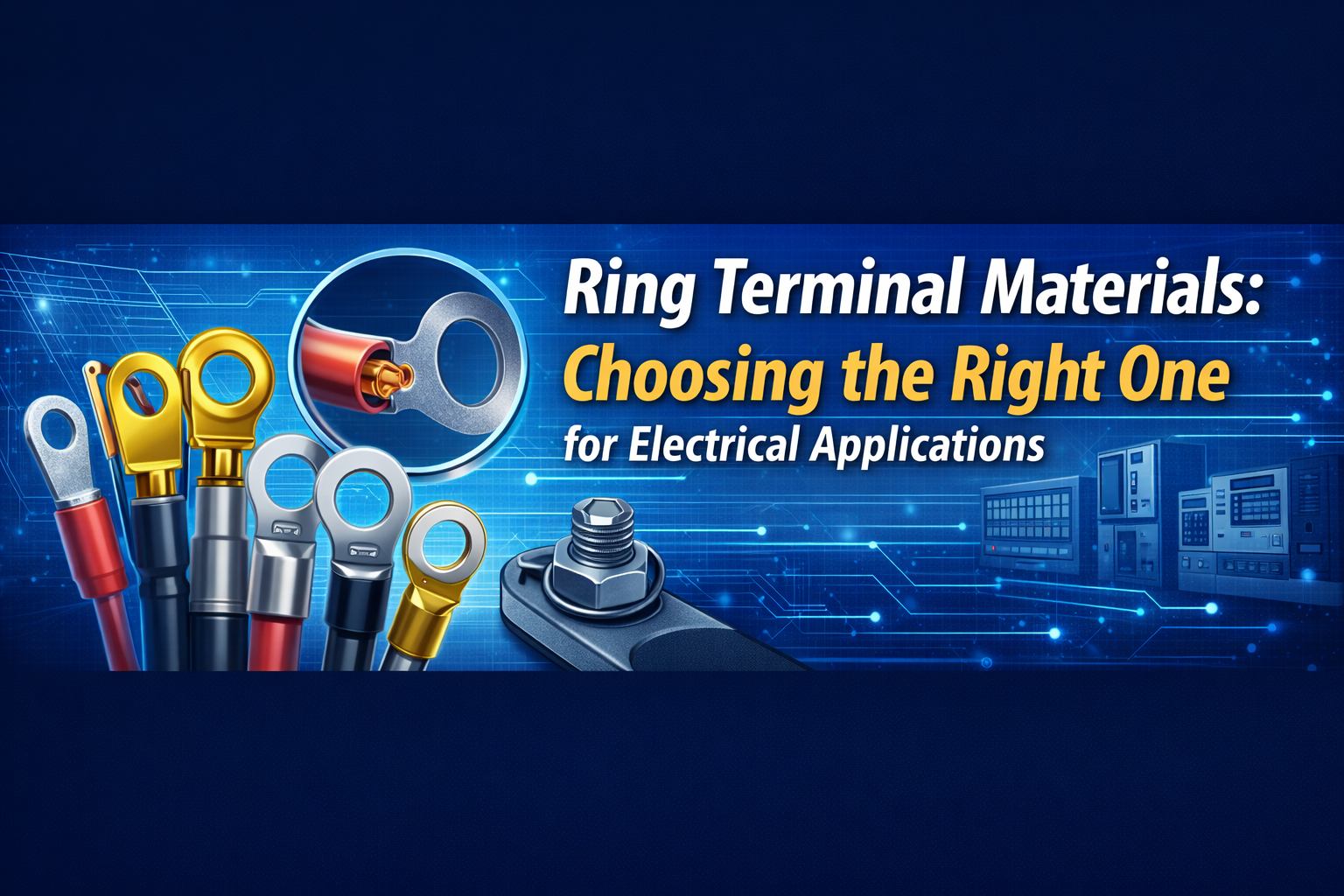
Ring terminals are widely used electrical connectors designed to create secure and reliable wire-to-terminal connections. Found in applications ranging from household wiring and automotive systems to industrial machinery and renewable energy installations, ring terminals play a critical role in ensuring safe and efficient electrical performance.
Although ring terminals may appear simple, the material used in their construction significantly impacts their performance. Electrical conductivity, mechanical strength, Korrosionsbeständigkeit, and compatibility with other metals all influence how well a terminal performs in real-world environments.
Choosing the correct ring terminal material helps prevent electrical failures, Überhitzung, Korrosion, and long-term maintenance issues. This guide explores the most common ring terminal materials, their advantages and limitations, and how to select the best option for different electrical applications.
Why Ring Terminal Material Matters
Selecting the proper ring terminal material is essential for maintaining electrical reliability and system safety. Several key factors influence material selection.
Electrical Conductivity
Electrical conductivity determines how efficiently current flows through the connection. Materials with higher conductivity minimize energy loss and reduce the risk of overheating.
Copper and silver-plated terminals typically offer the best conductivity, making them ideal for high-current applications.
Mechanical Strength
Ring terminals must withstand tightening torque, Vibration, and mechanical stress. In automotive, industriell, and heavy machinery environments, mechanical durability is critical for preventing loose or damaged connections.
Materials such as steel and brass provide improved strength for these demanding conditions.
Corrosion Resistance
Electrical connections are often exposed to moisture, chemicals, and environmental contaminants. Corrosion can increase resistance, weaken connections, and eventually cause system failure.
Materials like stainless steel or plated copper help protect connections from corrosion in harsh environments.
Metal Compatibility
When two different metals come into contact, galvanic corrosion may occur. Selecting compatible materials for terminals and conductors helps prevent this electrochemical reaction and extends connection lifespan.
Cost Efficiency
In many electrical installations, especially large-scale industrial systems, cost plays an important role in material selection. Engineers must balance performance requirements with budget constraints while maintaining reliability and safety.
Copper Ring Terminals
Material Characteristics
Copper is the most commonly used material for ring terminals due to its excellent electrical conductivity and flexibility. It allows efficient current flow and forms reliable crimp connections with copper wires.
Copper terminals are often enhanced with protective plating to improve durability and corrosion resistance.
Vorteile
Copper ring terminals offer several important benefits:
- Exceptional electrical conductivity
- Reduced energy loss and heat buildup
- Excellent compatibility with copper wiring
- Easy crimping and installation
These properties make copper the preferred material for many electrical applications.
Typische Anwendungen
Copper ring terminals are widely used in:
- Household electrical wiring
- Industrial control panels
- Kfz-Kabelbäume
- Circuit breakers and distribution boards
- Renewable energy systems such as solar installations
Common Variations
Copper terminals are frequently available with different surface coatings:
- Tin-plated copper: Improves corrosion resistance and solderability
- Nickel-plated copper: Suitable for high-temperature environments such as engine compartments
- Silver-plated copper: Provides extremely low electrical resistance
Brass Ring Terminals
Material Characteristics
Brass is an alloy composed primarily of copper and zinc. It offers a balance between electrical conductivity and mechanical durability.
Although brass does not conduct electricity as efficiently as pure copper, it provides stronger structural stability.
Vorteile
Brass ring terminals provide several benefits:
- Higher mechanical strength than copper
- Good resistance to wear and mechanical stress
- Cost-effective for moderate electrical loads
These characteristics make brass suitable for applications where durability is more important than maximum conductivity.
Typische Anwendungen
Brass terminals are commonly used in:
- Light-duty industrial wiring
- Small appliances and electronic devices
- Automotive lighting systems
- Dashboard electronics
Limitations
Because brass has lower conductivity than copper, it is generally not recommended for high-current electrical circuits.
Steel Ring Terminals
Material Characteristics
Steel ring terminals are typically made from carbon steel or mild steel. While steel offers excellent mechanical strength, its electrical conductivity is relatively low compared to copper-based materials.
Vorteile
Steel terminals provide several advantages:
- Exceptional structural strength
- High resistance to mechanical damage
- Strong performance in vibration-prone environments
- Cost-effective for non-current applications
Typische Anwendungen
Steel ring terminals are often used in:
- Erdungsanschlüsse
- Structural bonding points
- Industrial machinery installations
- Automotive grounding systems
Limitations
Due to its lower conductivity, steel is not suitable for circuits that carry high electrical current.
Stainless Steel Ring Terminals
Material Characteristics
Stainless steel contains chromium, which forms a protective oxide layer that prevents rust and corrosion. This property makes stainless steel highly suitable for harsh environments.
Vorteile
Stainless steel ring terminals offer several important benefits:
- Excellent corrosion resistance
- Strong mechanical durability
- Reliable performance in high temperatures
- Long service life in outdoor environments
Typische Anwendungen
These terminals are commonly used in:
- Marine electrical systems
- Outdoor control panels
- Renewable energy installations
- Chemical processing environments
Limitations
Despite their durability, stainless steel terminals have lower electrical conductivity compared with copper-based materials. Therefore, they are often used where environmental protection is more critical than electrical efficiency.
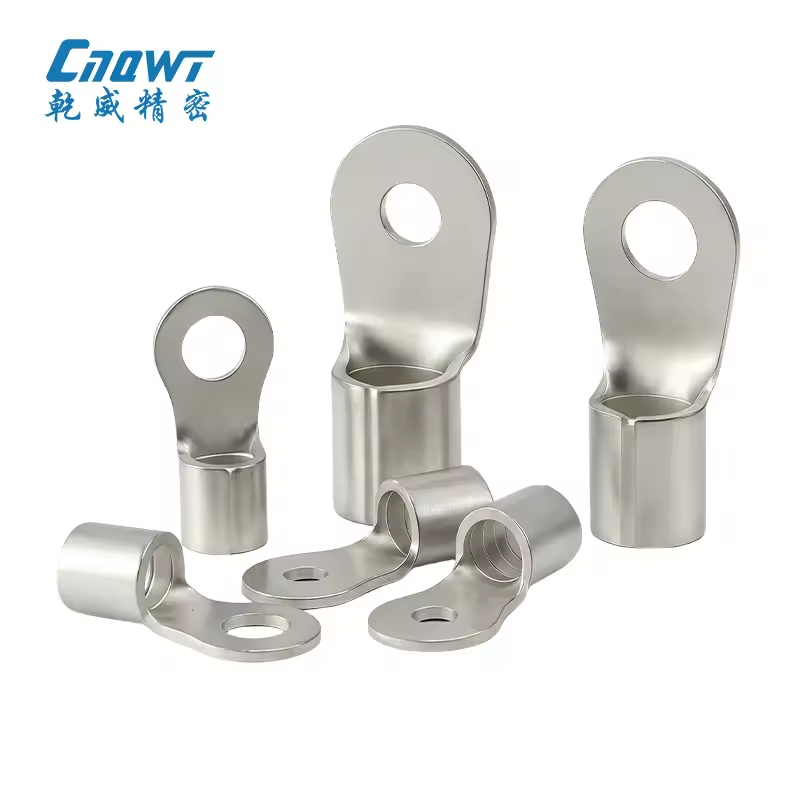
Aluminum Ring Terminals
Material Characteristics
Aluminum is a lightweight metal with moderate electrical conductivity. It is commonly used in power transmission and high-voltage applications where weight reduction is important.
Vorteile
Aluminum ring terminals offer several advantages:
- Lightweight construction
- Cost-effective for large installations
- Good thermal conductivity
- Suitable for high-power distribution systems
Typische Anwendungen
Aluminum terminals are commonly used in:
- Electrical substations
- Solar power systems
- Aerospace electrical systems
- Transportation and railway infrastructure
Potential Risks
Aluminum can react with copper, leading to galvanic corrosion when the two metals are connected. To prevent this issue, installers typically apply anti-oxidation compounds or use specialized connectors designed for mixed-metal connections.
Specialty Materials and Surface Coatings
Some applications require enhanced electrical performance or environmental resistance. In these cases, specialty coatings may be applied to ring terminals.
Silver-Plated Terminals
Silver plating provides extremely low contact resistance and excellent conductivity. These terminals are often used in:
- Aerospace electronics
- Precision instrumentation
- High-frequency electrical systems
Gold-Plated Terminals
Gold plating offers outstanding corrosion resistance and reliable electrical contact even in harsh environments. These terminals are typically used in:
- Military electronics
- Telecommunications equipment
- High-end electronic devices
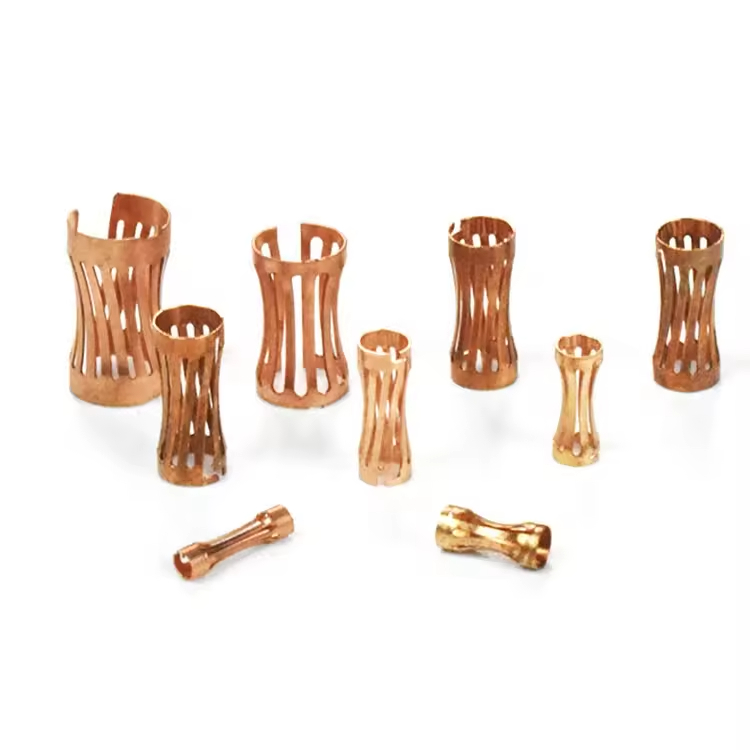
Isoliert vs. Non-Insulated Ring Terminals
Ring terminals are available in both insulated and non-insulated versions depending on the application requirements.
Insulated Ring Terminals
Insulated terminals provide additional electrical protection and strain relief. Common insulation materials include:
- Vinyl: Basic protection and easy installation
- Nylon: Higher temperature resistance and improved durability
- PVC: Cost-effective insulation for general applications
- Heat-shrink: Provides environmental sealing for outdoor and marine installations
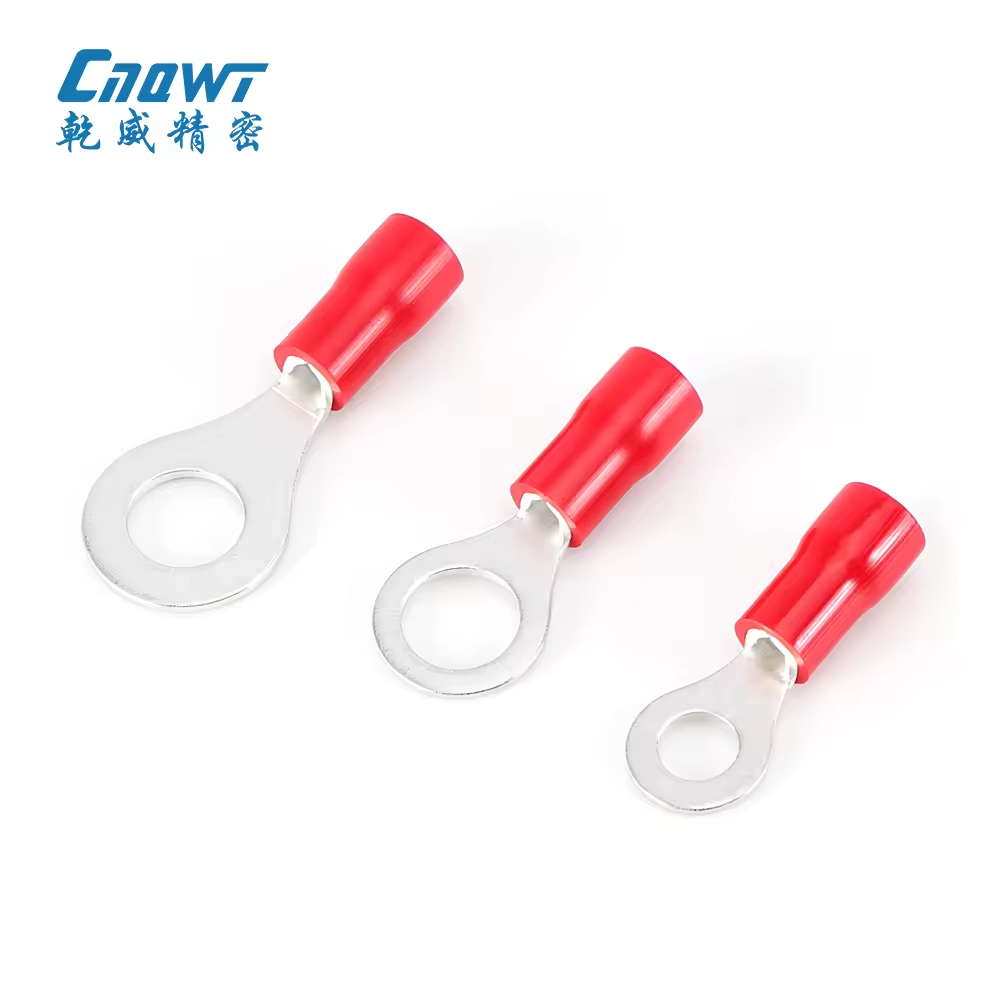
Non-Insulated Ring Terminals
Non-insulated terminals are typically used in controlled environments where additional insulation is unnecessary. They are commonly found in industrial equipment or applications requiring custom insulation methods.

How to Choose the Right Ring Terminal Material
Selecting the correct ring terminal material requires evaluating several factors related to the electrical system and operating environment.
Match the Material to the Application
Different materials serve different purposes:
- Copper for maximum electrical conductivity
- Stainless steel for harsh or corrosive environments
- Brass or steel for mechanical strength
Consider Environmental Conditions
Environmental exposure plays a major role in material selection. Applications involving moisture, saltwater, chemicals, or high temperatures require corrosion-resistant materials and protective coatings.
Ensure Wire Compatibility
Avoid pairing incompatible metals whenever possible. When mixed metals must be used, apply appropriate anti-corrosion compounds to reduce galvanic reactions.
Verify Industry Certifications
Always check for recognized safety and quality standards such as:
- UL certification
- CSA compliance
- MIL specifications for military-grade components
Evaluate Long-Term Performance
In addition to initial cost, consider the terminal’s expected lifespan, maintenance requirements, und langfristige Zuverlässigkeit.
Abschluss
Ring terminals are small but essential components in electrical systems. The material used in their construction directly affects electrical efficiency, Haltbarkeit, and resistance to environmental damage.
Copper and silver-plated terminals provide superior conductivity for power and signal transmission, while brass, steel, and stainless steel offer enhanced mechanical strength and corrosion resistance. Aluminum terminals provide lightweight solutions for large-scale power distribution systems but require careful handling to prevent galvanic corrosion.
By selecting the appropriate ring terminal material and insulation type, engineers and installers can ensure safe, efficient, and long-lasting electrical connections across a wide range of residential, industriell, and commercial applications.
Below are 10 SEO-optimized FAQs you can add to the end of your article. They target common search queries related to Ringklemmen, terminal materials, and electrical connectors, which helps improve Google rankings and featured snippet opportunities.
FAQs
1. What are ring terminals used for?
Ring terminals are electrical connectors used to securely attach a wire to a stud, screw, or terminal block. The ring-shaped design ensures a strong mechanical connection and prevents the wire from slipping off, making them ideal for automotive, industriell, and electrical panel applications.
2. Which material is best for ring terminals?
Copper is generally considered the best material for ring terminals because of its excellent electrical conductivity and compatibility with copper wires. Jedoch, other materials such as stainless steel, brass, and aluminum may be preferred depending on environmental conditions and mechanical requirements.
3. Why are copper ring terminals so commonly used?
Copper ring terminals are widely used because they provide high electrical conductivity, low resistance, and excellent crimping performance. They also work well with most electrical wiring systems, making them a standard choice for many residential and industrial applications.
4. What is the advantage of tin-plated copper terminals?
Tin-plated copper terminals offer improved corrosion resistance compared to bare copper. The tin coating also enhances solderability and helps protect the terminal from oxidation, making it suitable for humid or outdoor environments.
5. When should stainless steel ring terminals be used?
Stainless steel ring terminals are best used in harsh environments where corrosion resistance is critical. They are commonly used in marine systems, outdoor electrical installations, and chemical processing environments where moisture and chemicals are present.
6. Are aluminum ring terminals compatible with copper wires?
Aluminum terminals can be connected to copper wires, but precautions are necessary. Because aluminum and copper can cause galvanic corrosion, installers typically apply anti-oxidation compounds or use specially designed connectors to prevent corrosion.
7. What is the difference between insulated and non-insulated ring terminals?
Insulated ring terminals include a protective sleeve made from materials such as vinyl, Nylon, or heat-shrink tubing. This insulation protects the connection from electrical shorts and environmental exposure. Non-insulated terminals do not have this protective layer and are often used in controlled environments.
8. How do I choose the correct ring terminal size?
The correct ring terminal size depends on two factors: the wire gauge and the stud or bolt diameter. Always select a terminal that matches the wire size and the mounting hardware to ensure a secure and reliable connection.
9. What industries commonly use ring terminals?
Ring terminals are used in a wide range of industries, einschließlich:
- Automotive and transportation
- Industriemaschinen
- Electrical power distribution
- Erneuerbare Energiesysteme
- Telecommunications equipment
Their reliability makes them suitable for both low-voltage and high-current applications.
10. Can ring terminals improve electrical connection reliability?
Ja. Ring terminals create a secure mechanical connection that reduces the risk of loose wires, vibration damage, or accidental disconnection. This improves electrical reliability and ensures consistent current flow in demanding applications.
