

Introducción
Ordering custom electrical terminals may seem straightforward—but in reality, it involves a series of critical technical and commercial decisions. Asking the wrong questions—or worse, asking none—can lead to:
- Poor electrical performance
- Installation issues
- Increased failure rates
- Delays and unexpected costs
Whether you are sourcing for automotive wiring, equipos industriales, or renewable energy systems, this guide will walk you through the essential questions you must ask before ordering custom terminals.
Why Asking the Right Questions Matters
Custom terminals are not off-the-shelf components—they are engineered solutions tailored to specific applications.
Failing to define requirements upfront can result in:
- Mismatch between terminal and cable
- Overheating due to incorrect current rating
- Corrosion in harsh environments
- Rework and supply chain delays
👉 En resumen: The more precise your requirements, the better your final product performance and cost efficiency.
Key Questions to Ask Before Ordering Custom Terminals
1. What Is the Application Environment?
Understanding the operating environment is the first and most important step.
Ask yourself:
- Will the terminals be used indoors or outdoors?
- Is there exposure to humedad, spray de sal, o productos químicos?
- Will the system face high temperatures or vibration?
👉 Example:
- Solar systems → UV + waterproof required
- Automotor → vibration resistance essential
- Industrial → corrosion protection needed
2. What Are the Electrical Requirements?
Electrical performance defines the core design.
Key parameters:
- Calificación actual (Amps)
- Nivel de voltaje
- Acceptable resistance
- Tamaño del cable (AWG o mm²)
👉 Incorrect sizing can lead to:
- Calentamiento excesivo
- Caídas de voltaje
- System inefficiency
3. What Material Should Be Used?
Material selection directly affects conductivity and durability.
Common options:
- Electrolytic copper → best conductivity
- Brass → good strength and cost balance
- Phosphor bronze → excellent spring properties
- High-conductivity alloys → specialized applications
👉 For outdoor or harsh environments, plating becomes equally important.
4. What Terminal Design Is Required?
Custom terminals come in various forms, and design must match the application.
Considerar:
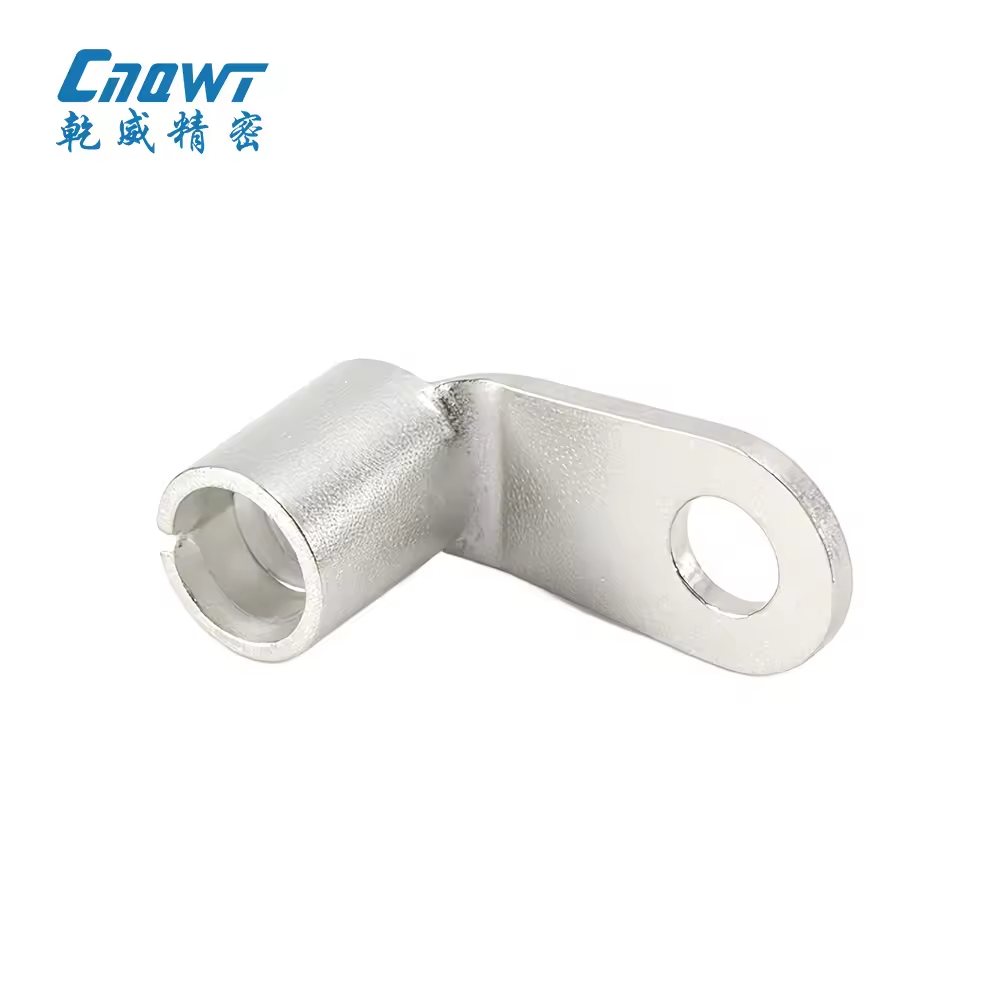
- Tipo de terminal (anillo, pala, alfiler, quick disconnect)
- Hole size (M4–M12 or custom)
- Thickness and dimensions
- Insulated vs non-insulated
👉 A small design mismatch can cause installation failure or loose connections.
5. What Connection Method Will Be Used?
The connection method impacts both performance and production.
Options include:
- prensado (más común)
- Soldadura
- Brazing
- Laser welding
👉 Crimping is generally preferred for:
- Consistencia
- Resistencia a las vibraciones
- producción en masa
6. What Surface Treatment or Plating Is Needed?
Plating enhances corrosion resistance and performance.
Typical choices:
- Tin plating → general-purpose protection
- Nickel plating → high-temperature environments
- Silver plating → high conductivity
Also consider:
- Required salt spray resistance (8h–96h+)
7. What Standards and Certifications Are Required?
Compliance is essential for many industries.
Check requirements such as:
- Certificación UL
- RoHS / REACH compliance
- Normas IEC
👉 Certification ensures seguridad, fiabilidad, and market acceptance.
8. What Quantity and Lead Time Are Needed?
Production planning affects both cost and delivery.
Key questions:
- What is the MOQ?
- Do you need samples or mass production?
- What is the required lead time?
👉 Early planning helps avoid project delays and inventory shortages.
9. Does the Supplier Offer Custom Engineering Support?
Not all suppliers provide true customization.
Buscar:
- Design support (2D/3D drawings)
- Sample development
- OEM/ODM capability
- Recomendaciones basadas en aplicaciones
👉 A strong supplier can help optimize both cost and performance.
10. What Quality Control Measures Are in Place?
Consistency is critical in large-scale production.
Ask about:
- Material inspection
- Crimp quality standards
- Prueba de fuerza de extracción
- Pruebas de niebla salina
👉 Reliable QC ensures stable performance across batches.
Errores comunes que se deben evitar
Even experienced buyers make these mistakes:
- Choosing based on price alone
- Ignoring environmental conditions
- Using incorrect cable-terminal combinations
- Skipping sample validation
- Lack of clear communication with suppliers
👉 Avoiding these can save time, dinero, and reputational risk.
Pro Tips for Faster and More Accurate Quotations
To get better results from suppliers:
- Provide detailed drawings (if available)
- Specify material and plating clearly
- Share application details
- Request samples before bulk orders
👉 The more information you provide, the faster and more accurate the quotation.
Conclusión
Ordering custom terminals is not just a purchasing task—it is a technical decision that directly impacts system performance and reliability.
By asking the right questions about:
- Ambiente
- Electrical requirements
- Materials and design
- Quality and certification
You can significantly reduce risks and ensure long-term success.
¿Por qué elegir la precisión Qianwei??
En Precisión de Qianwei, we specialize in manufacturing high-quality custom electrical terminals for a wide range of industries.
Ofrecemos:
- Personalización completa (materiales, enchapado, diseño)
- Advanced production and strict quality control
- Fast sampling and reliable lead times
- Engineering support for optimized solutions
👉 Looking for a reliable custom terminal supplier?
Póngase en contacto con Qianwei Precision hoy to get expert advice and competitive quotations.
Preguntas frecuentes
What information is needed to order custom terminals?
You need to provide application details, requisitos de corriente y voltaje, cable size, material preference, enchapado, and design specifications.
How do I choose the right terminal material?
Choose based on conductivity and environment. Copper offers the best conductivity, while plated materials provide better corrosion resistance.
What is the best connection method for terminals?
Crimping is the most reliable method for most applications because it provides a stable, low-resistance, and vibration-resistant connection.
What plating is best for corrosion resistance?
Tin plating is widely used for general corrosion protection, while nickel plating is suitable for high-temperature environments.
How can I ensure terminal quality?
Work with certified suppliers, request samples, and verify testing standards such as pull-out force and salt spray resistance.
What is the typical lead time for custom terminals?
Lead times usually range from 2 a 6 weeks depending on complexity, estampación, and order quantity.
Can I order small quantities of custom terminals?
Sí, many manufacturers support small batch production, especially for prototyping or testing.
What certifications should terminals have?
Common certifications include UL, RoHS, ALCANZAR, and IEC standards depending on the application.
¿Qué causa la falla terminal??
Failures are typically caused by poor crimping, corrosión, incorrect material selection, o conexiones sueltas.
Do manufacturers provide design support?
Professional manufacturers often provide engineering support, including design optimization and sample development.

