

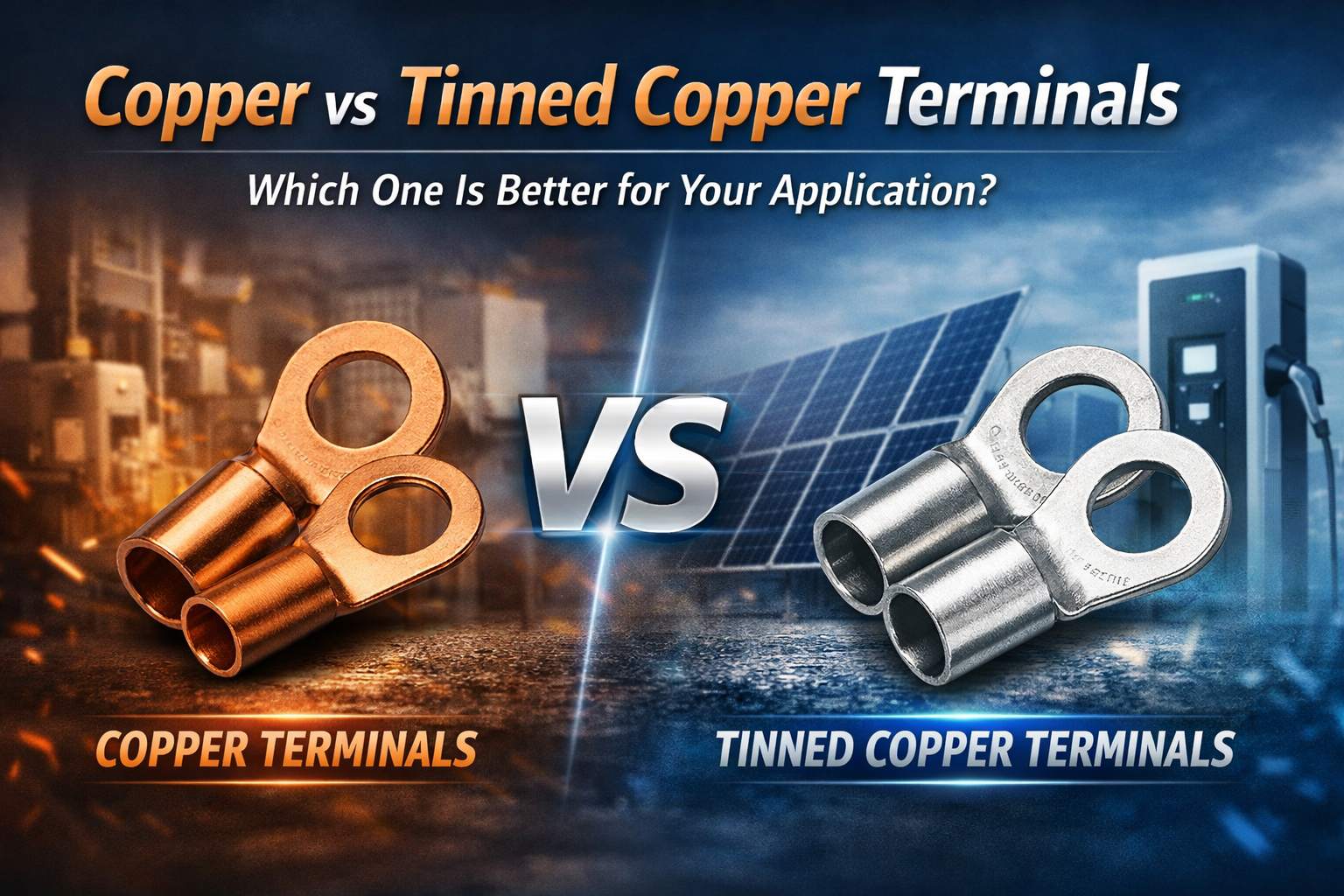
Introduction
If you’ve ever sourced electrical terminals, vous avez probablement posé cette question:
Should I choose copper terminals or tinned copper terminals?
At first glance, they look almost the same. Both are widely used, both conduct electricity well, and both are available in various shapes like ring terminals or battery lugs.
But here’s the truth:
The difference between them can directly affect performance, lifespan, and even safety.
Choosing the wrong material might lead to:
-
Corrosion
-
Increased resistance
-
Overheating
-
Connection failure
And in high-current systems like EV charging or solar storage, that’s not a small problem—it’s a serious risk.
Dans ce guide, we’ll break it down in a simple, practical way so you can confidently decide:
-
What copper terminals really are
-
What makes tinned copper different
-
Key differences that actually matter
-
Which one is better for your application
Let’s get into it.
What Are Copper Terminals?
Copper terminals are connectors made from pure or high-purity copper, designed to connect wires to electrical components like batteries, busbars, or equipment.
They’re one of the most common types of terminals used in electrical systems—and for good reason.
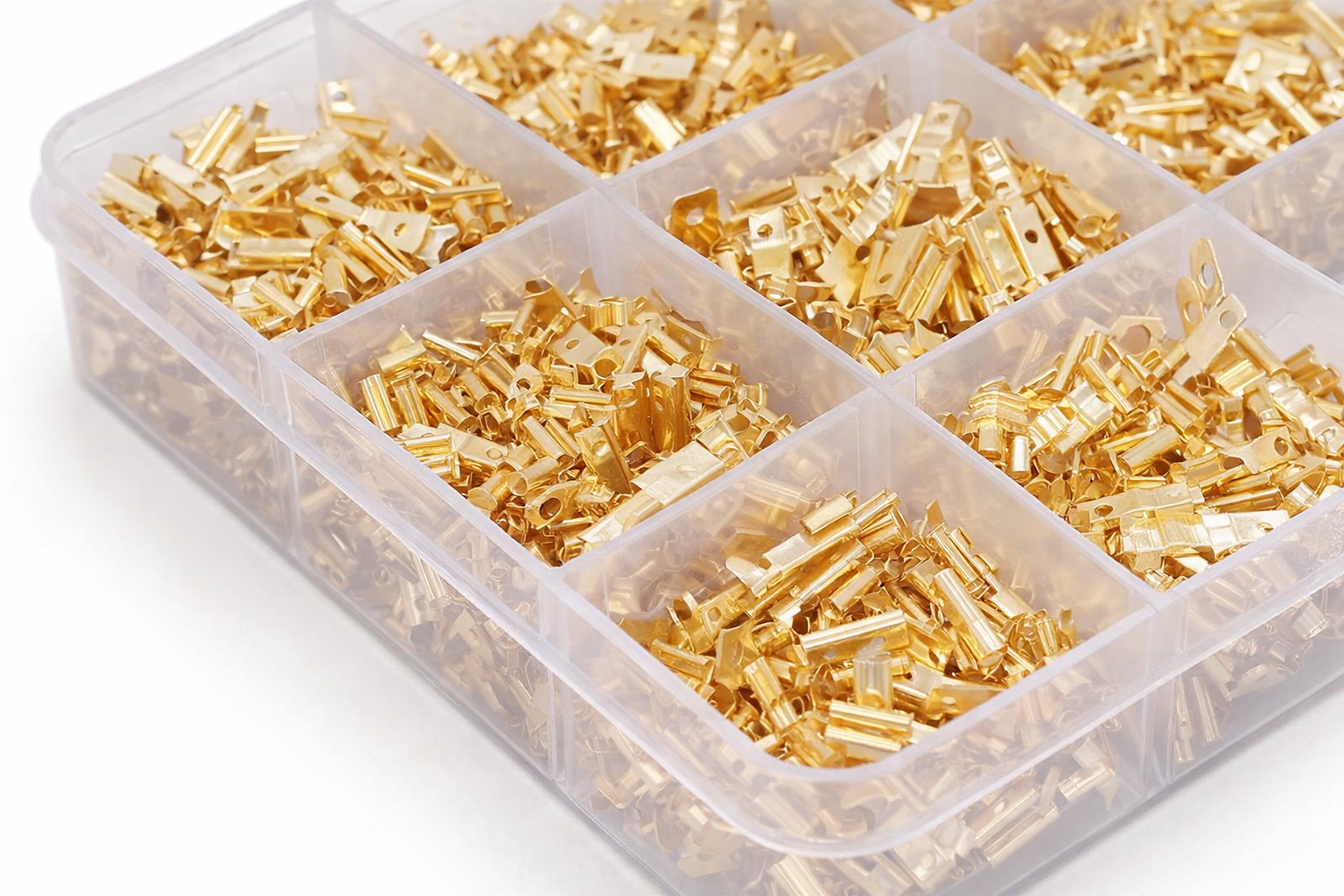
Why copper?
Because copper has:
-
Excellent electrical conductivity
-
Low resistance
-
Good mechanical strength
That means electricity flows easily, with minimal energy loss.
Key Advantages of Copper Terminals
1. High Conductivity
Copper is one of the best electrical conductors available. This makes it ideal for efficient power transmission.
2. Cost-Effective
Compared to treated or plated materials, copper terminals are generally cheaper.
3. Easy to Process
Copper is easy to stamp, crimp, and form into different terminal shapes.
But there’s a catch…
Copper has one major weakness:
It oxidizes when exposed to air and moisture.
Au fil du temps, this oxidation:
-
Increases resistance
-
Reduces performance
-
Can lead to overheating
That’s where tinned copper comes in.
What Are Tinned Copper Terminals?
Tinned copper terminals are made from copper—but with an extra protective layer:
A thin coating of tin applied over the copper surface
This is usually done through an electroplating process.
Why add tin?
Because tin provides:
-
Protection against oxidation
-
Better corrosion resistance
-
Improved durability in harsh environments
Key Advantages of Tinned Copper Terminals
1. Résistance à la corrosion
The tin layer protects the copper underneath from moisture, air, et produits chimiques.
2. Longer Lifespan
Less corrosion means more stable performance over time.
3. Better for Outdoor Use
Perfect for applications exposed to humidity, salt, or weather.
En bref:
Tinned copper = copper, but upgraded for real-world conditions
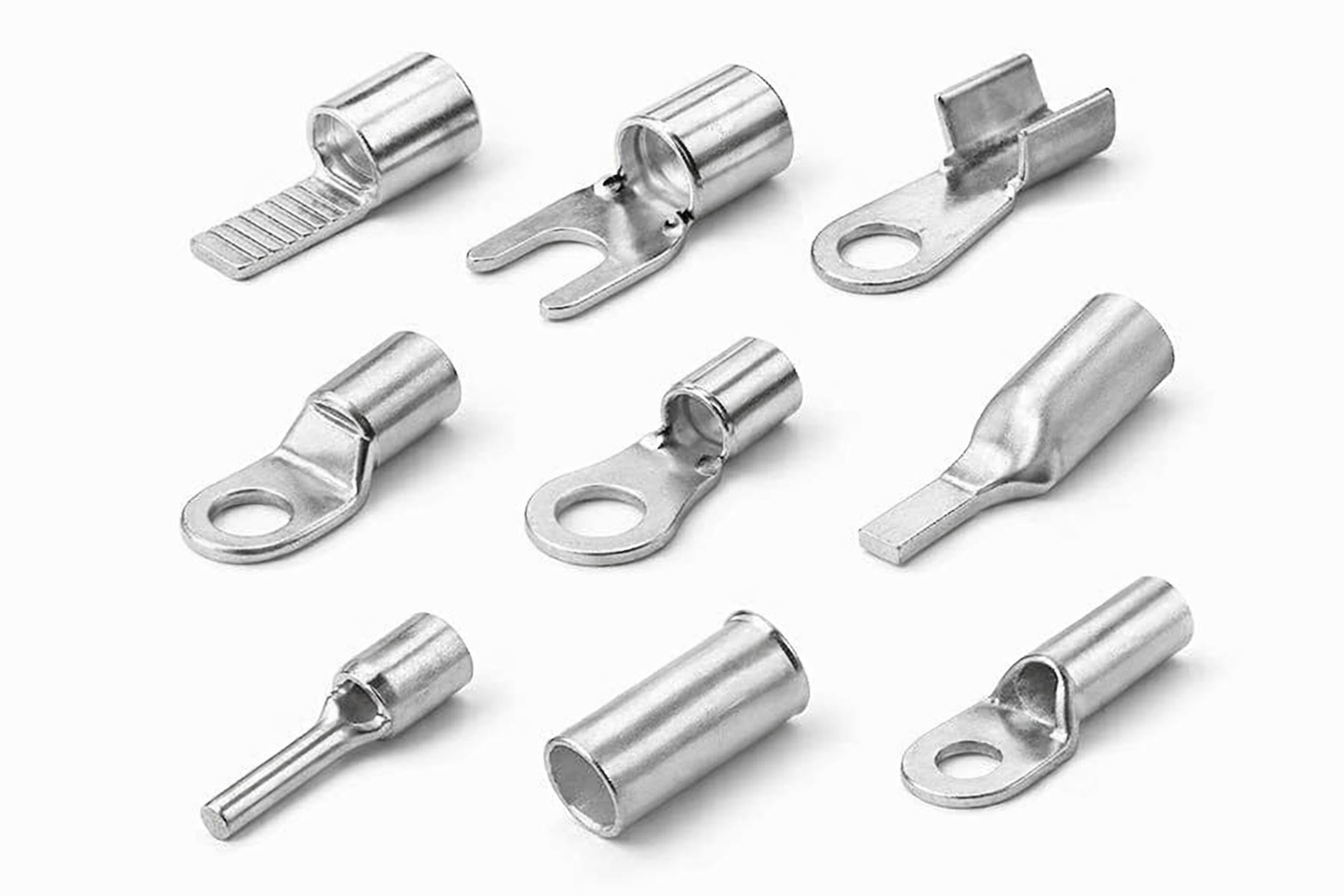
Copper vs Tinned Copper: Différences clés
Let’s compare them side by side in a practical way.
1. Conductivité électrique
-
Cuivre: Slightly higher conductivity
-
Cuivre étamé: Very slightly lower (due to tin layer)
Reality check:
The difference is so small that in most applications, you won’t notice it.
✔ Winner: Practically equal
2. Résistance à la corrosion (Big Difference)
-
Cuivre: Oxidizes over time
-
Cuivre étamé: Très résistant à la corrosion
This is the biggest difference—and the most important one.
✔ Winner: Cuivre étamé
3. Durabilité & Lifespan
-
Cuivre: Good in controlled environments
-
Cuivre étamé: Excellent in harsh conditions
If your terminals are exposed to:
-
Humidity
-
Temperature changes
-
Outdoor conditions
Tinned copper lasts much longer.
✔ Winner: Cuivre étamé
4. Coût
-
Cuivre: Lower cost
-
Cuivre étamé: Slightly higher price
The price difference is usually small compared to the performance benefits.
✔ Winner: Cuivre (for budget)
5. Appearance & Entretien
-
Cuivre: Turns dark over time (oxydation)
-
Cuivre étamé: Maintains clean, silver appearance
Also means less maintenance.
✔ Winner: Cuivre étamé
When Should You Choose Copper Terminals?
Copper terminals are still a solid choice—if used in the right environment.
Choose copper if:
-
The environment is dry and controlled
-
The system is indoors
-
Cost is a major concern
-
The application is low to moderate risk
Applications typiques
-
Electrical control panels
-
Indoor equipment
-
Household electrical systems
Dans ces cas, copper performs well and saves cost.
When Should You Choose Tinned Copper Terminals?
This is where tinned copper really shines.
Choose tinned copper if:
-
The environment is humid or outdoor
-
The system requires high reliability
-
The terminals are exposed to corrosion risks
-
You want durabilité à long terme
Applications typiques
-
Systèmes d'énergie solaire
-
Marine equipment
-
Battery energy storage systems (BESS)
-
Machines industrielles
In these scenarios, using plain copper is risky.
Common Mistakes When Choosing Terminal Materials
Let’s avoid the mistakes many buyers make.
❌ 1. Choosing Based on Price Only
Going for the cheapest option can lead to:
-
Short lifespan
-
Higher maintenance
-
System failure
❌ 2. Ignoring the Environment
This is the biggest mistake.
De plein air + copper = corrosion problems
❌ 3. Underestimating Corrosion
Even small corrosion:
-
Increases resistance
-
Generates heat
-
Reduces efficiency
❌ 4. Using Copper in High-Risk Systems
In EV or solar systems, reliability matters more than cost.
How to Choose the Right Terminal (Simple Checklist)
Here’s a quick decision guide you can actually use.
Step 1: Check the Environment
-
Indoor → Copper is OK
-
De plein air / Humid → Go tinned copper
Step 2: Consider Current Load
Higher current = higher heat risk
Safer choice = tinned copper
Step 3: Think About Lifespan
Short-term project? → Copper
Long-term system? → Tinned copper
Step 4: Balance Cost vs Performance
If failure is expensive, don’t save on material
Why Material Choice Matters in High-Current Systems
In high-current applications like EV charging:
-
Small resistance = big heat
-
Corrosion = unstable connection
-
Poor material = system risk
That’s why professionals almost always choose:
Tinned copper for critical applications
Pourquoi choisir la précision Qianwei?
When it comes to electrical terminals, material quality and manufacturing precision make all the difference.
À Précision Qianwei, we focus on delivering reliable, high-performance connection solutions.
What you get:
✔ High-purity copper for optimal conductivity
✔ Advanced tin plating for long-term protection
✔ Precision manufacturing for consistent quality
✔ OEM & custom solutions for your specific needs
✔ Fast response and global export experience
Whether you need standard terminals or custom designs, we can support your project.
Contact us today for a fast quote.
Conclusion
Donc, copper vs tinned copper—what’s the final answer?
👉 Cuivre:
-
Lower cost
-
Good for indoor use
👉 Cuivre étamé:
-
Better durability
-
Corrosion-resistant
-
Ideal for demanding environments
Final Recommendation
For most modern applications—especially EV, solaire, and industrial systems—
tinned copper terminals are the better choice.
If you’re looking for fiable, high-quality terminals,
👉 reach out to Qianwei Precision today and get expert support for your project.
FAQ
1. Is tinned copper better than copper?
Dans la plupart des cas, yes—especially for outdoor or high-reliability applications.
2. Does tin plating reduce conductivity?
Slightly, but the difference is negligible in real-world use.
3. Do copper terminals corrode easily?
Oui, especially in humid or outdoor environments.
4. Are tinned copper terminals worth the cost?
Absolument. The longer lifespan and reliability justify the small price increase.
5. Which is better for EV charging systems?
Tinned copper is strongly recommended due to high current and environmental exposure.
6. Can I use copper terminals outdoors?
Not recommended unless properly protected.
7. How long do tinned copper terminals last?
They can last many years, even in harsh conditions.
