

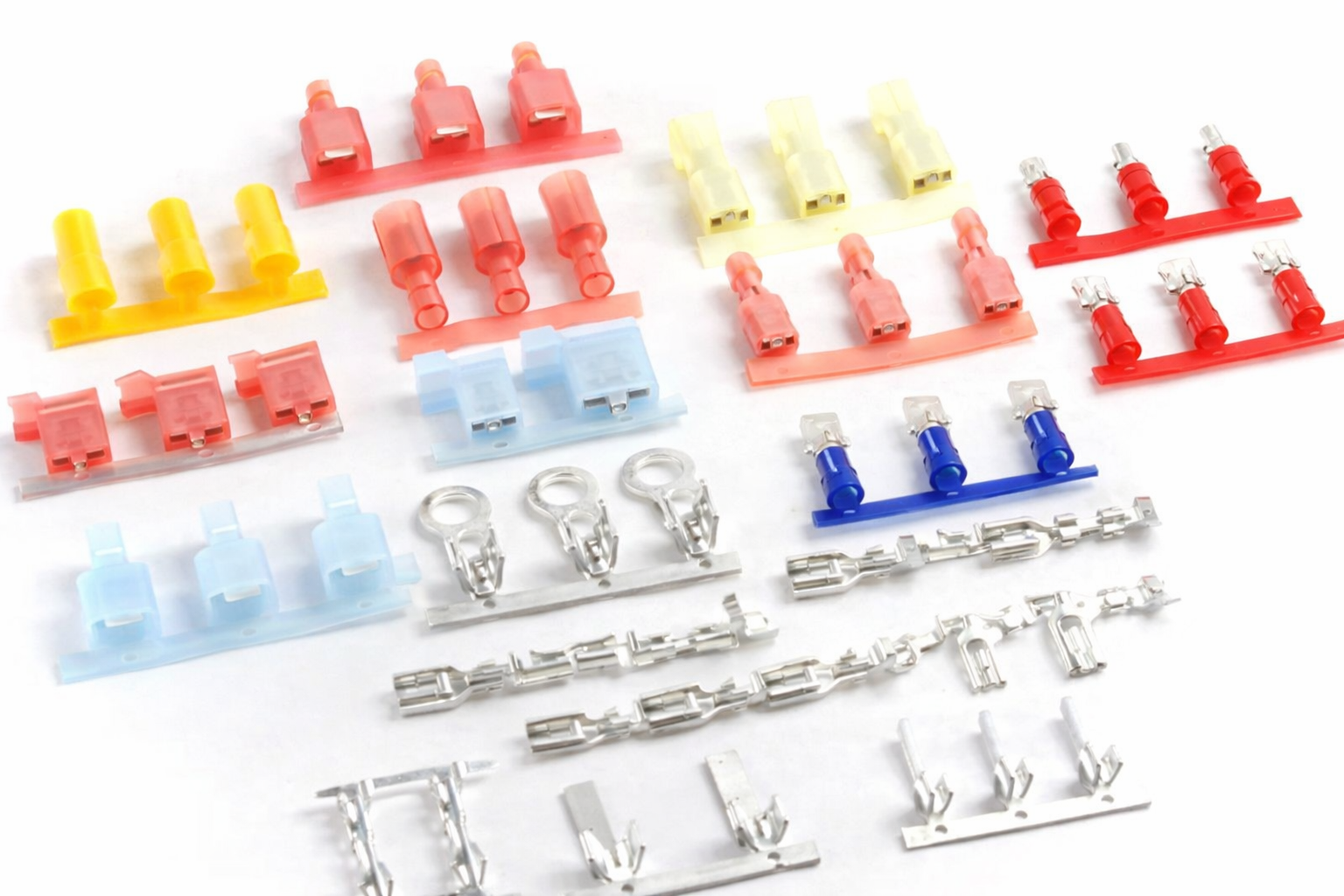
Custom Terminals vs Standard Terminals – Quick Comparison
When selecting electrical terminals for industrial or automotive applications, the choice between custom and standard terminals can significantly impact performance, cost, そして長期的な信頼性.
Here is a quick comparison:
| 特徴 | Custom Terminals | Standard Terminals |
| デザイン | Tailor-made for specific applications | Pre-designed, off-the-shelf |
| Flexibility | Fully customizable | 限定 |
| MOQ | より高い (tooling required) | Low or none |
| Lead Time | Longer (development required) | Immediate availability |
| 料金 | Higher upfront, optimized long-term | Lower upfront cost |
| パフォーマンス | Optimized for specific conditions | General-purpose |
In summary:
Choose custom terminals when performance, 耐久性, or unique design is critical.
Choose standard terminals when speed, cost, and simplicity are priorities.
What Are Custom Terminals?
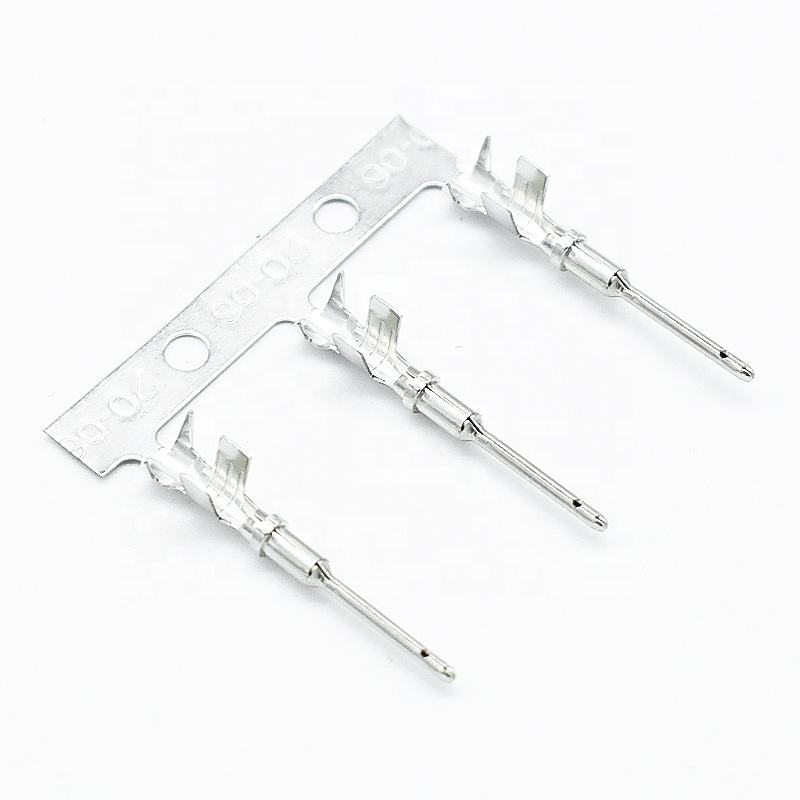
Custom terminals are engineered electrical connectors designed specifically for a particular application. Unlike standard terminals, they are developed based on exact requirements such as size, material, メッキ, electrical load, and environmental conditions.
Key Characteristics:
Designed from drawings or samples
Manufactured with custom tooling
Tailored to specific electrical and mechanical needs
Common Applications:
Automotive wiring systems (EV, ADAS)
Industrial machinery
Aerospace systems
High-temperature or high-vibration environments
Typical Customization Options:
材料 (銅, 真鍮, phosphor bronze)
メッキ (錫, ニッケル, 金)
Shape and dimensions
絶縁タイプ
Crimping design
Example:
An EV battery system may require terminals that can handle high current loads and extreme temperatures, which standard terminals cannot reliably support.
What Are Standard Terminals?
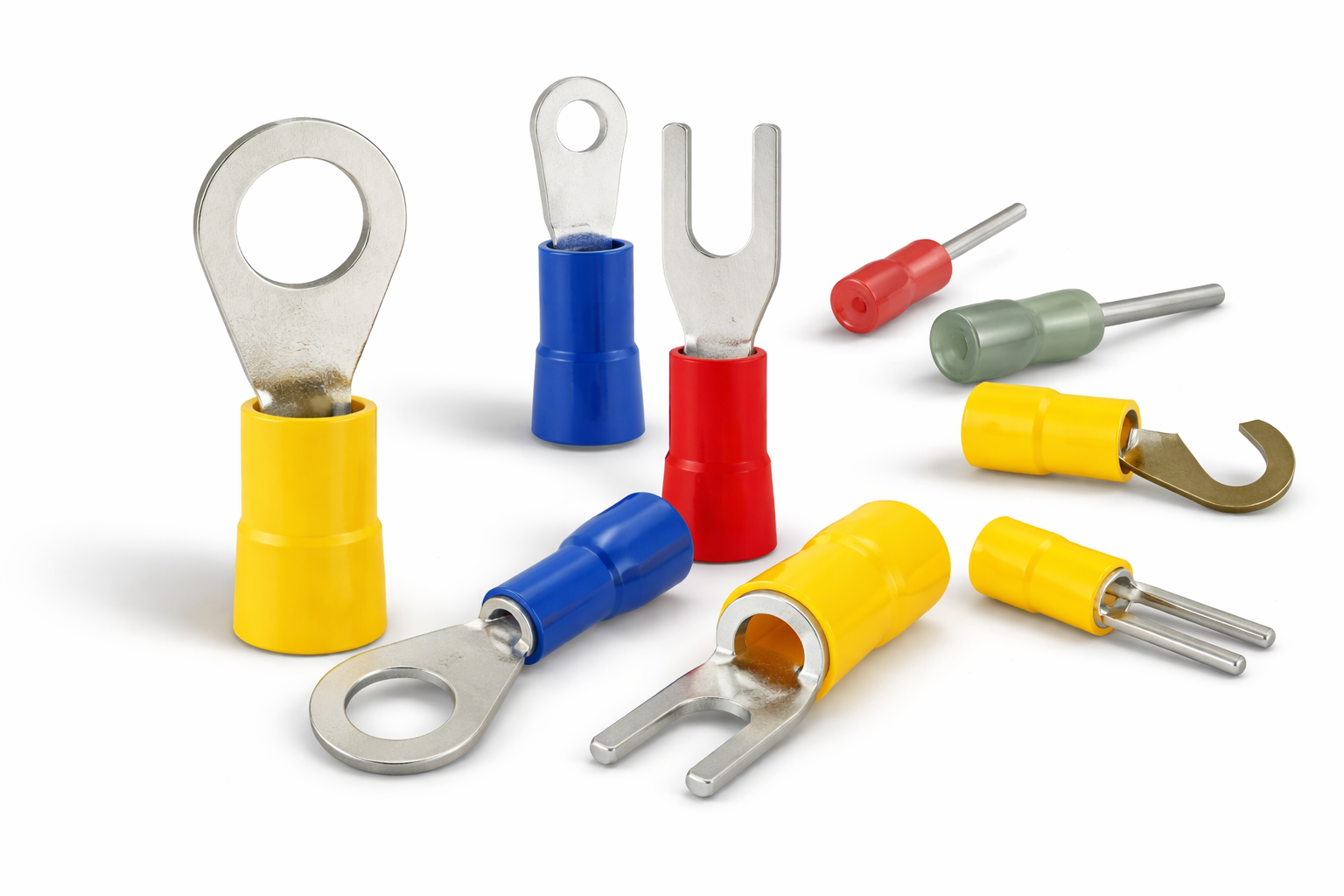
Standard terminals are mass-produced, ready-to-use electrical connectors designed for general-purpose applications. They are widely available and follow standardized sizes and specifications.
Key Characteristics:
Off-the-shelf products
No customization required
Widely available globally
Common Types:
突き合わせコネクタ
Typical Applications:
Household appliances
General electrical wiring
Low to medium industrial use
Example:
A standard ring terminal is often sufficient for basic electrical panel connections where requirements are predictable.
Custom vs Standard Terminals: 主な違い
Understanding the differences between custom and standard terminals is essential for making the right engineering and procurement decision.
1. Design Flexibility
Custom Terminals:
Fully adaptable to your design requirements, including unique geometries, 材料, and performance specifications.
Standard Terminals:
Limited to predefined shapes and sizes.
👉 Key Insight:
If your application requires non-standard dimensions or specific performance, custom is the only option.
2. Cost Structure
Custom Terminals:
Higher initial cost (ツーリング + development)
Lower long-term cost (optimized performance, fewer failures)
Standard Terminals:
Low upfront cost
Potential hidden costs (failures, replacements)
👉 Key Insight:
Custom terminals are an investment, not just a purchase.
3. Lead Time
Custom Terminals:
Development: 2–6 weeks
Mass production: additional time
Standard Terminals:
Immediate availability
👉 Key Insight:
Standard terminals are ideal for urgent projects.
4. パフォーマンス & Reliability
Custom Terminals:
Designed for specific environments
Higher durability
Better electrical performance
Standard Terminals:
Suitable for general conditions
Limited in extreme environments
👉 Key Insight:
Custom terminals reduce long-term failure risks.
5. Application Suitability
Custom Terminals:
Best for:
Automotive systems
High-current applications
Harsh environments
Standard Terminals:
Best for:
General electrical use
Low complexity systems
When Should You Choose Custom Terminals?
Custom terminals are the best choice when your application demands 精度, 信頼性, and differentiation.
Choose custom terminals if:
✔ You Need Unique Specifications
Non-standard size or shape
Special mounting requirements
✔ High Performance Is Critical
High current load
Extreme temperatures
High vibration environments
✔ Standard Terminals Fail
Frequent connection issues
Corrosion or overheating
✔ You Want Product Differentiation
OEM branding
Competitive advantage
Real-World Examples
Electric Vehicles (EV):
Custom terminals ensure stable connections under high current loads.
産業オートメーション:
Machines require terminals that withstand vibration and continuous operation.
When Are Standard Terminals the Better Choice?
Standard terminals are ideal when simplicity and cost-efficiency are the priority.
Choose standard terminals if:
✔ You Need Fast Delivery
No time for tooling or development
✔ Budget Is Limited
Small-scale projects
✔ Requirements Are Standard
No special performance needs
✔ You Need Small Quantities
No MOQ constraints
Custom vs Standard Terminals Cost Comparison
Cost is often the deciding factor for procurement teams.
Custom Terminals Cost Breakdown
Tooling cost (one-time)
Sampling cost
Unit price (optimized in bulk)
Standard Terminals Cost Breakdown
No tooling cost
Fixed unit price
Long-Term Cost Perspective
Although custom terminals have higher upfront costs, they can:
Reduce failure rates
Lower maintenance costs
Improve system efficiency
👉 結論:
Custom terminals often provide better total cost of ownership (TCO).
Lead Time and MOQ Differences
Understanding lead time and minimum order quantity (MOQ) is critical for project planning.
Custom Terminals
MOQ: Medium to high
リードタイム: 3–8 weeks
Includes design and tooling
Standard Terminals
MOQ: Low or none
リードタイム: Immediate
Tip for Buyers
If your project is long-term and volume-based, custom terminals become more cost-effective over time.
How to Choose Between Custom and Standard Terminals
Here is a practical decision-making framework:
Step 1: Define Your Application Requirements
Electrical load
環境条件
Mechanical constraints
Step 2: Evaluate Performance Needs
Do you need high reliability?
Are there safety risks?
Step 3: Consider Budget
Can you invest in tooling?
What is your long-term production volume?
Step 4: Assess Time Constraints
Do you need immediate supply?
Can you wait for development?
Step 5: Consult a Manufacturer
Get technical advice
Evaluate feasibility
👉 Key Insight:
The best decision comes from balancing パフォーマンス, cost, and timeline.
Why Work With an Experienced Terminal Manufacturer?
Choosing the right supplier is just as important as choosing the right product.
An experienced terminal manufacturer can provide:
✔ Engineering Support
Design optimization
Material selection
✔ Custom Development Capability
Tooling design
Rapid prototyping
✔ Quality Assurance
Strict inspection standards
Compliance with certifications
✔ Scalable Production
From small batches to mass production
👉 What to Look For in a Supplier:
Proven experience in your industry
Strong R&D capability
Flexible MOQ and lead time
Transparent communication
よくある質問s
1. Are custom terminals worth the cost?
はい, especially for high-performance or long-term applications. They reduce failure rates and improve reliability.
2. What is the MOQ for custom terminals?
MOQ varies depending on design complexity and tooling requirements, but it is typically higher than standard terminals.
3. How long does it take to develop custom terminals?
Usually between 2–6 weeks for development, plus production time.
4. Can I modify an existing standard terminal?
はい, many manufacturers offer semi-custom solutions based on standard designs.
5. Which industries benefit most from custom terminals?
自動車
Industrial equipment
Renewable energy
航空宇宙
結論: Custom vs Standard Terminals
Choosing between custom and standard terminals depends on your specific application requirements.
Custom terminals offer superior performance, 信頼性, and design flexibility
Standard terminals provide speed, affordability, and convenience
👉 If your project requires precision and long-term reliability, custom terminals are the better choice.
👉 If your needs are simple and time-sensitive, standard terminals are sufficient.
Need Help Choosing the Right Terminal?
If you are unsure which option is best for your application, working with an experienced manufacturer can save time and cost.
Our engineering team can help you:
Evaluate your application requirements
Recommend the best terminal solution
Provide custom design support
👉 Contact us today for a free consultation or send your drawings for a custom quote.
