


端子 are critical components in wiring harnesses because they provide the electrical connection, 機械的安定性, and safety interface between wires and devices. Even when high-quality wires are used, poor terminal selection or assembly can lead to electrical failure, overheating, signal loss, or system downtime. In many applications, terminals are the weakest point in a wiring harness—and therefore one of the most important.
This article explains what terminals do, why they matter, and how they directly affect wiring harness performance and reliability.
What Are Terminals in a Wiring Harness?
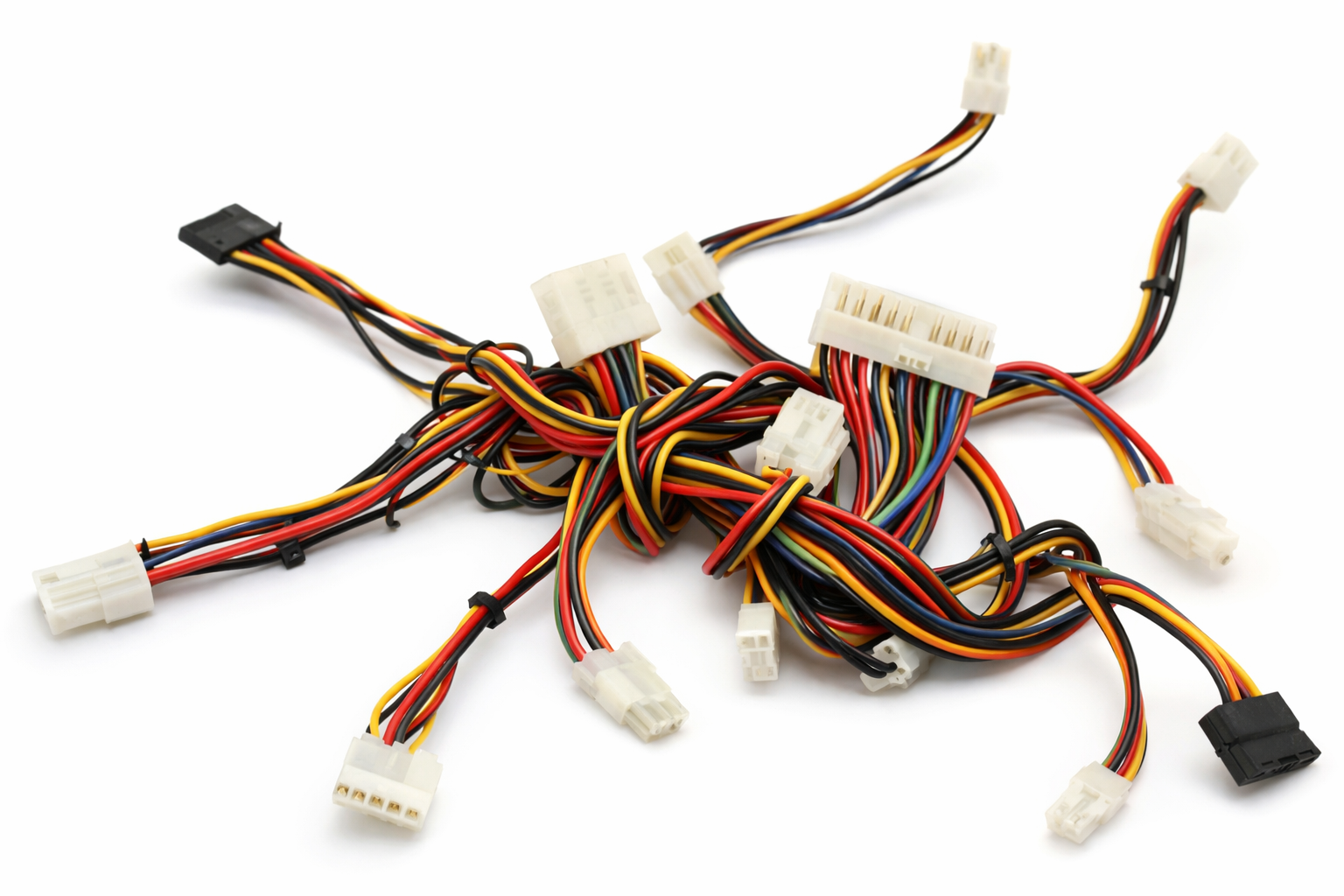
In a wiring harness, a terminal is a metal connector attached to the end of a wire that enables it to be connected securely to another component, such as a connector housing, PCB, switch, relay, or power source.
While the wire carries electrical current or signals, the terminal ensures that:
The electrical connection is stable and low-resistance
The wire is mechanically secured
The connection can withstand vibration, 熱, and environmental stress
Without properly selected and assembled terminals, a wiring harness cannot function reliably—regardless of wire quality.
Core Functions of Terminals in Wiring Harnesses
Electrical Connectivity
Terminals provide the electrical interface between the wire and the mating component. A well-designed terminal ensures:
Low contact resistance
Stable current flow
Minimal voltage drop
Reliable signal transmission in low-voltage or high-speed applications
Poor terminal contact can increase resistance, generate heat, and cause intermittent electrical failures.
Mechanical Retention
Beyond electrical performance, terminals must mechanically secure the wire. This is achieved through proper crimping or termination design.
Effective mechanical retention:
Prevents wire pull-out
Maintains contact integrity under vibration
Reduces stress on the conductor
Protects against fatigue failure
In automotive and industrial environments, mechanical stability is just as important as electrical performance.
Safety and Compliance
Terminals play a key role in system safety. Improper terminals can lead to:
Overheating at connection points
Short circuits
Arcing or fire hazards
Correct terminal selection and assembly help wiring harnesses meet regulatory and safety standards, such as UL, 自動車, or industrial compliance requirements.
How Terminal Quality Impacts Wiring Harness Performance
The quality of terminals directly determines the long-term performance of a wiring harness.
High-quality terminals:
Maintain consistent electrical contact over time
Resist corrosion and oxidation
Perform reliably in high-temperature or high-vibration environments
Low-quality or mismatched terminals may:
Increase power loss
Cause intermittent faults
Reduce system lifespan
Lead to costly rework or field failures
In many cases, wiring harness failures trace back not to the wire itself, but to terminal degradation or improper termination.
Common Terminal-Related Failures in Wiring Harnesses
Terminal issues are among the most frequent causes of wiring harness problems. Common failure modes include:
Poor crimping: Incorrect crimp height or pressure results in weak electrical and mechanical connections
Incorrect terminal selection: Using terminals not matched to wire gauge or current rating
Material incompatibility: Galvanic corrosion caused by mismatched metals
Environmental exposure: Corrosion from moisture, 化学薬品, or salt
Vibration fatigue: Terminal loosening in dynamic applications
Each of these failures can compromise system reliability and safety.
Types of Terminals Used in Wiring Harnesses
Different applications require different terminal types. Common terminal categories include:
Ring terminals: Provide secure, high-strength connections for power and grounding
Spade terminals: Allow easy connection and disconnection
Blade terminals: Common in automotive and appliance wiring
Pin and socket terminals: Used in connector housings for multi-wire interfaces
Custom terminals: Designed for specific OEM requirements or space constraints
Selecting the right terminal type is essential for both performance and assembly efficiency.
Key Factors When Choosing Terminals for Wiring Harnesses
When selecting terminals for a wiring harness, several technical factors must be considered:
Current and voltage rating: Must exceed application requirements
Wire gauge compatibility: Terminal must match conductor size precisely
Operating environment: Temperature, 水分, vibration, and chemical exposure
Material and plating: Copper alloys, 錫, ニッケル, or gold plating for corrosion resistance
Termination method: Crimped, soldered, or hybrid approaches
Compliance standards: UL, 自動車, or industry-specific requirements
Ignoring any of these factors can compromise performance or safety.
How Terminals Affect Wiring Harness Manufacturing Quality
Terminals have a major impact on manufacturing quality and consistency.
In professional wiring harness production, terminal quality is controlled through:
Precision crimping tools and calibrated equipment
Controlled crimp height and pull-force standards
100% visual or electrical inspection
Process documentation and traceability
Even a well-designed wiring harness can fail if terminals are not terminated correctly during manufacturing.
よくある質問s
Can terminals be reused in wiring harnesses?
In most professional applications, terminals are not reused. Reuse can degrade contact quality and compromise mechanical retention.
What happens if the wrong terminal is used?
Using an incorrect terminal can cause poor contact, overheating, wire damage, or early failure of the wiring harness.
Are crimped terminals better than soldered terminals?
Crimped terminals are generally preferred in industrial and automotive applications because they provide consistent mechanical strength and vibration resistance.
How do terminals affect high-current applications?
In high-current systems, terminals must have sufficient contact area and low resistance to prevent overheating and power loss.
Do terminals affect signal integrity?
はい. Poor terminal contact can introduce resistance, noise, and signal instability, especially in low-voltage or high-frequency applications.
結論
Terminals are not minor accessories in wiring harnesses—they are critical components that determine electrical performance, mechanical reliability, and overall system safety. Proper terminal selection, material choice, and termination processes are essential to ensure long-term reliability and compliance.
In many wiring harness failures, the root cause is not the wire itself, but the terminal connection. Understanding why terminals are important helps engineers and buyers make better design and manufacturing decisions. お問い合わせ 詳細については.
