

소개
Terminal crimping is a critical process in electrical connections, directly affecting 전도도, 기계적 강도, 장기적인 신뢰성.
When choosing between manual crimping 그리고 자동화된 압착, many buyers face a key question:
👉 Which method delivers better quality, 능률, and cost performance?
The answer depends on your production needs, budget, and quality requirements. 이 가이드에서는, 우리는 분해 real differences, 장점, and decision factors to help you choose the right solution.
What Is Terminal Crimping?
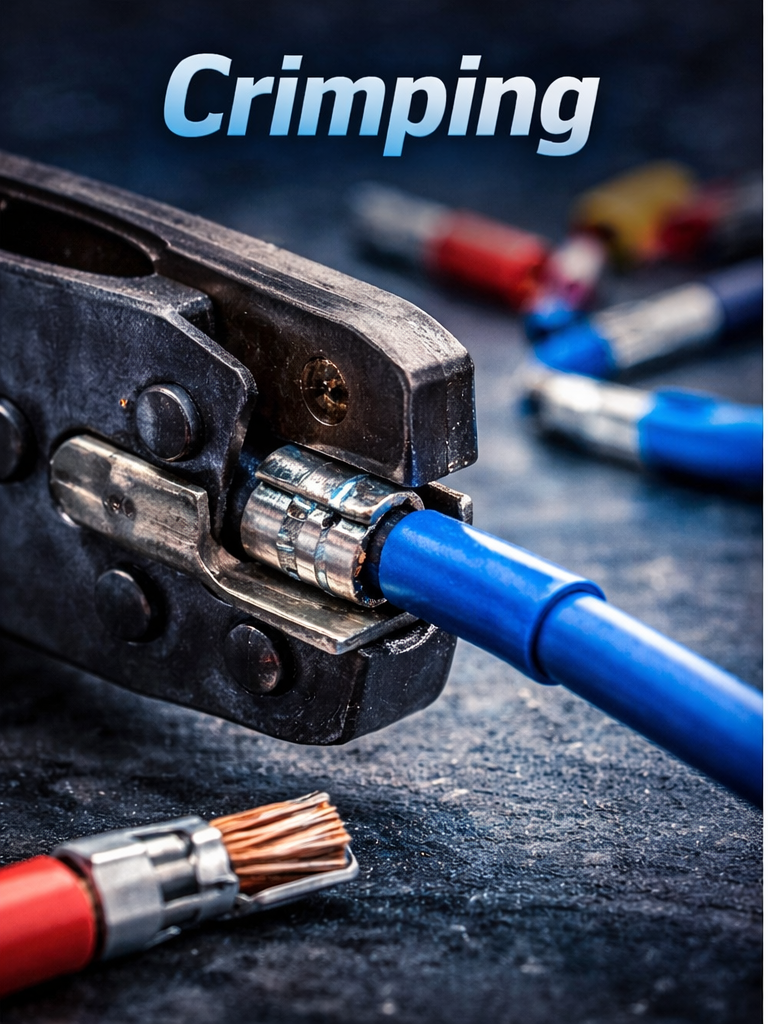
Terminal crimping is the process of mechanically compressing a terminal onto a wire to create a secure electrical connection.
적절한 압착은 다음을 보장합니다.:
- 낮은 전기 저항
- Strong pull-out force
- Resistance to vibration and corrosion
👉 Poor crimping can lead to overheating, 신호 손실, 아니면 시스템 장애라도.
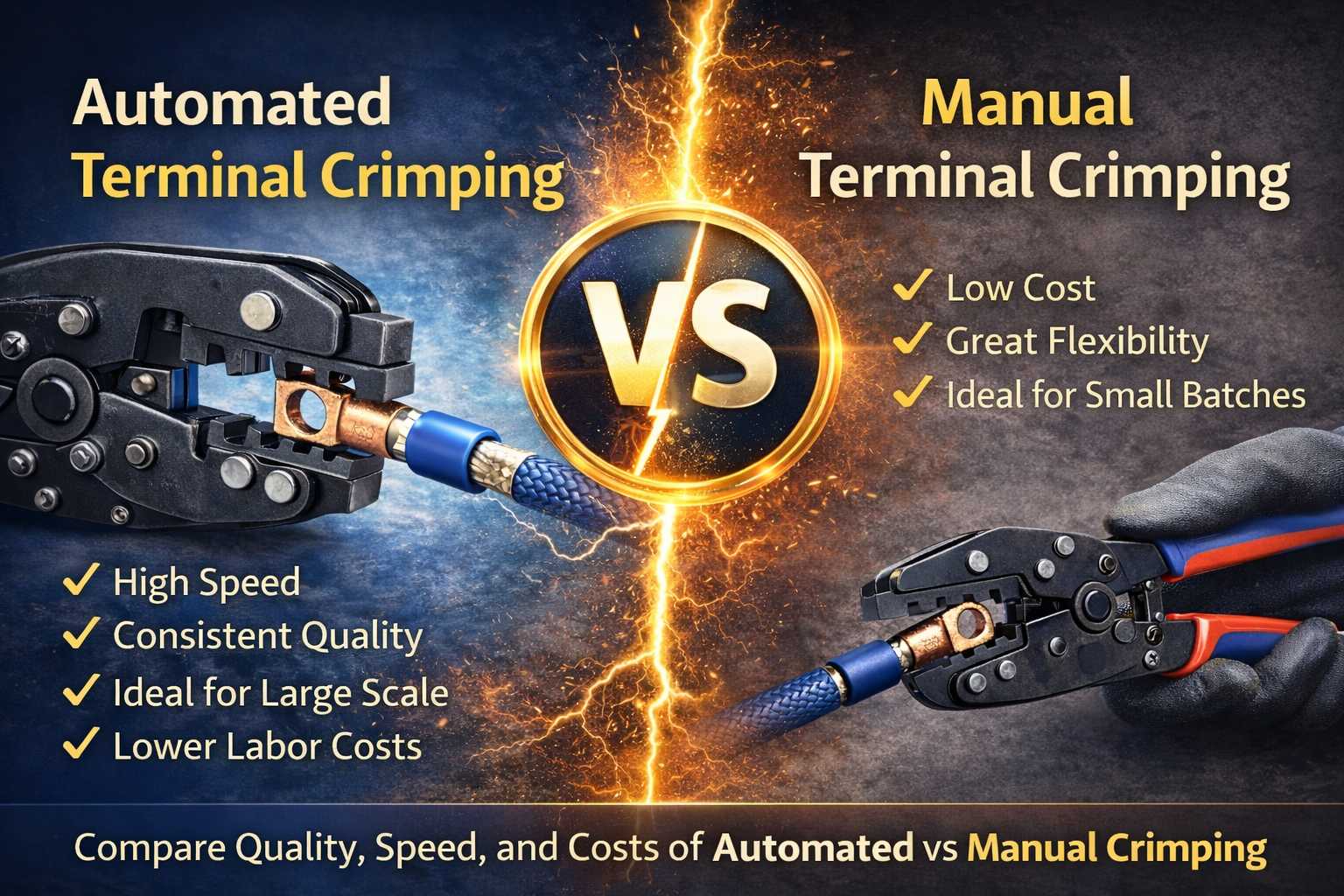
What Is Manual Terminal Crimping?
작동 방식
Manual crimping uses hand tools operated by technicians to attach terminals to wires.
Advantages of Manual Crimping
- ✅ Low initial investment
- ✅ High flexibility for different terminal types
- ✅ Ideal for prototyping and small batches
- ✅ Easy to operate without complex setup
Limitations of Manual Crimping
- ❌ Quality depends on operator skill
- ❌ Inconsistent crimp force
- ❌ Slower production speed
- ❌ Higher long-term labor cost
What Is Automated Terminal Crimping?
작동 방식
Automated crimping uses crimping machines that integrate:
- Wire cutting
- Stripping
- Terminal crimping
All in a continuous, high-speed process.
Advantages of Automated Crimping
- ✅ High consistency and repeatability
- ✅ Faster production speed
- ✅ Lower defect rate
- ✅ Reduced labor dependency
- ✅ Suitable for mass production
 Limitations of Automated Crimping
- ❌ Higher upfront investment
- ❌ Setup time required
- ❌ Less flexible for small orders
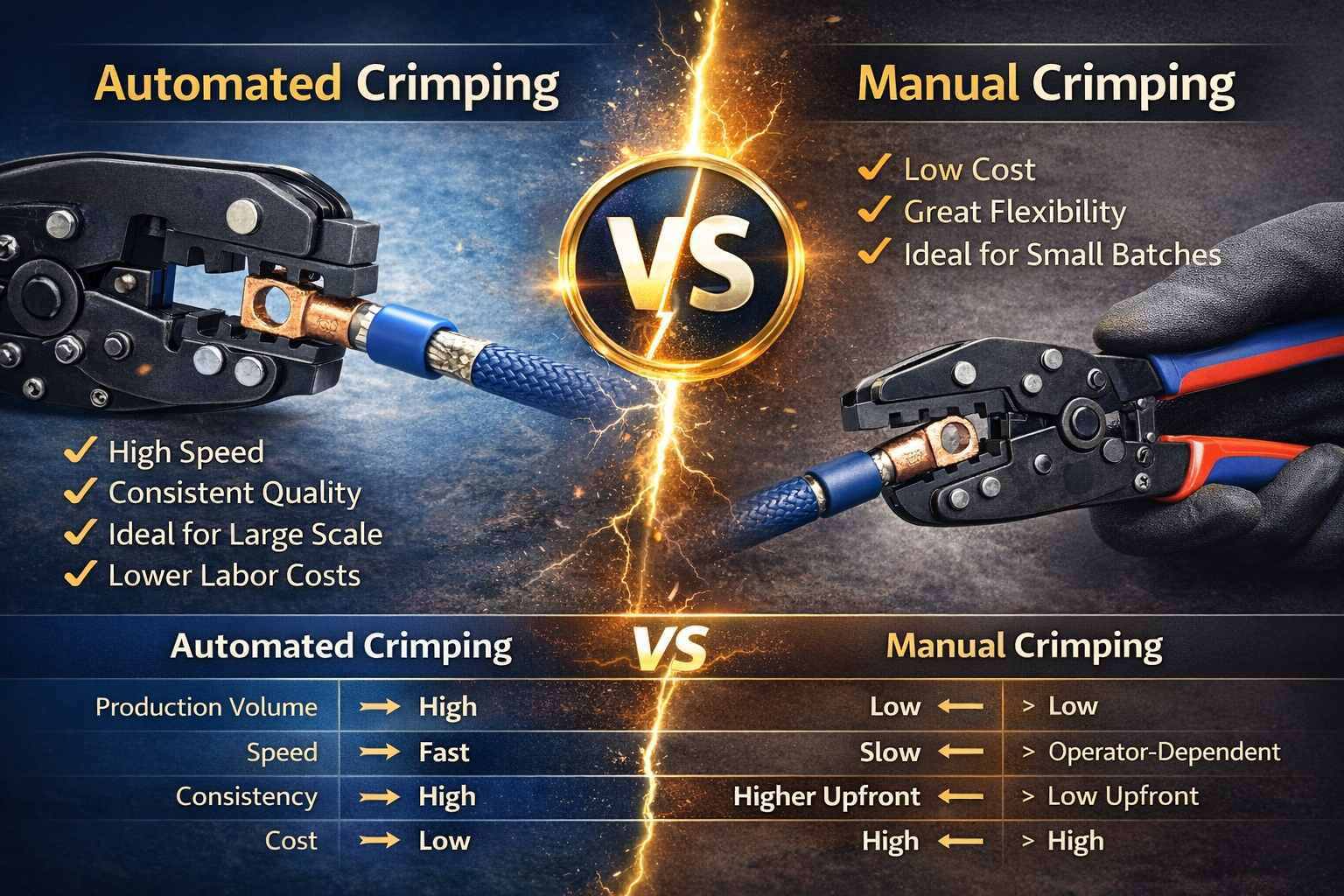
Automated vs Manual Crimping: 주요 차이점
| Factor | 수동 압착 | Automated Crimping |
|---|---|---|
| 생산량 | 낮은 | 높은 |
| 일관성 | 운영자에 따라 다름 | 높은 일관성 |
| Speed | Slow | 빠른 |
| 비용 | Low upfront | Higher initial investment |
| 유연성 | 높은 | 보통의 |
| Defect Rate | 더 높은 | 낮추다 |
When to Choose Manual Crimping
Manual crimping is the best option when:
- You produce small quantities
- You are in 아르 자형&D or prototyping stage
- You need frequent design changes
- Budget is limited
👉 It offers flexibility but sacrifices consistency.
When to Choose Automated Crimping
Automated crimping is ideal when:
- You require high-volume production
- Consistency is critical
- You need to reduce labor costs
- You want stable, scalable production
👉 It delivers long-term efficiency and reliability.
Key Factors to Consider Before Choosing
Before deciding, evaluate:
1. 생산량
High volume → Automation
Low volume → Manual
2. Quality Requirements
Strict standards → Automation preferred
3. 예산 & ROI
Short-term → Manual
Long-term → Automation
4. Labor Availability
Limited workforce → Automation advantage
5. Product Complexity
Complex terminals may require specialized setups
일반적인 압착 결함 (그리고 이를 피하는 방법)
일반적인 문제:
- Under-crimping → loose connection
- Over-crimping → damaged conductor
- Wire pull-out → weak mechanical strength
- High resistance → overheating
👉 Automated systems reduce these risks through controlled force and precision calibration.
Cost Analysis: Manual vs Automated Crimping
수동 압착:
- Low equipment cost
- High labor cost over time
- Higher defect-related losses
Automated Crimping:
- Higher upfront investment
- Lower per-unit cost
- Better long-term ROI
👉 For growing businesses, automation often becomes more cost-effective.
산업 응용
Manual Crimping Used In:
- Maintenance and repair
- Small workshops
- Custom wiring projects
Automated Crimping Used In:
- 자동차 배선 하니스
- 가전제품
- Industrial manufacturing
- 재생 에너지 시스템
Future Trends in Terminal Crimping
- Smart crimping machines with sensors
- Real-time quality monitoring
- AI-driven defect detection
- Integration with Industry 4.0 시스템
👉 Automation is becoming the industry standard.
결론
There is no one-size-fits-all solution:
- 수동 압착 = flexibility + low entry cost
- Automated crimping = consistency + 확장성
👉 The right choice depends on your production goals and long-term strategy.
Qianwei 정밀을 선택하는 이유?
Qianwei Precision provides both manual and automated crimping solutions to meet diverse industry needs.
우리는 제공합니다:
- Custom terminal manufacturing
- Advanced crimping technology
- 엄격한 품질 관리
- Fast delivery and global support
👉 Looking to improve your crimping quality or scale production?
지금 Qianwei Precision에 문의하세요. for expert guidance and tailored solutions.
자주 묻는 질문
What is the difference between manual and automated crimping?
Manual crimping relies on hand tools and operator skill, while automated crimping uses machines for consistent, high-speed production.
Which crimping method is more reliable?
Automated crimping is generally more reliable due to consistent force control and reduced human error.
Is automated crimping worth the investment?
예, 대량 생산을 위한, it reduces labor costs and improves quality consistency.
When should I use manual crimping?
Manual crimping is ideal for small batches, 프로토타이핑, and repair work.
What causes poor crimping quality?
Incorrect tool selection, improper force, and operator inconsistency are common causes.
Can automated crimping reduce defects?
예, it significantly reduces defects through precision control and repeatability.
What industries use automated crimping?
자동차, 전자 제품, 산업 설비, and renewable energy industries widely use automated crimping.
How do I ensure good crimping quality?
적절한 도구를 사용하세요, follow standards, and perform pull-out force testing.
What tools are used in manual crimping?
Hand crimping pliers, ratchet crimpers, and specialized dies.
What is the biggest advantage of automated crimping?
High efficiency and consistent quality in mass production.

