

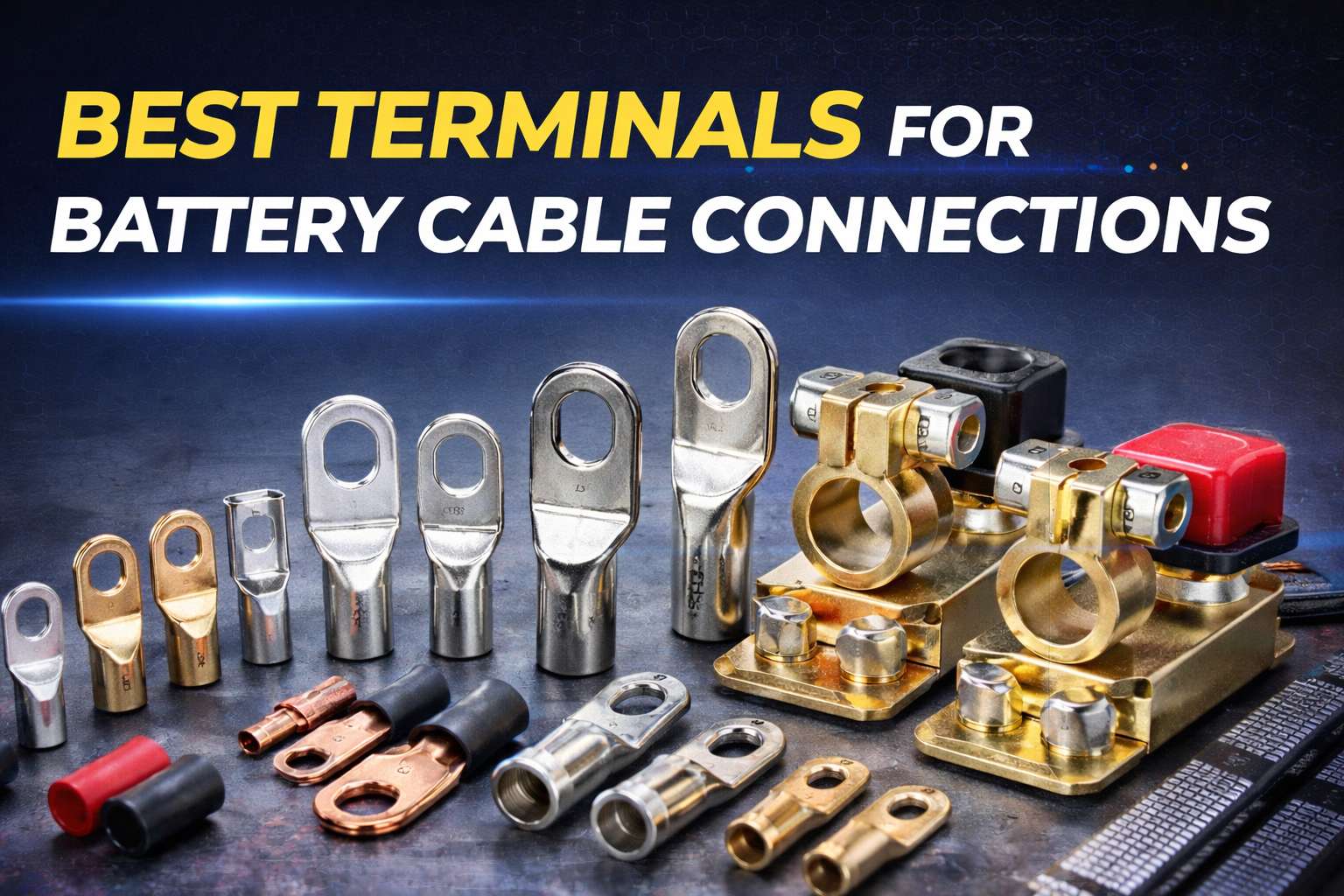
Battery cable terminals may seem like a small component, but in high-current systems, they directly impact electrical efficiency, 안전, 장기적인 신뢰성.
Whether you’re sourcing for automotive wiring harnesses, solar energy systems, or industrial equipment, selecting the right terminal is critical to preventing 전압 강하, 과열, and connection failure.
This guide breaks down the best terminal types, 재료, and selection criteria to help you make the right decision.
Types of Battery Cable Terminals
1. 구리 링 터미널 (러그) – The Industry Standard
Copper ring terminals—also known as battery lugs—are the most widely used solution for battery connections.
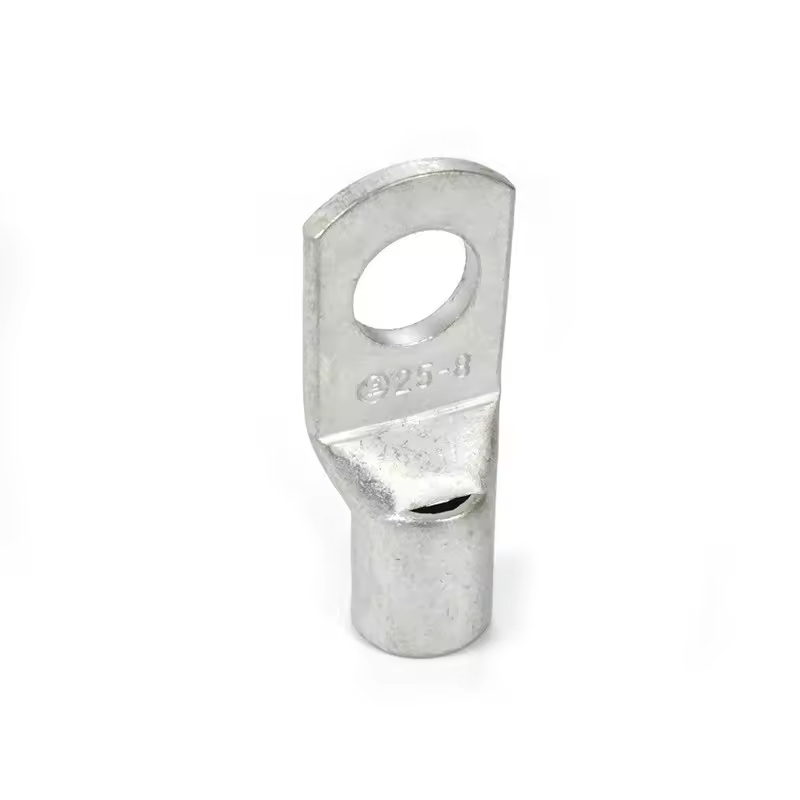
Key Advantages:
- 높은 전도성: Minimizes energy loss
- Secure connection: Bolt-on design resists vibration
- Large contact area: Reduces heat buildup
- Wide compatibility: Fits studs, busbars, and battery posts
Variants:
- Bare copper lugs → Maximum conductivity, 비용 효율적
- Tinned copper lugs → Corrosion-resistant, ideal for harsh environments
Best for:
자동차, EV systems, solar inverters, 산업용 전력 분배
2. Battery Clamp Terminals
These terminals attach directly to battery posts and are commonly used in vehicles.
장점:
- 쉬운 설치 (no heavy crimping tools required)
- Quick replacement in maintenance scenarios
제한사항:
- Higher contact resistance over time
- Less stable in high-vibration environments
Best for:
Standard automotive maintenance and light-duty applications
3. Heavy-Duty Compression Lugs
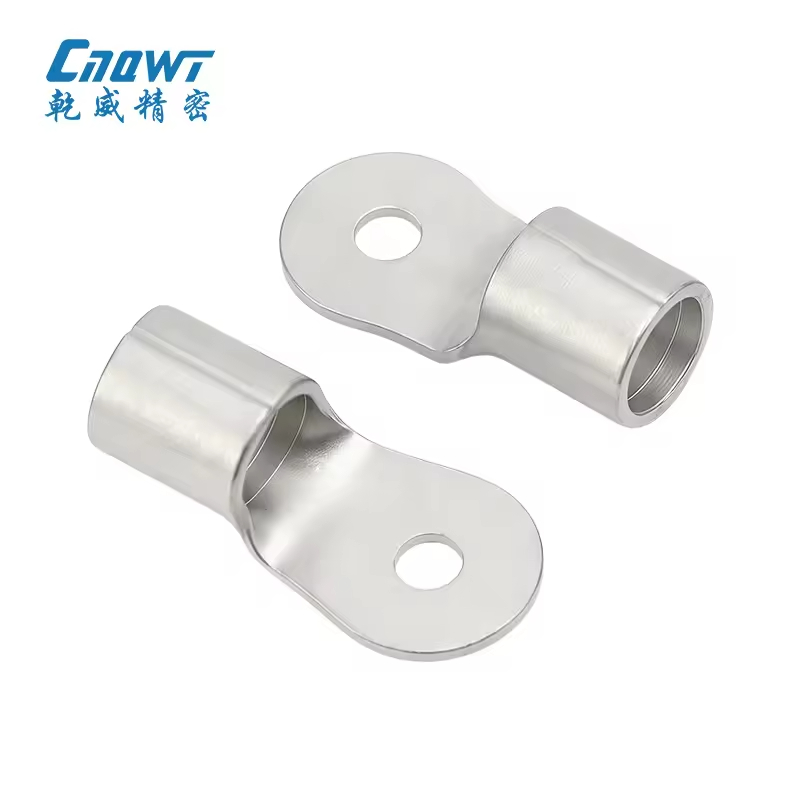 Designed for high-current (>100에이) 애플리케이션, these terminals use thick-wall copper and require hydraulic crimping.
주요 특징:
- Gas-tight crimp connection
- Extremely low resistance
- Superior mechanical strength
Best for:
에너지 저장 시스템, EV 배터리, 산업 설비
4. Soldered Terminals (Not Recommended for High Load)
While soldering provides good conductivity, it is generally not preferred for battery cables.
왜:
- Solder softens under heat
- Poor resistance to vibration
- Risk of joint failure over time
Best for:
Low-current or controlled environments only
How to Choose the Right Battery Terminal
1. 재료 선택
- Pure Copper (C1100): 전도도 (industry benchmark)
- 주석 도금된 구리: Corrosion resistance (선박 / outdoor use)
- 알류미늄: Lightweight but lower conductivity (limited use cases)
2. Wire Gauge Matching
Always match the terminal to the exact cable size:
- Too small → overheating
- Too large → weak crimp → high resistance
3. Stud Size Compatibility
Ensure correct stud hole size (M6, M8, M10, 등.)
A mismatch reduces contact area and can lead to localized overheating (hot spots).
4. Crimping Method
Connection quality depends heavily on crimping:
- Hex crimp: Preferred for reliability
- Hydraulic crimp: Required for large cables
- Avoid: Hammer crimp for critical systems
5. 환경 보호
For long-term durability:
- Use adhesive-lined heat shrink tubing
- Apply anti-oxidation compounds
- 선택하다 tinned terminals in humid or corrosive environments
Best Terminal by Application
| 애플리케이션 | Recommended Solution |
|---|---|
| 자동차 | Copper ring terminals + clamp terminals |
| EV / High Current | Heavy-duty tinned copper lugs |
| Solar Systems | Tinned copper lugs + heat shrink |
| 선박 | Tinned copper lugs (mandatory) |
| 산업용 | Compression lugs with hydraulic crimp |
What Really Matters in B2B Procurement
For professional buyers, the key differentiators are not just the terminal type:
Critical Quality Factors:
- Copper purity (≥99.9%)
- Barrel wall thickness
- Seamless vs. seamed lug design
- Surface plating quality
- Dimensional precision
These factors directly affect 전도도, 내구성, and failure rates—which ultimately impact your product reputation.
Qianwei 정밀을 선택하는 이유
~에 첸웨이 정밀, we specialize in manufacturing high-performance terminals and connectors for global OEMs and wiring harness suppliers.
What sets us apart:
- High-purity copper materials for superior conductivity
- Precision-engineered crimp barrels for secure connections
- Advanced plating technology for corrosion resistance
- Strict quality control for consistent performance
- Custom terminal solutions tailored to your application
Whether you need 자동차 터미널, battery lugs, or custom connectors, Qianwei delivers solutions that meet international standards and demanding environments.
Looking for a reliable supplier? Qianwei 정밀에 문의하세요 for customized terminal solutions.
자주 묻는 질문
1. What is the best material for battery terminals?
Copper is the best material due to its excellent electrical conductivity. Tinned copper is preferred for corrosion resistance.
2. Are crimped or soldered terminals better?
Crimped terminals are better for battery cables because they provide a stronger and more vibration-resistant connection.
3. What size battery terminal do I need?
You need to match both the wire gauge (AWG/mm²) and the stud size (M6, M8, 등.).
4. Why do battery terminals overheat?
Overheating is usually caused by:
- Poor crimping
- Incorrect terminal size
- Corrosion or loose connections
5. Can I use aluminum terminals instead of copper?
Aluminum is lighter but less conductive and more prone to oxidation. Copper is generally preferred.
6. What is a tinned copper terminal?
It is a copper terminal coated with tin to improve 내식성, especially in humid or marine environments.
7. How do I improve battery terminal lifespan?
Use:
- Proper crimping tools
- Heat shrink insulation
- Anti-corrosion treatments
8. What is the difference between a lug and a terminal?
에이 돌기 is a type of terminal designed for bolted connections, commonly used in battery cables.
9. Are all battery terminals universal?
아니요. They vary by:
- 와이어 크기
- Stud size
- 애플리케이션 유형
10. What is the best terminal for high-current applications?
Heavy-duty tinned copper compression lugs are the best choice for high-current systems.
