

소개
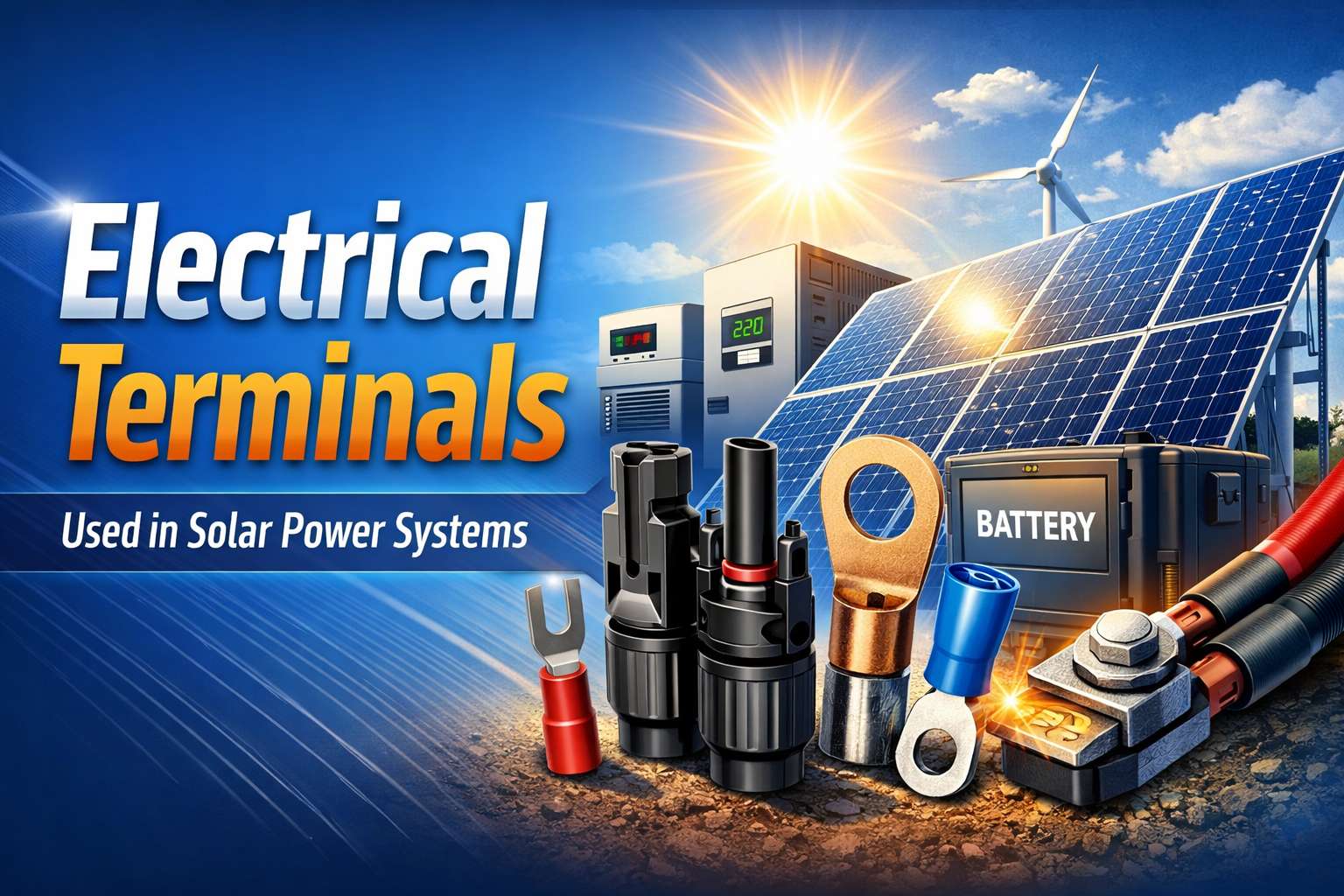
As solar energy adoption accelerates worldwide, the reliability of every component in a photovoltaic (PV) system becomes critical. While solar panels and inverters often receive the most attention, 전기 터미널 play a fundamental role in ensuring stable power transmission.
Poor-quality or improperly installed terminals can lead to energy loss, 과열, 아니면 시스템 장애라도. 대조적으로, well-designed terminals improve conductivity, enhance safety, and extend the lifespan of solar installations.
Overview of Solar Power System Components
A typical solar power system includes several interconnected components:
- Solar panels (PV modules)
- Inverters
- Battery storage systems
- Charge controllers
- DC and AC wiring systems
Electrical terminals are used throughout these components to connect wires, secure electrical paths, and ensure efficient current flow.
What Are Electrical Terminals?
Electrical terminals are conductive devices used to terminate, connect, or secure electrical wires to equipment or other wires.
Key Functions:
- Provide a reliable electrical connection
- Enable safe current transfer
- Facilitate easy installation and maintenance
Terminals vs. 커넥터:
- 터미널: Fixed connection points (예를 들어, 링 터미널)
- 커넥터: Detachable interfaces (예를 들어, MC4 connectors)
Why Electrical Terminals Matter in Solar Systems
Solar installations operate in demanding environments. Terminals must withstand:
- Continuous UV exposure
- 온도 변동
- 습기와 부식
- 기계적 응력 및 진동
주요 이점:
- Reduced power loss through low resistance
- Enhanced safety by preventing arcing
- Long-term durability in outdoor conditions
Types of Electrical Terminals Used in Solar Power Systems
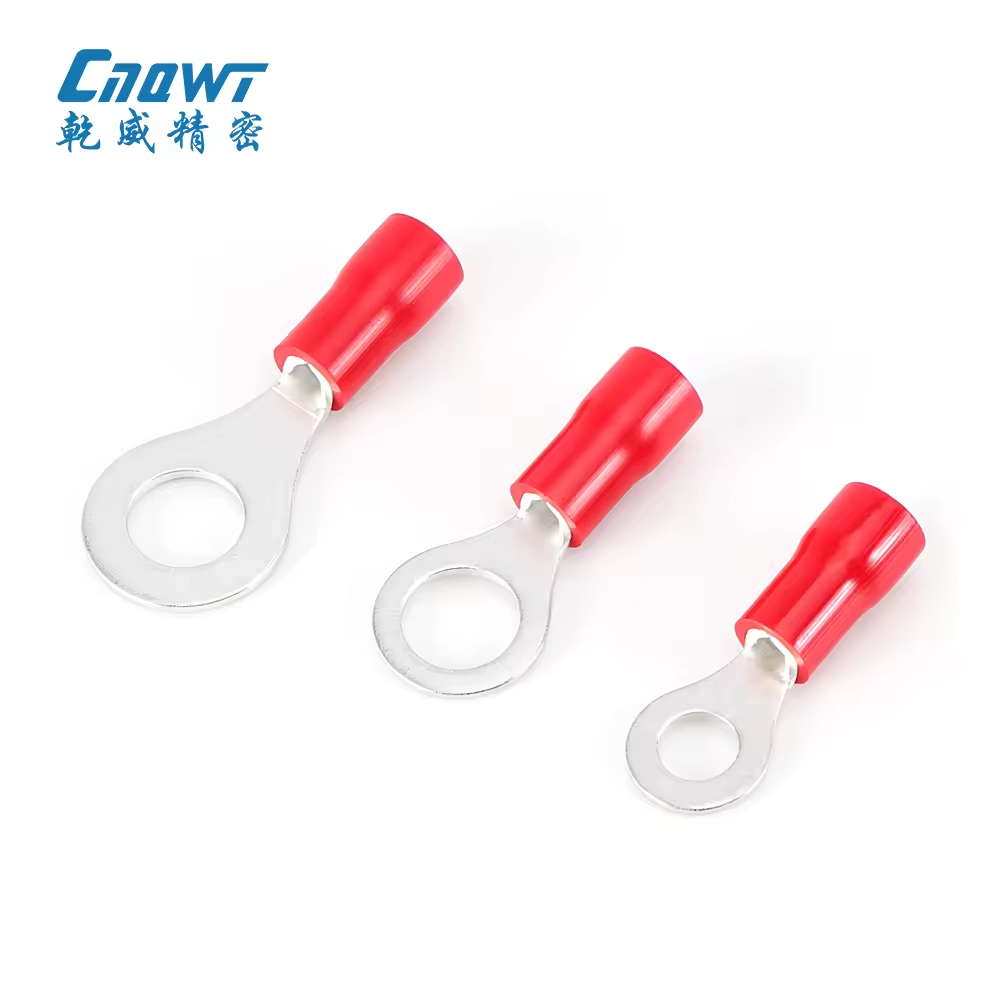
1. 링 터미널
- Circular design for secure bolt connections
- Common in grounding and battery systems
- 우수한 내진동성
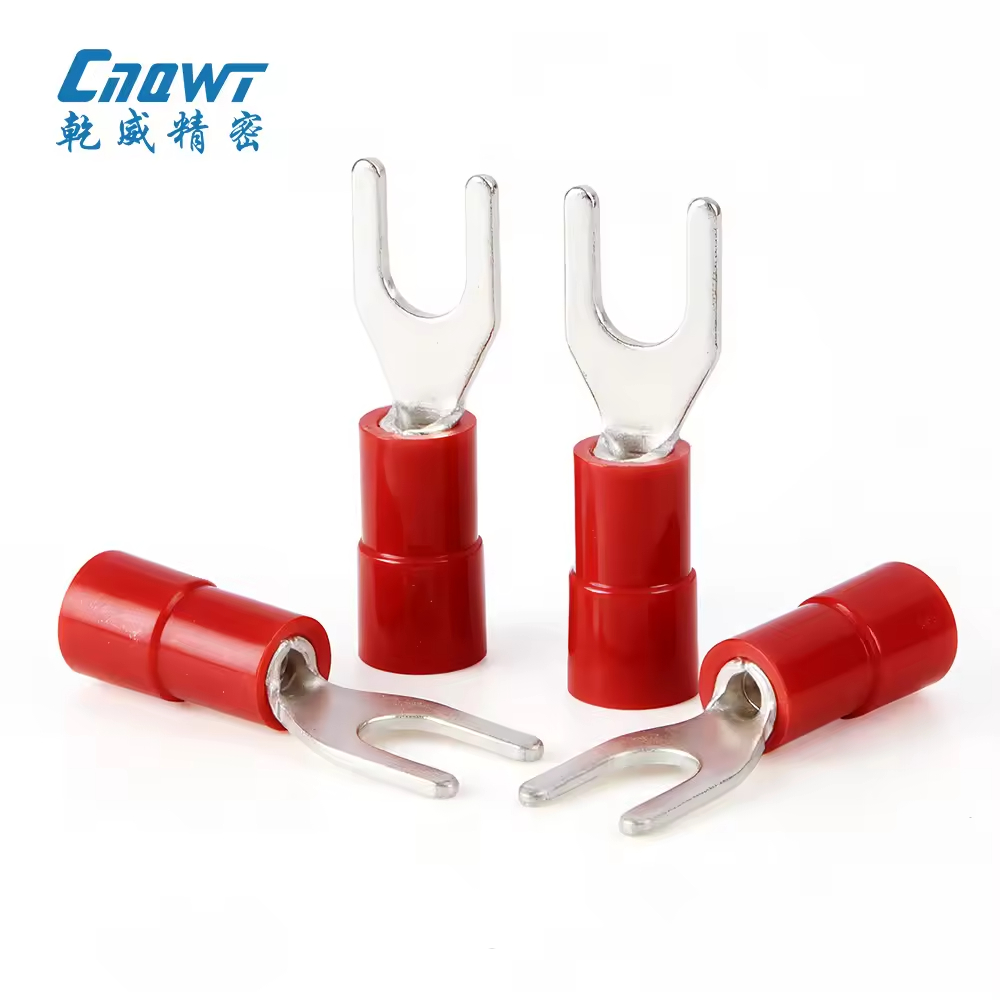
 2. 스페이드 (포크) 터미널
- Open-ended design for quick installation/removal
- Used in inverters and control panels
- Less secure than ring terminals under vibration
 3. 핀 터미널
- Ideal for terminal blocks
- Provide clean and organized wiring
- Suitable for compact electrical systems
4. 엉덩이 커넥터
- Used for inline wire splicing
- Heat shrink versions offer waterproof sealing
- Common in cable repairs and extensions
 5. MC4 Connectors (Solar Industry Standard)
- Widely used in PV module connections
- Waterproof and UV-resistant
- Locking mechanism ensures secure connections
- Supports fast installation in solar arrays
6. 블레이드 터미널
- Quick-connect/disconnect functionality
- Used in smaller or modular solar devices
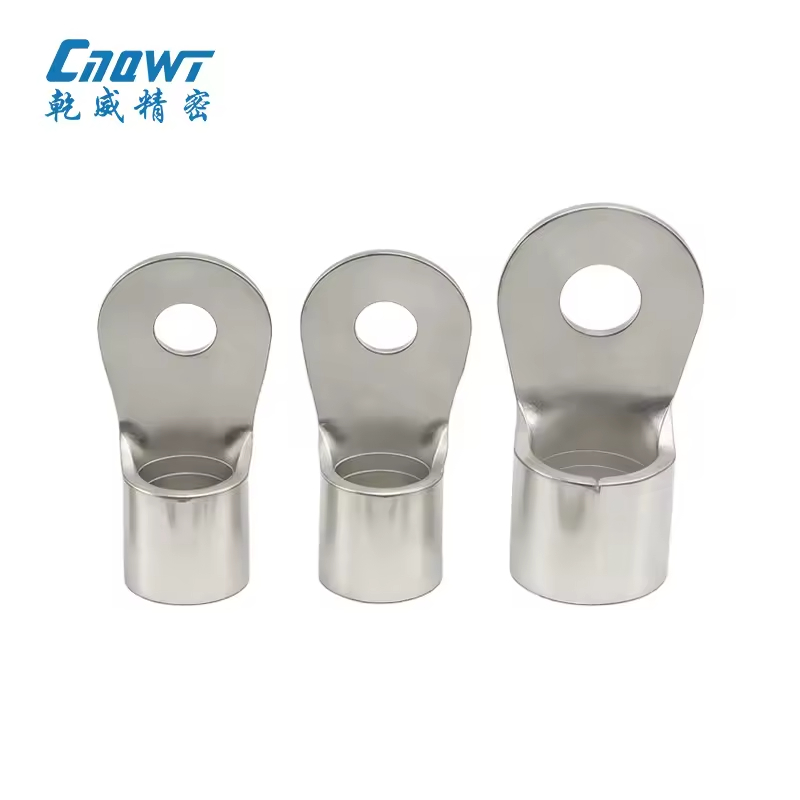
7. Compression Lugs
- Heavy-duty terminals for high-current applications
- Used in battery banks and inverter connections
- Require hydraulic or heavy crimping tools
 Materials Used in Solar Electrical Terminals
Material selection directly affects performance and durability.
Common Materials:
- 구리: 전도도, widely used
- 주석 도금된 구리: 부식, ideal for outdoor use
- 알류미늄: Lightweight and cost-effective
도금 옵션:
- 주석 도금 (most common)
- 니켈 도금 (high temperature resistance)
- 은도금 (최대 전도성, higher cost)
단열재 유형:
- PVC (비용 효율적)
- 나일론 (durable and heat-resistant)
- 열수축 (waterproof and sealed protection)
How to Choose the Right Terminal for Solar Applications
Selecting the correct terminal is essential for system performance.
Key Factors:
1. Current & 전압 정격
Ensure the terminal can handle the system load.
2. 환경 저항
Look for UV-resistant and waterproof designs (IP-rated).
3. Wire Compatibility
Match terminal size with cable gauge (AWG/mm²).
4. 규정 준수 & Certification
Choose products certified by UL, IEC, or TÜV.
5. Installation Method
Consider ease of crimping or connection type.
Installation Best Practices
Proper installation is just as important as terminal selection.
Guidelines:
- Use professional crimping tools
- Ensure correct wire stripping length
- 과도하게 압착하거나 압착하지 마십시오.
- Perform pull tests for connection strength
- Inspect for insulation damage
Common Electrical Terminal Failures and Prevention
Typical Issues:
1. 부식
- Caused by moisture and environmental exposure
- Solution: Use tinned copper and sealed terminals
2. Loose Connections
- Leads to arcing and overheating
- Solution: Proper crimping and periodic inspection
3. Overheating
- Due to high resistance or undersized terminals
- Solution: Match correct current ratings
4. Insulation Degradation
- UV and heat damage
- Solution: Use UV-resistant materials
Standards and Certifications
Compliance ensures safety and performance.
Key Standards:
- UL 486 (와이어 커넥터)
- IEC 61238 (compression connectors)
- TÜV certification for solar components
Using certified terminals reduces risk and ensures system reliability.
Latest Trends in Solar Terminal Technology
The industry continues to evolve with innovations such as:
- Smart connectors with monitoring capabilities
- Tool-free installation designs
- Enhanced waterproof sealing (IP67/IP68)
- Low-resistance, high-efficiency contact materials
Choosing a Reliable Manufacturer
Not all terminals are created equal. A reliable supplier should offer:
- Strict quality control processes
- High-grade raw materials
- Customization options
- International certifications
- Stable supply chain support
Qianwei 정밀을 선택하는 이유
첸웨이 정밀 specializes in high-performance electrical terminals and connectors for demanding industries, including solar energy.
- Advanced manufacturing technology
- Strong R&D capabilities
- Custom terminal solutions for PV systems
- Proven quality in global markets
Partnering with an experienced manufacturer ensures consistent performance and long-term reliability.
결론
Electrical terminals may be small components, but they play a critical role in the overall performance, 안전, and longevity of solar power systems. From ensuring stable conductivity to preventing overheating and environmental damage, the right terminal selection directly impacts system efficiency and reliability.
Choosing high-quality materials, applying proper installation techniques, and adhering to international standards are essential steps for any successful solar project. Equally important is partnering with a trusted manufacturer that understands the specific demands of photovoltaic applications.
첸웨이 정밀 stands out as a reliable partner in this field, offering high-performance electrical terminals and customized connection solutions tailored for solar energy systems. With strong manufacturing capabilities, 엄격한 품질 관리, and extensive industry experience, Qianwei Precision helps ensure every connection is secure, 효율적인, and built to last.
By investing in the right components and working with experienced suppliers, you can maximize the long-term value and performance of your solar power system.
자주 묻는 질문
1. What are electrical terminals in solar power systems?
Electrical terminals are conductive components used to connect wires to devices or other wires in a solar power system, ensuring safe and efficient electricity flow.
2. Which type of terminal is most commonly used in solar installations?
MC4 connectors are the most commonly used terminals in solar systems because they are waterproof, UV-resistant, and specifically designed for photovoltaic applications.
3. What is the difference between solar connectors and terminals?
Terminals are typically fixed connection points, while connectors (like MC4) are detachable interfaces used to quickly connect and disconnect solar components.
4. Why is tinned copper preferred for solar terminals?
Tinned copper offers excellent electrical conductivity along with superior resistance to corrosion, making it ideal for outdoor and high-humidity environments.
5. How do I choose the right terminal size for solar cables?
You should match the terminal size to the wire gauge (AWG 또는 mm²) and ensure it meets the required current and voltage ratings of your system.
6. Are solar electrical terminals waterproof?
Many solar terminals, especially MC4 connectors and heat-shrink terminals, are designed to be waterproof and suitable for outdoor use.
7. What causes electrical terminal failure in solar systems?
Common causes include poor crimping, 부식, 느슨한 연결, 과열, and exposure to harsh environmental conditions.
8. Can I reuse solar connectors and terminals?
Most solar connectors are not recommended for reuse once disconnected, as this may compromise their sealing and connection reliability.
9. What tools are required to install solar terminals properly?
Proper installation typically requires wire strippers, certified crimping tools, and sometimes hydraulic crimpers for large terminals.
10. Do electrical terminals affect solar system efficiency?
예, low-quality or improperly installed terminals can increase resistance, leading to energy loss and reduced system efficiency.
11. How often should solar terminals be inspected?
Solar terminals should be inspected at least once a year or during routine system maintenance to ensure secure and corrosion-free connections.
12. What certifications should solar terminals have?
High-quality solar terminals should comply with standards such as UL, IEC, and TÜV to ensure safety, 신뢰할 수 있음, 성능.
