

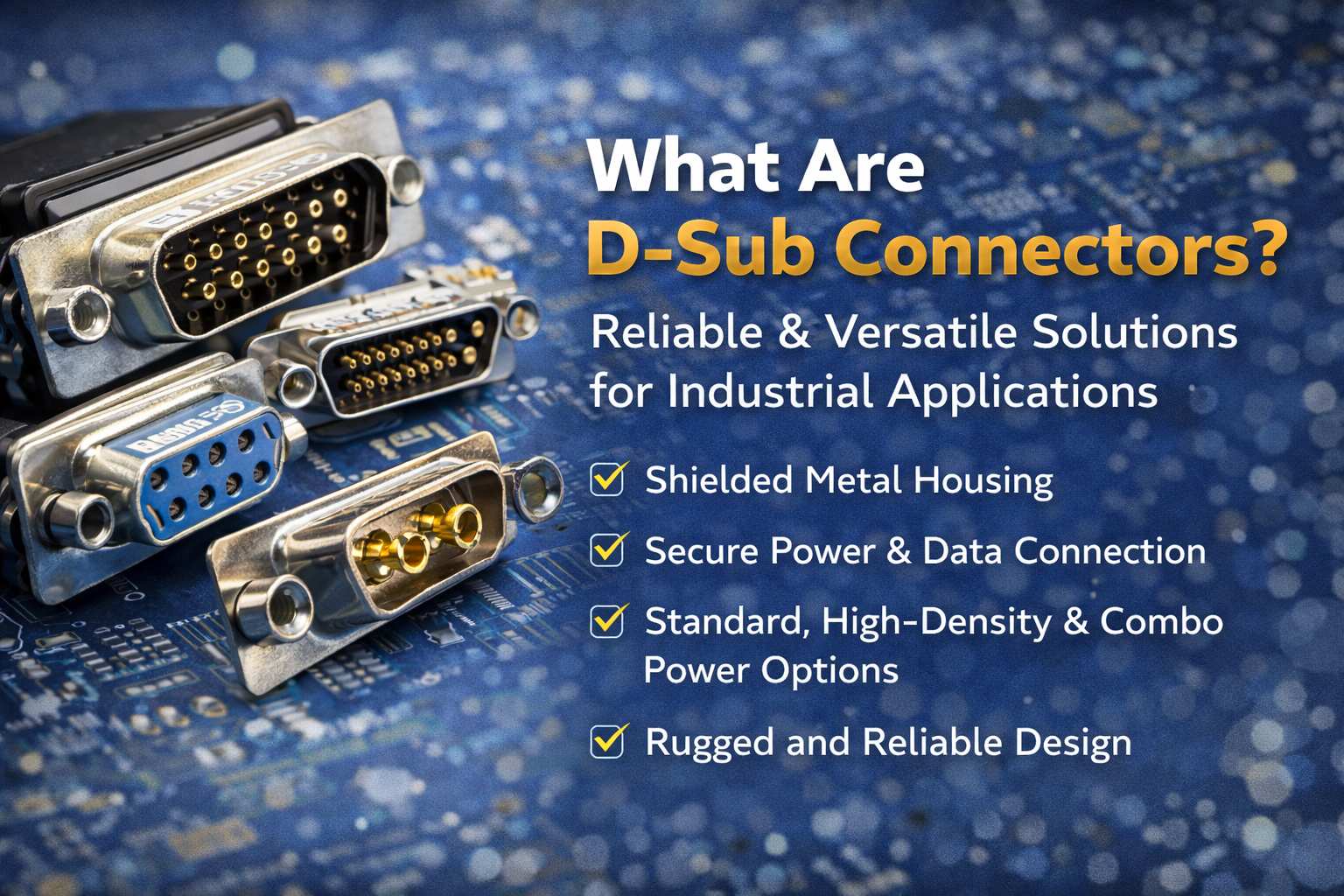
In today’s rapidly evolving electronics landscape, connectivity remains the foundation of system performance and reliability. While wireless technologies continue to advance, every intelligent electronic system ultimately relies on robust, hard-wired infrastructure to deliver power and transmit data. Among the many interconnect solutions available, D-Sub-connectoren have proven their value for decades—and continue to play a critical role in modern industrial, automatisering, and ruggedized applications.
From a manufacturer’s perspective, D-Sub connectors offer a unique balance of mechanische sterkte, electrical reliability, design flexibility, en lange levensduur. This article provides a comprehensive overview of D-Sub connectors, their advantages, types, and why they remain a trusted choice for demanding environments.
Understanding D-Sub Connectors
De D-subminiatuur (D-Sub) aansluiting was first introduced in the 1950s and quickly became a standard for electronic interconnections. Its distinctive D-shaped metal shell provides inherent polarization, ensuring correct mating while also delivering effective electromagnetic shielding.
Unlike many modern connectors designed for a single function, D-Sub connectors are capable of transmitting both power and data through a compact, secure interface. This versatility has allowed them to adapt across generations of technology, from early communication protocols to today’s industrial control and embedded systems.

Hard-Wired Connectivity in a Wireless World
The electronics industry has undergone significant transformation with the rise of wireless communication, IoT, and smart devices. Echter, behind every wireless network lies a robust wired infrastructure that ensures reliable power delivery and stable data flow.
No electronic system can function without:
-
Electrical power to operate
-
Data transmission for control, monitoring, and communication
D-Sub connectors continue to serve this foundational role by providing stable, shielded connections where reliability is non-negotiable. In environments where interference, trillingen, or harsh conditions are present, wired connections remain the most dependable solution.
Why D-Sub Connectors Remain a Reliable Choice
From a connector manufacturer’s standpoint, the enduring success of D-Sub connectors is rooted in their core design advantages:
Shielded Metal Housing
The metal shell provides excellent EMI and RFI protection, making D-Sub connectors suitable for signal-sensitive applications.
Secure Mechanical Locking
Screw-lock or jack-screw mechanisms prevent accidental disconnection caused by vibration or movement—an essential feature for industrial and transportation systems.
Orientation-Friendly Design
The D-shaped profile eliminates mating errors, improving installation efficiency and reducing assembly risk.
Power and Signal Integration
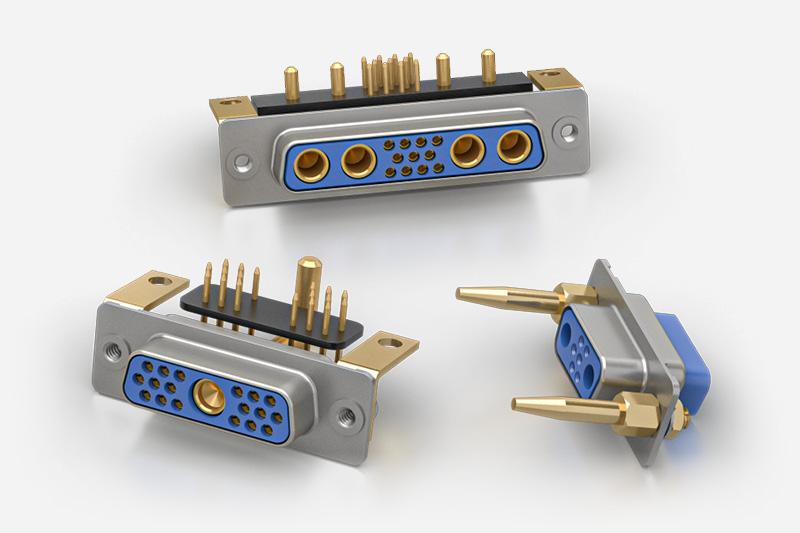
D-Sub connectors can combine power contacts and signal pins within a single interface, simplifying system architecture and reducing connector count.
Applications and Advantages of D-Sub Connectors
Originally developed for communication standards such as RS-232, RS-422, RS-499, and VGA, D-Sub connectors have since evolved far beyond office and computing environments.
Vandaag, they are widely used in:
-
Industrial automation and robotics
-
Petrochemical and energy facilities
-
Rail transportation and heavy machinery
-
Embedded computing and control systems
-
Rugged military and aerospace equipment
Their ability to withstand mechanical shock, trillingen, en blootstelling aan het milieu makes them ideal for harsh operating conditions. Modern sealing technologies and material enhancements have further extended their performance in outdoor and industrial environments.
Technological Advancements in D-Sub Connectors
To meet modern industry demands, D-Sub connectors have undergone continuous innovation. Manufacturers now offer:
-
Improved sealing options for higher ingress protection
-
Enhanced contact plating for better conductivity and corrosion resistance
-
High-current power contacts integrated into standard shells
-
Custom layouts tailored to specific electrical and mechanical requirements
These advancements allow D-Sub connectors to remain competitive alongside newer connector formats, especially in applications where ruggedness and long-term stability zijn kritisch.
Types of D-Sub Connectors
Standard Density D-Sub Connectors
Standard density D-Sub connectors are available with 9 to 50 contacts, typically rated at up to 5A per contact. With proper pin assignment and cable design, data rates of tot 5 Gbps can be achieved.
Manufacturers also offer Combo-D (Power D-Sub) configurations, which integrate high-current contacts rated up to 40A alongside standard signal pins. These connectors are ideal for applications requiring both control signals and power delivery within a single interface.
High-Density D-Sub Connectors
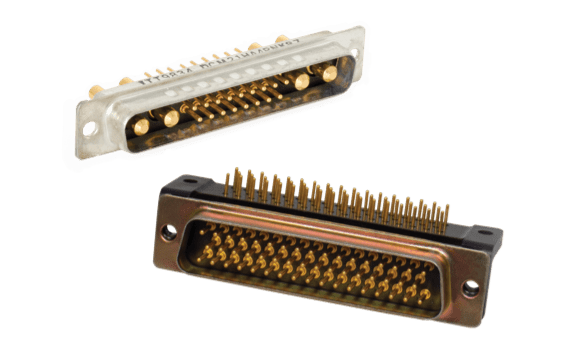
High-density D-Sub connectors maintain the same shell size as standard versions while increasing pin counts to 15–78 contacts. To achieve this higher density, contact size is reduced, resulting in a typical current rating of up to 3A per contact.
These connectors are well suited for systems requiring compact designs without sacrificing connection reliability.
Micro-D-connectoren
Micro-D connectors are approximately one-third the size of standard D-Sub connectors and are designed for space-constrained applications. With current ratings of up to 1A per contact, they are commonly used in aerospace, defense, and portable equipment.
Despite their small size, Micro-D connectors retain the robust mechanical characteristics that define the D-Sub family.
Conclusie: The Enduring Value of D-Sub Connectors
From a high-end connector manufacturer’s perspective, D-Sub connectors continue to deliver exceptional value across a wide range of industries. Their combination of mechanical durability, electrical performance, design flexibility, and proven reliability ensures they remain a preferred interconnect solution for demanding applications.
As industrial systems become more complex and environments more challenging, D-Sub connectors stand out as a time-tested technology that continues to evolve—supporting both legacy systems and next-generation designs with confidence.
FAQs About D-Sub Connectors
1. What are the main advantages of D-Sub connectors over newer connector types?
D-Sub connectors offer excellent mechanical strength, reliable EMI shielding, secure locking system, and the ability to integrate both power and signal pins. These features make them more robust and stable than many modern compact connectors, especially in industrial and high-vibration environments.
2. Are D-Sub connectors still used in modern electronics?
Ja. Although developed decades ago, D-Sub connectors remain widely used in automation, robotica, ruimtevaart, transportation, testing equipment, and embedded systems. Their durability and long service life make them ideal for applications requiring dependable wired connections.
3. What industries benefit the most from D-Sub connectors?
Industries such as industrial automation, petrochemical plants, rail systems, defense, ruimtevaart, and heavy machinery rely heavily on D-Sub connectors due to their rugged performance and ability to withstand vibration, schok, and environmental stress.
4. How do I choose between standard density and high-density D-Sub connectors?
Choose standard density when durability and higher current capacity are priorities. Choose high-density when space is limited and you need more pins within the same shell size. The electrical load, data rate, and design constraints will determine the best option.
5. Can D-Sub connectors support high-speed data transmission?
Ja. With proper cable selection and pin configuration, standard D-Sub connectors can support data speeds of up to 5 Gbps. Shielded versions help maintain signal integrity in environments with electromagnetic interference.
6. What are Combo-D or Power D-Sub connectors used for?
Combo-D connectors integrate high-current contacts (up to 40A) with standard signal pins. They are ideal for systems that require both power and data through a single interface—simplifying wiring, reducing connector count, and improving reliability.
7. Are D-Sub connectors suitable for harsh or outdoor environments?
Ja. Modern D-Sub connectors can be equipped with sealing gaskets, IP-rated housings, corrosion-resistant plating, and rugged backshells. These enhancements allow them to perform well in outdoor, industrieel, and high-temperature environments.
8. What is the difference between Micro-D and standard D-Sub connectors?
Micro-D connectors are about one-third the size of standard D-Subs and are designed for compact or portable devices. While smaller, they still offer strong mechanical retention and reliability, making them popular in aerospace and defense applications.
