

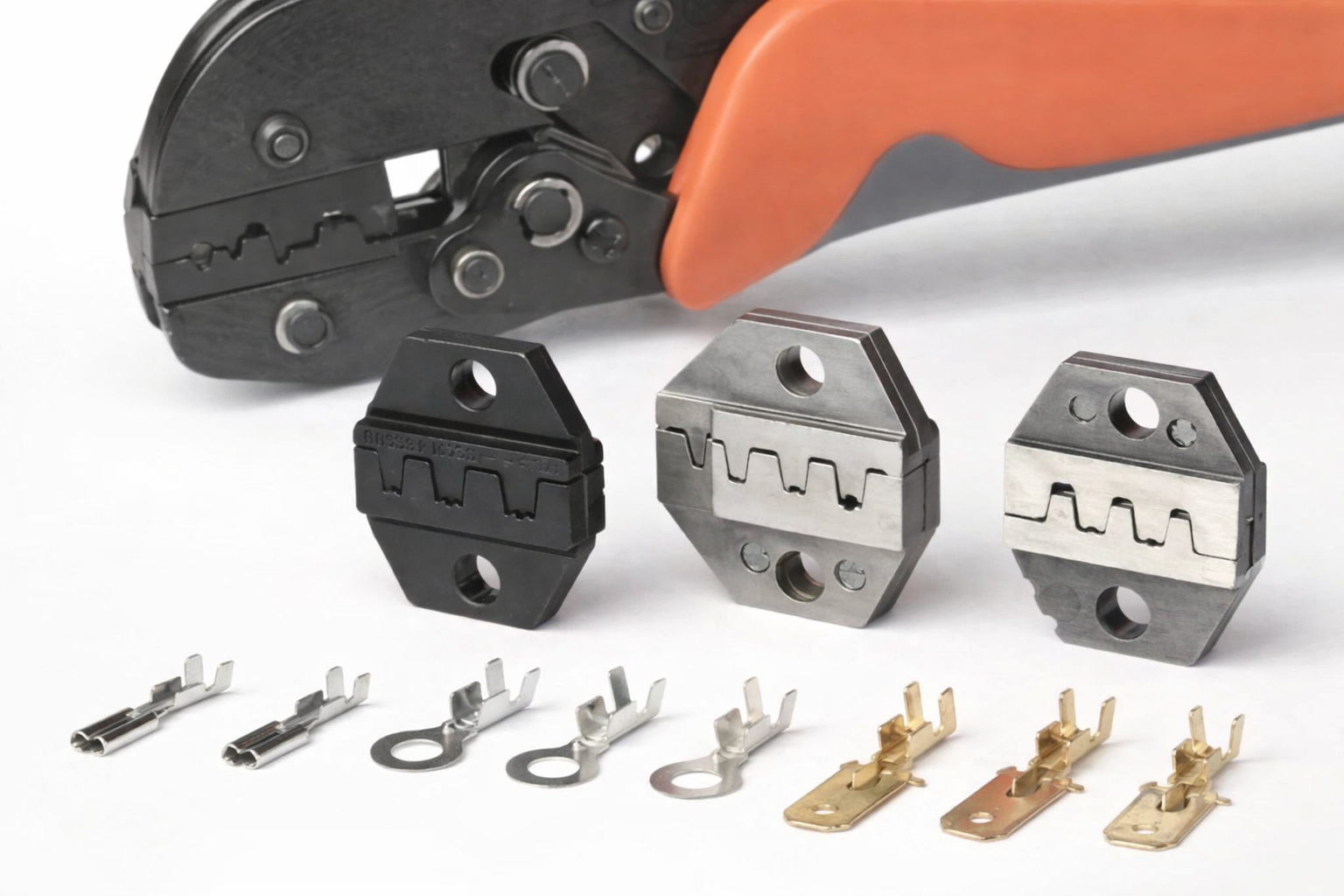
A crimpagem é o método mais confiável e amplamente utilizado para criar conexões elétricas em sistemas de fiação. De chicotes de fios automotivos a painéis de controle industriais e eletrônicos aeroespaciais, terminais devidamente crimpados garantem forte retenção mecânica, condutividade elétrica estável, e confiabilidade a longo prazo.
Entre os muitos tipos de terminais de crimpagem disponíveis, crimpagens de barril aberto e crimpagens de barril fechado são os dois designs mais comuns. Embora sirvam ao mesmo propósito fundamental – terminar os fios – suas estruturas, métodos de crimpagem, requisitos de ferramentas, e as aplicações ideais diferem significativamente.
Este artigo fornece uma comparação detalhada de aberto versus. crimpagens de barril fechado, ajudando engenheiros, compradores, e os fabricantes selecionam a solução certa para seus requisitos específicos de conexão elétrica.
1. Introdução aos terminais de crimpagem e crimpagem
Crimpagem é um processo mecânico que une permanentemente um condutor de fio a um terminal de metal, deformando o terminal ao redor do fio usando uma ferramenta de crimpagem dedicada. Quando feito corretamente, uma conexão crimpada pode ser tão confiável – ou até mais confiável – do que soldar, especialmente em ambientes expostos a vibrações, aquecer, ou umidade.
Terminais de crimpagem são componentes metálicos normalmente feitos de:
Cobre
Cobre estanhado
Latão
Alumínio
Aço inoxidável (para ambientes especializados)
Eles são usados para terminar fios trançados ou sólidos e fornecem uma interface padronizada para conexões elétricas.
Escolhendo o correto tipo de terminal de crimpagem é crítico. Uma incompatibilidade entre o design do terminal, bitola do fio, e ferramenta de crimpagem pode causar:
Alta resistência de contato
Conexões intermitentes
Extração de fio
Falha prematura do sistema
2. O que são crimpagens de barril aberto?

Um terminal de crimpagem de barril aberto apresenta um cano com “asas” abertas em vez de um tubo totalmente fechado. O fio é colocado no cano aberto, e as asas são dobradas para dentro durante a crimpagem para segurar com segurança o condutor e, em muitos designs, o isolamento do fio.
Terminais de barril aberto também são comumente chamados de:
Terminais estampados
Carimbado & contatos formados
Terminais de asa aberta
Eles são amplamente utilizados em grandes volumes, aplicações de fiação de precisão.
Características de crimpagens de barril aberto
As principais características incluem:
Design de crimpagem em dois estágios
Um conjunto de asas aperta o condutor desencapado
Outro conjunto comprime o isolamento para alívio de tensão
Excelente desempenho elétrico
A crimpagem do condutor à prova de gás reduz a oxidação
Resistência de contato consistente
Tamanho compacto
Ideal para conectores de alta densidade
Geralmente não isolado
O isolamento geralmente é fornecido por invólucros de conectores em vez de mangas terminais
Os terminais cilíndricos abertos são fabricados em dimensões precisas para corresponder às bitolas específicas dos fios, comumente variando de AWG 28 para AWG 10, dependendo do tipo de terminal.
Ferramentas de crimpagem para terminais de barril aberto
Crimpagens de barril aberto requerem ferramentas de crimpagem especializadas que formam um Perfil de crimpagem F ou B-crimp. Estas ferramentas dobram com precisão as asas do terminal em torno do condutor e do isolamento.
Principais considerações sobre ferramentas:
Perfil correto da matriz para o tipo de terminal
Controle preciso de altura de crimpagem
Pressão consistente para repetibilidade
Ferramentas de nível profissional são essenciais, especialmente no setor automotivo, aeroespacial, e produção de chicotes de fios, onde os padrões de qualidade de crimpagem são rigorosos.
Aplicações de crimpagens de barril aberto
Crimpagens de barril aberto são comumente usadas em:
Chicotes elétricos automotivos
Eletrônica aeroespacial e de defesa
Sistemas de controle industrial
Eletrônicos de consumo
Eletrodomésticos
Sistemas de conectores (Alemão, JST, Terminais estilo Molex)
Eles são particularmente valorizados em ambientes onde resistência à vibração, design compacto, e alta eficiência de produção são críticos.
3. O que são crimpagens de barril fechado?

UM terminal de crimpagem de barril fechado apresenta um totalmente fechado, cano metálico cilíndrico sem costura aberta. O fio é inserido em uma extremidade do cano e comprimido por fora usando uma ferramenta de crimpagem.
Terminais de barril fechado também são conhecidos como:
Terminais de contato fechado
Terminais tubulares
Eles são os terminais de crimpagem mais comumente reconhecidos em aplicações elétricas gerais.
Características de crimpagens de barril fechado
As principais características incluem:
Barril totalmente fechado
Fornece compressão uniforme ao redor do condutor
Alta resistência mecânica
Excelente resistência ao arrancamento
Disponível com isolamento
PVC, nylon, ou mangas termorretráteis para proteção e alívio de tensão
Grande variedade de estilos de terminais
Terminais de anel
Garfo (pá) terminais
Terminais de lâmina
Conectores de topo
Terminais de pino
As crimpagens cilíndricas fechadas estão disponíveis para tamanhos de fio que variam de pequenos fios de sinal a cabos de alimentação de grande calibre, tornando-os extremamente versáteis.
Ferramentas de crimpagem para terminais de barril fechado
Terminais cilíndricos fechados são crimpados usando ferramentas que criam:
Crimpagens ovais
Crimpagens hexagonais
Crimpagem de recuo (para algumas aplicações pesadas)
As crimpagens hexagonais são especialmente populares para cabos de energia porque distribuem a pressão uniformemente ao redor do condutor, garantindo uma forte conexão elétrica e mecânica.
A seleção da ferramenta depende:
Calibre do fio
Material terminal
Padrão de crimpagem necessário
Aplicações de crimpagens de barril fechado
As crimpagens de barril fechado são amplamente utilizadas em:
Sistemas elétricos automotivos
Fiação de máquinas industriais
Painéis de distribuição de energia
Ambientes marinhos e offshore
Sistemas de energia renovável
Aplicações pesadas e de alta corrente
Seu design fechado os torna ideais para ambientes agressivos, onde durabilidade e confiabilidade são essenciais.
4. Principais diferenças entre crimpagens de barril aberto e fechado
| Aspecto | Crimpagens de barril aberto | Crimpagens de barril fechado |
| Projeto de barril | Asas abertas | Tubo totalmente fechado |
| Estilo de crimpagem | Crimpagem F / Crimpagem B | Crimpagem oval ou hexagonal |
| Ferramentas | Ferramentas específicas para terminais de precisão | Crimpadores padrão ou para serviços pesados |
| Isolamento | Normalmente não isolado | Isolado ou não isolado |
| Tamanho | Compactar | Perfil geral maior |
| Produção | Ideal para automação | Manual e semiautomático |
| Força | Excelente resistência à vibração | Força de extração superior |
5. Como escolher entre crimpagens de barril aberto e fechado
Ao selecionar o terminal de crimpagem correto, considere os seguintes fatores:
Tipo de fio e condutor
Fios finos geralmente se beneficiam de crimpagens de barril aberto
Condutores sólidos ou de grande calibre favorecem crimpagens de barril fechado
Ambiente
Alta vibração → cano aberto
Umidade, corrosão, ou uso externo → barril fechado com isolamento
Volume de produção
Produção em massa e automação → barril aberto
Instalação de baixo volume ou em campo → barril fechado
Padrões da Indústria
O setor automotivo e aeroespacial geralmente especifica terminais de barril aberto
As aplicações industriais e marítimas geralmente exigem projetos de barril fechado
6. Casos de uso comuns e preferências do setor
Crimpagens de barril aberto são preferidos em sistemas de conectores OEM e conjuntos de chicotes elétricos.
Crimpagens de barril fechado dominar a manutenção, reparar, e aplicações de energia.
Em muitos sistemas, ambos os tipos podem ser usados em seções diferentes do mesmo chicote elétrico.
7. Melhores práticas para conexões de crimpagem confiáveis
Para garantir conexões de crimpagem de alta qualidade:
Combine o terminal precisamente com a bitola do fio
Use ferramentas de crimpagem recomendadas pelo fabricante
Verifique a altura e a compressão corretas da crimpagem
Realize testes de tração e inspeções visuais
Evite crimpagem excessiva ou insuficiente
A crimpagem adequada não envolve apenas o terminal – é um sistema completo que envolve o arame, terminal, ferramenta, e processo.
8. Conclusão
Ambos barril aberto e terminais de crimpagem de barril fechado desempenham papéis essenciais em sistemas elétricos modernos. Embora sejam diferentes na estrutura, ferramentas, e aplicações ideais, nenhum dos dois é universalmente “melhor”. A escolha correta depende do seu requisitos elétricos, ambiente, processo de produção, e padrões da indústria.
Para OEMs, engenheiros, e profissionais de terceirização, selecionar o terminal de crimpagem correto – e combiná-lo com a ferramenta de crimpagem correta – é fundamental para construir, conexões elétricas duradouras.
Se você está procurando terminais de crimpagem personalizados, ferramentas de crimpagem profissionais, ou suporte de engenharia para sua aplicação específica, trabalhando com Precisão Qianwei-um fabricante de terminais experiente pode melhorar significativamente a qualidade do produto e reduzir custos a longo prazo.
Perguntas frequentes
1. Qual tipo de crimpagem oferece melhor condutividade elétrica?
As crimpagens de barril aberto e fechado oferecem excelente condutividade quando crimpadas corretamente. As crimpagens de barril aberto criam uma conexão à prova de gás, ideal para aplicações de sinal e de baixa tensão, enquanto as crimpagens de barril fechado são preferidas para conexões de corrente mais alta devido à sua compressão uniforme.
2. As crimpagens de barril aberto são adequadas para ambientes externos ou agressivos??
Crimpagens de barril aberto são melhor usadas dentro de invólucros de conectores. Para ambientes externos ou expostos, crimpagens de barril fechado com isolamento ou mangas termorretráteis proporcionam melhor proteção contra umidade e corrosão.
3. Posso usar a mesma ferramenta de crimpagem para terminais cilíndricos abertos e fechados??
Não. Terminais de barril aberto requerem ferramentas de crimpagem F ou B, enquanto terminais de barril fechados exigem ovais, hexadecimal, ou ferramentas de crimpagem de recuo. Usar a ferramenta errada pode resultar em conexões não confiáveis.
4. Qual tipo de crimpagem é melhor para aplicações de alta vibração?
As crimpagens de barril aberto são comumente usadas em ambientes de alta vibração, como fiação automotiva e aeroespacial, porque fornecem forte alívio de tensão e retenção consistente do condutor quando crimpadas corretamente.
5. As crimpagens de barril fechado funcionam com fios finos?
Sim, mas o terminal deve ser dimensionado corretamente e cravado com a ferramenta adequada. Para fios muito finos, crimpagens de barril aberto geralmente fornecem melhor controle e suporte ao condutor.
6. As crimpagens isoladas são sempre melhores do que as crimpagens não isoladas??
Não necessariamente. Crimpagens isoladas oferecem conveniência e proteção adicional, mas crimpagens não isoladas são frequentemente necessárias em sistemas de conectores onde o isolamento é fornecido pelo invólucro ou pela sobremoldagem.
7. Como escolho o tamanho correto do terminal de crimpagem?
Sempre combine o terminal com a bitola do fio (AWG ou mm²) especificado pelo fabricante. Um tamanho incorreto pode levar a alta resistência, força de arrancamento fraca, ou falha de crimpagem.
8. As crimpagens de barril abertas e fechadas podem ser usadas no mesmo chicote elétrico?
Sim. Muitos sistemas de fiação usam terminais cilíndricos abertos dentro dos conectores e terminais cilíndricos fechados para conexões de alimentação ou aterramento dentro do mesmo chicote..
