

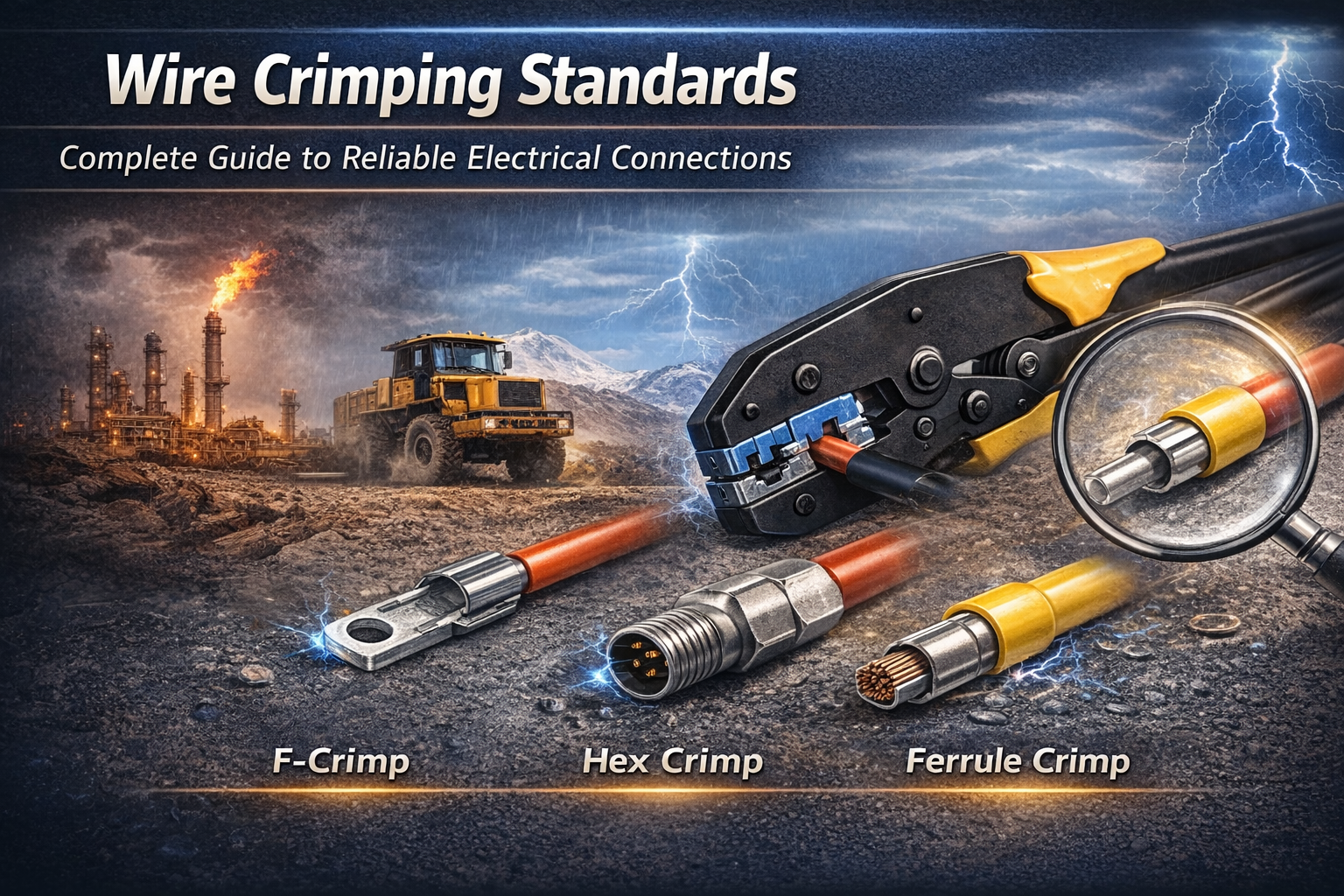
Electrical connections are the foundation of every modern electrical and electronic system. From automotive wiring harnesses and industrial automation equipment to aerospace electronics and medical devices, reliable electrical connections are essential for system safety and long-term performance.
Among the various connection methods, wire crimping has become the most widely used technique for joining wires to terminals and connectors. No entanto, achieving consistent and durable connections requires adherence to recognized wire crimping standards.
Standards such as IPC/WHMA-A-620, UL 486A-B, and SAE AS7928 define strict requirements for crimp geometry, pull strength, inspection methods, and process control. Following these standards helps manufacturers reduce defects, improve electrical performance, and ensure compliance across industries.
In this guide, we explore the most important wire crimping standards, the crimping process, and the key factors that determine crimp quality.
What Is Wire Crimping?
Wire crimping is a mechanical process used to connect a wire to a terminal or connector by applying pressure with a specialized crimping tool. During the crimping process, the terminal barrel is compressed around the wire conductor, forming a secure mechanical and electrical connection.
Unlike soldering, crimping does not require heat or additional materials. Instead, the crimping tool precisely deforms the metal terminal so that it tightly grips the conductor strands.
A properly executed crimp forms what is known as a gas-tight connection. This means the compression between the conductor and terminal prevents oxygen and moisture from entering the joint. As a result, the connection becomes highly resistant to corrosion and maintains stable electrical conductivity over time.
Because of these advantages, crimping is widely used in:
-
Chicotes elétricos automotivos
-
Sistemas de controle industrial
-
Eletrônica aeroespacial
-
Equipamento de telecomunicações
-
Medical devices
Why Proper Crimping Ensures Reliable Electrical Connections
The quality of a crimped connection directly affects both the estabilidade mecânica e desempenho elétrico of a wiring system.
Resistência Mecânica
A correctly crimped terminal provides strong mechanical retention between the wire and terminal. This prevents the wire from loosening due to vibration, mechanical stress, or repeated movement. In applications such as automotive wiring harnesses, strong crimp joints are critical for long-term reliability.
Electrical Performance
Crimping creates a large contact area between the conductor strands and the terminal barrel. This ensures low electrical resistance, allowing current to flow efficiently without generating excessive heat.
Resistência Ambiental
Gas-tight crimp connections protect the contact surface from oxidation and moisture. This makes crimped terminals highly resistant to environmental factors such as humidity, temperature fluctuations, e exposição química.
When crimping standards are not followed, problems such as high resistance, loose connections, and premature failure may occur.
Major Wire Crimping Standards in the Industry
Several international standards define the requirements for proper wire crimping. These standards ensure consistent quality and safety across industries.
IPC/WHMA-A-620
IPC/WHMA-A-620 is one of the most widely recognized standards for cable and wire harness assemblies. It defines workmanship criteria for crimp connections, including acceptable crimp geometry, visual inspection requirements, e resistência mecânica.
This standard is commonly used in electronics manufacturing, industrial equipment, and aerospace systems.
UL 486A-B
UL 486A-B focuses on the safety requirements for wire connectors and terminals. It defines performance criteria such as pull strength, electrical conductivity, and insulation reliability. Many electrical products must comply with UL standards to be approved for use in North America.
SAE AS7928
SAE AS7928 is primarily used in automotive and aerospace industries. It establishes detailed requirements for crimped electrical contacts, including crimp height tolerances, material specifications, and testing procedures.
CEI, DIN, and ISO Standards
International standards such as IEC 60352-2 and DIN specifications also provide guidelines for solderless crimp connections, ferrules, and power terminals used in industrial electrical systems.
Industry Applications of Wire Crimping Standards
Different industries require specific crimping standards depending on environmental conditions and system requirements.
Automotive Wiring Harnesses
Automotive electrical systems operate in environments with constant vibration, temperature changes, e estresse mecânico. Standards such as USCAR and SAE define strict requirements for automotive crimp connections.
Automotive terminals often use F-crimp designs, which provide strong mechanical retention and reliable electrical contact.
Aerospace Systems
Aerospace applications require the highest level of reliability. Standards such as IPC Class 3 and NASA guidelines ensure that crimped connections can withstand extreme temperatures, vibração, and altitude conditions.
Every crimp joint must pass strict inspection and testing procedures.
Medical Devices
Medical equipment requires highly reliable wiring systems due to patient safety considerations. Crimp connections used in medical cable assemblies must meet both electrical reliability and biocompatibility requirements.
Manufacturers also maintain strict documentation and traceability for every component.
Industrial Automation and Power Systems
Industrial equipment and control panels rely heavily on crimped connections for motors, sensores, PLCs, e sistemas de distribuição de energia. Ferrule crimps are commonly used to prevent wire strand damage in screw terminals.
Standard Wire Harness Crimping Process
The crimping process used in wire harness manufacturing typically follows several key steps.
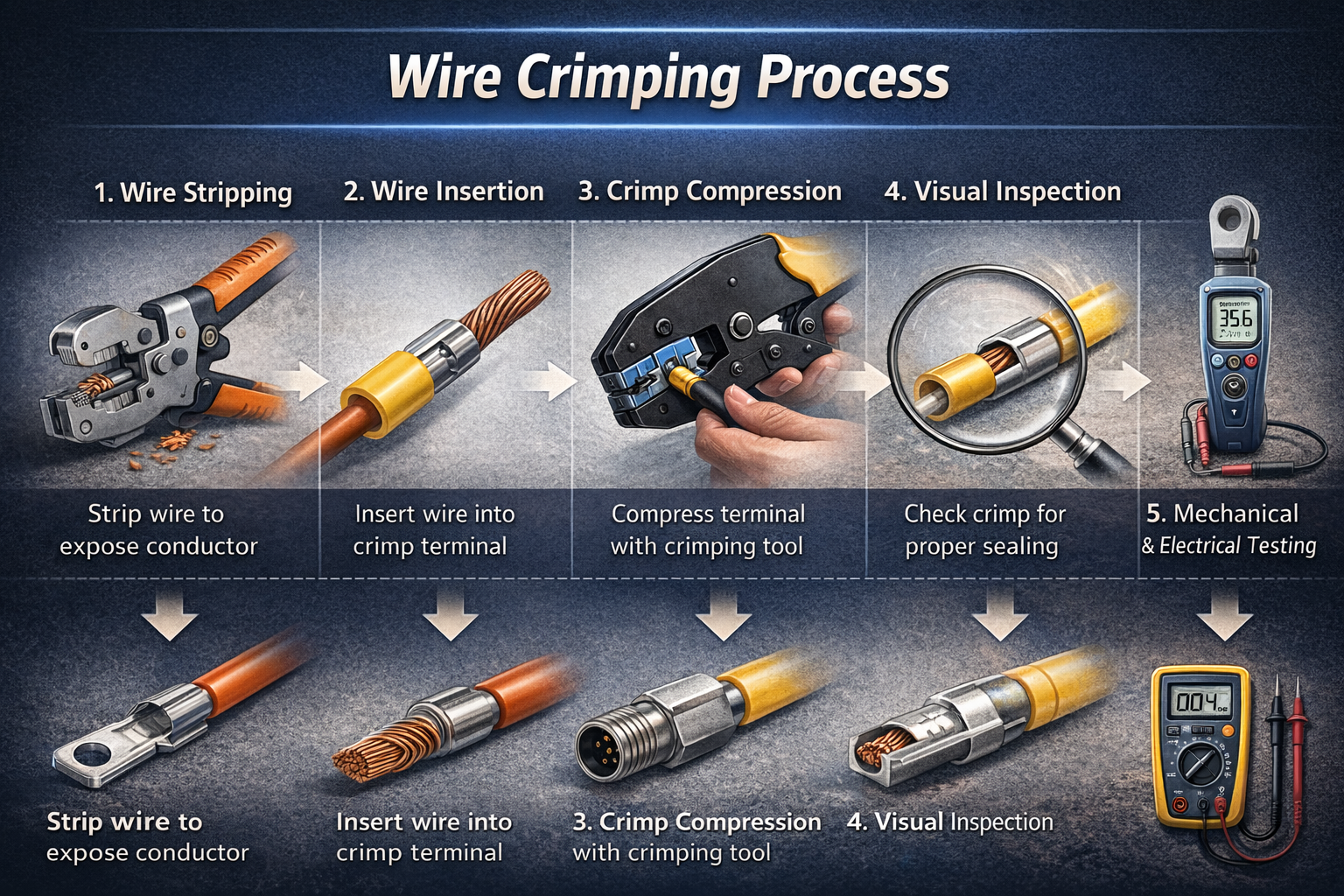
1. Wire Stripping
The insulation is carefully stripped from the wire to expose the conductor. The stripping length must match the terminal design to ensure proper contact.
2. Wire Insertion
The exposed conductor is inserted into the terminal barrel until it reaches the correct position.
3. Crimp Compression
A calibrated crimping tool compresses the terminal barrel around the conductor, forming the mechanical and electrical connection.
4. Visual Inspection
Operators inspect the crimp for correct conductor placement, proper bellmouth formation, and insulation support.
5. Mechanical and Electrical Testing
The finished crimp may undergo pull testing or resistance measurement to verify compliance with required standards.
Factors That Affect Crimp Quality
Several factors influence the quality and reliability of crimp connections.
Wire Construction
Stranded wires are generally preferred for crimping because they provide better flexibility and distribute compression evenly across the conductor.
Wire Size Compatibility
The wire gauge must match the terminal barrel size. Incorrect sizing can lead to weak connections or incomplete compression.
Strip Length
Proper stripping length ensures that the conductor fully contacts the terminal without exposing excessive wire.
Material Quality
High-quality copper conductors and properly plated terminals improve electrical conductivity and corrosion resistance.
Tooling Compatibility
Crimping tools must match the terminal design and wire size. Using incorrect tooling can result in deformation errors or insufficient compression.
Insulation Support
A well-formed insulation crimp provides strain relief and prevents mechanical stress from transferring to the conductor.
Key Indicators of High-Quality Crimp Connections
High-quality crimp connections can be evaluated through several measurable indicators.
Mechanical Pull Strength
Pull tests determine the force required to separate the wire from the terminal. The required pull strength varies depending on wire size and industry standards.
Electrical Resistance
Low electrical resistance indicates a strong metal-to-metal connection and efficient current flow.
Dimensional Accuracy
Measurements such as crimp height, crimp width, and bellmouth formation help verify that the crimp meets specification tolerances.
Testing Methods for Crimp Quality
Manufacturers use several testing methods to verify crimp quality.
Pull Force Testing
Measures the mechanical retention strength of the crimp connection.
Electrical Resistance Testing
Evaluates the electrical performance and identifies potential conductivity issues.
Cross-Section Analysis
A cross-section cut of the crimped terminal reveals internal compression and strand distribution.
Visual Inspection
Visual inspection detects defects such as cracks, over-crimping, or improper conductor placement.
Types of Crimping Tools Used in Manufacturing
Different types of crimping tools are used depending on production volume and application.
Manual Crimping Tools
Hand-operated crimpers are commonly used for small production runs and maintenance work.
Application-Specific Crimp Tools
Certain tools are designed for specific terminals or connectors, including coaxial cable crimpers and ferrule crimp tools.
Automated and Powered Crimping Systems
Large-scale manufacturing often uses pneumatic, hydraulic, or battery-powered crimping systems to achieve consistent results and higher productivity.
Common Crimp Types Used in Different Industries
Various crimp designs are used depending on the application.
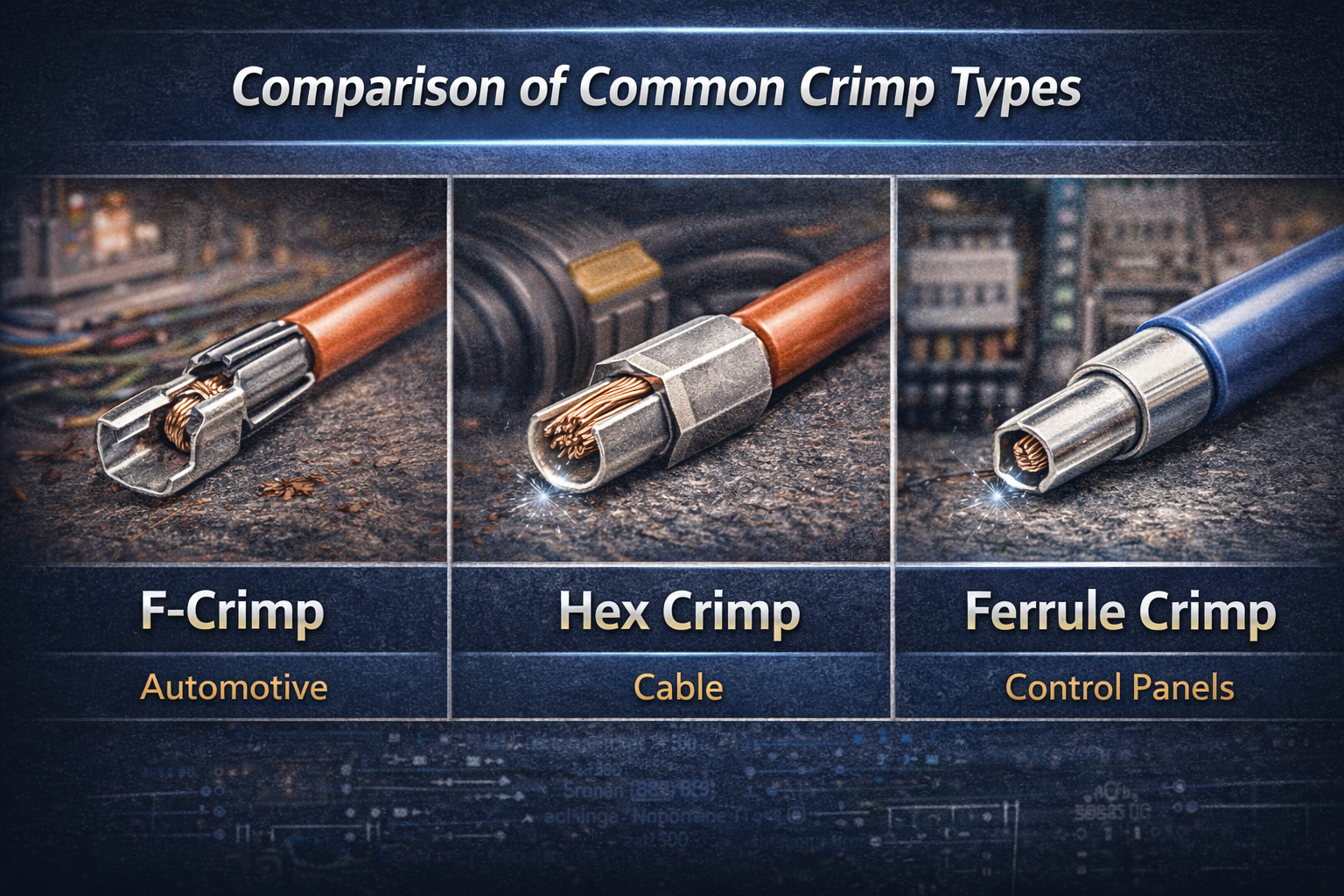
F-Crimp
Widely used in automotive wiring harnesses for open-barrel terminals.
Indent Crimp
Common in aerospace applications requiring precise compression and high reliability.
Hex Crimp
Used for large power cables and heavy-duty electrical lugs.
Ferrule Crimp
Commonly used in industrial control panels to protect stranded wires.
Coaxial Crimp
Used in signal transmission cables to maintain consistent impedance.
Best Practices to Ensure Consistent Crimp Quality
To maintain high crimp quality, manufacturers should implement strict process control measures.
Best practices include:
-
Using high-quality terminals and conductors
-
Calibrating crimping tools regularly
-
Following recognized international standards
-
Performing routine inspection and testing
-
Maintaining full material traceability
These measures help ensure consistent performance across production batches and reduce the risk of field failures.
Conclusão
Wire crimping standards play a critical role in ensuring reliable electrical connections across a wide range of industries. By following recognized standards such as IPC/WHMA-A-620, UL 486A-B, and SAE AS7928, manufacturers can produce durable wiring systems that meet strict safety and performance requirements.
Proper crimping techniques, combined with the right tools and materials, significantly improve the reliability and lifespan of electrical connections.
For industries that rely on high-performance wiring harnesses and terminals, maintaining strict compliance with wire crimping standards is essential for long-term success.
Perguntas frequentes
1. What are wire crimping standards?
Wire crimping standards are technical guidelines that define how wires should be properly crimped to terminals or connectors. These standards specify requirements for crimp geometry, pull strength, inspection, and testing to ensure safe and reliable electrical connections.
2. What is the most widely used wire crimping standard?
One of the most widely used standards is IPC/WHMA-A-620, which defines the quality requirements for cable and wire harness assemblies. Other common standards include UL 486A-B, SAE AS7928, e CEI 60352-2.
3. Why is proper wire crimping important?
Proper wire crimping ensures strong mechanical retention and low electrical resistance. A well-executed crimp connection can prevent overheating, perda de sinal, and electrical failure in wiring systems.
4. What is a gas-tight crimp connection?
A gas-tight crimp connection occurs when the terminal barrel compresses the wire strands tightly enough to eliminate air gaps. This prevents oxygen and moisture from entering the connection, reducing corrosion and improving long-term reliability.
5. What are the most common types of crimp connections?
Common crimp types include:
-
Crimpagem F – widely used in automotive wiring harnesses
-
Hex crimp – commonly used for power cables and heavy-duty terminals
-
Ferrule crimp – used in industrial control panels
-
Indent crimp – used in aerospace and high-reliability systems
6. How do you check the quality of a crimp connection?
Crimp quality is typically verified through:
-
Pull force testing
-
Electrical resistance measurement
-
Cross-section analysis
-
Visual inspection of crimp geometry
These tests ensure the crimp meets industry standards.
7. What causes poor crimp connections?
Poor crimp connections are often caused by:
-
Incorrect wire size
-
Improper crimping tools
-
Incorrect crimp height
-
Poor terminal material quality
-
Improper wire stripping length
These issues can result in loose connections or electrical failure.
8. What tools are used for wire crimping?
Wire crimping can be performed using different tools, incluindo:
-
Manual crimping tools
-
Ratchet crimpers
-
Pneumatic crimping machines
-
Hydraulic crimping tools
-
Automated crimping equipment used in large-scale wire harness manufacturing.
9. What industries rely on wire crimping standards?
Wire crimping standards are widely used in industries such as:
-
Automotive manufacturing
-
Aerospace and defense
-
Industrial automation
-
Telecomunicações
-
Medical equipment manufacturing
These industries require highly reliable electrical connections.
10. How can manufacturers ensure consistent crimp quality?
Manufacturers can maintain consistent crimp quality by:
-
Using high-quality terminals and wires
-
Calibrating crimping tools regularly
-
Following international standards
-
Implementing strict quality inspection procedures
-
Maintaining traceability of materials and production processes.
