

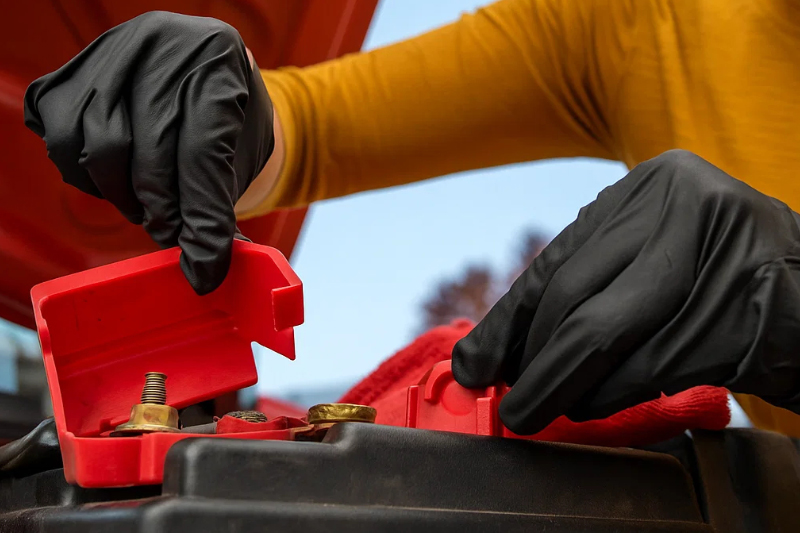
When it comes to your vehicle’s electrical system, every component plays a part in ensuring smooth performance — and battery terminals are no exception. These small but critical connectors are what bridge your car’s battery to the rest of the electrical system. Without them, the flow of electricity that powers your starter, lights, and accessories simply wouldn’t happen.
Tuy nhiên, because of their exposure to heat, độ ẩm, and vibration, battery terminals can corrode or loosen over time. Knowing the different types of terminals — and how to choose the right one — helps ensure consistent performance and prevents unnecessary electrical issues.
Trong hướng dẫn này, we’ll explore what battery terminals are, their main types, materials, and how to keep them in top condition.
What Are Battery Terminals and How Do They Work?
Battery terminals are the metal connectors that attach your vehicle’s battery cables to the battery posts. They provide the pathway through which electrical current travels between the battery and the vehicle’s electrical system.
Typically:
- các positive terminal(marked “+” and usually red) connects to the power distribution system, feeding electricity to the starter motor, lights, and other accessories.
- các negative terminal(marked “–” and usually black) connects to the chassis ground, completing the circuit.
When both terminals are properly secured and clean, electricity flows smoothly. But corrosion, loose clamps, or cracked connectors can cause voltage drops, weak starting, or even complete power loss.
Common Types of Battery Terminals
There isn’t a one-size-fits-all solution when it comes to battery terminals. Different vehicles, environments, and power demands call for specific designs. Below are the most widely used types of battery terminals and where they work best.
Standard (Post) Battery Terminals
Standard or top-post terminals are the most common type used in cars and light trucks. They’re typically made of lead and have a round or hexagonal shape that clamps directly over the battery posts.

Features:
- Found on most automotive batteries.
- Use a simple clamp-and-bolt mechanism for connection.
- Easy to replace and widely available.
Advantages:
- Low cost and easy installation.
- Compatible with most vehicle batteries.
Disadvantages:
- Lead can corrode over time.
- Requires regular cleaning to maintain conductivity.
Despite their simplicity, standard terminals work effectively for most automotive applications, provided they are properly maintained.
Side Post Battery Terminals
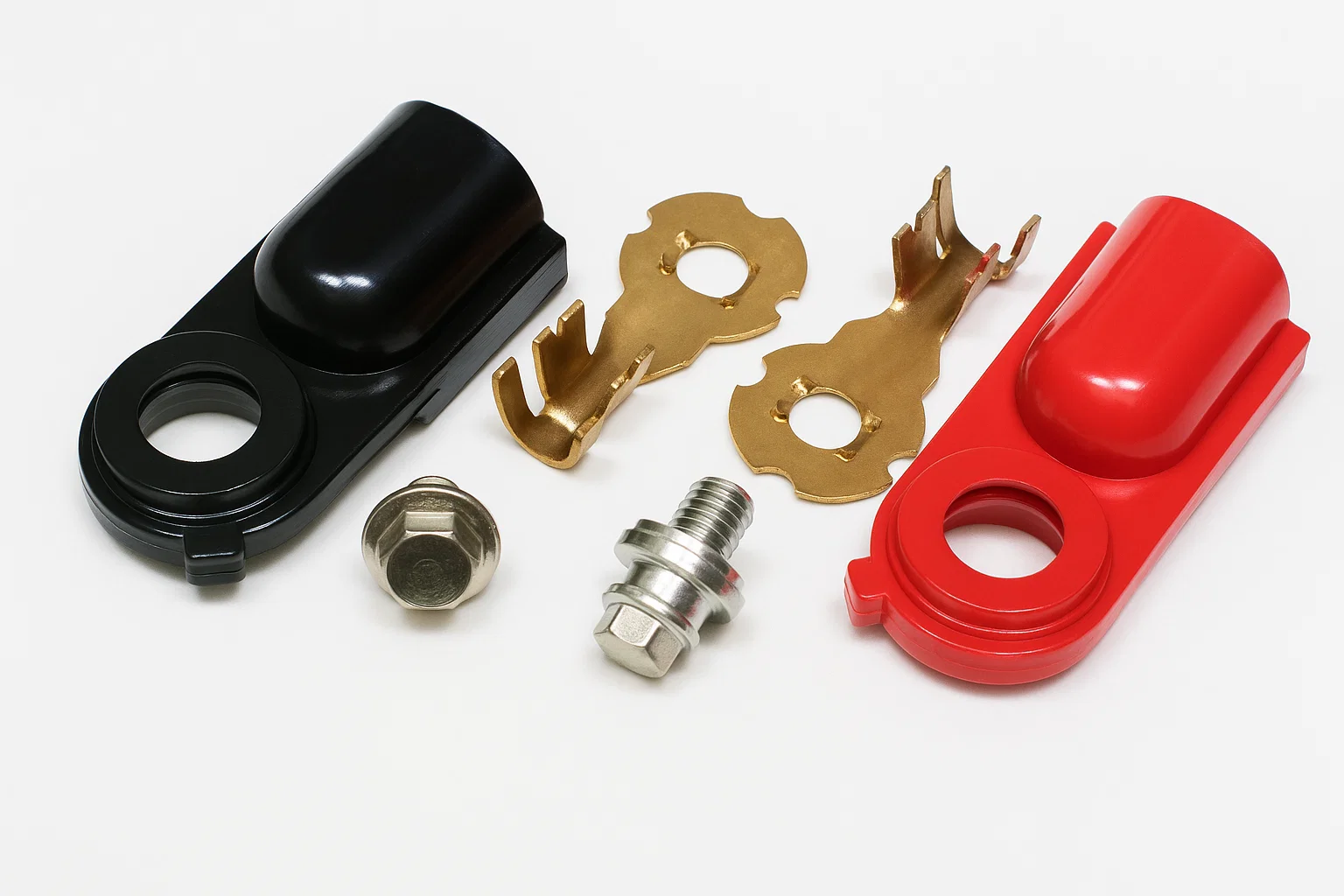
Side post terminals are mounted on the side of the battery rather than on the top. They’re commonly used in General Motors (GM) vehicles and some European models.
Design:
- A threaded bolt fastens into the side of the battery, eliminating the need for a clamping post.
- Offers a sleek, space-saving design.
Advantages:
- Reduces the risk of accidental shorting.
- Provides a secure, flush connection.
- Ideal for vehicles with limited under-hood space.
Disadvantages:
- Only compatible with side-post batteries.
- Not interchangeable with top-post terminals.
If your car uses a side-post design, always ensure the replacement matches the correct thread size and polarity.
Marine Battery Terminals
Marine terminals are specifically designed for boats, jet skis, and other watercraft, where moisture and salt exposure are common. These terminals prioritize corrosion resistance Và ease of connection.

Key Features:
- Made from corrosion-resistant metals like brasshoặc thép không gỉ.
- Tính năng wingnut or stud-styleconnections for quick cable removal.
- Often come with rubber or plastic covers for water protection.
Advantages:
- Excellent corrosion resistance in harsh, salty environments.
- Durable and long-lasting.
- Easy to connect/disconnect even in tight spaces.
Disadvantages:
- Higher cost than standard terminals.
- Not ideal for automotive applications due to differing current loads.
For marine and powersport equipment, corrosion resistance is more valuable than conductivity alone — making brass and stainless-steel terminals a must-have.
Hybrid Battery Terminals
Hybrid battery terminals combine two or more materials, often copper and lead, to achieve superior conductivity and longer lifespan. They are a newer generation of terminals designed for high-performance or specialized vehicles.

Features:
- Multi-slot design supports multiple cable connections.
- Enhanced corrosion protection and conductivity.
- Suitable for vehicles with high electrical demand (ví dụ., trucks, RVs, or vehicles with audio systems).
Advantages:
- Lower resistance and better current flow.
- Less maintenance than pure lead terminals.
Disadvantages:
- More expensive than standard terminals.
- Hybrid terminals are an excellent choice for those who need dependable performance and durability in more demanding environments.
Heavy-Duty and Industrial Battery Terminals
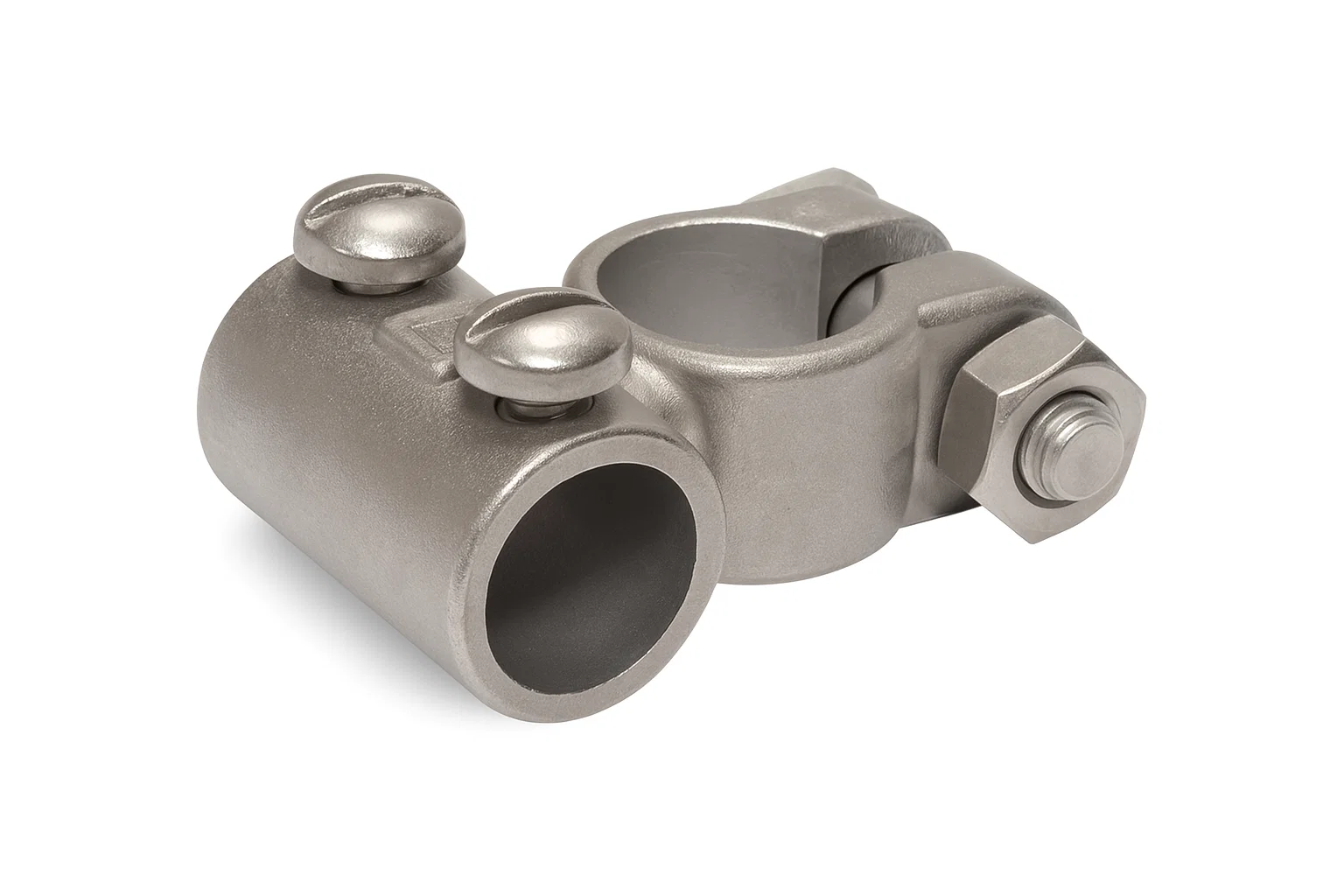
In heavy equipment, forklifts, or military vehicles, battery terminals must withstand high current loads Và tough operating conditions. These industrial-grade terminals are built from high-conductivity copper or tin-plated brass, designed for maximum reliability.
Features:
- Thick construction for durability and higher current handling.
- Custom options available: bolt-down, ring terminals, or compression-style.
- Resistant to vibration and mechanical stress.
Ứng dụng:
- Construction machinery
- Commercial trucks
- Power backup systems
If you operate in extreme environments, heavy-duty terminals provide the strength and longevity standard terminals can’t offer.
Battery Terminal Materials: Which Is Best?
| Vật liệu | Conductivity | Corrosion Resistance | Cost | Best For |
| Lead | Medium | Low | Low | Standard vehicles |
| đồng | Excellent | Moderate | Medium | High-performance or industrial |
| Brass | High | High | Medium-High | Marine or outdoor use |
| Stainless Steel | Moderate | Very High | High | Corrosive or marine environments |
Tip: For everyday automotive use, lead hoặc copper terminals offer the best balance between cost and performance. For marine or high-humidity environments, brass hoặc thép không gỉ is more durable.
Signs Your Battery Terminals Need Replacement
Knowing when to replace your battery terminals can save you from unexpected breakdowns. Watch for these signs:
- White or green corrosion builduparound the terminals.
- Loose or cracked clampsthat don’t hold firmly.
- Hard startingor flickering lights.
- Overtightened boltsthat strip the threads.
- Frequent battery drainage or voltage drops.
Replacing faulty terminals early helps maintain stable electrical performance and extends battery life.
Maintenance Tips: Keeping Battery Terminals Clean and Reliable
Proper care can extend the life of your battery terminals and prevent electrical problems.
Maintenance checklist:
- Inspect regularlyfor corrosion or looseness.
- Lau dọnwith a baking soda and water solution, then rinse and dry.
- Apply anti-corrosion grease or petroleum jellyto protect against moisture.
- Avoid overtightening bolts — secure them firmly but gently.
- Check terminals whenever you service or replace your battery.
Routine maintenance is simple but can make a big difference in electrical reliability.
How to Choose the Right Battery Terminals
Before replacing your terminals, consider the following:
- Battery type: Top-post or side-post design.
- Vật liệu: Match to your environment (standard, marine, công nghiệp).
- Polarity: Ensure positive and negative terminals are correctly positioned.
- Connection type: Standard clamp, stud, or ring terminal based on your setup.
- Extra connections: Choose multi-slot designs if you need to attach accessories.
Choosing correctly ensures compatibility, độ tin cậy, and optimal power flow.
Phần kết luận: Small Components with a Big Role
Battery terminals may look simple, but they are the foundation of your vehicle’s electrical connection. Whether you’re maintaining a daily driver, a boat, or heavy machinery, choosing the right type and material ensures consistent performance and prevents costly downtime.
At Qianwei, we supply a complete range of battery terminals and electrical connectors — from automotive to marine and industrial applications.
Each terminal is designed for high conductivity, corrosion resistance, and long-lasting performance, helping you power every project with confidence.
Câu hỏi thường gặp
What are battery terminals used for?
Battery terminals are the metal connectors that link your vehicle’s battery to its electrical system. They allow electrical current to flow between the battery and the car’s components — such as the starter, lights, and sensors. Without properly functioning terminals, your battery cannot deliver power efficiently.
What’s the difference between top-post and side-post battery terminals?
Top-post terminals sit on top of the battery and connect using a clamp that fits around the battery post. They are the most common type found in cars and trucks.
Side-post terminals, on the other hand, are located on the side of the battery and connect using a threaded bolt. They save space under the hood and are often used in GM vehicles. Always choose the terminal type that matches your battery design.
How do I know if my battery terminals are bad?
You might need new terminals if you notice:
- Corrosion (white or green powdery buildup)
- Loose or damaged clamps
- Difficulty starting your vehicle
- Flickering dashboard lights
If these issues persist after cleaning, replacement terminals are likely required.
What materials are best for battery terminals?
The most common materials include:
- Lead:Affordable and widely used in standard automotive applications.
- đồng:Excellent conductivity and ideal for high-performance or industrial use.
- Brass or Stainless Steel:Highly resistant to corrosion, perfect for marine environments.
Your choice depends on your vehicle type and operating environment.
How can I prevent battery terminal corrosion?
To prevent corrosion, regularly clean your terminals with a mix of baking soda and water. After cleaning, apply a light coat of petroleum jelly or anti-corrosion grease to protect against moisture. Cũng, ensure the connections are tight and secure, as loose terminals can accelerate corrosion buildup.
Can I replace battery terminals myself?
Yes — replacing battery terminals is a simple DIY task for most vehicle owners. You’ll need a wrench, wire brush, and replacement terminals. Always disconnect the negative (-) terminal first, then the positive (+) phần cuối. After replacement, reconnect in the reverse order and tighten securely.
What are marine battery terminals and how are they different?
Marine battery terminals are made from corrosion-resistant materials like brass or stainless steel and are designed to withstand exposure to water and salt. They often use a wingnut or stud-style connection, allowing quick and secure cable attachment — perfect for boats and other marine equipment.
How often should I inspect my battery terminals?
It’s best to check your battery terminals every 3 ĐẾN 6 months, or whenever you service your vehicle. Regular inspections help you spot corrosion, cracks, or loose connections early — preventing electrical issues and extending your battery life.
Are all battery terminals the same size?
KHÔNG. Battery terminals come in different sizes and configurations depending on the battery type (ô tô, marine, công nghiệp) and the polarity (positive or negative). Always match the terminal size and design to your battery specifications before replacement.
Why is proper battery terminal connection important?
A secure, clean connection ensures efficient current flow, prevents voltage drops, and reduces the risk of starting issues. Poor connections can cause electrical resistance, battery drain, or even system damage over time — so keeping your terminals in good condition is crucial for vehicle reliability.
