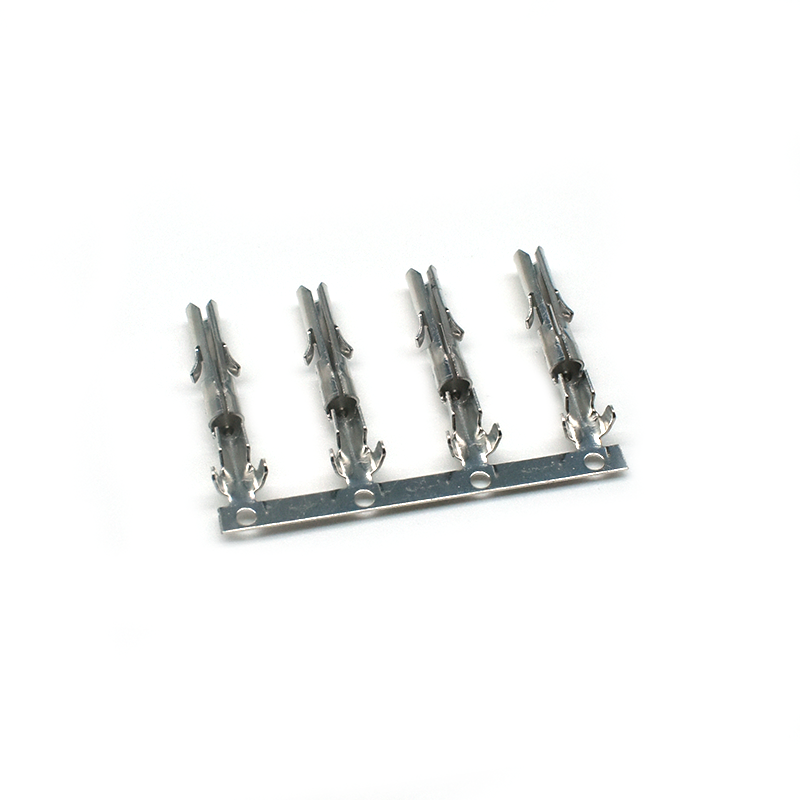
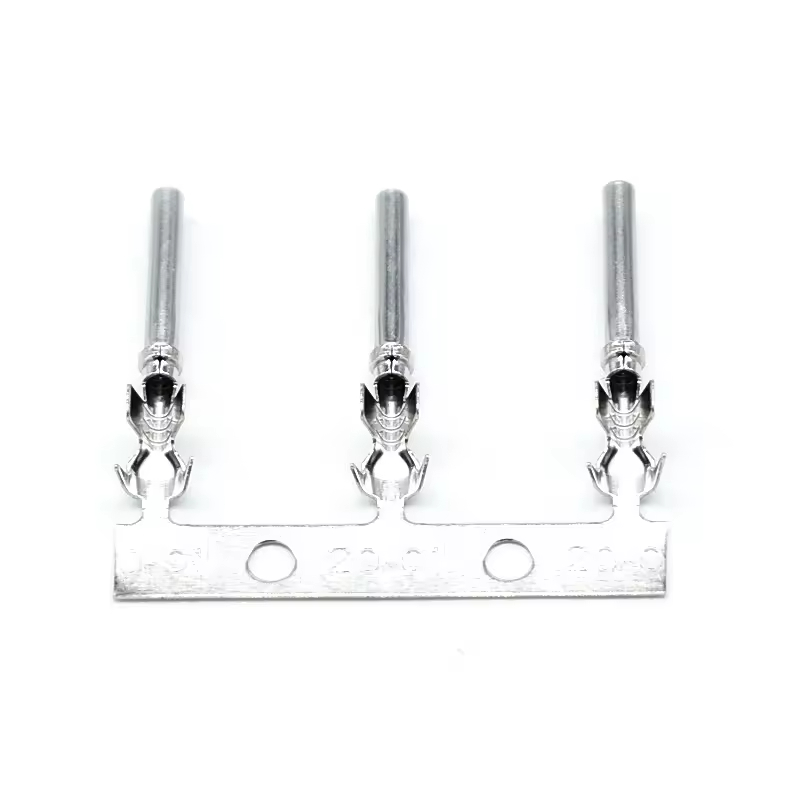
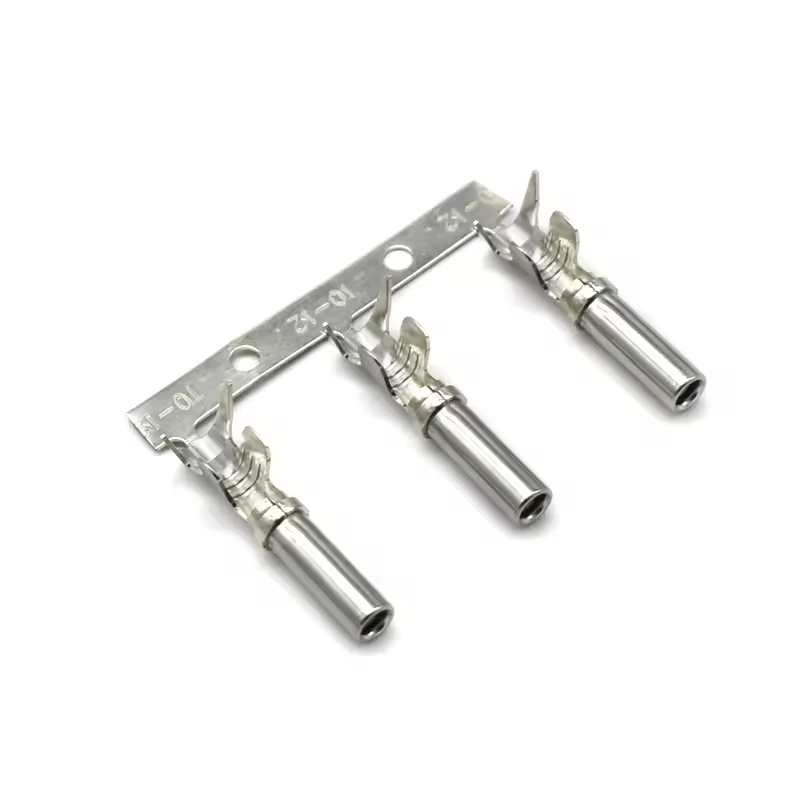
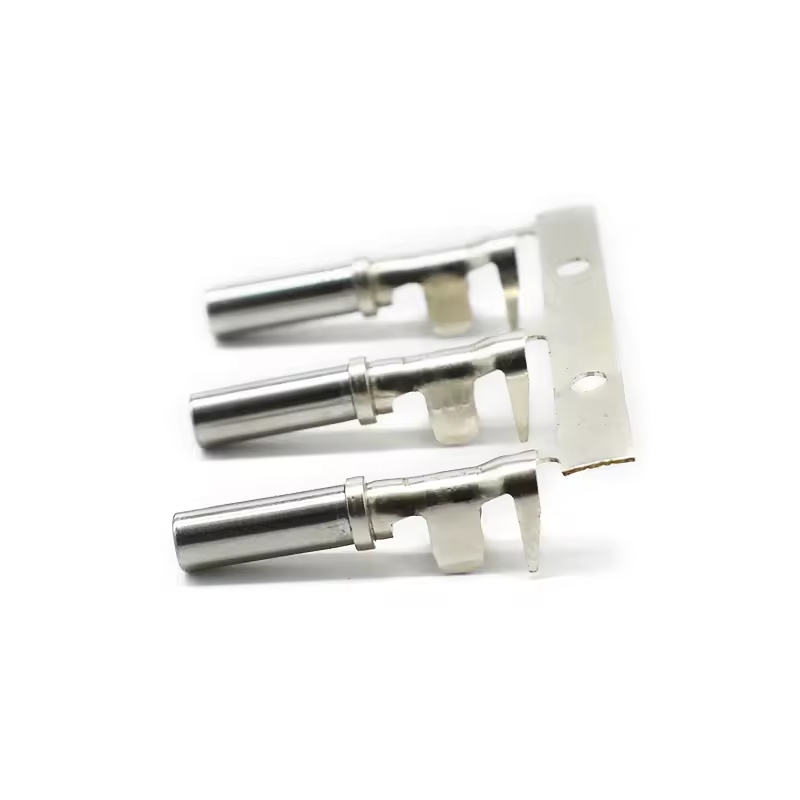
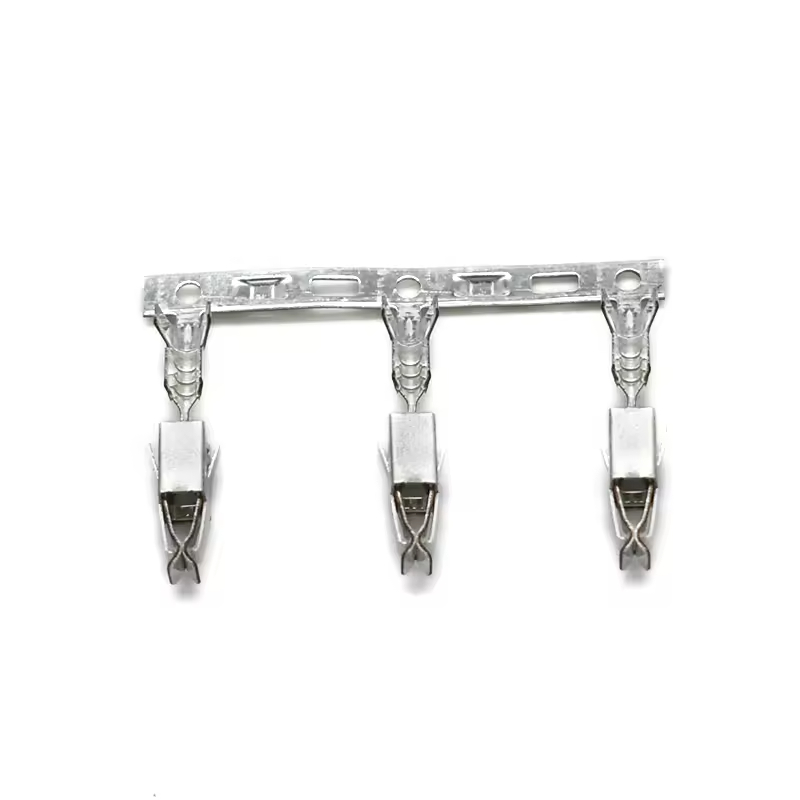
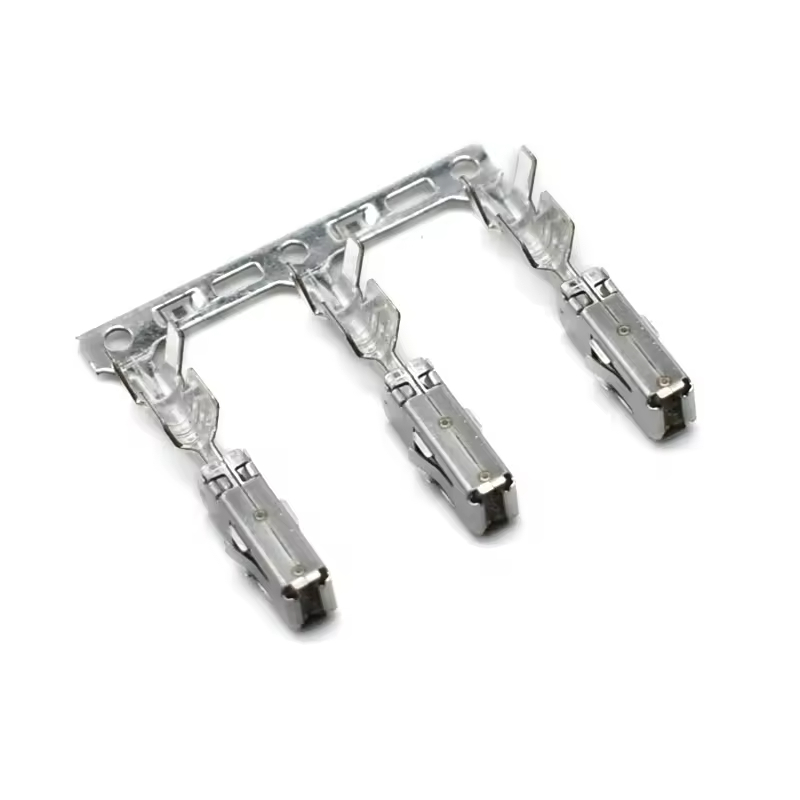
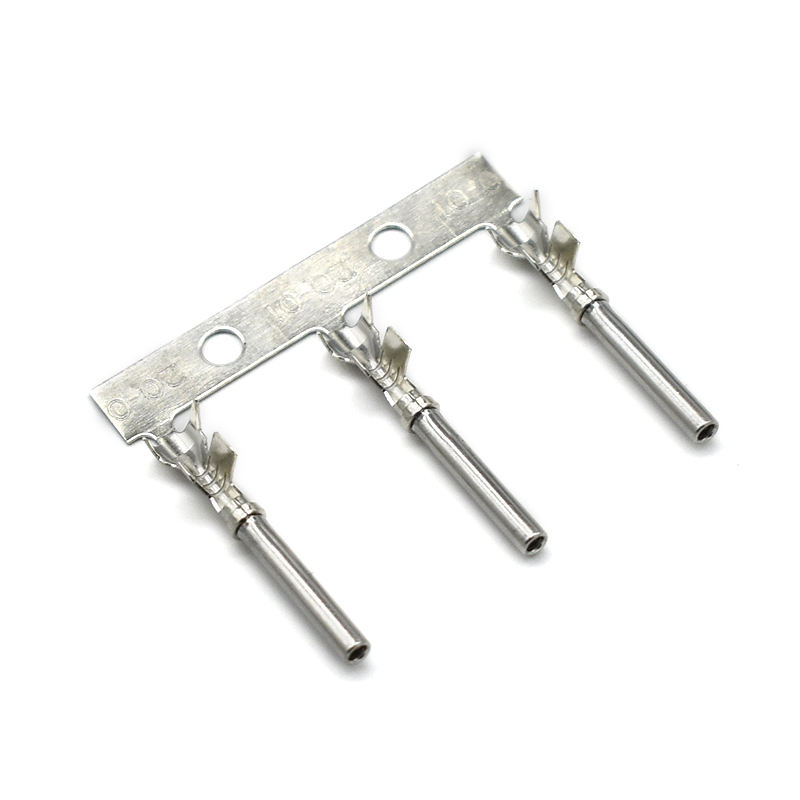
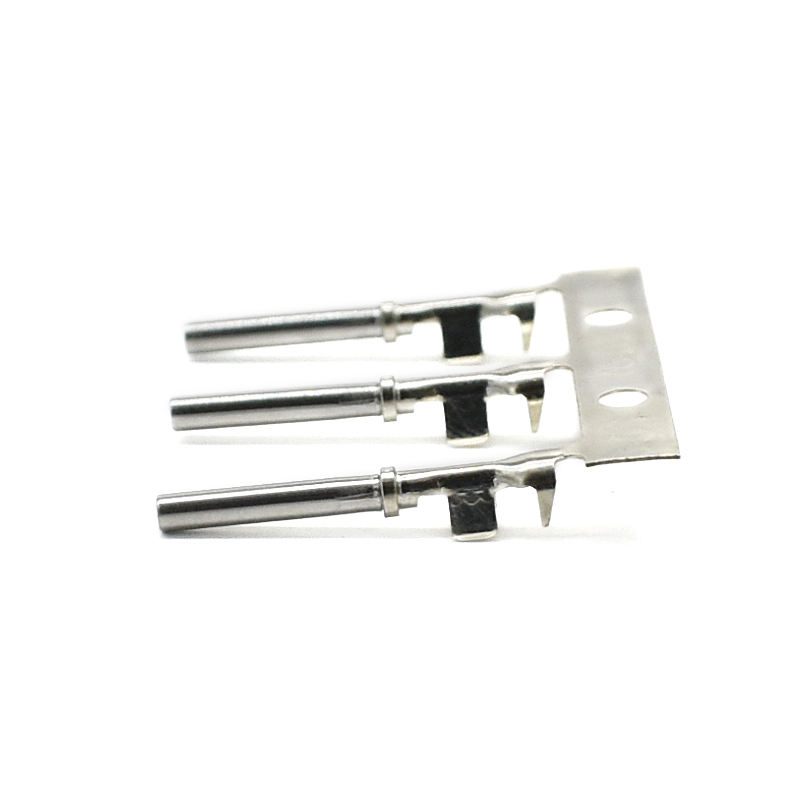
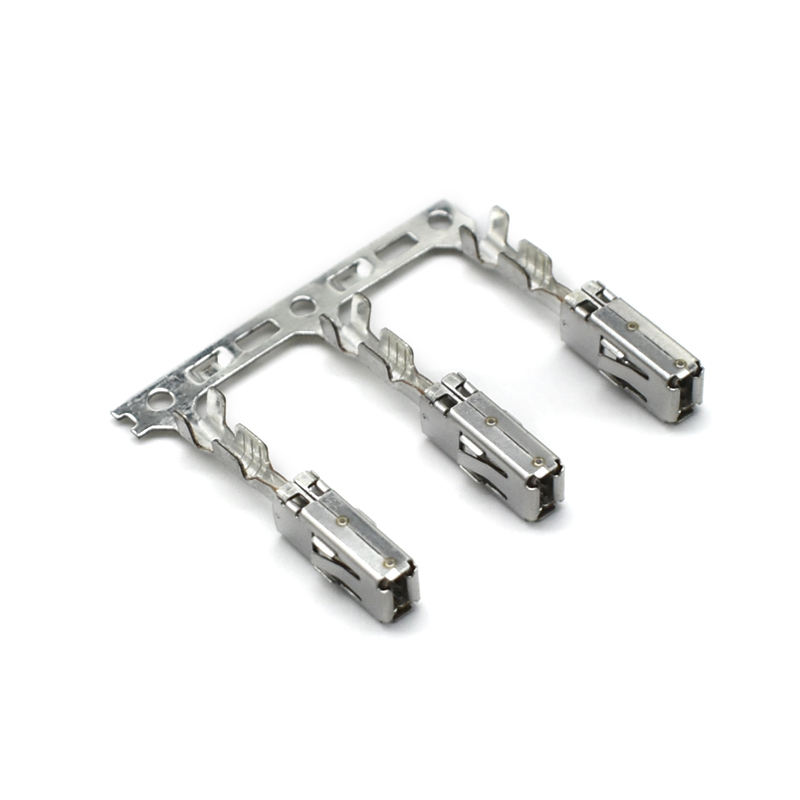
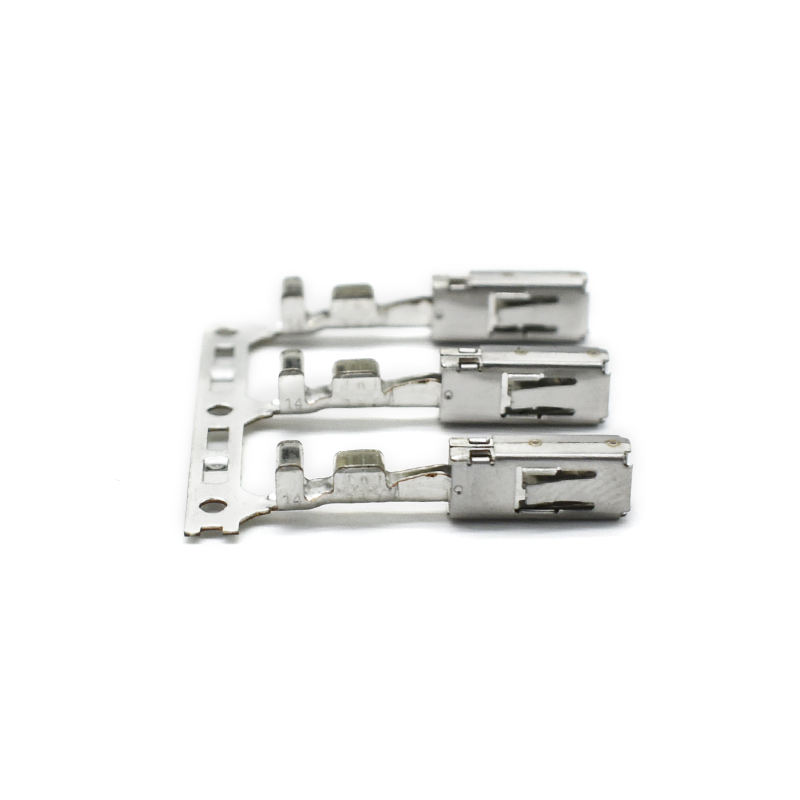
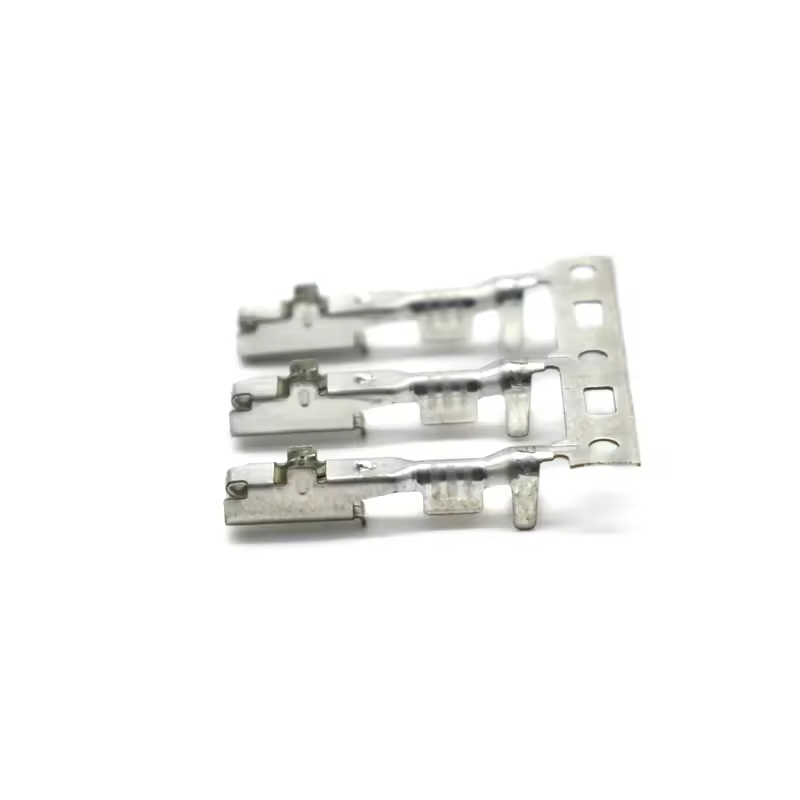
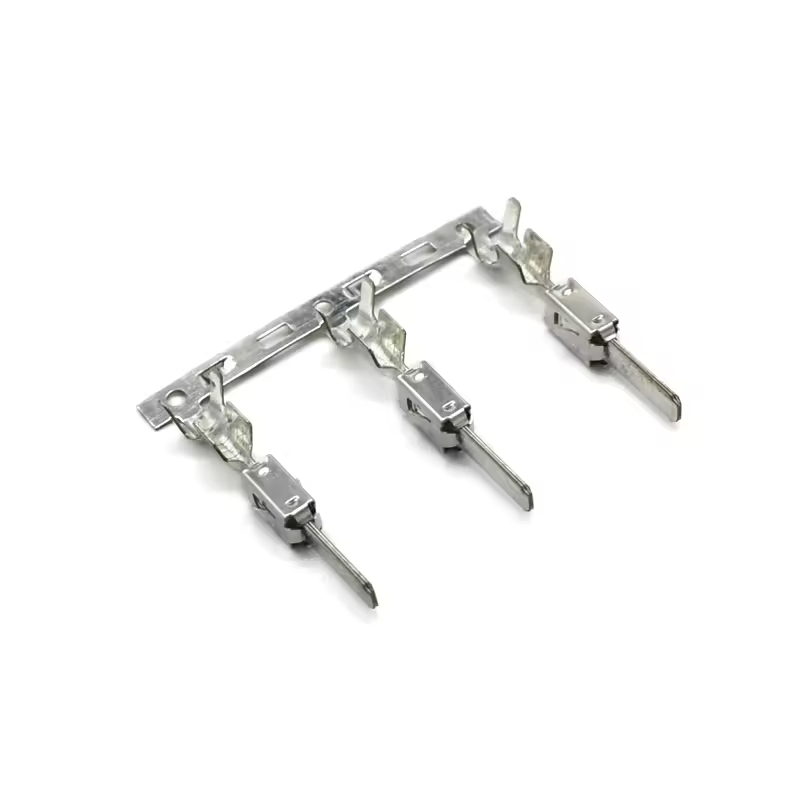
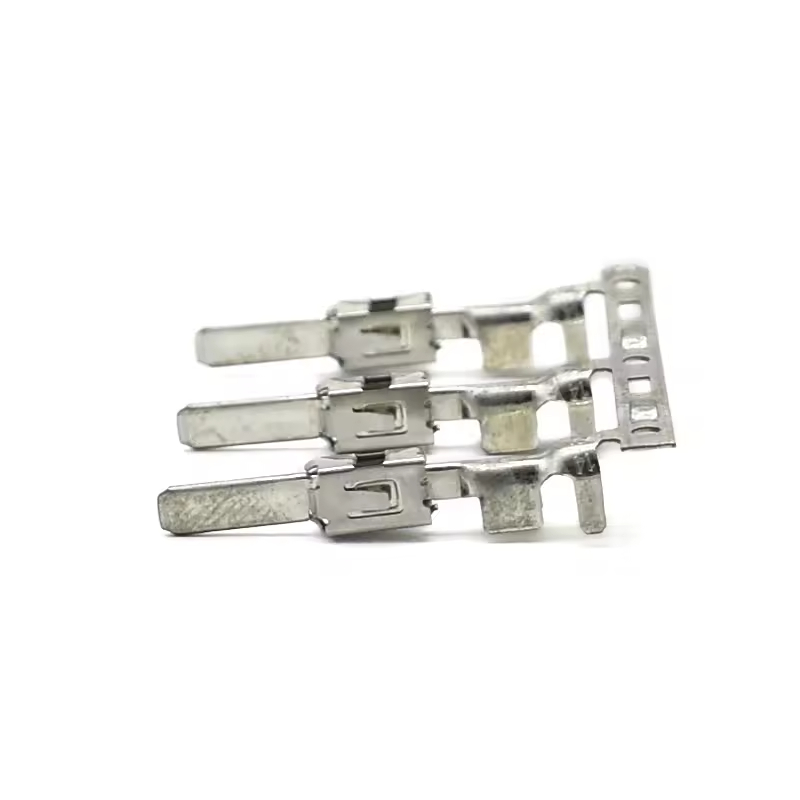
Car terminals are critical electrical connection elements utilized in the automotive wiring systems for confidence in hot and cold conductor relay of electricity and signals through different systems of a vehicle. These connectors are essential to modern automobiles, electric cars (EVs), and hybrid systems because they are long-lasting, highly conductive, corrosion-resistant, and easily maintainable. Car terminals are built to sustain long-term performance even in extreme automotive conditions, such as vibration, high temperatures, and exposure to fluids like oil and water, as well as fuel.
Qianwei Precision manufactures car terminals that adhere to automotive-grade standards and has standard and customized solutions to customers’ requirements to fit particular vehicle systems.
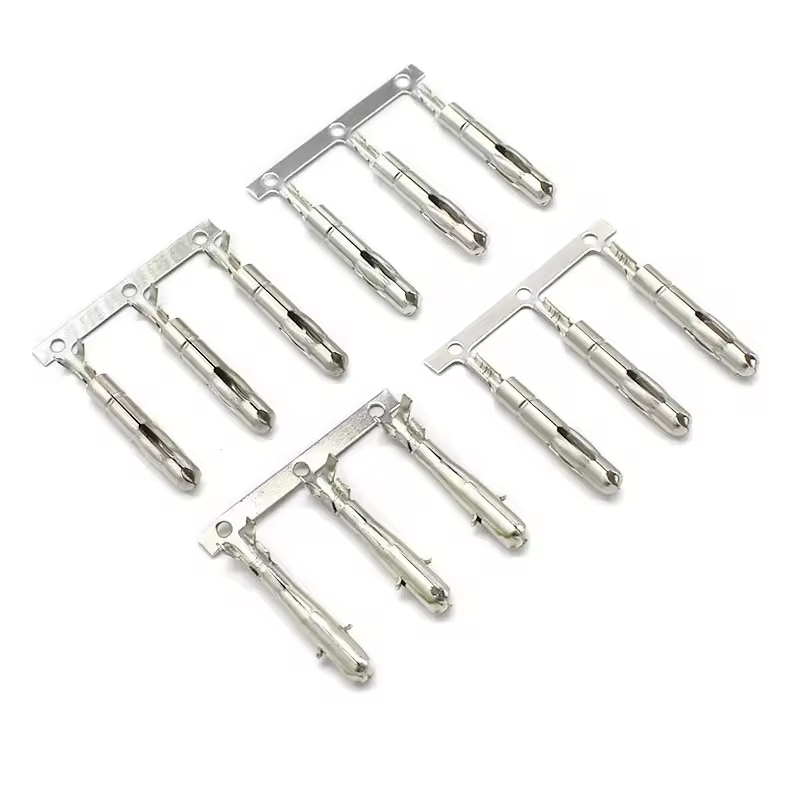
What Are Car Terminals?
Car terminals are special connectors that enable wire-to-wire or wire-to-component connections in motor vehicles in a secure manner. They provide continuity of the electrical system and consideration of mechanical force, rung động, and thermal expansion. Types of car terminals may be generally categorised into a few types according to the application and design:
- Ring terminals: Circular terminals used to connect to bolts or studs.
- Spade terminals:Flat connectors, which slide under screws or bolts.
- Bullet terminals: These are cylindrical connectors that fit into a corresponding receptacle.
- Blade connectors:Thin-tab connectors to connect easily with female receptacles.
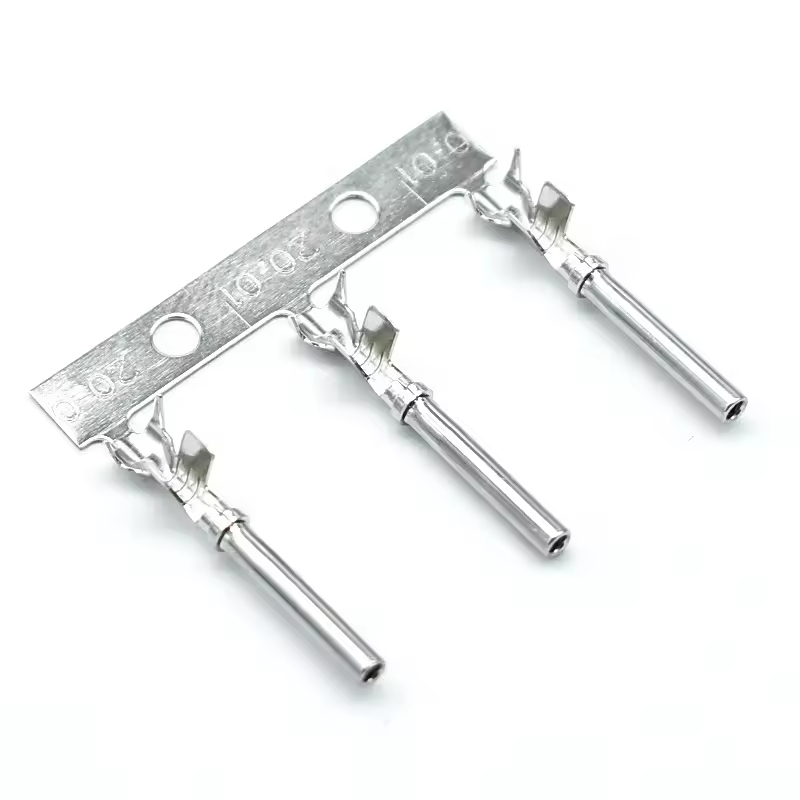
- Pin terminals. Cylindrical pins are applied in automotive control system multi-pin connectors.
These terminals allow fast assemblies, tool-free mounting, and solid interconnects that would be important in large quantity automotive-building, and also in field repair and maintenance.
Engineering Design Principles
The car terminal performance relies on the number of engineering principles that will guarantee safety, electrical reliability, and mechanical stability:
Contact Pressure and Retention Force
The electrical reliability of car terminals depends on controlled contact pressure. The correct tension or crimping is done on the spring to make sure that the terminal is constant against the mating. A large retention force is used to avoid accidental disconnection during vibration, thermal cycling, and mechanical stress that occur in automotive applications.
Electrical Conductivity
Car terminals are engineered in such a way that they offer low-resistance electrical conduits. High-purity copper alloys, optimal contact surfaces, and the use of the correct plating materials reduce the resistive losses and eliminate localized heating. It is especially crucial in high-current uses like battery connections in EVs, starter motors, and alternators.
Mechanical Stability
Car terminals should be able to take mating cycles, rung động, and mechanical stress repeatedly. Mechanical security is enhanced through reinforced designs, lock systems, and hard crimps to ensure connections are reliable both in traditional vehicles and in EV systems.
Standard Sizes and Specifications
Car terminals are available in different sizes to suit various wire gauges, current ratings, and the needs of the application. Typical sizes include:
| Terminal Type | Wire Size Range | Current Rating | Typical Application |
| Ring Terminal | 0.5–10 mm² | Up to 50 MỘT | Battery, grounding, alternator |
| Spade Terminal | 0.5–6 mm² | Up to 30 MỘT | Rơle, switches, sensors |
| Bullet Terminal | 0.5–6 mm² | Up to 25 MỘT | Lighting, accessories |
| Blade Terminal | 0.5–6 mm² | Up to 30 MỘT | Fuses, rơle, and control modules |
| Pin Terminal | 0.2–1.5 mm² | Up to 10 MỘT | Multi-pin connectors, signal circuits |
Electrical and Thermal Specifications:
- Rated voltage:up to 600 V.
- Operation temperature: – 40 °C to +125 °C.
- Insulation:PVC, Nylon, Heat-resistant polymers.
- Plating:Tin, Nickel, Silver, Gold.
Manufacturing Processes for Car Terminals
Qianwei Precision is a company that uses highly accurate and automated processes to producehigh-qualityy car terminals that are compatiblewitho a conventional automotive application but also demanding OEM requirements.
1. Raw Material Inspection
Incoming materials are strictly checked in terms of chemical structure and mechanical characteristics to meet electrical working and mechanical reliability requirements. The step is used to ensure that all materials are able to resist thermal, mechanical, and environmental stresses that are experienced in the automotive operations. Only materials that are found after these rigorous tests are taken to the next production phase,n ensuring high quality of products to the very end.
2. Precision Stamping
Fast stamping has a reduction in the error of dimension and dimensional consistency, which has led to a reliable electrical contact and mechanical fit. State-of-the-art tooling enables a high level of tightness, and the amount of unused material is minimal in this scenario, as terminal shapes can be repeated throughout manufacturing in high quantities. This phase also allows the specialization of the terminal profiles towards specialized automotive requirements without affecting the accuracy.
3. Crimping and Forming
The terminals are formed and shaped by specialized forming and crimping machines to maximize retention force and conductivity and retain mechanical integrity. Automated crimping is done to provide uniform compression and eliminate likely points of weakness due to electrical failure or accidental disconnection. This process also enables standard and custom terminal designs and is hence flexible towards most automotive wiring systems.
4. Heat Treatment
The heat treatment procedures are done on a need basis to improve the spring characteristics, the ability to resist fatigue,e and the sustainability of the mechanical performance over time. The phase enhances the capability of terminals to ensure a reliable contact during repeated vibration and thermal cycling in a car. Regulated heating and cooling conditions are meant to avoid warping or degrading of the material and maintain its uniformity in its performance over the lifetime of the product.
5. Electroplating
The process of electroplating is carried out using well-regulated chemical conditions so as to impart corrosion protection, better electrical conductivity, and corrosion surface life. The technology also increases wear resistance in terminals that have large numbers of mating cycles and mechanical stresses. Qianwei Precision attains reliability in every terminal by regulating plating thickness and composition to the standard performance of required conductivity and environmental conditions, as well.
6. Final Inspection and Testing.
Every load of terminals is thoroughly tested; the dimensional checks, electrical conductivity tests, and mechanical tests are conducted, and all criteria of automotive standards are met. Random sample testing and batch-level testing ensure that every product meets the OEM’s requirements and complies with international safety standards. The stage serves to check every single terminal that leaves the facility so that it can be sure of reliable performance in any automotive systems.
7. High-Level Automation
Qianwei Precision is capable of achieving more than 98 percent automation in terminal making, which ensures uniform quality, scalability, and efficient production, meeting bulk delivery requirements for customers through OEM. Automation ensures that there is less human error, better repeatability, and high-speed production of standard and customized terminals. This new level of automation also promotes traceability and data-driven quality control that gives the OEM clients worldwide confidence.
Base Material Use in Car Materials
The selection of materials is crucial when designing car terminals so that they will achieve reliable electrical performance, sức mạnh cơ học, and durability in the automotive environment. A base material that fits the requirements of any vehicle today has to compromise between conductivity, corrosion resistance, and fatigue resistance.
| Material | Electrical Conductivity (% IACS) | Key Mechanical Property | Typical Applications |
| Brass (Cu-Zn) | 25–30% | Easy forming, good strength | General automotive wiring, rơle, sensors |
| Phosphor Bronze | 15–20% | Excellent spring force, high fatigue resistance | Vibration-resistant connectors, control modules |
| Copper Alloys | 80–95% | High current-carrying capacity | Battery terminals, starter motors, EV power distribution |
Plating and Surface Treatments
The electroplated surfaces improve the conducting ability, corrosion resistance, and longevity of the car terminals. Popular plating materials are:
- Tin plating:Cheap, noncorrosive, can be used in general automobile applications.
- Nickel plating: It improves the wear and adhesion of long-term performance.
- Silver plating: Provides high conductivity and thermal stability to high current or sensitive circuits.
- Gold plating: Applied in low-current signal-critical applications, including those found in vehicle control modules or infotainment systems.

Types of Car Terminals
Car terminals are important parts that offer safe and trustworthy electrical connections between automotive systems that are safe, powerful, and long-lasting.
1. Crimp Terminals
Crimp terminals are attached to the end of a wire with a crimping tool that offers mechanical retention and electrical continuity without soldering. They are popular in automotive systems due to their stability, simple set and Commission, and vibration ability.
2. Ring Terminals
Ring terminals are circular in design, with a crimp or stud around which they snap securely and firmly into place. They are typically employed in grounding points, battery connections, and high current.
3. Spade Terminals
Spade terminals are fashioned with a forked structure to slide under the screws or bolts, making it easy to install and maintain. They can be used in switches, rơle, and in fuse holder connections.
4. Blade Terminals
Blade terminals are flat connectors that can be inserted into corresponding female receptacles, providing tool-free interconnections that can be connected or disconnected quickly. They are applied widely in fuse boxes, lighting systems, and control modules.
5. Pin Terminals
Pin terminals are cylindrical male connectors that are tasked with insertion into multi-pin housings. They are often employed in engine control units, transmission modules, and automotive sensors.
6. Socket Terminals
Socket terminals are the female equivalents of pin or blade terminals, which offer safe mating to the male connectors. They provide a stable electrical contact and find application in harnesses, lighting circuits, and sensor interfaces.
7. Sealed Waterproof Terminals
Waterproof terminals are hermetically sealed to keep away moisture, dust, and chemical infiltrations, and are long-lasting. They are perfectly fitted in engine compartments, EV battery systems, and automotive outdoor lighting.
Applications in the Automotive Industry and related industries
Car terminals are important in providing good electrical connections in most automotive systems. They are indispensable in the traditional and modern vehicle platforms, in addition to other industrial uses, due to their versatility, độ bền, and high performance.
1. Traditional and Electric Vehicles
A variety of automotive circuits use car terminals such as lighting, sensors, actuators, ECU sockets, battery sockets, and power distribution systems. Their vibration resistance, sức mạnh cơ học, and serviceability make them suitable for the current automobile platforms.
2. Energy Storage and Battery Systems
Automotive battery terminals, EV battery pack terminals, and hybrid energy storage systems have to deal with large current flows and have low resistance and stable electrical contacts.
3. Home and Commercial Automotive Systems
The auxiliary automotive systems like air conditioning units, audio systems, and infotainment modules also utilize car terminals because the connectivity solutions are cost-effective, durable, and reliable.
4. Industrial Automation
Cars used in an industrial context will have car terminals fitted in vehicle assembly lines, vehicle testing stations, and robotic controls, which will offer consistent and high-speed connections.
OEM Solutions and Customization
A standard terminal is not always able to support all application requirements. Qianwei Precision has customized solutions which include:
- Custom tab dimensions
- High current or corrosion-resistant plating.
- Materials resisting high temperatures.
- Customized insulation
- Unique mechanical design or locking.
With modern equipment and the development of a mold, Qianwei Precision can make custom car terminals fast and ensure performance.
Quality and Compliance
The car terminals are produced in compliance with international automotive requirements:
- RoHS and REACH compliant
- Traceability of materials
- Verification of electrical and mechanical performance.
- Strict testing of life cycles to ensure reliability.
Why Qianwei Precision?
Knowledge of High-Precision Terminals: More than a decade of expertise in the production of automotive-grade terminals and connectors.
- High Accuracy and Reliability:Tight tolerances provide predictable contacts, minimum resistance, and extend life.
- Complete Portfolio: Standard and custom terminals, đầu nối, and wire harness solutions.
- High Quality Assurance: Intensive testing and inspection give the product reliability.
- Quick Lead Times and Automation: OEMs with orders of large volume can be shipped rapidly with 98 percent automation.
- International OEM and Supply Service: Global delivery of partially traceable terminals and after-sales services.
Conclusion
Car terminals are an essential component of the system of automotive electrical equipment, giving a safe, đáng tin cậy, and durable medium of power and signal conduction. In the traditional vehicles in the hybrid and electric parks, there are high-quality terminals that can guarantee the performance, safety, and easy fix of the vehicles.
Qianwei Precision has been operating for over 10 số năm kinh nghiệm, with superior production methods and extreme automation to produce high-performance customized car terminals based on the critical demands of modern automotive, xe điện, and industrial operations.
Câu hỏi thường gặp
What is a car terminal?
A car terminal, also known as an automotive terminal, is an electrical connector employed in cars to make wire-to-wire or wire-to-component connections that are incredibly reliable and mechanically stable.
What are the typical car terminals?
The most frequently used terminals are the ring, spade, bullet, blade, and pin terminals.
What are car terminals made out of?
Alloys of brass, phosphor bronze, copper, surface plated with tin, nickel, silver, or gold.
Are EV battery systems compatible with car terminals?
Đúng, car terminals can be used in high-current applications like EV battery connections and power distribution modules.
Can car terminals be customized?
Đúng, size, plating, insulation, and mechanical design of terminals can be customized to meet specific automotive needs.
What is the normal operating temperature range?
The majority of car terminals can work with a range of -40 °C to +125 °C, but the insulation and materials assist in this temperature range.