

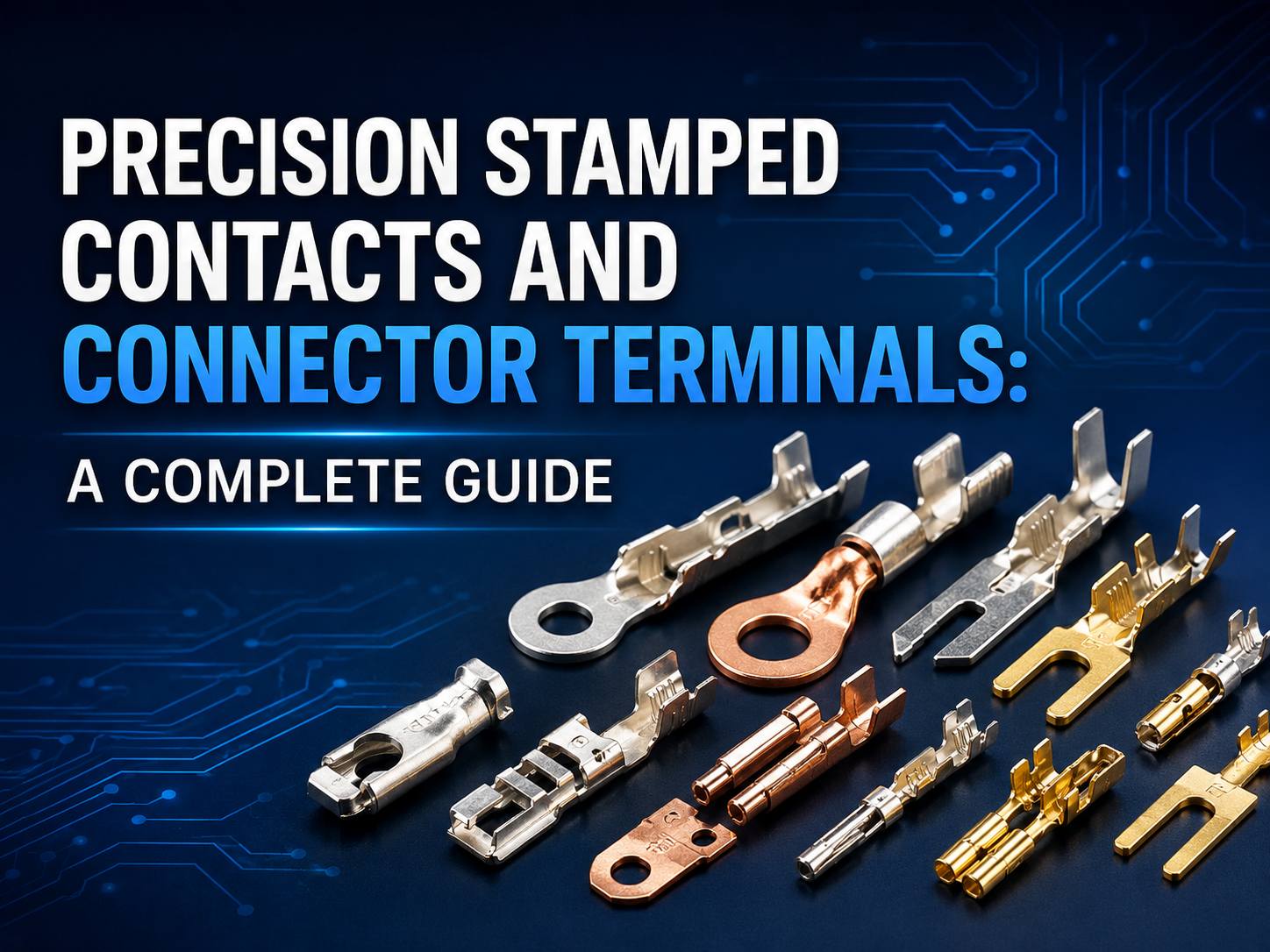
Los sistemas eléctricos y electrónicos modernos se basan en miles de pequeños componentes que funcionan juntos a la perfección.. entre ellos, contactos estampados de precisión y terminales del conector son algunos de los más críticos. Aunque suelen estar ocultos dentro de los conectores, mazos de cables, paneles de control, baterias, y dispositivos electrónicos, Estos componentes son responsables de brindar una conductividad eléctrica confiable., conexiones mecánicas estables, y durabilidad a largo plazo.
Desde vehículos eléctricos y sistemas de almacenamiento de energía hasta centros de datos de IA y automatización industrial., Los contactos estampados con precisión desempeñan un papel clave para garantizar que la transmisión de energía y señal siga siendo segura y eficiente..
A medida que las industrias continúan avanzando hacia la miniaturización, mayor capacidad actual, y sistemas eléctricos más inteligentes, Los fabricantes requieren terminales de contacto que ofrezcan tolerancias más estrictas., mejor conductividad, y rendimiento constante en condiciones exigentes.
En esta guía completa, aprenderá qué son los contactos estampados de precisión, como se fabrican, los diferentes tipos disponibles, opciones de material y revestimiento, aplicaciones comunes, y cómo elegir el socio fabricante adecuado para su proyecto.
¿Qué son los contactos estampados de precisión??
Los contactos estampados de precisión son componentes metálicos fabricados mediante procesos de estampado de precisión de alta velocidad.. Sirven como interfaz conductora dentro de los conectores eléctricos., permitir que la corriente eléctrica o las señales pasen de un componente a otro.
A diferencia de los contactos mecanizados, Los contactos estampados se producen utilizando matrices progresivas que dan forma a tiras de metal en geometrías complejas con tolerancias extremadamente estrictas.. Este proceso permite una producción de gran volumen manteniendo una excelente consistencia y menores costos de fabricación..
Estos contactos se utilizan ampliamente en:
- Conectores automotrices
- Paquetes de baterías
- Sistemas de almacenamiento de energía (ESS)
- Electrónica de consumo
- Equipo medico
- Telecomunicaciones
- Automatización industrial
- Sistemas de alimentación de servidores de IA
Porque las conexiones eléctricas afectan directamente el rendimiento del sistema., Cada contacto estampado debe mantener una baja resistencia de contacto., suficiente fuerza de resorte, y excelente durabilidad durante toda su vida útil.
Cómo funcionan los contactos estampados de precisión
Cuando dos mitades del conector están acopladas, Los contactos estampados crean una interfaz mecánica y eléctrica..
El diseño del contacto genera una fuerza de contacto controlada que garantiza:
- Conductividad eléctrica estable
- Baja resistencia eléctrica
- Transmisión de señal confiable
- Resistencia a la vibración
- Larga vida de inserción
La presión de contacto adecuada es uno de los factores más importantes en la confiabilidad del conector.. Muy poca presión aumenta la resistencia y la generación de calor., mientras que una presión excesiva acelera el desgaste.
Por eso la fabricación de precisión es esencial.
Por qué es importante la precisión
Los contactos eléctricos a menudo miden sólo unos pocos milímetros., sin embargo, las tolerancias dimensionales se pueden controlar dentro de micras..
La alta precisión de fabricación garantiza:
- Fuerza de contacto constante
- Mejor rendimiento de apareamiento
- Menor variación de la fuerza de inserción
- Resistencia eléctrica estable
- Vida útil del producto mejorada
- Mejor compatibilidad con el montaje automatizado
Para industrias como la automoción, aeroespacial, dispositivos médicos, e infraestructura de IA, La precisión no es opcional, es un requisito fundamental..
¿Qué son los terminales de conector??
Los terminales de conector son componentes metálicos conductores diseñados para conectar cables., cables, placas de circuito, baterias, o dispositivos eléctricos.
Proporcionan ambos:
- Retención mecánica
- Conductividad eléctrica
Dependiendo de la aplicación, Los terminales del conector pueden estar engarzados., soldado, soldado, o fijado mecánicamente.
Están disponibles en miles de formas y configuraciones para cumplir con diferentes clasificaciones actuales., tamaños de alambre, y métodos de instalación.
Contactos estampados de precisión vs.. Terminales de conector
Aunque estos términos suelen usarse indistintamente, tienen diferentes funciones.
Contactos estampados de precisión Generalmente son los elementos conductores dentro de la carcasa de un conector..
Terminales de conector Son los puntos de terminación completos que conectan alambres o cables a equipos eléctricos..
Por ejemplo:
- Un mazo de cables puede utilizar terminales engarzados..
- Dentro de la carcasa del conector, Los contactos estampados proporcionan la interfaz eléctrica..
- Juntos, Crean un completo sistema de conexión..
Comprender esta diferencia ayuda a los ingenieros a elegir la solución adecuada para cada aplicación..
Cómo trabajan juntos
Una conexión eléctrica completa generalmente incluye:
- Cable
- Terminal de engarce
- Carcasa del conector
- Contacto estampado de precisión
- Conector de acoplamiento
- Equipo electrico
Cada componente contribuye a la confiabilidad general de la conexión..
Si falla un componente, todo el sistema eléctrico puede verse comprometido.
Tipos comunes de contactos estampados de precisión
Diferentes sistemas eléctricos requieren diferentes diseños de contactos.. La selección del tipo de contacto correcto depende de factores como la corriente, Voltaje, ciclos de inserción, estrés mecánico, y condiciones ambientales.
Contactos masculinos
Los contactos macho cuentan con un diseño en forma de pin que se inserta en un contacto hembra correspondiente..
Las ventajas incluyen:
- Baja resistencia a la inserción
- Alta conductividad
- Estructura compacta
- Fácil montaje automatizado
Las aplicaciones comunes incluyen conectores automotrices., equipos industriales, y sistemas de baterías.
Contactos femeninos
Los contactos hembra reciben el pasador macho mientras proporcionan una presión de resorte controlada.
Su diseño asegura:
- Fuerza de contacto estable
- Conexión eléctrica confiable
- Múltiples ciclos de apareamiento
- Excelente resistencia a las vibraciones
Se utilizan ampliamente en conectores de cable a cable y de cable a placa..
Contactos de primavera
Los contactos de resorte utilizan estructuras elásticas para mantener una presión de contacto continua..
Los beneficios incluyen:
- Alta confiabilidad
- Excelente resistencia a las vibraciones
- Larga vida útil
- Baja resistencia de contacto
Las aplicaciones típicas incluyen dispositivos médicos., equipo de comunicacion, servidores de IA, y sistemas de gestión de baterías.
Contactos de hoja
Los contactos de hoja utilizan una tira de metal flexible para crear contacto eléctrico..
En comparación con los contactos de pin tradicionales, ellos ofrecen:
- Menor costo de fabricación
- Dimensiones compactas
- Rendimiento eléctrico estable
- Fácil producción en masa
Se encuentran comúnmente en electrónica de consumo y conectores compactos..
Contactos PIN
Los contactos de clavija son uno de los tipos de contactos de conector más comunes..
Su diseño cilíndrico proporciona:
- Excelente conductividad
- Alta resistencia mecánica
- Baja pérdida de inserción
- Rendimiento de acoplamiento confiable
Los contactos pin se utilizan ampliamente en conectores industriales., sistemas de aviación, y equipo medico.
Contactos de enchufe
Los contactos del zócalo trabajan junto con los contactos del pin para completar el circuito eléctrico..
Su estructura de resorte de precisión garantiza:
- Presión de contacto constante
- Baja resistencia eléctrica
- Larga vida de apareamiento
- Rendimiento estable bajo vibración
Los contactos de enchufe son esenciales para aplicaciones que requieren conexiones y desconexiones repetidas..
Contactos de alta corriente
Como vehículos eléctricos, sistemas de almacenamiento de energía en baterías, y los centros de datos de IA exigen más potencia, Los contactos de alta corriente se han vuelto cada vez más importantes..
Estos contactos cuentan:
- Secciones conductoras más grandes
- Mayor capacidad actual
- Disipación de calor optimizada
- Fuerte soporte mecánico
- Aumento de temperatura baja
Generalmente se fabrican a partir de aleaciones de cobre de alta conductividad con estaño., plata, o niquelado.
Las aplicaciones incluyen:
- Paquetes de baterías
- Gabinetes ESS
- Sistemas UPS
- Unidades de distribución de energía
- Sistemas de energía del centro de datos de IA
Contactos de señal
Los contactos de señal están diseñados específicamente para transmitir señales eléctricas de baja corriente en lugar de energía..
Sus prioridades incluyen:
- Integridad de señal estable
- Baja pérdida de inserción
- Excelente compatibilidad de blindaje
- Rendimiento de alta frecuencia
- Operación confiable a largo plazo
Los contactos de señal se utilizan ampliamente en:
- Equipo de comunicación
- Conectores de transmisión de datos
- Sensores industriales
- Electrónica médica
- Equipo informático de IA
Tipos comunes de terminales de conector
Los terminales de conector están diseñados en varias formas y configuraciones para cumplir con diferentes métodos de instalación., requisitos actuales, y diseños de equipos. Elegir el tipo de terminal correcto puede mejorar la eficiencia de la instalación, aumentar la confiabilidad de la conexión, y reducir los costos de mantenimiento.
Terminales de anillo
Los terminales de anillo cuentan con una abertura circular completamente cerrada que se ajusta de forma segura sobre un tornillo o perno.
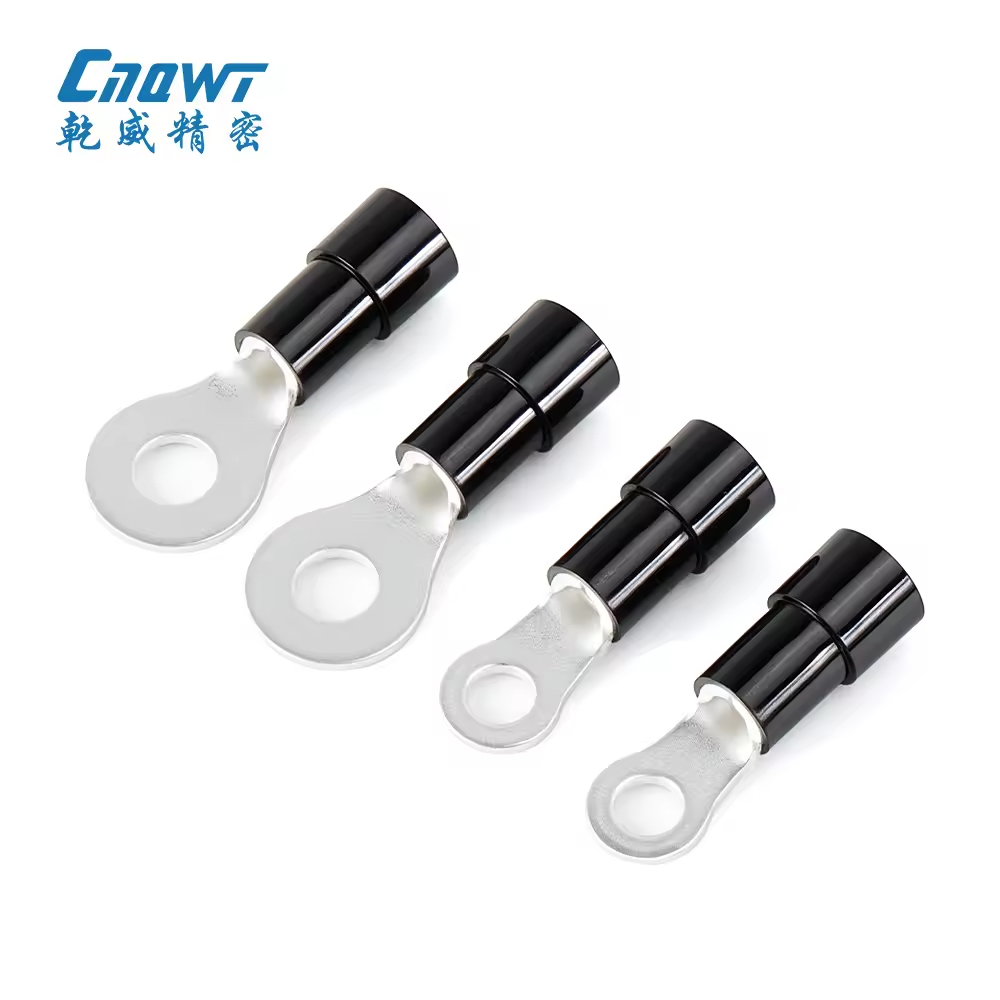
Porque el tornillo pasa completamente a través del anillo., la desconexión accidental es muy improbable, incluso en entornos con vibración continua.
Ventajas
- Conexión extremadamente segura
- Excelente resistencia a las vibraciones
- Adecuado para aplicaciones de alta corriente
- Larga vida útil
Aplicaciones típicas
- Arneses de cableado para automóviles
- Sistemas de baterías
- Gabinetes de almacenamiento de energía
- Equipos de control industrial
- Conexiones de tierra
(Tenedor) Terminales
Terminales de pala, también llamados terminales de horquilla, Tienen un diseño abierto en forma de horquilla que permite la instalación sin quitar completamente el tornillo..
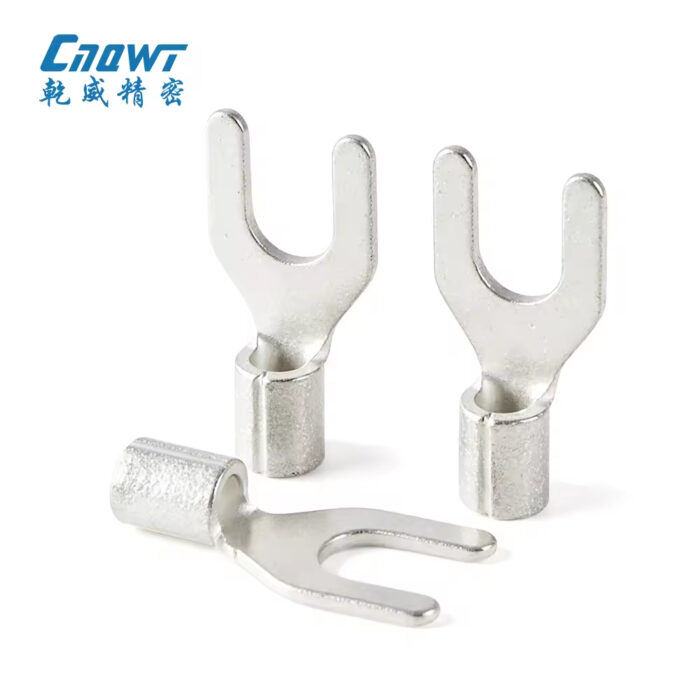
Esto hace que el mantenimiento sea más rápido y sencillo..
Ventajas
- Instalación rápida
- Fácil reemplazo
- Tiempo de mantenimiento reducido
- Buen rendimiento eléctrico
Aplicaciones típicas
- Paneles de control electricos
- Electrodomésticos
- Equipos industriales
- Cableado de maquinaria
Conectores de empalme a tope
Los conectores de empalme a tope unen dos cables de extremo a extremo mientras mantienen la continuidad eléctrica..
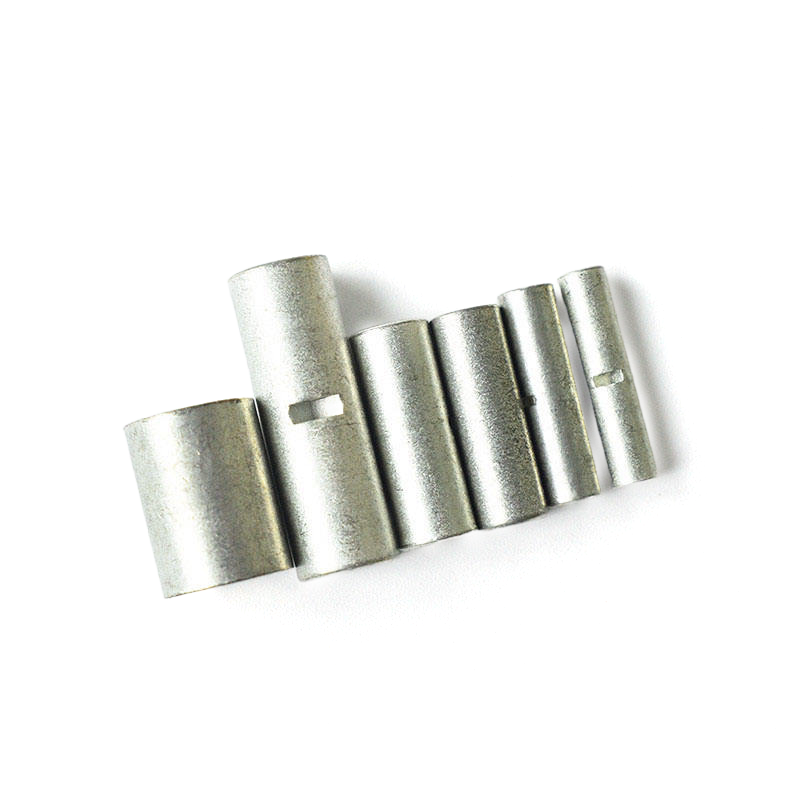
Se utilizan comúnmente durante reparaciones de cables o extensiones de mazos de cables..
Ventajas
- Fuerte conexión mecánica
- Baja resistencia eléctrica
- Diseño compacto
- Fácil instalación
Aplicaciones típicas
- Reparaciones automotrices
- mantenimiento industrial
- Extensiones de cables
- Fabricación de mazos de cables.
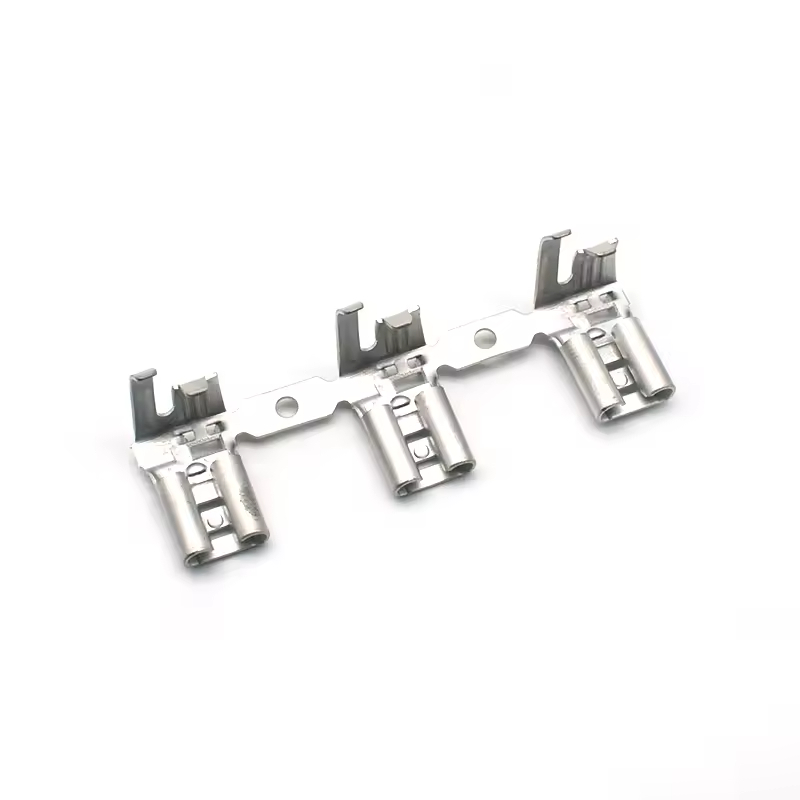
Terminales de bandera
Los terminales de bandera colocan el cable en un ángulo de 90 grados con respecto al punto de conexión..
Este diseño ayuda a ahorrar espacio de instalación y mejora el enrutamiento de cables en conjuntos compactos..
Ventajas
- Ideal para espacios reducidos
- Mejor gestión de cables
- Flexión de alambre reducida
- Fácil instalación
Aplicaciones típicas
- Electrónica de consumo
- Tableros de instrumentos automotrices
- Módulos de control industriales
- Equipo medico
Terminales tipo bala
Los terminales tipo bala constan de un conector macho y un conector hembra que se conectan y desconectan rápidamente.
Se utilizan ampliamente en mazos de cables que requieren un mantenimiento frecuente..
Ventajas
- Montaje rápido
- Fácil mantenimiento
- Estructura compacta
- Conexión eléctrica confiable
Aplicaciones típicas
- motocicletas
- cableado automotriz
- Maquinaria agrícola
- Equipo marino
Terminales de clavija
Los terminales de clavija están diseñados para insertarse en bloques de terminales y conectores de abrazadera de resorte..
Su forma cilíndrica simple permite una instalación rápida manteniendo una conductividad eléctrica confiable..
Ventajas
- Excelente conductividad
- Fácil inserción
- Cableado limpio
- Adecuado para alambre trenzado
Aplicaciones típicas
- Armarios de control
- Sistemas PLC
- Equipos de automatización
- Paneles de distribución eléctrica
Terminales de cuchilla
Los terminales de cuchilla proporcionan superficies conductoras planas capaces de transportar corriente media a alta..
Se utilizan frecuentemente en cajas de fusibles de automóviles., relevos, y sistemas de distribución de energía.
Ventajas
- Área de alto contacto
- Baja resistencia de contacto
- Transmisión de energía confiable
- Fácil montaje
Terminales de conector de cable a cable
Los terminales cable a cable conectan dos conjuntos de cables entre sí, permitiendo una rápida instalación y reemplazo.
Se encuentran comúnmente en arneses de automóviles., maquinaria industrial, y electrodomésticos.
Terminales de conector de cable a placa
Los terminales de cable a placa conectan los cables directamente a las placas de circuito impreso. (PCB).
Su tamaño compacto y su fabricación de precisión los hacen esenciales en los productos electrónicos modernos..
Las aplicaciones incluyen:
- Electrónica de consumo
- Dispositivos de comunicación
- Electrónica médica
- Controladores industriales
- Módulos de servidor de IA
Materiales utilizados para contactos estampados de precisión
La selección del material determina directamente el consumo eléctrico., mecánico, y desempeño ambiental de contactos estampados y terminales de conector.
El material ideal depende de varios factores., incluyendo la capacidad actual, conductividad, resistencia a la corrosión, características del resorte, y costo de fabricación.
Cobre
El cobre es el material más utilizado para contactos eléctricos debido a su excepcional conductividad..
Sus ventajas incluyen:
- Excelente conductividad eléctrica
- Baja resistencia de contacto
- Alta capacidad de carga de corriente
- Buena conductividad térmica
- Fácil estampado y conformado
El cobre se utiliza comúnmente en:
- Terminales de batería
- Conectores de alta corriente
- Barras colectoras
- Terminales de almacenamiento de energía
- Sistemas de distribución de energía.
Latón
El latón es una aleación de cobre y zinc que ofrece un equilibrio entre conductividad y resistencia mecánica..
Comparado con el cobre puro, latón proporciona:
- Mayor dureza
- Mejor resistencia al desgaste
- Buena maquinabilidad
- Menor costo de material
Las aplicaciones típicas incluyen:
- Electrónica de consumo
- Electrodomésticos
- Conectores automotrices
- Conectores industriales
Bronce fosforado
El bronce fosforado contiene cobre., estaño, y fósforo, proporcionando una excelente elasticidad y resistencia a la fatiga.
Es ampliamente utilizado para contactos de resorte..
Las ventajas incluyen:
- Excelentes propiedades primaverales
- Alta resistencia a la fatiga
- Buena conductividad
- Larga vida útil
Las aplicaciones incluyen:
- Conectores de señal
- Equipo de comunicación
- Conectores médicos
- Contactos eléctricos de alto ciclo
Cobre berilio
El cobre berilio combina una excelente conductividad eléctrica con una resistencia mecánica excepcional..
Sus propiedades únicas incluyen:
- Alta dureza
- Excelente elasticidad
- Larga vida a la fatiga
- Fuerza de resorte estable
- Alta confiabilidad
Por su mayor costo, normalmente se utiliza en:
- Aeroespacial
- Equipo militar
- Dispositivos médicos
- Instrumentos de precisión
Acero inoxidable
Aunque el acero inoxidable tiene una conductividad eléctrica más baja que las aleaciones de cobre., Proporciona una excelente resistencia a la corrosión y resistencia mecánica..
A menudo se utiliza para:
- Ballestas
- Componentes de blindaje
- Partes estructurales
- Hardware resistente a la corrosión
Elegir el material adecuado
La selección del material adecuado depende de los requisitos eléctricos y mecánicos de la aplicación..
| Solicitud | Material recomendado |
|---|---|
| Transmisión de energía de alta corriente | Cobre T2 |
| Conectores automotrices | Latón |
| Contactos de señal | Bronce fosforado |
| Contactos de resorte de alto ciclo | Cobre berilio |
| Piezas estructurales resistentes a la corrosión. | Acero inoxidable |
Un fabricante profesional puede ayudar a optimizar la selección de materiales según la clasificación actual., entorno operativo, y objetivos de costos.
Opciones de revestimiento de superficies
Incluso el material base de la más alta calidad requiere un tratamiento superficial adecuado para maximizar el rendimiento a largo plazo..
El revestimiento de la superficie mejora:
- Resistencia a la corrosión
- Resistencia al desgaste
- Fiabilidad de contacto
- Conductividad eléctrica
- Soldabilidad
La elección del revestimiento depende del entorno de aplicación y de los requisitos de rendimiento..
Estañado
El estañado es el acabado superficial más común para terminales de conectores..
ofrece:
- Excelente resistencia a la corrosión
- Buena conductividad
- Soldadura fácil
- Producción rentable
Los contactos estañados se utilizan ampliamente en:
- Conectores automotrices
- Arneses de cableado
- Sistemas de almacenamiento de energía
- Electrodomésticos
Niquelado
El niquelado proporciona una dureza y resistencia al desgaste superiores..
A menudo se utiliza como:
- Una capa de barrera protectora
- Una capa base debajo de un baño de oro o plata.
- Un acabado resistente a la corrosión
Las aplicaciones incluyen conectores industriales y entornos hostiles..
Chapado en plata
La plata tiene la conductividad eléctrica más alta de todos los metales..
Se utiliza comúnmente para:
- Conectores de alta corriente
- Terminales de batería
- Equipos de distribución de energía.
- Sistemas de almacenamiento de energía
El revestimiento de plata minimiza la resistencia de contacto al tiempo que mejora el rendimiento térmico bajo cargas eléctricas pesadas..
Chapado en oro
El baño de oro ofrece una excepcional resistencia a la corrosión y confiabilidad de la señal..
Aunque más caro que otros acabados, es ideal para:
- Conectores de datos de alta velocidad
- Equipo medico
- Electrónica aeroespacial
- Sistemas de comunicación
El oro no se oxida., asegurando un rendimiento estable durante miles de ciclos de acoplamiento.
Revestimiento selectivo
El revestimiento selectivo aplica metales preciosos solo en áreas de contacto críticas y deja las superficies restantes con un acabado de menor costo..
Este enfoque ofrece:
- Costo de producción reducido
- Rendimiento mejorado
- Utilización eficiente de materiales
- Mayor vida útil del contacto
El revestimiento selectivo se utiliza ampliamente en conectores de electrónica de consumo y de automoción..
Proceso de fabricación de estampado de precisión
La fabricación de contactos estampados de alta calidad implica mucho más que simplemente presionar el metal para darle forma.. Cada etapa del proceso productivo afecta directamente el rendimiento eléctrico del producto final., precisión dimensional, y confiabilidad a largo plazo.
En Qianwei precisión, automatización avanzada, herramientas de precisión, y un estricto control de calidad garantizan que cada terminal de conector cumpla con las especificaciones del cliente y los estándares de la industria..
Paso 1: Diseño e ingeniería de producto
Todo proyecto exitoso comienza con una revisión de ingeniería exhaustiva..
Los ingenieros evalúan:
- Requisitos de corriente y voltaje.
- Compatibilidad de tamaño de cable
- Dimensiones del conector
- Requisitos de fuerza de contacto
- Entorno operativo
- Método de instalación
- Dibujos o muestras del cliente.
Uso de software CAD 3D y herramientas de simulación, El equipo de diseño optimiza la geometría de contacto antes de que comience la producción.. La participación temprana de la ingeniería ayuda a reducir los riesgos de fabricación, acortar el tiempo de desarrollo, y mejorar el rendimiento general del producto.
Paso 2: Selección de materiales
Elegir el material adecuado es esencial para lograr las propiedades eléctricas y mecánicas deseadas..
Dependiendo de la aplicación, Los ingenieros pueden recomendar:
- Cobre T2 para máxima conductividad.
- Latón para una resistencia y un coste equilibrados
- Bronce fosforado para contactos de resorte
- Cobre-berilio para aplicaciones de alto rendimiento
Espesor del material, dureza, y el acabado de la superficie se seleccionan cuidadosamente para garantizar una calidad de estampado constante y una larga vida útil..
Paso 3: Diseño de matriz progresiva
El troquel progresivo es uno de los activos más valiosos en el estampado de precisión..
A diferencia de las simples herramientas de estampado, un troquel progresivo realiza múltiples operaciones en un solo ciclo de producción, incluido:
- Puñetazos
- Perforación
- formando
- acuñar
- Doblar
- Corte
Cada estación da forma gradualmente a la tira de metal hasta que se produce la pieza terminada..
El diseño de matriz de alta calidad ofrece varias ventajas:
- Excelente consistencia dimensional
- Velocidad de producción más rápida
- Menores costos de producción
- Reducción del desperdicio de material
- Mayor vida útil de la herramienta
Para proyectos personalizados, Qianwei Precision diseña y fabrica moldes internamente, permitiendo un desarrollo más rápido y un mejor control de calidad.
Paso 4: Estampado de precisión de alta velocidad
Una vez que las herramientas estén completas, La producción pasa al estampado de alta velocidad..
Las prensas de estampado modernas pueden producir cientos de piezas por minuto manteniendo tolerancias extremadamente estrictas..
El proceso entrega:
- Alta eficiencia de producción
- Calidad estable del producto
- Excelente repetibilidad
- Producción en masa rentable
La automatización avanzada minimiza el manejo manual y reduce el riesgo de error humano..
Paso 5: Desbarbado y limpieza
Las piezas recién estampadas pueden tener rebabas microscópicas o aceites residuales del proceso de fabricación..
Para mejorar la seguridad y el rendimiento, los componentes se someten:
- Desbarbado
- Limpieza ultrasónica
- Pulido de superficies (cuando hace falta)
La eliminación de rebabas ayuda a garantizar un montaje suave y evita daños a las carcasas de los conectores o al aislamiento..
Paso 6: Revestimiento de superficie
El tratamiento de la superficie mejora tanto el rendimiento eléctrico como la resistencia ambiental..
Dependiendo de los requisitos del cliente, los contactos pueden recibir:
- estañado
- niquelado
- Chapado en plata
- chapado en oro
- Enchapado selectivo
El recubrimiento adecuado reduce la oxidación, mejora la soldabilidad, reduce la resistencia de contacto, y extiende la vida útil.
Paso 7: Inspección de calidad
Cada lote de producción se inspecciona antes del envío..
Las inspecciones típicas incluyen:
- Medición dimensional
- Inspección visual
- Verificación del espesor del revestimiento
- Pruebas de resistencia de contacto
- Pruebas de rendimiento de engarce
- Prueba de fuerza de extracción
Muchos fabricantes también implementan control estadístico de procesos. (proceso estadístico) para garantizar una calidad de producción estable a lo largo del tiempo.
Paso 8: Embalaje y entrega
Después de pasar la inspección, Los productos se empaquetan según los requisitos del cliente..
Las opciones de embalaje pueden incluir:
- Embalaje de carrete
- Embalaje de cinta
- Embalaje en bandeja
- Embalaje a granel
- Embalaje personalizado para montaje automatizado
El embalaje adecuado protege los componentes de precisión durante el transporte y respalda la producción eficiente en las instalaciones del cliente..
Requisitos clave de rendimiento
Seleccionar un contacto estampado de precisión implica más que coincidir con las dimensiones. El componente debe ofrecer constantemente un rendimiento eléctrico y mecánico confiable durante toda su vida útil..
A continuación se detallan las características clave de rendimiento que los ingenieros deben evaluar..
Conductividad eléctrica
La conductividad eléctrica determina la eficiencia con la que fluye la corriente a través del contacto..
Los materiales de alta conductividad ayudan:
- Reducir la caída de voltaje
- Minimizar la pérdida de energía
- Mejorar la eficiencia energética
- Temperaturas de funcionamiento más bajas
Para aplicaciones de alta corriente, como paquetes de baterías y sistemas de almacenamiento de energía., El cobre y las aleaciones de cobre suelen ser la opción preferida..
Resistencia de contacto
La baja resistencia de contacto es esencial para mantener un rendimiento eléctrico confiable.
Una resistencia excesiva puede provocar:
- Acumulación de calor
- Pérdida de voltaje
- Eficiencia reducida del sistema
- Fallo prematuro del conector
Un contacto bien diseñado mantiene una resistencia estable durante miles de ciclos de acoplamiento.
Resistencia mecánica
Los terminales del conector deben resistir las fuerzas de instalación., vibración, y uso repetido sin deformarse.
Fuertes propiedades mecánicas ayudan a prevenir:
- Conexiones sueltas
- contactos agrietados
- Falla estructural
- Vida útil reducida
Esto es especialmente importante en la automoción., industrial, y aplicaciones de servicio pesado.
Fuerza del resorte
Para contactos de resorte y terminales hembra, Mantener la fuerza de contacto correcta es fundamental..
Una fuerza de resorte insuficiente puede provocar un contacto eléctrico deficiente, mientras que una fuerza excesiva aumenta el esfuerzo de inserción y acelera el desgaste.
El estampado de precisión garantiza características consistentes del resorte en grandes volúmenes de producción..
Resistencia a la fatiga
Muchos conectores experimentan miles de ciclos de conexión y desconexión durante su vida útil..
Los materiales con excelente resistencia a la fatiga mantienen un rendimiento estable incluso después de esfuerzos mecánicos repetidos..
Esta característica es particularmente importante para:
- Equipos industriales
- Dispositivos médicos
- Equipo de prueba
- Sistemas de comunicación
Resistencia al desgaste
La inserción y extracción repetidas desgastan gradualmente la superficie de contacto..
Los materiales de alta calidad y el revestimiento adecuado reducen el desgaste, manteniendo una conductividad estable y extendiendo la vida útil del conector.
Resistencia a la corrosión
Los contactos eléctricos a menudo funcionan en ambientes húmedos., polvoriento, o ambientes químicamente agresivos.
El revestimiento resistente a la corrosión protege la superficie de contacto de la oxidación y garantiza un rendimiento confiable a largo plazo..
Industrias como equipos marinos., energía renovable, y los sistemas eléctricos exteriores se benefician especialmente de una mayor protección contra la corrosión..
Resistencia al calor
A medida que aumentan los niveles actuales, Los conectores generan más calor..
Los materiales y el revestimiento deben mantener sus propiedades eléctricas y mecánicas bajo temperaturas elevadas sin deformación u oxidación excesiva..
Una resistencia al calor confiable es esencial para:
- Vehículos eléctricos
- Sistemas de almacenamiento de energía en baterías.
- Fuentes de alimentación para servidores de IA
- Distribución de energía industrial
Industrias y aplicaciones
Los contactos estampados de precisión se utilizan en casi todas las industrias que dependen de conexiones eléctricas confiables..
Algunas de las aplicaciones más comunes incluyen:
Automotor
Los vehículos modernos contienen cientos de conectores eléctricos que soportan la iluminación., control del motor, infoentretenimiento, sensores, y sistemas avanzados de asistencia al conductor (ADA).
Los contactos estampados con precisión garantizan un rendimiento confiable incluso bajo vibraciones continuas y cambios de temperatura..
Vehículos eléctricos (vehículos eléctricos)
Los vehículos eléctricos requieren terminales de alta corriente capaces de transferir grandes cantidades de energía de forma segura.
Las aplicaciones incluyen:
- Paquetes de baterías
- Sistemas de gestión de baterías (BMS)
- Conectores de carga
- Unidades de distribución de energía
- Sistemas de propulsión eléctrica
Sistemas de almacenamiento de energía en baterías (ESS)
A medida que crece la adopción de energías renovables, Las instalaciones de ESS exigen durabilidad, terminales de conector de alta corriente.
Los contactos estampados se utilizan ampliamente en:
- Módulos de batería
- Bastidores de baterías
- Inversores
- Sistemas de conversión de energía.
- Gabinetes de almacenamiento de energía
Centros de datos de IA
La infraestructura informática de IA requiere un suministro de energía estable e ininterrumpido.
Los contactos estampados con precisión ayudan a garantizar un rendimiento eléctrico confiable en:
- servidores de IA
- Unidades de fuente de alimentación de alta potencia
- Sistemas UPS
- Distribución de energía en rack
- Sistemas de servidores refrigerados por líquido
Automatización Industrial
Las fábricas dependen cada vez más de equipos de producción automatizados que funcionan continuamente..
Los terminales de conector confiables son esenciales para:
- Sistemas PLC
- robots industriales
- Equipos de control de movimiento.
- Sensores
- Servomotores
Equipo médico
Los dispositivos médicos exigen conexiones eléctricas extremadamente confiables donde el fallo no es una opción.
Los contactos estampados se encuentran comúnmente en:
- Equipo de diagnóstico
- Sistemas de monitorización de pacientes
- Instrumentos quirúrgicos
- Sistemas de imagen
Electrónica de Consumo
Teléfonos inteligentes, portátiles, dispositivos portátiles, Y los electrodomésticos utilizan contactos estampados en miniatura para lograr un diseño compacto., conexiones eléctricas confiables.
Telecomunicaciones
La infraestructura de telecomunicaciones requiere conectores capaces de mantener la integridad de la señal durante largos períodos de funcionamiento..
Las aplicaciones incluyen:
- Conmutadores de red
- Estaciones base
- Equipos de comunicación de fibra.
- Sistemas de transmisión de datos de alta velocidad.
Cómo elegir el contacto estampado de precisión adecuado
Seleccionar el contacto estampado de precisión adecuado es algo más que encontrar un componente que encaje. La elección correcta afecta directamente al rendimiento eléctrico., confiabilidad del producto, eficiencia de fabricación, y costos de mantenimiento a largo plazo.
A continuación se detallan los factores clave que los ingenieros y gerentes de compras deben considerar.
Calificación actual
El primer paso es determinar cuánta corriente debe transportar el contacto..
Un contacto demasiado pequeño puede generar calor excesivo., conduciendo a:
- Mayor resistencia de contacto
- Caída de voltaje
- Eficiencia reducida
- Fallo prematuro
Por ejemplo:
- Conectores de señal normalmente llevan menos de 5A.
- Conectores industriales puede requerir 10A–50A.
- Sistemas de almacenamiento de energía en baterías. (ESS) A menudo requieren contactos clasificados por encima de 100 A..
Seleccione siempre un contacto con suficiente capacidad de corriente y un margen de seguridad adecuado.
Clasificación de voltaje
Los requisitos de voltaje son igualmente importantes.
Los voltajes más altos requieren:
- Mayores distancias de aislamiento
- Diseño mejorado de fuga y espacio libre.
- Funciones de seguridad mejoradas
Aplicaciones como estaciones de carga de vehículos eléctricos, sistemas de energía renovable, y los equipos industriales a menudo funcionan a cientos de voltios, haciendo que la selección de voltaje adecuada sea esencial.
Selección de materiales
Diferentes materiales proporcionan diferentes ventajas..
| Material | Mejor para |
|---|---|
| Cobre T2 | Aplicaciones de alta corriente |
| Latón | Conectores de uso general |
| Bronce fosforado | contactos de resorte |
| Cobre berilio | Conectores de alto rendimiento |
| Acero inoxidable | Componentes estructurales |
El material debe cumplir con los requisitos eléctricos y mecánicos de la aplicación..
Revestimiento de superficie
El tratamiento de la superficie influye en gran medida en el rendimiento del conector.
Las opciones de revestimiento comunes incluyen:
- estañado para una protección contra la corrosión rentable
- Chapado en plata para aplicaciones de alta corriente
- chapado en oro para transmisión de señales y ciclos de acoplamiento elevados
- niquelado para resistencia al desgaste
Elegir el revestimiento correcto ayuda a mejorar la conductividad y prolongar la vida útil del producto..
Entorno operativo
Las condiciones ambientales pueden afectar significativamente la confiabilidad del conector..
Considere factores como:
- Temperatura
- Humedad
- Polvo
- quimicos
- spray de sal
- Vibración continua
Equipo al aire libre, sistemas marinos, Y los vehículos todoterreno generalmente requieren una mayor resistencia a la corrosión que los dispositivos electrónicos de interior..
Ciclos de apareamiento
Algunos conectores se instalan una vez y rara vez se desconectan, mientras que otros pueden conectarse y desconectarse miles de veces.
Las aplicaciones de alto ciclo requieren:
- Mejor rendimiento de primavera
- Revestimiento resistente al desgaste
- Fuerza de contacto estable
Comprender los ciclos de acoplamiento esperados ayuda a determinar el material y el acabado superficial más adecuados..
Precisión de fabricación
Incluso el mejor material no puede compensar la mala calidad de fabricación..
El estampado de alta precisión proporciona:
- Tolerancias dimensionales estrictas
- Fuerza de contacto constante
- Mejor compatibilidad del conector
- Eficiencia de montaje mejorada
Elegir un fabricante experimentado en estampado de precisión reduce los riesgos de producción y garantiza una calidad constante del producto..
Certificación y Estándares de Calidad
Para muchas industrias, el cumplimiento es obligatorio.
Dependiendo de su aplicación, Su proveedor debe poder soportar estándares como:
- UL
- RoHS
- ALCANZAR
- ISO 9001
- IATF 16949
- ISO 13485
Un fabricante con un sistema de gestión de calidad maduro puede brindar una mayor confianza en la confiabilidad del producto..
Modos de falla comunes y cómo prevenirlos
Incluso los terminales de conectores de alta calidad pueden fallar si no están diseñados adecuadamente., fabricado, o usado. Comprender los modos de falla más comunes ayuda a los ingenieros a mejorar la confiabilidad y extender la vida útil del producto..
Corrosión de contacto
La corrosión es una de las principales causas de fallas en los conectores..
Aumenta la resistencia eléctrica y eventualmente puede interrumpir el flujo de corriente..
Las causas comunes incluyen:
- Humedad
- spray de sal
- Exposición química
- Enchapado inadecuado
Prevención:
- Utilice un revestimiento resistente a la corrosión.
- Seleccione materiales adecuados.
- Garantizar un sellado adecuado para aplicaciones en exteriores..
Mal prensado
Un terminal mal engarzado puede crear una alta resistencia, calentamiento excesivo, o conexiones eléctricas intermitentes.
Los problemas comunes incluyen:
- Fuerza de engarce insuficiente
- Herramientas incorrectas
- Pelado de cables inadecuado
- Dimensiones de engarce inconsistentes
El uso de equipos de engarzado calificados y especificaciones de engarzado validadas reduce significativamente estos riesgos..
Calentamiento excesivo
El calor excesivo suele ser causado por:
- Contactos de tamaño insuficiente
- Conexiones sueltas
- Alta resistencia de contacto
- Circuitos sobrecargados
El sobrecalentamiento acelera la degradación del material y acorta la vida útil del conector..
Seleccionar el tamaño de contacto correcto y mantener conexiones mecánicas seguras ayuda a prevenir fallas relacionadas con la temperatura.
Oxidación
Incluso sin corrosión severa, La oxidación puede reducir gradualmente la conductividad..
Enchapado adecuado, condiciones de montaje limpias, y las prácticas de almacenamiento adecuadas ayudan a minimizar la oxidación..
Conexiones sueltas
La vibración mecánica puede aflojar las conexiones eléctricas con el tiempo..
Esto es particularmente común en:
- vehículos todoterreno
- Maquinaria de construcción
- Automatización industrial
- Sistemas ferroviarios
Los diseños de conectores con fuerza de contacto optimizada y mecanismos de bloqueo seguros proporcionan una mejor resistencia a las vibraciones..
Fatiga mecánica
Los ciclos repetidos de flexión o inserción pueden eventualmente debilitar el contacto..
Selección de materiales con excelente resistencia a la fatiga, como bronce fosforado o cobre berilio, ayuda a mantener un rendimiento confiable durante toda la vida útil del conector.
Selección de material incorrecta
La elección del material incorrecto puede provocar:
- Mala conductividad
- Fuerza de resorte reducida
- Desgaste prematuro
- Mayores costos de mantenimiento.
Trabajar con un equipo de ingeniería experimentado garantiza que el material cumpla con los requisitos eléctricos y ambientales de la aplicación..
Por qué el estampado de precisión es mejor que otros métodos de fabricación
Varios métodos de fabricación pueden producir contactos eléctricos., pero el estampado de precisión sigue siendo la solución preferida para la producción de gran volumen.
| Característica | Estampado de precisión | Mecanizado CNC | Fundición |
|---|---|---|---|
| Velocidad de producción | Excelente | Moderado | Moderado |
| Rentabilidad | Excelente | Más alto | Medio |
| Consistencia dimensional | Excelente | Excelente | Moderado |
| Utilización de materiales | Alto | Más bajo | Moderado |
| Producción de alto volumen | Excelente | Limitado | Moderado |
| Repetibilidad | Excelente | Bien | Moderado |
El estampado de precisión ofrece importantes ventajas para los fabricantes que requieren una calidad constante, producción rápida, y precios competitivos.
¿Por qué elegir la precisión Qianwei?
Elegir el socio fabricante adecuado es tan importante como seleccionar el terminal conector adecuado.
En Precisión de Qianwei, combinamos experiencia en ingeniería, tecnología de fabricación avanzada, y un estricto control de calidad para ofrecer contactos estampados de precisión confiables para clientes de todo el mundo..
Encima 10 Años de experiencia en estampado de precisión
Con más de una década de experiencia en la industria., Nos especializamos en la fabricación de terminales eléctricos de precisión y contactos de conectores para automoción., almacenamiento de energía, automatización industrial, electrónica de consumo, y otras industrias exigentes.
Tecnología avanzada de matriz progresiva
Nuestros experimentados ingenieros de herramientas diseñan y fabrican matrices progresivas internamente., habilitando:
- Desarrollo más rápido
- Alta precisión dimensional
- Producción en masa estable
- Menores costos de fabricación
Desarrollo de terminales de conectores personalizados
Cada aplicación es única.
Admitimos una personalización completa basada en:
- Dibujos técnicos
- Muestras
- Requisitos de desempeño
- Estándares de la industria
Del desarrollo de prototipos a la producción en masa, Nuestro equipo de ingeniería trabaja en estrecha colaboración con los clientes para ofrecer soluciones optimizadas..
OEM & Servicios de fabricación ODM
Ya sea que necesite componentes estándar o productos totalmente personalizados, Qianwei Precision proporciona servicios de fabricación OEM y ODM flexibles con una gestión de proyectos eficiente y una capacidad de producción confiable..
Producción automatizada de alta velocidad
Nuestras líneas de producción automatizadas mejoran:
- Eficiencia de fabricación
- Consistencia del producto
- Fiabilidad de entrega
- Competitividad de costos
La automatización también reduce el error humano, Garantizar una calidad estable en grandes volúmenes de producción..
Inspección de calidad integral
La calidad está integrada en cada etapa de la producción..
Nuestras capacidades de inspección incluyen:
Inspección dimensional
Las dimensiones críticas se miden para garantizar que cada producto cumpla con las especificaciones del cliente..
Prueba de fuerza de extracción
La resistencia de retención mecánica se verifica para garantizar conexiones de cables seguras..
Pruebas de vibración
Los productos se evalúan en condiciones de vibración simuladas para garantizar la confiabilidad a largo plazo..
Pruebas de ciclos térmicos
Los contactos se prueban bajo cambios repetidos de temperatura para verificar la estabilidad eléctrica en entornos operativos exigentes..
Industrias globales atendidas
Nuestros contactos estampados de precisión y terminales de conector se utilizan en:
- Automotor
- Vehículos eléctricos
- Sistemas de almacenamiento de energía en baterías.
- Centros de datos de IA
- Energía renovable
- Automatización industrial
- Equipo medico
- Electrónica de consumo
Tendencias futuras en contactos estampados de precisión
A medida que los sistemas eléctricos se vuelven más avanzados, La tecnología de conectores continúa evolucionando..
Varias tendencias importantes están dando forma al futuro de los contactos estampados de precisión.
Fabricación impulsada por IA
La inteligencia artificial se utiliza cada vez más para optimizar la programación de la producción, monitorear el rendimiento del equipo, y mejorar la inspección de calidad.
Miniaturización
Los dispositivos electrónicos modernos requieren tamaños más pequeños., Conectores más ligeros sin sacrificar el rendimiento eléctrico..
Mayor capacidad de corriente
El rápido crecimiento de los vehículos eléctricos y los sistemas de almacenamiento de energía está impulsando la demanda de terminales capaces de transportar cientos de amperios de forma segura.
Transmisión de datos de alta velocidad
A medida que las tecnologías de la comunicación continúan evolucionando, Los contactos del conector deben admitir velocidades de datos más rápidas con una integridad de señal mejorada..
Inspección de calidad inteligente
La visión artificial y los sistemas de inspección automatizados están mejorando la detección de defectos al tiempo que aumentan la eficiencia de la producción..
Fabricación sostenible
Los fabricantes se centran en materiales respetuosos con el medio ambiente, envases reciclables, y procesos de producción energéticamente eficientes para apoyar los objetivos globales de sostenibilidad.
Conclusión
Los contactos y terminales de conector estampados con precisión son la base de conexiones eléctricas confiables en innumerables industrias.. Desde mazos de cables para automóviles y centros de datos de IA hasta sistemas de almacenamiento de energía en baterías y automatización industrial, Estos pequeños componentes desempeñan un papel fundamental a la hora de garantizar la seguridad., eficiente, y rendimiento duradero.
Seleccionar el contacto adecuado implica más que elegir un material o tamaño. Los ingenieros deben considerar la capacidad actual., entorno operativo, enchapado, precisión de fabricación, y confiabilidad a largo plazo. Igual de importante, asociarse con un fabricante experimentado garantiza una calidad constante, desarrollo más rápido, y suministro confiable.
En Precisión de Qianwei, Combinamos tecnología avanzada de estampado de precisión., experiencia interna en herramientas, producción automatizada, e inspección de calidad integral para proporcionar terminales de conector personalizados y contactos estampados que satisfagan las demandas cambiantes de las industrias globales..
Ya sea que necesite un producto estándar o una solución totalmente personalizada, Nuestro equipo de ingeniería está listo para respaldar su próximo proyecto con fabricación confiable y asistencia técnica profesional.. Póngase en contacto con Qianwei Precision hoy para analizar sus requisitos y descubrir cómo nuestra experiencia en estampado de precisión puede ayudarle a impulsar su éxito..
Preguntas frecuentes
1. ¿Qué son los contactos estampados de precisión??
Los contactos estampados de precisión son componentes metálicos conductores fabricados con tecnología de estampado de precisión de alta velocidad.. Crean conexiones eléctricas confiables dentro de los conectores transfiriendo energía o señales entre dispositivos eléctricos.. Su alta precisión dimensional y consistencia los hacen ideales para la automoción., industrial, médico, y aplicaciones de almacenamiento de energía.
2. ¿Cuál es la diferencia entre un contacto estampado de precisión y un terminal de conector??
Aunque los términos a menudo se usan indistintamente, sirven para diferentes propósitos.
A contacto estampado de precisión es el elemento conductor dentro de un conector que hace contacto eléctrico con su contraparte acoplada. A terminal del conector es el componente utilizado para terminar un alambre o cable, permitiéndole conectarse de forma segura a un conector, bloque de terminales, o dispositivo eléctrico. En muchos conjuntos de conectores, Ambos componentes trabajan juntos para crear una conexión eléctrica completa..
3. ¿Qué materiales se utilizan comúnmente para los contactos estampados de precisión??
Los materiales más comunes incluyen:
- Cobre T2
- Latón
- Bronce fosforado
- Cobre berilio
- Acero inoxidable
Cada material ofrece diferentes ventajas en términos de conductividad eléctrica., fortaleza, resistencia a la corrosión, y rendimiento de primavera. La mejor elección depende de los requisitos eléctricos y mecánicos de la aplicación..
4. ¿Qué revestimiento es mejor para los terminales del conector??
no hay un solo “mejor” Enchapado: depende de la aplicación..
- estañado Es ideal para conexiones eléctricas generales y cableado automotriz porque ofrece buena conductividad a un costo competitivo..
- Chapado en plata Se utiliza comúnmente para aplicaciones de alta corriente debido a su excelente conductividad eléctrica..
- chapado en oro Se prefiere para conectores de señal y aplicaciones de alta frecuencia porque proporciona una resistencia superior a la corrosión y un rendimiento estable a largo plazo..
- niquelado mejora la resistencia al desgaste y se utiliza a menudo como capa base para revestimientos de metales preciosos.
5. ¿Por qué se prefiere el estampado de precisión al mecanizado CNC??
El estampado de precisión es generalmente más adecuado para la producción de gran volumen porque ofrece:
- Mayor velocidad de producción
- Mejor consistencia
- Menor costo unitario
- Excelente repetibilidad
- Reducción del desperdicio de material
Si bien el mecanizado CNC es ideal para prototipos y piezas complejas de bajo volumen, El estampado de precisión es el método de fabricación preferido para la producción de terminales de conectores a gran escala..
6. ¿Qué industrias utilizan contactos estampados de precisión??
Los contactos estampados de precisión se utilizan ampliamente en muchas industrias., incluido:
- Automotor
- Vehículos eléctricos (vehículo eléctrico)
- Sistemas de almacenamiento de energía en baterías (ESS)
- Centros de datos de IA
- Electrónica de consumo
- Equipo medico
- Automatización industrial
- Telecomunicaciones
- Energía renovable
A medida que los sistemas eléctricos se vuelven más avanzados, La demanda de contactos de precisión sigue creciendo..
7. ¿Cómo elijo el terminal conector adecuado para mi aplicación??
Al seleccionar un terminal de conector, considere los siguientes factores:
- Calificación actual
- Clasificación de voltaje
- Tamaño del cable
- Material de contacto
- Revestimiento de superficie
- Temperatura de funcionamiento
- Condiciones ambientales
- Resistencia a las vibraciones
- Ciclos de apareamiento requeridos
Trabajar con un fabricante experimentado puede ayudarle a seleccionar la solución más adecuada para su aplicación..
8. ¿Pueden los contactos estampados con precisión manejar aplicaciones de alta corriente??
Sí. Los contactos estampados de alta corriente están diseñados específicamente para aplicaciones exigentes, como sistemas de baterías., vehículos eléctricos, Equipo UPS, y sistemas de almacenamiento de energía.
Estos contactos generalmente se fabrican con aleaciones de cobre de alta conductividad y presentan geometrías optimizadas para reducir la resistencia de contacto y mejorar la disipación de calor..
9. ¿Qué pruebas de calidad se realizan normalmente en contactos estampados de precisión??
Para garantizar la confiabilidad del producto, los fabricantes suelen realizar:
- Inspección dimensional
- Inspección visual
- Medición del espesor del revestimiento
- Pruebas de resistencia de contacto
- Prueba de fuerza de extracción
- Pruebas de rendimiento de engarce
- Pruebas de niebla salina
- Pruebas de vibración
- Pruebas de ciclos térmicos
Estas pruebas ayudan a verificar que los contactos cumplan con las especificaciones del cliente y los estándares de la industria..
10. ¿Se pueden personalizar los contactos estampados con precisión??
Sí. La mayoría de los fabricantes ofrecen soluciones personalizadas basadas en:
- Dibujos técnicos
- 3modelos D
- Muestras físicas
- Requisitos de desempeño
- Entornos de aplicaciones
La personalización puede incluir la selección de materiales., tipo de revestimiento, geometría terminal, compatibilidad de tamaño de cable, y métodos de embalaje.
11. Qué certificaciones debe tener un fabricante de terminales de conector?
Dependiendo de la industria objetivo, un fabricante confiable puede proporcionar productos fabricados bajo sistemas de calidad como:
- ISO 9001
- IATF 16949 (Automotor)
- ISO 13485 (Dispositivos médicos)
Los productos también pueden cumplir con regulaciones ambientales que incluyen:
- RoHS
- ALCANZAR
- Requisitos UL (donde se aplica)
Estas certificaciones demuestran un compromiso con la gestión de la calidad y el cumplimiento normativo..
12. ¿Cuál es el plazo de entrega típico para los contactos estampados de precisión personalizados??
Los plazos de entrega varían dependiendo de la complejidad del proyecto..
Como guía general:
- Desarrollo de prototipos: 2–4 semanas
- Fabricación de herramientas y moldes.: 3–6 semanas
- producción en masa: 2–5 semanas después de la aprobación de la muestra
Los proyectos con herramientas existentes suelen tener tiempos de entrega mucho más cortos..
13. ¿Ofrecen servicios de OEM y ODM??
Sí. Qianwei Precision ofrece servicios integrales de fabricación OEM y ODM para clientes globales.
Nuestras capacidades incluyen:
- Diseño de producto personalizado
- Desarrollo de moldes interno
- Estampado de metales de precisión
- Revestimiento de superficie
- Producción automatizada
- inspección de calidad
- Soporte de producción en masa
Ya sea que tenga dibujos de ingeniería completos o solo un concepto, Nuestro equipo puede ayudarle a llevar su proyecto a producción..
14. ¿Cómo mejoran los contactos estampados con precisión la confiabilidad del conector??
Los contactos estampados con precisión mejoran la confiabilidad al garantizar:
- Fuerza de contacto estable
- Baja resistencia de contacto
- Dimensiones precisas
- Rendimiento eléctrico constante
- Excelente resistencia a las vibraciones
- Larga vida útil
La alta precisión de fabricación reduce los fallos de conexión y mejora la fiabilidad general de los sistemas eléctricos..
15. ¿Por qué elegir Qianwei Precision como su fabricante de contactos estampados de precisión??
Qianwei Precision combina tecnología de fabricación avanzada con años de experiencia en la industria para ofrecer soluciones de terminales de conector confiables para clientes de todo el mundo..
Nuestras ventajas incluyen:
- Encima 10 años de experiencia en estampado de precisión
- Diseño y fabricación internos de troqueles progresivos.
- Producción automatizada de alta velocidad
- OEM personalizado & Soluciones ODM
- Estricto control de calidad durante toda la producción.
- Capacidades de prueba integrales
- Desarrollo rápido de prototipos y producción en masa estable
- Experiencia al servicio del sector automotriz., almacenamiento de energía, automatización industrial, Centros de datos de IA, dispositivos médicos, y electrónica de consumo
Ya sea que necesite terminales de conector estándar o contactos estampados de precisión totalmente personalizados, Qianwei Precision se compromete a ofrecer productos de alta calidad, soporte de ingeniería receptivo, y servicios de fabricación confiables.

