

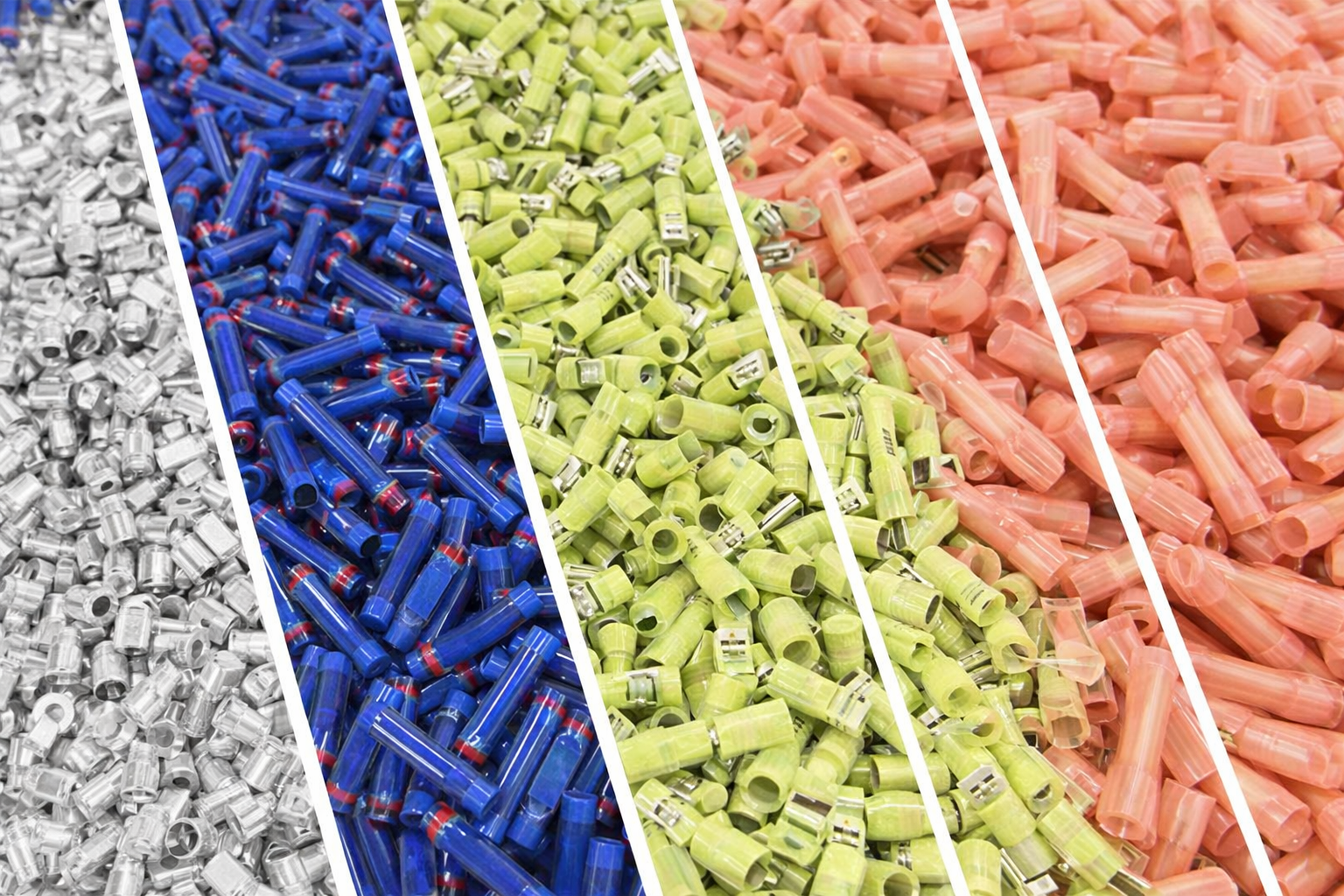
Electrical systems in modern vehicles, machines, and industrial equipment are becoming increasingly compact. As wiring density increases, engineers and installers often face one common challenge: making reliable electrical connections in confined spaces.
Flag terminals provide an efficient solution to this problem. These specialized 90-degree electrical connectors allow wires to run parallel to the mounting surface, significantly reducing clearance requirements while maintaining strong electrical and mechanical performance.
In this comprehensive guide, we will explain what flag terminals are, how they work, their design features, 種類, アプリケーション, installation methods, and how to select the right flag terminal for your project. This article is designed to help engineers, technicians, and purchasing professionals understand how to choose the right terminals for reliable electrical connections.
What Are Flag Terminals?
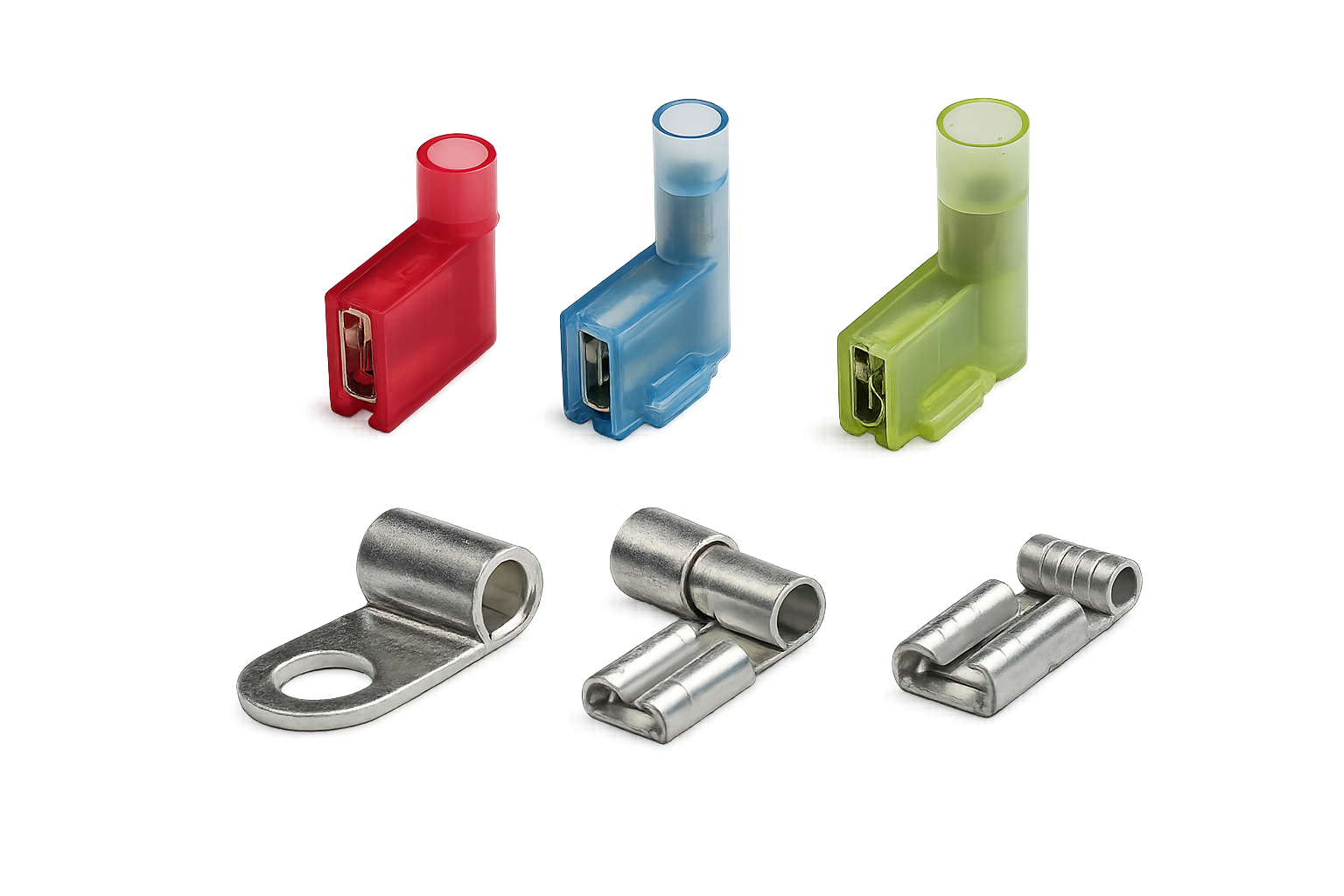
Flag terminals are right-angle electrical connectors designed with a 90-degree bend between the wire barrel and the connection tongue.
Unlike traditional terminals where the wire exits straight from the connector, flag terminals allow the wire to exit parallel to the mounting surface.
Key Characteristics
90-degree connector orientation
Compact profile for tight spaces
Reliable crimp connection
Compatible with various electrical terminals
Why Flag Terminals Are Important
In many installations, vertical space is limited. Standard terminals may force the wire to bend sharply, which can:
Damage the conductor
Reduce electrical reliability
Increase mechanical stress on the connection
Flag terminals eliminate this issue by providing a built-in right-angle routing solution.
Typical Installation Environments
Flag terminals are commonly used in:
Electric motor housings
Automotive engine compartments
Battery terminals
コントロールパネル
Compact electrical enclosures
Their design allows installers to route wires neatly even in extremely confined areas.
Flag Terminal Design and Construction
Understanding the structural design of flag terminals helps engineers select the right connector for specific applications.
Core Components of Flag Terminals
Flag terminals consist of three main parts.
1. Connection Tongue
The connection tongue is the part that connects to the electrical contact point. It may be designed as:
Quick-disconnect blade
Ring terminal
Fork terminal
2. 90-Degree Bend
The right-angle bend is the defining feature of flag terminals. It allows the wire to run parallel to the mounting surface while maintaining a secure electrical connection.
3. Wire Barrel
The wire barrel is the crimping section that holds the conductor.
Professional terminals include:
Serrated barrel walls
Precision crimp geometry
Gas-tight crimping capability
These features ensure strong mechanical retention and low electrical resistance.
Material Specifications
High-quality flag terminals are typically manufactured using electrolytic copper, which offers excellent electrical conductivity.
Common materials include:
Tin-Plated Copper
高い導電性
Corrosion resistance
Excellent solderability
Nickel-Plated Steel
Used for high-temperature applications, such as:
Engine compartments
Industrial machinery
High-heat electrical systems
Nickel plating provides temperature resistance up to 900°F (482°C).
Types of Flag Terminals
Flag terminals are available in multiple configurations depending on insulation type and connection design.
By Insulation Type
Insulated Flag Terminals
These terminals feature nylon or vinyl insulation sleeves that protect the connection.
Advantages include:
Electrical insulation
Short-circuit protection
Color-coded wire gauge identification
They are widely used in:
自動車配線
HVAC equipment
産業用制御システム
Non-Insulated Flag Terminals
Non-insulated terminals are made entirely of metal and have a smaller profile.
Benefits include:
Maximum space efficiency
Lower cost
Better suitability for tight installations
しかし, installers must ensure proper spacing to avoid electrical shorts.
Heat-Shrink Flag Terminals
Heat-shrink terminals provide environmental sealing.
Key features include:
Adhesive-lined tubing
Waterproof sealing
Vibration resistance
They are ideal for:
Marine wiring
Outdoor equipment
Harsh industrial environments
By Connection Type
Push-On Flag Terminals
Push-on connectors use male or female quick-disconnect blades.
Typical blade sizes include:
0.187 inch
0.250 inch
These connectors are commonly used where components require frequent removal or maintenance.
Ring Flag Terminals
Ring flag terminals use a closed ring for stud mounting.
利点:
Highest mechanical security
優れた耐振動性
Common applications include:
Battery connections
Grounding systems
High-current circuits
Spade Flag Terminals
Spade flag terminals combine a fork connector with a flag orientation.
They allow easy installation but offer slightly lower mechanical security compared to ring terminals.
Wire Gauge Compatibility and Sizing
Selecting the correct wire gauge ensures reliable electrical performance.
Flag terminals are typically manufactured in standard wire ranges.
| Wire Gauge | Insulation Color | Typical Applications | Current Capacity |
| 22-18 AWG | 青 | Signal wiring | 5-10あ |
| 16-14 AWG | 赤 / 黄色 | Automotive circuits | 10-20あ |
| 12-10 AWG | 黄色 | Motor leads | 20-35あ |
| 8-6 AWG | Natural | Heavy-duty equipment | 40-80あ |
Important Sizing Rules
Always match terminal rating to wire gauge
Avoid oversized terminals
Ensure full wire insertion into the barrel
Proper sizing reduces resistance and prevents overheating.
Flag Terminals vs Standard Terminals
Understanding the differences between terminal types helps engineers select the correct connector.
| 特徴 | フラグ端子 | Standard Ring Terminals | スペード端子 |
| Wire Direction | Parallel | Perpendicular | Perpendicular |
| Space Requirement | Minimal | 高い | 高い |
| 耐振動性 | 高い | 非常に高い | 適度 |
| Installation Speed | 適度 | 適度 | Fast |
| 一般的な使用方法 | Tight spaces | Secure connections | Maintenance access |
の primary advantage of flag terminals is space efficiency.
They allow wiring installations in areas where standard terminals simply will not fit.
Flag Terminals vs Right-Angle Spade Terminals
Although both designs provide angled wiring solutions, それらは異なる目的に役立ちます.
| 特徴 | フラグ端子 | Right-Angle Spade Terminals |
| Connection Type | Blade or ring | Fork-style spade |
| Security | Very secure | 適度 |
| 耐振動性 | 高い | より低い |
| Ease of Removal | 適度 | Very easy |
| Best Application | Permanent connections | Maintenance access |
Key Differences
Flag terminals are preferred when:
Connection reliability is critical
Equipment experiences vibration
Electrical load is significant
Right-angle spade terminals are preferred when:
Components require frequent maintenance
Quick removal is necessary
For automotive and industrial environments, flag terminals generally provide stronger long-term reliability.
How to Crimp Flag Terminals Correctly
Proper crimping is essential for a reliable electrical connection.
Required Tools
Flag terminals require specialized crimping tools designed for right-angle terminals.
Professional tools include:
Gauge-specific crimp cavities
Ratcheting mechanisms
Hardened steel jaws
Using standard crimp tools may damage the terminal or produce weak connections.
Step-by-Step Crimping Process
Select the correct terminal size
Strip the wire insulation (5-7 mm)
ワイヤーをバレルに完全に挿入します
Place the terminal in the crimp tool
Apply steady pressure until the ratchet releases
Inspect the finished crimp
Crimp Quality Inspection
Check for the following:
Wire retention strength
Centered crimp indentation
No cut wire strands
Undamaged insulation
Proper crimps create gas-tight electrical connections that resist corrosion and vibration.
Common Applications for Flag Terminals
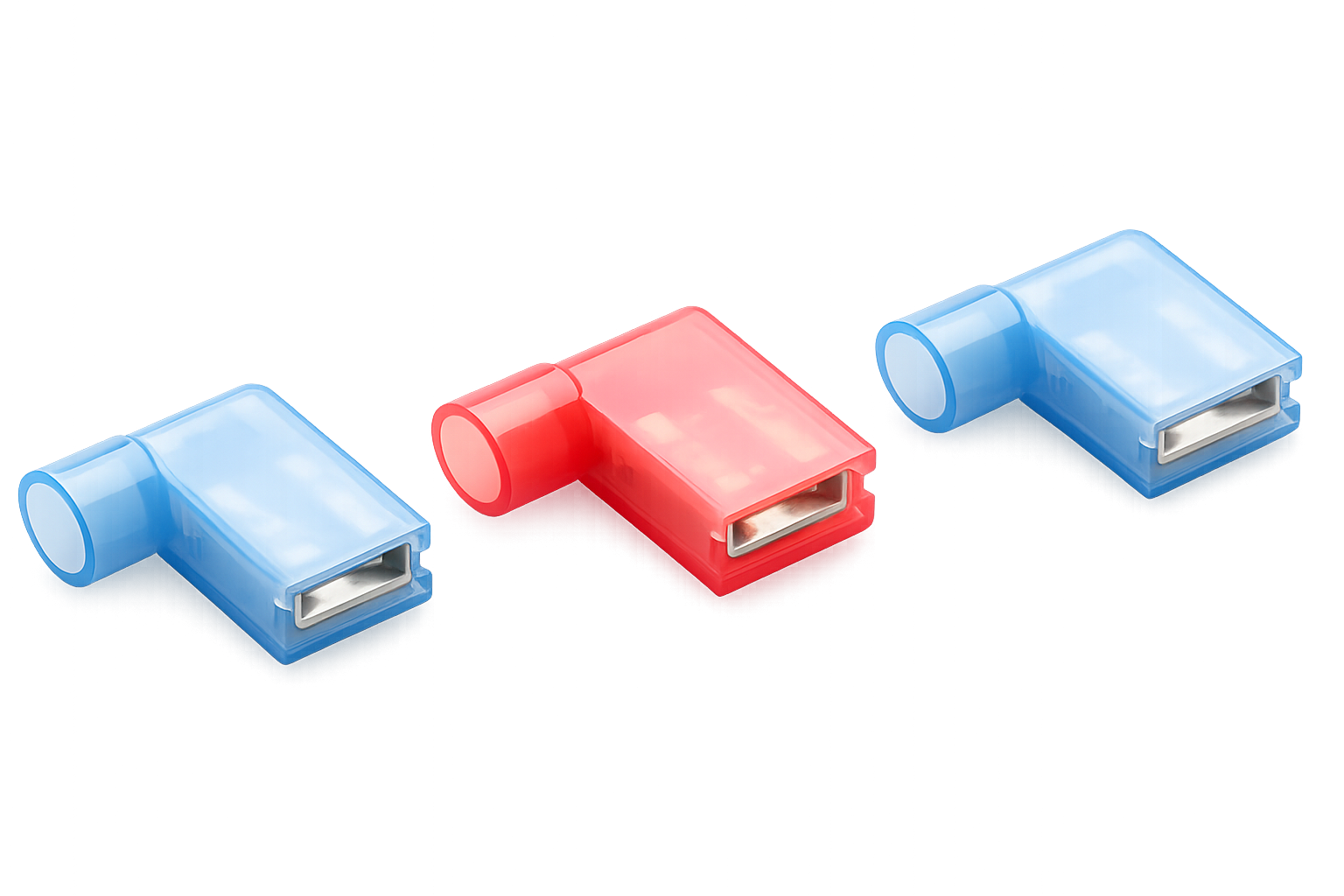
Flag terminals are widely used across multiple industries.
Automotive Applications
Common uses include:
Starter motor wiring
Alternator connections
Battery terminals
Instrument panel wiring
Modern vehicles rely heavily on flag terminals due to limited engine compartment space.
Industrial Equipment
Industrial machinery uses flag terminals for:
Electric motor connections
コントロールパネル
Compressors
HVAC systems
The right-angle design simplifies wiring inside compact equipment housings.
Marine Applications
Marine environments require corrosion-resistant electrical connectors.
Heat-shrink flag terminals are commonly used for:
Bilge pumps
Navigation lights
Dashboard instruments
Installation Best Practices
Before installing flag terminals, follow these preparation steps.
Pre-Installation Checklist
Confirm wire gauge compatibility
Verify connector type
Inspect terminals for defects
Prepare correct crimping tools
Wire Preparation
Good wire preparation ensures reliable connections.
ベストプラクティスには以下が含まれます:
Correct strip length
Avoid cutting conductor strands
Remove oxidation from copper
Twist stranded wire slightly before insertion
Troubleshooting Common Flag Terminal Problems
Connection Failure
Possible causes:
Poor crimping technique
Incorrect terminal size
腐食
Solution: replace terminal and crimp properly.
Physical Damage
Symptoms include:
Bent terminals
Cracked insulation
Deformed barrels
Cause: incorrect tools or excessive force.
Overheating
Signs include:
Melted insulation
Discolored metal
Possible reasons:
High resistance connection
Undersized terminal
Loose connection
How to Select the Right Flag Terminal
Selecting the correct terminal requires considering multiple factors.
Environmental Conditions
Choose terminals based on environment:
Indoor use → standard insulated terminals
Outdoor use → heat-shrink terminals
Marine use → corrosion-resistant plating
Electrical Requirements
Verify:
Current capacity
Voltage rating
Temperature tolerance
Mechanical Requirements
Consider:
Vibration levels
Connection frequency
Installation space
Quality Standards and Certifications
Professional flag terminals meet international standards such as:
UL 486E
CSA C22.2
SAE J1128
IEC 60998
ISO 9001
Quality manufacturers perform tests including:
Pull-out force testing
Temperature cycling
Salt spray corrosion testing
Vibration testing
Maintenance and Long-Term Reliability
Regular inspections ensure safe operation.
Inspection Schedule
Critical circuits: annually
High vibration environments: every 6 月
Marine systems: every 3 月
What to Check
腐食
接続が緩い
Insulation damage
Signs of overheating
Replace damaged terminals immediately.
結論
Flag terminals are a highly effective solution for electrical connections in tight spaces. Their 90-degree design allows wires to route parallel to mounting surfaces, reducing stress on conductors and simplifying installations.
When properly selected and installed, flag terminals provide:
Reliable electrical conductivity
Strong mechanical retention
Efficient use of limited space
They are widely used in 自動車, 工業用, and marine electrical systems, where space constraints and reliability requirements are critical.
By understanding their design, installation methods, and application requirements, engineers and installers can ensure safe, 耐久性のある, and efficient electrical connections in even the most compact systems.
よくある質問s
1. Can standard crimping tools be used for flag terminals?
いいえ. Specialized 90-degree crimping tools are required.
2. Are flag terminals suitable for high-vibration environments?
はい. Properly crimped flag terminals offer excellent vibration resistance.
3. Can flag terminals be reused?
いいえ. Crimp terminals are designed for single-use installation.
4. Are they suitable for outdoor installations?
はい, especially when using heat-shrink sealed flag terminals.
