블로그, 테스트 & 신뢰할 수 있음

전기 단자 테스트 방법 개요: 품질에 대한 주요 테스트, 성능, 및 신뢰성

전기 단자 테스트

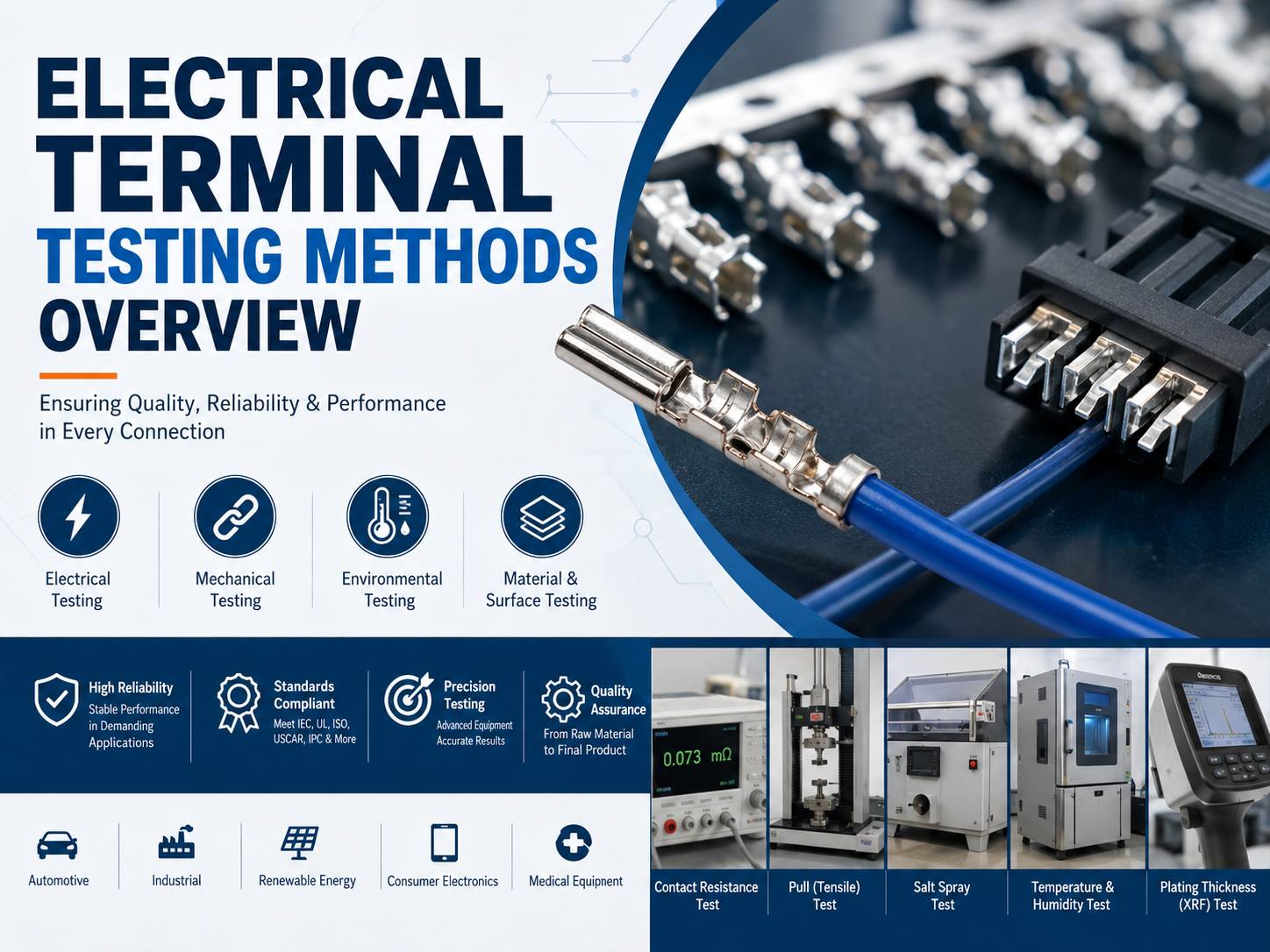
전기 터미널 are critical components in any electrical or electronic system, serving as the physical interface for conducting current between wires, 장치, and systems. 작은 크기에도 불구하고, their performance directly determines the stability, 안전, and lifespan of the entire assembly. For manufacturers and engineers, testing electrical terminals is not optional—it is a core part of ensuring product integrity, 규제 준수, and customer trust.

This article provides a structured, engineering-level overview of the major electrical terminal testing methods used in modern manufacturing. It covers electrical, 기계적인, 환경, and material-based evaluations, along with industry standards and quality control systems used to validate performance.

Why Electrical Terminal Testing Matters

Electrical terminals operate under a combination of electrical load, 기계적 응력, 환경 노출. Without proper testing, even a minor defect can lead to overheating, 간헐적인 실패, 부식, or complete circuit breakdown.

제조 관점에서 보면, terminal testing is essential for three primary reasons:

첫 번째, it ensures electrical performance stability. Poor contact surfaces or inconsistent crimping can increase resistance, generating heat and energy loss. 시간이 지남에 따라, this degrades system efficiency and may cause safety hazards.

Second, it guarantees mechanical integrity. Terminals must withstand insertion, 추출, 진동, and cable tension without loosening or breaking. In automotive or industrial environments, mechanical failure is often more critical than electrical failure.

Third, it supports compliance with international standards. Organizations such as IEC, UL, and ISO define strict requirements for electrical safety, performance consistency, and manufacturing quality systems.

요컨대, terminal testing is the bridge between production and real-world reliability.

Electrical Testing Methods for Terminals

Electrical tests are designed to evaluate how effectively a terminal conducts current and maintains insulation under operational conditions. These are the most fundamental and frequently performed evaluations in any terminal production line.

Contact Resistance Test

Contact resistance is one of the most important performance indicators for electrical terminals. It measures the resistance at the interface between two mating conductors.

A low and stable contact resistance indicates efficient current transfer and minimal energy loss. Conversely, high resistance suggests poor crimping, 산화, 오염, or insufficient contact pressure.

실제로, micro-ohm meters are used to measure resistance under controlled current conditions. Manufacturers often define maximum allowable resistance values depending on application type, such as power distribution, 신호 전송, or high-frequency circuits.

Even minor variations in contact resistance can significantly impact heat generation, making this test essential for power applications.

절연 저항 테스트

The insulation resistance test evaluates the ability of a terminal assembly to prevent unintended current leakage between conductive paths.

A high voltage is applied across the insulating material, and leakage current is measured. If insulation resistance is too low, it may indicate material degradation, moisture ingress, or contamination.

This test is particularly important in environments with high humidity or dust exposure. It ensures that terminals maintain electrical separation even under challenging operating conditions.

Dielectric Withstand Voltage Test

Also known as the high-potential or “hipot” test, this method applies a high voltage to verify that the insulation system can withstand electrical stress without breakdown.

Unlike insulation resistance testing, which measures leakage, this test actively stresses the material to identify weak points. A failure during this test indicates a high risk of field failure under surge or overload conditions.

It is widely used in safety-critical applications such as automotive electronics, 산업 기계, 및 배전 시스템.

Mechanical Testing Methods for Electrical Terminals

Mechanical reliability is just as important as electrical performance. Terminals are constantly subjected to forces such as crimp tension, 진동, insertion cycles, and cable movement.

Tensile Strength (인발력) 시험

The tensile strength test measures how firmly a wire is held inside a crimped terminal. A controlled pulling force is applied until the wire either slips or breaks.

This test evaluates crimp quality, deformation consistency, and conductor grip strength. Poor crimping is one of the most common failure modes in terminal assemblies, 특히 진동이 심한 환경에서.

Manufacturers typically define minimum pull-out force standards based on wire gauge and terminal type.

Insertion and Extraction Force Test

This test evaluates the mechanical behavior of terminals during mating and unmating processes. It measures the force required to insert or remove a terminal from its housing or connector interface.

If insertion force is too high, assembly becomes difficult and may damage components. If extraction force is too low, the terminal may loosen during operation.

A balanced force range ensures both secure connection and efficient assembly.

압착 품질 검사

Crimp quality directly affects both mechanical and electrical performance. Inspection methods include cross-sectional analysis, 압착 높이 측정, and deformation evaluation.

A properly formed crimp should exhibit uniform compression without wire strand damage or insulation interference. Any voids or uneven deformation can lead to localized resistance increases or mechanical failure.

In high-volume production, automated optical systems are often used for continuous crimp inspection.

Environmental Testing Methods

Electrical terminals must perform reliably in a wide range of environmental conditions, including temperature extremes, 습기, corrosion exposure, and mechanical stress caused by expansion and contraction.

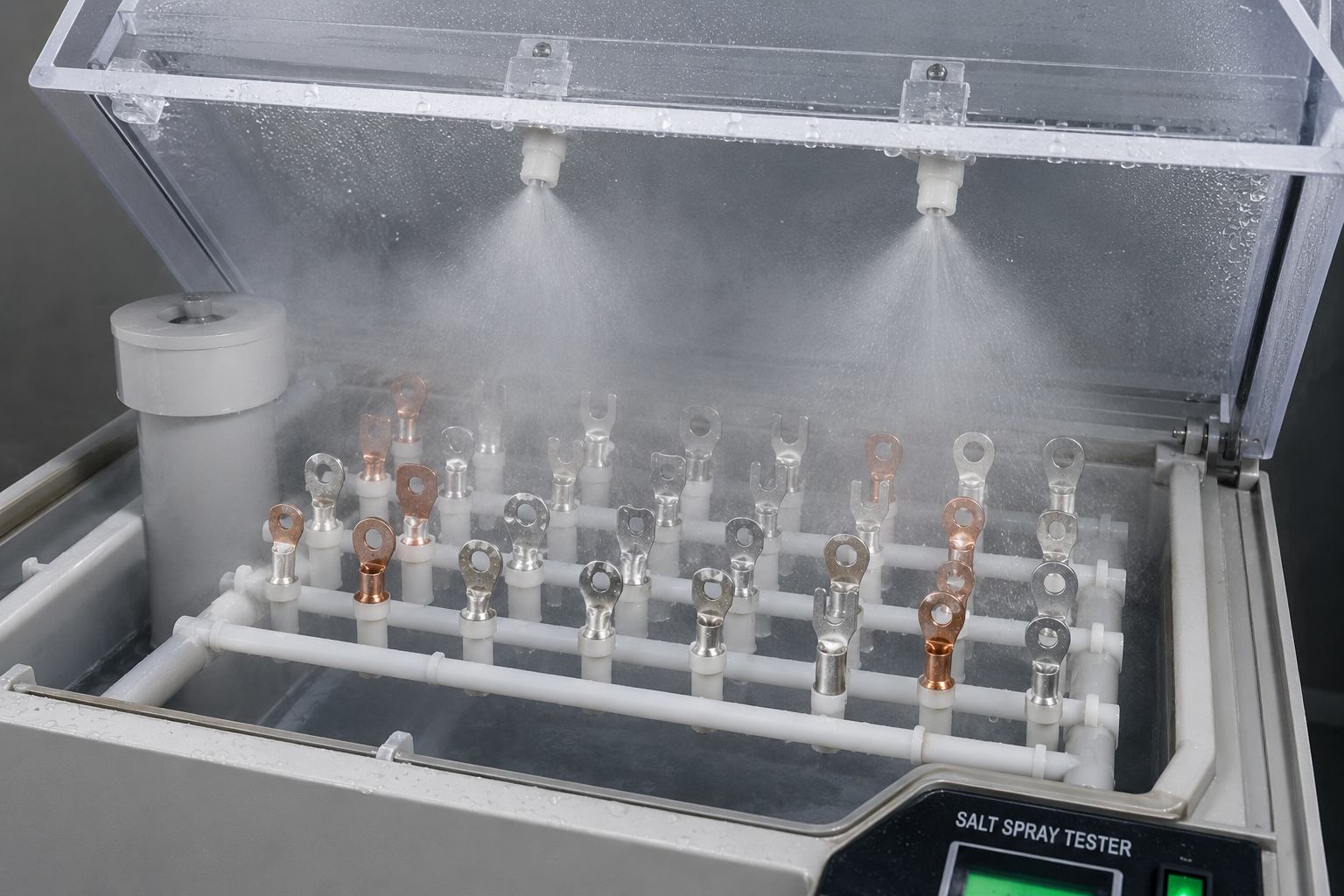
Salt Spray Corrosion Test

The salt spray test evaluates corrosion resistance by exposing terminals to a controlled saline mist environment for extended periods.

This is especially important for plated terminals, such as tin or nickel-coated products. Corrosion can increase contact resistance and weaken structural integrity.

This test is widely used to simulate long-term exposure in marine or high-humidity environments.

소금 스프레이

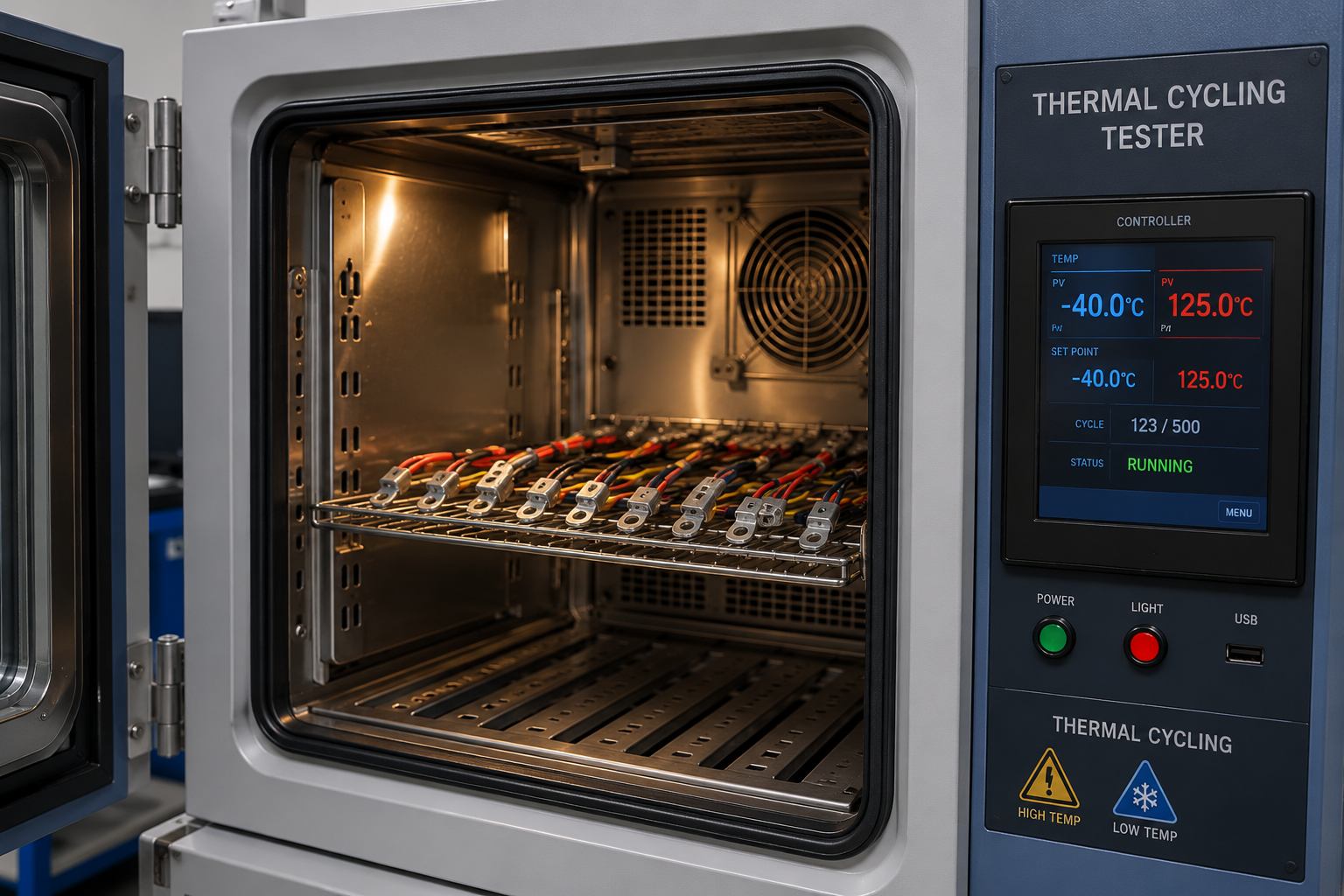
Temperature Cycling Test

Temperature cycling evaluates how terminals behave under repeated transitions between high and low temperatures.

Different materials expand and contract at different rates. 시간이 지남에 따라, this can cause mechanical stress, 열분해, or loss of contact pressure.

This test is critical for automotive, 항공우주, 및 실외 전기 애플리케이션.

열 순환 테스트

Humidity Resistance Test

Humidity testing assesses how moisture affects electrical and mechanical performance. Water vapor can lead to oxidation, 절연파괴, 부식.

Terminals that pass humidity testing are more suitable for tropical or high-moisture environments.

Thermal Shock Test

Thermal shock testing exposes terminals to rapid temperature changes to simulate extreme environmental conditions.

Unlike gradual thermal cycling, this test stresses materials instantly, revealing weaknesses in bonding, 도금, or structural integrity.

Material and Surface Testing Methods

Beyond functional testing, material verification ensures that terminals meet design specifications and maintain consistency across production batches.

Plating Thickness Measurement

Surface plating plays a critical role in corrosion resistance and conductivity. Common coatings include tin, 니켈, 그리고 금.

X선 형광 (XRF) analysis is often used to measure plating thickness without damaging the sample. Consistent coating thickness ensures stable performance and long-term reliability.

Metallographic Analysis

This method involves cross-sectional examination of the terminal material under a microscope. It provides insights into grain structure, bonding quality, and internal defects.

Metallographic analysis is especially useful for identifying manufacturing inconsistencies that are not visible through surface inspection.

Hardness Testing

Hardness tests evaluate the mechanical strength of terminal materials. Proper hardness ensures durability during crimping, 삽입, and long-term operation.

If a terminal is too soft, it may deform under load. If it is too hard, it may crack during assembly.

Advanced Reliability Testing Methods

For high-performance industries such as automotive and industrial automation, additional reliability tests are required to simulate real-world operating conditions.

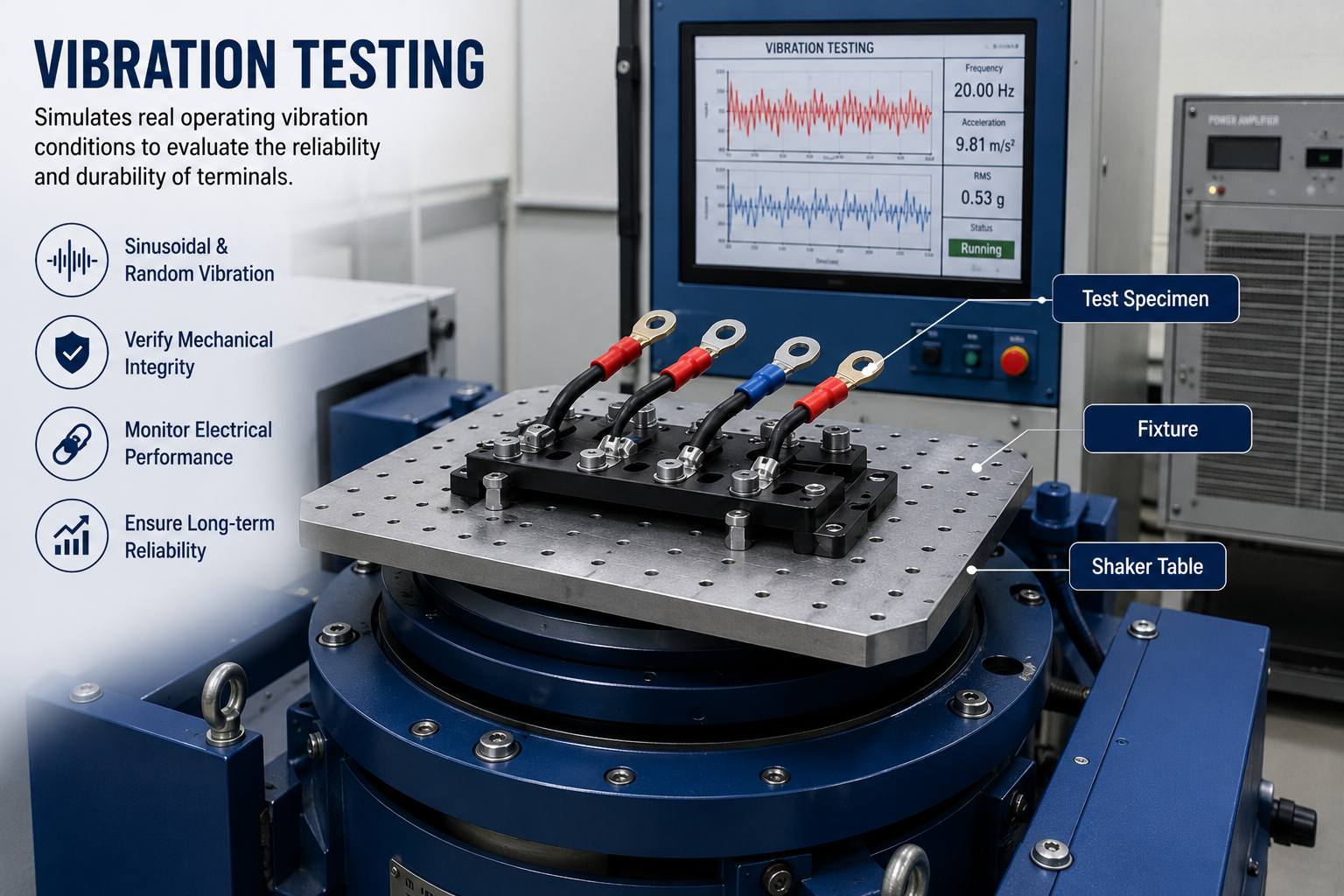
진동 테스트

Vibration testing simulates continuous mechanical oscillation, commonly found in vehicles, 기계, and transportation systems. It helps identify loosening, 입다, or fatigue failures over time.

터미널 진동 테스트

기계적 충격 테스트

Shock testing evaluates how terminals respond to sudden impacts or drops. This is important for portable devices and automotive applications where sudden force exposure is possible.

Life Cycle Durability Testing

Durability testing involves repeated insertion and extraction cycles to simulate long-term usage. It helps estimate product lifespan and identify wear-related degradation.

Industry Standards for Terminal Testing

Standardization ensures consistency across manufacturers and industries. Key frameworks include:

  • IEC for electrical safety and performance guidelines
  • UL for product safety certification
  • ISO for quality management systems
  • USCAR for automotive connector performance
  • IPC for crimping and assembly standards

Compliance with these standards ensures global market acceptance and reduces product liability risk.

첸웨이 정밀 단말기 제조 품질관리 프로세스

A robust quality control system integrates multiple testing stages throughout production:

  1. 입고 자재 검사
  2. Stamping and forming verification
  3. Plating thickness and surface inspection
  4. Crimp quality monitoring
  5. 전기 성능 테스트
  6. 환경 스트레스 테스트 (sampling or batch-based)
  7. Final inspection and packaging validation

This layered approach ensures defects are detected early, reducing waste and improving yield efficiency.

결론

Electrical terminal testing is a multi-dimensional process that integrates electrical, 기계적인, 환경, and material science principles. Each testing method plays a specific role in ensuring that terminals perform reliably under real-world conditions.

제조업체의 경우, implementing a comprehensive testing system is not just about compliance—it is about building trust, reducing failure risk, and ensuring long-term performance stability in increasingly demanding applications.

A well-tested electrical terminal is ultimately a guarantee of system reliability, 안전, 그리고 효율성.

FAQ

What is electrical terminal testing?

It is a series of tests used to evaluate electrical, 기계적인, and environmental performance of terminals.

접촉 저항 테스트가 중요한 이유?

It ensures stable conductivity and prevents overheating or signal loss.

What is a terminal pull test?

It measures the mechanical strength between wire and terminal after crimping.

What is salt spray testing used for?

It evaluates corrosion resistance of plated terminals.

Which industries require terminal testing?

자동차, EV, 산업 자동화, 통신, 그리고 가전제품.

답장을 남겨주세요

귀하의 이메일 주소는 공개되지 않습니다. 필수 입력란이 표시되어 있습니다 *