

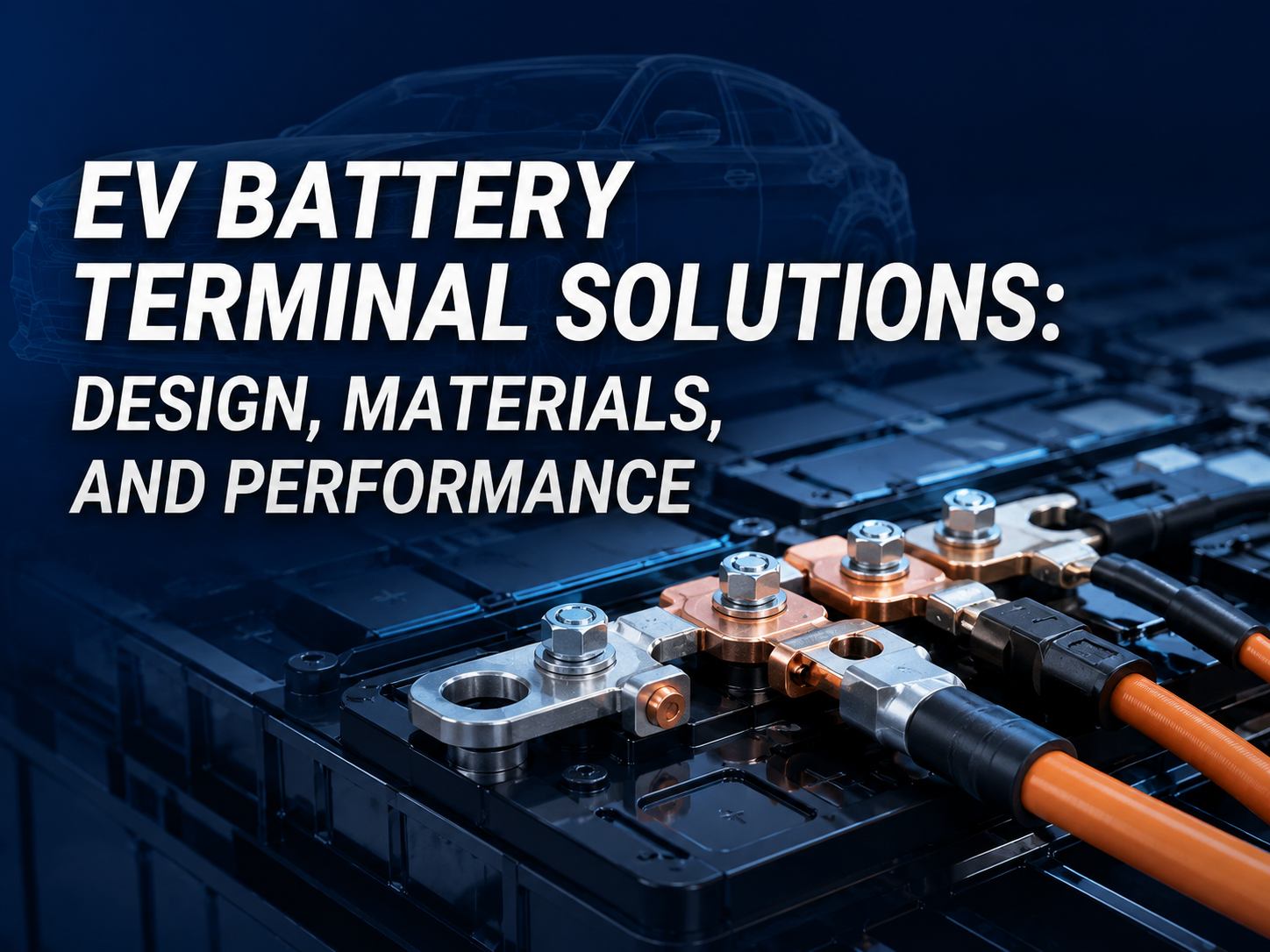
Why EV Battery Terminals Are Critical Components in Electric Vehicles
전기차의 급속한 성장 (EV) and energy storage systems has created increasing demand for reliable, 고성능 전기 연결 솔루션. 배터리를 사용하는 동안, 모터, and power electronics often receive the most attention, battery terminals are equally important components that directly influence electrical efficiency, 안전, 장기적인 시스템 신뢰성.
An EV battery system requires thousands of electrical connections between battery cells, 모듈, 모선, 전원 케이블, 및 배터리 관리 시스템 (BMS). These connections must continuously handle high current loads while operating under challenging conditions, 진동을 포함하여, 온도 변동, 습기, and long service cycles.
A poorly designed battery terminal can create problems such as:
- 접촉 저항 증가
- 과도한 열 발생
- 전력 손실
- 전기적 고장
- Reduced battery efficiency
- 안전 위험
그러므로, 오른쪽을 선택 EV battery terminal solution is a critical step for battery manufacturers, automotive OEMs, and energy storage companies.
A reliable EV battery terminal requires a combination of:
- 높은 전기 전도성
- 강력한 기계적 성능
- 우수한 내식성
- 안정적인 접점 성능
- Suitable material selection
- 정밀가공
For companies developing electric vehicles, 하이브리드 차량, 에너지 저장 시스템, working with an experienced battery terminal manufacturer helps ensure consistent performance from prototype development to mass production.
What Are EV Battery Terminals?
EV battery terminals are conductive metal components designed to establish secure electrical connections within battery systems.
Unlike traditional automotive electrical terminals, EV battery terminals must support significantly higher current levels and more demanding operating conditions.
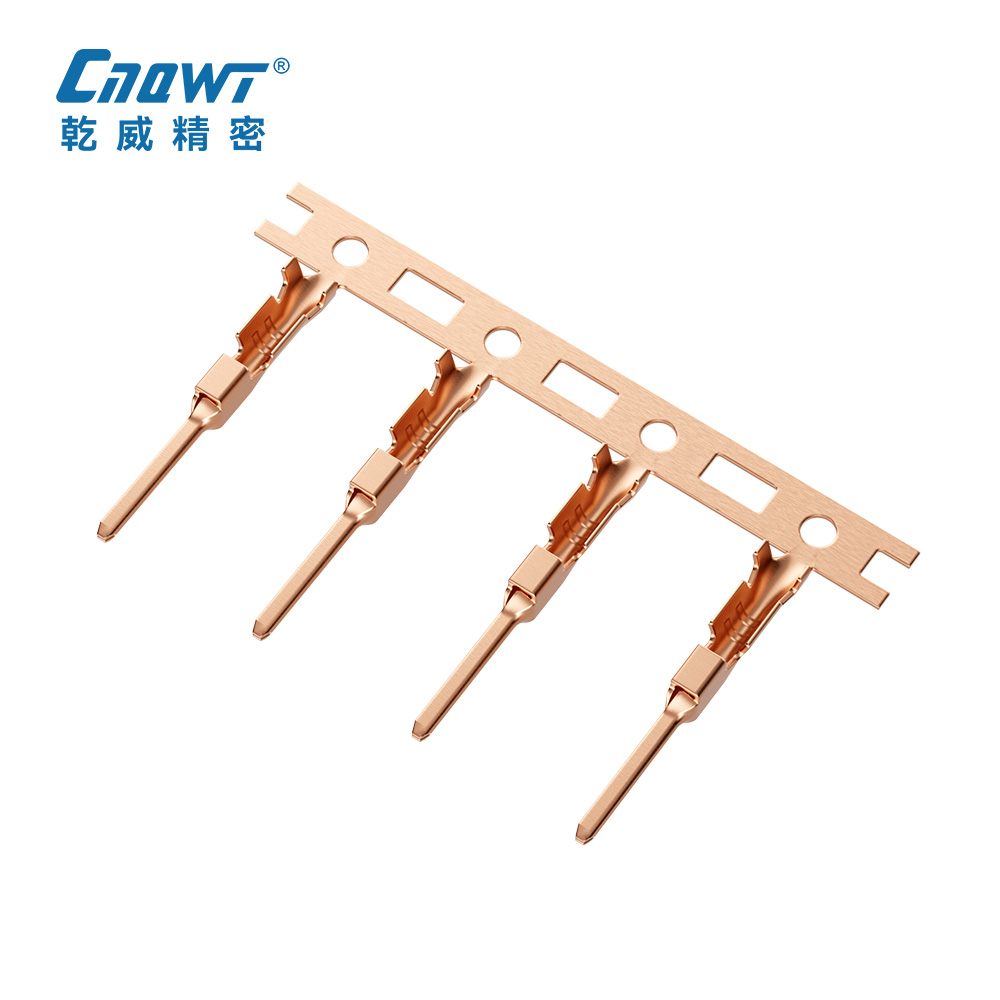
They are typically used to connect:
- Battery cells
- 배터리 모듈
- 배터리 팩
- 부스바
- 전원 케이블
- 배터리 관리 시스템 (BMS)
- 충전 시스템
The primary functions of EV battery terminals include:
1. Electrical Current Transmission
Battery terminals provide a low-resistance pathway for transferring electrical energy between battery components.
A high-quality terminal minimizes energy loss and prevents excessive heat generation.
2. 기계적 연결
Battery terminals must maintain stable connections even under:
- 차량 진동
- 열팽창
- 기계적 충격
- 장기 운영
A secure mechanical structure prevents loosening and intermittent electrical contact.
3. 환경 보호
EV battery systems may operate in harsh environments where terminals are exposed to:
- 수분
- 온도 순환
- 먼지
- 약
- 도로 진동
Proper material selection and surface treatment are essential for long-term reliability.
Applications of EV Battery Terminal Solutions
EV battery terminals are widely used across multiple industries.
전기자동차 (EV)
응용 프로그램은 다음과 같습니다:
- 승용차
- 상업용 차량
- Electric buses
- Electric trucks
Battery terminals connect battery modules and transfer high current power to electric motors and control systems.
Hybrid Electric Vehicles (HEV)
Hybrid systems require terminals capable of handling frequent charging and discharging cycles.
Reliable electrical connections help improve:
- Fuel efficiency
- Battery performance
- System durability
배터리 에너지 저장 시스템 (베스)
Large-scale energy storage systems require high-current terminal solutions for:
- Renewable energy storage
- Grid energy systems
- Industrial backup power
Industrial Electric Equipment
Battery-powered industrial equipment also requires durable terminal solutions, 포함:
- 지게차
- Automated guided vehicles (AGVs)
- Robotics systems
Why EV Battery Terminals Require Special Design
Traditional electrical terminals used in household appliances or low-power systems are not suitable for EV applications.
EV battery terminals face significantly higher performance requirements.
High Current Load
Electric vehicle batteries operate with much higher current levels compared with traditional electrical systems.
During:
- 가속
- 고속 충전
- High-power operation
battery terminals must continuously handle large electrical currents without overheating.
High Voltage Requirements
Modern EV battery systems commonly operate at:
- 400V platforms
- 800V platforms
Higher voltage systems require improved:
- Insulation design
- 전기 안전
- 접촉 신뢰성
긴 서비스 수명
Vehicles are expected to operate reliably for many years.
Battery terminals must maintain performance through:
- 수천 번의 충전 주기
- 지속적인 진동
- 온도 변화
Compact Design Requirements
Automotive manufacturers continuously optimize battery pack size and weight.
그러므로, EV terminals must achieve:
- 더 높은 전류 밀도
- Smaller size
- 더 낮은 무게
- 더 나은 열 관리
Key Design Requirements for EV Battery Terminals
1. High Current Carrying Capability
One of the most important requirements for EV battery terminals is the ability to carry high electrical current safely.
Unlike conventional terminals, EV battery terminals may need to support hundreds of amperes depending on system design.
The current capacity depends on:
- 단자 재질
- 단면적
- 접점 디자인
- 표면 처리
- 방열 능력
A properly designed high current battery terminal reduces:
- Electrical losses
- 온도 상승
- Energy waste
예를 들어, copper-based terminals are commonly selected for high-current applications because of their excellent electrical conductivity.
2. 낮은 접촉 저항
Contact resistance is a key factor affecting battery system efficiency.
When resistance increases, electrical energy is converted into heat.
The relationship is:
Power Loss = Current² × Resistance
This means even a small increase in resistance can create significant heat under high-current conditions.
Low contact resistance depends on:
- 접촉면적
- 접촉압력
- 표면 품질
- 도금기술
- Manufacturing precision
High-quality EV battery terminals are designed to maintain stable electrical contact throughout the product lifetime.
3. Mechanical Strength and Vibration Resistance
Electric vehicles operate under constant mechanical stress.
Battery terminals must withstand:
- 도로 진동
- Vehicle acceleration
- Mechanical impact
- 열팽창
중요한 기계적 요소는 다음과 같습니다.:
유지력
The terminal must maintain secure positioning after installation.
Structural Strength
The terminal body must resist deformation during assembly and operation.
피로 저항
Repeated vibration and thermal cycling should not reduce connection reliability.
Precision stamping processes help achieve consistent mechanical performance across large production volumes.
4. 열 성능
Heat management is one of the biggest challenges in EV battery systems.
High current flow naturally generates heat.
If a battery terminal cannot effectively manage heat, it may lead to:
- 저항력 증가
- 재료 열화
- Reduced battery efficiency
- 안전 위험
Good thermal performance depends on:
- 재료 전도성
- 단자두께
- Connection design
- 표면 처리
Typical EV battery terminals are designed to operate in environments ranging from:
-40°C ~ +125°C
depending on application requirements.
Material Selection for EV Battery Terminals
Material selection directly determines the electrical performance, 기계적 강도, 내식성, and service life of an EV battery terminal. As electric vehicles continue to move toward higher voltages, faster charging, and increased power density, choosing the right conductive material has become more important than ever.
The ideal battery terminal material should provide:
- 우수한 전기 전도성
- 높은 기계적 강도
- 좋은 피로 저항
- 우수한 내식성
- Stable performance under thermal cycling
- Compatibility with high-volume manufacturing
Below are the most commonly used materials for EV battery terminals.
Copper Battery Terminals
Copper is widely recognized as the best conductor for high-current electrical applications. Its extremely low electrical resistance allows battery systems to transfer large amounts of current with minimal energy loss.
장점
- 뛰어난 전기 전도성
- 낮은 접촉 저항
- 우수한 열전도율
- Suitable for ultra-high current applications
- Reduced temperature rise during fast charging
일반적인 응용 분야
구리 터미널은 일반적으로 다음과 같이 사용됩니다.:
- EV 배터리 모듈
- Battery busbar connections
- 고속 충전 시스템
- 고전압 배터리 팩
- 에너지 저장 시스템 (ESS)
Although copper offers the best electrical performance, it is relatively soft and heavier than some alternative materials. 그러므로, engineers often combine copper with special surface treatments or alloy technologies to improve durability.
Brass Battery Terminals
Brass provides an excellent balance between electrical conductivity, 기계적 강도, 그리고 제조비용.
순수 구리와 비교, brass offers greater hardness, making it easier to stamp, bend, and form into complex terminal structures while still maintaining reliable conductivity.
장점
- 좋은 전기 전도성
- Higher mechanical strength than pure copper
- 우수한 치수 안정성
- 비용 효율적인 제조
- Suitable for precision stamping
일반적인 응용 분야
황동 단자는 다음과 같이 널리 사용됩니다.:
- 자동차 전기 시스템
- 제어 장치
- 충전 커넥터
- Medium-current battery applications
- Auxiliary power systems
For many EV components outside the main power circuit, brass remains one of the most economical and reliable material choices.
구리 합금 재료
Modern EV battery systems increasingly use high-performance copper alloys to achieve both excellent conductivity and superior mechanical performance.
Popular materials include:
- C5191 Phosphor Bronze
- C7025 Copper Alloy
- C194 Copper Iron Alloy
장점
구리 합금은 다음을 제공합니다.:
- 더 높은 인장 강도
- 더 나은 피로 저항
- Improved spring properties
- 안정적인 전도성
- Excellent stamping performance
These materials are especially suitable for battery terminals requiring repeated insertion, 진동 저항, or spring contact structures.
Aluminum Battery Terminals
As vehicle manufacturers pursue lightweight designs, aluminum terminals are becoming more common in certain battery pack applications.
장점
- Low density
- Reduced vehicle weight
- 재료비 절감
- Suitable for lightweight battery systems
도전과제
하지만, aluminum also presents several engineering challenges:
- Higher contact resistance than copper
- 표면 산화
- More complex joining processes
- Special surface treatments required
이러한 이유로, aluminum terminals are typically used only where weight reduction provides a clear advantage.
Surface Treatment Technologies for EV Battery Terminals
Even the best conductive materials require appropriate surface treatment to maintain long-term electrical performance.
Surface plating helps prevent oxidation, 접촉 저항 감소, improve solderability, and increase wear resistance.
Selecting the right plating technology depends on the operating environment and electrical requirements.
주석 도금
Tin plating is the most commonly used surface treatment for EV battery terminals.
이익
- 우수한 내식성
- 낮은 접촉 저항
- 우수한 납땜성
- 비용 효율적
- 자동화 생산에 적합
Tin-plated terminals perform well in most automotive electrical systems and are widely used for battery connections, charging terminals, and wiring harness assemblies.
니켈 도금
Nickel plating provides superior protection under harsh environments.
장점
- 우수한 내마모성
- High-temperature stability
- 우수한 내산화성
- 내구성 향상
Nickel-plated terminals are commonly used in high-temperature battery systems and demanding industrial applications.
실버 도금
Silver offers the highest electrical conductivity among commonly used plating materials.
장점
- 매우 낮은 접촉 저항
- 우수한 전도성
- Outstanding performance under high current
- 발열 감소
응용
Silver plating is often selected for:
- 고전력 배터리 팩
- 고속 충전 시스템
- High-current busbars
- Premium EV applications
Although silver plating increases manufacturing cost, it delivers outstanding electrical performance where efficiency is critical.
Precision Manufacturing Process for EV Battery Terminals
High-quality battery terminals require more than premium materials. Precision manufacturing plays an equally important role in ensuring dimensional consistency, 전기적 신뢰성, and large-scale production efficiency.
첸웨이정밀에서, every custom battery terminal follows a controlled manufacturing process designed for automotive-quality production.
단계 1 – Material Selection
The process begins by selecting the appropriate conductive material based on the customer’s current requirements, mechanical strength targets, 및 애플리케이션 환경.
Material options include:
- 구리
- 놋쇠
- 인청동
- 구리 합금
단계 2 – Precision Metal Stamping
High-speed stamping equipment produces complex terminal geometries with tight dimensional tolerances.
혜택은 다음과 같습니다:
- 높은 생산 효율성
- 일관된 치수
- 버(Burr) 없는 가장자리
- 뛰어난 반복성
단계 3 – Forming and Bending
Precision forming creates the required terminal shape while maintaining mechanical integrity.
This process ensures:
- Accurate positioning
- Stable contact geometry
- 안정적인 조립 성능
단계 4 – Surface Plating
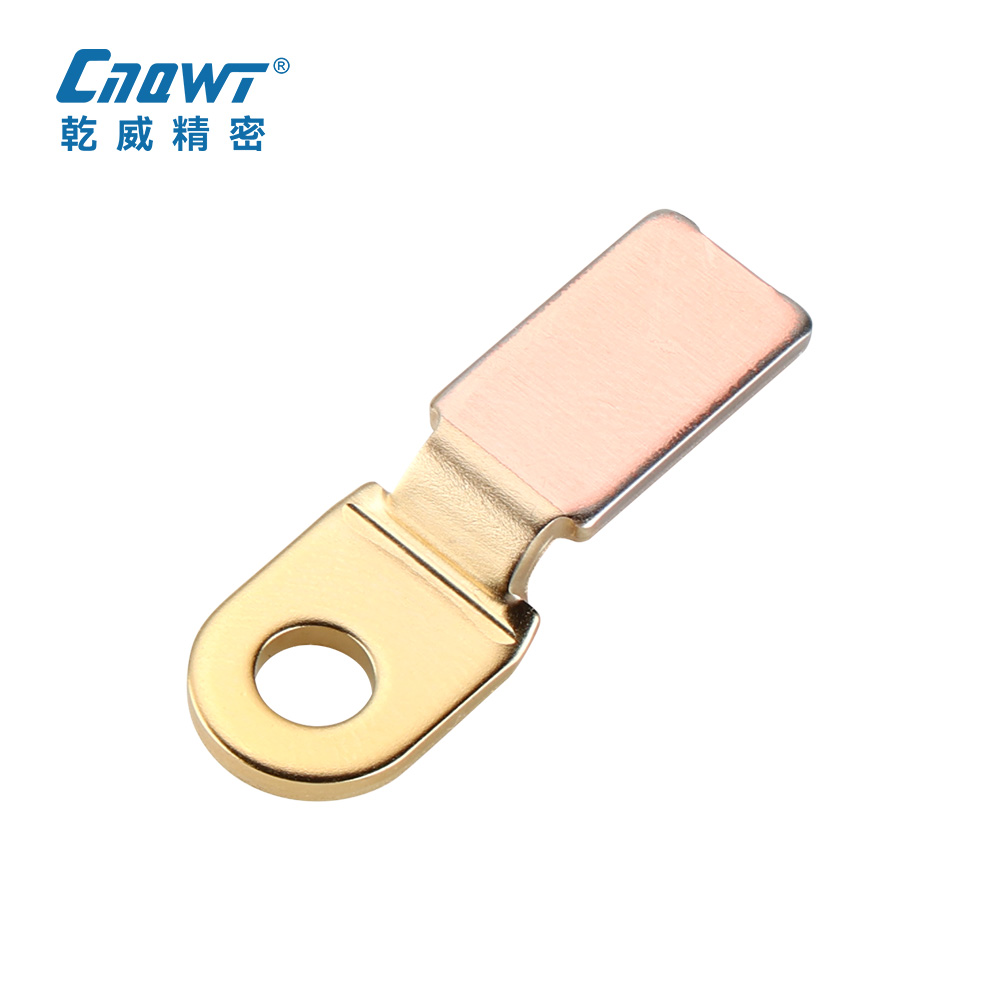
After forming, terminals receive the specified surface treatment, 주석과 같은, 니켈, 아니면 은도금, 내식성과 전기적 성능을 향상시키기 위해.
단계 5 – Inspection and Testing
Every production batch undergoes comprehensive quality inspection before shipment.
테스트에는 다음이 포함될 수 있습니다.:
- 치수검사
- 접촉저항 측정
- 도금 두께 검증
- 인발력 테스트
- 염수 분무 테스트
- 육안검사
Common Failure Modes of EV Battery Terminals
Even well-designed battery systems can experience failures if terminal selection or manufacturing quality is inadequate.
Understanding these common failure modes helps engineers design more reliable electrical systems.
Terminal Overheating
Causes
- 높은 접촉 저항
- Loose electrical connections
- 접촉 압력이 충분하지 않음
- Undersized terminal design
결과
- Increased energy loss
- Reduced battery efficiency
- Accelerated material aging
- Potential safety hazards
부식
Moisture and contaminants gradually attack unprotected conductive surfaces.
Corrosion increases electrical resistance and reduces connection reliability.
Proper plating significantly extends terminal service life.
Mechanical Loosening
Vehicle vibration can gradually loosen poorly designed terminals.
증상은 다음과 같습니다:
- 간헐적인 전기 연결
- 저항력 증가
- 전기 아크
- Equipment shutdown
Proper terminal design and adequate retention force help eliminate this risk.
Thermal Fatigue
Repeated charging and discharging create continuous thermal expansion and contraction.
수천 번의 작동 주기 이상, poor-quality terminals may develop:
- Microcracks
- 물질적 피로
- 접촉 압력 감소
- 연결 실패
High-quality copper alloys and precision manufacturing significantly improve fatigue resistance.
잘못된 재료 선택
Selecting a material based solely on cost rather than application requirements can result in:
- Insufficient conductivity
- Excessive temperature rise
- Poor mechanical strength
- Premature product failure
이러한 이유로, material selection should always consider current rating, operating temperature, 환경 조건, and expected service life rather than focusing only on initial cost.
How to Choose the Right EV Battery Terminal Supplier
Choosing the right battery terminal supplier is just as important as selecting the right terminal design. A reliable supplier not only provides high-quality products but also offers engineering support, 제조 전문 지식, and stable production capacity throughout the product lifecycle.
공급업체를 평가할 때, 다음 요소를 고려하십시오.
Engineering Design Capability
Battery terminals are rarely one-size-fits-all products. Different battery pack structures, 현재 등급, and installation methods require customized solutions.
유능한 공급업체는 다음을 제공해야 합니다.:
- 제조 가능성을 고려한 설계 (DFM) analysis
- 3D drawing and prototype support
- Material selection recommendations
- Cost optimization suggestions
- Rapid sample development
Engineering collaboration during the early design stage helps reduce development costs and shorten product launch cycles.
정밀 제조 역량
EV battery terminals require extremely tight dimensional tolerances and consistent quality across millions of parts.
A qualified manufacturer should possess:
- High-speed precision stamping equipment
- 프로그레시브 다이 제조
- Precision bending and forming
- 자동화된 조립 라인
- Surface plating capability
- 사내 툴링 개발
Integrated manufacturing reduces production lead time while improving consistency and traceability.
Quality Control and Testing
Battery terminals operate under demanding electrical and mechanical conditions. Comprehensive testing is essential before mass production.
Typical testing capabilities include:
- 접촉 저항 테스트
- Current carrying capacity testing
- 온도 상승 테스트
- 염수 분무 부식 테스트
- 인발력 테스트
- 치수검사
- 도금 두께 측정
- Metallographic analysis
A robust quality management system ensures stable performance across every production batch.
Automotive Certifications
For automotive and energy storage applications, internationally recognized certifications demonstrate manufacturing reliability.
일반적인 인증에는 다음이 포함됩니다.:
- IATF 16949
- ISO 9001
- RoHS 준수
- REACH 규정 준수
- UL (해당되는 경우)
Certified manufacturing processes provide greater confidence for OEMs and Tier 1 공급업체.
Custom EV Battery Terminal Solutions by 첸웨이 정밀
As electric vehicle technology continues to evolve, manufacturers increasingly require customized connection solutions rather than standard catalog products.
Qianwei Precision specializes in developing custom battery terminals that meet the performance requirements of EV, 에너지 저장, and industrial electrical systems.
Custom Design Services
Our engineering team supports customers throughout the product development process, 포함:
- Custom terminal structures
- High-current connection design
- 재료 선택
- Surface plating recommendations
- 프로토타입 개발
- Design optimization for mass production
Whether the project requires a simple stamped terminal or a complex multi-functional power connection, we work closely with customers to deliver practical and cost-effective solutions.
Advanced Manufacturing Capabilities
Qianwei Precision operates a complete production system covering:
- Precision high-speed metal stamping
- 프로그레시브 다이 제조
- 플라스틱 사출 성형
- 자동 조립
- Surface treatment coordination
- 와이어 하니스 어셈블리
Our vertically integrated manufacturing process enables consistent quality, flexible customization, 효율적인 생산.
Applications We Serve
Our battery terminal solutions are widely used in:
- Electric vehicle battery packs
- 배터리 에너지 저장 시스템 (베스)
- Hybrid electric vehicles
- 충전소
- 산업 자동화 장비
- High-current power distribution systems
With years of experience in precision electrical connection products, we help customers improve product reliability while reducing manufacturing complexity.
EV Battery Terminal Specification Guide
The following table summarizes typical design parameters for EV battery terminals.
| 매개변수 | Typical Specification |
|---|---|
| 재료 | 구리, 놋쇠, 구리 합금 |
| 표면 처리 | 주석, 니켈, 은 |
| 정격전류 | 50A–500A+ |
| 정격전압 | Up to 1000V DC |
| 작동 온도 | -40°C ~ +125°C |
| 제조공정 | 정밀 스탬핑 + 형성 |
| 생산량 | Prototype to High-Volume Manufacturing |
| 맞춤화 | 재료, 모양, 두께, 도금, 포장 |
These values vary depending on the specific battery architecture and application requirements.
결론
As electric vehicles and energy storage technologies continue to advance, battery terminals have become increasingly critical to system safety, 전기 효율, 장기적인 신뢰성. Although they represent only a small portion of the overall battery pack, their influence on performance is significant.
Selecting the right EV battery terminal requires more than choosing a conductive metal. Engineers must evaluate current carrying capacity, 접촉저항, 재료 특성, 표면 처리, 기계적 내구성, and manufacturing precision to ensure dependable performance under demanding operating conditions.
Partnering with an experienced manufacturer can simplify product development, improve production consistency, and reduce long-term operational risks.
첸웨이 정밀 combines precision stamping, mold development, 고급 제조, and engineering expertise to deliver custom EV battery terminal solutions for electric vehicles, 에너지 저장 시스템, and high-current industrial applications. From concept design to mass production, we help customers build safer, more reliable electrical connection systems.
자주 묻는 질문
What is an EV battery terminal?
An EV battery terminal is a conductive component that connects battery cells, 모듈, 모선, and power cables inside an electric vehicle battery system, providing safe and efficient electrical current transmission.
What material is best for EV battery terminals?
There is no universal answer. 구리는 가장 높은 전도성을 제공합니다., brass provides a balance of strength and cost, while copper alloys combine excellent conductivity with superior mechanical performance. The best choice depends on current rating, 운영 환경, and design requirements.
Why are copper battery terminals widely used?
Copper has excellent electrical and thermal conductivity, making it ideal for high-current battery systems where minimizing energy loss and heat generation is critical.
Why is tin plating commonly used?
Tin plating provides excellent corrosion resistance, 낮은 접촉 저항, good solderability, and cost-effective protection against oxidation, making it suitable for most EV battery applications.
What tests should EV battery terminals pass?
응용 프로그램에 따라, common tests include:
- 접촉 저항 테스트
- 전류 운반 능력
- 온도 상승 테스트
- 염수 분무 부식 테스트
- 인발력 테스트
- 치수검사
- 진동 테스트
- 열 순환 테스트
Can battery terminals be customized?
예. Most EV battery terminals are customized according to battery pack structure, 현재 등급, 설치 방법, 재료 선택, 및 생산 요구 사항.
How do battery terminals improve battery performance?
High-quality terminals reduce electrical resistance, minimize heat generation, improve energy transfer efficiency, and maintain stable electrical connections throughout the vehicle’s service life.
What causes battery terminal overheating?
가장 일반적인 원인은 다음과 같습니다.:
- 느슨한 연결
- 높은 접촉 저항
- Insufficient contact area
- Improper material selection
- 도금 품질이 좋지 않음
- 과도한 전류
Proper design and manufacturing help prevent overheating.
What industries use high-current battery terminals?
High-current battery terminals are widely used in:
- 전기 자동차
- Hybrid vehicles
- 배터리 에너지 저장 시스템
- Charging infrastructure
- 산업용 장비
- 재생 에너지 시스템
How do I choose a reliable EV battery terminal manufacturer?
다음을 갖춘 공급업체를 찾으세요.:
- 자동차 제조 경험
- 정밀 스탬핑 기능
- 사내 툴링 개발
- Comprehensive testing equipment
- 맞춤형 엔지니어링 지원
- Stable quality management systems
- Large-scale production capacity

