

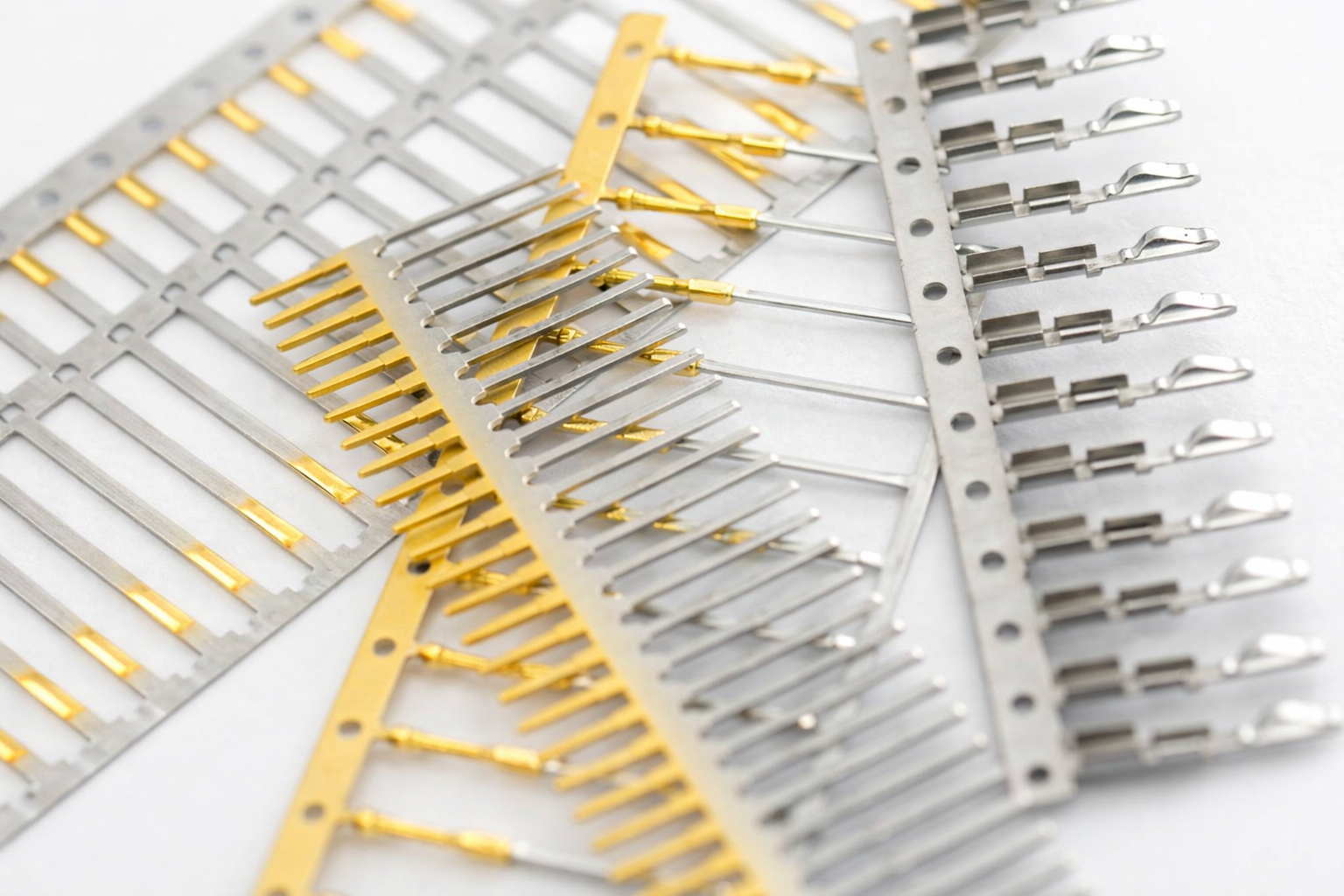
Mejores materiales terminales por temperatura
Si necesitas una decisión rápida, Utilice esta guía:
Por debajo de 150°C → Latón o bronce fósforo con estañado.
150–300°C → Cobre niquelado o cobre plateado
Por encima de 300°C → Acero inoxidable o aleaciones a base de níquel.
Mejor conductividad → Cobre plateado
Mejor resistencia a la oxidación → Niquelado o acero inoxidable
👉 En la mayoría de aplicaciones industriales y automotrices, Las aleaciones de cobre niquelado ofrecen el mejor equilibrio entre rendimiento y coste..
Por qué es importante la selección de materiales
En ambientes de alta temperatura, El rendimiento del terminal no se trata sólo de conductividad, sino también de confiabilidad a largo plazo.
Una mala selección de materiales puede provocar:
Mayor resistencia de contacto
Oxidación y corrosión.
Pérdida de resistencia mecánica. (arrastrarse)
Fallo eléctrico o sobrecalentamiento.
Estos riesgos son especialmente críticos en:
Compartimentos de motores de automóviles
Sistemas de baterías para vehículos eléctricos
Equipos de calefacción industriales.
Sistemas aeroespaciales y de alta confiabilidad
Esta guía proporciona una práctico, enfoque impulsado por la ingeniería para seleccionar los materiales terminales correctos en función de la temperatura, conductividad, y requisitos de aplicación.
Factores clave al elegir materiales terminales
Resistencia a la temperatura
Primero defina su rango de trabajo:
| Rango de temperatura | Requisito típico |
| <150°C | Aplicaciones estándar |
| 150–300°C | Automotor / industrial |
| 300°C+ | Ambientes extremos |
Las temperaturas más altas se aceleran:
Oxidación
Ablandamiento de materiales
Pérdida de fuerza del resorte.
Conductividad eléctrica
Cobre → Excelente conductividad
Acero inoxidable → Mala conductividad
👉 Compensación:
Una mayor resistencia a la temperatura a menudo tiene el costo de una menor conductividad..
Oxidación & Resistencia a la corrosión
A temperaturas elevadas:
El cobre se oxida rápidamente.
El revestimiento de superficies se vuelve crítico
Soluciones clave:
Niquelado → barrera contra la oxidación
Chapado en plata → conductividad + estabilidad
Estabilidad mecánica (Resistencia a la fluencia)
Creep = deformación gradual bajo calor + estrés
Esto lleva a:
Fuerza de contacto reducida
Conexiones sueltas
Mayor resistencia
👉 Crítico en:
Conectores
Terminales de resorte
Conexiones prensadas
Costo versus rendimiento
| Material | Costo | Actuación |
| Latón | Bajo | Moderado |
| Aleaciones de cobre | Medio | Alto |
| Cobre plateado | Alto | muy alto |
| Aleaciones de níquel | muy alto | Extremo |
👉 La ingeniería debe equilibrar:
actuación, esperanza de vida, y presupuesto
Los mejores materiales para Terminales de alta temperatura
Cobre y aleaciones de cobre (Latón, Bronce fosforado)
Rango de temperatura: Hasta ~150–200°C
Ventajas:
Excelente conductividad eléctrica
Fácil de estampar y formar
Rentable
Limitaciones:
Oxidación a altas temperaturas.
Estabilidad mecánica reducida
Lo mejor para:
Electrónica de consumo
Conectores de temperatura baja a media
Cobre niquelado
Rango de temperatura: Hasta ~300°C
Ventajas:
Fuerte resistencia a la oxidación
Mantiene la conductividad
Actualización rentable
Limitaciones:
Costo ligeramente mayor que el cobre desnudo.
Lo mejor para:
Sistemas de cableado automotriz
Conectores industriales
👉 Este es el solución más comúnmente recomendada.
Cobre plateado
Rango de temperatura: 300°C+ (dependiendo del diseño)
Ventajas:
Máxima conductividad eléctrica
Excelente estabilidad térmica
Baja resistencia de contacto
Limitaciones:
Mayor costo
Empañamiento en ciertos ambientes.
Lo mejor para:
Sistemas de alta corriente
Aplicaciones aeroespaciales y de vehículos eléctricos
Acero inoxidable
Rango de temperatura: 400°C+
Ventajas:
Excepcional resistencia al calor
Fuerte estabilidad mecánica
Excelente resistencia a la oxidación
Limitaciones:
Mala conductividad eléctrica
Lo mejor para:
Terminales estructurales
Conexiones mecánicas de alta temperatura
Aleaciones a base de níquel
Rango de temperatura: Extremo (>500°C)
Ventajas:
Excelente resistencia al calor
Excelente resistencia a la fluencia
Limitaciones:
muy caro
Difícil de procesar
Lo mejor para:
Aeroespacial
Sistemas industriales especializados
Tabla de comparación de materiales
| Material | Temperatura máxima | Conductividad | Resistencia a la oxidación | Costo | Mejor aplicación |
| Latón | ~150°C | Bien | Bajo | Bajo | Terminales generales |
| Bronce fosforado | ~200ºC | Bien | Moderado | Medio | Terminales de resorte |
| Cobre niquelado | ~300°C | Excelente | Alto | Medio | Automotor |
| Cobre plateado | 300°C+ | Excelente | Alto | Alto | Alta corriente |
| Acero inoxidable | 400°C+ | Bajo | muy alto | Medio | Estructural |
| Aleaciones de níquel | 500°C+ | Medio | Excelente | muy alto | Aeroespacial |
Revestimiento de superficies para terminales de alta temperatura
Estañado
Bajo costo
Adecuado para <150°C
No recomendado para altas temperaturas.
Niquelado
Excelente barrera a la oxidación
Mejora la durabilidad
Ampliamente utilizado en automoción
Chapado en plata
Mejor rendimiento eléctrico
Adecuado para altas temperaturas
Utilizado en aplicaciones exigentes
👉 Información clave:
En ambientes de alta temperatura, El revestimiento es a menudo más crítico que el material base..
Selección de materiales por temperatura (Guía práctica)
Por debajo de 150°C
Latón / bronce fosforado
estañado
150–300°C
Cobre niquelado
Cobre plateado
Por encima de 300°C
Acero inoxidable
Aleaciones de níquel
👉 Esta sección responde directamente:
“¿Qué debo elegir??"
Modos de falla comunes en terminales de alta temperatura
Comprender el fracaso ayuda a prevenirlo:
Oxidación
Aumenta la resistencia
Causa sobrecalentamiento
Deformación por fluencia
Pérdida de presión de contacto.
Conduce a conexiones inestables
Degradación del revestimiento
Exposición de metal base
Corrosión acelerada
Problemas de expansión térmica
Aflojamiento de conexiones
👉 La selección adecuada de materiales elimina la mayoría de estos riesgos.
Escenarios de aplicación
Automotor
Compartimentos del motor
Conexiones de la batería del vehículo eléctrico
Equipos industriales
Sistemas de calefacción
motores
Aeroespacial
Ambientes con temperaturas extremas
Electrónica
Conectores de alta potencia
Carcasas sensibles al calor
Guía de selección de materiales paso a paso
- Identificar la temperatura de funcionamiento
- Determinar la carga actual
- Evaluar la exposición ambiental
- Seleccionar material base
- Elige el emplatado
- Validar con pruebas
Por qué trabajar con un fabricante de terminales personalizados

Elegir el material adecuado es sólo una parte de la solución.
Un fabricante calificado puede ayudarle con:
Selección de materiales basada en aplicaciones reales.
DFM (Diseño para fabricación) mejoramiento
Validación del rendimiento a alta temperatura
Soluciones personalizadas de estampado y enchapado
Estrategias de reducción de costos
Conclusión
No existe una solución única para terminales de alta temperatura.
La elección óptima depende de:
Rango de temperatura
Requisitos eléctricos
Condiciones ambientales
Restricciones presupuestarias
Sin embargo, en la mayoría de los casos:
El cobre niquelado ofrece el mejor equilibrio
El cobre plateado es ideal para sistemas de alto rendimiento
El acero inoxidable está reservado para condiciones extremas
Obtenga soporte experto para su proyecto de terminal
Si está diseñando terminales para aplicaciones de alta temperatura, La selección temprana del material adecuado puede ahorrar costos y riesgos significativos..
Precisión de Qianwei puede apoyarte con:
Diseño de terminal personalizado
Recomendación de materiales
Soluciones de revestimiento de alta temperatura
Prototipo para producción en masa.
Envíanos tus dibujos, requisitos de temperatura, o detalles de la solicitud hoy recibir:
Cotización rápida
Comentarios de ingeniería
Solución de materiales optimizada
👉 Contáctanos ahora para iniciar tu proyecto.
Preguntas frecuentess
- ¿Cuál es el mejor material para terminales de alta temperatura??
El cobre niquelado es la solución más equilibrada, mientras que el cobre plateado es mejor para aplicaciones de alto rendimiento. - ¿Se puede utilizar el cobre en entornos de alta temperatura??
Sí, pero requiere un revestimiento adecuado (níquel o plata) para prevenir la oxidación. - ¿El acero inoxidable es adecuado para terminales eléctricos??
Es adecuado para ambientes de alta temperatura pero tiene menor conductividad.. - ¿Qué revestimiento es mejor para altas temperaturas??
El niquelado y el plateado son las opciones más efectivas.

