

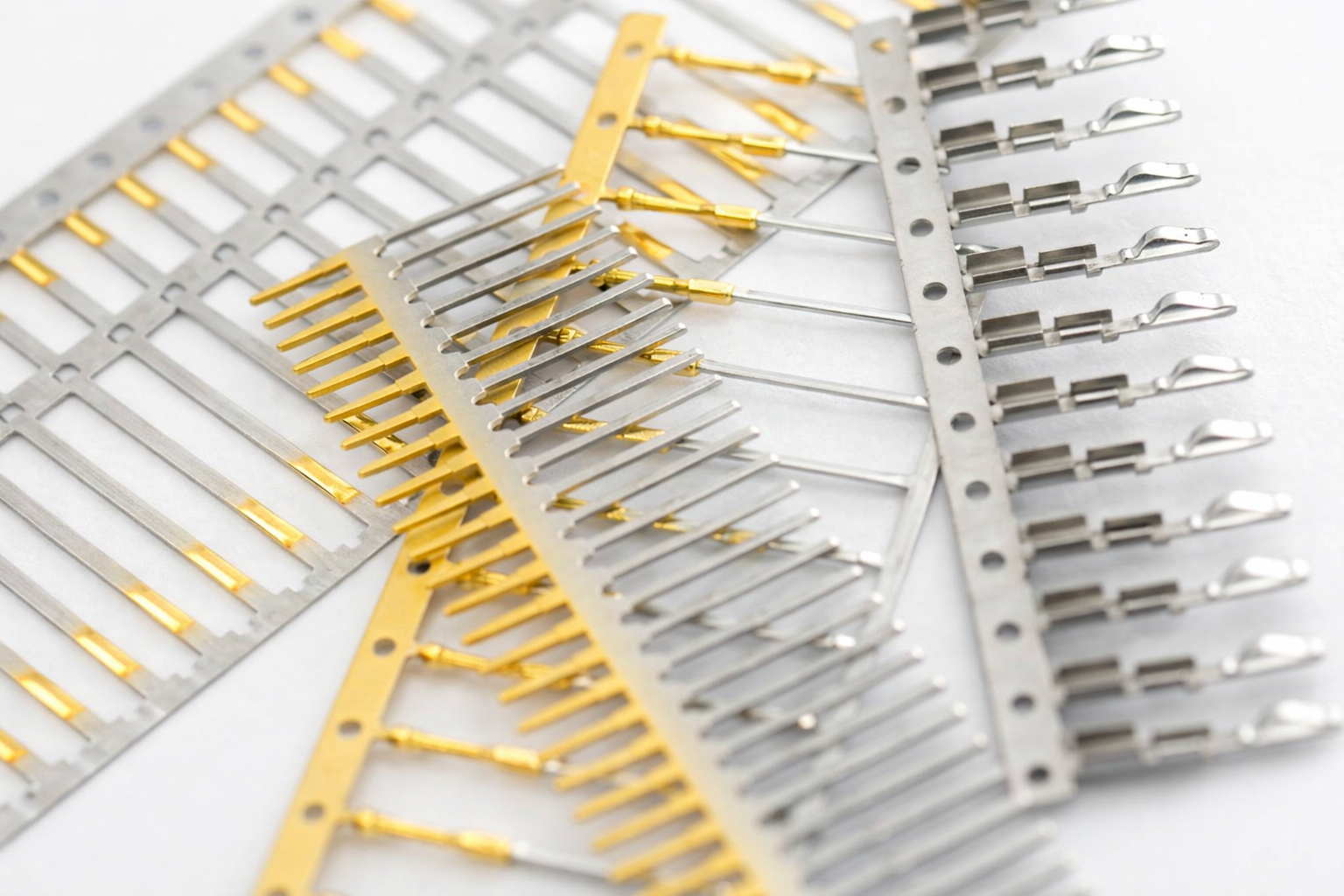
온도별 최고의 단자 재료
빠른 결정이 필요한 경우, 이 지침을 사용하세요:
150°C 이하 → 주석 도금된 황동 또는 인청동
150-300°C → 니켈 도금 구리 또는 은도금 구리
300°C 이상 → 스테인리스강 또는 니켈 기반 합금
최고의 전도성 → 은도금 구리
최고의 내산화성 → 니켈 도금 또는 스테인레스 스틸
👉 대부분의 산업 및 자동차 응용 분야, 니켈 도금 구리 합금은 성능과 비용의 최상의 균형을 제공합니다..
재료 선택이 중요한 이유
고온 환경에서, 단자 성능은 단지 전도성에 관한 것이 아니라 장기적인 신뢰성.
잘못된 재료 선택으로 인해:
접촉 저항 증가
산화 및 부식
기계적 강도의 상실 (살금살금 기다)
전기 고장 또는 과열
이러한 위험은 특히 다음과 같은 경우에 중요합니다.:
자동차 엔진룸
EV 배터리 시스템
산업용 난방 장비
항공우주 및 고신뢰성 시스템
이 가이드는 현실적인, 엔지니어링 중심 접근 방식 온도에 따라 올바른 단자 재료를 선택하는 것, 전도도, 및 신청 요구 사항.
터미널 재료 선택 시 주요 요소
온도 저항
먼저 작업 범위를 정의하세요.:
| 온도 범위 | 일반적인 요구 사항 |
| <150℃ | 표준 애플리케이션 |
| 150-300°C | 자동차 / 산업의 |
| 300℃+ | 극한 환경 |
온도가 높아지면 가속화됩니다.:
산화
소재 연화
스프링 힘의 손실
전기 전도도
구리 → 전도성 우수
스테인레스 스틸 → 전도성 불량
👉 절충안:
온도 저항이 높을수록 전도성이 낮아지는 경우가 많습니다..
산화 & 부식 저항
높은 온도에서:
구리는 빠르게 산화됩니다.
표면 도금이 중요해짐
주요 솔루션:
니켈 도금 → 산화 장벽
은도금 → 전도성 + 안정
기계적 안정성 (크리프 저항)
크리프 = 열에 의한 점진적 변형 + 스트레스
이로 인해:
접촉력 감소
느슨한 연결
저항력 증가
👉 중요:
커넥터
스프링 터미널
압착된 연결
비용 대 성능
| 재료 | 비용 | 성능 |
| 놋쇠 | 낮은 | 보통의 |
| 구리 합금 | 중간 | 높은 |
| 은도금 구리 | 높은 | 매우 높음 |
| 니켈 합금 | 매우 높음 | 극심한 |
👉 엔지니어링은 균형을 이루어야 합니다:
성능, 수명, 그리고 예산
최고의 재료 고온 터미널
구리 및 구리 합금 (놋쇠, 인청동)
온도 범위: 최대 ~150~200°C
장점:
우수한 전기 전도성
스탬프 및 성형이 용이함
비용 효율적
제한사항:
고온에서의 산화
기계적 안정성 감소
다음에 가장 적합:
가전제품
중저온 커넥터
니켈 도금된 구리
온도 범위: 최대 ~300°C
장점:
강한 내산화성
전도성 유지
비용 효율적인 업그레이드
제한사항:
베어 구리보다 약간 높은 비용
다음에 가장 적합:
자동차 배선 시스템
산업용 커넥터
👉이것은 가장 일반적으로 권장되는 솔루션.
은도금 구리
온도 범위: 300℃+ (디자인에 따라)
장점:
가장 높은 전기 전도성
우수한 열 안정성
낮은 접촉 저항
제한사항:
더 높은 비용
특정 환경에서의 변색
다음에 가장 적합:
고전류 시스템
항공우주 및 EV 애플리케이션
스테인레스 스틸
온도 범위: 400℃+
장점:
뛰어난 내열성
강한 기계적 안정성
우수한 내산화성
제한사항:
전기 전도성이 좋지 않음
다음에 가장 적합:
구조적 터미널
고온 기계적 연결
니켈 기반 합금
온도 범위: 극심한 (>500℃)
장점:
뛰어난 내열성
우수한 내크리프성
제한사항:
매우 비싸다
처리가 어렵다
다음에 가장 적합:
항공우주
전문 산업 시스템
재료 비교표
| 재료 | 최대 온도 | 전도도 | 산화 저항 | 비용 | 최고의 응용 프로그램 |
| 놋쇠 | ~150°C | 좋은 | 낮은 | 낮은 | 일반 터미널 |
| 인청동 | ~200°C | 좋은 | 보통의 | 중간 | 스프링 터미널 |
| 니켈 도금된 구리 | ~300°C | 훌륭한 | 높은 | 중간 | 자동차 |
| 은도금 구리 | 300℃+ | 훌륭한 | 높은 | 높은 | 고전류 |
| 스테인레스 스틸 | 400℃+ | 낮은 | 매우 높음 | 중간 | 구조적 |
| 니켈 합금 | 500℃+ | 중간 | 훌륭한 | 매우 높음 | 항공우주 |
고온 단자 표면 도금
주석 도금
저렴한 비용
적합 <150℃
고열에는 권장되지 않음
니켈 도금
우수한 산화 장벽
내구성 향상
자동차에 널리 사용됨
실버 도금
최고의 전기적 성능
고온에 적합
까다로운 응용 분야에 사용됨
👉 주요 통찰력:
고온 환경에서, 도금은 종종 기본 재료보다 더 중요합니다..
온도에 따른 소재 선택 (실용 가이드)
150°C 이하
놋쇠 / 인청동
주석 도금
150-300°C
니켈 도금된 구리
은도금 구리
300°C 이상
스테인레스 스틸
니켈 합금
👉 이 섹션에서는 직접 답변합니다.:
“무엇을 선택해야 할까??”
고온 터미널의 일반적인 고장 모드
실패를 이해하면 실패를 예방하는 데 도움이 됩니다:
산화
저항력 증가
과열의 원인
크리프 변형
접촉 압력 손실
불안정한 연결로 이어짐
도금 열화
비금속 노출
부식 가속화
열팽창 문제
연결 느슨해짐
👉 적절한 재료 선택으로 이러한 위험이 대부분 제거됩니다..
응용 시나리오
자동차
엔진실
EV 배터리 연결
산업용 장비
난방 시스템
모터
항공우주
극한의 온도 환경
전자제품
고전력 커넥터
열에 민감한 하우징
단계별 재료 선택 가이드
- 작동 온도 식별
- 현재 부하 결정
- 환경 노출 평가
- 기본 재료 선택
- 도금을 선택하세요
- 테스트를 통해 검증
맞춤형 터미널 제조업체와 협력해야 하는 이유

올바른 재료를 선택하는 것은 솔루션의 일부일 뿐입니다..
자격을 갖춘 제조업체가 귀하를 도울 수 있습니다.:
실제 적용을 기반으로 한 재료 선택
DFM (제조를 위한 설계) 최적화
고온 성능 검증
맞춤형 스탬핑 및 도금 솔루션
비용 절감 전략
결론
고온 단자에 대해 모든 용도에 맞는 단일 솔루션은 없습니다..
최적의 선택은 다음에 달려 있습니다.:
온도 범위
전기적 요구 사항
환경 조건
예산 제약
하지만, 대부분의 경우:
니켈 도금 구리는 최고의 균형을 제공합니다.
은도금 구리는 고성능 시스템에 이상적입니다.
스테인레스 스틸은 극한의 조건을 위해 예약되어 있습니다
터미널 프로젝트에 대한 전문가 지원 받기
고온 애플리케이션용 단자를 설계하는 경우, 올바른 재료를 조기에 선택하면 상당한 비용과 위험을 줄일 수 있습니다..
첸웨이 정밀 당신을 지원할 수 있습니다:
맞춤형 터미널 디자인
소재 추천
고온 도금 솔루션
프로토타입부터 양산까지
우리에게 그림을 보내주세요, 온도 요구 사항, 또는 오늘 신청 세부 사항 받다:
빠른 견적
엔지니어링 피드백
최적화된 소재 솔루션
FAQ에스
- 고온 단자에 가장 적합한 재료는 무엇입니까??
니켈 도금 구리는 가장 균형 잡힌 솔루션입니다., 은도금 구리는 고성능 응용 분야에 가장 적합합니다.. - 고온 환경에서 구리를 사용할 수 있습니까??
예, 하지만 적절한 도금이 필요합니다 (니켈 또는 은) 산화를 방지하기 위해. - 스테인레스 스틸은 전기 단자에 적합합니까??
고온 환경에 적합하지만 전도성이 낮습니다.. - 고온에 가장 적합한 도금은 무엇입니까??
니켈과 은도금이 가장 효과적인 옵션입니다..

