

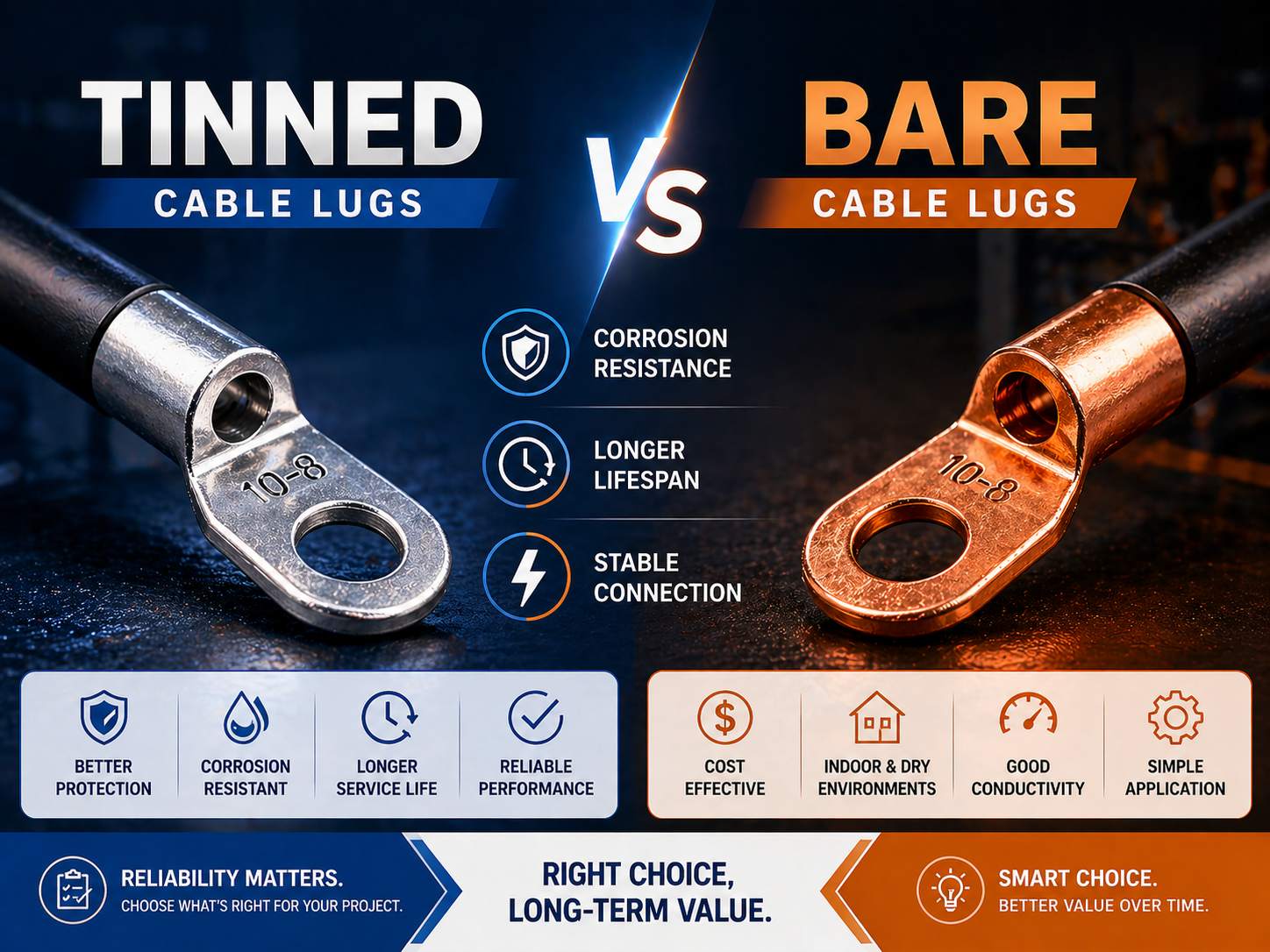
Introducción: Una pequeña elección que impacta un gran rendimiento
en sistemas electricos, Los terminales de cable pueden parecer componentes simples, pero su material y tratamiento de superficie pueden afectar significativamente confiabilidad de la conexión, esperanza de vida, y costos de mantenimiento.
Una de las preguntas más comunes que enfrentan los ingenieros y los equipos de adquisiciones es:
¿Debería elegir terminales de cable estañados o terminales de cable de cobre desnudo??
A primera vista, la diferencia parece mínima. Ambos están hechos de cobre altamente conductor y tienen el mismo propósito fundamental: conectar cables a equipos o barras colectoras.. Sin embargo, cuando se consideran las condiciones del mundo real, como humedad, corrosión, variación de temperatura, y costos del ciclo de vida, la elección se vuelve mucho más crítica.
Esta guía proporciona una comparación detallada entre terminales de cable estañados y desnudos., ayudándole a tomar la decisión correcta basándose en actuación, ambiente, y rentabilidad.
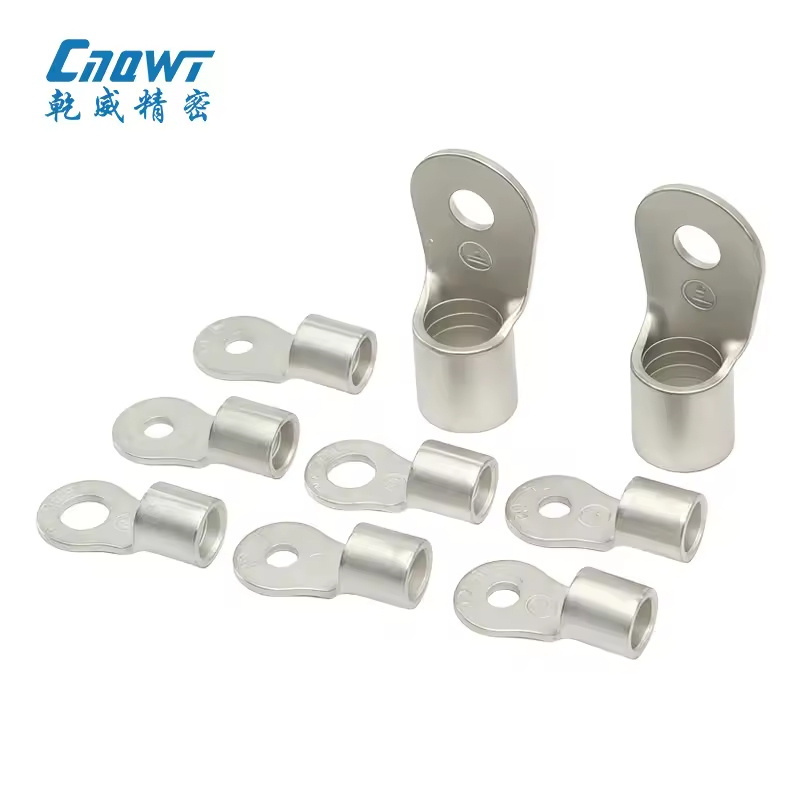
¿Qué son los terminales de cable estañados??
Los terminales de cable estañados son terminales de cobre recubiertos con una fina capa de estañado. Esta capa actúa como una barrera protectora., Prevención de la exposición directa del cobre al aire y la humedad..
Características clave
- Materia prima: Cobre de alta conductividad
- Superficie: Acabado estañado
- Apariencia: color plateado
- Función: Resistencia a la corrosión mejorada
Por qué es importante el estañado
El cobre se oxida naturalmente cuando se expone al aire.. Con el tiempo, Esta oxidación aumenta la resistencia de contacto y reduce la calidad de la conexión.. El estañado evita este proceso., garantizar la estabilidad a largo plazo.
¿Qué son los terminales de cable desnudos??
Los terminales de cable desnudos están hechos de cobre puro sin ningún revestimiento superficial.. Ofrecen una excelente conductividad pero carecen de protección contra factores ambientales..
Características clave
- Materia prima: Cobre puro
- Superficie: Sin recubrimiento
- Apariencia: Color cobrizo rojizo
- Función: Conductividad máxima, menor costo
Limitaciones
Sin emplatar, El cobre es vulnerable a:
- Oxidación
- Humedad
- Exposición química
Esto puede conducir a la degradación con el tiempo., especialmente en ambientes hostiles.
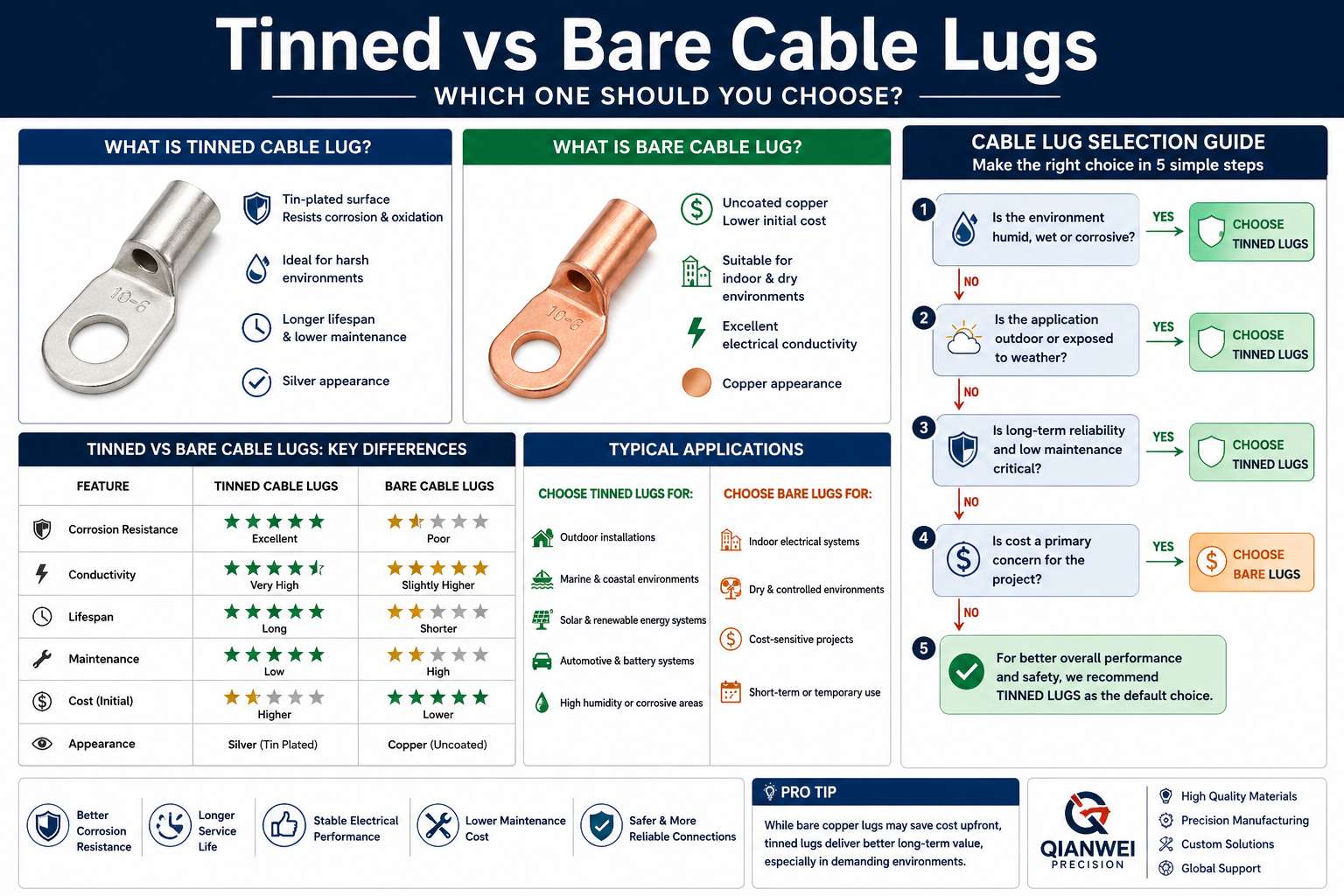
Terminales de cable estañados versus desnudos: Diferencias clave
Aquí hay una comparación clara:
| Característica | Terminales de cable estañados | Terminales de cable desnudo |
|---|---|---|
| Resistencia a la corrosión | Excelente | Pobre |
| Conductividad | muy alto | Ligeramente más alto |
| Esperanza de vida | Largo | más corto |
| Mantenimiento | Bajo | Alto |
| Costo | Más alto | Más bajo |
| Apariencia | Plata | Cobre |
Rendimiento eléctrico: ¿El estaño reduce la conductividad??
Una preocupación común es si el estañado reduce la conductividad..
La realidad
- Conductividad del cobre: ~100% SIGC
- Conductividad del estaño: más bajo que el cobre
Sin embargo:
- La capa de estaño es extremadamente delgada.
- El impacto en la conductividad general es insignificante en aplicaciones reales
Conclusión práctica
En la mayoría de los sistemas:
- La diferencia es no medible en rendimiento
- Los factores ambientales importan mucho más que la conductividad teórica
Corrosión & Oxidación: El factor crítico
Aquí es donde radica la verdadera diferencia..
Comportamiento del cobre desnudo
Cuando se expone al aire y la humedad.:
- El cobre forma capas de óxido.
- La resistencia superficial aumenta
- La confiabilidad de la conexión disminuye
En ambientes hostiles, este proceso se acelera.
Ventaja del cobre estañado
El estañado proporciona:
- Una barrera protectora contra el oxígeno.
- Resistencia a la humedad y a los productos químicos.
- Superficies de contacto estables en el tiempo
Impacto en el mundo real
En entornos como:
- Instalaciones exteriores
- Zonas costeras (exposición a la sal)
- Instalaciones industriales
Las orejetas estañadas superan significativamente a las orejetas desnudas.
Costo versus valor del ciclo de vida
Muchos compradores se centran sólo en el precio inicial..
Terminales de cable desnudo
- Costo inicial más bajo
- Mayor mantenimiento
- Vida útil más corta
Terminales de cable estañados
- Costo inicial ligeramente mayor
- Mantenimiento mínimo
- Vida útil más larga
Información sobre el costo total
Las orejetas estañadas suelen tener un costo total de propiedad más bajo con el tiempo..
Especialmente en:
- Instalaciones a gran escala
- Sistemas difíciles de mantener
Escenarios de aplicación
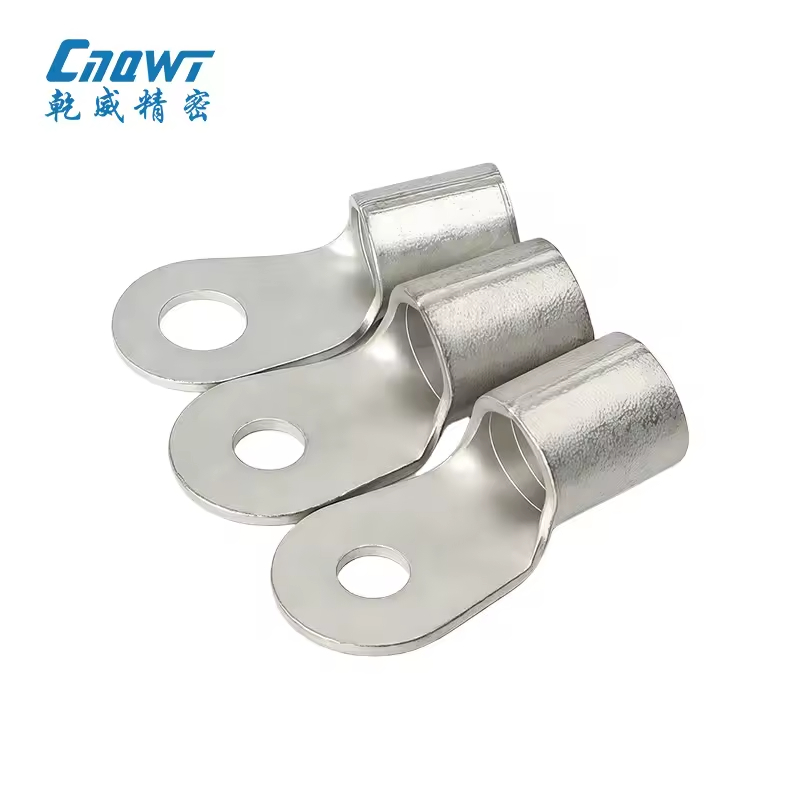
Cuándo utilizar terminales de cable estañados
Se recomiendan orejetas estañadas para:
- Sistemas eléctricos exteriores.
- Sistemas de energía solar y renovable.
- Ambientes marinos o costeros
- Sistemas automotrices y de baterías.
- Ambientes de alta humedad
Cuándo utilizar terminales de cable desnudos
Las orejetas desnudas son adecuadas para:
- Instalaciones interiores
- Seco, ambientes controlados
- Proyectos de bajo costo
- Aplicaciones a corto plazo
Guía de selección: Cómo elegir la opción correcta
Utilice este marco de decisión simplificado:
Paso 1: Evaluar el entorno
- Húmedo / corrosivo → Elija estañado
- Seco / interior → Desnudo puede funcionar
Paso 2: Considere la esperanza de vida
- Sistema de larga duración → Estañado
- Uso temporal → Desnudo
Paso 3: Evaluar la criticidad
- Sistemas eléctricos críticos → Estañados
- No crítico → Desnudo
Regla de decisión rápida
- Si la confiabilidad importa → Ir con orejetas estañadas
- Si el costo es la única preocupación → Se aceptan orejetas desnudas
Errores comunes que se deben evitar
Incluso los compradores experimentados cometen estos errores:
1. Elegir orejetas desnudas para uso en exteriores
Conduce a una rápida oxidación y falla..
2. Ignorar los costos de mantenimiento
Los reemplazos frecuentes aumentan los gastos totales.
3. Sobreestimar las diferencias de conductividad
Las ventajas teóricas no importan en condiciones reales..
4. Sin considerar la exposición ambiental
La humedad y los productos químicos afectan drásticamente el rendimiento.
Consideraciones de prensado
Ambos tipos requieren un engarzado adecuado., pero:
Orejetas estañadas
- Mejor estabilidad de la superficie
- Calidad de contacto constante
Orejas desnudas
- Puede degradarse con el tiempo después del prensado
- La oxidación de la superficie puede afectar la conexión.
Mejores prácticas
Utilice siempre:
- Herramientas de prensado correctas
- Fuerza de prensado adecuada
- Terminales de calidad
Estándares de la industria & Cumplimiento
Los terminales de cable fiables deben cumplir:
- RoHS (cumplimiento ambiental)
- ALCANZAR (seguridad química)
- IATF16949 (calidad automotriz)
Las orejetas estañadas suelen ser las preferidas en las industrias reguladas debido a su estabilidad a largo plazo.
Por qué cada vez más ingenieros prefieren terminales de cable estañados
En todas las industrias, la tendencia es clara:
- La creciente demanda de durabilidad
- Expectativas de mantenimiento reducidas
- Estándares de confiabilidad más altos
Como resultado, Los terminales de cable estañados se están convirtiendo en la opción predeterminada. en muchas aplicaciones.
¿Por qué elegir? Precisión de Qianwei
Qianwei Precision proporciona terminales de cable de alta calidad diseñados para brindar confiabilidad y rendimiento.
Nuestras ventajas:
- Materiales de cobre de alta conductividad.
- Estañado estable y uniforme
- 1800+ moldes de producción
- Fabricación automatizada avanzada
- Fuertes capacidades de personalización
Apoyamos aplicaciones en:
- Sistemas automotrices
- Energía renovable
- Equipos industriales
- Electrónica de consumo
Conclusión: Rendimiento sobre precio
Aunque tanto los terminales de cable estañados como los desnudos tienen su lugar, La decisión nunca debe basarse únicamente en el precio..
- Las orejetas desnudas ofrecen ahorros a corto plazo
- Las orejetas estañadas brindan confiabilidad a largo plazo
En la mayoría de las aplicaciones del mundo real, Los terminales de cable estañados ofrecen un mejor rendimiento, vida útil más larga, y menor costo total.
👉 Listo para elegir el terminal de cable adecuado?
Si busca terminales de cable para su proyecto:
- Obtenga orientación de selección de expertos
- Solicitar muestras gratis
- Personalice las especificaciones para su aplicación
Póngase en contacto con Qianwei Precision hoy para garantizar que sus conexiones eléctricas estén diseñadas para un rendimiento a largo plazo.
Preguntas frecuentes
1. ¿Cuál es la diferencia entre terminales de cable estañados y desnudos??
Los terminales de cable estañados están recubiertos con una fina capa de estaño para evitar la corrosión., mientras que los terminales de cable desnudos son de cobre sin recubrimiento. La principal diferencia radica en resistencia a la corrosión y vida útil, no es una funcionalidad principal.
2. ¿Son mejores los terminales de cable estañados que los terminales de cobre desnudo??
Los terminales de cable estañados son generalmente mejores para exterior, húmedo, o ambientes corrosivos debido a sus propiedades antioxidantes. Las orejetas desnudas son adecuadas para seco, aplicaciones en interiores.
3. ¿Los terminales de cable estañados tienen menor conductividad??
Levemente, pero la diferencia es insignificante. La capa de estaño es muy fina., entonces en aplicaciones del mundo real, las diferencias de conductividad no son significativas.
4. ¿Cuándo debo utilizar terminales de cable desnudos??
Utilice terminales de cable desnudos:
- Ambientes interiores
- Condiciones secas
- Proyectos sensibles a los costos
- Aplicaciones a corto plazo
5. ¿Por qué los terminales de cable necesitan estañado??
El estañado protege el cobre de:
- Oxidación
- Humedad
- Exposición química
Esto asegura Rendimiento eléctrico estable a lo largo del tiempo..
6. ¿Se requieren terminales de cable estañados para uso en exteriores??
Sí, en la mayoría de los casos. Los entornos exteriores exponen los conectores a la humedad y la corrosión., haciendo Los terminales estañados son la opción más segura y confiable..
7. ¿Los terminales de cable estañados duran más??
Sí. Los terminales de cable estañados tienen una vida útil más larga porque resisten la corrosión y mantienen superficies de contacto estables..
8. ¿Son las terminales de cobre desnudas más rentables??
Tienen un coste inicial menor, pero puede resultar en mayores costos a largo plazo debido al mantenimiento, oxidación, y reemplazo.
9. ¿Se pueden utilizar terminales de cable desnudos en aplicaciones de alta corriente??
Sí, pero sólo en ambientes controlados. Sin protección, la oxidación puede afectar el rendimiento a largo plazo incluso en sistemas de alta corriente.
10. ¿Cómo elijo entre terminales de cable estañados y desnudos??
Considere tres factores:
- Ambiente (húmedo versus seco)
- Esperanza de vida (largo plazo versus corto plazo)
- Criticidad de la aplicación
👉 Si la confiabilidad importa → elige orejetas estañadas
👉 Si el costo es la prioridad → asas desnudas puede trabajar


un pensamiento sobre “Terminales de cable estañados versus desnudos – ¿Cuál debería elegir para obtener confiabilidad eléctrica a largo plazo??”