

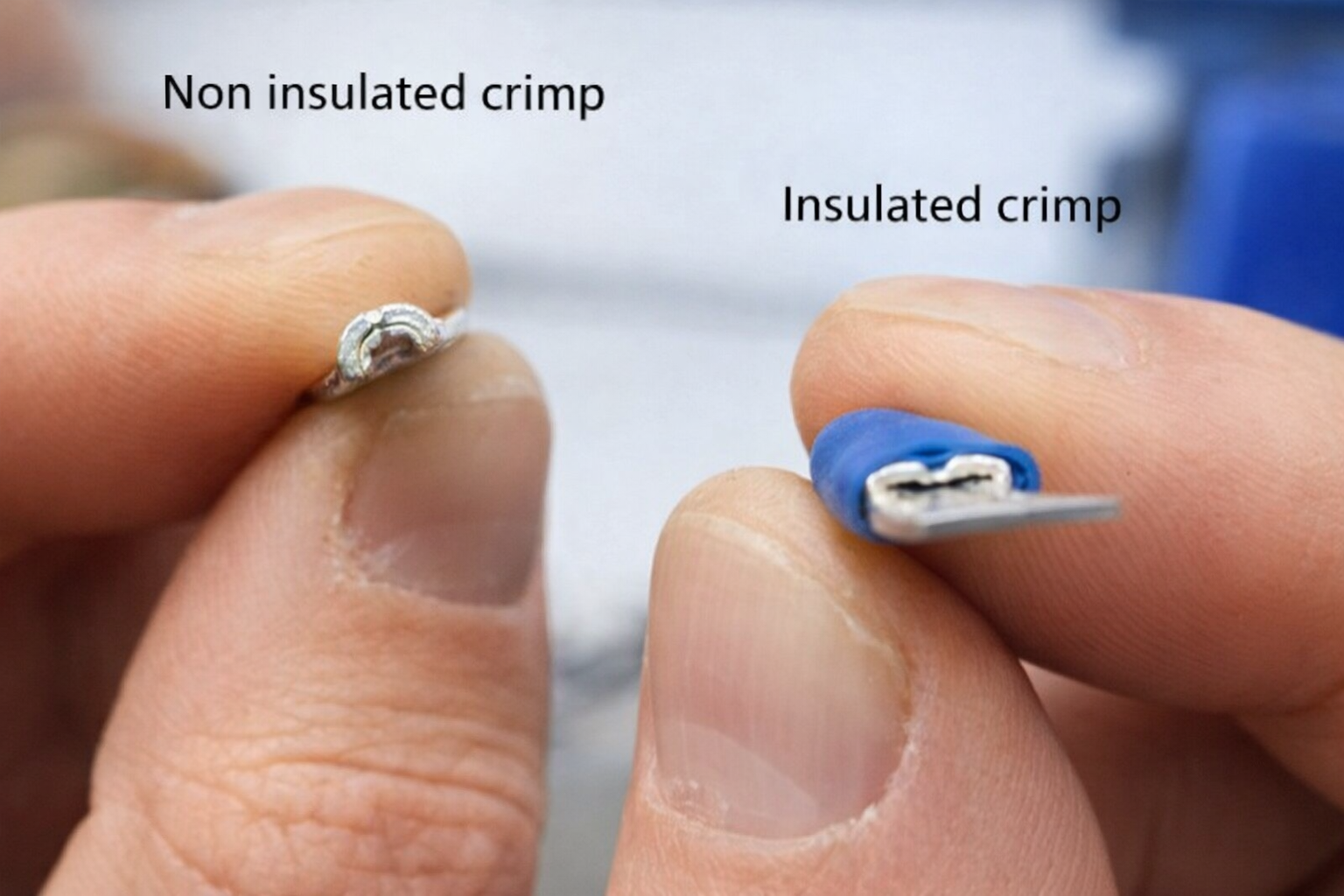
Choosing between insulated and non-insulated terminals is one of the most important decisions when designing or assembling an electrical wiring system. Whether you are building automotive wire harnesses, marine electrical systems, 산업용 제어 패널, or vehicle upfits, the right terminal directly affects:
전기 안전
Long-term reliability
Installation efficiency
Environmental resistance
Total project cost
This comprehensive guide explains the differences, 장점, 한계, 애플리케이션, and selection criteria for insulated and non-insulated solderless terminals—helping engineers, buyers, and technicians make informed purchasing decisions.
What Are Non-Insulated Terminals?
Definition and Construction
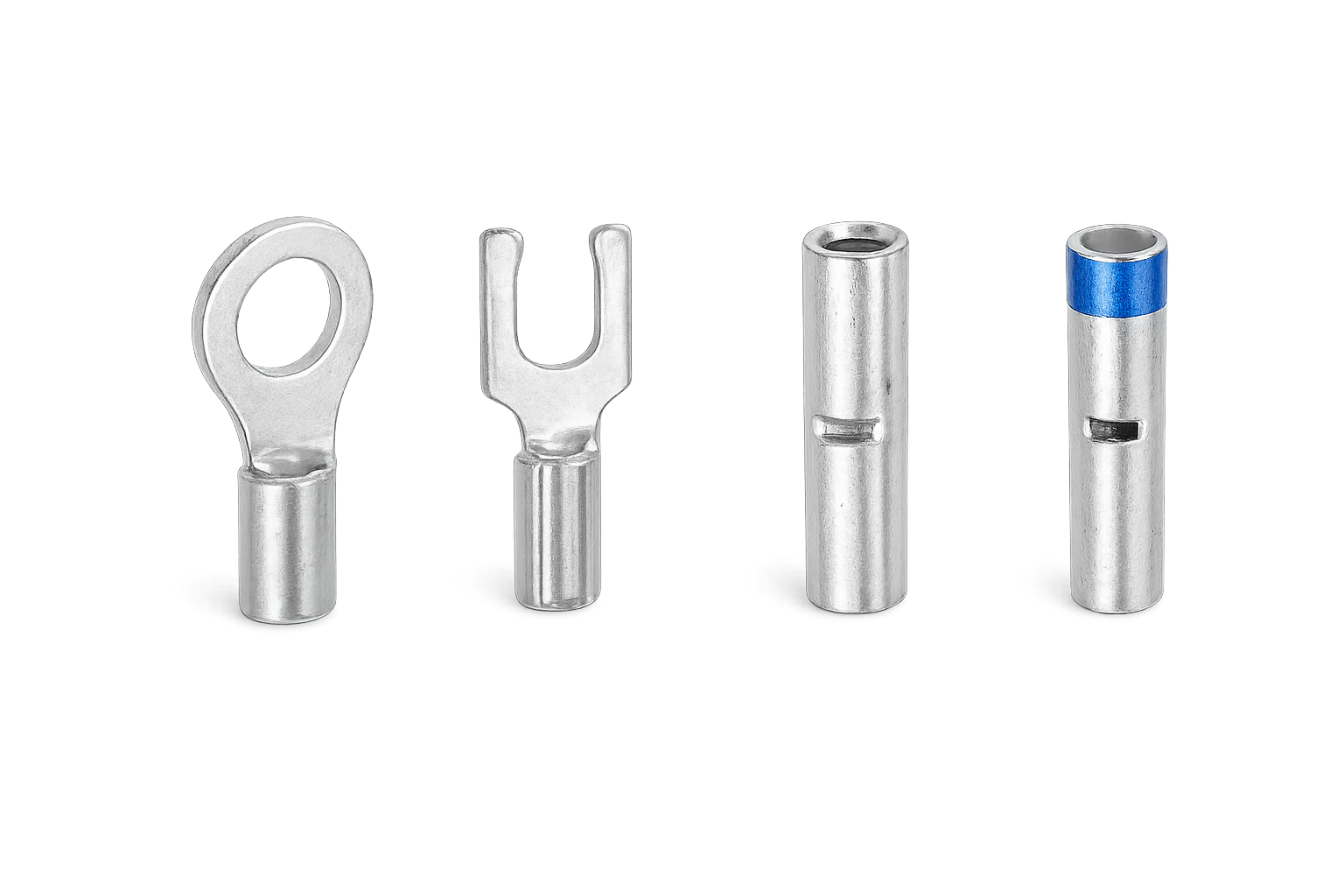
Non-insulated terminals are crimp connectors made of bare conductive metal—typically electrolytic copper, tinned copper, or brass—without any insulation sleeve covering the crimp barrel.
They are commonly available in:
포크 (스페이드) 터미널
Butt splices
Bullet connectors
핀 터미널
Because of their simple construction, they are compact, economical, and highly conductive.
Key Advantages of Non-Insulated Terminals
1. Lower Cost
Non-insulated terminals are more affordable due to:
Minimal material usage
No additional insulation molding
Simplified manufacturing process
This makes them ideal for:
High-volume OEM production
Cost-sensitive applications
Internal harness assemblies
2. Compact Profile
Their smaller diameter allows installation in:
Tight electrical panels
Densely packed fuse blocks
Compact relay enclosures
Space-restricted vehicle dashboards
When every millimeter matters, non-insulated terminals provide flexibility.
3. 우수한 전기 전도성
Without insulation barriers, crimp compression can achieve:
Strong mechanical bonding
Low electrical resistance
Reliable grounding performance
Limitations of Non-Insulated Terminals
While economical and compact, they lack built-in electrical protection.
They are not suitable for:
Exposed environments
Moisture-prone areas
Situations where hot and ground wires are adjacent
High-vibration or corrosive conditions
They must only be used in controlled, enclosed systems unless additional insulation (열 수축 튜브) is applied.
Typical Applications of Non-Insulated Terminals
Chassis ground connections
Enclosed automotive interior wiring
Fuse panels
Relay blocks
Sealed industrial control cabinets
What Are Insulated Terminals?
Definition and Construction
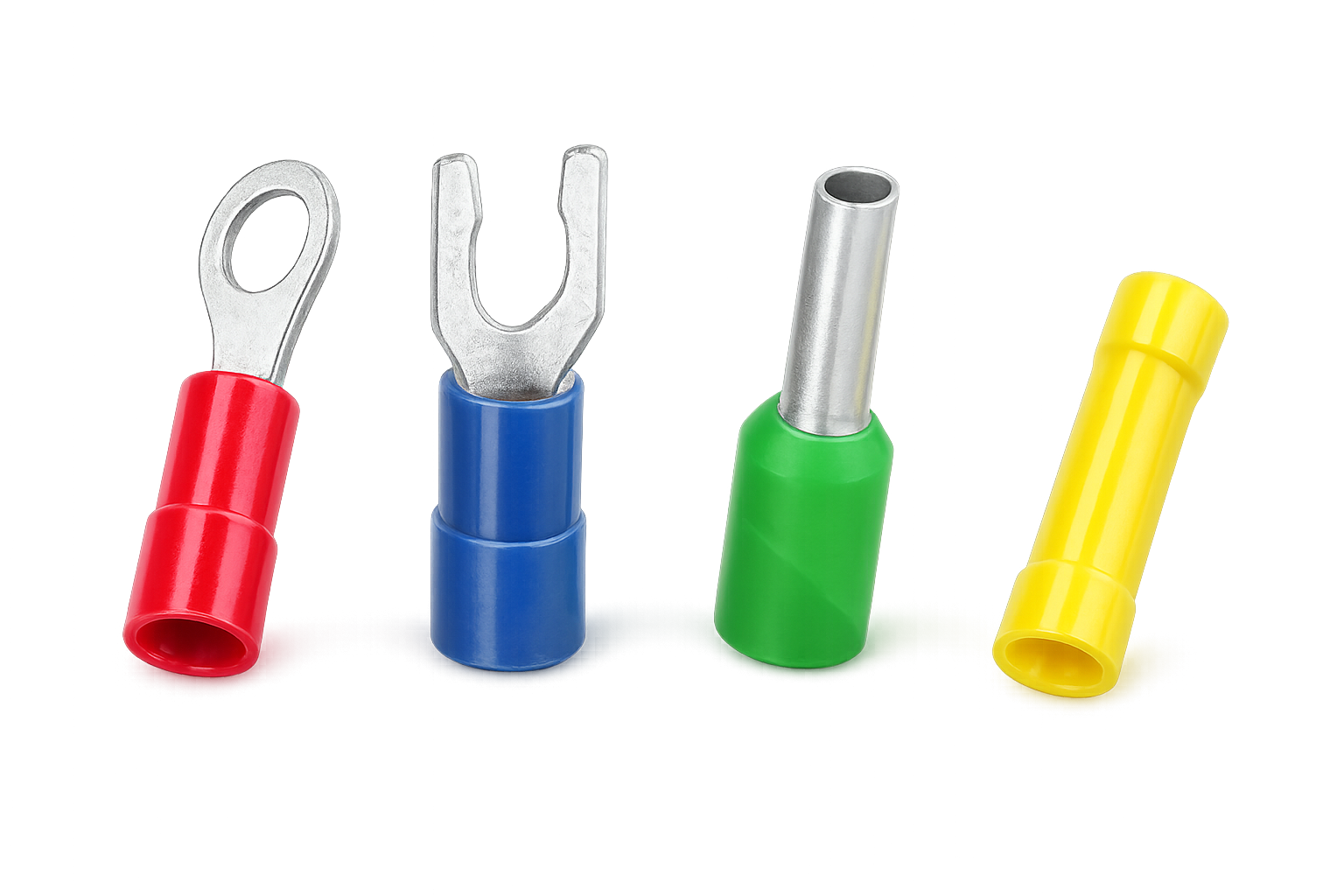
Insulated terminals feature a protective sleeve molded around the crimp barrel, providing electrical isolation and mechanical strain relief.
Most insulated terminals follow a standardized color-coding system based on wire gauge:
| 색상 | Wire Size (AWG) |
| Red | 22–18 AWG |
| Blue | 16–14 AWG |
| Yellow | 12–10 AWG |
This simplifies installation, improves speed, and reduces wiring errors.
Types of Insulated Terminals
1. Vinyl Insulated Terminals
Characteristics
Most economical insulation type
Soft and flexible material
Provides basic electrical protection
장점
Low cost
Easy crimping
Suitable for light-duty work
Limitations
Limited strain relief
Lower abrasion resistance
Not ideal for long-term UV exposure
Moderate temperature tolerance
Best Applications
Interior automotive wiring
General-purpose electrical work
Light-duty equipment wiring
2. Nylon Insulated Terminals
Characteristics
Stronger and more durable than vinyl
Resistant to chemicals and abrasion
Often semi-transparent for inspection
장점
Superior strain relief
Better vibration resistance
Improved UV resistance
Compatible with double-crimp designs
Double-crimp terminals secure both:
Conductor strands
와이어 절연
This significantly increases pull-out strength.
Best Applications
Under-hood automotive wiring
Heavy equipment
Agricultural machinery
Outdoor electrical systems
3. Heat Shrink Insulated Terminals
Characteristics
Heat-activated shrink tubing
Tight environmental seal
Often dual-wall adhesive lined
장점
Maximum moisture protection
Corrosion resistance
Highest strain relief
Long-term durability
Vibration-resistant seal
When heated properly, the tubing shrinks and seals tightly around the wire insulation.
Best Applications
Marine wiring
Trailer harnesses
Exterior vehicle lighting
Harsh industrial environments
High-humidity areas
Heat shrink terminals represent the highest level of environmental protection.
Insulated vs. Non-Insulated Terminals: Direct Comparison
| Feature | Non-Insulated | Vinyl | Nylon | Heat Shrink |
| Cost | Lowest | 낮은 | 중간 | Highest |
| 전기 보호 | None | Basic | 좋은 | 훌륭한 |
| Strain Relief | None | Minimal | Strong | Maximum |
| Moisture Resistance | None | 낮은 | 보통의 | 높은 |
| UV Resistance | None | 제한된 | 좋은 | 훌륭한 |
| Ideal Environment | Enclosed | Light-duty | Moderate-duty | Harsh/Outdoor |
How to Choose the Right Terminal for Your Application
Selecting the correct terminal depends on five critical factors:
1. Environmental Conditions
Ask:
Will the connection be exposed to moisture?
Is there UV exposure?
Is vibration significant?
Is chemical exposure possible?
If yes → Use nylon or heat shrink terminals
If controlled enclosure → Non-insulated may suffice
2. Electrical Risk Level
If hot wires run near ground wires or metal surfaces:
→ Insulated terminals are recommended to prevent short circuits.
For simple grounding inside sealed panels:
→ Non-insulated may be appropriate.
3. Mechanical Stress
Applications subject to:
Vibration
Movement
Tension
Require:
Nylon double-crimp
Heat shrink strain relief
4. Production Volume & Cost
High-volume production often balances:
Material cost
Installation speed
Lifecycle durability
Non-insulated may reduce upfront cost, but insulated terminals reduce warranty and failure risks.
5. 규정 준수 & Safety Standards
Certain automotive and marine standards require:
환경 밀봉
Corrosion resistance
Vibration endurance
이러한 경우, heat shrink terminals are often preferred.
Crimping Tools and Installation Considerations
Proper crimping is critical regardless of terminal type.
Different insulation types require:
Specific crimp dies
Controlled compression force
Heat application (for heat shrink)
Improper crimping can result in:
High resistance
Pull-out failure
Overheating
Electrical faults
For professional installations, ratcheting crimp tools with calibrated dies are recommended.
Why Many OEMs Stock Both Types
Professional wire harness manufacturers and upfitters typically stock:
Non-insulated terminals for enclosed assemblies
Nylon insulated for vibration-prone areas
Heat shrink for exterior or marine applications
This ensures flexibility across different projects.
Which Terminal Should You Choose?
Choose Non-Insulated If:
The connection is enclosed
Budget is highly constrained
Space is limited
Environmental exposure is minimal
Choose Vinyl Insulated If:
Light-duty use
Basic protection required
Cost-sensitive application
Choose Nylon Insulated If:
Moderate vibration
Chemical exposure
Outdoor installation
Choose Heat Shrink If:
Marine or wet environments
Exterior automotive wiring
High-reliability applications
Long-term corrosion protection required
Final Thoughts: Match Protection to Environment
There is no universal “best” terminal—only the right terminal for your environment.
Non-insulated terminals offer economy and compact size.
Vinyl insulated terminals provide basic protection.
Nylon insulated terminals add durability and strain relief.
Heat shrink terminals deliver maximum environmental sealing.
For automotive, marine, and industrial wiring systems, selecting the correct terminal type improves safety, reliability, 그리고 장기적인 성과.
If you are sourcing terminals for OEM production, custom wire harness manufacturing, or industrial applications, working with us-첸웨이 정밀-a supplier that offers:
Full insulation type range
Multiple terminal styles (반지, 포크, butt splice, bullet, quick-disconnect)
Bulk packaging options
Technical support for crimping and application
will ensure both cost efficiency and dependable electrical performance.
