

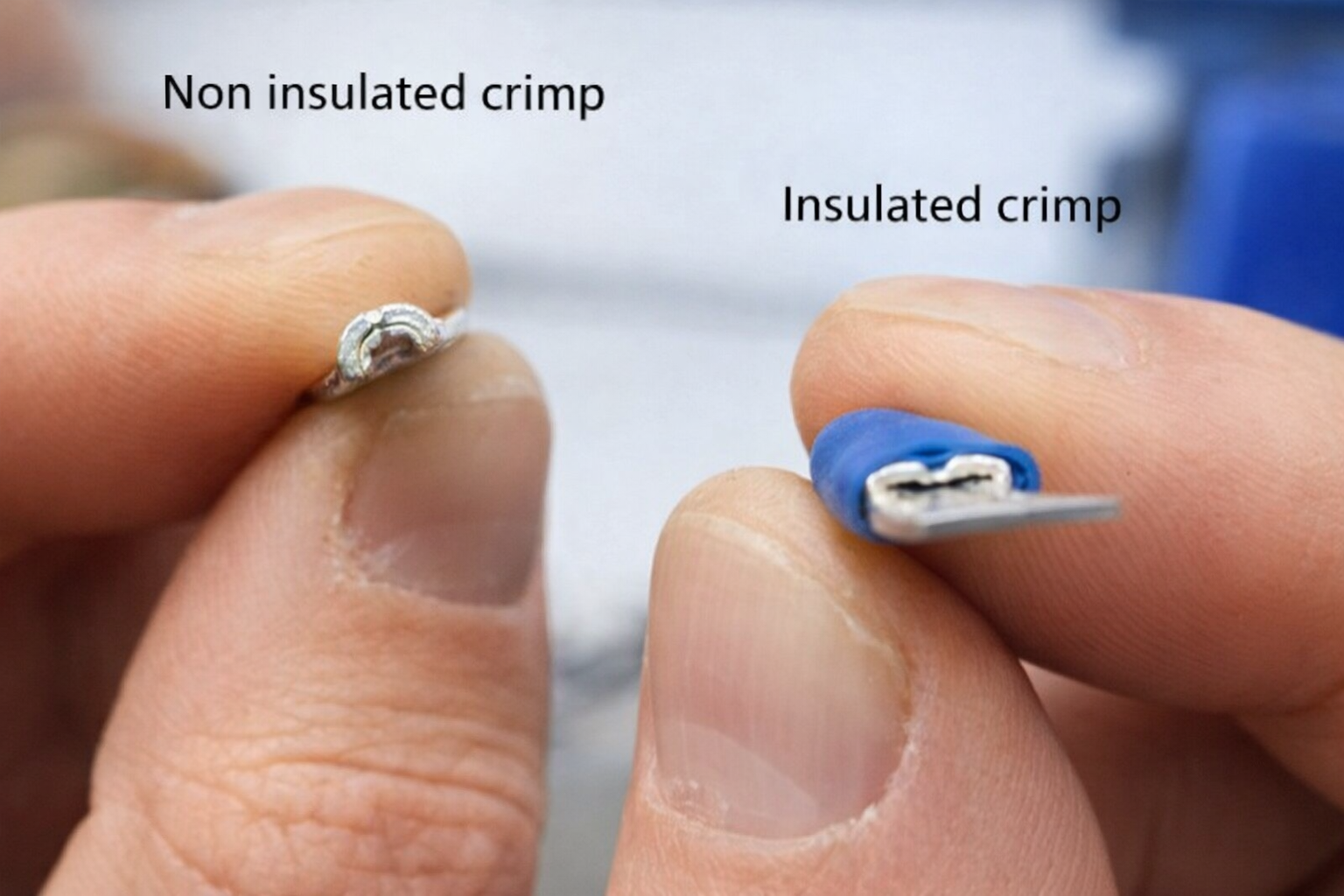
Lựa chọn quyền thiết bị đầu cuối điện is not simply a matter of selecting a connector that fits the wire. The terminal also needs to match the electrical load, môi trường cài đặt, yêu cầu cơ khí, and long-term reliability of the application.
One of the most common choices engineers and wiring professionals face is between thiết bị đầu cuối cách điện và không cách điện. Both are widely used in automotive, hàng hải, công nghiệp, and electrical wiring, nhưng chúng phục vụ những mục đích khác nhau.
Insulated terminals provide an additional layer of protection around the connection, while non-insulated terminals offer a more compact metal-to-metal design and can be combined with external insulation when required.
Vì thế, which type is better?
Câu trả lời phụ thuộc vào ứng dụng. This guide explains the differences between insulated and non-insulated terminals, ưu điểm và hạn chế của chúng, and how to choose the right option for automotive, hàng hải, and industrial wiring.
là gì Thiết bị đầu cuối cách điện?
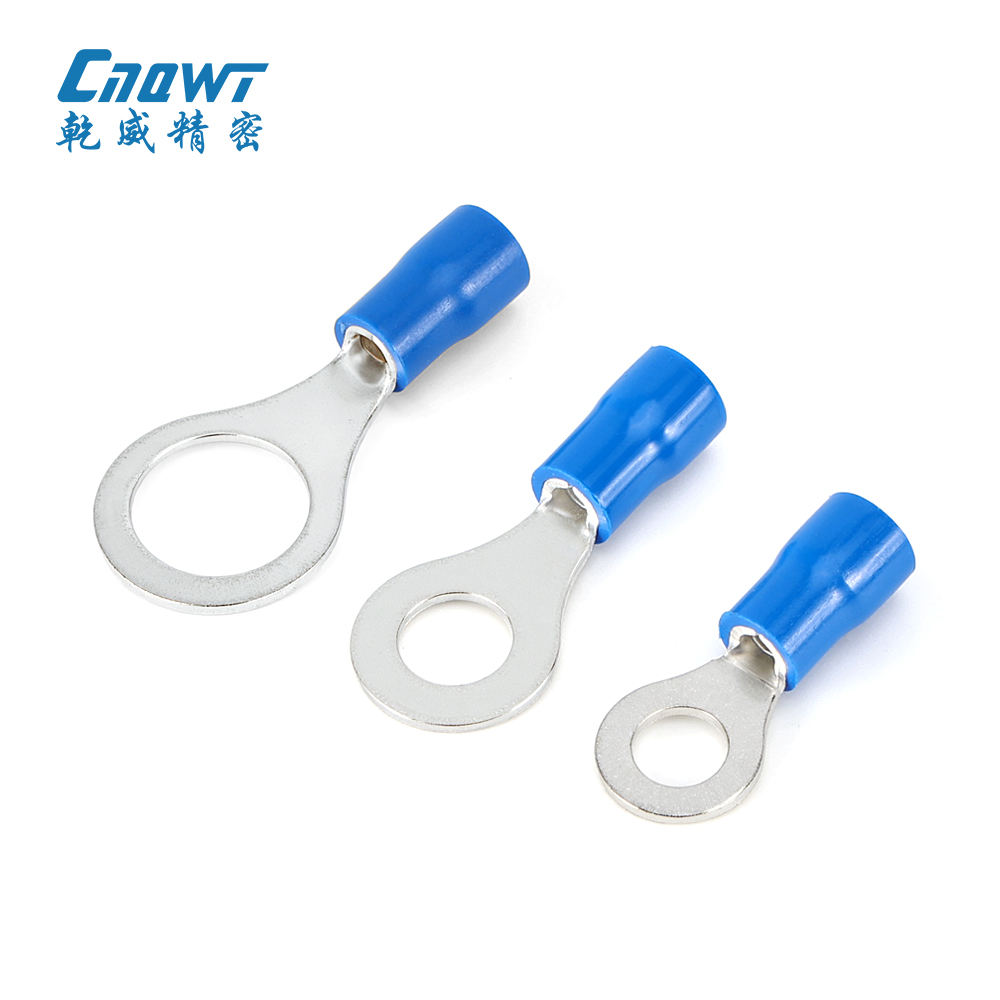
An insulated terminal is an electrical terminal with an insulating material surrounding part or all of the metal connection area. The insulation is usually made from materials such as vinyl, nylon, or other engineered polymers.
A typical insulated terminal consists of a conductive metal barrel and an insulating sleeve. The metal section provides the electrical connection, while the insulation helps prevent accidental contact with other conductive components.
Insulated terminals are commonly available as:
- Thiết bị đầu cuối vòng
- Thiết bị đầu cuối nĩa hoặc thuổng
- Đầu nối mông
- Pin thiết bị đầu cuối
- Thiết bị đầu cuối lưỡi
- Thiết bị đầu cuối ngắt kết nối nhanh
The color of the insulation is also often used to identify the compatible wire size. Ví dụ, different colors may indicate different wire-gauge ranges, although the exact color coding depends on the terminal standard or manufacturer.
Ưu điểm của thiết bị đầu cuối cách điện
The main advantage is the additional protection provided around the electrical connection.
Insulated terminals can help:
- Reduce the risk of accidental short circuits
- Protect conductive areas from accidental contact
- Improve handling during wiring installation
- Provide basic protection against contamination
- Make wire assemblies easier to identify
- Reduce the chance of exposed metal contacting nearby components
They are particularly useful where wiring connections are exposed or where additional protection is desirable without adding a separate insulation step.
Limitations of Insulated Terminals
Insulation also introduces some limitations.
An insulated terminal is usually larger than its non-insulated equivalent. This can be important in applications where many connections must fit into a limited space.
The insulation material also has its own temperature, hóa chất, and mechanical limitations. A terminal designed for general electrical wiring may not be suitable for an engine compartment, high-temperature industrial equipment, or other demanding environments.
Vì lý do này, engineers should consider the insulation material and temperature rating rather than assuming that every insulated terminal offers the same performance.
là gì Thiết bị đầu cuối không cách điện?
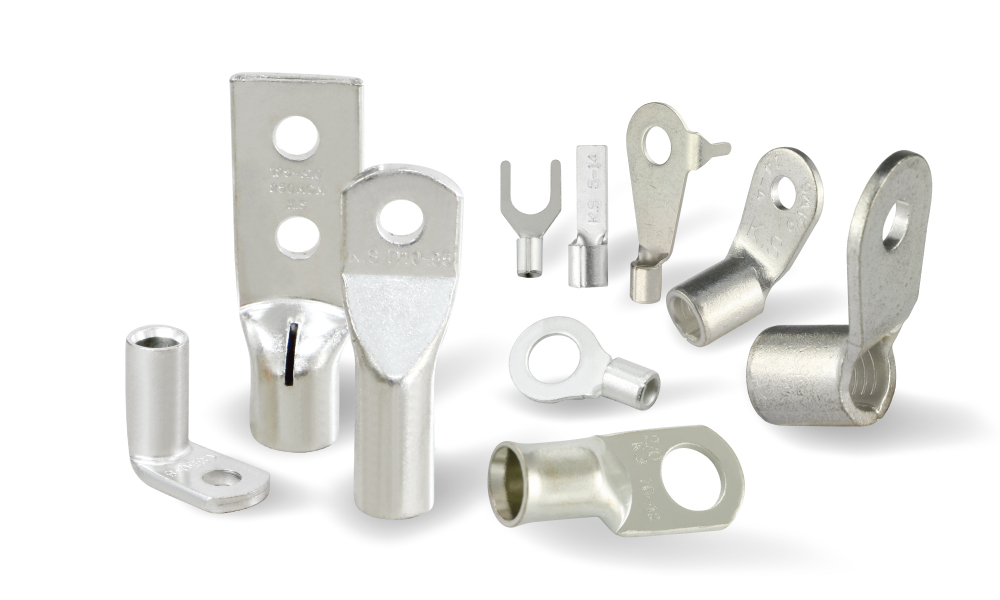
Thiết bị đầu cuối không cách điện, sometimes called bare terminals, consist primarily of the conductive metal terminal without a permanent insulating sleeve.
They are widely used in professional wire harnesses, thiết bị công nghiệp, tủ điện, kết nối pin, và các ứng dụng cao cấp.
Các ví dụ phổ biến bao gồm:
- Bare ring terminals
- Bare fork terminals
- Bare spade terminals
- Bare butt connectors
- Pin thiết bị đầu cuối
- Copper tube terminals
- Các vấu cáp có dòng điện cao
Đồng và hợp kim đồng được sử dụng phổ biến vì chúng mang lại tính dẫn điện và hiệu suất cơ học tốt. Many terminals are also tin-plated to improve corrosion resistance and maintain stable electrical contact.
Advantages of Non-Insulated Terminals
The biggest advantage is their simple and compact construction.
Non-insulated terminals can provide:
- Kích thước nhỏ gọn
- Easy visual inspection
- Good accessibility during crimping
- High-temperature capability when used with suitable materials
- Flexibility for additional insulation methods
- Good suitability for high-current connections
Because there is no pre-installed insulation sleeve, the terminal can also be used with application-specific insulation such as heat-shrink tubing, protective boots, or an enclosed electrical housing.
This makes non-insulated terminals particularly useful when engineers need to control the insulation system separately from the terminal itself.
Hạn chế của thiết bị đầu cuối không cách điện
The exposed metal is also the main limitation.
A bare terminal can come into contact with another conductive component if the connection is not properly protected. This can create a short-circuit risk or other electrical problems.
For applications where connections are exposed, non-insulated terminals may therefore require additional protection.
This does not mean that non-insulated terminals are inherently less reliable. In a properly designed electrical enclosure or wire harness, they can provide excellent long-term performance.
Cách nhiệt vs. Thiết bị đầu cuối không cách điện: Sự khác biệt chính
The difference between the two types can be summarized as follows:
| Tính năng | Thiết bị đầu cuối cách điện | Thiết bị đầu cuối không cách điện |
|---|---|---|
| Built-in insulation | Đúng | KHÔNG |
| Bảo vệ ngắn mạch | Higher at the connection point | Requires external protection |
| Overall size | Usually larger | Usually more compact |
| Kiểm tra trực quan | Hạn chế hơn | Dễ dàng hơn |
| High-temperature use | Depends on insulation material | Often suitable with proper material selection |
| Cài đặt | Generally straightforward | Requires more attention to protection |
| Additional insulation | Usually not required | May require heat-shrink, boot, or housing |
| sử dụng ô tô | Rất phổ biến | Also widely used |
| Industrial use | Chung | Rất phổ biến |
| High-current use | Application-dependent | Commonly used |
| Custom insulation options | Hạn chế hơn | Linh hoạt hơn |
The key point is that neither type is universally better.
Insulated terminals prioritize integrated protection and convenience, while non-insulated terminals provide compactness, tính linh hoạt, and easier access to the metal connection.
Cái nào an toàn hơn: Insulated or Non-Insulated Terminals?
It is tempting to assume that insulated terminals are automatically safer because the conductive area is covered. Trong thực tế, terminal safety depends on the entire electrical connection.
An insulated terminal can be a better choice when:
- The connection is exposed
- Nearby conductive surfaces could cause a short circuit
- Installation is performed in a relatively open environment
- Additional protection needs to be built into the terminal
- Fast and consistent manual installation is important
Non-insulated terminals can also be highly reliable when:
- The connection is inside an electrical enclosure
- The terminal is protected by a connector housing
- Heat-shrink tubing is applied correctly
- The wiring assembly is professionally designed
- The application requires a compact or high-temperature connection
The quality of the crimp is equally important. Even a high-quality insulated terminal can fail if the wrong wire size or crimping tool is used.
Cách nhiệt vs. Non-Insulated Terminals for Automotive Wiring
Automotive electrical systems present several challenges for terminals. Connections may experience vibration, thay đổi nhiệt độ, độ ẩm, hóa chất, limited installation space, and repeated mechanical stress.
Đối với hệ thống dây điện ô tô nói chung, insulated terminals are often convenient because they provide additional protection around the connection.
They can be useful for:
- Mạch điện phụ trợ
- Aftermarket wiring
- General vehicle wiring
- Exposed connections
- Thấp- and medium-current circuits
Tuy nhiên, non-insulated terminals are also widely used in automotive applications.
They are particularly suitable for professionally engineered wiring harnesses where the terminal is installed inside a connector housing or protected by another insulation system.
High-current automotive connections are another area where bare terminals are common. Thiết bị đầu cuối pin, kết nối điện, and heavy-gauge cable lugs may use a non-insulated metal structure because the electrical and mechanical requirements are more important than having a molded insulation sleeve directly on the terminal.
What Should You Consider for Automotive Terminals?
When selecting a terminal for automotive wiring, coi như:
Kích thước dây: Thùng đầu cuối phải phù hợp với kích thước dây dẫn.
Hiện hành: The terminal must be capable of carrying the expected current without excessive temperature rise.
Vật liệu: Copper and copper alloys are common choices for conductive terminals.
mạ: Tin plating can improve corrosion resistance and contact stability.
Crimp design: The terminal must provide consistent conductor and insulation support where required.
Rung: Automotive connections need sufficient mechanical retention to withstand vibration and movement.
Nhiệt độ: Engine compartments and other high-temperature areas require appropriate terminal and insulation materials.
Cách nhiệt vs. Non-Insulated Terminals for Marine Wiring
Marine wiring requires additional attention because electrical connections may be exposed to high humidity, sự ngưng tụ, nước mặn, and corrosive environments.
Trong các ứng dụng này, corrosion resistance becomes just as important as basic electrical conductivity.
Insulated terminals can be useful for general marine wiring because the insulation provides additional protection around the connection. Tuy nhiên, standard insulated terminals should not automatically be considered waterproof.
If the application requires a sealed connection, the terminal system needs to be designed accordingly. This may involve heat-shrink tubing with adhesive, sealed connectors, protective boots, or another suitable enclosure.
When Are Non-Insulated Terminals Used in Marine Applications?
Non-insulated terminals can be appropriate for:
- Kết nối pin
- Enclosed electrical systems
- High-current power connections
- Connections protected by heat-shrink tubing
- Professional marine wiring assemblies
For marine environments, terminal material and plating deserve particular attention.
Tin-plated copper terminals are commonly used because the plating helps protect the underlying copper from environmental exposure.
Tuy nhiên, plating alone does not make a connection waterproof. The complete connection system still needs appropriate sealing and environmental protection.
Cách nhiệt vs. Non-Insulated Terminals for Industrial Wiring
Industrial electrical systems cover a much wider range of applications than general household wiring.
Terminals may be installed in:
- Tủ điều khiển
- Máy móc công nghiệp
- Motor systems
- Thiết bị phân phối điện
- Thiết bị tự động hóa
- Production-line equipment
- Hệ thống điều khiển công nghiệp
Both insulated and non-insulated terminals can be appropriate.
Ví dụ, a non-insulated terminal inside a properly designed electrical cabinet may be completely suitable because the connection is already protected from accidental contact.
Ngược lại, an insulated terminal may be more convenient for field wiring where the connection is more exposed.
High-Temperature Industrial Applications
Temperature is an important factor when selecting insulated terminals.
The metal terminal may be capable of handling a high temperature, but the insulation material could have a lower temperature limit.
This is why engineers should evaluate the terminal as a complete assembly rather than looking only at the conductive material.
For high-temperature applications, non-insulated terminals can sometimes provide more flexibility because additional high-temperature insulation can be selected separately.
How to Choose Between Insulated and Non-Insulated Terminals
The best terminal should be selected based on the complete application rather than simply choosing the most protective-looking option.
Consider the Electrical Requirements
Start with:
- Điện áp
- Hiện hành
- Máy đo dây
- Vật liệu dẫn điện
- Điện trở tiếp xúc
- Expected temperature rise
The terminal must be properly matched to the wire and electrical load.
Consider Mechanical Requirements
Electrical connections also need mechanical stability.
Coi như:
- Sức mạnh kéo ra
- Crimp retention
- Rung
- Tensile load
- Chuyển động của dây
- Mating or mounting requirements
Đối với các ứng dụng ô tô và công nghiệp, vibration resistance can be particularly important.
Hãy xem xét môi trường
Ask where the terminal will operate.
Will it be exposed to:
- Nước?
- Xịt muối?
- Dầu?
- Hóa chất?
- Nhiệt độ cao?
- Bụi?
- Rung liên tục?
The environmental conditions can determine whether an insulated terminal, bare terminal with heat-shrink, or fully sealed connector system is appropriate.
Consider Available Space
If space is limited, the compact design of a non-insulated terminal can be an advantage.
This can matter in:
- Dây dẫn dày đặc
- Tủ điều khiển
- Battery compartments
- Compact electrical equipment
- High-density connection areas
Consider the Manufacturing Process
The production method also matters.
For low-volume maintenance work, manually crimped insulated terminals can be convenient.
For large-volume wire harness production, hình học thiết bị đầu cuối, crimp consistency, tooling compatibility, and automation capability become much more important.
A terminal designed for automated crimping may have different requirements from one intended primarily for hand installation.
How to Properly Crimp Insulated and Non-Insulated Terminals
Correct crimping is critical regardless of terminal type.
Select the Correct Terminal Size
The terminal must match the conductor cross-section or wire gauge.
A terminal that is too large may produce a weak crimp, while one that is too small can damage the conductor or prevent proper insertion.
Strip the Wire Correctly
Remove the required length of insulation without cutting or damaging the conductor strands.
Too much exposed conductor can create an unnecessary exposed area, while insufficient stripping can prevent the conductor from reaching the correct position inside the terminal.
Chèn dây dẫn
The conductor should be fully inserted into the terminal barrel.
For terminals with insulation support, the wire should also be positioned correctly in relation to the insulation crimp area.
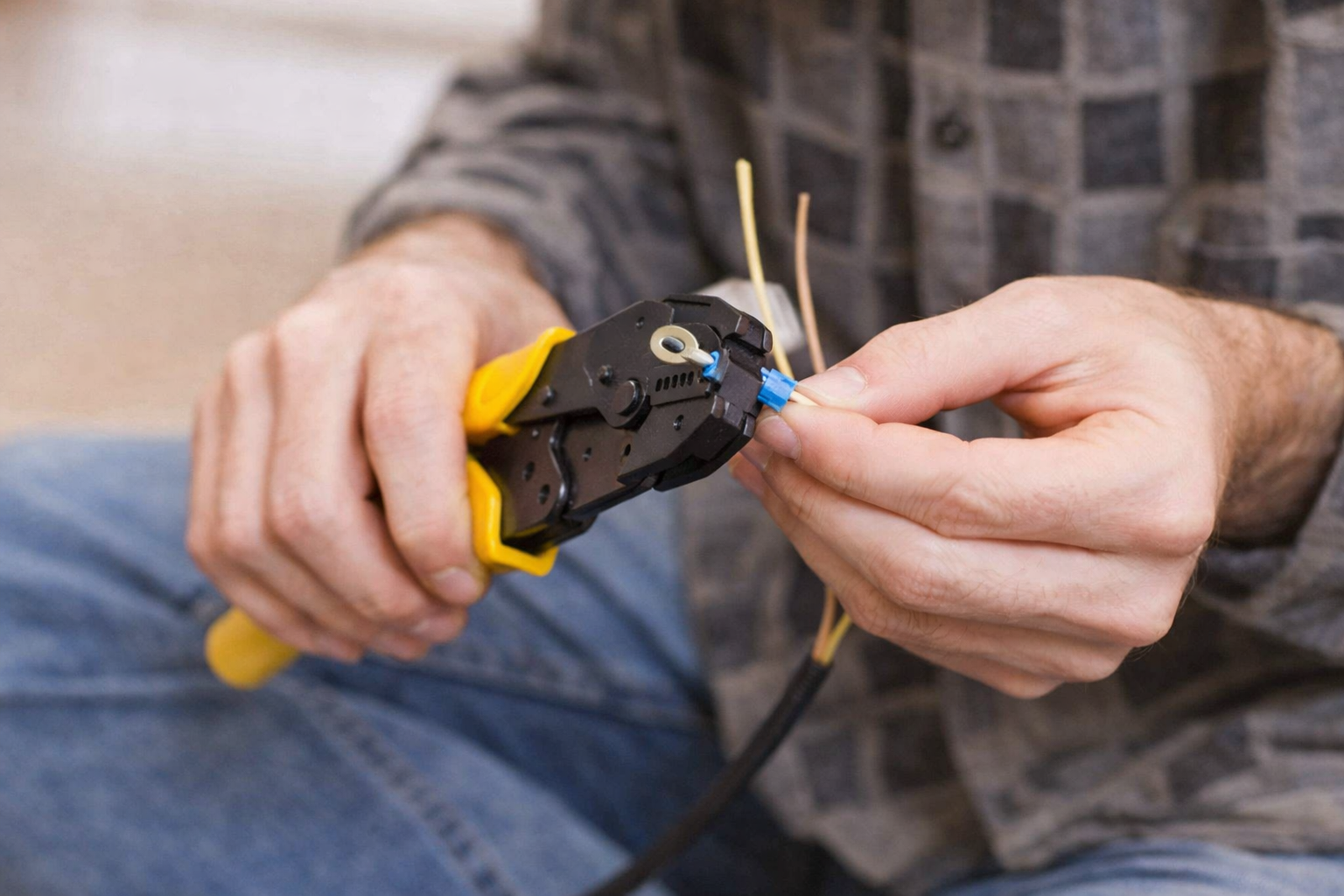
Apply the Correct Crimp
Use a crimping tool designed for the terminal and wire size.
Avoid relying on excessive force as a substitute for the correct tooling.
Kiểm tra nếp gấp
A finished crimp should be checked for:
- Chèn dây đúng cách
- Correct crimp position
- Không có dây dẫn bị hư hỏng
- No excessive deformation
- Appropriate mechanical retention
- Proper insulation support where applicable
Đối với ứng dụng sản xuất, manufacturers may also perform tensile testing, kiểm tra chiều, thử nghiệm điện, or other quality-control procedures.
Những sai lầm thường gặp khi chọn thiết bị đầu cuối
Lựa chọn chỉ dựa trên giá
The cheapest terminal is not necessarily the lowest-cost solution.
Độ dẫn điện kém, inconsistent crimping, ăn mòn, or premature failure can create significantly higher costs later.
Ignoring Wire Gauge
A terminal must be matched to the conductor.
Using an incorrectly sized terminal can result in poor electrical contact or inadequate mechanical retention.
Bỏ qua các yêu cầu hiện tại
A terminal designed for a small control circuit should not automatically be used for a high-current application.
Current capacity depends on the terminal design, vật liệu, mặt cắt ngang, chất lượng kết nối, và điều kiện hoạt động.
Using the Wrong Crimp Tool
Even a properly manufactured terminal can perform poorly when crimped with unsuitable tooling.
For production wiring, terminal and tooling compatibility should be validated together.
Selecting the Wrong Plating
Environmental conditions should be considered when selecting plating.
Ví dụ, applications exposed to moisture or corrosive environments may require more attention to corrosion protection than a dry indoor application.
Assuming Insulated Always Means Better
Insulation is useful, but it is not a substitute for correct engineering.
A non-insulated terminal inside a properly protected enclosure can be more suitable than a large insulated terminal that does not fit the available space or temperature requirements.
Using Non-Insulated Terminals Without Proper Protection
The opposite mistake is also common.
If a bare terminal is used in an exposed location, appropriate insulation or enclosure protection may be necessary to prevent accidental contact and environmental damage.
Cách nhiệt vs. Thiết bị đầu cuối không cách điện: Quick Decision Guide
A simple decision framework can help:
| Application Requirement | Typical Choice |
|---|---|
| Exposed general wiring | cách nhiệt |
| Kết nối nhỏ gọn | Không cách nhiệt |
| Enclosed electrical cabinet | Cả hai |
| Automotive wiring harness | Cả hai |
| High-current battery connection | Non-insulated or specialized insulated design |
| High-temperature application | Non-insulated or high-temperature insulated |
| Hệ thống dây điện biển | Insulated or properly sealed/protected |
| Professional wire harness | Cả hai |
| Easy manual installation | cách nhiệt |
| Custom external insulation | Không cách nhiệt |
These are general guidelines rather than universal rules. The actual choice should always be based on the terminal specification and application requirements.
Choosing a Reliable Terminal Manufacturer
For OEM and industrial applications, terminal quality depends on much more than the finished appearance.
A capable manufacturer should be able to control:
- Raw material quality
- Kích thước thiết bị đầu cuối
- Stamping precision
- Crimp geometry
- Chất lượng mạ
- Vật liệu cách nhiệt
- Mold accuracy
- Tính nhất quán trong sản xuất
- Hiệu suất điện
- Độ bền cơ học
- Kiểm tra chất lượng
Tại Độ chính xác của Qianwei, terminal manufacturing combines precision metal stamping, ép phun, sản xuất khuôn, mạ, và khả năng lắp ráp. This allows terminal designs to be developed and manufactured with closer control over dimensions, nguyên vật liệu, và tính nhất quán trong sản xuất.
Dành cho ô tô, công nghiệp, điện, và các ứng dụng khai thác dây, terminals can be developed according to requirements such as wire size, công suất hiện tại, vật liệu, mạ, connection structure, và phương pháp cài đặt.
Whether you need insulated terminals for general wiring or non-insulated copper terminals for compact and high-current connections, selecting the right terminal design at the beginning can significantly improve the reliability of the finished wiring system.
Câu hỏi thường gặp
Are insulated terminals better than non-insulated terminals?
Không nhất thiết. Insulated terminals provide integrated protection and are convenient for exposed wiring, while non-insulated terminals offer a compact design and greater flexibility for external insulation. The better choice depends on the application.
Can I use non-insulated terminals for automotive wiring?
Đúng. Non-insulated terminals are widely used in automotive wiring harnesses, kết nối pin, and other professional applications. They are often installed inside connector housings or protected using an appropriate insulation system.
Are non-insulated terminals safe?
Đúng, when they are correctly selected, bị quăn, and protected. A non-insulated terminal should not be left exposed where accidental contact or short circuits could occur.
Which terminals are best for marine applications?
There is no single terminal type that is best for every marine application. Corrosion-resistant materials and plating, together with appropriate sealing and environmental protection, are especially important. Insulated or sealed terminals are often preferred for exposed marine wiring.
Do insulated terminals handle high current?
Some do, but insulation alone does not determine current capacity. Vật liệu đầu cuối, kích thước dây dẫn, vùng tiếp xúc, crimp design, đánh giá nhiệt độ, and overall construction all affect current-carrying capability.
What is the difference between vinyl and nylon insulated terminals?
Vinyl and nylon are different insulation materials with different mechanical, nhiệt độ, hóa chất, and environmental characteristics. The appropriate choice depends on the operating conditions and the terminal manufacturer’s specifications.
Làm cách nào để chọn đúng thiết bị đầu cuối cho dây của tôi?
Start with the wire size and conductor type, then consider current, điện áp, nhiệt độ, tiếp xúc với môi trường, yêu cầu cơ khí, không gian có sẵn, và phương pháp uốn. The terminal should be matched to the wire and the application rather than selected by size alone.
Can non-insulated terminals be made insulated?
Đúng. Non-insulated terminals can often be combined with heat-shrink tubing, insulating boots, vỏ kết nối, or other protective systems. This approach provides greater flexibility when a specific insulation system is required.
Need Help Selecting the Right Terminal?
Choosing between an insulated and non-insulated terminal is only one part of terminal selection. Kích thước dây, hiện hành, vật liệu, mạ, crimp design, điều kiện môi trường, and manufacturing requirements all need to work together.
Qianwei Precision provides terminal and connector manufacturing solutions for automotive, công nghiệp, điện, và các ứng dụng khai thác dây. Contact us to discuss your terminal specifications, Yêu cầu OEM/ODM, and application needs.


Một suy nghĩ trên “Cách nhiệt vs. Thiết bị đầu cuối không cách điện: Hướng dẫn kỹ thuật hoàn chỉnh cho ô tô, Hàng hải & Dây công nghiệp”