

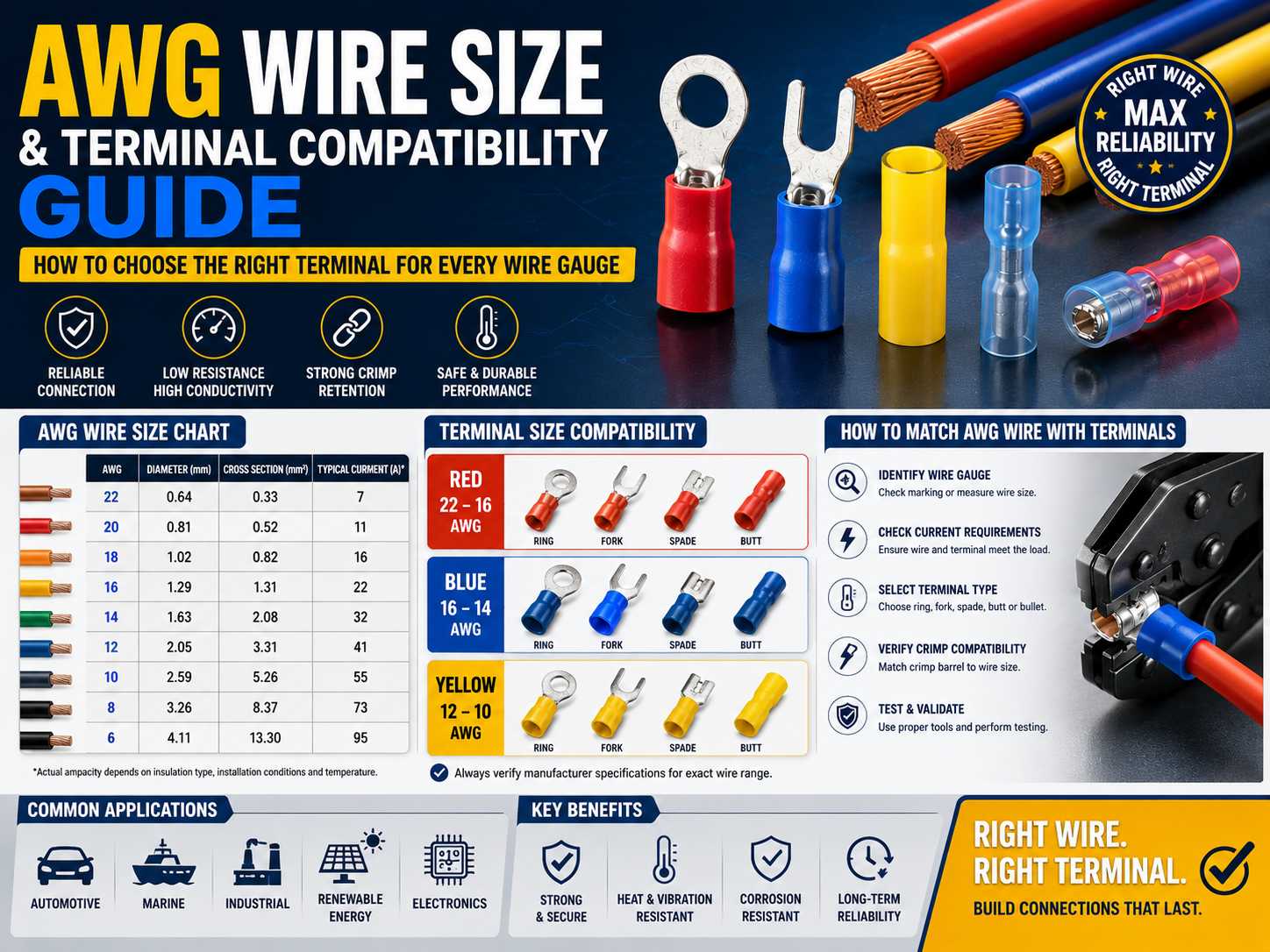
Việc lựa chọn đúng thiết bị đầu cuối điện cho một cỡ dây cụ thể là một trong những yếu tố quan trọng nhất để tạo ra sự an toàn, đáng tin cậy, và kết nối điện lâu dài. Cho dù trong hệ thống dây điện ô tô, hệ thống điều khiển công nghiệp, lắp đặt năng lượng tái tạo, thiết bị hàng hải, hoặc điện tử tiêu dùng, khả năng tương thích giữa thước dây và kích thước đầu cuối ảnh hưởng trực tiếp đến hiệu suất điện, sức mạnh cơ học, và độ tin cậy của toàn bộ hệ thống.
Nhiều lỗi kết nối có thể bắt nguồn từ việc kết nối dây với thiết bị đầu cuối không đúng cách. Thiết bị đầu cuối quá lớn có thể tạo ra kết nối lỏng lẻo, trong khi cái quá nhỏ có thể làm hỏng sợi dây và giảm độ dẫn điện. Hiểu được mối quan hệ giữa kích thước dây AWG và khả năng tương thích của thiết bị đầu cuối giúp các kỹ sư, thợ điện, nhà sản xuất OEM, và đội mua sắm tránh được những sai lầm tốn kém.
Hướng dẫn này giải thích hệ thống AWG, yêu cầu tương thích thiết bị đầu cuối, phương pháp lựa chọn, thủ tục kiểm tra, và các phương pháp hay nhất để đảm bảo kết nối điện đáng tin cậy.
AWG là gì (Máy đo dây của Mỹ)?
AWG, hoặc Máy đo dây của Mỹ, là hệ thống đo lường tiêu chuẩn được sử dụng chủ yếu ở Bắc Mỹ để xác định đường kính dây và kích thước dây dẫn.
Không giống như nhiều hệ thống đo lường, Số AWG hoạt động ngược lại. Số AWG nhỏ hơn cho thấy đường kính dây lớn hơn, trong khi số AWG lớn hơn biểu thị dây nhỏ hơn.
Ví dụ:
- 10 Dây AWG lớn hơn 16 dây AWG
- 16 Dây AWG lớn hơn 22 dây AWG
- 4 Dây AWG lớn hơn đáng kể so với 12 dây AWG
Khi đường kính dây tăng, dây có thể mang nhiều dòng điện hơn và thường có điện trở thấp hơn.
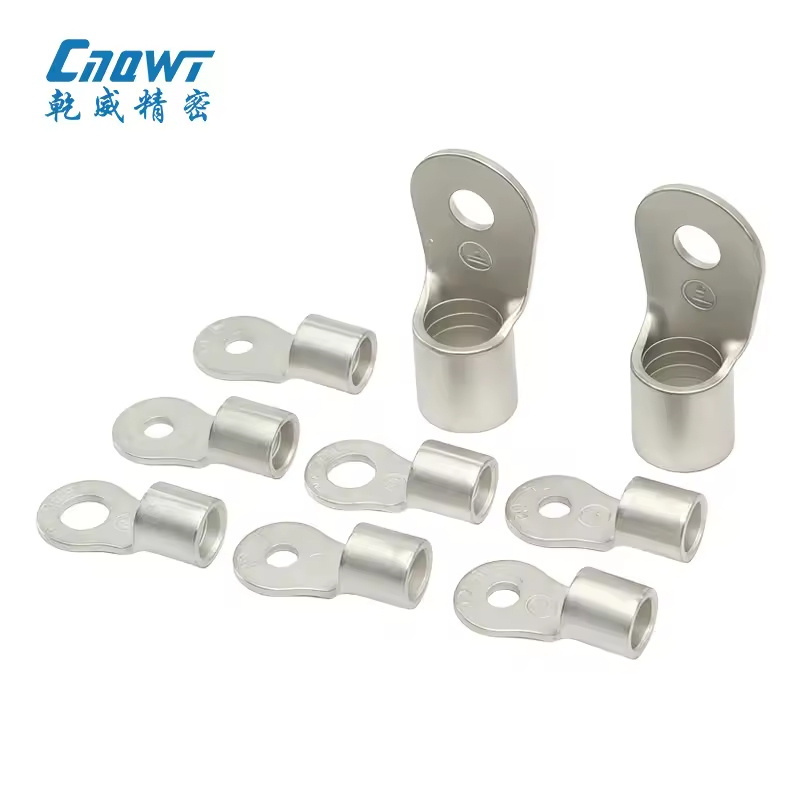
Kích thước dây AWG và số liệu
Nhiều thị trường quốc tế sử dụng milimet vuông (mm²) thay vì AWG. Hiểu được sự chuyển đổi giữa các hệ thống này rất quan trọng đối với các dự án kỹ thuật và tìm nguồn cung ứng toàn cầu.
| AWG | Đường kính (mm) | Mặt cắt ngang (mm²) |
|---|---|---|
| 22 AWG | 0.64 | 0.33 |
| 20 AWG | 0.81 | 0.52 |
| 18 AWG | 1.02 | 0.82 |
| 16 AWG | 1.29 | 1.31 |
| 14 AWG | 1.63 | 2.08 |
| 12 AWG | 2.05 | 3.31 |
| 10 AWG | 2.59 | 5.26 |
| 8 AWG | 3.26 | 8.37 |
| 6 AWG | 4.11 | 13.30 |
Bởi vì các nhà cung cấp có thể chỉ định kích thước dây khác nhau, các kỹ sư phải luôn xác minh cả AWG và số liệu tương đương trước khi chọn thiết bị đầu cuối.
Tại sao AWG lại quan trọng trong kết nối điện
Kích thước dây ảnh hưởng nhiều hơn kích thước vật lý.
Ảnh hưởng của xếp hạng AWG:
- Khả năng vận chuyển hiện tại
- Giảm điện áp
- sinh nhiệt
- Độ bền cơ học
- Tính linh hoạt
- Hiệu suất uốn
Một thiết bị đầu cuối được thiết kế cho 22 Dây AWG sẽ không cố định đúng cách 10 dây dẫn AWG. Tương tự như vậy, một thiết bị đầu cuối được thiết kế cho dây cỡ lớn không thể uốn một dây dẫn nhỏ hơn nhiều một cách hiệu quả.
Lựa chọn máy đo dây thích hợp và khả năng tương thích của thiết bị đầu cuối là điều cần thiết cho cả hiệu suất điện và cơ khí.
Tại sao tính tương thích của thiết bị đầu cuối lại quan trọng
Thiết bị đầu cuối được thiết kế để phù hợp với đường kính dây dẫn và cấu hình sợi cụ thể.
Kích thước thùng uốn phải phù hợp với kích thước dây đủ chặt để tạo ra lực nén vừa đủ mà không làm hỏng dây dẫn.
Khi khả năng tương thích bị bỏ qua, độ tin cậy kết nối giảm đáng kể.
Kích thước đầu cuối ảnh hưởng đến chất lượng uốn như thế nào
Một thiết bị đầu cuối có kích thước phù hợp cung cấp:
- Khả năng giữ cơ học mạnh mẽ
- Điện trở tiếp xúc thấp
- nén thống nhất
- Độ dẫn điện ổn định
- Độ bền kéo cao
Kết nối bị uốn sẽ trở thành mối nối kín khí một cách hiệu quả giúp giảm thiểu quá trình oxy hóa và duy trì hiệu suất lâu dài.
Rủi ro khi sử dụng thiết bị đầu cuối quá khổ
Sử dụng thiết bị đầu cuối quá lớn so với dây có thể gây ra một số vấn đề:
- Giữ dây lỏng lẻo
- Nén không đầy đủ
- Tăng sức đề kháng
- Giảm sức mạnh kéo ra
- Thất bại liên quan đến rung
Trong các ứng dụng ô tô và công nghiệp, những vấn đề này thường dẫn đến sự cố điện liên tục.
Rủi ro khi sử dụng thiết bị đầu cuối có kích thước nhỏ
Sử dụng thiết bị đầu cuối quá nhỏ cũng có thể gây ra vấn đề tương tự.
Hậu quả tiềm ẩn bao gồm:
- Hư hỏng sợi dây
- Cắm dây không đúng cách
- Biến dạng dây dẫn quá mức
- Giảm độ dẫn điện
- Thất bại sớm
Sợi dây bị hư hỏng làm giảm diện tích dây dẫn hiệu quả, tăng sức đề kháng và sinh nhiệt.

Biểu đồ kích thước dây AWG và khả năng tương thích thiết bị đầu cuối
Hầu hết các thiết bị đầu cuối cách điện đều tuân theo mã màu tiêu chuẩn để đơn giản hóa việc lựa chọn kích thước dây.
| Màu đầu cuối | Kích thước dây tương thích |
|---|---|
| Màu đỏ | 22–16 AWG |
| Màu xanh da trời | 16–14 AWG |
| Màu vàng | 12–10 AWG |
Các mã màu này thường được sử dụng cho:
- Thiết bị đầu cuối vòng
- Thiết bị đầu cuối ngã ba
- Thiết bị đầu cuối thuổng
- Đầu nối mông
- Ngắt kết nối nhanh các thiết bị đầu cuối
Luôn xác minh thông số kỹ thuật của nhà sản xuất vì phạm vi tương thích có thể khác nhau một chút giữa các thương hiệu.
Hiểu thiết bị đầu cuối được mã hóa màu
Thiết bị đầu cuối màu đỏ
Thiết bị đầu cuối màu đỏ thường được thiết kế cho kích thước dây nhỏ hơn, từ 22 AWG tới 16 AWG.
Các ứng dụng phổ biến bao gồm:
- Điện tử
- Hệ thống điều khiển
- Dây cảm biến
- Mạch tín hiệu
Thiết bị đầu cuối màu xanh
Thiết bị đầu cuối màu xanh thường hỗ trợ 16 AWG tới 14 Dây dẫn AWG.
Các ứng dụng điển hình bao gồm:
- Dây điều khiển công nghiệp
- Sản xuất thiết bị
- Lắp ráp điện đa năng
Thiết bị đầu cuối màu vàng
Thiết bị đầu cuối màu vàng chứa kích thước dây lớn hơn từ 12 AWG tới 10 AWG.
Những thiết bị đầu cuối này thường được sử dụng trong:
- Mạch điện ô tô
- Kết nối pin
- Thiết bị công nghiệp
- Hệ thống năng lượng tái tạo
Cách kết nối dây AWG với thiết bị đầu cuối điện
Quy trình lựa chọn có hệ thống giúp ngăn ngừa các vấn đề về khả năng tương thích.
Bước chân 1 – Xác định thước dây
Kích thước dây có thể được xác định thông qua:
- Đánh dấu cáp
- Bảng dữ liệu kỹ thuật
- Dụng cụ đo thước dây
- Tài liệu của nhà sản xuất
Không bao giờ ước tính kích thước dây một cách trực quan.
Bước chân 2 – Xác định yêu cầu phụ tải điện
Yêu cầu tải điện ảnh hưởng đến cả việc lựa chọn dây và thiết bị đầu cuối.
Coi như:
- Dòng điện hoạt động
- Dòng điện cực đại
- Cấp điện áp
- Chu kỳ nhiệm vụ
- Yếu tố an toàn
Các ứng dụng có dòng điện cao liên tục đòi hỏi dây dẫn lớn hơn và các thiết bị đầu cuối được đánh giá phù hợp.
Bước chân 3 – Chọn đúng loại thiết bị đầu cuối
Các ứng dụng khác nhau yêu cầu thiết kế thiết bị đầu cuối khác nhau.
Các tùy chọn phổ biến bao gồm:
Thiết bị đầu cuối vòng
Lý tưởng cho các kết nối bắt vít an toàn.
Phổ biến ở:
- Hệ thống pin
- Ứng dụng nối đất
- Tấm công nghiệp
Thiết bị đầu cuối thuổng
Hỗ trợ các ứng dụng kết nối nhanh và lắp ráp nhanh chóng.
Đầu nối mông
Dùng để nối và sửa chữa dây điện.
Đầu nối đạn
Phổ biến trong hệ thống dây điện ô tô và có thể tháo rời.
Bước chân 4 – Xác minh tính tương thích của thùng uốn
Thùng uốn phải phù hợp với đường kính dây.
Xác minh:
- Độ sâu chèn dây
- Kích thước thùng
- Dụng cụ uốn được đề xuất
- Thông số kỹ thuật của nhà sản xuất
Ngay cả những sai lệch kích thước nhỏ cũng có thể ảnh hưởng đến chất lượng kết nối.
Bước chân 5 – Thực hiện kiểm tra xác nhận
Trước khi sản xuất hàng loạt, xác minh khả năng tương thích thông qua thử nghiệm.
Các bài kiểm tra được đề xuất bao gồm:
- Kiểm tra lực kéo ra
- Kiểm tra điện trở tiếp xúc
- Kiểm tra trực quan
- Phân tích mặt cắt uốn
Xác thực làm giảm lỗi trường và yêu cầu bảo hành.
Năng lực hiện tại và mối quan hệ AWG
Kích thước dây ảnh hưởng trực tiếp đến khả năng mang dòng điện, thường được gọi là độ khuếch đại.
Một biểu đồ tham khảo đơn giản được hiển thị dưới đây:
| AWG | Công suất hiện tại điển hình* |
|---|---|
| 22 AWG | 7 MỘT |
| 20 AWG | 11 MỘT |
| 18 AWG | 16 MỘT |
| 16 AWG | 22 MỘT |
| 14 AWG | 32 MỘT |
| 12 AWG | 41 MỘT |
| 10 AWG | 55 MỘT |
*Độ khuếch đại thực tế phụ thuộc vào loại cách điện, điều kiện lắp đặt, nhiệt độ môi trường xung quanh, và tiêu chuẩn áp dụng.
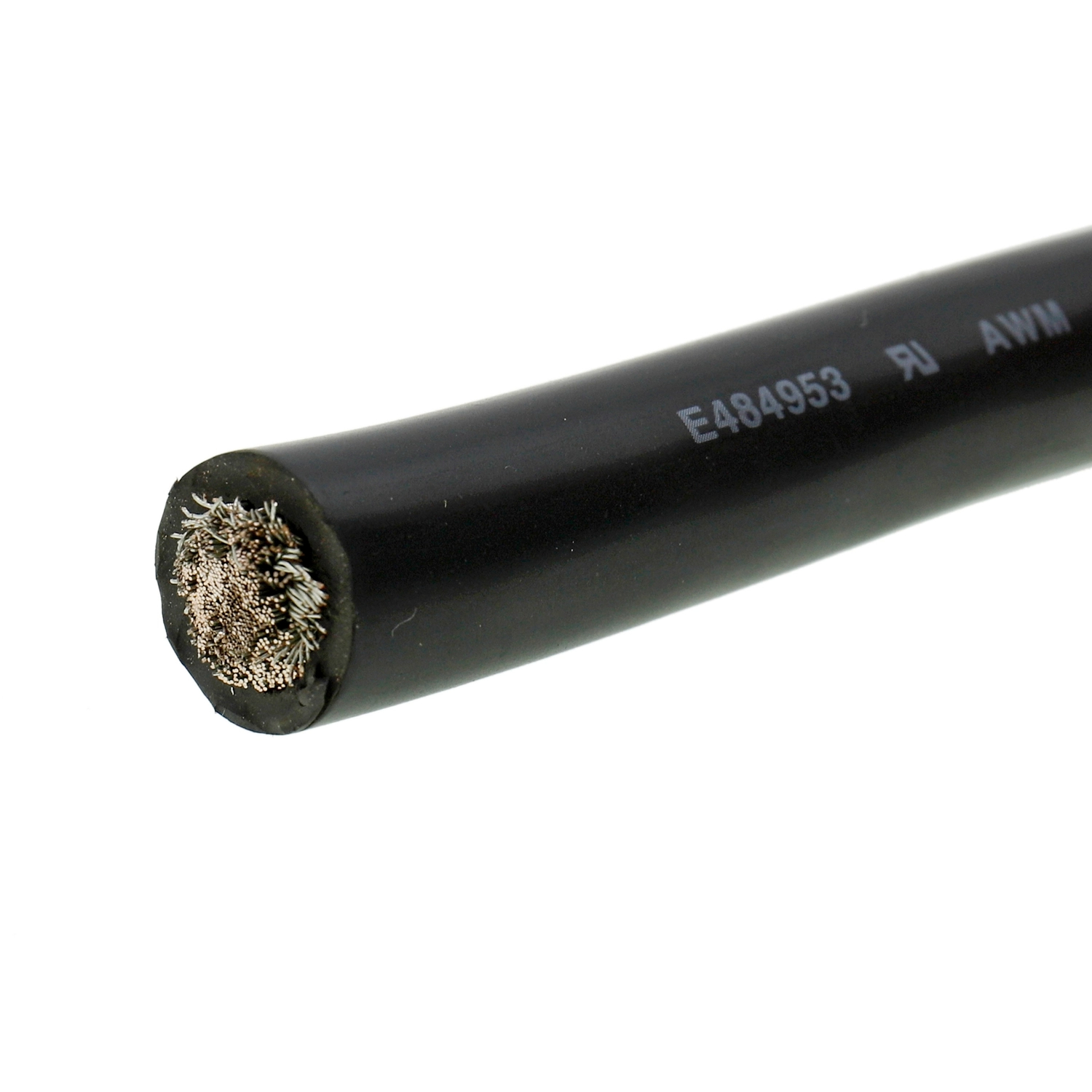
Tại sao độ khuếch đại ảnh hưởng đến việc lựa chọn thiết bị đầu cuối
Khi dòng điện tăng, sinh nhiệt tại điểm kết nối trở nên quan trọng hơn.
Thiết bị đầu cuối phải có khả năng:
- Mang theo dòng điện cần thiết
- Tản nhiệt hiệu quả
- Duy trì điện trở tiếp xúc thấp
- Chống lại sự suy thoái nhiệt
Thiết bị đầu cuối được đánh giá thấp có thể quá nóng và hỏng ngay cả khi kích thước dây có vẻ phù hợp.
Các lỗi lựa chọn thiết bị đầu cuối và AWG phổ biến
Mặc dù có sẵn các tiêu chuẩn và biểu đồ, một số sai sót xảy ra thường xuyên.
Sử dụng thiết bị đầu cuối quá khổ
Thiết bị đầu cuối quá khổ thường tạo ra các điểm uốn yếu và khả năng giữ cơ học kém.
Sử dụng thiết bị đầu cuối có kích thước nhỏ hơn
Thiết bị đầu cuối có kích thước quá nhỏ có thể làm hỏng dây dẫn và giảm hiệu suất điện.
Bỏ qua các yêu cầu hiện tại
Chỉ kích thước dây không đảm bảo hiệu suất đầy đủ.
Thiết bị đầu cuối cũng phải hỗ trợ tải điện cần thiết.
Bỏ qua điều kiện môi trường
Các yếu tố môi trường như:
- Độ ẩm
- Ăn mòn
- Rung
- Biến động nhiệt độ
phải được cân nhắc trong quá trình lựa chọn.
Đối với môi trường khắc nghiệt, thiết bị đầu cuối co nhiệt không thấm nước có thể thích hợp hơn.
Sử dụng dụng cụ uốn không chính xác
Dụng cụ bấm mép không đúng cách thường xuyên gây ra lỗi kết nối.
Các vấn đề thường gặp bao gồm:
- Uốn dưới
- Uốn quá mức
- Hư hỏng sợi dây
- Nén không nhất quán
Luôn sử dụng dụng cụ được nhà sản xuất thiết bị đầu cuối khuyến nghị.
Chọn thiết bị đầu cuối cho các ứng dụng khác nhau
Dây điện ô tô
Môi trường ô tô yêu cầu:
- Chống rung
- Bảo vệ chống ăn mòn
- Độ bền nhiệt độ
Thiết bị đầu cuối co nhiệt và thiết bị đầu cuối bằng đồng đóng hộp thường được sử dụng.
Ứng dụng hàng hải
Môi trường biển liên quan đến việc tiếp xúc với độ ẩm và muối liên tục.
Các giải pháp được đề xuất bao gồm:
- Thiết bị đầu cuối chống nước
- Đầu nối co nhiệt
- Mạ chống ăn mòn
Bảng điều khiển công nghiệp
Hệ thống điều khiển công nghiệp thường sử dụng:
- Thiết bị đầu cuối vòng
- Thiết bị đầu cuối ngã ba
- Thiết bị đầu cuối uốn cách điện
Chúng cung cấp các kết nối an toàn và có thể sử dụng được.
Hệ thống năng lượng tái tạo
Các ứng dụng lưu trữ năng lượng và năng lượng mặt trời yêu cầu các thiết bị đầu cuối có:
- Chống tia cực tím
- Chống ăn mòn
- Công suất hiện tại cao
Điện tử tiêu dùng
Đồng hồ đo dây nhỏ hơn phổ biến trong các thiết bị điện tử.
Thiết bị đầu cuối nhỏ gọn với kích thước uốn chính xác thường được ưu tiên.
Cân nhắc về vật liệu và mạ
Khả năng tương thích kích thước dây chỉ là một phần của việc lựa chọn thiết bị đầu cuối.
Chất liệu và mạ cũng ảnh hưởng đến hiệu suất.
Vật liệu đầu cuối chung
Đồng cung cấp độ dẫn tuyệt vời.
Đồng thau mang lại sự cân bằng giữa độ dẫn điện và độ bền.
Đồng Phosphor mang lại độ đàn hồi và chống mỏi vượt trội.
Tùy chọn mạ chung
Mạ thiếc được sử dụng rộng rãi cho các ứng dụng điện nói chung.
Mạ niken cải thiện khả năng chống mài mòn và hiệu suất nhiệt độ.
Mạ vàng mang lại khả năng chống ăn mòn đặc biệt và độ tin cậy tín hiệu.
Mạ bạc mang lại độ dẫn điện tuyệt vời cho các ứng dụng dòng điện cao.
Lựa chọn lớp mạ thích hợp giúp tối đa hóa tuổi thọ của thiết bị đầu cuối.
Phương pháp kiểm tra để xác minh tính tương thích
Các nhà sản xuất sử dụng nhiều phương pháp thử nghiệm khác nhau để đảm bảo khả năng tương thích của dây và thiết bị đầu cuối.
Kiểm tra lực kéo ra
Đo độ bền cơ học.
Phân tích mặt cắt uốn
Đánh giá chất lượng nén uốn và biến dạng dây dẫn.
Kiểm tra điện trở tiếp xúc
Đo hiệu suất điện tại điểm kết nối.
Kiểm tra độ tăng nhiệt độ
Xác minh hiệu suất dưới tải điện.
Kiểm tra độ rung
Mô phỏng điều kiện vận hành thực tế trong môi trường ô tô và công nghiệp.
Các tiêu chuẩn ngành liên quan đến AWG và lựa chọn thiết bị đầu cuối
Một số tổ chức cung cấp các yêu cầu hướng dẫn và thử nghiệm cho các kết nối điện.
Các tiêu chuẩn quan trọng bao gồm:
- UL
- IEC
- ISO
Tuân thủ giúp đảm bảo an toàn, tính nhất quán, và sự chấp nhận của thị trường.
Cách các nhà sản xuất đảm bảo khả năng tương thích AWG phù hợp
Các nhà sản xuất thiết bị đầu cuối đáng tin cậy thực hiện nhiều biện pháp kiểm soát chất lượng.
Những điều này thường bao gồm:
- Xác nhận thiết kế
- Kiểm tra vật liệu
- Kiểm tra uốn
- Kiểm tra quang học tự động
- Xác minh kích thước
- Hệ thống truy xuất nguồn gốc
Các nhà sản xuất với sự hỗ trợ kỹ thuật mạnh mẽ cũng có thể cung cấp hướng dẫn về kết nối dây với thiết bị đầu cuối cho các ứng dụng cụ thể.
Xu hướng tương lai về công nghệ dây và thiết bị đầu cuối
Khi hệ thống điện trở nên tiên tiến hơn, công nghệ thiết bị đầu cuối tiếp tục phát triển.
Các xu hướng chính bao gồm:
- Hệ thống EV điện áp cao
- Điện tử thu nhỏ
- Giám sát uốn tự động
- Quy trình sản xuất thông minh
- Vật liệu chống ăn mòn tiên tiến
Thiết kế thiết bị đầu cuối trong tương lai sẽ ngày càng tập trung vào độ tin cậy, hiệu quả, và đảm bảo chất lượng tự động.
Phần kết luận
Kích thước dây AWG phù hợp và khả năng tương thích của thiết bị đầu cuối là nền tảng để tạo ra các kết nối điện đáng tin cậy. Chọn thiết bị đầu cuối chính xác cho máy đo dây cụ thể sẽ cải thiện độ dẫn điện, lưu giữ cơ học, sự an toàn, và hiệu suất lâu dài.
Lựa chọn thiết bị đầu cuối thành công đòi hỏi phải đánh giá:
- Máy đo dây
- Yêu cầu hiện tại
- Loại thiết bị đầu cuối
- Kích thước thùng uốn
- Lựa chọn vật liệu
- Điều kiện môi trường
- Yêu cầu kiểm tra và xác nhận
Bằng cách tuân theo các nguyên tắc tương thích đã được thiết lập và làm việc với các nhà sản xuất thiết bị đầu cuối có kinh nghiệm, kỹ sư và người mua có thể giảm đáng kể lỗi kết nối và cải thiện độ tin cậy của hệ thống tổng thể.
Câu hỏi thường gặp
AWG có nghĩa là gì trong hệ thống dây điện?
AWG là viết tắt của Máy đo dây Mỹ., một hệ thống tiêu chuẩn được sử dụng để đo đường kính dây và kích thước dây dẫn.
Màu thiết bị đầu cuối nào tương ứng với phạm vi AWG nào?
Nói chung là:
- Màu đỏ: 22–16 AWG
- Màu xanh da trời: 16–14 AWG
- Màu vàng: 12–10 AWG
Điều gì xảy ra nếu tôi sử dụng sai kích thước thiết bị đầu cuối?
Kích thước thiết bị đầu cuối không chính xác có thể gây ra kết nối lỏng lẻo, sợi dây bị hư hỏng, quá nóng, tăng sức đề kháng, và thất bại sớm.
Một kích thước thiết bị đầu cuối có thể phù hợp với nhiều đồng hồ đo dây không?
Đúng. Hầu hết các thiết bị đầu cuối được thiết kế để phù hợp với nhiều kích cỡ dây khác nhau, nhưng dây phải nằm trong phạm vi quy định của nhà sản xuất.
Tại sao thử nghiệm kéo ra lại quan trọng?
Thử nghiệm kéo ra xác minh độ bền cơ học của kết nối bị uốn và giúp đảm bảo độ tin cậy lâu dài.
Các thiết bị đầu cuối co nhiệt có sẵn cho tất cả các kích cỡ AWG không?
Đúng. Thiết bị đầu cuối co nhiệt có sẵn với nhiều kích cỡ AWG, từ dây tín hiệu nhỏ đến dây dẫn điện lớn.
Sự khác biệt giữa kích thước dây AWG và mm2 là gì?
AWG đo đường kính dây bằng hệ thống đo, trong khi mm2 đo trực tiếp diện tích mặt cắt dây dẫn.
Loại thiết bị đầu cuối nào là tốt nhất cho hệ thống dây điện ô tô?
Thiết bị đầu cuối co nhiệt, thiết bị đầu cuối vòng, và thiết bị đầu cuối uốn chống rung thường được khuyên dùng cho các ứng dụng ô tô do độ bền và bảo vệ môi trường của chúng.

