

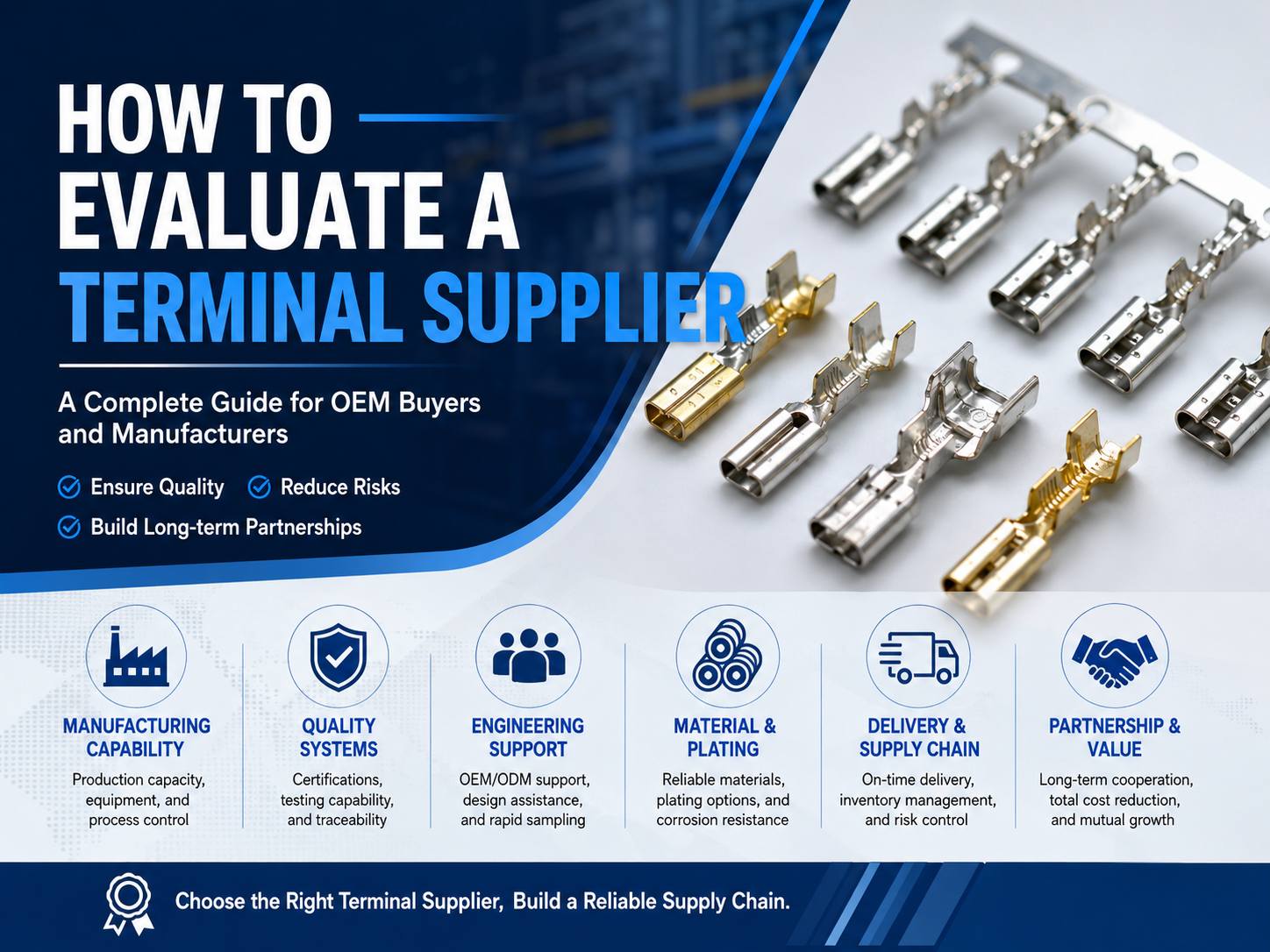
Elegir el proveedor de terminales adecuado es una de las decisiones más importantes en la cadena de suministro de conectores y mazos de cables.. Terminales electricos pueden parecer componentes pequeños, pero su calidad afecta directamente al rendimiento eléctrico, confiabilidad del producto, eficiencia de montaje, y seguridad operativa a largo plazo.
Para fabricantes OEM, distribuidores, y equipos de adquisiciones, Seleccionar un proveedor basándose únicamente en el precio a menudo genera costos ocultos, como una calidad inconsistente., entregas retrasadas, rehacer, fallas de campo, y quejas de clientes. Un proveedor de terminales confiable no solo debe proporcionar productos sino también respaldar el desarrollo de ingeniería., seguro de calidad, y producción escalable.
Esta guía explica cómo evaluar un proveedor de terminales desde una perspectiva técnica y de adquisiciones., Ayudar a los compradores a tomar decisiones informadas para una cooperación a largo plazo..
Por qué es importante la evaluación de proveedores en la adquisición de terminales
Los terminales eléctricos se utilizan en industrias como la automoción., electrónica de consumo, automatización industrial, dispositivos domésticos inteligentes, sistemas de energía renovable, y telecomunicaciones. Debido a que estas aplicaciones a menudo operan en condiciones exigentes, La capacidad del proveedor se convierte en un factor crítico..
Un proveedor con un control deficiente del proceso puede producir terminales con dimensiones inestables, espesor de revestimiento inconsistente, o fuerza de engarzado insuficiente. Estos problemas pueden causar sobrecalentamiento., fallo de conexión, corrosión, y vida útil reducida del producto.
La evaluación de proveedores ayuda a los compradores a reducir los riesgos de adquisición al verificar:
- Capacidad de fabricación
- Sistemas de calidad del producto.
- Soporte de ingeniería
- Rendimiento de entrega
- Trazabilidad de materiales
- Escalabilidad a largo plazo
En lugar de tratar la selección de proveedores como un ejercicio de comparación de precios, las empresas deberían verlo como una inversión estratégica.
Evalúe primero la capacidad de fabricación
La capacidad de fabricación es la base de la evaluación de proveedores.. Los compradores deben entender si el proveedor controla la producción internamente o depende en gran medida de la subcontratación..
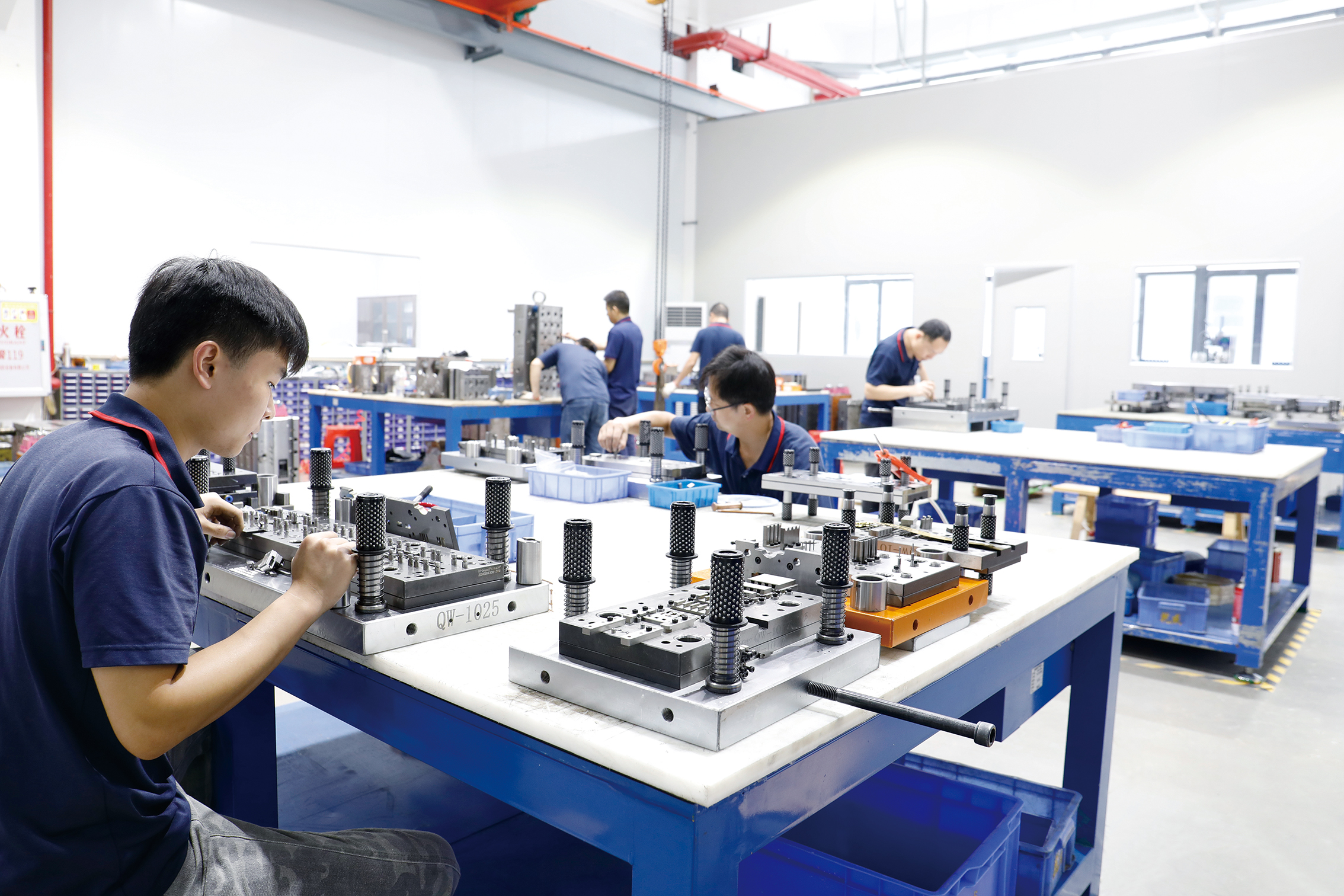
Determinar si el proveedor es un fabricante o una empresa comercial
Muchos proveedores se presentan como fabricantes y subcontratan procesos clave.. Los compradores deben verificar si la empresa posee instalaciones de producción como:
- Talleres de estampación
- Departamentos de utillaje de troqueles progresivos
- Centros de desarrollo de moldes
- Líneas de montaje
- Laboratorios de calidad
- Instalaciones de almacenamiento
Un modelo de producción interna suele proporcionar un mejor control de la calidad., plazo de entrega, y consistencia del proceso.
Las preguntas que los compradores deben hacer incluyen:
- ¿Fabrican terminales internamente??
- ¿Qué procesos se subcontratan??
- ¿Se pueden organizar auditorías de fábrica??
- ¿Tiene herramientas y equipos de estampado??
Comprender la propiedad de la producción ayuda a evitar incertidumbres en la cadena de suministro.
Evaluar la capacidad de producción
La capacidad de producción determina si un proveedor puede soportar el crecimiento del proyecto y las fluctuaciones de volumen..
Las áreas de evaluación incluyen:
Capacidad de producción mensual
Los proveedores deben proporcionar datos claros de producción e información de planificación de capacidad..
Nivel de automatización
Las líneas de producción automatizadas mejoran la consistencia y reducen los errores manuales.
Rendimiento del tiempo de entrega
Los plazos de entrega estables indican sistemas de fabricación maduros.
Escalabilidad
Los proveedores deben ser capaces de aumentar la producción sin comprometer la calidad..
Es posible que un proveedor adecuado para la creación de prototipos no necesariamente admita los requisitos de producción en masa..
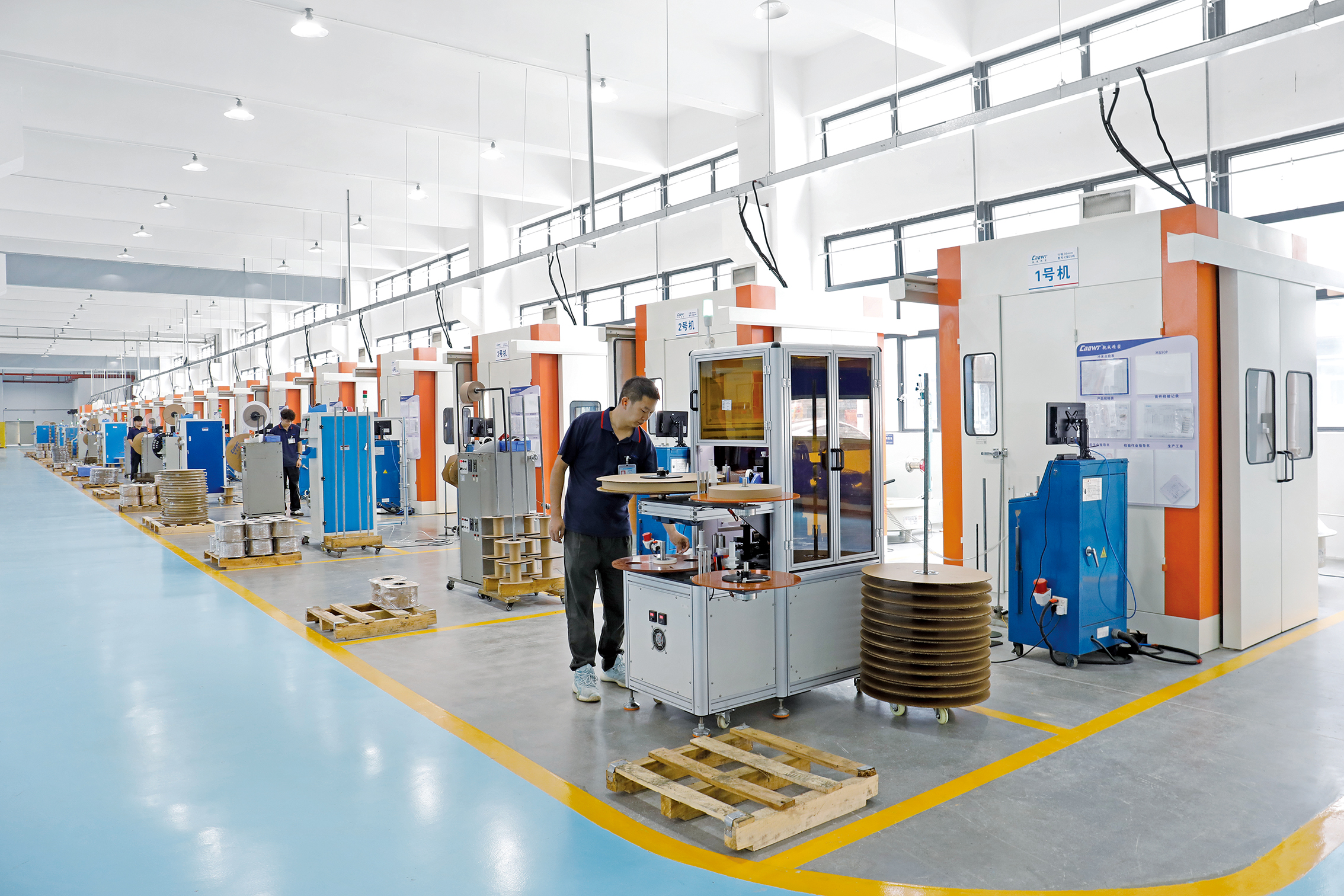
Revisar equipos de fabricación
El equipo influye directamente en la precisión, eficiencia, y consistencia del producto.
El equipo común en la fabricación de terminales incluye:
- Prensas de estampado de alta velocidad
- Sistemas de matrices progresivas
- Máquinas automáticas de montaje
- Sistemas de inspección óptica
- Equipos de prueba de engarce
- Instrumentos de inspección de revestimiento
- Máquinas de ensayo de tracción.
Los equipos avanzados generalmente indican un control de proceso más sólido y una mayor repetibilidad de la producción..
Evaluar los sistemas de gestión de calidad del producto
Los sistemas de calidad son uno de los indicadores más claros de la madurez de los proveedores.
Los fabricantes de terminales confiables generalmente implementan procedimientos estructurados de gestión de calidad que cubren las materias primas., producción, inspección, y envío.
Verificar certificaciones
Las certificaciones demuestran el cumplimiento de los estándares internacionales y los requisitos del cliente..
Las certificaciones comunes incluyen:
- ISO 9001 para sistemas de gestión de calidad
- IATF 16949 para la fabricación de automóviles
- Requisitos de seguridad del producto UL
Dependiendo de los mercados de destino, La documentación de cumplimiento ambiental también puede ser necesaria..
Los compradores deben solicitar copias de certificación y verificar su validez..
Evaluar la capacidad de prueba
La calidad del terminal no puede depender únicamente de la inspección visual.
Un proveedor calificado debe realizar reparaciones eléctricas., mecánico, y pruebas ambientales.
Las pruebas eléctricas pueden incluir:
- Pruebas de resistencia de contacto
- Prueba de resistencia de aislamiento
- Pruebas de resistencia dieléctrica
Las pruebas mecánicas pueden incluir:
- Prueba de fuerza de extracción
- Análisis de engarce
- Evaluación de la fuerza de inserción y extracción.
Las pruebas ambientales pueden incluir:
- Pruebas de corrosión por niebla salina
- Ciclos de temperatura
- Pruebas de resistencia a la humedad
- Prueba de choque térmico
Los proveedores con laboratorios internos suelen ofrecer una validación más rápida y un control de calidad más estricto..
Revisar los sistemas de trazabilidad
La trazabilidad es cada vez más importante para los proyectos OEM y de automoción.
Un sólido sistema de trazabilidad permite a los fabricantes identificar:
- Lotes de materiales
- Fechas de producción
- Equipo utilizado
- Operadores involucrados
- Registros de inspección
Esta capacidad mejora el análisis de la causa raíz y la eficiencia de las acciones correctivas..
Pregunte a los proveedores si mantienen registros históricos de calidad y seguimiento de lotes..
Evaluar la capacidad de ingeniería y personalización
Muchos proyectos de terminales requieren un desarrollo personalizado en lugar de productos de catálogo estándar..
La capacidad de ingeniería se vuelve especialmente importante cuando las aplicaciones involucran dimensiones únicas., materiales especiales, o requisitos de desempeño.
Verificar el soporte OEM y ODM
Un proveedor capaz debe proporcionar:
- Asistencia de revisión de diseño
- Optimización de dibujo
- Desarrollo de prototipos
- Diseño de herramientas
- Análisis de viabilidad de fabricación.
El soporte OEM y ODM acorta los ciclos de desarrollo y reduce el riesgo de producción.
Las preguntas para hacer incluyen:
- ¿Puedes desarrollar productos a partir de dibujos??
- ¿Admite herramientas personalizadas??
- ¿Cuál es el tiempo de entrega de la muestra??
- ¿Se pueden modificar rápidamente los prototipos??
Evaluar la fortaleza del equipo de ingeniería
Los equipos de ingeniería desempeñan un papel fundamental en la resolución de problemas técnicos..
Los puntos de evaluación incluyen:
Capacidad DFM
El soporte de diseño para la fabricación mejora la eficiencia de la producción.
Experiencia en herramientas
El diseño de herramientas afecta la precisión dimensional y la velocidad de producción..
Ingeniería de aplicaciones
Comprender las aplicaciones de uso final ayuda a optimizar el rendimiento del producto.
Velocidad de resolución de problemas
La retroalimentación técnica rápida mejora la ejecución del proyecto.
Los proveedores con equipos de ingeniería sólidos a menudo se convierten en socios de desarrollo a largo plazo en lugar de simples proveedores..
Evaluar la capacidad de tratamiento de materiales y superficies
El rendimiento del terminal depende en gran medida de la selección del material y la calidad del revestimiento..
Revisar las opciones de materiales
Los materiales terminales comunes incluyen:
El latón ofrece buena conductividad y rentabilidad..
El bronce fosforado proporciona mejor elasticidad y resistencia a la fatiga..
Las aleaciones de cobre mejoran la conductividad eléctrica.
El acero inoxidable admite aplicaciones de alta resistencia.
Los proveedores deben explicar la selección de materiales según los requisitos de la aplicación..
Evaluar la capacidad de revestimiento
El tratamiento de la superficie afecta directamente la resistencia a la corrosión y la conductividad..
Las opciones de revestimiento comunes incluyen:
Estañado para aplicaciones eléctricas generales..
Niquelado para resistencia al desgaste..
Chapado en oro para baja resistencia de contacto y confiabilidad de la señal..
Chapado en plata para entornos de alta conductividad.
Los compradores deben evaluar:
- Control de espesor del revestimiento
- Consistencia del recubrimiento
- Rendimiento ante la corrosión
- Métodos de prueba
Verificar el rendimiento de la resistencia a la corrosión
La corrosión es una de las principales causas de fallo terminal..
Los proveedores deben proporcionar datos de pruebas de niebla salina y validación de resistencia a la corrosión..
Para aplicaciones automotrices y exteriores, esta evaluación se vuelve particularmente importante.
Revisar el desempeño de las entregas y la estabilidad de la cadena de suministro
Incluso los proveedores de alta calidad pueden crear problemas si el desempeño de las entregas es inestable.
Evaluar la gestión del tiempo de entrega
Los compradores deben revisar:
Plazo de entrega del prototipo.
Plazo de entrega de producción en masa.
Capacidad de manejo de pedidos urgentes.
Flexibilidad en la programación de la producción.
El rendimiento de entrega estable reduce la presión del inventario y el riesgo del proyecto.
Revisar la planificación de inventario y capacidad
Los proveedores confiables a menudo mantienen:
Sistemas de stock de seguridad.
Procedimientos de previsión de materiales..
Planes de expansión de capacidad.
Canales de abastecimiento alternativos.
Estas medidas mejoran la continuidad del suministro durante las fluctuaciones del mercado..

Evaluar la experiencia en la industria
La experiencia en la industria a menudo refleja madurez técnica.
Los proveedores que atienden a sectores exigentes suelen tener sistemas de validación y control de procesos más sólidos..
Los ejemplos incluyen:
Automotor.
Electrónica de consumo.
Automatización industrial.
Sistemas domésticos inteligentes.
Energía renovable.
Infraestructura de carga de vehículos eléctricos.
Pregunte a los proveedores sobre:
Regiones de exportación.
Principales industrias atendidas.
Experiencia de aplicación.
Proyectos representativos.
La experiencia en aplicaciones similares reduce el riesgo de desarrollo.
Evaluar el costo más allá del precio unitario
El precio es importante, pero el costo total de adquisición es más importante.
Los proveedores de bajo costo pueden generar gastos ocultos como:
Manejo de defectos.
Costos de retrabajo.
Retrasos en la producción.
Reclamaciones de garantía.
Pérdidas de inventario.
Los equipos de adquisiciones deben evaluar el costo total de propiedad en lugar del precio unitario únicamente..
La transparencia de costos debe incluir:
Tarifas de herramientas.
Requisitos mínimos de pedido.
Costos de embalaje.
Condiciones de envío.
Condiciones de pago.
Un precio unitario más alto en realidad puede reducir los costos generales del proyecto..
Realizar una auditoría de fábrica antes de cooperar
Las auditorías de fábrica proporcionan información directa sobre la capacidad de los proveedores..
Las áreas clave de evaluación incluyen:
| Artículo de auditoría | Preguntas |
|---|---|
| Producción | ¿El proveedor posee instalaciones de fabricación?? |
| Calidad | ¿Existe un laboratorio de pruebas interno?? |
| Ingeniería | ¿Están disponibles los servicios OEM y ODM?? |
| Entrega | ¿Cuáles son los plazos de entrega estándar?? |
| Proceso de dar un título | ¿Son válidos los certificados de calidad?? |
| Capacidad | ¿Qué es la capacidad de producción mensual?? |
| Trazabilidad | ¿Se mantienen registros de lotes?? |
Las visitas a las fábricas a menudo revelan detalles que los documentos no pueden mostrar.
Señales de alerta al evaluar proveedores de terminales
Los compradores deben tener cuidado al encontrar las siguientes situaciones:
Precios significativamente más bajos que el promedio del mercado..
Sin capacidad de prueba.
Fuerte subcontratación de procesos centrales.
Fuentes de materias primas poco claras.
Sin equipo de soporte de ingeniería.
comunicación lenta.
Falta de transparencia en la producción..
Estos factores a menudo indican un mayor riesgo a largo plazo..
Construya asociaciones con proveedores a largo plazo
Los mejores proveedores de terminales no son simplemente proveedores de productos: son socios estratégicos.
Un proveedor confiable debe entregar:
Calidad constante.
Soporte de ingeniería.
Producción escalable.
Entrega estable.
Comunicación transparente.
Capacidad de mejora continua.
La cooperación a largo plazo reduce los costes de cualificación, mejora la eficiencia, y fortalece la estabilidad de la cadena de suministro.
Para fabricantes OEM y equipos de adquisiciones, La evaluación de proveedores debe combinar la evaluación técnica., verificación de calidad, revisión de fabricación, y planificación estratégica.
Seleccionar el proveedor de terminales adecuado hoy ayuda a prevenir problemas de producción en el futuro.

Conclusión
Evaluar a un proveedor de terminales va mucho más allá de comparar cotizaciones o capacidad de producción. Para compradores y fabricantes OEM, el socio adecuado debe combinar experiencia en fabricación, estricto control de calidad, soporte de ingeniería, rendimiento de entrega estable, y fiabilidad del suministro a largo plazo.
Un proveedor calificado no sólo es capaz de producir terminales, sino que también debería ayudar a optimizar los diseños., mejorar la capacidad de fabricación, reducir los riesgos del proyecto, y respaldar la escalabilidad futura. Desde la selección de materiales y la precisión del estampado hasta la capacidad de prueba y el soporte de personalización., Cada etapa influye en el rendimiento del producto final..
Como fabricante profesional de terminales eléctricos, Precisión de Qianwei se centra en la fabricación de terminales de precisión, Desarrollo OEM/ODM, y soluciones de conectores personalizados para industrias que incluyen la electrónica de consumo, dispositivos domésticos inteligentes, equipos industriales, y aplicaciones automotrices. Con capacidades de producción interna., sistemas de inspección de calidad, y soporte de ingeniería, Qianwei Precision ayuda a los clientes a acelerar el desarrollo manteniendo al mismo tiempo la calidad constante del producto y la estabilidad del suministro..
Ya sea que esté comprando terminales estándar o desarrollando soluciones personalizadas, asociarse con un fabricante experimentado puede crear valor a largo plazo en términos de calidad, eficiencia, y desempeño de la cadena de suministro.
Preguntas frecuentes
¿Cómo elijo un proveedor de terminales??
Evaluar la capacidad de fabricación., sistemas de calidad, soporte de ingeniería, capacidad de prueba, rendimiento de entrega, y experiencia en la industria.
¿Debo elegir una fábrica o una empresa comercial??
Las fábricas generalmente ofrecen un mejor control de la producción., apoyo técnico, y transparencia de costos.
Qué certificaciones deben tener los fabricantes de terminales?
Las certificaciones comunes incluyen ISO 9001, IATF 16949, y requisitos de UL dependiendo de las aplicaciones de la industria.
¿Por qué es importante la capacidad de ingeniería??
El soporte de ingeniería mejora la personalización, desarrollo de herramientas, capacidad de fabricación, y eficiencia en la resolución de problemas.
¿Cómo puedo verificar la calidad del terminal??
Revisar la capacidad del laboratorio, informes de prueba, sistemas de inspección, registros de trazabilidad, y procedimientos de validación de muestras..

