

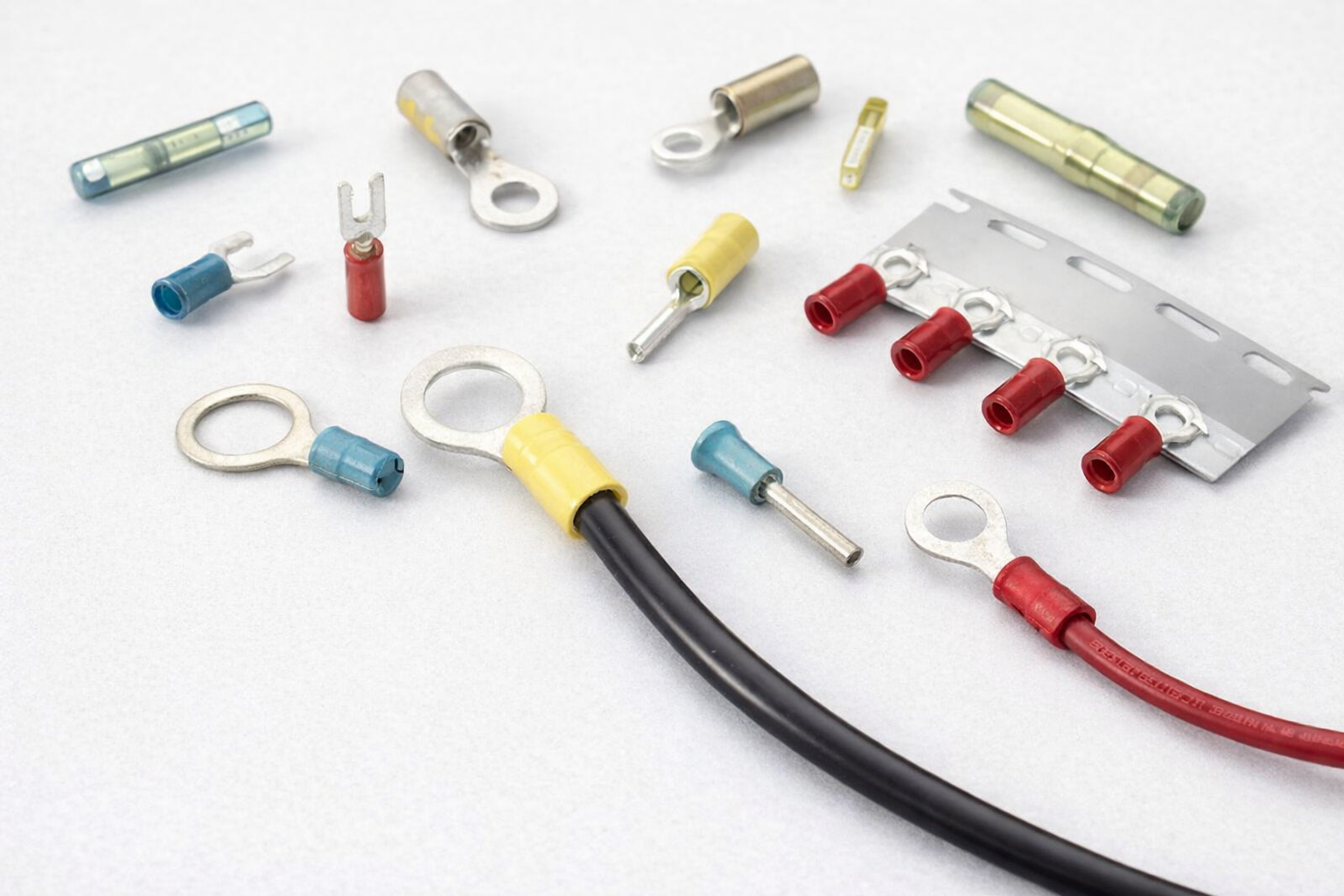
Thiết bị đầu cuối điện provide a reliable connection between wires, cáp, thành phần mạch, và thiết bị điện. Tùy thuộc vào ứng dụng, terminals can be connected to conductors through different methods, với crimping and soldering being two of the most common.
Trong số đó, crimp terminals are widely used in automotive wiring harnesses, thiết bị gia dụng, thiết bị công nghiệp, new energy systems, and other high-volume electrical applications. Thiết bị đầu cuối hàn, meanwhile, remain useful where a soldered connection is preferred or required.
Vì thế, which connection method is better?
Câu trả lời phụ thuộc vào ứng dụng, khối lượng sản xuất, yêu cầu về điện, mechanical conditions, và quá trình sản xuất.
This guide compares crimp terminals and solder terminals, explains their differences, and shows how to choose the right terminal for your application.
Thiết bị đầu cuối uốn là gì?
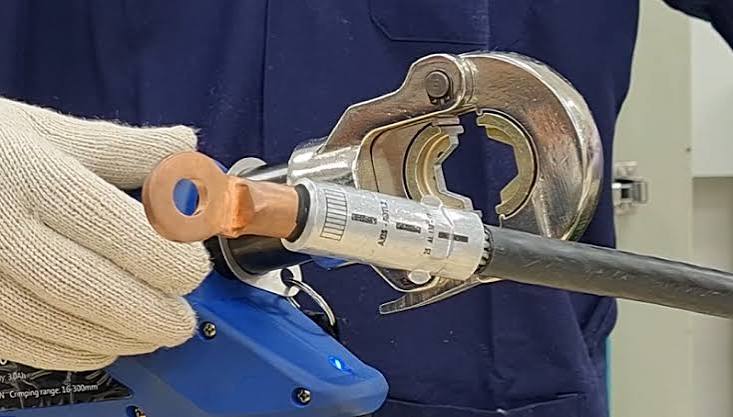
A crimp terminal is an electrical terminal designed to connect a wire to another electrical component through mechanical crimping.
The terminal typically includes a conductor barrel that is crimped around the exposed conductor. Some terminals also include an insulation barrel that provides additional mechanical support around the wire insulation.
Trong quá trình uốn, a properly selected crimping tool compresses the terminal around the wire to create a secure electrical and mechanical connection.
Crimp terminals are available in many configurations, bao gồm:
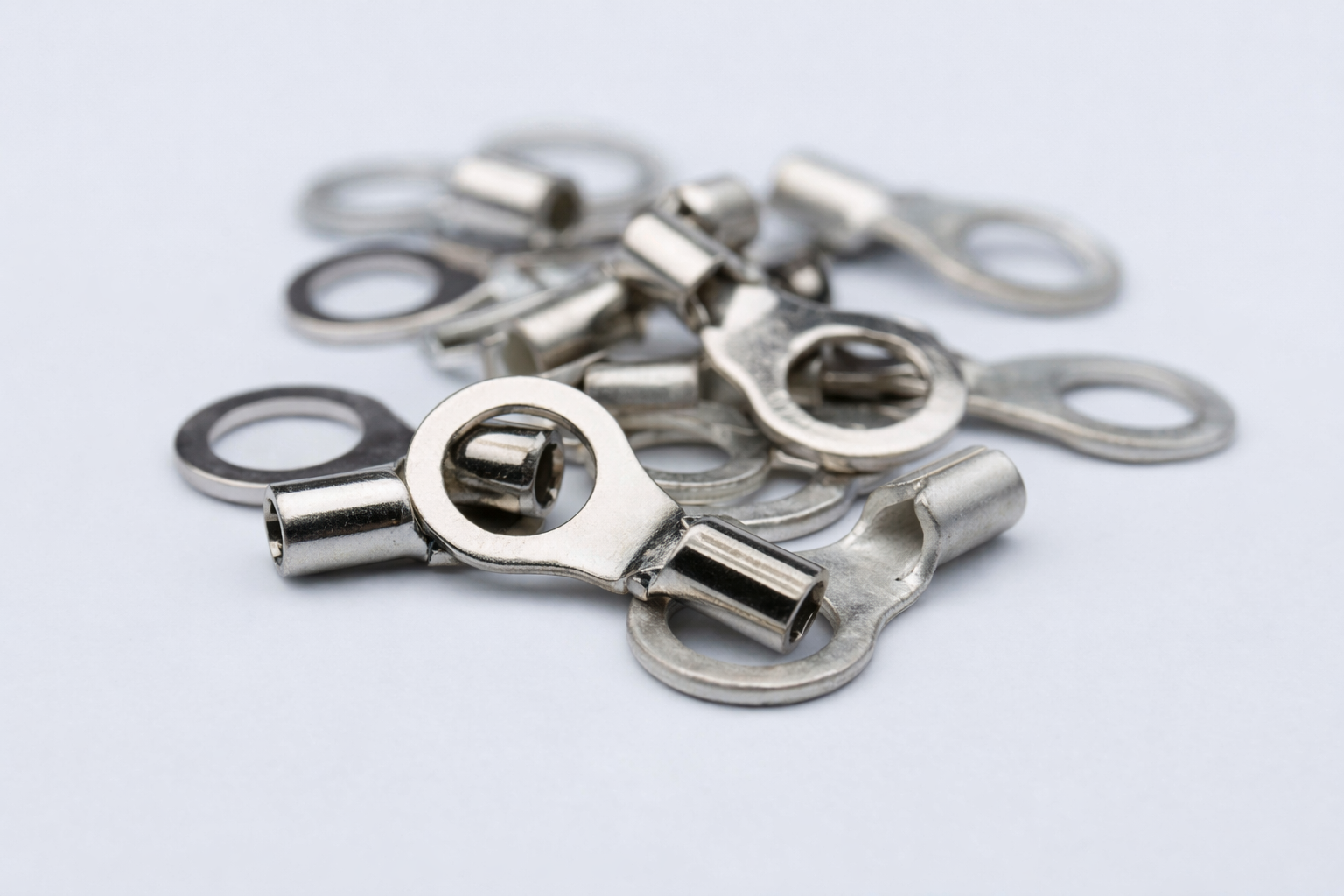
- Thiết bị đầu cuối vòng
- Thiết bị đầu cuối thuổng
- Pin thiết bị đầu cuối
- Thiết bị đầu cuối mông
- Thiết bị đầu cuối được đóng dấu tùy chỉnh
The specific design depends on the wire size, phương thức kết nối, yêu cầu hiện tại, môi trường cài đặt, và ứng dụng.
Why Are Crimp Terminals Widely Used?
One of the biggest advantages of crimp terminals is repeatability.
Khi thiết bị đầu cuối, dây điện, dụng cụ, and crimping parameters are correctly matched, manufacturers can produce a large number of consistent connections.
This makes crimp terminals particularly suitable for:
- Bộ dây điện ô tô
- Thiết bị gia dụng
- Hệ thống điều khiển công nghiệp
- Hệ thống pin
- Thiết bị năng lượng mới
- Thiết bị truyền thông
- Điện tử tiêu dùng
- Tủ điện
Dành cho các nhà sản xuất sản xuất hàng nghìn hoặc hàng triệu kết nối dây, repeatable crimping is an important advantage.
Thiết bị đầu cuối hàn là gì?
Solder terminals are electrical terminals designed to be connected to wires or conductors through soldering.
Instead of mechanically compressing the terminal around the conductor, solder is heated until it melts and bonds the conductor to the terminal.
Common solder terminal designs include solder lugs, solder cups, solder tabs, and certain PCB terminals.
Solder connections can provide good electrical conductivity when the soldering process is properly controlled.
Tuy nhiên, soldering requires additional process control, including solder temperature, solder amount, heating time, and operator or equipment consistency.
Solder terminals can be useful in applications where soldering is already part of the manufacturing process or where a specific soldered connection is required.
uốn vs. Thiết bị đầu cuối hàn: Sự khác biệt chính
The main difference is the way the conductor is attached to the terminal.
Crimp terminals use mechanical deformation, while solder terminals use a soldered joint.
| Tính năng | Thiết bị đầu cuối uốn | Thiết bị đầu cuối hàn |
|---|---|---|
| Phương thức kết nối | Mechanical crimping | hàn |
| Tốc độ sản xuất | Cao | Nói chung là thấp hơn |
| Tự động hóa | Rất phù hợp | Suitable but process-dependent |
| Độ lặp lại | High with controlled tooling | Depends on soldering process |
| Sản xuất số lượng lớn | Xuất sắc | Less efficient in many applications |
| Wire harness applications | Được sử dụng rộng rãi | Ít phổ biến hơn |
| Kiểm soát quá trình | Chiều cao uốn, force, dụng cụ | Nhiệt độ, thời gian, solder amount |
| Cài đặt hiện trường | Convenient with proper tooling | Requires soldering equipment |
| Tùy chỉnh | Highly flexible | Có sẵn tùy thuộc vào thiết kế |
Cả hai phương pháp đều không tốt hơn. The right choice depends on what the terminal needs to accomplish.
When Should You Choose Crimp Terminals?
For most high-volume wire connection applications, crimp terminals are an excellent starting point.
Sản xuất số lượng lớn
If a product requires hundreds, thousands, or millions of wire connections, production efficiency becomes important.
Crimping can be integrated into semi-automatic or fully automatic production equipment, allowing manufacturers to achieve consistent results at high production volumes.
Bộ dây điện ô tô
Crimp terminals are widely used in automotive wiring harnesses because they can provide repeatable mechanical and electrical connections.
Automotive applications may also require terminals to withstand vibration, thay đổi nhiệt độ, độ ẩm, and long-term mechanical stress.
Hình học thiết bị đầu cuối, vật liệu, mạ, crimp design, and tooling therefore need to be carefully controlled.
Thiết bị gia dụng
Máy giặt, tủ lạnh, điều hòa không khí, ovens, and other appliances can contain numerous wire connections.
Crimp terminals can simplify assembly and provide a repeatable connection method suitable for mass production.
Thiết bị công nghiệp
Industrial control systems and electrical equipment often require reliable wire termination combined with efficient assembly.
Tùy thuộc vào ứng dụng, manufacturers may use ring, cái nĩa, lưỡi dao, ghim, or custom terminals.
When Are Solder Terminals a Better Choice?
Solder terminals still have their place.
They may be considered when:
- The design specifically requires a soldered connection
- Soldering equipment is already available
- Production volume is relatively low
- The terminal is designed specifically for soldering
- The application requires a particular soldering process
- The product architecture makes mechanical crimping impractical
Ví dụ, some electronic assemblies and specialized electrical components may incorporate solder cups or solder tabs as part of their connection design.
Tuy nhiên, choosing soldering simply because it appears to create a strong connection is not enough. The complete application and manufacturing process should be considered.
Uốn vs. Soldering for Wire Harnesses
For modern wire harness production, crimping is often preferred because of its speed, repeatability, and compatibility with automated equipment.
A typical wire harness production process may include:
Wire Cutting → Stripping → Terminal Crimping → Inspection → Assembly → Testing
The quality of the final connection depends on more than the terminal itself.
Kích thước dây, vật liệu dẫn điện, vật liệu đầu cuối, mạ, hình học uốn, and tooling all need to be compatible.
A poorly matched terminal and wire can result in:
- Insufficient mechanical retention
- Điện trở cao
- Conductor damage
- Kết nối lỏng lẻo
- Biến dạng đầu cuối
- Inconsistent crimping
This is why selecting a suitable terminal manufacturer is important for production applications.
What Other Types of Electrical Terminals Are Available?
Crimp and solder describe connection methods, but terminals can also be classified according to their structure, vật liệu, và ứng dụng.
Wire Terminals
Wire terminals are designed to terminate electrical wires and provide a reliable interface with another component.
They can include ring, cái nĩa, lưỡi dao, ghim, và các cấu hình khác.
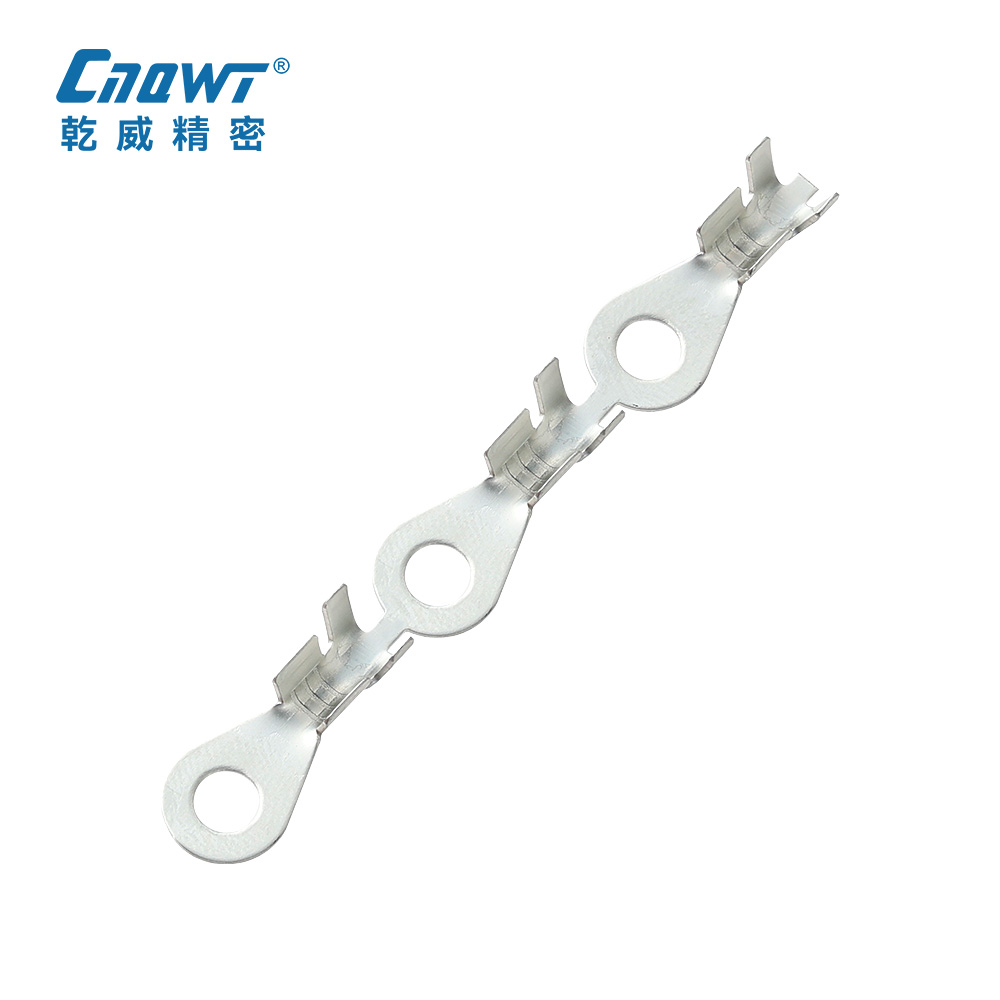
Stamped Terminals
Stamped terminals are manufactured from metal strip using precision stamping processes.
They are particularly suitable for high-volume production because stamping allows manufacturers to produce large quantities of terminals with consistent dimensions.
Stamped terminals are commonly used inside connectors and wiring harness systems.
Thiết bị đầu cuối đồng
Copper is widely used for electrical terminals because of its good electrical conductivity and suitable mechanical properties.
Tùy thuộc vào ứng dụng, copper terminals can also receive plating treatments such as tin plating to improve corrosion resistance and connection performance.
Thiết bị đầu cuối hiện tại cao
High-current terminals are designed for applications where electrical loads are significantly higher than those found in conventional signal or low-current circuits.
They may be used in:
- Hệ thống pin
- Thiết bị năng lượng mới
- Phân phối điện
- Máy móc công nghiệp
- EV-related systems
- Thiết bị lưu trữ năng lượng
The terminal design must consider current capacity, kích thước dây dẫn, tăng nhiệt độ, điện trở tiếp xúc, và yêu cầu cơ khí.
Thiết bị đầu cuối tùy chỉnh
Not every application can use a standard terminal.
Custom terminals may be required when a customer has specific requirements for:
- Kích thước
- Vật liệu
- mạ
- Phạm vi dây
- Công suất hiện tại
- Phương pháp lắp
- Hình học liên hệ
- Cấu trúc uốn
- Bao bì
Trong những trường hợp này, working directly with a terminal manufacturer can simplify the transition from product design to mass production.
Cách chọn thiết bị đầu cuối phù hợp
Khi chọn một thiết bị đầu cuối, do not focus only on the connection method.
Xem xét ứng dụng hoàn chỉnh.
Kích thước dây
The terminal must be compatible with the conductor size.
A terminal designed for a small wire should not be used for a significantly larger conductor simply because the physical dimensions appear similar.
Yêu cầu hiện tại
The expected current affects the terminal’s required cross-sectional area, vật liệu, liên hệ thiết kế, and temperature performance.
High-current applications generally require terminals designed specifically for higher electrical loads.
Vật liệu
Copper and copper alloys are common choices for electrical terminals.
The appropriate material depends on electrical conductivity, sức mạnh cơ học, yêu cầu hình thành, chống ăn mòn, và điều kiện áp dụng.
mạ
Plating can affect corrosion resistance, hiệu suất điện, và độ tin cậy lâu dài.
Tin plating is commonly used for many electrical terminal applications, while other plating systems may be selected for specific requirements.
Phương thức kết nối
Determine whether the application requires:
- uốn tóc bồng
- hàn
- Hàn
- PCB mounting
- Other mechanical connection methods
Để sản xuất dây nịt số lượng lớn, crimping is often an efficient option.
Môi trường hoạt động
Nhiệt độ, độ ẩm, rung động, hóa chất, and other environmental factors should also be considered.
Automotive and new energy applications, Ví dụ, may require terminals capable of maintaining reliable performance under demanding operating conditions.
Tại sao chất lượng sản xuất lại quan trọng
Một thiết bị đầu cuối có thể trông đơn giản, but its performance depends heavily on manufacturing precision.
Small differences in dimensions can affect:
- Chất lượng uốn
- Lực liên lạc
- Wire retention
- Mating performance
- Điện trở
- Tính nhất quán của hội
Đối với thiết bị đầu cuối được dán tem, tooling quality is particularly important.
A capable manufacturer should be able to control the complete production process rather than simply purchase finished terminals from another supplier.
Tại Độ chính xác của Qianwei, terminal manufacturing can be integrated across several key processes:
Thiết kế → Dụng cụ → Dập → Mạ → Kiểm tra → Sản xuất hàng loạt
This integrated approach allows manufacturers to control tooling accuracy, stamping consistency, xử lý bề mặt, dimensional quality, and production efficiency.
For custom terminal projects, this can also simplify communication between product design and mass production.
Crimp or Solder: Cái nào phù hợp với ứng dụng của bạn?
There is no single answer for every application.
Chọn thiết bị đầu cuối uốn when you need:
- Sản xuất số lượng lớn
- Repeatable wire connections
- Lắp ráp nhanh
- Automated or semi-automated production
- Automotive or wire harness applications
- Consistent mechanical and electrical performance
Coi như solder terminals khi:
- Soldering is already part of your production process
- The terminal is specifically designed for soldering
- The application requires a soldered connection
- Production volume and assembly requirements make soldering practical
For many modern industrial and wire harness applications, crimping provides an efficient and repeatable solution. Tuy nhiên, the final choice should always be based on the specific electrical, cơ khí, môi trường, và yêu cầu sản xuất.
Why Work With a Terminal Manufacturer?
When you are sourcing terminals for a production project, buying a standard part is not always enough.
A manufacturer with stamping, dụng cụ, mạ, điều tra, and production capabilities can provide more control over the complete process.
This becomes particularly important when you need:
- Custom terminal dimensions
- Specific materials
- Mạ đặc biệt
- Thiết kế dòng điện cao
- Custom crimp structures
- Large-volume production
- OEM or ODM support
Độ chính xác của Qianwei focuses on electrical terminal manufacturing and precision metal stamping, supporting standard and custom terminal requirements for automotive, năng lượng mới, thiết bị gia dụng, thiết bị công nghiệp, and other applications.
If you have a terminal drawing, vật mẫu, đặc điểm kỹ thuật dây, or project requirement, a professional terminal manufacturer can evaluate the design and recommend an appropriate manufacturing solution.
Phần kết luận
Crimp and solder terminals serve different purposes, and the best choice depends on the application, quá trình sản xuất, thông số kỹ thuật dây, yêu cầu về điện, và môi trường hoạt động.
For high-volume wire harnesses, automotive components, thiết bị, thiết bị công nghiệp, and other production applications, crimp terminals offer strong advantages in repeatability, hiệu quả sản xuất, và tự động hóa.
Solder terminals remain useful for applications where soldering is required or already integrated into the assembly process.
For more demanding projects, the terminal itself is only one part of the solution. Lựa chọn vật liệu, hình học thiết bị đầu cuối, dụng cụ, dập, mạ, điều tra, and production control all contribute to the final connection quality.
For standard or custom thiết bị đầu cuối điện, thiết bị đầu cuối uốn, stamped terminals, thiết bị đầu cuối dây, thiết bị đầu cuối đồng, and high-current terminals, working directly with an experienced manufacturer can help ensure that the terminal design matches both the electrical requirements and the production process.
Câu hỏi thường gặp
Are crimp terminals better than solder terminals?
Not in every application. Crimp terminals are often more suitable for high-volume wire harness and automated production, while solder terminals can be appropriate when a soldered connection is specifically required.
Are crimp terminals reliable?
Đúng. Khi thiết bị đầu cuối, dây điện, dụng cụ, and crimping parameters are properly matched, crimp connections can provide reliable electrical and mechanical performance.
Can terminals be customized?
Đúng. Custom terminals can be developed according to requirements such as dimensions, vật liệu, mạ, kích thước dây, mounting structure, and crimp design.
Những vật liệu nào thường được sử dụng làm thiết bị đầu cuối điện?
Copper and copper alloys are commonly used because of their electrical conductivity and suitable mechanical properties. The final material depends on the application’s electrical, cơ khí, và yêu cầu về môi trường.
What is the difference between a crimp terminal and a wire terminal?
A crimp terminal describes a terminal connected through a crimping process, while wire terminal is a broader term describing terminals designed to terminate wires. Many wire terminals are crimp terminals.
Can Qianwei manufacture custom terminals?
Đúng. Qianwei Precision supports custom terminal manufacturing and integrates tooling, dập chính xác, mạ, điều tra, and mass production for customized terminal projects.

