

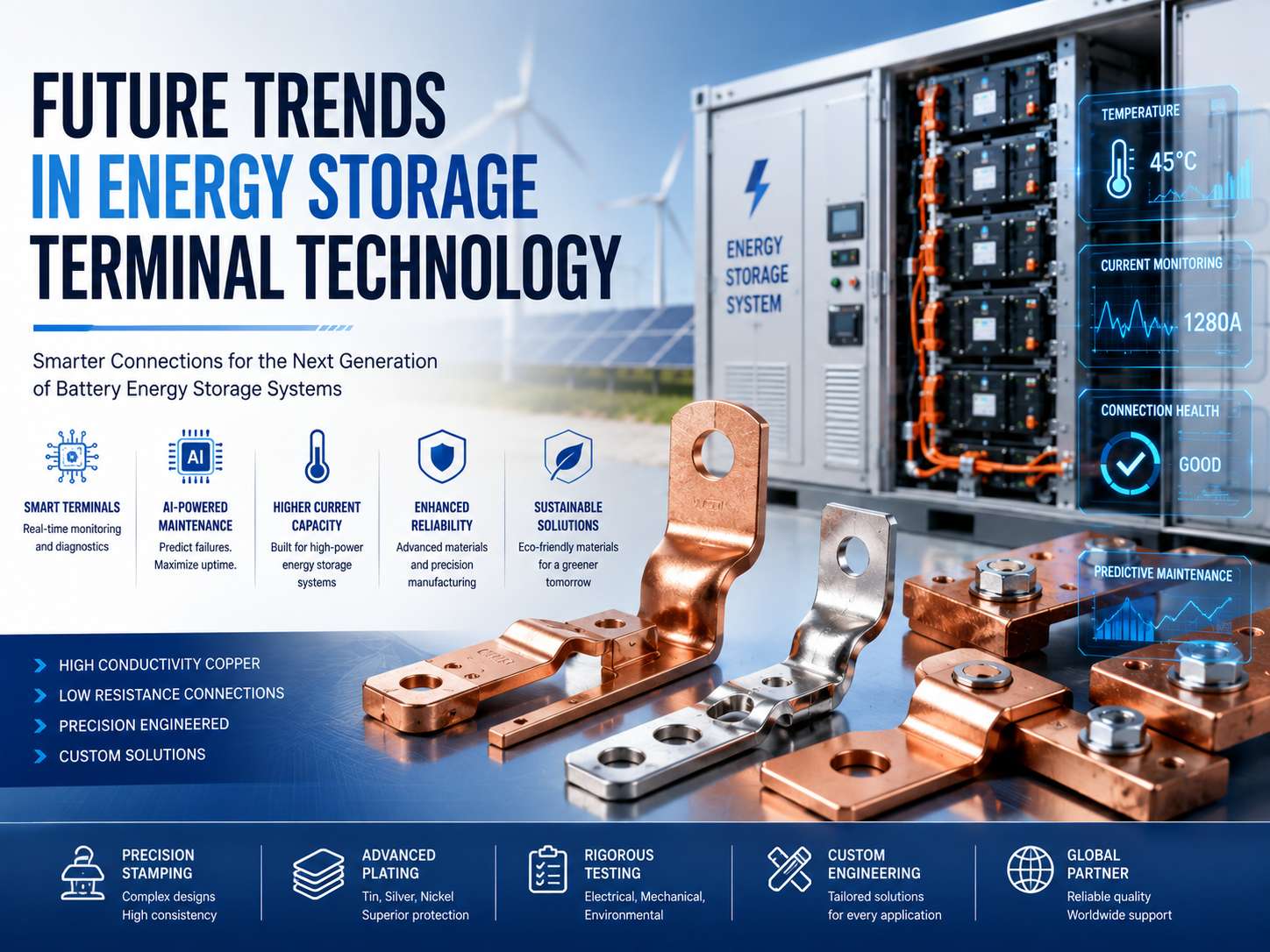
El panorama energético mundial está experimentando una profunda transformación. Impulsado por la rápida adopción de energías renovables, vehículos eléctricos, redes inteligentes, y centros de datos impulsados por IA, La demanda de sistemas de almacenamiento de energía eficientes y fiables. (ESS) está creciendo a un ritmo sin precedentes.
En el corazón de cada sistema de almacenamiento de energía se encuentra una red de conexiones eléctricas responsables de transferir energía de manera segura y eficiente.. Mientras que las baterías, inversores, y los sistemas de gestión de baterías suelen recibir la mayor atención, Los terminales eléctricos desempeñan un papel igualmente crítico en la determinación del rendimiento del sistema., seguridad, y longevidad.
A medida que evoluciona la tecnología de almacenamiento de energía, La tecnología terminal debe evolucionar junto con ella.. Aumento de la densidad de potencia, cargas de corriente más altas, estándares de seguridad más estrictos, y los sistemas inteligentes de gestión de energía están cambiando la forma en que se diseñan las terminales, fabricado, y probado.
En este artículo, Exploramos las tendencias futuras en la tecnología de terminales de almacenamiento de energía y examinamos cómo las soluciones de terminales de próxima generación respaldarán las crecientes demandas de la infraestructura moderna de almacenamiento de energía..
¿Por qué almacenar energía? Terminales Importa más que nunca
El ascenso de Sistemas de almacenamiento de energía en baterías a gran escala
Durante la última década, Los sistemas de almacenamiento de energía en baterías han ido más allá de las aplicaciones específicas y se han convertido en un componente clave de la infraestructura energética moderna..
Los gobiernos y las empresas de servicios públicos de todo el mundo están invirtiendo fuertemente en proyectos de ESS a escala de servicios públicos para:
- Mejorar la estabilidad de la red
- Almacenar energía renovable
- Reducir las presiones de demanda máxima
- Mejorar la seguridad energética
Muchas instalaciones de baterías modernas funcionan ahora a escalas de megavatios e incluso gigavatios.. A medida que crece la capacidad del sistema, también lo hace la importancia de conexiones eléctricas confiables.
Una sola conexión débil puede crear una resistencia excesiva, generación de calor, o tiempo de inactividad del sistema, haciendo que el rendimiento del terminal sea más crítico que nunca.
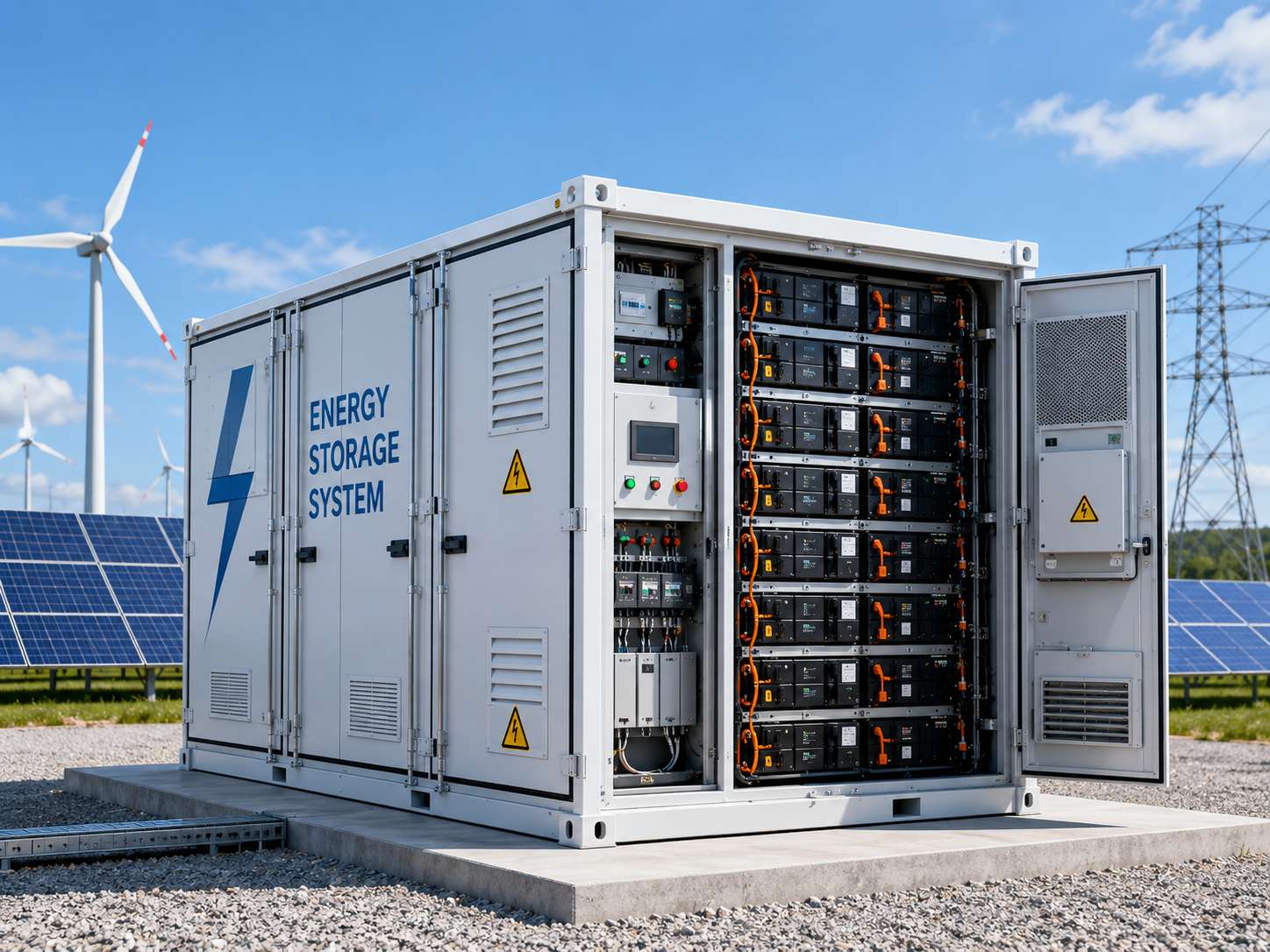
Los centros de datos de IA impulsan la demanda de energía
La Inteligencia Artificial se está convirtiendo rápidamente en uno de los mayores impulsores del consumo de electricidad..
Los grandes grupos de entrenamiento de IA requieren enormes cantidades de energía para operar miles de GPU y servidores continuamente.
A medida que la infraestructura de IA se expande, Los sistemas de almacenamiento de energía se utilizan cada vez más para:
- Admite sistemas de energía de respaldo
- Gestionar la demanda máxima de electricidad
- Mejorar la eficiencia energética
- Estabilizar la entrega de energía
Estas aplicaciones imponen enormes exigencias al rendimiento del terminal., especialmente en entornos de alta corriente.
El papel oculto de las conexiones eléctricas
Si bien las baterías de almacenamiento de energía reciben mucha atención, La electricidad solo puede moverse a través de un sistema cuando cada conexión funciona de manera confiable..
Los terminales influyen directamente:
- Eficiencia del sistema
- Seguridad electrica
- Rendimiento térmico
- Requisitos de mantenimiento
- Vida útil del equipo
A medida que los sistemas ESS se vuelven más grandes y sofisticados, Los terminales están pasando de componentes de hardware simples a habilitadores de rendimiento críticos..
Desafíos actuales que enfrentan las terminales de almacenamiento de energía
Requisitos de corriente más altos
Los sistemas modernos de almacenamiento de energía manejan más energía que nunca.
A medida que aumentan las capacidades de la batería y mejoran las velocidades de carga, Los terminales deben transportar de forma segura cargas de corriente significativamente más altas sin sobrecalentarse..
Los diseños de terminales tradicionales pueden tener dificultades para cumplir con los requisitos futuros.
Problemas de gestión térmica
El calor sigue siendo uno de los mayores desafíos en los sistemas eléctricos..
Incluso pequeñas cantidades de resistencia de contacto pueden generar un calor significativo en condiciones de alta corriente..
El calor excesivo puede provocar:
- Eficiencia reducida
- Degradación de materiales
- Fallos de conexión
- Riesgos de seguridad
Los diseños de terminales futuros deben abordar la gestión térmica de manera más efectiva.
Restricciones de espacio
Los fabricantes de almacenamiento de energía buscan continuamente una mayor densidad de potencia..
Esto significa:
- Más poder
- Huellas más pequeñas
- Diseños de gabinetes compactos
Los terminales deben ofrecer mayor rendimiento ocupando menos espacio.
Expectativas de confiabilidad a largo plazo
Se espera que muchos proyectos comerciales de ESS funcionen durante 15 a 20 años.
Durante este periodo, Los terminales deben soportar:
- Miles de ciclos de carga
- Fluctuaciones de temperatura
- Estrés mecánico
- Exposición ambiental
La confiabilidad se ha convertido en un requisito de diseño clave.
Tendencia #1 – Mayor capacidad de carga de corriente
Crecimiento del almacenamiento de energía a escala de megavatios
Los proyectos de almacenamiento de energía continúan aumentando.
Grandes instalaciones de baterías que respaldan a los servicios públicos., instalaciones industriales, y los centros de datos de IA a menudo operan a niveles de potencia extremadamente altos.
A medida que aumentan las necesidades actuales, Los diseños de terminales deben evolucionar en consecuencia..
Diseños de conductores más grandes
Las futuras terminales de almacenamiento de energía contarán con:
- Secciones de conductores aumentadas
- Rutas actuales optimizadas
- Geometrías de contacto mejoradas
Estas mejoras ayudan a reducir la resistencia y mejorar las capacidades de manejo actuales..
Materiales avanzados de alta conductividad
La selección de materiales jugará un papel importante en el futuro desarrollo de terminales..
El cobre electrolítico sigue siendo el material preferido debido a su:
- Excelente conductividad
- Baja resistencia
- Disipación de calor superior
Las aleaciones de cobre avanzadas también pueden ganar popularidad al combinar una alta conductividad con una resistencia mecánica mejorada..
Tendencia #2 – Tecnología de conexión de baja resistencia
Por qué es importante la resistencia al contacto
Cada conexión eléctrica introduce cierta resistencia..
Aunque los valores de resistencia pueden parecer pequeños, su impacto se vuelve significativo en aplicaciones de alta corriente.
Una mayor resistencia resulta en:
- Pérdida de energía
- Generación de calor
- Eficiencia reducida
Las tecnologías de terminales futuras se centrarán en gran medida en minimizar la resistencia de contacto..
Ingeniería avanzada de superficies de contacto
Los ingenieros están desarrollando nuevos diseños de superficies que mejoran la calidad del contacto..
Las innovaciones incluyen:
- Presión de contacto optimizada
- Superficies de contacto mejoradas
- Distribución actual mejorada
Estos desarrollos ayudan a maximizar el rendimiento eléctrico..
Mejoras en la fabricación de precisión
Las modernas tecnologías de estampado permiten tolerancias de fabricación más estrictas que nunca..
La precisión mejorada da como resultado:
- Mejor ajuste
- Conexiones más estables
- Menor resistencia
- Mayor consistencia
Las futuras terminales de almacenamiento de energía dependerán cada vez más de técnicas de fabricación de precisión.
Tendencia #3 – Diseño de gestión térmica mejorado
Aumento de la densidad de energía
La densidad de potencia continúa aumentando en toda la industria del almacenamiento de energía..
Se almacena más energía en espacios más pequeños, lo que resulta en mayores desafíos térmicos.
Optimización de la disipación de calor
Las futuras terminales se diseñarán teniendo en cuenta la gestión térmica como consideración principal.
Las posibles mejoras incluyen:
- Áreas de contacto más grandes
- Vías de flujo de calor mejoradas
- Geometría del conductor mejorada
Estas características ayudan a reducir el aumento de temperatura durante el funcionamiento..
Selección de materiales para rendimiento térmico
El cobre sigue siendo el material preferido debido a su excelente conductividad térmica..
Las investigaciones futuras también pueden explorar:
- Materiales conductores híbridos
- Aleaciones avanzadas
- Soluciones compuestas
Estas innovaciones podrían mejorar aún más las capacidades de disipación de calor..
Tendencia #4 – Miniaturización sin pérdida de rendimiento
Sistemas compactos de almacenamiento de energía
Los sistemas de almacenamiento de energía residenciales y comerciales son cada vez más compactos.
Los clientes quieren:
- Gabinetes más pequeños
- Espacio de instalación reducido
- Estética mejorada
Sin embargo, Los sistemas más pequeños aún requieren un alto rendimiento..
Desafíos de los componentes más pequeños
La miniaturización introduce varios desafíos de ingeniería.:
- Mayor densidad de corriente
- Capacidad de refrigeración limitada
- Espacio mecánico reducido
Mantener el rendimiento se vuelve cada vez más difícil.
Tecnología de estampado de precisión
Las tecnologías de estampado avanzadas permiten a los fabricantes producir:
- Estructuras de paredes delgadas
- Geometrías complejas
- Diseños de terminales compactos
Estas capacidades permitirán que los futuros terminales ofrezcan un alto rendimiento en espacios más pequeños..
Tendencia #5 – Terminales Inteligentes con Monitoreo Integrado
El cambio hacia la infraestructura inteligente
Los sistemas de almacenamiento de energía son cada vez más inteligentes.
Los operadores esperan cada vez más capacidades de monitoreo en tiempo real y mantenimiento predictivo..
Es probable que los terminales pasen a formar parte de este ecosistema inteligente.
Sensores integrados
Los futuros terminales podrán incorporar sensores capaces de medir:
- Temperatura
- Voltaje
- Actual
- Condición de contacto
Estos datos pueden proporcionar información valiosa sobre el rendimiento de la conexión..
Monitoreo de salud en tiempo real
Los terminales inteligentes podrían monitorear continuamente la calidad de la conexión.
Los beneficios incluyen:
- Detección temprana de fallas
- Planificación de mantenimiento mejorada
- Tiempo de inactividad reducido
- Seguridad mejorada
Esta tendencia se alinea estrechamente con la transformación digital más amplia que se está produciendo en toda la industria energética..
Tendencia #6 – Mantenimiento predictivo asistido por IA
Limitaciones de mantenimiento tradicional
Históricamente, El mantenimiento ha sido reactivo..
Los problemas a menudo se descubren sólo después de que se produce una falla..
Este enfoque puede resultar en:
- Tiempo de inactividad inesperado
- Reparaciones costosas
- Productividad reducida
Sistemas de monitoreo impulsados por IA
La inteligencia artificial está cambiando la forma en que se realiza el mantenimiento de los equipos.
Analizando datos operativos., Los sistemas de inteligencia artificial pueden identificar patrones que los humanos pueden pasar por alto.
Predecir fallas de conexión antes de que ocurran
Los futuros sistemas de almacenamiento de energía pueden utilizar IA para monitorear los indicadores de rendimiento de la terminal, como:
- Tendencias de temperatura
- Cambios de resistencia
- Fluctuaciones actuales
Cuando se detectan patrones anormales, Los equipos de mantenimiento pueden intervenir antes de que se produzcan fallos..
Este enfoque mejora la confiabilidad al tiempo que reduce los costos de mantenimiento..
Tendencia #7 – Tecnologías avanzadas de revestimiento de superficies
El papel del tratamiento de superficies
El revestimiento de superficies desempeña un papel fundamental en el rendimiento del terminal.
El recubrimiento adecuado ayuda a mejorar:
- Resistencia a la corrosión
- Conductividad
- Durabilidad
- Vida útil
Estañado de próxima generación
El estañado sigue siendo el tratamiento superficial más utilizado en terminales de almacenamiento de energía.
Los avances futuros pueden proporcionar:
- Mejor resistencia al desgaste
- Protección mejorada contra la oxidación
- Fiabilidad mejorada a largo plazo
Soluciones de revestimiento de plata e híbridos
Para aplicaciones de alto rendimiento, ofertas de baño de plata:
- Conductividad excepcional
- Baja resistencia de contacto
- Rendimiento térmico superior
Las tecnologías de revestimiento híbrido pueden volverse cada vez más comunes en los sistemas de almacenamiento de energía premium.
Tendencia #8 – Materiales Sostenibles y Ecológicos
Requisitos de sostenibilidad global
La responsabilidad medioambiental se está convirtiendo en un factor importante en las decisiones de fabricación..
Los gobiernos y los clientes exigen:
- Menores emisiones
- Residuos reducidos
- Prácticas de producción sostenible
Materiales terminales reciclables
El cobre es altamente reciclable y puede reutilizarse repetidamente sin una pérdida significativa de rendimiento..
Esto hace que los terminales de cobre sean atractivos para proyectos ambientalmente conscientes..
Procesos de fabricación ecológicos
Los futuros fabricantes de terminales se centrarán en:
- Eficiencia de materiales
- Producción energéticamente eficiente
- Reducción de la generación de chatarra
- Prácticas de abastecimiento sostenible
Estos esfuerzos respaldan iniciativas ESG más amplias en toda la industria energética..
Tendencia #9 – Terminales personalizados para aplicaciones emergentes
El almacenamiento de energía no es único para todos
Las diferentes aplicaciones de almacenamiento de energía tienen requisitos únicos.
Los ejemplos incluyen:
- ESS a escala de servicios públicos
- Almacenamiento de baterías residenciales
- Sistemas de energía comerciales.
- Infraestructura de carga de vehículos eléctricos
- Centros de datos de IA
Cada aplicación presenta distintos desafíos de diseño.
Demanda de diseños personalizados
Los terminales estándar no siempre pueden cumplir con los requisitos especializados.
Los proyectos futuros requieren cada vez más:
- Formas personalizadas
- Métodos de montaje especializados
- Calificaciones actuales únicas
- Materiales para aplicaciones específicas
Ciclos de desarrollo de productos más rápidos
Los clientes esperan un rápido desarrollo de productos.
Fabricantes capaces de proporcionar:
- Soporte de ingeniería
- creación rápida de prototipos
- Desarrollo de herramientas
- Lanzamientos rápidos de producción
tendrá importantes ventajas competitivas.
Cómo la fabricación de precisión respalda el desarrollo de terminales futuras
Tecnología de estampado progresivo
La estampación progresiva sigue siendo uno de los métodos más eficientes para fabricar terminales de precisión..
Los beneficios incluyen:
- Alta velocidad de producción
- Excelente consistencia
- Menores costos de producción
- Geometrías de piezas complejas
Producción automatizada de alta velocidad
La automatización mejora:
- Eficiencia de producción
- Consistencia de calidad
- control de costos
Las fábricas del futuro seguirán aumentando los niveles de automatización.
Control dimensional de precisión
A medida que los diseños de terminales se vuelven más sofisticados, La precisión dimensional se vuelve cada vez más importante..
Los sistemas de inspección avanzados ayudan a mantener tolerancias estrictas durante toda la producción..
Calidad constante del producto
Los futuros proyectos de almacenamiento de energía exigen componentes extremadamente fiables.
La calidad de fabricación constante reduce las fallas en el campo y mejora la confianza del cliente..
Capacidad de producción escalable
A medida que se acelera el despliegue global de ESS, Los fabricantes deben ser capaces de soportar una producción de gran volumen manteniendo al mismo tiempo los estándares de calidad..
¿Por qué elegir Qianwei para el futuro? Terminal de almacenamiento de energía Proyectos
A medida que la tecnología de terminales evoluciona, elegir el socio de fabricación adecuado se vuelve cada vez más importante.
Experiencia en terminales de cobre de precisión
Qianwei se especializa en terminales de cobre estampados con precisión diseñados para aplicaciones eléctricas exigentes..
Desarrollo de terminales de almacenamiento de energía personalizados
Trabajamos estrechamente con los clientes para desarrollar soluciones personalizadas para proyectos de almacenamiento de energía..
Diseño avanzado de herramientas y moldes
Nuestras capacidades de herramientas internas ayudan a acelerar los plazos de desarrollo y mejorar la eficiencia de fabricación..
OEM & Soporte de fabricación ODM
Apoyamos proyectos de terminales tanto estándar como totalmente personalizados..
Capacidades de prueba integrales
Para garantizar la confiabilidad a largo plazo, Ofrecemos servicios de pruebas integrales que incluyen:
Inspección dimensional
Verificar el cumplimiento de los planos de ingeniería..
Pruebas de resistencia de contacto
Evaluación del rendimiento eléctrico.
Prueba de fuerza de extracción
Evaluación de la resistencia de retención mecánica..
Pruebas de ciclos térmicos
Simulación de condiciones de funcionamiento a largo plazo.
Pruebas de vibración
Validación de la confiabilidad bajo tensión mecánica..
Prueba de niebla salina
Evaluación de la resistencia a la corrosión en entornos hostiles..
Estas capacidades ayudan a garantizar que cada terminal cumpla con los exigentes requisitos de rendimiento..
Conclusión
El futuro del almacenamiento de energía depende de algo más que baterías avanzadas y software inteligente. Las conexiones eléctricas confiables siguen siendo fundamentales para el rendimiento del sistema., eficiencia, y seguridad.
A medida que la tecnología de almacenamiento de energía continúa evolucionando, La tecnología de terminales avanza en varias direcciones importantes.:
- Mayor capacidad de carga de corriente
- Menor resistencia de contacto
- Gestión térmica mejorada
- Capacidades de monitoreo inteligente
- Mantenimiento predictivo asistido por IA
- Prácticas de fabricación sostenibles
- Soluciones personalizadas para aplicaciones específicas
Estas innovaciones ayudarán a respaldar la próxima generación de sistemas de energía renovable., Infraestructura impulsada por IA, y redes eléctricas inteligentes.
Aunque los terminales eléctricos pueden ser componentes pequeños, su impacto en la confiabilidad y el rendimiento del sistema es enorme. Los fabricantes que inviertan hoy en tecnologías de terminales avanzadas estarán mejor posicionados para satisfacer las crecientes demandas de la industria de almacenamiento de energía del mañana..
Preguntas frecuentes
¿Qué son las terminales de almacenamiento de energía??
Los terminales de almacenamiento de energía son componentes conductores que se utilizan para conectar baterías., barras colectoras, cables, inversores, y otros equipos eléctricos dentro de un sistema de almacenamiento de energía de batería (BESS). Proporcionan vías eléctricas seguras que permiten una transmisión de energía eficiente en todo el sistema..
¿Por qué son importantes los terminales en los sistemas de almacenamiento de energía en baterías??
Los terminales afectan directamente la conductividad eléctrica., generación de calor, eficiencia, y seguridad. Un terminal de alta calidad ayuda a minimizar la pérdida de energía, reducir los requisitos de mantenimiento, y mejorar la confiabilidad general del sistema.
¿Qué materiales se utilizan habitualmente para las terminales de almacenamiento de energía??
Los materiales más comunes incluyen:
- Cobre electrolítico
- Aleaciones de cobre
- Aleaciones de aluminio
Generalmente se prefiere el cobre para aplicaciones de alta corriente debido a su conductividad y rendimiento térmico superiores..
¿Por qué se prefiere el cobre para aplicaciones ESS de alta corriente??
Ofertas de cobre:
- Excelente conductividad eléctrica
- Baja resistencia
- Disipación de calor superior
- Larga vida útil
- Alta fiabilidad mecánica
Estas propiedades hacen que el cobre sea ideal para el almacenamiento de energía., energía renovable, y aplicaciones de infraestructura de IA.
¿Cómo afectan los terminales eléctricos a la eficiencia del almacenamiento de energía??
Los terminales eléctricos influyen en la resistencia de contacto.. La menor resistencia reduce la pérdida de energía y la generación de calor., permitiendo que se entregue más energía de manera eficiente en todo el sistema.
¿Qué es la resistencia de contacto y por qué es importante??
La resistencia de contacto es la resistencia creada donde se encuentran dos superficies conductoras.. Una resistencia de contacto excesiva puede provocar:
- Pérdida de energía
- Aumento de temperatura
- Eficiencia reducida
- Fallo de conexión
Mantener una baja resistencia de contacto es esencial para los sistemas de almacenamiento de energía de alta corriente.
¿A qué desafíos se enfrentan las terminales de almacenamiento de energía??
Los terminales ESS modernos deben resistir:
- Cargas de alta corriente
- Ciclos frecuentes de carga/descarga
- Ciclismo térmico
- Vibración mecánica
- Ambientes al aire libre
- Requisitos de larga vida útil
Estos desafíos impulsan la innovación continua en el diseño de terminales..
¿Qué son los terminales inteligentes??
Los terminales inteligentes son terminales de última generación equipados con sensores que monitorean:
- Temperatura
- Voltaje
- Flujo actual
- Calidad de conexión
Proporcionan datos en tiempo real que ayudan a mejorar el mantenimiento y la confiabilidad del sistema..
¿Cómo puede la IA mejorar la confiabilidad del terminal??
La IA puede analizar datos operativos de sistemas de almacenamiento de energía para detectar patrones anormales y predecir fallas antes de que ocurran.. Esto permite el mantenimiento predictivo y reduce el tiempo de inactividad no planificado..
¿Qué revestimiento es mejor para las terminales de almacenamiento de energía??
El mejor revestimiento depende de la aplicación.:
- Estañado para una protección contra la corrosión rentable
- Chapado en plata para máxima conductividad.
- Niquelado para ambientes de alta temperatura
Los terminales de cobre estañado son la solución más utilizada en aplicaciones ESS.
¿Por qué se usa comúnmente el estañado en terminales de cobre??
El estañado proporciona:
- Resistencia a la corrosión
- Rendimiento eléctrico estable
- Buena soldabilidad
- Menor costo en comparación con el baño de plata.
Ofrece un excelente equilibrio entre rendimiento y asequibilidad..
Qué es el ciclo térmico y cómo afecta a los terminales?
El ciclo térmico se refiere al calentamiento y enfriamiento repetidos durante la operación.. Con el tiempo, Las fluctuaciones de temperatura pueden causar expansión y contracción de los materiales., potencialmente afectando la estabilidad de la conexión.
Los terminales deben diseñarse para soportar miles de ciclos térmicos sin degradación..
¿Cómo se prueban los terminales de almacenamiento de energía??
Los métodos de prueba comunes incluyen:
- Inspección dimensional
- Pruebas de resistencia de contacto
- Prueba de fuerza de extracción
- Pruebas de capacidad de carga actual
- Prueba de aumento de temperatura
- Pruebas de ciclos térmicos
- Pruebas de vibración
- Prueba de niebla salina
Estas pruebas ayudan a verificar, mecánico, y desempeño ambiental.
¿Por qué es importante la resistencia a las vibraciones para los terminales ESS??
Los sistemas de almacenamiento de energía pueden experimentar vibraciones durante el transporte., instalación, o operación. Los terminales resistentes a las vibraciones ayudan a evitar que se aflojen y mantienen conexiones eléctricas estables con el tiempo..
¿Se pueden personalizar los terminales de almacenamiento de energía??
Sí. Muchos proyectos de almacenamiento de energía requieren terminales personalizados adaptados a:
- Calificaciones actuales
- Tamaños de cables
- Requisitos de instalación
- Limitaciones de espacio
- Condiciones ambientales
Las soluciones personalizadas a menudo mejoran tanto el rendimiento como la eficiencia del ensamblaje..
¿Qué papel juegan las terminales en los sistemas de almacenamiento de energía renovable??
Los terminales conectan las baterías., inversores, y equipos de distribución de energía, Garantizar una transferencia de energía fiable dentro de los sistemas de almacenamiento de energía solar y eólica.. Su rendimiento impacta directamente en la eficiencia y confiabilidad del sistema..
¿Cómo apoyan las terminales de almacenamiento de energía los centros de datos impulsados por IA??
Los centros de datos de IA consumen enormes cantidades de electricidad. Los terminales de almacenamiento de energía ayudan a entregar energía de alta corriente de manera segura y eficiente entre baterías, sistemas de distribución de energía, e infraestructura de energía de respaldo.
¿Cuál es la vida útil de una terminal de almacenamiento de energía??
La duración de la vida depende de factores como:
- Selección de materiales
- Revestimiento de superficie
- Condiciones ambientales
- Corriente de funcionamiento
- Calidad de instalación
Los terminales de alta calidad en sistemas diseñados adecuadamente pueden funcionar de manera confiable durante 15 a 20 años o más.
¿Qué tecnologías futuras influirán en el diseño de terminales de almacenamiento de energía??
Las tecnologías emergentes incluyen:
- Terminales de monitorización inteligentes
- Mantenimiento predictivo asistido por IA
- Materiales conductores avanzados
- Diseños compactos de alta corriente
- Tecnología de sensores integrada
- Procesos de fabricación sostenibles
Estas innovaciones darán forma a la próxima generación de soluciones de conectividad ESS.
¿Qué deben considerar los compradores al seleccionar un fabricante de terminales de almacenamiento de energía??
Las consideraciones clave incluyen:
- Experiencia en materiales
- Capacidades de fabricación de precisión
- Soporte de desarrollo personalizado
- Experiencia en diseño de herramientas y moldes.
- Sistemas de gestión de calidad.
- Capacidades de prueba
- Capacidad de producción
- Experiencia en la industria
Elegir un fabricante experimentado ayuda a reducir los riesgos del proyecto y mejorar el rendimiento del sistema a largo plazo..
¿Cuál es la diferencia entre terminales estándar y terminales de almacenamiento de energía personalizados??
Los terminales estándar están diseñados para aplicaciones de uso general., mientras que los terminales de almacenamiento de energía personalizados están diseñados para clasificaciones de corriente específicas, entornos de instalación, y requisitos de rendimiento. Las soluciones personalizadas a menudo proporcionan una mayor confiabilidad, eficiencia, y utilización del espacio en proyectos ESS.
¿Cómo afecta el diseño del terminal a la seguridad de la batería??
Un terminal bien diseñado reduce la resistencia, previene el sobrecalentamiento, y mantiene un contacto eléctrico estable. Un diseño deficiente de los terminales puede aumentar el riesgo de formación de arcos, fuga térmica, y fallo del sistema, hacer de la calidad del terminal un factor importante en la seguridad de la batería.

