

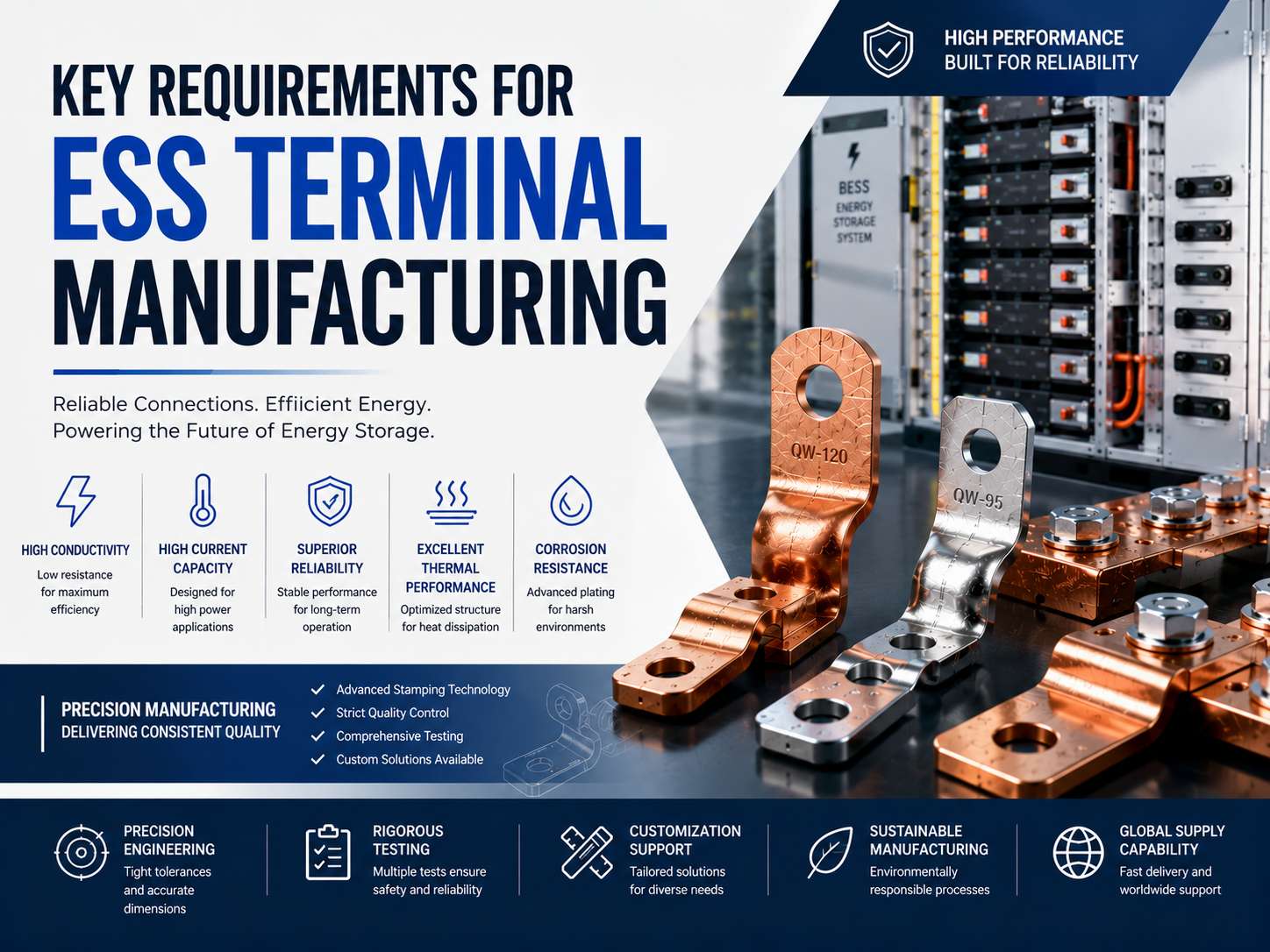
A medida que la industria mundial del almacenamiento de energía continúa expandiéndose, Sistemas de almacenamiento de energía en baterías (BESS) se están convirtiendo en una parte fundamental de la infraestructura energética moderna. Desde proyectos de energía renovable y estaciones de almacenamiento a escala de servicios públicos hasta Centros de datos de IA y redes de carga de vehículos eléctricos, Los sistemas de almacenamiento de energía están ayudando a equilibrar el suministro y la demanda de electricidad de manera más eficiente que nunca..
Detrás de cada sistema de almacenamiento de energía exitoso hay una conexión eléctrica confiable. Si bien las baterías suelen recibir la mayor atención, los terminales que conectan las baterías, barras colectoras, inversores, y los equipos de distribución de energía son igualmente importantes.
Un terminal mal diseñado puede provocar un calor excesivo, pérdida de energía, falla del equipo, e incluso riesgos de seguridad. Por otro lado, un terminal ESS de alta calidad ayuda a garantizar una transmisión de energía eficiente, confiabilidad a largo plazo, y rendimiento estable del sistema.
Entonces, ¿Qué hace exactamente a una buena terminal de almacenamiento de energía?? En este artículo, Exploraremos los requisitos clave para la fabricación de terminales ESS y explicaremos por qué estos factores son importantes para los proyectos modernos de almacenamiento de energía..
Cuáles son Terminales ESS?
Los terminales ESS son componentes de conexión eléctrica que se utilizan en los sistemas de almacenamiento de energía de baterías..
Su función principal es transferir energía eléctrica de manera segura y eficiente entre diferentes partes del sistema., incluido:
- Módulos de batería
- Paquetes de baterías
- Barras colectoras
- Inversores
- Sistemas de conversión de energía. (piezas)
- Equipos de distribución
Aunque puedan parecer simples piezas metálicas, Los terminales ESS están diseñados para manejar grandes cantidades de corriente en condiciones de funcionamiento exigentes..
Aplicaciones típicas de terminales ESS
Hoy, Los terminales ESS se pueden encontrar en una amplia gama de aplicaciones:
- Sistemas de almacenamiento de energía en baterías a gran escala
- Proyectos de almacenamiento de energía comercial e industrial.
- Sistemas de almacenamiento de baterías residenciales.
- Instalaciones solares más almacenamiento
- Sistemas de almacenamiento de energía eólica
- Centros de datos de IA
- carga de vehículos eléctricos infraestructura
A medida que estas industrias continúan creciendo, La demanda de soluciones terminales fiables está aumentando rápidamente..
Por qué los terminales ESS son diferentes de los terminales estándar
A diferencia de lo ordinario terminales electricos, Los terminales ESS enfrentan requisitos mucho más estrictos.
A menudo necesitan manejar:
- Corrientes más altas
- Vida útil más larga
- Ciclos frecuentes de carga y descarga.
- Condiciones ambientales duras
- Normas de seguridad más estrictas
Debido a estos desafíos, La fabricación de terminales ESS requiere materiales avanzados., procesos de producción de precisión, y riguroso control de calidad.
.jpg)
Requisito #1 – Alta conductividad eléctrica
Uno de los requisitos más importantes para cualquier terminal ESS es la conductividad eléctrica..
Cuanto mejor sea la conductividad, más eficientemente la electricidad podrá fluir a través de la conexión.
Por qué es importante la baja resistencia
Siempre que la corriente eléctrica pase por un punto de conexión, se crea cierta resistencia.
La alta resistencia puede causar:
- Pérdida de energía
- Generación de calor
- Eficiencia reducida
- inestabilidad del sistema
Incluso un pequeño aumento en la resistencia de contacto puede convertirse en un problema grave cuando cientos o miles de amperios fluyen a través de una conexión..
Por este motivo, el diseño de baja resistencia es fundamental para las terminales de almacenamiento de energía..
La selección de materiales es fundamental
El material utilizado para un terminal afecta directamente a su conductividad.
Cobre electrolítico
El cobre electrolítico es el material más común utilizado en los terminales ESS porque ofrece:
- Excelente conductividad
- Baja resistencia
- Rendimiento térmico superior
- Fiabilidad a largo plazo
Sigue siendo la opción preferida para aplicaciones de alta corriente..
Aleaciones de cobre de alta conductividad
En algunas aplicaciones, Las aleaciones de cobre se utilizan para mejorar la resistencia mecánica manteniendo una buena conductividad..
Estos materiales proporcionan un equilibrio entre el rendimiento eléctrico y la durabilidad estructural..
Alternativas de aluminio
El aluminio es más ligero y menos costoso que el cobre., pero su conductividad es menor.
Para la mayoría de aplicaciones ESS de alta corriente, el cobre sigue siendo la solución preferida.
Requisito #2 – Alta capacidad de carga de corriente
A medida que los sistemas de almacenamiento de energía crecen, Los terminales deben poder transportar más corriente de forma segura..
Demandas de energía crecientes
Los sistemas modernos de almacenamiento de energía en baterías son significativamente más grandes que los instalados hace apenas unos años..
Los proyectos de ESS a gran escala a menudo operan a:
- Cientos de amperios
- Miles de amperios
- Niveles de potencia a escala de megavatios
Los terminales deben diseñarse para soportar estas cargas eléctricas crecientes..
Diseño de conductores optimizado
La capacidad de transporte de corriente de un terminal depende en gran medida de su diseño.
Los factores importantes incluyen:
- Espesor del material
- Ancho
- Área de contacto
- Geometría de la ruta actual
El aumento de la sección transversal del conductor ayuda a reducir la resistencia y mejorar la capacidad actual..
Prevenir el sobrecalentamiento
Los altos niveles de corriente generan calor de forma natural.
El diseño adecuado ayuda a controlar el aumento de temperatura y garantiza un funcionamiento seguro durante largos períodos.
Requisito #3 – Excelente resistencia mecánica
El rendimiento eléctrico es importante, pero la resistencia mecánica es igualmente crítica.
Los terminales deben mantener conexiones estables durante toda la vida útil del sistema..
Fiabilidad estructural
Los terminales ESS experimentan diversas tensiones mecánicas durante:
- Transporte
- Instalación
- Operación
- Mantenimiento
Las estructuras débiles pueden provocar fallos de conexión y riesgos de seguridad..
Resistencia a las fuerzas de tracción y torsión
Los cables conectados a terminales pueden ejercer fuerzas significativas.
Un terminal de alta calidad debe resistir:
- Fuerzas de extracción
- Par de apriete
- Vibración mecánica
sin perder la integridad de la conexión.
Equilibrio de fuerza y conductividad
Los fabricantes deben equilibrar cuidadosamente:
- Conductividad eléctrica
- Resistencia mecánica
- Formabilidad
para lograr un rendimiento óptimo.
Requisito #4 – Rendimiento térmico superior
El calor es uno de los mayores enemigos de las conexiones eléctricas.
A medida que aumentan los niveles actuales, La gestión térmica se vuelve cada vez más importante..
Generación de calor en los puntos de conexión
Cada conexión eléctrica genera algo de calor..
La mala calidad del contacto aumenta la resistencia., lo que lleva a:
- Temperaturas más altas
- Eficiencia reducida
- Degradación más rápida de los componentes
Desafíos de la gestión térmica
Los armarios ESS modernos son cada vez más compactos.
Esto significa:
- Mayor densidad de potencia
- Menos flujo de aire
- Calor más concentrado
El diseño de terminales debe ayudar a gestionar estos desafíos térmicos.
Mejor disipación del calor
Los futuros terminales ESS están cada vez más diseñados para mejorar el flujo de calor.
Las mejoras de diseño comunes incluyen:
- Áreas de contacto más grandes
- Rutas actuales optimizadas
- Geometría del conductor mejorada
Estas características ayudan a reducir las temperaturas de funcionamiento..
Resistencia al ciclo térmico
Los sistemas de almacenamiento de energía experimentan ciclos constantes de calentamiento y enfriamiento..
Con el tiempo, Estos cambios de temperatura pueden estresar los materiales y las conexiones..
Los terminales de alta calidad deben mantener el rendimiento tras miles de ciclos térmicos.
Requisito #5 – Resistencia a la corrosión y protección de superficies
Las terminales ESS a menudo operan en entornos desafiantes.
Sin la protección adecuada, la corrosión puede reducir el rendimiento y acortar la vida útil.
Desafíos ambientales
Los terminales pueden estar expuestos a:
- Humedad
- Condensación
- Ambientes costeros
- Contaminación industrial
Todos estos factores pueden acelerar la corrosión..
Opciones comunes de revestimiento de superficies
Estañado
El estañado es el tratamiento superficial más común para los terminales ESS.
Los beneficios incluyen:
- Resistencia a la corrosión
- Conductividad estable
- Buena soldabilidad
- Rentabilidad
Chapado en plata
El baño de plata proporciona:
- Excelente conductividad
- Baja resistencia de contacto
- Rendimiento de alta corriente
A menudo se utiliza en aplicaciones premium..
Niquelado
El niquelado ofrece una excelente resistencia a ambientes de alta temperatura..
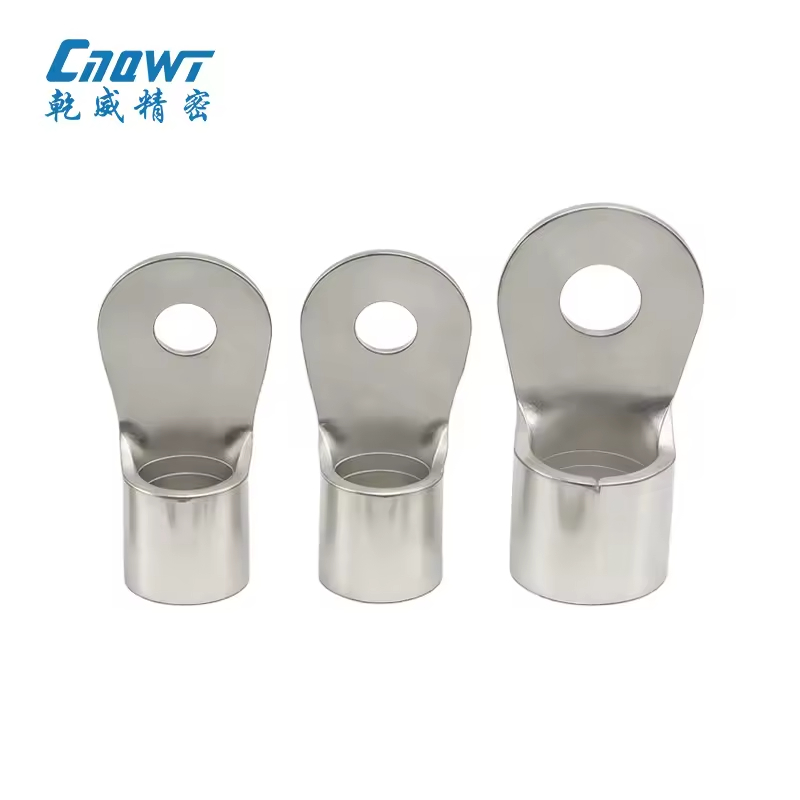
Por qué es importante el tratamiento de superficies
El recubrimiento adecuado ayuda a garantizar:
- Rendimiento eléctrico estable
- Larga vida útil
- Requisitos de mantenimiento reducidos
Requisito #6 – Fabricación de precisión y tolerancias estrictas
En sistemas de almacenamiento de energía., Incluso pequeñas variaciones dimensionales pueden afectar la calidad de la conexión..
La fabricación de precisión es esencial.
Por qué es importante la precisión
Las dimensiones precisas ayudan a lograr:
- Mejor presión de contacto
- Rendimiento eléctrico estable
- Calidad de montaje constante
Una precisión deficiente puede provocar conexiones sueltas y una mayor resistencia..
Tecnología de estampado progresivo
El estampado progresivo se utiliza ampliamente para fabricar terminales ESS.
Las ventajas incluyen:
- Alta eficiencia de producción
- Excelente consistencia
- Geometrías complejas
- Menores costos de producción
Sistemas de inspección automatizados
Los fabricantes modernos utilizan cada vez más equipos de inspección automatizados para verificar:
- Dimensiones
- Calidad superficial
- Consistencia del producto
Esto ayuda a mantener altos estándares de calidad..
Requisito #7 – Fiabilidad a largo plazo
La mayoría de los proyectos de almacenamiento de energía están diseñados para funcionar durante muchos años..
Los terminales deben ofrecer un rendimiento confiable durante todo el ciclo de vida del sistema..
Expectativas de larga vida útil
Se espera que muchas instalaciones de ESS funcionen durante:
- 15 años
- 20 años
- O incluso más
La confiabilidad del terminal se vuelve extremadamente importante durante estos largos períodos.
Riesgos de falla comunes
Los problemas potenciales incluyen:
- Aflojamiento de la conexión
- Oxidación
- Agrietamiento por fatiga
- Daño térmico
El diseño y la fabricación adecuados ayudan a minimizar estos riesgos..
Ingeniería orientada a la confiabilidad
Los terminales ESS confiables están diseñados teniendo en cuenta el rendimiento a largo plazo desde el principio.
Esto incluye una cuidadosa atención a:
- Selección de materiales
- Diseño estructural
- Calidad de fabricación
- Procedimientos de prueba
Requisito #8 – Cumplimiento de los estándares de la industria
Los estándares de la industria ayudan a garantizar la seguridad y la coherencia en todos los proyectos de almacenamiento de energía..
Estándares importantes
Los requisitos comunes incluyen:
Estándares UL
Ampliamente utilizado en América del Norte..
Normas IEC
Comúnmente utilizado en los mercados internacionales..
Cumplimiento de RoHS
Restringe sustancias peligrosas.
Cumplimiento de REACH
Aborda los requisitos de seguridad química..
Por qué es importante el cumplimiento
Ayuda de productos certificados:
- Mejorar la confianza del cliente
- Facilitar el acceso al mercado
- Cumplir con los requisitos del proyecto
El cumplimiento se está convirtiendo cada vez más en un requisito de compra.
.jpg)
Requisito #9 – Capacidades de prueba integrales
Las pruebas son una de las partes más importantes de la fabricación de terminales ESS.
Sin pruebas adecuadas, No se puede garantizar el rendimiento a largo plazo..
Métodos de prueba clave
Inspección dimensional
Verifica la precisión de fabricación..
Pruebas de resistencia de contacto
Mide el rendimiento eléctrico..
Pruebas de capacidad de carga actual
Confirma la capacidad de manejo actual.
Prueba de fuerza de extracción
Evalúa la resistencia mecánica..
Pruebas de ciclos térmicos
Simula condiciones de funcionamiento a largo plazo..
Pruebas de vibración
Garantiza la estabilidad bajo movimiento y golpes..
Prueba de niebla salina
Mide la resistencia a la corrosión..
Pruebas de confiabilidad ambiental
Valida el rendimiento en condiciones desafiantes.
Requisito #10 – Capacidad de personalización
No hay dos proyectos de almacenamiento de energía exactamente iguales.
La personalización es cada vez más importante.
Por qué las soluciones estándar no siempre son suficientes
Diferentes proyectos tienen diferentes requisitos con respecto:
- Calificaciones actuales
- Espacio de instalación
- Tamaños de cables
- Métodos de montaje
Los productos estándar no siempre pueden satisfacer estas necesidades.
Creación y desarrollo rápidos de prototipos
Los clientes esperan cada vez más:
- Soporte de ingeniería rápido
- creación rápida de prototipos
- Ciclos de desarrollo cortos
Los fabricantes con capacidades de herramientas internas pueden responder más rápidamente.
Soporte OEM y ODM
La capacidad de proporcionar soluciones de fabricación personalizadas se ha convertido en una importante ventaja competitiva en la industria de ESS..
Requisitos de fabricación inteligente para futuras terminales ESS
El futuro de la fabricación de terminales es cada vez más inteligente.
Líneas de producción automatizadas
La automatización mejora:
- Productividad
- Consistencia de calidad
- Eficiencia de fabricación
Control de calidad digital
Los sistemas de inspección avanzados brindan monitoreo de calidad en tiempo real durante toda la producción..
Sistemas de Trazabilidad
Los fabricantes modernos implementan cada vez más sistemas de trazabilidad que permiten rastrear los productos durante todo el proceso de fabricación..
Fabricación asistida por IA
La inteligencia artificial está ayudando a los fabricantes a mejorar:
- control de procesos
- Gestión de calidad
- Planificación de la producción
Almacenamiento y logística inteligentes
Los almacenes automatizados ayudan a mejorar:
- Gestión de inventario
- Velocidad de entrega
- Eficiencia de la cadena de suministro
¿Por qué elegir? Precisión de Qianwei para la fabricación de terminales ESS
A medida que la industria del almacenamiento de energía continúa creciendo, elegir el socio de fabricación adecuado se vuelve cada vez más importante.
Qianwei ofrece soporte integral para proyectos de terminales de almacenamiento de energía.
Amplia Experiencia en Terminales de Cobre de Precisión
Nos especializamos en la fabricación.:
- Terminales de cobre
- Terminales de alta corriente
- Soluciones de conexión de almacenamiento de energía
Desarrollo interno de herramientas y moldes
Nuestras capacidades de herramientas internas permiten:
- Desarrollo más rápido
- Mejor control de calidad
- Plazos de entrega reducidos
Tecnología avanzada de estampado progresivo
El equipo de estampado de alta velocidad garantiza:
- Calidad constante
- Alta eficiencia de producción
- Fabricación rentable
Capacidades de prueba integrales
Nuestros servicios de pruebas incluyen:
- Inspección dimensional
- Pruebas de resistencia de contacto
- Prueba de fuerza de extracción
- Pruebas de ciclos térmicos
- Pruebas de vibración
- Prueba de niebla salina
Estas pruebas ayudan a garantizar la confiabilidad del producto en condiciones operativas exigentes..
Entrega rápida y soporte de suministro global
Apoyamos a clientes de todo el mundo con un servicio receptivo y una capacidad de fabricación confiable..
Conclusión
A medida que los sistemas de almacenamiento de energía en baterías continúan expandiéndose a nivel mundial, Las exigencias impuestas a los terminales ESS están aumentando rápidamente..
Las modernas terminales de almacenamiento de energía deben ofrecer:
- Alta conductividad
- Alta capacidad de corriente
- Excelente resistencia mecánica
- Rendimiento térmico superior
- Resistencia a la corrosión
- Calidad de fabricación de precisión
- Fiabilidad a largo plazo
Al mismo tiempo, personalización, pruebas integrales, y las capacidades de fabricación inteligente son cada vez más importantes.
Aunque los terminales ESS representan sólo una pequeña parte de un sistema de almacenamiento de energía, su impacto en el rendimiento, eficiencia, y la seguridad es importante. Elegir un fabricante con una sólida experiencia en ingeniería y capacidades de producción avanzadas puede ayudar a garantizar el éxito a largo plazo de cualquier proyecto de almacenamiento de energía..
Preguntas frecuentes
¿Qué es una terminal ESS??
Una terminal ESS (Terminal del sistema de almacenamiento de energía) Es un componente de conexión conductor que se utiliza para transferir energía eléctrica entre baterías., barras colectoras, inversores, y otros equipos dentro de un sistema de almacenamiento de energía de batería. Garantiza seguridad, estable, y transmisión de energía eficiente.
¿Por qué son importantes los terminales ESS en los sistemas de almacenamiento de energía en baterías??
Los terminales ESS afectan directamente:
- Eficiencia eléctrica
- Fiabilidad del sistema
- Generación de calor
- Seguridad operativa
Un terminal de alta calidad minimiza la resistencia, reduce la pérdida de energía, y mejora el rendimiento a largo plazo de todo el sistema de almacenamiento.
¿Qué materiales se utilizan habitualmente para los terminales ESS??
Los materiales más comunes incluyen:
- Cobre electrolítico
- Aleaciones de cobre de alta conductividad
- Aleaciones de aluminio
Entre estos materiales, El cobre electrolítico es ampliamente preferido debido a su excelente conductividad eléctrica y rendimiento térmico..
¿Por qué el cobre es el material preferido para las terminales de almacenamiento de energía??
El cobre ofrece varias ventajas.:
- Alta conductividad eléctrica
- Baja resistencia de contacto
- Excelente disipación de calor
- Fuerte resistencia a la corrosión
- Larga vida útil
Estas características hacen que el cobre sea ideal para aplicaciones ESS de alta corriente..
¿Cuánta corriente puede manejar un terminal ESS??
La capacidad actual depende de:
- tipo de material
- Tamaño de terminal
- Área transversal
- Revestimiento de superficie
- Temperatura de funcionamiento
Se pueden diseñar terminales ESS personalizados para soportar cientos o incluso miles de amperios para proyectos de almacenamiento de energía a gran escala..
¿Qué causa el sobrecalentamiento de los terminales ESS??
El sobrecalentamiento suele ser causado por:
- Resistencia de contacto excesiva
- Conexiones sueltas
- Diseño de terminal de tamaño insuficiente
- Mala conductividad del material.
- Altas corrientes de funcionamiento
La ingeniería y la fabricación adecuadas ayudan a prevenir estos problemas..
¿Qué es la resistencia de contacto y por qué es importante??
La resistencia de contacto es la resistencia que se produce cuando dos superficies conductoras se encuentran..
La baja resistencia de contacto ayuda:
- Mejorar la eficiencia eléctrica
- Reducir la generación de calor
- Prolongar la vida útil de los componentes
- Aumentar la confiabilidad del sistema
Para sistemas de almacenamiento de energía., mantener una baja resistencia de contacto es fundamental.
¿Qué revestimiento se utiliza habitualmente en los terminales ESS??
Las opciones de revestimiento más comunes incluyen:
Estañado
- Rentable
- Resistente a la corrosión
- Excelente para la mayoría de aplicaciones ESS
Chapado en plata
- Mayor conductividad
- Menor resistencia de contacto
- Adecuado para sistemas premium de alta corriente
Niquelado
- Excelente resistencia a altas temperaturas
- Durabilidad mejorada
¿Por qué el estañado es popular para los terminales ESS??
El estañado proporciona un excelente equilibrio de:
- Conductividad
- Protección contra la corrosión
- Soldabilidad
- Eficiencia de costes
Esto lo convierte en el tratamiento de superficie más utilizado en la industria del almacenamiento de energía..
¿Cuánto duran normalmente los terminales ESS??
Un terminal ESS diseñado y fabricado correctamente a menudo puede funcionar de manera confiable durante:
- 15 años
- 20 años
- O incluso más
La vida útil real depende de las condiciones de funcionamiento., exposición ambiental, y prácticas de mantenimiento.
¿Qué pruebas se realizan en los terminales ESS??
Los procedimientos de prueba comunes incluyen:
- Inspección dimensional
- Pruebas de resistencia de contacto
- Prueba de fuerza de extracción
- Pruebas de capacidad de carga actual
- Prueba de aumento de temperatura
- Pruebas de ciclos térmicos
- Pruebas de vibración
- Prueba de niebla salina
Estas pruebas verifican, mecánico, y desempeño ambiental.
¿Por qué son importantes las pruebas de ciclo térmico??
Los sistemas de almacenamiento de energía experimentan constantemente ciclos de carga y descarga., que crean fluctuaciones de temperatura.
Las pruebas de ciclos térmicos evalúan la capacidad de un terminal para mantener un rendimiento confiable bajo condiciones repetidas de calentamiento y enfriamiento..
¿Qué es la prueba de fuerza de extracción??
La prueba de fuerza de extracción mide la resistencia mecánica de una conexión terminal.
Esta prueba ayuda a garantizar que los cables permanezcan conectados de forma segura durante la instalación., transporte, y funcionamiento a largo plazo.
¿Cómo afecta la vibración a los terminales ESS??
La vibración puede causar:
- Aflojamiento de la conexión
- Mayor resistencia
- inestabilidad eléctrica
- Fallo prematuro
Las pruebas de vibración ayudan a verificar que los terminales puedan soportar condiciones operativas del mundo real..
¿Se pueden personalizar los terminales ESS??
Sí. Muchos proyectos de almacenamiento de energía requieren terminales personalizados basados en:
- Requisitos actuales
- Configuración de la batería
- Espacio de instalación
- Tamaño del cable
- Método de montaje
Las soluciones personalizadas a menudo mejoran la eficiencia y simplifican el montaje..
¿Qué industrias utilizan terminales ESS??
Los terminales ESS se utilizan ampliamente en:
- Almacenamiento de energía a escala de servicios públicos
- Sistemas de energía solar
- Almacenamiento de energía eólica
- ESS comercial e industrial
- Almacenamiento de baterías residenciales
- Infraestructura de carga de vehículos eléctricos
- Centros de datos de IA
- Sistemas de energía de respaldo para telecomunicaciones.
¿Qué certificaciones deben cumplir los fabricantes de terminales ESS??
Dependiendo del mercado objetivo, Los fabricantes pueden cumplir con:
- Estándares UL
- Normas IEC
- Requisitos RoHS
- Reglamento REACH
- ISO 9001 Sistemas de Gestión de Calidad
Estas certificaciones ayudan a garantizar la seguridad y la calidad del producto..
¿Qué deben buscar los compradores al elegir un fabricante de terminales ESS??
Los factores clave incluyen:
- Experiencia en materiales
- Capacidades de estampado de precisión
- Desarrollo interno de herramientas.
- Capacidades de prueba de calidad
- Capacidad de producción
- Soporte de personalización
- Experiencia en la industria
- Fiabilidad de entrega
Seleccionar el proveedor adecuado puede reducir significativamente el riesgo del proyecto y mejorar el rendimiento del producto..
¿Por qué es importante la fabricación de precisión para los terminales ESS??
Incluso pequeñas desviaciones dimensionales pueden afectar:
- Presión de contacto
- Conductividad eléctrica
- Consistencia del ensamblaje
La fabricación de precisión garantiza un rendimiento fiable y una durabilidad a largo plazo..
¿Cuáles son las tendencias futuras en la fabricación de terminales ESS??
Las tendencias emergentes incluyen:
- Diseños de terminales de alta corriente
- Terminales inteligentes con sensores integrados
- Mantenimiento predictivo asistido por IA
- Tecnologías avanzadas de revestimiento de superficies
- Sistemas de fabricación automatizados
- Almacenamiento y logística inteligentes
- Materiales sostenibles y respetuosos con el medio ambiente.
Estas innovaciones están ayudando a que los sistemas de almacenamiento de energía sean más seguros, más eficiente, y más confiable.
¿Cómo puede Qianwei apoyar los proyectos de terminales ESS??
Qianwei proporciona:
- Fabricación de terminales de cobre de precisión.
- Desarrollo de terminal ESS personalizado
- OEM & servicios ODM
- Diseño de moldes y herramientas internos.
- Producción de estampado progresivo.
- Servicios integrales de pruebas.
- Soporte de suministro global
Nuestra experiencia en estampado de metales de precisión y fabricación de terminales eléctricos ayuda a los clientes a desarrollar soluciones de conexión confiables para aplicaciones modernas de almacenamiento de energía..

