

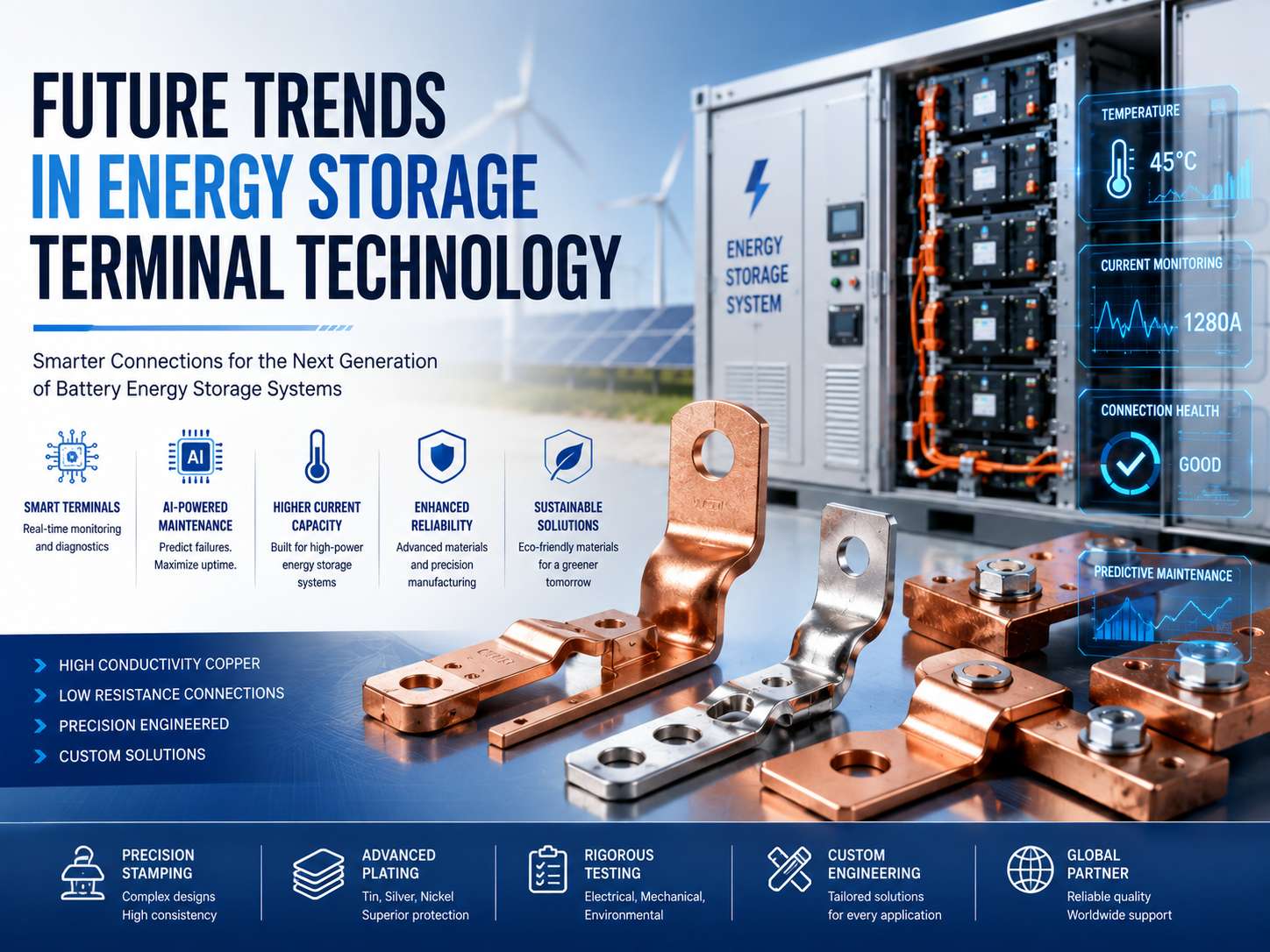
The global energy landscape is undergoing a profound transformation. Driven by the rapid adoption of renewable energy, electric vehicles, smart grids, and AI-powered data centers, the demand for efficient and reliable energy storage systems (ESS) is growing at an unprecedented pace.
At the heart of every energy storage system lies a network of electrical connections responsible for transferring power safely and efficiently. While batteries, inverters, and battery management systems often receive the most attention, electrical terminals play an equally critical role in determining system performance, safety, and longevity.
As energy storage technology evolves, terminal technology must evolve alongside it. Increasing power density, higher current loads, stricter safety standards, and intelligent energy management systems are reshaping how terminals are designed, manufactured, and tested.
In this article, we explore the future trends in energy storage terminal technology and examine how next-generation terminal solutions will support the growing demands of modern energy storage infrastructure.
Why Energy Storage Terminals Matter More Than Ever
The Rise of Large-Scale Battery Energy Storage Systems
Over the past decade, battery energy storage systems have moved beyond niche applications and become a key component of modern power infrastructure.
Governments and utilities worldwide are investing heavily in utility-scale ESS projects to:
- Improve grid stability
- Store renewable energy
- Reduce peak demand pressures
- Enhance energy security
Many modern battery installations now operate at megawatt and even gigawatt scales. As system capacity grows, so does the importance of reliable electrical connections.
A single weak connection can create excessive resistance, heat generation, or system downtime, making terminal performance more critical than ever.
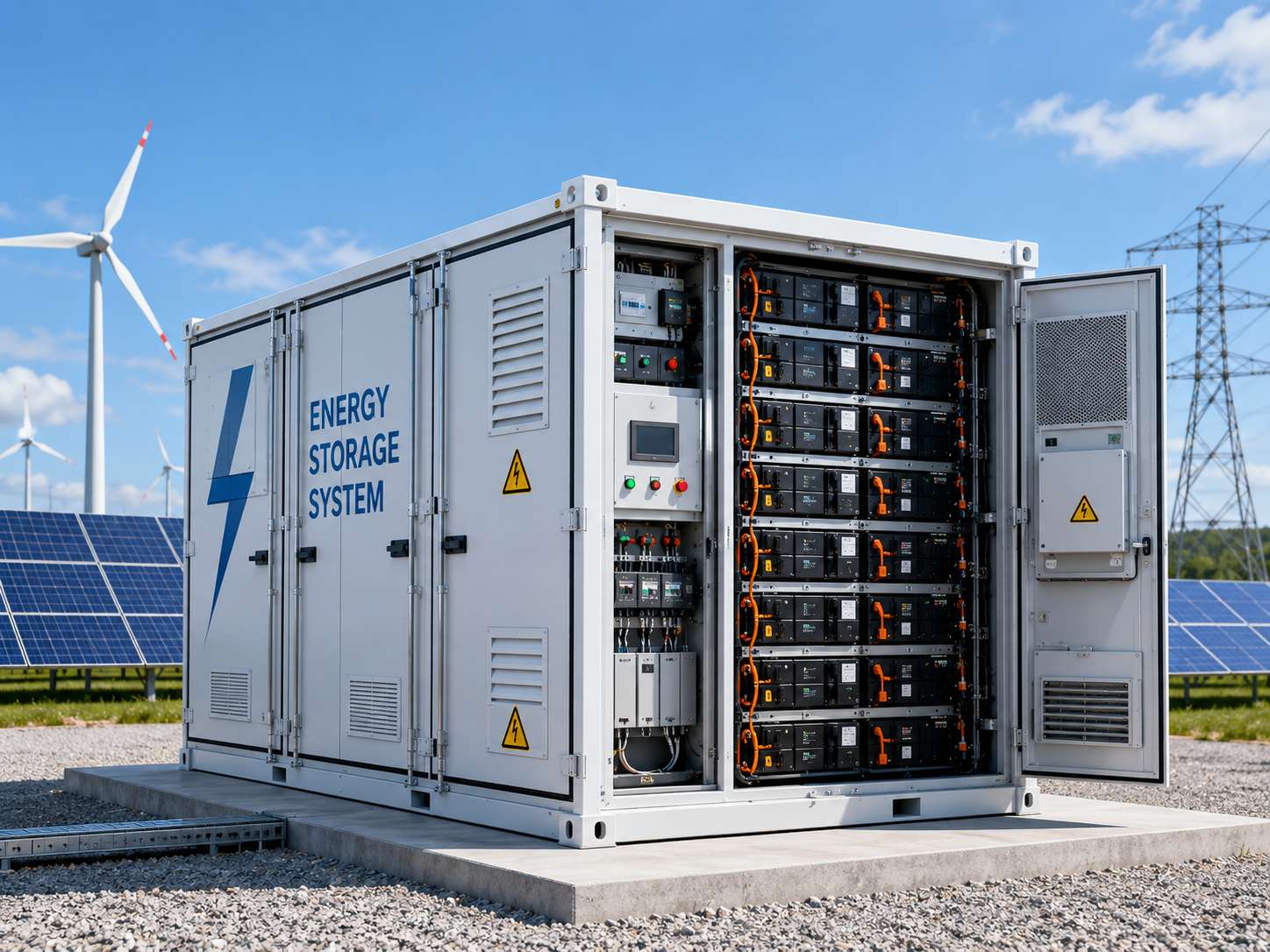
AI Data Centers Driving Power Demand
Artificial Intelligence is rapidly becoming one of the largest drivers of electricity consumption.
Large AI training clusters require massive amounts of power to operate thousands of GPUs and servers continuously.
As AI infrastructure expands, energy storage systems are increasingly being deployed to:
- Support backup power systems
- Manage peak electricity demand
- Improve energy efficiency
- Stabilize power delivery
These applications place enormous demands on terminal performance, especially in high-current environments.
The Hidden Role of Electrical Connections
While energy storage batteries receive significant attention, electricity can only move through a system when every connection performs reliably.
Terminals directly influence:
- System efficiency
- Electrical safety
- Thermal performance
- Maintenance requirements
- Equipment lifespan
As ESS systems become larger and more sophisticated, terminals are transitioning from simple hardware components to critical performance enablers.
Current Challenges Facing Energy Storage Terminals
Higher Current Requirements
Modern energy storage systems are handling more power than ever before.
As battery capacities increase and charging speeds improve, terminals must safely carry significantly higher current loads without overheating.
Traditional terminal designs may struggle to meet future requirements.
Thermal Management Issues
Heat remains one of the biggest challenges in electrical systems.
Even small amounts of contact resistance can generate significant heat under high-current conditions.
Excessive heat can lead to:
- Reduced efficiency
- Material degradation
- Connection failures
- Safety risks
Future terminal designs must address thermal management more effectively.
Space Constraints
Energy storage manufacturers are continuously seeking higher power density.
This means:
- More power
- Smaller footprints
- Compact cabinet designs
Terminals must deliver higher performance while occupying less space.
Long-Term Reliability Expectations
Many commercial ESS projects are expected to operate for 15 to 20 years.
During this period, terminals must withstand:
- Thousands of charge cycles
- Temperature fluctuations
- Mechanical stress
- Environmental exposure
Reliability has become a key design requirement.
Trend #1 – Higher Current Carrying Capacity
Growth of Megawatt-Scale Energy Storage
Energy storage projects continue to scale upward.
Large battery installations supporting utilities, industrial facilities, and AI data centers often operate at extremely high power levels.
As current requirements increase, terminal designs must evolve accordingly.
Larger Conductor Designs
Future energy storage terminals will feature:
- Increased conductor cross-sections
- Optimized current paths
- Improved contact geometries
These improvements help reduce resistance and improve current handling capabilities.
Advanced High-Conductivity Materials
Material selection will play a major role in future terminal development.
Electrolytic copper remains the preferred material because of its:
- Excellent conductivity
- Low resistance
- Superior heat dissipation
Advanced copper alloys may also gain popularity by combining high conductivity with enhanced mechanical strength.
Trend #2 – Low-Resistance Connection Technology
Why Contact Resistance Matters
Every electrical connection introduces some resistance.
Although resistance values may appear small, their impact becomes significant in high-current applications.
Higher resistance results in:
- Power loss
- Heat generation
- Reduced efficiency
Future terminal technologies will focus heavily on minimizing contact resistance.
Advanced Contact Surface Engineering
Engineers are developing new surface designs that improve contact quality.
Innovations include:
- Optimized contact pressure
- Improved mating surfaces
- Enhanced current distribution
These developments help maximize electrical performance.
Precision Manufacturing Improvements
Modern stamping technologies allow tighter manufacturing tolerances than ever before.
Improved precision results in:
- Better fit
- More stable connections
- Lower resistance
- Greater consistency
Future energy storage terminals will increasingly rely on precision manufacturing techniques.
Trend #3 – Enhanced Thermal Management Design
Increasing Power Density
Power density continues to rise throughout the energy storage industry.
More energy is being stored in smaller spaces, resulting in greater thermal challenges.
Heat Dissipation Optimization
Future terminals will be designed with thermal management as a primary consideration.
Possible improvements include:
- Larger contact areas
- Enhanced heat flow pathways
- Improved conductor geometry
These features help reduce temperature rise during operation.
Material Selection for Thermal Performance
Copper remains the preferred material due to its excellent thermal conductivity.
Future research may also explore:
- Hybrid conductive materials
- Advanced alloys
- Composite solutions
These innovations could further improve heat dissipation capabilities.
Trend #4 – Miniaturization Without Performance Loss
Compact Energy Storage Systems
Residential and commercial energy storage systems are becoming increasingly compact.
Customers want:
- Smaller cabinets
- Reduced installation space
- Improved aesthetics
However, smaller systems still require high performance.
Challenges of Smaller Components
Miniaturization introduces several engineering challenges:
- Increased current density
- Limited cooling capacity
- Reduced mechanical space
Maintaining performance becomes increasingly difficult.
Precision Stamping Technology
Advanced stamping technologies enable manufacturers to produce:
- Thin-wall structures
- Complex geometries
- Compact terminal designs
These capabilities allow future terminals to deliver high performance within smaller footprints.
Trend #5 – Smart Terminals with Integrated Monitoring
The Shift Toward Intelligent Infrastructure
Energy storage systems are becoming smarter.
Operators increasingly expect real-time monitoring and predictive maintenance capabilities.
Terminals are likely to become part of this intelligent ecosystem.
Embedded Sensors
Future terminals may incorporate sensors capable of measuring:
- Temperature
- Voltage
- Current
- Contact condition
This data can provide valuable insight into connection performance.
Real-Time Health Monitoring
Smart terminals could continuously monitor connection quality.
Benefits include:
- Early fault detection
- Improved maintenance planning
- Reduced downtime
- Enhanced safety
This trend aligns closely with the broader digital transformation occurring across the energy industry.
Trend #6 – AI-Assisted Predictive Maintenance
Traditional Maintenance Limitations
Historically, maintenance has been reactive.
Problems were often discovered only after a failure occurred.
This approach can result in:
- Unexpected downtime
- Expensive repairs
- Reduced productivity
AI-Powered Monitoring Systems
Artificial intelligence is changing how equipment maintenance is performed.
By analyzing operational data, AI systems can identify patterns that humans may miss.
Predicting Connection Failures Before They Occur
Future energy storage systems may use AI to monitor terminal performance indicators such as:
- Temperature trends
- Resistance changes
- Current fluctuations
When abnormal patterns are detected, maintenance teams can intervene before failures occur.
This approach improves reliability while reducing maintenance costs.
Trend #7 – Advanced Surface Plating Technologies
The Role of Surface Treatment
Surface plating plays a critical role in terminal performance.
Proper plating helps improve:
- Corrosion resistance
- Conductivity
- Durability
- Service life
Next-Generation Tin Plating
Tin plating remains the most widely used surface treatment in energy storage terminals.
Future advancements may provide:
- Better wear resistance
- Improved oxidation protection
- Enhanced long-term reliability
Silver and Hybrid Plating Solutions
For high-performance applications, silver plating offers:
- Exceptional conductivity
- Low contact resistance
- Superior thermal performance
Hybrid plating technologies may become increasingly common in premium energy storage systems.
Trend #8 – Sustainable and Eco-Friendly Materials
Global Sustainability Requirements
Environmental responsibility is becoming a major factor in manufacturing decisions.
Governments and customers are demanding:
- Lower emissions
- Reduced waste
- Sustainable production practices
Recyclable Terminal Materials
Copper is highly recyclable and can be reused repeatedly without significant loss of performance.
This makes copper terminals attractive for environmentally conscious projects.
Green Manufacturing Processes
Future terminal manufacturers will focus on:
- Material efficiency
- Energy-efficient production
- Reduced scrap generation
- Sustainable sourcing practices
These efforts support broader ESG initiatives throughout the energy industry.
Trend #9 – Customized Terminals for Emerging Applications
Energy Storage Is Not One-Size-Fits-All
Different energy storage applications have unique requirements.
Examples include:
- Utility-scale ESS
- Residential battery storage
- Commercial energy systems
- EV charging infrastructure
- AI data centers
Each application presents distinct design challenges.
Demand for Custom Designs
Standard terminals cannot always meet specialized requirements.
Future projects increasingly require:
- Custom shapes
- Specialized mounting methods
- Unique current ratings
- Application-specific materials
Faster Product Development Cycles
Customers expect rapid product development.
Manufacturers capable of providing:
- Engineering support
- Rapid prototyping
- Tooling development
- Quick production launches
will have significant competitive advantages.
How Precision Manufacturing Supports Future Terminal Development
Progressive Die Stamping Technology
Progressive die stamping remains one of the most efficient methods for manufacturing precision terminals.
Benefits include:
- High production speed
- Excellent consistency
- Lower production costs
- Complex part geometries
High-Speed Automated Production
Automation improves:
- Production efficiency
- Quality consistency
- Cost control
Future factories will continue increasing automation levels.
Precision Dimensional Control
As terminal designs become more sophisticated, dimensional accuracy becomes increasingly important.
Advanced inspection systems help maintain tight tolerances throughout production.
Consistent Product Quality
Future energy storage projects demand extremely reliable components.
Consistent manufacturing quality reduces field failures and improves customer confidence.
Scalable Production Capacity
As global ESS deployment accelerates, manufacturers must be capable of supporting high-volume production while maintaining quality standards.
Why Choose Qianwei for Future Energy Storage Terminal Projects
As terminal technology evolves, choosing the right manufacturing partner becomes increasingly important.
Expertise in Precision Copper Terminals
Qianwei specializes in precision-stamped copper terminals designed for demanding electrical applications.
Custom Energy Storage Terminal Development
We work closely with customers to develop customized solutions for energy storage projects.
Advanced Tooling and Mold Design
Our in-house tooling capabilities help accelerate development timelines and improve manufacturing efficiency.
OEM & ODM Manufacturing Support
We support both standard and fully customized terminal projects.
Comprehensive Testing Capabilities
To ensure long-term reliability, we provide comprehensive testing services including:
Dimensional Inspection
Verifying compliance with engineering drawings.
Contact Resistance Testing
Evaluating electrical performance.
Pull-Out Force Testing
Assessing mechanical retention strength.
Thermal Cycling Testing
Simulating long-term operating conditions.
Vibration Testing
Validating reliability under mechanical stress.
Salt Spray Testing
Assessing corrosion resistance in harsh environments.
These capabilities help ensure that every terminal meets demanding performance requirements.
Conclusion
The future of energy storage depends on more than just advanced batteries and intelligent software. Reliable electrical connections remain fundamental to system performance, efficiency, and safety.
As energy storage technology continues to evolve, terminal technology is advancing in several important directions:
- Higher current carrying capacity
- Lower contact resistance
- Improved thermal management
- Smart monitoring capabilities
- AI-assisted predictive maintenance
- Sustainable manufacturing practices
- Customized application-specific solutions
These innovations will help support the next generation of renewable energy systems, AI-powered infrastructure, and intelligent power networks.
Although electrical terminals may be small components, their impact on system reliability and performance is enormous. Manufacturers that invest in advanced terminal technologies today will be better positioned to meet the growing demands of tomorrow’s energy storage industry.
FAQs
What are energy storage terminals?
Energy storage terminals are conductive components used to connect batteries, busbars, cables, inverters, and other electrical equipment within a battery energy storage system (BESS). They provide secure electrical pathways that enable efficient power transmission throughout the system.
Why are terminals important in battery energy storage systems?
Terminals directly affect electrical conductivity, heat generation, efficiency, and safety. A high-quality terminal helps minimize energy loss, reduce maintenance requirements, and improve overall system reliability.
What materials are commonly used for energy storage terminals?
The most common materials include:
- Electrolytic Copper
- Copper Alloys
- Aluminum Alloys
Copper is generally preferred for high-current applications because of its superior conductivity and thermal performance.
Why is copper preferred for high-current ESS applications?
Copper offers:
- Excellent electrical conductivity
- Low resistance
- Superior heat dissipation
- Long service life
- High mechanical reliability
These properties make copper ideal for energy storage, renewable energy, and AI infrastructure applications.
How do electrical terminals affect energy storage efficiency?
Electrical terminals influence contact resistance. Lower resistance reduces energy loss and heat generation, allowing more power to be delivered efficiently throughout the system.
What is contact resistance and why does it matter?
Contact resistance is the resistance created where two conductive surfaces meet. Excessive contact resistance can lead to:
- Power loss
- Temperature rise
- Reduced efficiency
- Connection failure
Maintaining low contact resistance is essential for high-current energy storage systems.
What challenges do energy storage terminals face?
Modern ESS terminals must withstand:
- High current loads
- Frequent charge/discharge cycles
- Thermal cycling
- Mechanical vibration
- Outdoor environments
- Long service life requirements
These challenges drive continuous innovation in terminal design.
What are smart terminals?
Smart terminals are next-generation terminals equipped with sensors that monitor:
- Temperature
- Voltage
- Current flow
- Connection quality
They provide real-time data that helps improve maintenance and system reliability.
How can AI improve terminal reliability?
AI can analyze operational data from energy storage systems to detect abnormal patterns and predict failures before they occur. This enables predictive maintenance and reduces unplanned downtime.
What plating is best for energy storage terminals?
The best plating depends on the application:
- Tin plating for cost-effective corrosion protection
- Silver plating for maximum conductivity
- Nickel plating for high-temperature environments
Tin-plated copper terminals are the most widely used solution in ESS applications.
Why is tin plating commonly used on copper terminals?
Tin plating provides:
- Corrosion resistance
- Stable electrical performance
- Good solderability
- Lower cost compared to silver plating
It offers an excellent balance between performance and affordability.
What is thermal cycling and how does it affect terminals?
Thermal cycling refers to repeated heating and cooling during operation. Over time, temperature fluctuations can cause expansion and contraction of materials, potentially affecting connection stability.
Terminals must be designed to withstand thousands of thermal cycles without degradation.
How are energy storage terminals tested?
Common testing methods include:
- Dimensional Inspection
- Contact Resistance Testing
- Pull-Out Force Testing
- Current Carrying Capacity Testing
- Temperature Rise Testing
- Thermal Cycling Testing
- Vibration Testing
- Salt Spray Testing
These tests help verify electrical, mechanical, and environmental performance.
Why is vibration resistance important for ESS terminals?
Energy storage systems may experience vibration during transportation, installation, or operation. Vibration-resistant terminals help prevent loosening and maintain stable electrical connections over time.
Can energy storage terminals be customized?
Yes. Many energy storage projects require custom terminals tailored to:
- Current ratings
- Cable sizes
- Installation requirements
- Space limitations
- Environmental conditions
Custom solutions often improve both performance and assembly efficiency.
What role do terminals play in renewable energy storage systems?
Terminals connect batteries, inverters, and power distribution equipment, ensuring reliable energy transfer within solar and wind energy storage systems. Their performance directly impacts system efficiency and reliability.
How do energy storage terminals support AI-powered data centers?
AI data centers consume massive amounts of electricity. Energy storage terminals help deliver high-current power safely and efficiently between batteries, power distribution systems, and backup power infrastructure.
What is the lifespan of an energy storage terminal?
The lifespan depends on factors such as:
- Material selection
- Surface plating
- Environmental conditions
- Operating current
- Installation quality
High-quality terminals in properly designed systems can operate reliably for 15–20 years or longer.
What future technologies will influence energy storage terminal design?
Emerging technologies include:
- Smart monitoring terminals
- AI-assisted predictive maintenance
- Advanced conductive materials
- High-current compact designs
- Integrated sensor technology
- Sustainable manufacturing processes
These innovations will shape the next generation of ESS connectivity solutions.
What should buyers consider when selecting an energy storage terminal manufacturer?
Key considerations include:
- Material expertise
- Precision manufacturing capabilities
- Custom development support
- Tooling and mold design experience
- Quality management systems
- Testing capabilities
- Production capacity
- Industry experience
Choosing an experienced manufacturer helps reduce project risks and improve long-term system performance.
What is the difference between standard terminals and custom energy storage terminals?
Standard terminals are designed for general-purpose applications, while custom energy storage terminals are engineered for specific current ratings, installation environments, and performance requirements. Custom solutions often provide better reliability, efficiency, and space utilization in ESS projects.
How does terminal design affect battery safety?
A well-designed terminal reduces resistance, prevents overheating, and maintains stable electrical contact. Poor terminal design can increase the risk of arcing, thermal runaway, and system failure, making terminal quality an important factor in battery safety.

