

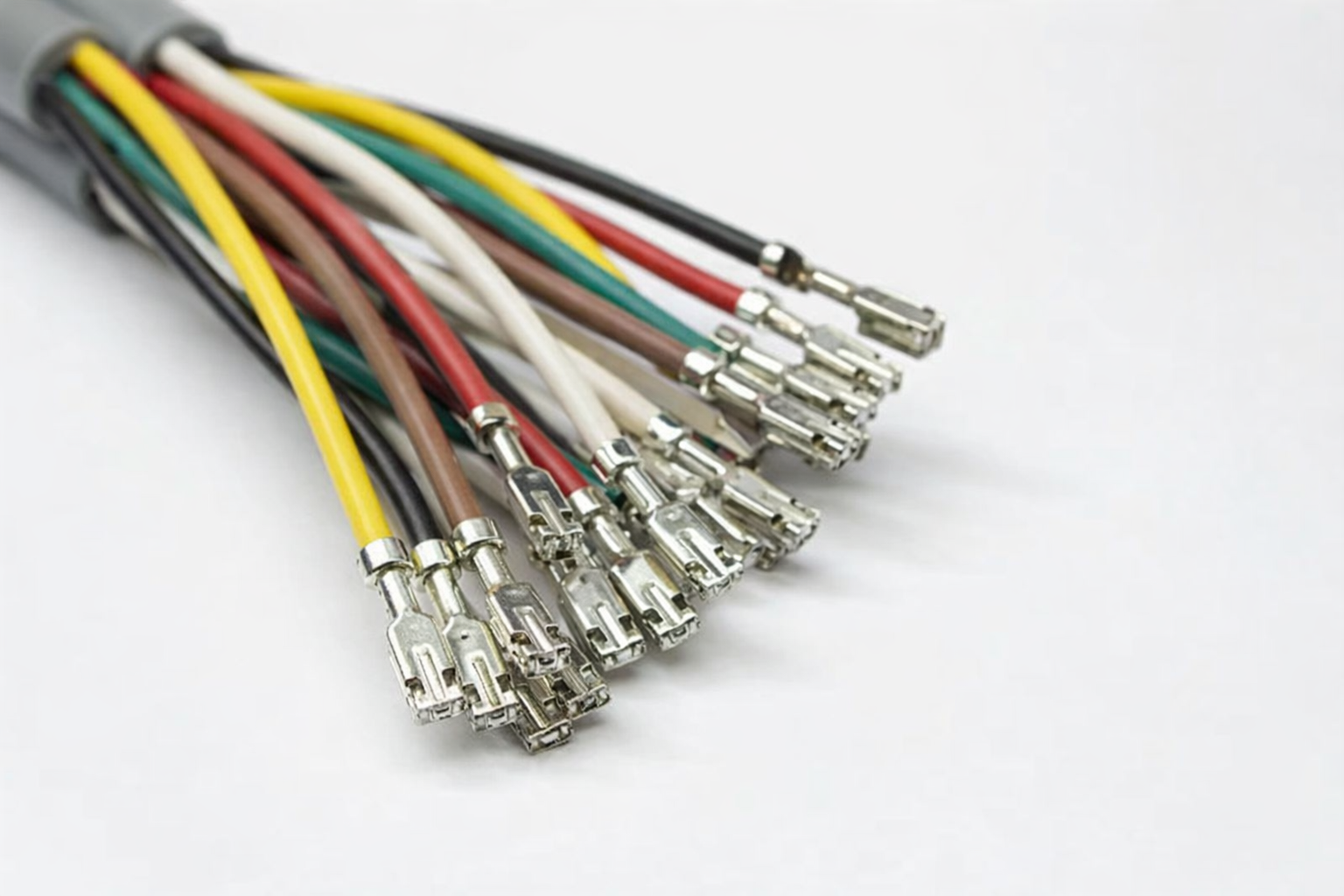
Toda conexión eléctrica confiable comienza con un terminal.
Desde mazos de cables para automóviles y sistemas de control industrial hasta equipos de energía renovable y electrónica de consumo., terminales electricos Proporcionar la interfaz que permite que la corriente pase de forma segura y eficiente entre conductores y componentes.. Aunque los terminales suelen ser pequeños y económicos en comparación con otras piezas eléctricas, su rendimiento tiene un impacto directo en la seguridad del sistema, eficiencia, y confiabilidad.
El principio de funcionamiento de un terminal eléctrico se basa en dos funciones clave: crear una conexión mecánica segura y mantener una ruta eléctrica de baja resistencia. Cuando estas funciones se logran adecuadamente, la conexión puede permanecer estable durante años, incluso en entornos exigentes que implican vibración, calor, humedad, y estrés mecánico.
Esta guía explica cómo funcionan los terminales eléctricos., La ciencia detrás de la presión de contacto y la conductividad., y por qué el diseño y la instalación adecuados de los terminales son fundamentales para el rendimiento eléctrico a largo plazo.

La función principal de un terminal eléctrico
En su nivel más básico, Un terminal eléctrico tiene dos funciones principales.:
- Cree una conexión mecánica segura
- Establecer una vía eléctrica confiable
Ambas funciones deben trabajar juntas para garantizar una transmisión segura y eficiente de energía o señal..
Crear una conexión mecánica segura
El propósito mecánico de un terminal es mantener un conductor firmemente en su lugar.. Sin suficiente fuerza de retención, los cables pueden aflojarse, desconectar, o dañarse durante el funcionamiento.
Dependiendo del diseño del terminal, Esta conexión mecánica se puede lograr mediante:
- Fuerza de prensado
- Sujeción por tornillo
- Presión de resorte
- Fijación con pernos o pernos
Una fuerte conexión mecánica evita que el cable se salga y mantiene la estabilidad incluso cuando el sistema está expuesto a vibraciones., choque, o movimiento repetido.
Estableciendo una ruta eléctrica confiable
Mientras que la retención mecánica asegura al conductor físicamente, La función eléctrica de un terminal es proporcionar un camino conductor continuo para el flujo de corriente..
Una conexión eléctrica eficaz requiere:
- Gran superficie de contacto
- Presión de contacto adecuada
- Baja resistencia de contacto
- Resistencia a la oxidación y la corrosión.
Cuando se cumplan estas condiciones, La energía eléctrica puede fluir eficientemente con mínima pérdida de voltaje y generación de calor..
Por qué los terminales eléctricos son esenciales
Los terminales eléctricos ofrecen varias ventajas en comparación con los métodos de unión de cables permanentes.:
- Instalación más rápida
- Mantenimiento y sustitución más sencillos
- Seguridad mejorada
- Mayor eficiencia de fabricación
- Mejor modularidad del sistema
Por estas razones, Los terminales se han convertido en componentes estándar en casi todas las industrias eléctricas..
El principio básico de funcionamiento de los terminales eléctricos
Aunque los diseños de terminales varían significativamente, Todos los terminales eléctricos funcionan según los mismos principios fundamentales.: retención mecánica y conductividad eléctrica.
Retención Mecánica
La retención mecánica se refiere a la fuerza que mantiene el conductor firmemente sujeto al terminal..
La fuerza de retención puede provenir de:
- Compresión creada por engarce
- Fuerza de sujeción generada por tornillos.
- Presión constante proporcionada por resortes.
El objetivo es evitar el movimiento entre el conductor y el terminal.. Incluso los pequeños movimientos pueden aumentar gradualmente la resistencia y provocar fallos en la conexión..
Contacto eléctrico
La corriente eléctrica fluye sólo cuando los materiales conductores hacen suficiente contacto entre sí..
En una conexión terminal, Esto ocurre cuando el conductor toca la superficie del terminal bajo presión controlada..
La calidad de este contacto metal con metal determina:
- Capacidad de carga actual
- Caída de voltaje
- Generación de calor
- Fiabilidad general de la conexión
Cuanto mayor sea el área de contacto efectiva, mejor será el rendimiento eléctrico.
Por qué es importante la presión de contacto
Uno de los aspectos más importantes, pero a menudo pasado por alto, del rendimiento del terminal es la presión de contacto..
Cuando la presión de contacto es demasiado baja:
- La resistencia eléctrica aumenta
- La generación de calor aumenta
- La oxidación se desarrolla más fácilmente.
- La confiabilidad de la conexión disminuye
Cuando la presión de contacto se controla adecuadamente, Las irregularidades microscópicas de la superficie se comprimen juntas., creando múltiples vías conductoras que mejoran el flujo de corriente.
Por eso las herramientas de engarce, especificaciones de par, y los mecanismos de resorte están cuidadosamente diseñados para lograr una fuerza de contacto constante.
Comprender la resistencia de contacto
Ninguna conexión eléctrica está completamente libre de resistencia..
La resistencia de contacto es la resistencia que existe en la interfaz entre dos superficies conductoras..
Una resistencia de contacto excesiva puede causar:
- Pérdida de voltaje
- Desperdicio de energía
- Calefacción localizada
- Fallo prematuro de componentes
Los terminales de alta calidad están diseñados para minimizar la resistencia de contacto optimizando:
- Selección de materiales
- Acabado superficial
- Presión de contacto
- Calidad del revestimiento
Paso a paso: Cómo un terminal eléctrico crea una conexión confiable
Aunque los métodos de instalación difieren, la mayoría de las conexiones de terminales siguen una secuencia similar.
Paso 1 – Preparación del alambre
El proceso comienza quitando el aislamiento del conductor..
La preparación adecuada del alambre es crítica porque:
- Los hilos dañados reducen la conductividad
- El pelado excesivo expone conductores innecesarios
- Un pelado insuficiente limita el área de contacto
El conductor debe permanecer limpio y sin daños antes de la instalación..
Paso 2 – Inserción de conductores
El conductor preparado se inserta en el cilindro terminal., zona de sujeción, o cámara de contacto.
El posicionamiento correcto garantiza:
- Área máxima de contacto
- Distribución uniforme de la fuerza
- Rendimiento eléctrico confiable
Una mala colocación del conductor puede comprometer toda la conexión.
Paso 3 – Formación de conexión
A continuación, el terminal fija el conductor mediante una tecnología de conexión específica..
Los métodos comunes incluyen:
- prensado
- Apriete de tornillos
- Sujeción por resorte
- Fijación con pernos
En esta etapa se establecen los aspectos mecánicos y eléctricos de la conexión..
Paso 4 – Establecimiento de flujo actual
Una vez completada la conexión, La corriente fluye a través de la interfaz conductor-terminal..
Una conexión formada correctamente proporciona:
- Baja resistencia
- Conductividad estable
- Caída de voltaje mínima
La conexión pasa a formar parte efectivamente del circuito eléctrico..
Paso 5 – Estabilidad a largo plazo
El objetivo final es mantener el rendimiento en el tiempo..
Una conexión terminal confiable debe resistir:
- Vibración
- Estrés mecánico
- Ciclismo térmico
- Humedad
- Ambientes corrosivos
La estabilidad a largo plazo suele ser el principal factor que distingue a los terminales premium de las alternativas de menor calidad..
Cómo funcionan las diferentes tecnologías de terminales eléctricos
Diferentes aplicaciones requieren diferentes tecnologías de conexión.
Terminales de crimpado
Los terminales engarzados se encuentran entre los métodos de conexión más utilizados en los sistemas eléctricos modernos..
Una conexión de engarzado se forma cuando una herramienta de engarzado calibrada comprime el cilindro del terminal alrededor del conductor..
Este proceso crea:
- Alta retención mecánica
- Gran área de contacto
- Baja resistencia de contacto
- Sellado estanco al gas
La naturaleza hermética al gas de un engarce ejecutado correctamente ayuda a evitar que la oxidación llegue a la interfaz del conductor..
Los terminales de engarzado se utilizan comúnmente en:
- Arneses de cableado para automóviles
- Maquinaria industrial
- Equipos de telecomunicaciones
- Sistemas aeroespaciales
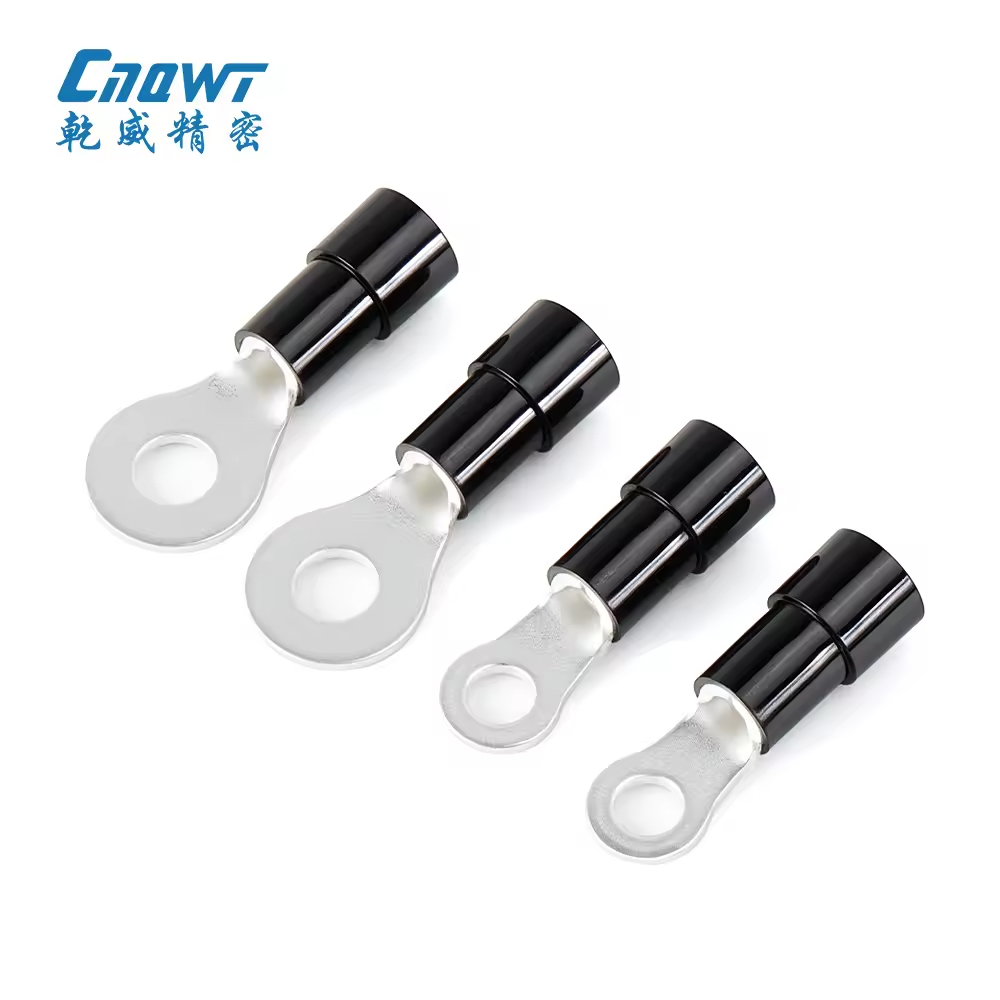
Terminales de anillo
Los terminales de anillo cuentan con una abertura circular que encaja sobre un perno o perno.
Después de la instalación, el hardware de sujeción asegura el terminal en su lugar.
El diseño del anillo proporciona una excelente resistencia a la desconexión accidental..
Las aplicaciones comunes incluyen:
- Baterías automotrices
- Equipo marino
- Maquinaria industrial
- Sistemas eléctricos de servicio pesado
Terminales de pala
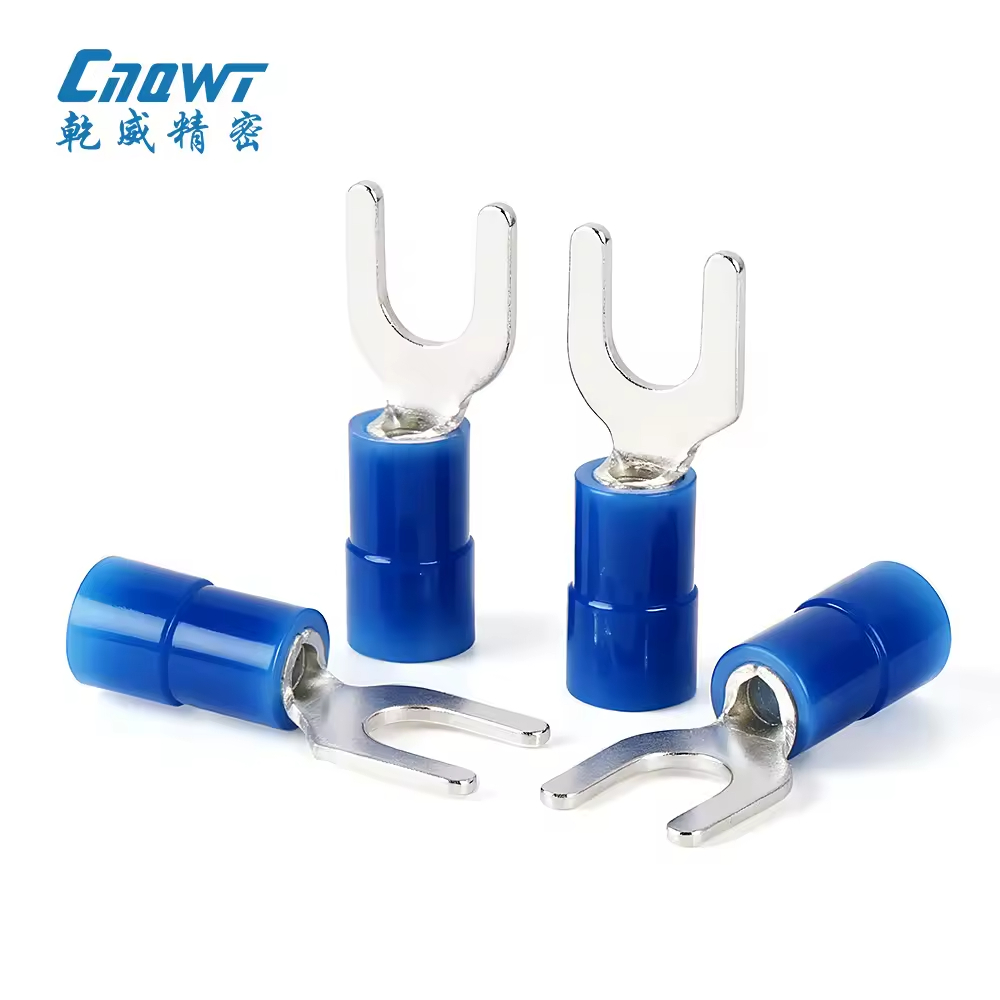
Los terminales de pala funcionan de manera similar a los terminales de anillo pero presentan un diseño abierto.
Esto permite una instalación y extracción más rápidas sin quitar completamente el tornillo de fijación..
Se utilizan comúnmente en aplicaciones que requieren mantenimiento o servicio frecuentes..
¿Qué factores afectan el rendimiento de los terminales eléctricos??
No todas las conexiones de terminales funcionan igual. Varios factores influyen directamente en la fiabilidad.
Presión de contacto
La presión de contacto insuficiente es una de las causas más comunes de falla terminal.
Una presión adecuada garantiza:
- Baja resistencia
- Conductividad estable
- Generación de calor reducida
Material conductor
La mayoría de los sistemas eléctricos utilizan conductores de cobre debido a su excelente conductividad..
Sin embargo, Los conductores de aluminio también son comunes en ciertas aplicaciones..
Los diseños de los terminales deben ser compatibles con el material del conductor para evitar problemas como la corrosión galvánica o la mala conductividad..
Material de terminales
Los materiales terminales comúnmente incluyen:
- Latón
- Aleaciones de cobre
- Bronce fosforado
Cada material ofrece diferentes combinaciones de:
- Conductividad
- Fortaleza
- Resistencia a la corrosión
- Costo
Revestimiento de superficie
El revestimiento de la superficie influye significativamente en el rendimiento del terminal.
Las opciones de revestimiento comunes incluyen:
- Estaño
- Níquel
- Plata
El revestimiento proporciona:
- Protección contra la corrosión
- Conductividad mejorada
- Soldabilidad mejorada
- Vida útil más larga
Condiciones ambientales
La exposición ambiental puede afectar en gran medida la confiabilidad de la conexión.
Los factores incluyen:
- Humedad
- Polvo
- quimicos
- spray de sal
- Temperaturas extremas
Los terminales utilizados en entornos hostiles a menudo requieren materiales especializados y revestimientos protectores..
Razones comunes por las que fallan las conexiones de los terminales eléctricos
Incluso los terminales bien diseñados pueden fallar si las condiciones de instalación o funcionamiento son inadecuadas..
Conexiones sueltas
Las conexiones flojas a menudo resultan de:
- Torque incorrecto
- Vibración
- Desgaste mecánico
A medida que la presión de contacto disminuye, La resistencia aumenta y puede producirse sobrecalentamiento..
Engarzado inadecuado
El engarzado incorrecto es una de las principales causas de fallos en el campo.
Los defectos comunes incluyen:
- Sub-engarzado
- Sobre-engarzado
- Selección de herramienta incorrecta
- Inserción de conductor incompleta
Estos problemas reducen tanto la resistencia mecánica como el rendimiento eléctrico..
Corrosión y Oxidación
La corrosión introduce capas no conductoras entre las superficies de contacto..
Esto aumenta la resistencia y reduce la capacidad de transporte de corriente..
El revestimiento adecuado y la protección ambiental son esenciales para prevenir fallas relacionadas con la corrosión..
Expansión y contracción térmica
Los sistemas eléctricos a menudo experimentan ciclos repetidos de calentamiento y enfriamiento..
Con el tiempo, el movimiento térmico puede:
- Reducir la presión de contacto
- Aflojar los sujetadores
- Acelerar la fatiga del material
Los terminales deben diseñarse para adaptarse a estos cambios..
Ambientes de alta vibración
La vibración puede debilitar gradualmente las conexiones eléctricas..
Industrias como la automoción., carril, aeroespacial, y maquinaria pesada imponen exigencias especialmente altas a la fiabilidad del terminal.
A menudo se requieren diseños de terminales especializados para mantener un rendimiento estable bajo vibración continua..
Cómo los fabricantes mejoran la confiabilidad de los terminales
Los fabricantes de terminales modernos utilizan técnicas de ingeniería avanzadas para maximizar la confiabilidad..
Estampado de precisión
El estampado de alta precisión garantiza dimensiones y geometría de contacto consistentes.
Procesos de revestimiento controlados
El espesor uniforme del revestimiento mejora la resistencia a la corrosión y el rendimiento eléctrico..
Inspección de calidad
Los fabricantes realizan inspecciones dimensionales y visuales durante toda la producción..
Pruebas de rendimiento
Las pruebas de validación comunes incluyen:
- Prueba de fuerza de extracción
- Pruebas de resistencia de contacto
- Pruebas de capacidad de carga actual
- Pruebas de vibración
- Pruebas de niebla salina
- Pruebas de ciclos térmicos
Estas pruebas ayudan a garantizar la confiabilidad en el campo a largo plazo..
Aplicaciones donde la confiabilidad del terminal es crítica
Las conexiones de terminales confiables son esenciales en muchas industrias.
Arneses de cableado automotriz
Los vehículos modernos contienen cientos o incluso miles de conexiones terminales que deben soportar vibraciones., calor, y humedad.
Sistemas de automatización industrial
Los equipos de producción dependen de conexiones eléctricas confiables para un funcionamiento ininterrumpido.
Equipos de distribución de energía
Los sistemas de alta corriente requieren terminales capaces de manejar cargas eléctricas importantes de forma segura.
Sistemas de energía renovable
Las instalaciones solares y eólicas dependen de terminales duraderos que puedan sobrevivir décadas de exposición al aire libre..
Electrónica de Consumo
Los dispositivos compactos requieren conexiones terminales altamente confiables en espacios cada vez más limitados.
Cuando se selecciona e instala correctamente, Los terminales eléctricos pueden proporcionar un rendimiento confiable durante décadas..
Conclusión
Los terminales eléctricos pueden ser componentes pequeños., pero tienen un impacto significativo en la seguridad, eficiencia, y confiabilidad de los sistemas eléctricos. Comprender cómo funcionan ayuda a los ingenieros y compradores a seleccionar la solución de conexión adecuada para sus aplicaciones específicas..
En Qianwei precisión, Nos especializamos en el diseño y fabricación de terminales eléctricos de alta calidad para automoción., industrial, electrónica de consumo, y aplicaciones de energías renovables. Póngase en contacto con nuestro equipo hoy para analizar los requisitos de su proyecto y encontrar la solución de terminal adecuada para su negocio.
Preguntas frecuentes
¿Cómo conducen la electricidad los terminales eléctricos??
Los terminales eléctricos conducen la electricidad creando un contacto metal con metal de baja resistencia entre conductores y componentes eléctricos..
¿Cuál es el principio de funcionamiento de un terminal engarzado??
Un terminal de engarce funciona comprimiendo mecánicamente un cilindro de metal alrededor de un conductor., creando una conexión segura y altamente conductora.
¿Por qué es importante la presión de contacto??
La presión de contacto garantiza un área de contacto eléctrico suficiente y minimiza la resistencia., generación de calor, y degradación de la conexión.
¿Qué causa el sobrecalentamiento de los terminales eléctricos??
Las causas comunes incluyen conexiones sueltas., resistencia excesiva, engarzado inadecuado, y sobrecarga.
¿Cómo afecta la corrosión al rendimiento del terminal??
La corrosión aumenta la resistencia de contacto y eventualmente puede interrumpir el flujo de corriente..
¿Se pueden aflojar los terminales eléctricos con el tiempo??
Sí. Vibración, ciclo térmico, Y una instalación incorrecta puede reducir gradualmente la presión de contacto..
¿Por qué los terminales eléctricos están chapados??
El revestimiento mejora la resistencia a la corrosión, mejora la conductividad, y extiende la vida útil.
¿Qué tipo de terminal ofrece la mejor resistencia a las vibraciones??
Los terminales de engarzado y de anillo correctamente instalados generalmente proporcionan una excelente resistencia a las vibraciones..

