

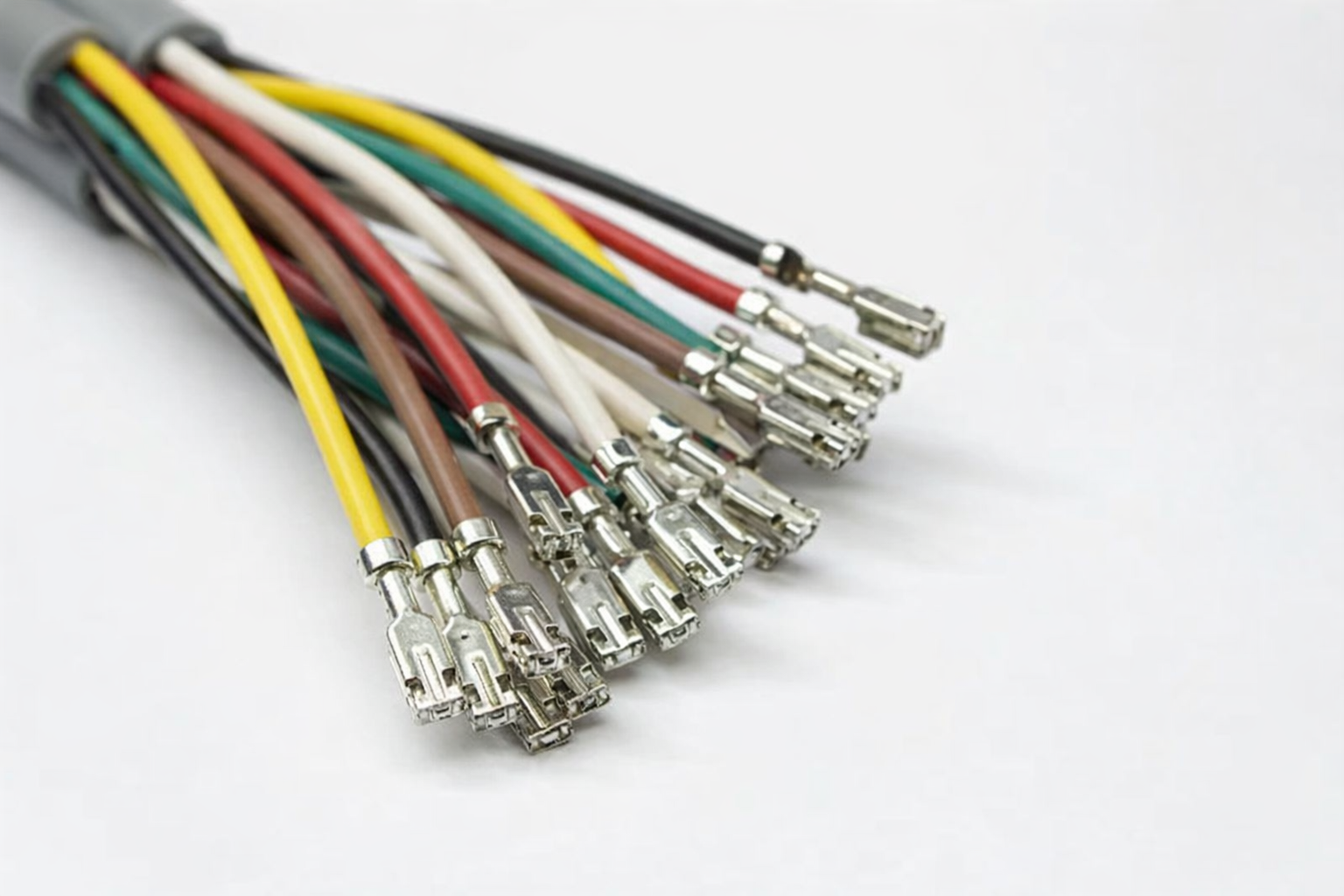
Every reliable electrical connection starts with a terminal.
From automotive wiring harnesses and industrial control systems to renewable energy equipment and consumer electronics, electrical terminals provide the interface that allows current to pass safely and efficiently between conductors and components. Although terminals are often small and inexpensive compared with other electrical parts, their performance has a direct impact on system safety, efficiency, and reliability.
The working principle of an electrical terminal is based on two key functions: creating a secure mechanical connection and maintaining a low-resistance electrical path. When these functions are properly achieved, the connection can remain stable for years, even in demanding environments involving vibration, heat, moisture, and mechanical stress.
This guide explains how electrical terminals work, the science behind contact pressure and conductivity, and why proper terminal design and installation are critical for long-term electrical performance.

The Primary Function of an Electrical Terminal
At its most basic level, an electrical terminal has two primary functions:
- Create a secure mechanical connection
- Establish a reliable electrical pathway
Both functions must work together to ensure safe and efficient power or signal transmission.
Creating a Secure Mechanical Connection
The mechanical purpose of a terminal is to hold a conductor firmly in place. Without sufficient retention force, wires may loosen, disconnect, or become damaged during operation.
Depending on the terminal design, this mechanical connection may be achieved through:
- Crimping force
- Screw clamping
- Spring pressure
- Stud or bolt fastening
A strong mechanical connection prevents wire pull-out and maintains stability even when the system is exposed to vibration, shock, or repeated movement.
Establishing a Reliable Electrical Path
While mechanical retention secures the conductor physically, the electrical function of a terminal is to provide a continuous conductive path for current flow.
An effective electrical connection requires:
- Large contact surface area
- Adequate contact pressure
- Low contact resistance
- Resistance to oxidation and corrosion
When these conditions are met, electrical energy can flow efficiently with minimal voltage loss and heat generation.
Why Electrical Terminals Are Essential
Electrical terminals provide several advantages compared with permanent wire joining methods:
- Faster installation
- Easier maintenance and replacement
- Improved safety
- Greater manufacturing efficiency
- Better system modularity
For these reasons, terminals have become standard components across almost every electrical industry.
The Core Working Principle of Electrical Terminals
Although terminal designs vary significantly, all electrical terminals operate according to the same fundamental principles: mechanical retention and electrical conductivity.
Mechanical Retention
Mechanical retention refers to the force that keeps the conductor securely attached to the terminal.
The retention force may come from:
- Compression created by crimping
- Clamping force generated by screws
- Constant pressure provided by springs
The objective is to prevent movement between the conductor and the terminal. Even small movements can gradually increase resistance and lead to connection failure.
Electrical Contact
Electrical current flows only when conductive materials make sufficient contact with each other.
In a terminal connection, this occurs when the conductor touches the terminal surface under controlled pressure.
The quality of this metal-to-metal contact determines:
- Current carrying capacity
- Voltage drop
- Heat generation
- Overall connection reliability
The greater the effective contact area, the better the electrical performance.
Why Contact Pressure Matters
One of the most important but often overlooked aspects of terminal performance is contact pressure.
When contact pressure is too low:
- Electrical resistance increases
- Heat generation rises
- Oxidation develops more easily
- Connection reliability decreases
When contact pressure is properly controlled, microscopic surface irregularities are compressed together, creating multiple conductive pathways that improve current flow.
This is why crimping tools, torque specifications, and spring mechanisms are carefully engineered to achieve consistent contact force.
Understanding Contact Resistance
No electrical connection is completely resistance-free.
Contact resistance is the resistance that exists at the interface between two conductive surfaces.
Excessive contact resistance can cause:
- Voltage loss
- Energy waste
- Localized heating
- Premature component failure
High-quality terminals are designed to minimize contact resistance by optimizing:
- Material selection
- Surface finish
- Contact pressure
- Plating quality
Step-by-Step: How an Electrical Terminal Creates a Reliable Connection
Although installation methods differ, most terminal connections follow a similar sequence.
Step 1 – Wire Preparation
The process begins with stripping insulation from the conductor.
Proper wire preparation is critical because:
- Damaged strands reduce conductivity
- Excessive stripping exposes unnecessary conductor
- Insufficient stripping limits contact area
The conductor should remain clean and undamaged before installation.
Step 2 – Conductor Insertion
The prepared conductor is inserted into the terminal barrel, clamping area, or contact chamber.
Correct positioning ensures:
- Maximum contact area
- Uniform force distribution
- Reliable electrical performance
Poor conductor placement can compromise the entire connection.
Step 3 – Connection Formation
The terminal then secures the conductor using a specific connection technology.
Common methods include:
- Crimping
- Screw tightening
- Spring clamping
- Stud fastening
This stage establishes both the mechanical and electrical aspects of the connection.
Step 4 – Current Flow Establishment
Once the connection is completed, current flows through the conductor-terminal interface.
A properly formed connection provides:
- Low resistance
- Stable conductivity
- Minimal voltage drop
The connection effectively becomes part of the electrical circuit.
Step 5 – Long-Term Stability
The final objective is maintaining performance over time.
A reliable terminal connection must withstand:
- Vibration
- Mechanical stress
- Thermal cycling
- Humidity
- Corrosive environments
Long-term stability is often the primary factor that distinguishes premium terminals from lower-quality alternatives.
How Different Electrical Terminal Technologies Work
Different applications require different connection technologies.
Crimp Terminals
Crimp terminals are among the most widely used connection methods in modern electrical systems.
A crimp connection is formed when a calibrated crimping tool compresses the terminal barrel around the conductor.
This process creates:
- High mechanical retention
- Large contact area
- Low contact resistance
- Gas-tight sealing
The gas-tight nature of a properly executed crimp helps prevent oxidation from reaching the conductor interface.
Crimp terminals are commonly used in:
- Automotive wiring harnesses
- Industrial machinery
- Telecommunications equipment
- Aerospace systems
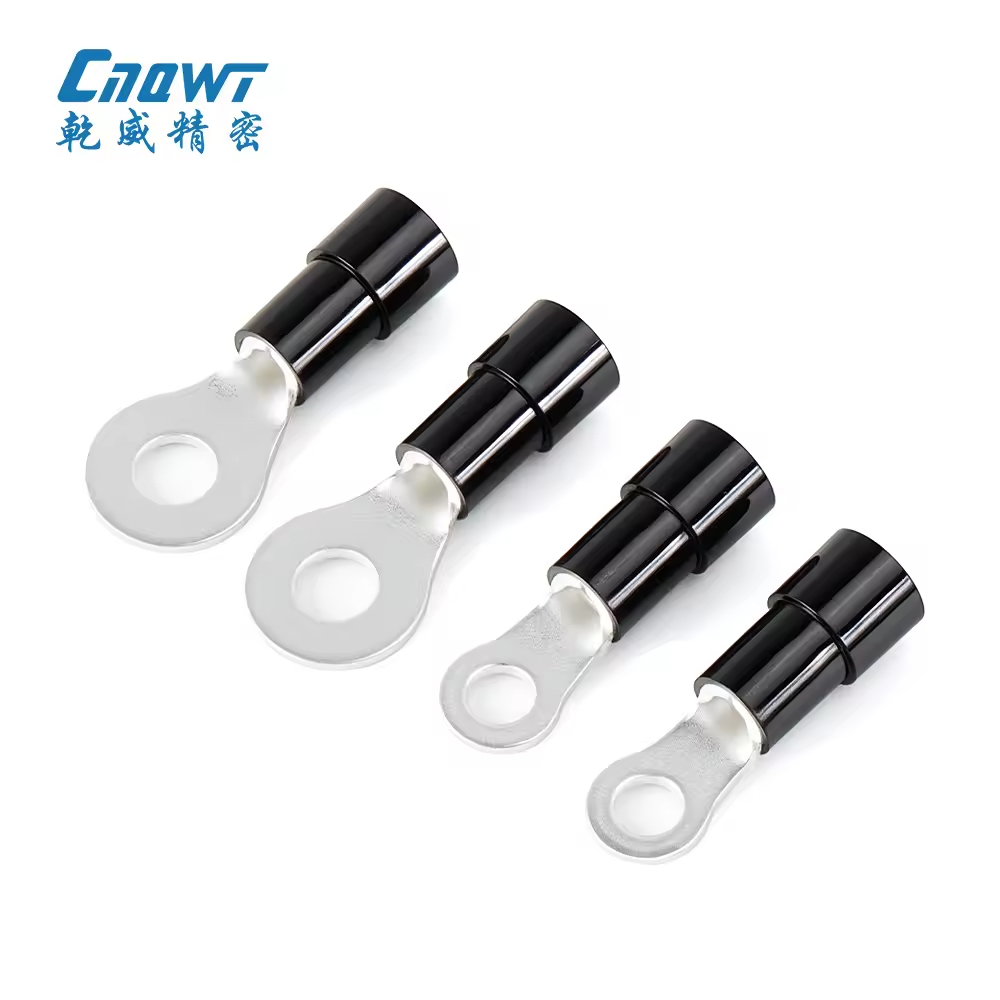
Ring Terminals
Ring terminals feature a circular opening that fits over a stud or bolt.
After installation, the fastening hardware secures the terminal in place.
The ring design provides excellent resistance to accidental disconnection.
Common applications include:
- Automotive batteries
- Marine equipment
- Industrial machinery
- Heavy-duty electrical systems
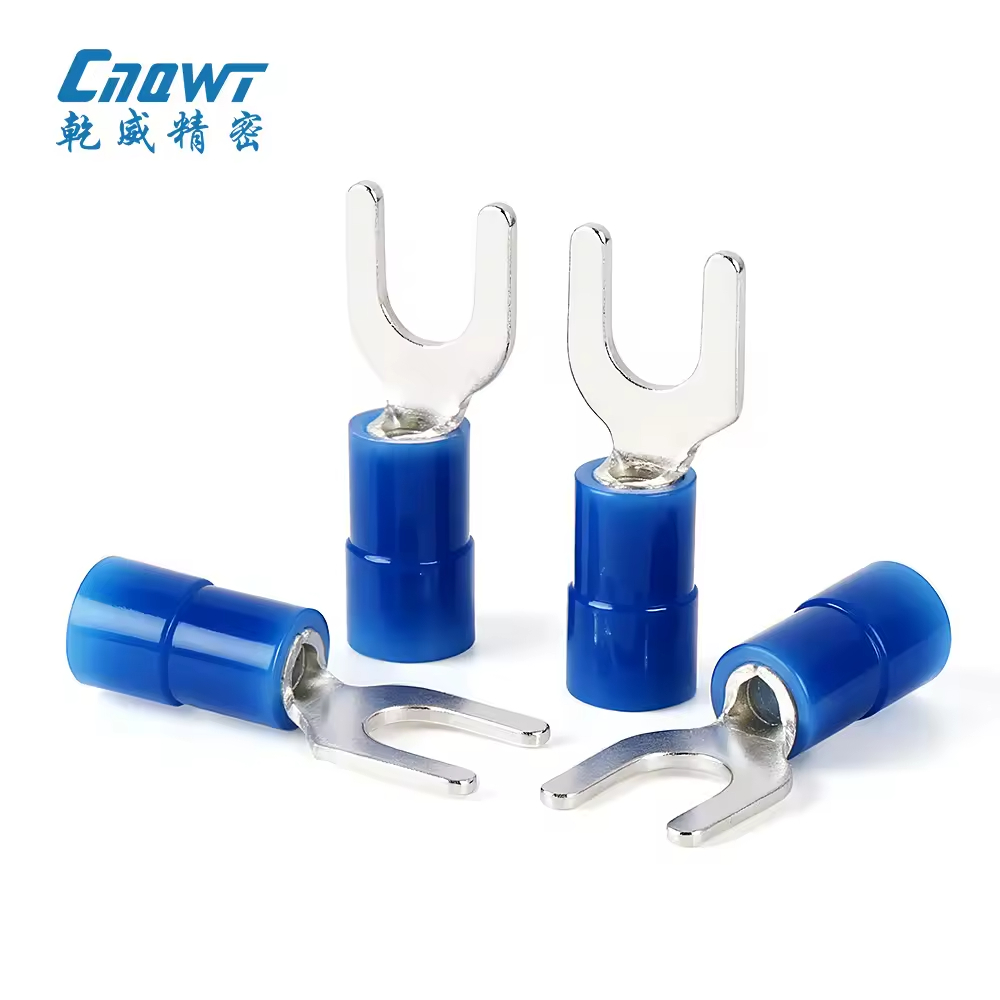
Spade Terminals
Spade terminals function similarly to ring terminals but feature an open-ended design.
This allows faster installation and removal without completely removing the fastening screw.
They are commonly used in applications requiring frequent maintenance or servicing.
What Factors Affect Electrical Terminal Performance?
Not all terminal connections perform equally. Several factors directly influence reliability.
Contact Pressure
Insufficient contact pressure is one of the most common causes of terminal failure.
Adequate pressure ensures:
- Low resistance
- Stable conductivity
- Reduced heat generation
Conductor Material
Most electrical systems use copper conductors due to their excellent conductivity.
However, aluminum conductors are also common in certain applications.
Terminal designs must be compatible with the conductor material to prevent issues such as galvanic corrosion or poor conductivity.
Terminal Material
Terminal materials commonly include:
- Brass
- Copper alloys
- Phosphor bronze
Each material offers different combinations of:
- Conductivity
- Strength
- Corrosion resistance
- Cost
Surface Plating
Surface plating significantly influences terminal performance.
Common plating options include:
- Tin
- Nickel
- Silver
Plating provides:
- Corrosion protection
- Improved conductivity
- Enhanced solderability
- Longer service life
Environmental Conditions
Environmental exposure can greatly affect connection reliability.
Factors include:
- Humidity
- Dust
- Chemicals
- Salt spray
- Temperature extremes
Terminals used in harsh environments often require specialized materials and protective coatings.
Common Reasons Electrical Terminal Connections Fail
Even well-designed terminals can fail if installation or operating conditions are inadequate.
Loose Connections
Loose connections often result from:
- Improper torque
- Vibration
- Mechanical wear
As contact pressure decreases, resistance increases and overheating may occur.
Improper Crimping
Incorrect crimping is a major cause of field failures.
Common defects include:
- Under-crimping
- Over-crimping
- Incorrect tool selection
- Incomplete conductor insertion
These issues reduce both mechanical strength and electrical performance.
Corrosion and Oxidation
Corrosion introduces non-conductive layers between contact surfaces.
This increases resistance and reduces current carrying capability.
Proper plating and environmental protection are essential for preventing corrosion-related failures.
Thermal Expansion and Contraction
Electrical systems often experience repeated heating and cooling cycles.
Over time, thermal movement can:
- Reduce contact pressure
- Loosen fasteners
- Accelerate material fatigue
Terminals must be designed to accommodate these changes.
High-Vibration Environments
Vibration can gradually weaken electrical connections.
Industries such as automotive, rail, aerospace, and heavy machinery place particularly high demands on terminal reliability.
Specialized terminal designs are often required to maintain stable performance under continuous vibration.
How Manufacturers Improve Terminal Reliability
Modern terminal manufacturers use advanced engineering techniques to maximize reliability.
Precision Stamping
High-precision stamping ensures consistent dimensions and contact geometry.
Controlled Plating Processes
Uniform plating thickness improves corrosion resistance and electrical performance.
Quality Inspection
Manufacturers perform dimensional and visual inspections throughout production.
Performance Testing
Common validation tests include:
- Pull-out force testing
- Contact resistance testing
- Current carrying capacity testing
- Vibration testing
- Salt spray testing
- Thermal cycling testing
These tests help ensure long-term field reliability.
Applications Where Terminal Reliability Is Critical
Reliable terminal connections are essential across many industries.
Automotive Wiring Harnesses
Modern vehicles contain hundreds or even thousands of terminal connections that must withstand vibration, heat, and moisture.
Industrial Automation Systems
Production equipment relies on dependable electrical connections for uninterrupted operation.
Power Distribution Equipment
High-current systems require terminals capable of handling significant electrical loads safely.
Renewable Energy Systems
Solar and wind installations depend on durable terminals that can survive decades of outdoor exposure.
Consumer Electronics
Compact devices require highly reliable terminal connections in increasingly limited spaces.
When correctly selected and installed, electrical terminals can provide reliable performance for decades.
Conclusion
Electrical terminals may be small components, but they have a significant impact on the safety, efficiency, and reliability of electrical systems. Understanding how they work helps engineers and buyers select the right connection solution for their specific applications.
At Qianwei Precision, we specialize in the design and manufacturing of high-quality electrical terminals for automotive, industrial, consumer electronics, and renewable energy applications. Contact our team today to discuss your project requirements and find the right terminal solution for your business.
FAQs
How do electrical terminals conduct electricity?
Electrical terminals conduct electricity by creating low-resistance metal-to-metal contact between conductors and electrical components.
What is the working principle of a crimp terminal?
A crimp terminal works by mechanically compressing a metal barrel around a conductor, creating a secure and highly conductive connection.
Why is contact pressure important?
Contact pressure ensures sufficient electrical contact area and minimizes resistance, heat generation, and connection degradation.
What causes electrical terminals to overheat?
Common causes include loose connections, excessive resistance, improper crimping, and overloading.
How does corrosion affect terminal performance?
Corrosion increases contact resistance and can eventually interrupt current flow.
Can electrical terminals loosen over time?
Yes. Vibration, thermal cycling, and improper installation can gradually reduce contact pressure.
Why are electrical terminals plated?
Plating improves corrosion resistance, enhances conductivity, and extends service life.
Which terminal type offers the best vibration resistance?
Properly installed crimp terminals and ring terminals generally provide excellent vibration resistance.

