

Modern vehicles rely on a complex network of wiring harnesses to distribute power and transmit signals across various systems. With over 3,000 wires arranged in nearly 40 wiring harnesses in today’s automobiles, understanding the types of wiring harness in cars is essential for automotive engineers, designers, and manufacturers. These harnesses are critical for ensuring system reliability, safety, and efficient vehicle performance.
What Is an Automotive Wiring Harness?
A car wiring harness is an organized assembly of electrical wires, connectors, and terminals designed to distribute electrical power and transmit signals between components. It provides a structured solution for connecting sensors, actuators, electronic control units (ECUs), lighting, and other electrical devices throughout the vehicle. High-quality automotive wiring harnesses improve installation efficiency, reduce errors, and protect circuits from heat, vibration, moisture, and electromagnetic interference.

Functions of Different Automotive Wiring Harnesses
Wiring harnesses in cars can be categorized by function:
-
Power Harnesses: Deliver electrical power to critical systems such as headlights, ignition, and other devices. Must handle high currents and remain durable under heat and vibration.
-
Signal Harnesses: Transmit low-voltage signals, sensor outputs, and data between electronic components. Proper shielding and routing minimize interference.
-
Multifunctional Harnesses: Combine power and signal transmission in a single assembly, reducing space requirements and simplifying installation.
Wiring Harness Types by Vehicle System
Automotive wiring harnesses are designed to meet the specific needs of different vehicle systems. The main types include:
-
Engine Harness: Connects alternators, ignition coils, fuel injectors, and sensors to the ECU; resistant to heat, vibration, and oil exposure.
-
Powertrain Harness: Extends from the engine to the transmission, starter motor, and battery, ensuring proper power and signal distribution across drivetrain systems.
-
Chassis Harness: Integrates circuits for braking systems, suspension modules, and exterior lighting; must withstand vibration and temperature variations.
-
Body and Interior Harnesses: Include doors, dashboard, seats, and trunk; power convenience and comfort features while being flexible and fatigue-resistant.
-
Safety and Control System Harnesses: Dedicated to airbags (SRS) and ABS/ESP modules; reliability is crucial for safety-critical systems.
-
Climate and Comfort Harnesses: HVAC, sunroof, and other comfort-related wiring; must resist heat and moisture.
-
Connectivity and Entertainment Harnesses: Antennas, GPS, cameras, ADAS modules, and infotainment systems; shielded for signal clarity.
-
Lighting and External Harnesses: Adaptive headlights, LEDs, trailer connections; organized routing ensures durability.
Electric Vehicle-Specific High Voltage Harnesses
Electric vehicles require specialized high-voltage harnesses to manage batteries, inverters, and charging systems. Key types include:
-
High Voltage Battery Harness: Connects battery to HVJB; insulated with XLPE and marked with orange jackets.
-
Inverter/Motor Controller Harness: Carries high-frequency switching currents; shielded to prevent interference.
-
DC-DC Converter Harness: Steps down voltage for 12V auxiliary systems.
-
Charging System Harnesses: Charging port and onboard charger harnesses; designed for AC/DC fast charging.
-
Safety & Monitoring Harnesses: BMS harness for battery monitoring and high-voltage interlock for technician safety.
Wiring Harness Structures
| Structure Type | Description | Typical Application |
|---|---|---|
| Closed Bundle | Wires grouped inside a sealed jacket; protects against dust, fluids, and wear | Engine bay, exterior wiring |
| Open Bundle | Wires grouped but exposed for easy access | Dashboard, interior cabin |
| Shrouded/Boxed Pins | Pins enclosed in a plastic deflector hood to prevent misalignment | Connectors with IDC ribbon cables |
| Polarized Connectors | Blocks incorrect insertion by design | Safety-critical systems, sensors |
Materials and Construction
Most automotive wiring harnesses use copper conductors for high conductivity, insulated with PVC or XLPE to withstand heat and mechanical stress. Protective jackets, braids, and heat shrink tubing enhance durability. Terminals are reinforced and plated to reduce corrosion and improve reliability.
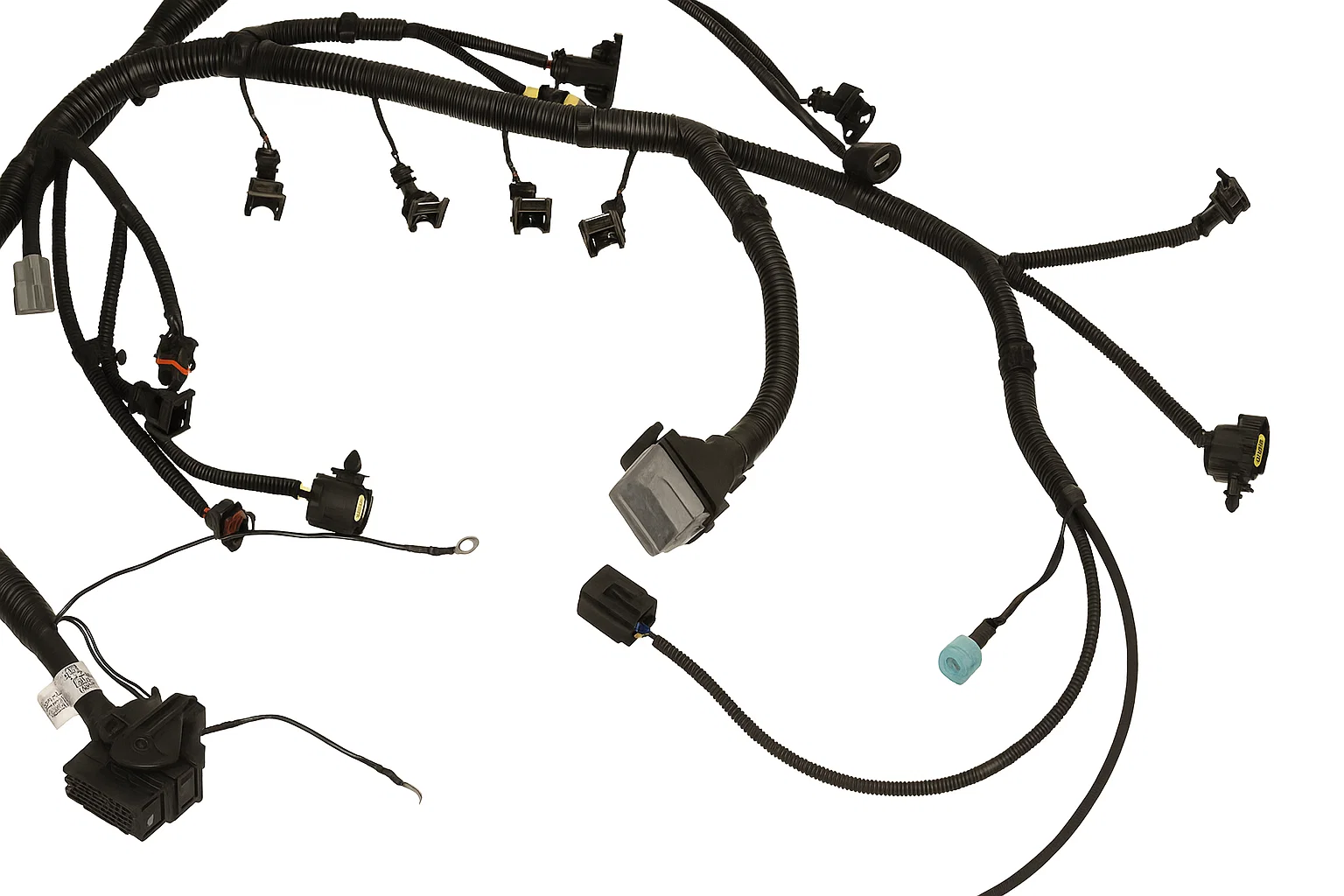
Technical Specifications Table: Automotive Wiring Harness Types
| Harness Type | Conductor Material | Insulation Material | Voltage Rating | Temperature Rating | Typical Application | Notes |
|---|---|---|---|---|---|---|
| Engine Harness | Copper | XLPE / PVC | 12–48V | -40°C to 125°C | Engine sensors, ignition coils | Heat & vibration resistant |
| Powertrain Harness | Copper | XLPE / PVC | 12–48V | -40°C to 125°C | Transmission, starter, battery | Supports torque control |
| Chassis Harness | Copper | PVC | 12V | -40°C to 105°C | Lights, ABS, suspension | Durable for exposed areas |
| Body Harness | Copper | PVC | 12V | -40°C to 105°C | Interior lighting, stereo, trunk | Flexible & fatigue resistant |
| Door Harness | Copper | PVC | 12V | -40°C to 105°C | Windows, locks, mirrors | Flexible for hinge movement |
| Dashboard Harness | Copper | PVC | 12V | -40°C to 105°C | Instrument cluster, infotainment | Multiple connector integration |
| Airbag/SRS Harness | Copper | XLPE | 12V | -40°C to 125°C | Airbags & restraint systems | High reliability & safety |
| ABS/ESP Harness | Copper | XLPE / PVC | 12V | -40°C to 125°C | Braking sensors & actuators | Signal integrity critical |
| HVAC Harness | Copper | PVC | 12V | -40°C to 105°C | Fans, blowers, control modules | Moisture resistant |
| EV High Voltage Harness | Copper / Aluminum | XLPE | 300–800V | -40°C to 150°C | Battery, inverter, DC-DC converter | Orange jacket, high insulation |
| Charging Port Harness | Copper | XLPE | 300–800V | -40°C to 150°C | AC/DC fast charging | Weather & heat resistant |
| BMS Harness | Fine-gauge Copper | PVC | 12V | -40°C to 105°C | Battery monitoring | Low-voltage signal lines |
Signs of a Faulty Wiring Harness
A malfunctioning wiring harness can cause:
-
Flickering or dimming lights
-
Intermittent power loss
-
Sensor or ECU malfunctions
-
Burnt wires or damaged insulation
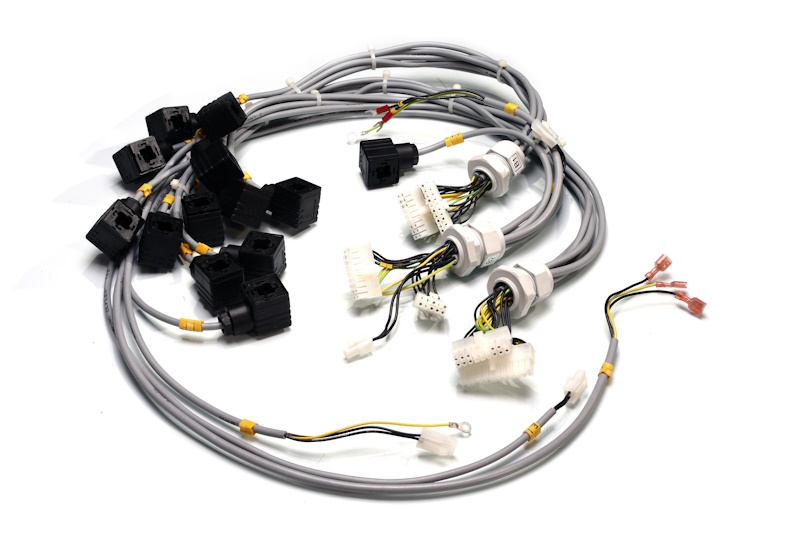
High-quality materials and precision manufacturing help prevent failures.
Conclusion
Understanding the types of wiring harness in cars is essential for vehicle design, safety, and maintenance. From power distribution to signal communication, these harnesses ensure reliable operation under extreme conditions. Electric vehicles add complexity with high-voltage harnesses, requiring specialized manufacturing standards. Partnering with a professional automotive wire harness manufacturer ensures precise design, durability, and compliance with safety regulations.
Contact Us for Your Solution
For custom automotive wiring harness solutions, professional design support, and high-quality manufacturing:
Contact Qianwei Precision today for assemblies tailored to both conventional and electric vehicles, engineered to withstand harsh automotive conditions and provide long-term reliability.

