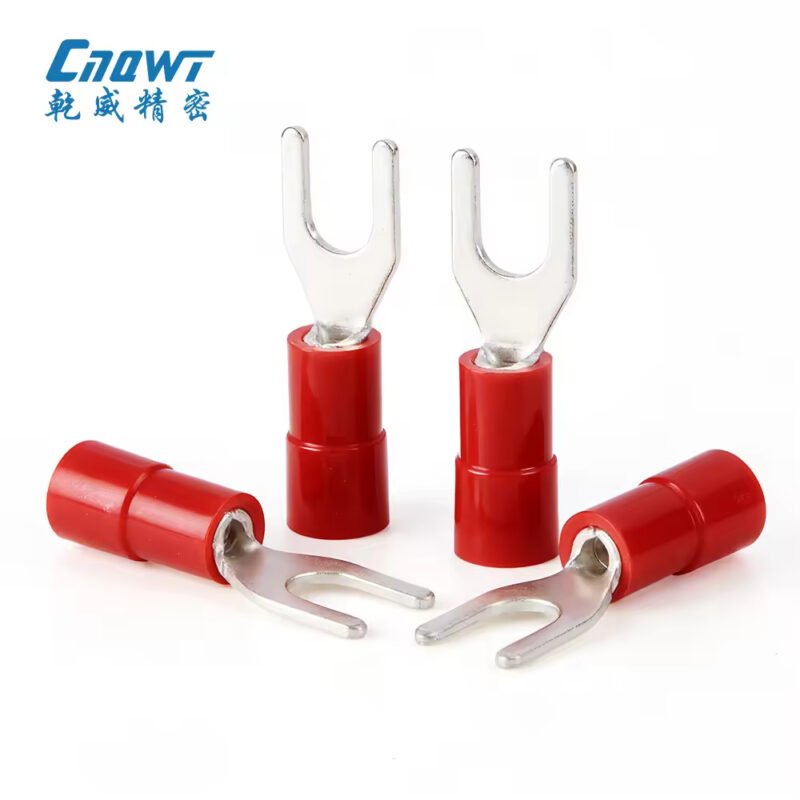
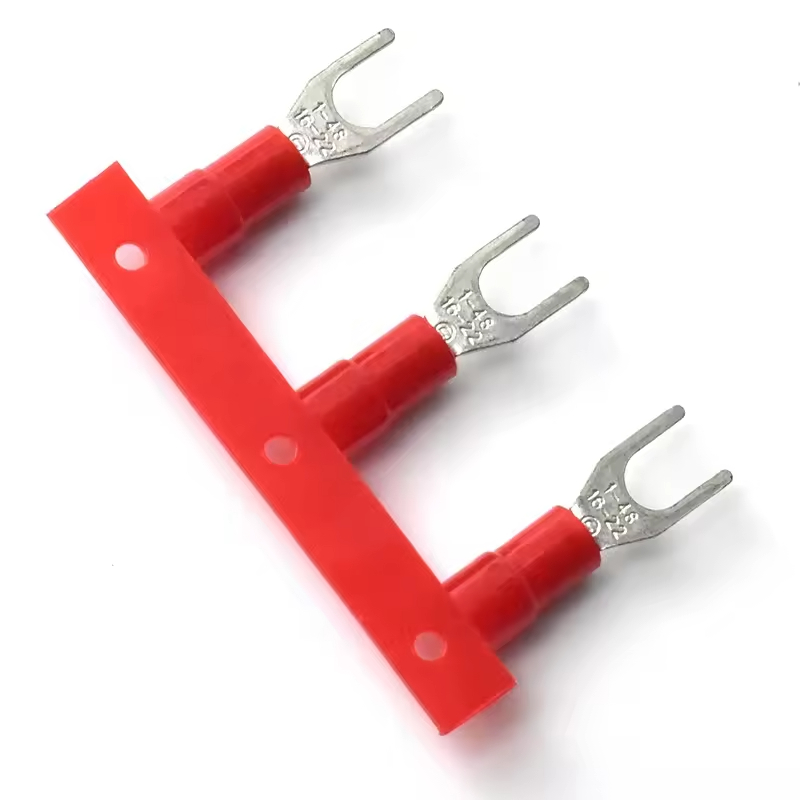
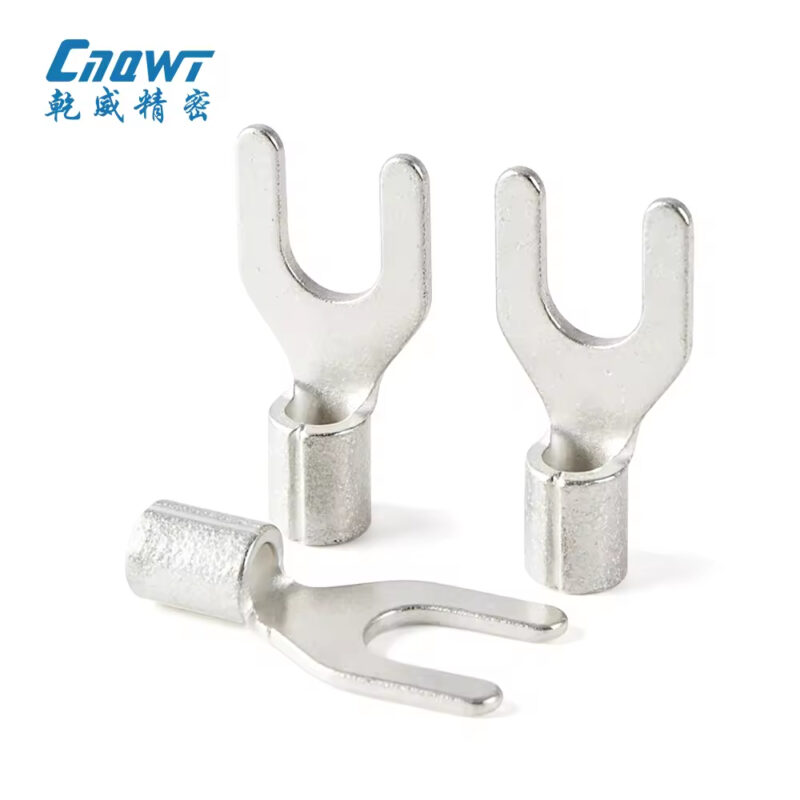
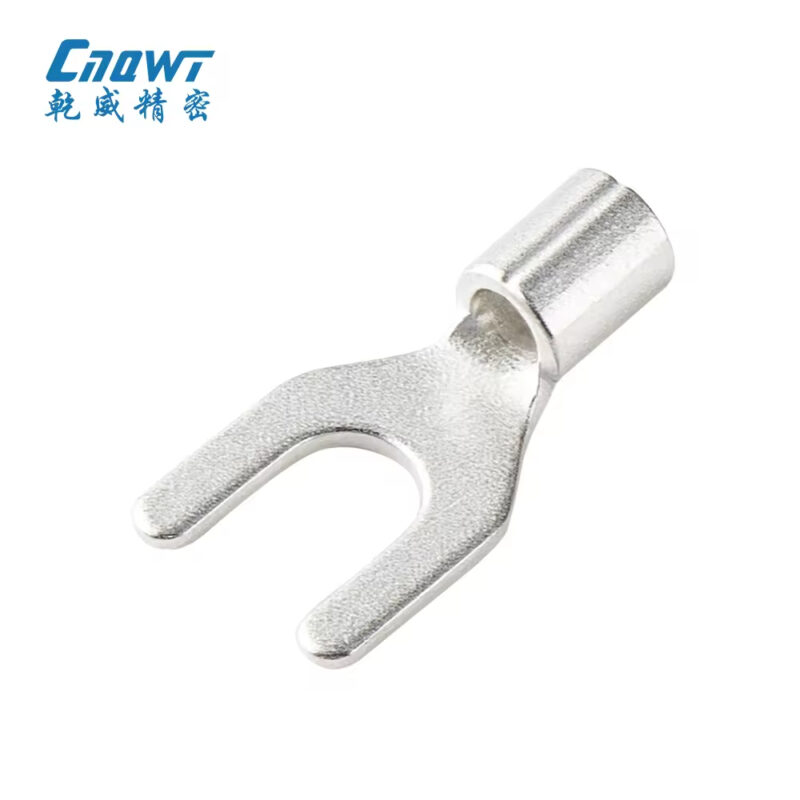
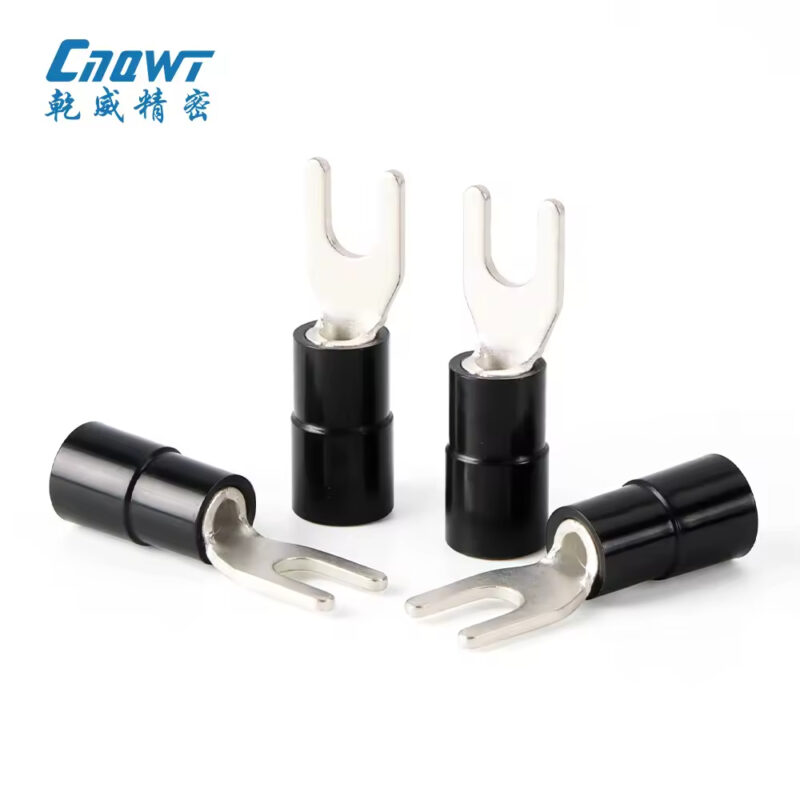
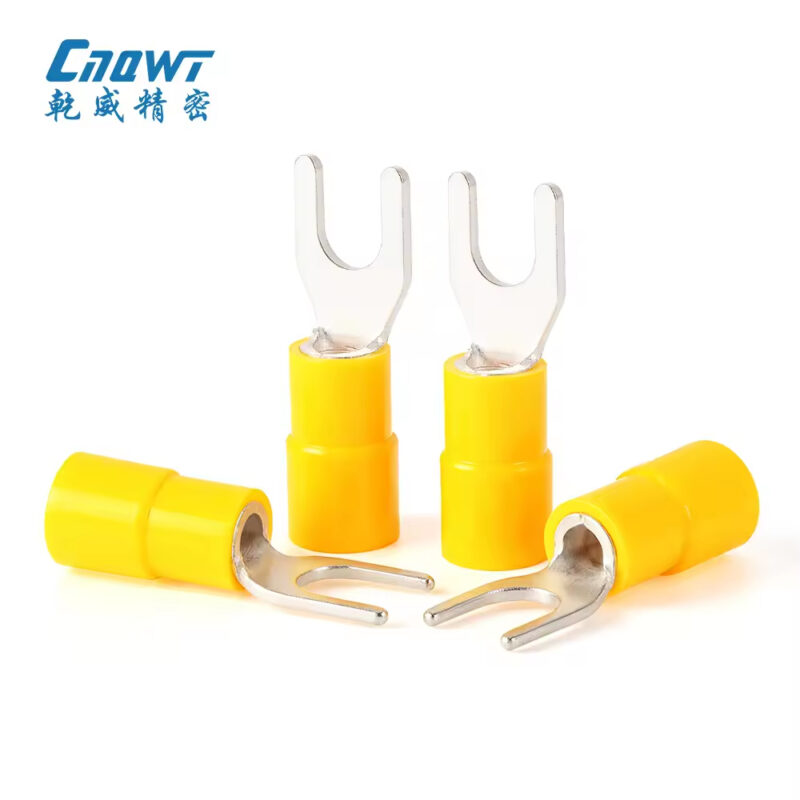
What Are Spade Terminals?
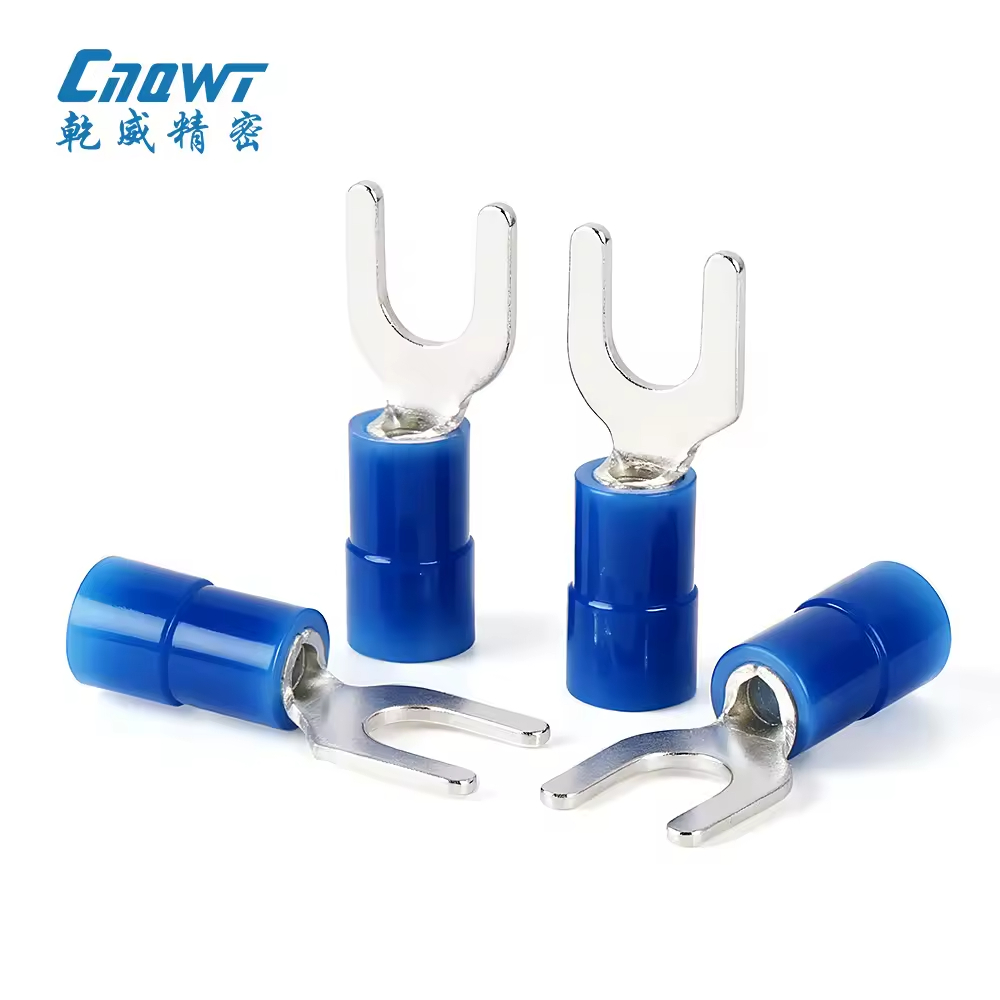
Spade terminals or fork terminals are electromechanical terminals that are used to end wires and to attach them to components in a forked or U-shaped design. Spade terminals do not surround a stud, creating a gap to enable connection or disconnection without necessarily removing the fastening hardware, unlike a ring terminal, which entirely encloses a stud. This ensures their application is especially helpful in maintenance or replacement without affecting other connections.
A spade terminal typically has two portions:
- Barrel – this is a conductor that is inserted, pressed, and crimped or soldered together so that it is both mechanically and electrically connected.
- Fork (Spade) – the protruded length that is attached to a stud, screw, or terminal post.
This design will provide the stability, balance, ease of use, and the high quality of electrical contact. Spade terminals and harnesses are common in automotive wiring systems, household appliances, industrial automation systems, and renewable energy systems, as they have both durability and fast disconnection capabilities.
Principles of Design in Engineering
The terminals of spades should be designed in such a way that considerations about electrical, mechanical, and environmental is taken into account. Individual components of the terminal, such as material selection, geometric set-up, and conductivity, retention, and durability, are all influenced.
1. Electrical Conductivity and Current Carrying Capacity
The major role of spade terminals is the effective transmission of electricity. In order to reduce voltage drops and energy loss, high-conductivity materials like electrolytic copper are used. The correct barrel and fork geometry applies constant electrical contacts and less resistance, particularly with heavy current flow.
Surface treatments, precision forming, and careful crimping are also used to further provide electrical conductivity. All these factors are a guarantee of a consistent and stable current flow at spade terminals under different environmental and operational conditions.
2. Simple, Quick Discoverability and Capsulability
Spade terminals are terminals that are particularly intended to have fast connection and disconnection. The fork shape may be slipped onto a stud or screw without removing the fastening hardware entirely. This is quite beneficial in those applications that need regular service systems, examination, or renewal of the parts.
Another advantage of ease of installation is that it lowers expenses on labeling and the chances of causing harm to the conductor or terminal when assembling.
3. Mechanical Strength and Retention Force
Spade terminals, though needed to serve quick disconnection purposes, still need to offer secure mechanical retention. These factors are the material thickness, crimping accuracy, and fork geometry, which affect the stability of the terminal. Correctly crimped spade terminals can withstand wire pull-out and continue to be mechanically sound, in spite of the vibration, tension, bending strain, etc.
4. Contact Surface Optimization
The electrical efficiency directly depends on the quality and size of the contact surfaces of the spade terminal and the mating stud. Flat surfaces with smooth and adequate surfaces are also required to provide minimum resistance and eliminate localized heating. The process of precision stamping and forming contributes to the attainment of necessary levels of surface quality and dimensional consistency.
5. Secure Fit and Vibration Resistance
Terminals can be subjected to vibrations continuously, mostly in industrial and automotive settings. The prong geometry of the spade terminals would provide a good fit of the stud, but yield reliability upon installation. During vibrational stress, high retention ensures that disconnection does not take place accidentally and that operations of the electric elements are not interfered with.
6. Heat Dissipation and Thermal Performance
Heat is produced as a result of running electrical currents. With the spade terminals, they are designed in such a manner that they do not deteriorate when it comes to changes in temperature. The choice of material, the treatment of surfaces, and the optimization of contacts allow the removal of heat effectively and the prohibition of overheating, ensuring the reliability of performance in harsh conditions in the long term.
Materials Use in Spade Terminals
The performance, durability, and environmental resistance of spade terminals largely depend on the choice of their materials. Qianwei Precision applies high-quality metals to satisfy the expectations of various applications:
| Material | Key Properties | Typical Use |
| Electrolytic Copper | High conductivity, ductile | Standard electrical wiring |
| Brass | Moderate conductivity, higher mechanical strength than copper, good corrosion resistance | Mechanical terminals, screw-type connectors |
| Phosphor Copper (Phosphor Bronze) | Excellent elasticity, fatigue resistance, good conductivity | Spring terminals, connectors requiring repeated flexing |
| High-Conductivity Alloys | Enhanced strength and conductivity | High-performance or industrial use |
| Insulation Materials (PVC, Nylon, Heat Shrink Tubing) | Electrical insulation, strain relief | Insulated and heat-shrink connectors |
Overview of the Manufacturing Processes
The manufacturing of the spade terminals is a process that goes through multiple steps that are corrective and controlled in order to guarantee the quality and reliability. All the steps are strictly followed to ensure both mechanical strength and electrical performance of all the batches.
1. Raw Material Inspection
Every metal and alloy that comes in is thoroughly checked in terms of composition, mechanical characteristics, and conductivity. Only those materials that satisfy tight specifications are passed onto the production process, and this will provide the terminals with a stable and dependable base. Such inspection stops defects at an early stage and guarantees long term result in the most demanding applications.
2. High-Speed Stamping Precision
The spade form is cut and shaped by high-speed stamping machines using metal sheets with high tolerances. Application of accuracy stamping guarantees identical prong sizes, even contacts, and mechanical excellence. High-volume production without reduction in dimensional accuracy or surface quality can be achieved through this process.
3. Fork (Spade) Shaping and Forming
The parted point is well shaped so as to be within targeted sizes and angles. This is done so that the spade can be pushed into standard studs/posts and so that it can have a good electrical connection. Shaping also helps in minimizing stress points, hence minimizing the chances of deformation when installing the product.
4. Development of Barrel Forming and Crimp Structure
The wire conductor is received in the barrel. Its structure allows ensuring the maximum overall contact between the strands of the wire and the terminal, which increases mechanical fixation and the accuracy of electrical contacts. A developed barrel is key to the regularity of crimp quality, and electrical failures are avoided.
5. Annealing and Heat Treatment
The heat treatment, in turn, makes it more flexible, decreases internal stress, and augments the mechanical properties of the terminal. Annealed terminals are less difficult to crimp and are long-term durable. It is also undertaken to enhance fatigue resistance, and the terminal will not fail due to repetitive vibrations or mechanical loads.
6. Surface Treatment and Electroplating
Thin coatings such as tin, nickel, silver, or gold plating enhance corrosion resistance, electrical behavior, and environmental integrity. Plating avoids oxidation and improves service life in arduous conditions. Electroplating also increases the solderability of the terminal and provides uniform conduction over time.
7. Crimp Quality Check and Calibration
Barrels are inspected and calibrated to ensure that crimp sizes are correct. This measure will make sure the terminal is offering a predictable electrical and mechanical service. Calibration ensures conformity with commercial crimping machines and eliminates incorrect connections.
8. Final Inspection and Testing
Electrical resistance, pull-out strength, and visual check of the terminals are performed to make sure that the quality standards are met. Approved terminals only go to packaging. These last tests ensure the stability of the terminal both at low and high power.
9. Automated Packaging and Production
Automation provides the stability of quality and high-volume productivity. The assembly and packaging are automated in order to reduce human error and ensure consistency in large batch production. It is also traceable and can be easily labeled through automation, facilitating the easy handling of inventory and integration into OEM.
Standard Sizes and Technical Specifications of Spade Terminals
Here is a brief table for the specifications of the spade terminal.
| General Specification | Parameter |
| Conductor Size (AWG / mm²) | 22–6 AWG (0.3–16 mm²) |
| Stud Size / Fork Opening Width | 2–10 mm |
| Current Rating | 1–50 A |
| Voltage Rating | 12–600 V |
| Operating Temperature Range | -40°C to 125°C |
| Contact Resistance | ≤5 mΩ |
| Barrel Length | 8–25 mm |
| Barrel Wall Thickness | 0.3–1.2 mm |
| Insulation Compatibility | Nylon, PVC, Heat Shrink, Rubber |
☞ Contact us for your quote today
Plating Technology and Surface Finishes
Surface finishes improve the capability and life of the terminal. Typical plating reagents are:
1. Tin Plating
Tin plating is affordable and resistant to corrosion, making it reliable as a conductive material used for general purposes. It is also well solderable, and therefore terminals can be used in both electronics and automotive systems.
2. Nickel Plating
Nickel-plated terminals are durable and resistant to heat and are appropriate in high temperature and industrial conditions. Nickel plating guarantees protection of terminals against corrosion and wear, even in extreme conditions.
3. Silver Plating
Silver has good conductivity, it is very resistant to corrosion as well; Good for high precision and high-performance. Its high conductivity is such as to avoid low voltage drop in high-sensitivity electrical systems.
4. Gold Plating
Gold plating is used to provide stable conductivity and a high level of corrosion resistance when it is required in a sensitive environment or where it must pass high levels of reliability. Gold-plated terminals are of particular use in aerospace, medical, and precision electronics, where reliability is paramount.
Types of Spade Terminals
Spade terminals are designed and manufactured in different forms to satisfy particular electrical and mechanical needs. The right choice of type provides reliable connections and security as well as performance in different applications.
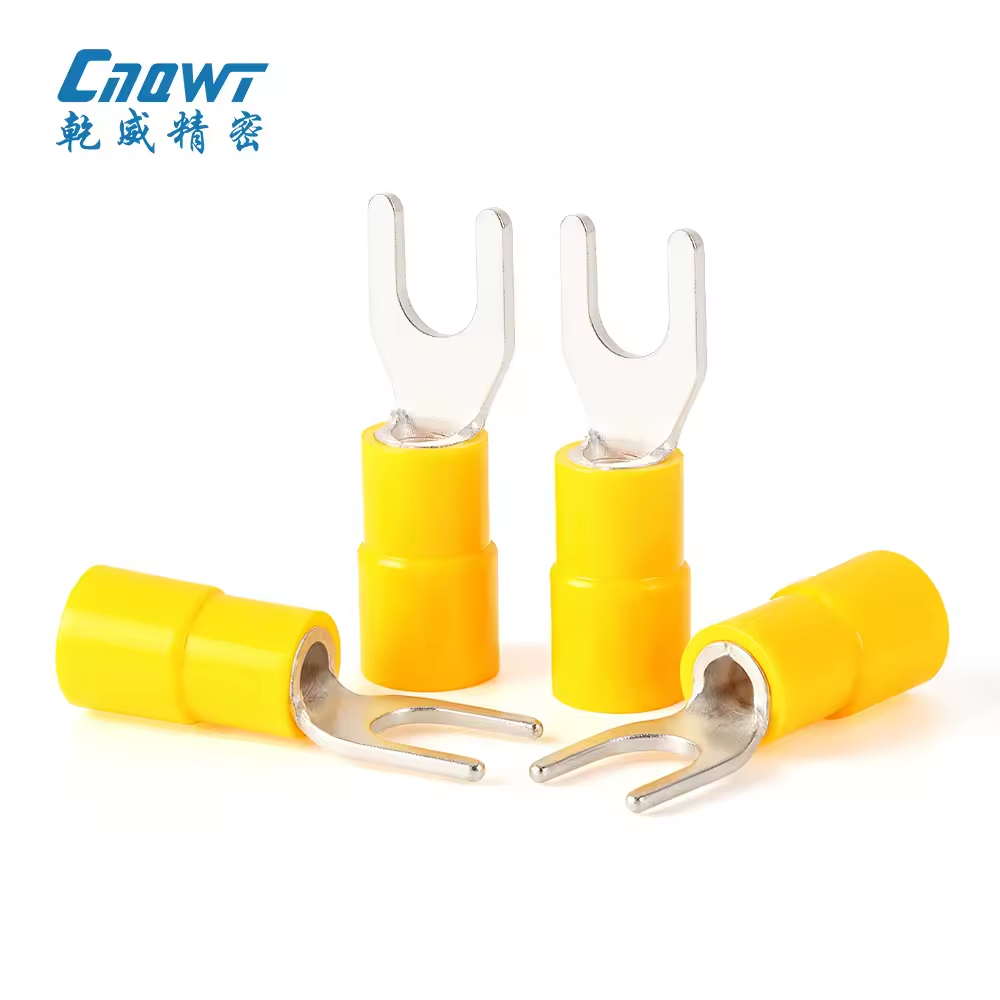
1. Insulated Spade Terminals
Insulated spade terminals with a protective sleeve composed of heat-resistant nylon or PVC to avoid short circuiting and unintentional touching. They are commonly applied in automotive wiring, control panels, industrial systems, and devices, giving them strain relief and performance in dynamic applications.
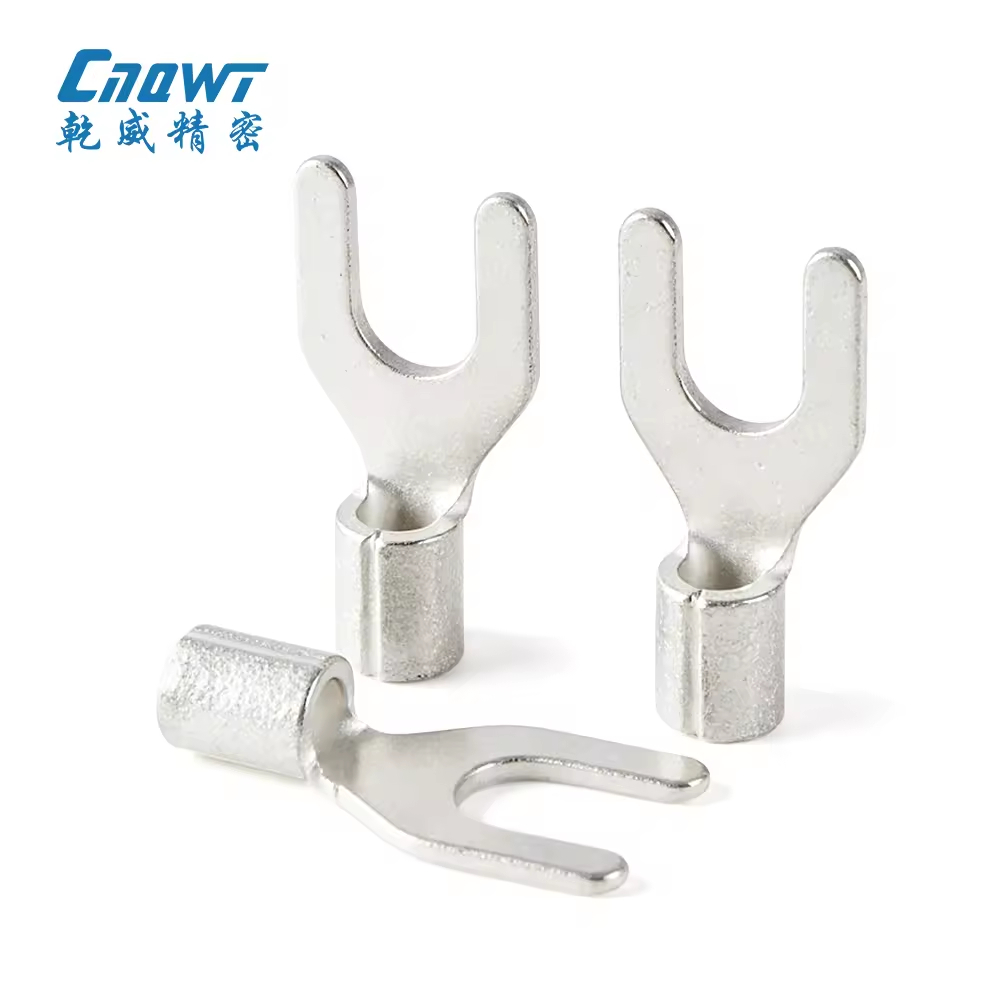
2. Non-Insulated Spade Terminals
Non-insulated spade terminals are flexible (can be insulated to custom or everything can use high temperature). They allow the actual inspection of the crimped connection and are usually used on industrial equipment, high-temperature circuits, or in tight wiring areas.
3. Spade terminals fully insulated (sleeved)
The insulation and mechanical strain relief. Fully insulated or sleeved spade terminals are used in combination. The sleeve is waterproof, shockproof, and does not experience accidents, so it is suitable for automotive harnesses, industrial machinery, and consumer electronics.
4. Locking Spade Terminals
Locking spade terminals have mechanical latches and crimps on them to avoid disconnection due to an accident. They offer safe and sound connections where they are used in engines, heavy machinery, and automated systems with high vibrations.
5. Heat Shrink Spade Terminals
Heat-shrink spade terminals are used with heat-activated tubing, forming a waterproof and corrosion-free seal. The terminals can be used in outdoor, marine environments, and also in the automotive industry, and they are provided with insulation together with strain relievers to ensure long-running connections.
6. Hot Gas Spade Terminals
The high-temperature spade terminals are constructed using materials that do not conduct when subjected to high temperatures, and those materials that do not lose their conductivity and mechanical strength when subjected to such high temperatures. Applications of them include engine bays, industrial kilns, and large power circuits where standard terminals would not work.
7. Heavy-Duty Spade Terminals
Heavy-duty spade terminals have been developed to withstand high-current, harsh conditions. They have reinforced barrels and wider forks and can hold large electrical loads with safe connections in industrial equipment, power distribution systems, and commercial vehicles.

Spade Applications in the Industries
Spade terminals are applicable in numerous industries:
- Automobile and Passenger Vehicles –Wiring harness, battery connections, and lighting.
- Electrical Control Systems and Panels –Trustworthy circuit breaker and switch connections.
- Industrial Machinery and Automation –SMART performance in vibrating conditions and motor connections.
- Household Issues – heating oven, fridges, and washing machine.
- Power Distribution Systems –Protection of electrical energy transmission.
- Renewable Energy Systems (Solar and Wind) – Sturdy connections to harvest and exchange energy.
- Telecommunications Equipment – Stable, low resistance signal and power connections.
OEM Solutions and Customization
Qianwei Precision offers customized spade terminals to match special design and application requirements:
- Personal fork width/thickness specification.
- Color coding and special insulation.
- Special surface or plating.
- Branding, laser marking, and serial numbering.
- Supply chain management and bulk packaging.
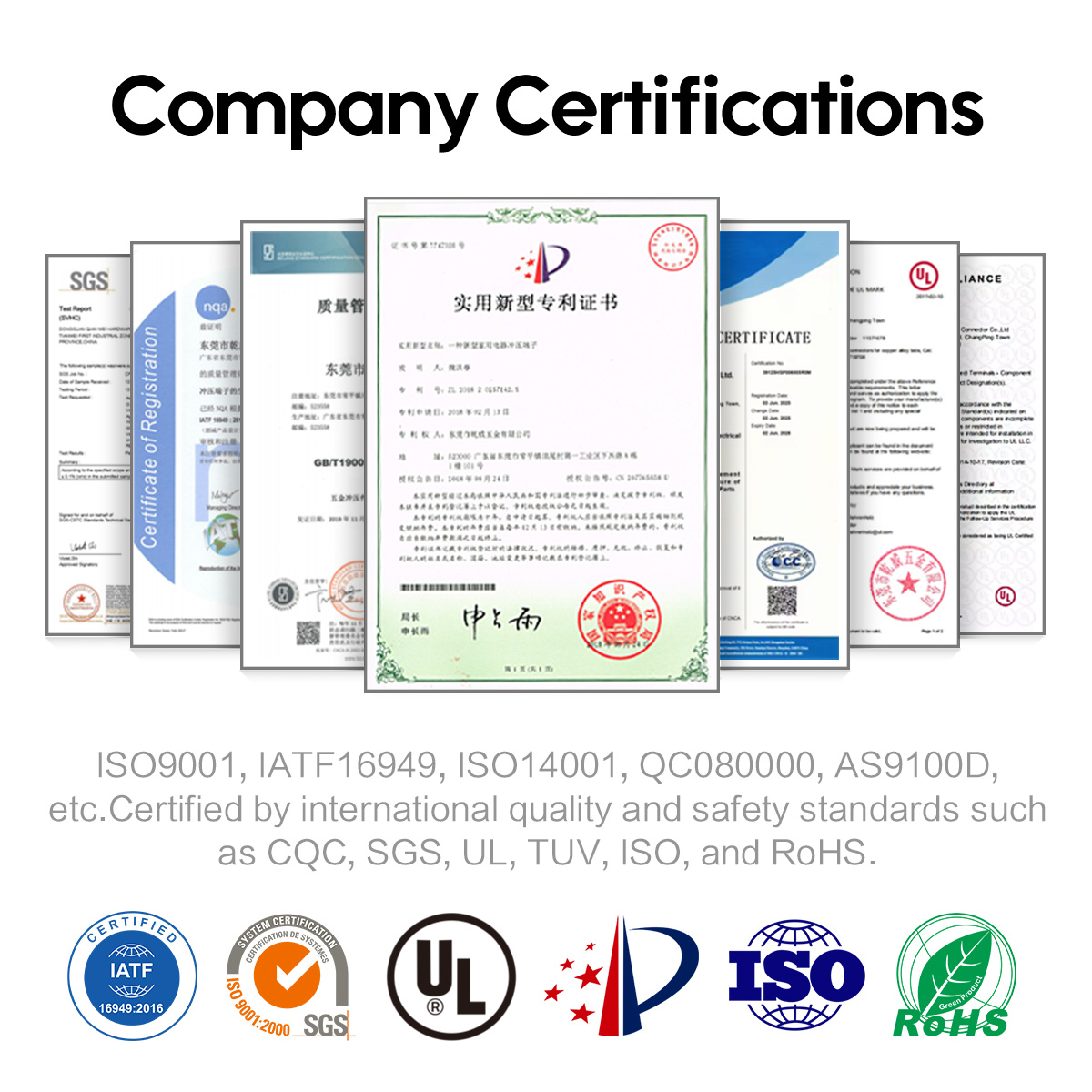
Quality and Compliance
Spade terminals manufactured by Qianwei Precision meet international quality and safety:
- Quality Management Systems (In the ISO 9001).
- IATF 16949 Automotive Standards
- RoHS and REACH Compliance
- UL Certification Support
- Detailed electrical and mechanical testing.
- Salty and atmospheric outer tests.
Why select Qianwei Precision to Spade Terminals?
State-of-the-art stamping and forming capabilities.
- Electrical transmission materials.
- Tight quality control and performance testing.
- Extensive selection of standard and tailored solutions.
- Odentified automation that guarantees standard production quality.
- International OEM supply and logistics.
☞ Contact us for your quote today
Conclusion
Spade terminals are very much a vital interconnection used in current electrical systems as it offers a combination of dependability, effortless installation, and long electrical operation. Their design is fork-shaped, their material choice is quality, and their production technologies are highly developed, which guarantees safe connections in the automotive industry, households, and energy generation.
Qianwei Precision offers excellent spade terminals that give special attention to performance, customization, and international standards, and becomes a perfect candidate partner to OEMs and system integrators around the globe.
Require high-quality and reliable spade terminals? Call Qianwei Precision with questions, samples, or special solutions.
FAQs
What is a spade terminal?
A spade terminal is a terminal in the form of forks designed to connect the wires and slide easily enough into studs and screws, and be firmly clamped.
What is the right choice of size?
Select based on wire diameter, fork diameter, and stud diameter to fit.
What are the standard materials used?
Electrolytic copper, tinned copper, brass, phosphor bronze, aluminum, and high-conductivity alloys.
Are spade terminals able to withstand a high-temperature environment?
Yes, the use of high-temperature design and proper plating guarantees performance.
Do spade terminals work on high current?
Even high-current versions can be supported in size and crimped when sized properly.