

Introduction
Choosing an electrical terminal might seem like a small decision—but if you’re dealing with high-current applications, it’s actually one of the most important choices you’ll make.
Think about systems like:
EV charging equipment
Battery packs and energy storage
Solar inverters
Industrial machinery
All of these systems carry large amounts of current. And in these cases, the electrical terminal is not just a connector—it’s a critical performance component.
Here’s the reality:
👉 Many system failures don’t come from big components—they come from small connection points.
A poorly chosen terminal can lead to:
Overheating
Energy loss
Loose connections
System downtime
The good news?
Once you understand what to look for, choosing the right terminal becomes much easier.
In this guide, we’ll walk through everything step by step in a simple, practical way.
What Is a High-Current Application?
Before choosing anything, let’s quickly define what “high current” actually means.
In general:
Below 10A → low current
10A–50A → medium
50A+ → high current
150A–500A+ → very high current
You’ll see high-current applications in:
EV chargers (especially fast charging)
Battery systems
Renewable energy systems
Industrial equipment
👉 The higher the current, the more stress on the connection—and the more important the terminal becomes.
Why Terminal Selection Becomes Critical at High Current
At low current, small issues might not matter much.
At high current, even tiny problems can quickly turn into serious failures.
1. Small Resistance = Big Heat
Every connection has some resistance. That’s normal.
But here’s the key point:
👉 Heat increases with the square of the current (I²R loss)
That means:
Double the current → four times the heat
So if your terminal connection is not perfect:
It heats up quickly
Efficiency drops
Parts start to degrade
2. Heat Creates a Chain Reaction
Here’s what often happens in real systems:
Poor contact → higher resistance
Higher resistance → more heat
Heat → metal expands
Expansion → connection loosens
Loose connection → even more resistance
👉 This loop continues until something fails.
That’s why thermal performance is so important.
3. Mechanical Stress Makes It Worse
High-current systems are rarely static.
You often have:
Vibration (especially in EVs or industrial equipment)
Cable movement
Daily use cycles
If the terminal isn’t strong enough:
It loosens over time
Contact quality drops
Heat increases
4. Safety Is at Stake
In high-current systems, a bad connection can cause:
Electrical arcing (sparks)
Short circuits
Fire risks
👉 This is why choosing the right terminal is not just about performance—it’s about safety.
Step-by-Step: How to Choose the Right Terminal
Let’s break this down into a simple checklist you can actually follow.
1. Start with Current Rating (Always First)
This is the most important factor.
Your terminal must be able to handle:
Continuous current
Peak current
Practical tip:
👉 Don’t choose a terminal that is “just enough”
Always add a 20–30% safety margin.
Example:
System current = 100A
Choose terminal rated for at least 120–130A
This helps prevent overheating and extends lifespan.
2. Choose the Right Material
Material directly affects performance.
Copper (Basic Standard)
Copper is widely used because:
Very good conductivity
Good heat handling
Strong and durable
Tinned Copper (Best Overall Choice)
Tinned copper is copper with a thin tin coating.
This gives you:
Better corrosion resistance
Longer life in outdoor environments
More stable performance over time
👉 For most applications, this is the recommended option.
Silver-Plated Copper (For High-End Systems)
Silver improves conductivity even further.
Used in:
EV fast charging
High-performance equipment
👉 Better performance, but higher cost.
3. Match the Terminal to the Cable Size
This is where many problems happen.
The terminal must match the wire size perfectly.
If the terminal is too small:
Hard to insert wire
Poor crimp
Overheating
If the terminal is too large:
Loose connection
High resistance
Unstable performance
👉 Always match:
AWG (American standard)
Or mm² (metric standard)
4. Look at the Contact Design
The shape and structure of the terminal matter more than you think.
Why contact area matters:
Larger area = lower resistance
Better heat distribution
More stable connection
Example:
Ring terminals → very stable (best for high current)
Open connectors → less stable
👉 For high current, always prioritize secure and large contact designs
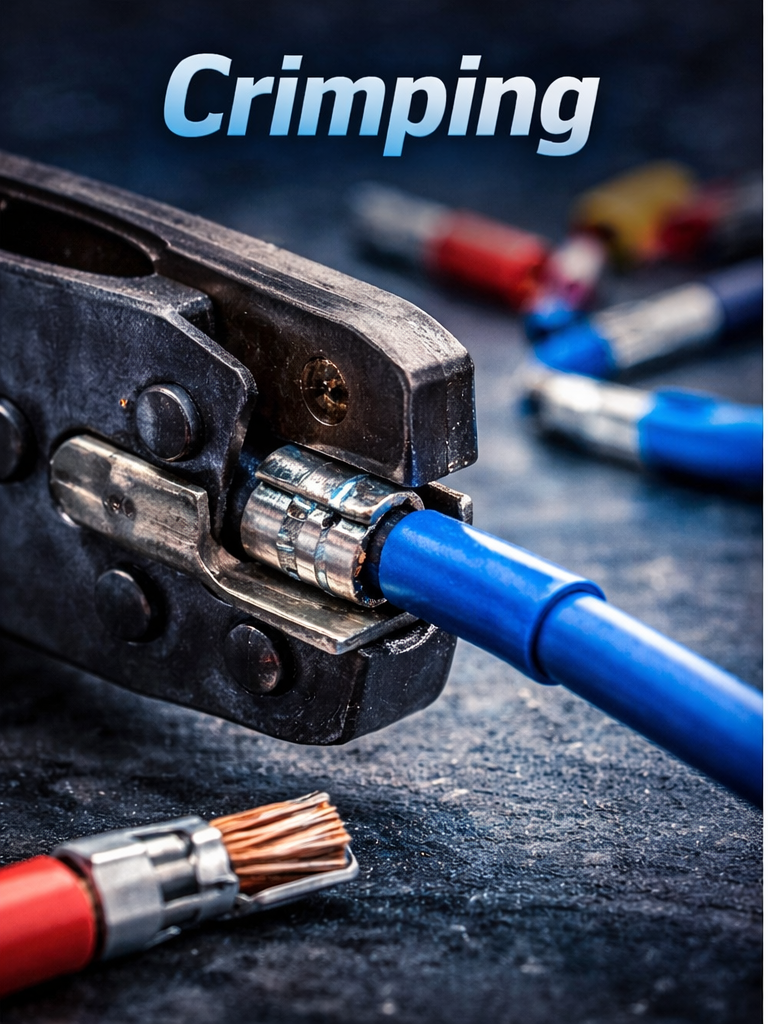
5. Pay Attention to Crimping Quality
Even the best terminal can fail if the crimp is poor.
A good crimp:
Is tight and solid
Has no air gaps
Creates a “gas-tight” connection

Common mistakes:
Using wrong tool
Not applying enough pressure
Over-crimping (damaging the wire)
👉 For high-current systems:
Use professional or hydraulic crimping tools
6. Consider Thermal Performance
Heat is your biggest enemy.
A good terminal should:
Stay cool under load
Handle temperature changes
Maintain stable contact
What affects thermal performance:
Material
Contact area
Crimp quality
👉 If heat is not controlled, failure is only a matter of time.
7. Check Mechanical Strength
Your terminal must survive real-world conditions.
It should resist:
Vibration
Pulling force
Repeated use
This is especially important in:
EV systems
Industrial machines
8. Think About Corrosion Resistance
If your system is outdoors or in a humid environment:
Corrosion will happen.
To prevent this:
Use tinned or plated terminals
Apply heat shrink tubing
Use protective coatings
👉 Corrosion increases resistance and leads to failure.
9. Don’t Ignore Certifications
Always check if the terminal meets standards like:
IEC
👉 This ensures:
Safety
Quality
Market acceptance
Common Mistakes to Avoid
Let’s keep this practical—these mistakes happen all the time:
❌ Choosing Based on Price Only
Cheap terminals often mean:
Lower copper quality
Poor plating
Result:
Higher resistance
Shorter lifespan
❌ Ignoring Heat
Many failures come from:
👉 Underestimating thermal effects
❌ Poor Installation
Even a good terminal fails if:
Crimping is wrong
Torque is incorrect
❌ Wrong Size Matching
This leads to:
Loose connections
Overheating
Best Practices for Installation
If you want long-term reliability, follow these:
Use the correct crimping tool
Apply proper torque
Use heat shrink insulation
Test under real load
Check connections regularly
👉 Installation quality is just as important as product quality.
Real Applications (Where This Matters Most)
You’ll see high-current terminals in:
EV charging stations
Battery energy storage systems
Solar power systems
Industrial power equipment
Each application is different—but the selection principles stay the same.
Why Supplier Quality Matters
Even if you choose the right specs, your supplier still matters.
A good supplier ensures:
Consistent materials
Precise manufacturing
Reliable performance
Why Choose Qianwei Precision
Qianwei Precision focuses on high-performance electrical terminals for demanding applications.
What you get:
High-purity copper
Precision design
Advanced plating (tin, silver)
Strict quality control
Custom solutions for your needs
👉 Whether standard or custom, Qianwei helps you build reliable systems.
Contact us today for a quote or technical support.
Conclusion
Choosing the right electrical terminal for high-current applications is not complicated—but it does require attention to detail.
Focus on:
Current rating
Material
Proper installation
And you’ll avoid most common problems.
👉 In high-current systems, small components make a big difference.
FAQ
1. What is considered high current?
Usually above 50A, but EV systems can exceed 500A.
2. What is the best material?
Tinned copper is the most practical choice.
3. Why do terminals overheat?
Because of poor contact, wrong size, or high resistance.
4. Is crimping better than soldering?
Yes, crimping is stronger and more reliable in high-current systems.


2 thoughts on “How to Choose Electrical Terminals for High-Current Applications (A Simple, Practical Guide)”