

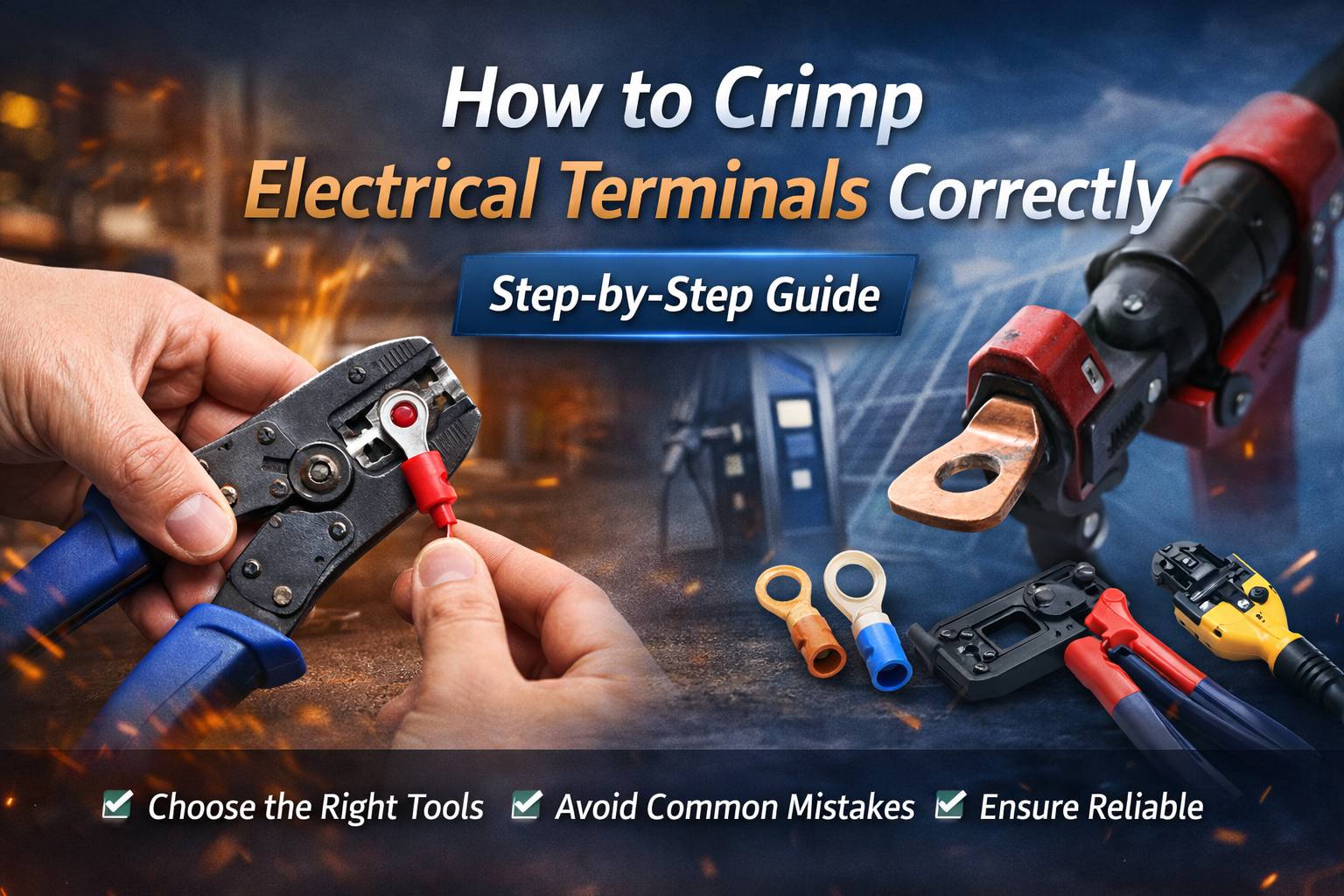
Introduction
If you work with electrical wiring, knowing how to crimp terminals correctly is not optional—it’s essential.
A poor crimp can lead to:
- Loose connections
- Increased resistance
- Overheating
- Even complete system failure
And in high-current applications like battery systems, EV charging, or industrial equipment, these issues can quickly become serious safety risks.
The good news is that proper crimping isn’t complicated—you just need the right tools, the right technique, and a clear understanding of the process.
In this guide, we’ll walk you through everything you need to know, step by step, so you can create secure, reliable, and professional-grade electrical connections every time.
What Is Electrical Terminal Crimping?
Crimping is the process of mechanically compressing a terminal onto a wire to create a strong electrical and physical connection.
Instead of melting metal like soldering, crimping works by:
- Deforming the terminal around the conductor
- Creating a tight, gas-resistant connection
- Ensuring consistent conductivity
Why is crimping widely used?
Because it offers several key advantages:
- Consistent and repeatable results
- Low electrical resistance
- High mechanical strength
- Faster installation compared to soldering
That’s why crimping is the standard method in industries like automotive, EV, aerospace, and industrial manufacturing.
Tools Required for Crimping Electrical Terminals
Before you start, you need the right tools. Using the wrong tool is one of the biggest reasons crimping fails.
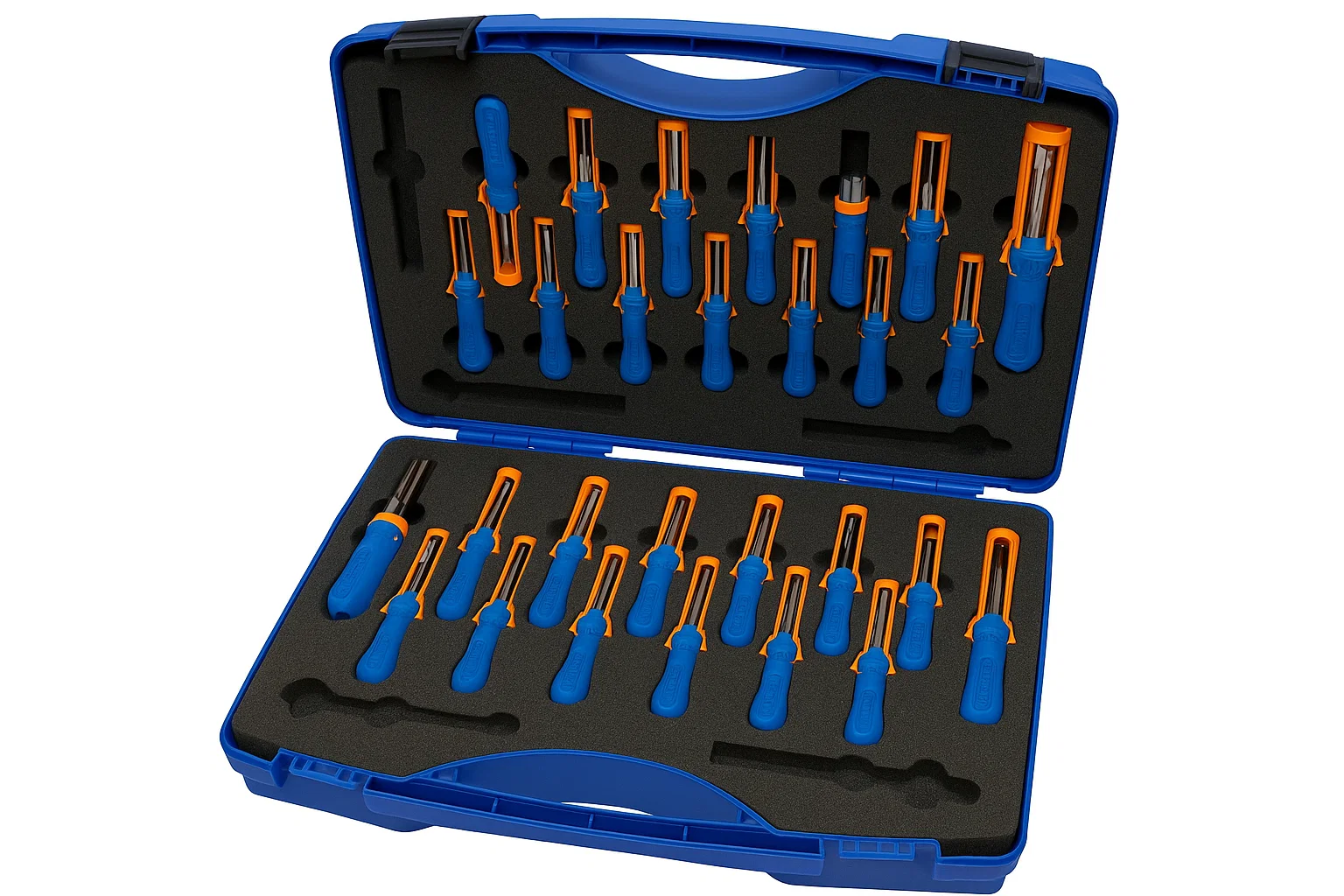
Manual Crimping Tools
Ideal for small projects or occasional use. These are cost-effective and easy to operate but depend heavily on user skill.
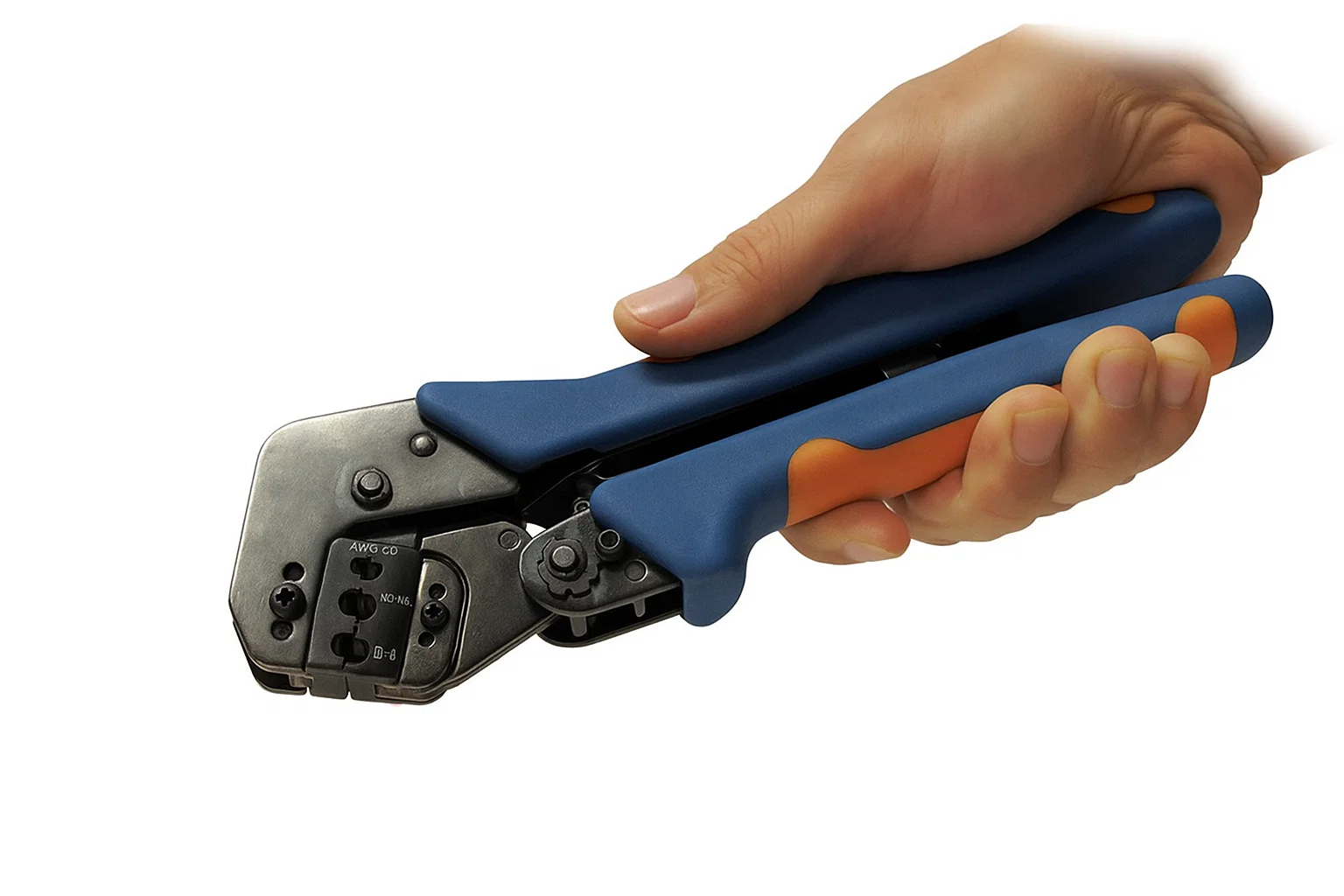
Hydraulic Crimping Tools
Designed for heavy-duty applications such as battery cables and high-current terminals. They provide consistent pressure and are essential for large wire sizes.
Automatic Crimping Machines
Used in industrial production environments. They ensure speed, precision, and repeatability.
Supporting Tools
You’ll also need:
- Wire stripper for clean insulation removal
- Cable cutter for precise cutting
- Inspection tools for quality checks
Using the right combination of tools ensures your crimp is both electrically efficient and mechanically secure.
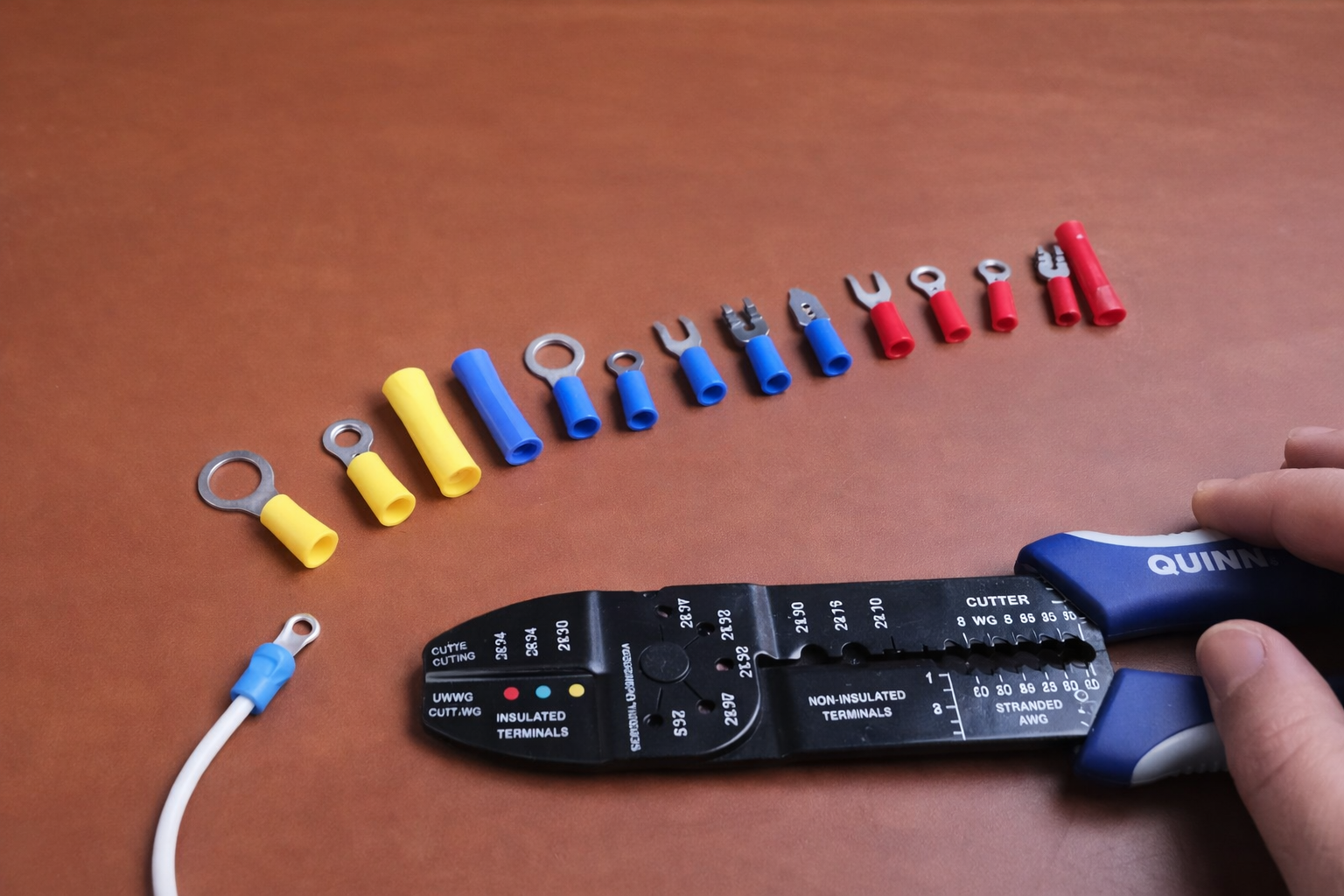
Types of Electrical Terminals You Can Crimp
Different applications require different terminal types. Understanding them helps you choose the right one.
Ring Terminals
Provide a secure connection using a bolt or stud. Common in battery and grounding applications.
Spade Terminals
Easy to install and remove, often used in control systems.
Butt Connectors
Used to join two wires end-to-end.
Battery Cable Lugs
Heavy-duty terminals designed for high-current connections such as batteries and power systems.
Step-by-Step Guide to Crimping Electrical Terminals
This is the most important part of the process. Follow these steps carefully.
Step 1: Choose the Right Terminal
Make sure the terminal matches:
- Wire size (AWG or mm²)
- Application requirements
- Current load
A mismatch here will compromise the entire connection.
Step 2: Strip the Wire Properly
Use a wire stripper to remove insulation.
Key tips:
- Strip just enough insulation to fit the terminal
- Do not damage or cut the conductor strands
Damaged wires reduce conductivity and weaken the connection.
Step 3: Insert the Wire into the Terminal
Insert the stripped wire fully into the terminal barrel.
Make sure:
- All strands are inside
- No copper is exposed outside
Proper insertion ensures full contact and maximum conductivity.
Step 4: Select the Correct Crimping Tool
Choose a tool that matches:
- Terminal type
- Wire size
Using the wrong die or tool can result in under-crimping or over-crimping.
Step 5: Crimp the Terminal
Place the terminal into the crimping tool and apply pressure.
Best practices:
- Position the terminal correctly in the die
- Apply firm, even pressure
- Complete the crimp in one action
A proper crimp should feel solid and secure.
Step 6: Inspect the Crimp
Always check your work.
Look for:
- Firm attachment (no movement)
- Clean, uniform crimp shape
- No cracks or deformation
You can also perform a pull test to ensure the wire does not come loose.
Common Crimping Mistakes to Avoid
Even experienced users make mistakes. Here are the most common ones:
Using the Wrong Tool
Leads to weak or inconsistent crimps.
Incorrect Wire Stripping
Too short or too long affects contact quality.
Incomplete Crimping
Results in loose connections and higher resistance.
Using Low-Quality Terminals
Cheap materials can deform or fail under load.
Re-Crimping
Trying to fix a bad crimp usually makes it worse. Always start fresh.
Crimping Standards and Best Practices
In professional applications, crimping must meet certain quality standards.
Best practices include:
- Consistent crimp height and shape
- Proper compression force
- Reliable mechanical strength
In industries like automotive and aerospace, strict standards ensure long-term reliability and safety.
Following these practices helps you avoid failures and maintain consistent quality.
Crimping vs Soldering: Which Is Better?
This is a common question.
Crimping Advantages
- Faster installation
- Strong mechanical bond
- Better for vibration environments
Soldering Advantages
- Good for small electronics
- Useful for delicate connections
Final Verdict
For most industrial, automotive, and high-current applications:
Crimping is the preferred method
It offers better durability and reliability under real-world conditions.
How to Ensure a Reliable Electrical Connection
To get the best results, focus on these factors:
- Use high-quality terminals
- Select the correct tools
- Follow proper crimping procedures
- Inspect every connection
Consistency is key. A well-executed crimp can last for years without issues.
Why Terminal Quality Matters
Even with perfect technique, poor-quality terminals can cause problems.
Low-quality terminals may:
- Have impurities in the material
- Crack during crimping
- Corrode quickly
- Increase resistance
High-quality terminals, especially those made from copper or tinned copper, ensure:
- Stable conductivity
- Long-term durability
- Better performance in demanding environments
Why Choose Qianwei Precision
At Qianwei Precision, we understand that reliable connections start with high-quality components.
We provide:
- High-purity copper and tinned copper terminals
- Precision manufacturing for consistent performance
- Strict quality control processes
- Custom solutions tailored to your application
- Fast response and global supply capability
Whether you need standard terminals or customized designs, our team is ready to support your project.
👉 Contact us today for a fast quote and expert guidance.
Conclusion
Crimping electrical terminals correctly is one of the most important skills in electrical work.
A proper crimp ensures:
- Safe operation
- Efficient power transmission
- Long-term reliability
By using the right tools, following the correct steps, and choosing high-quality terminals, you can avoid common problems and achieve professional results.
If you’re looking for reliable terminal solutions,
👉 reach out to Qianwei Precision for expert support and high-quality products.
FAQs
What is the correct way to crimp a terminal?
Use the correct tool, strip the wire properly, insert it fully, and apply even pressure during crimping.
Can I crimp without a crimping tool?
It is not recommended. Proper tools ensure safety and reliability.
How do I know if a crimp is good?
A good crimp is tight, uniform, and passes a pull test without movement.
What happens if a crimp is loose?
It can cause high resistance, overheating, and connection failure.
Is crimping better than soldering?
For most industrial and high-current applications, yes.
What tool should I use for battery terminals?
Hydraulic crimping tools are recommended for large cables.
Can I reuse a crimped terminal?
No. Always use a new terminal for a reliable connection.
