

Introduction
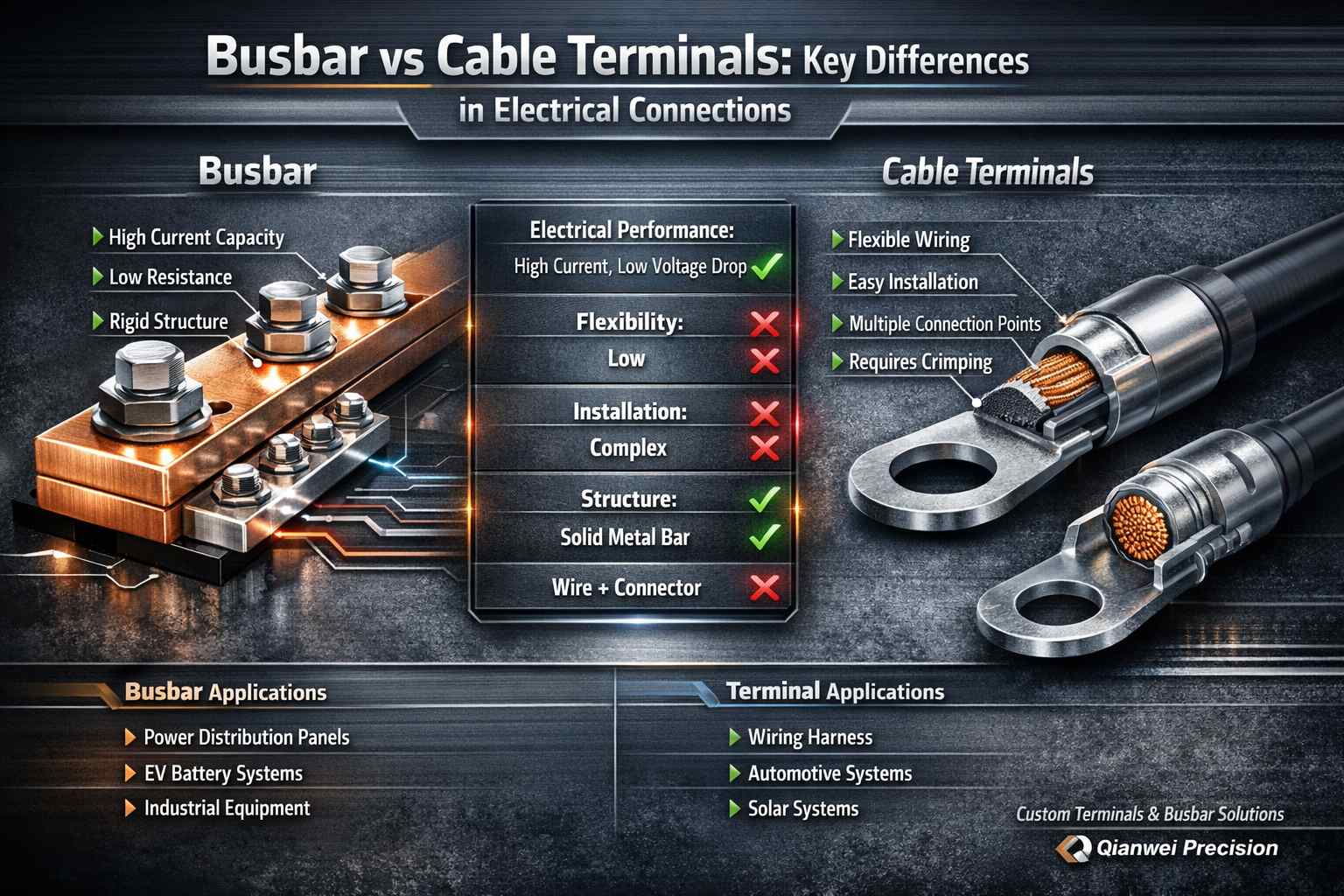
In modern electrical systems, selecting the right connection method is critical for performance, safety, and long-term reliability. Two of the most commonly used solutions are busbars and cable terminals.
While both are designed to conduct electricity and connect components, they serve very different purposes in terms of structure, capacity, and application. Choosing the wrong solution can lead to overheating, inefficiency, or even system failure.
In this guide, we break down the key differences between busbars and cable terminals, helping engineers, buyers, and system designers make the right decision for their applications.
What Is a Busbar?
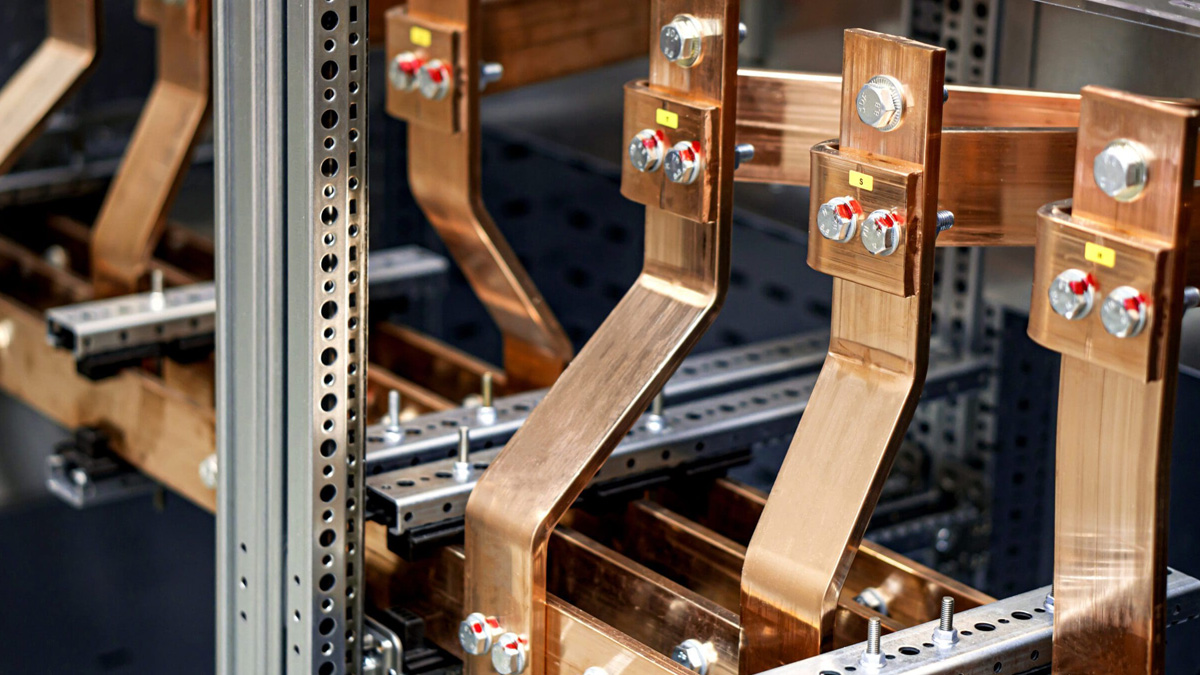
A busbar is a solid conductor, typically made from copper or aluminum, used to distribute large amounts of electrical current within a system.
Key Features of Busbars:
- High current carrying capacity
- Low electrical resistance
- Rigid and compact structure
- Designed for fixed installations
Typical Applications:
- Power distribution panels
- Switchgear systems
- Electric vehicle (EV) battery packs
- Industrial equipment
Advantages:
- Efficient power distribution with minimal energy loss
- Reduced wiring complexity
- Improved system organization
Limitations:
- Limited flexibility
- Higher initial design and manufacturing cost
- Requires precise installation
What Are Cable Terminals?
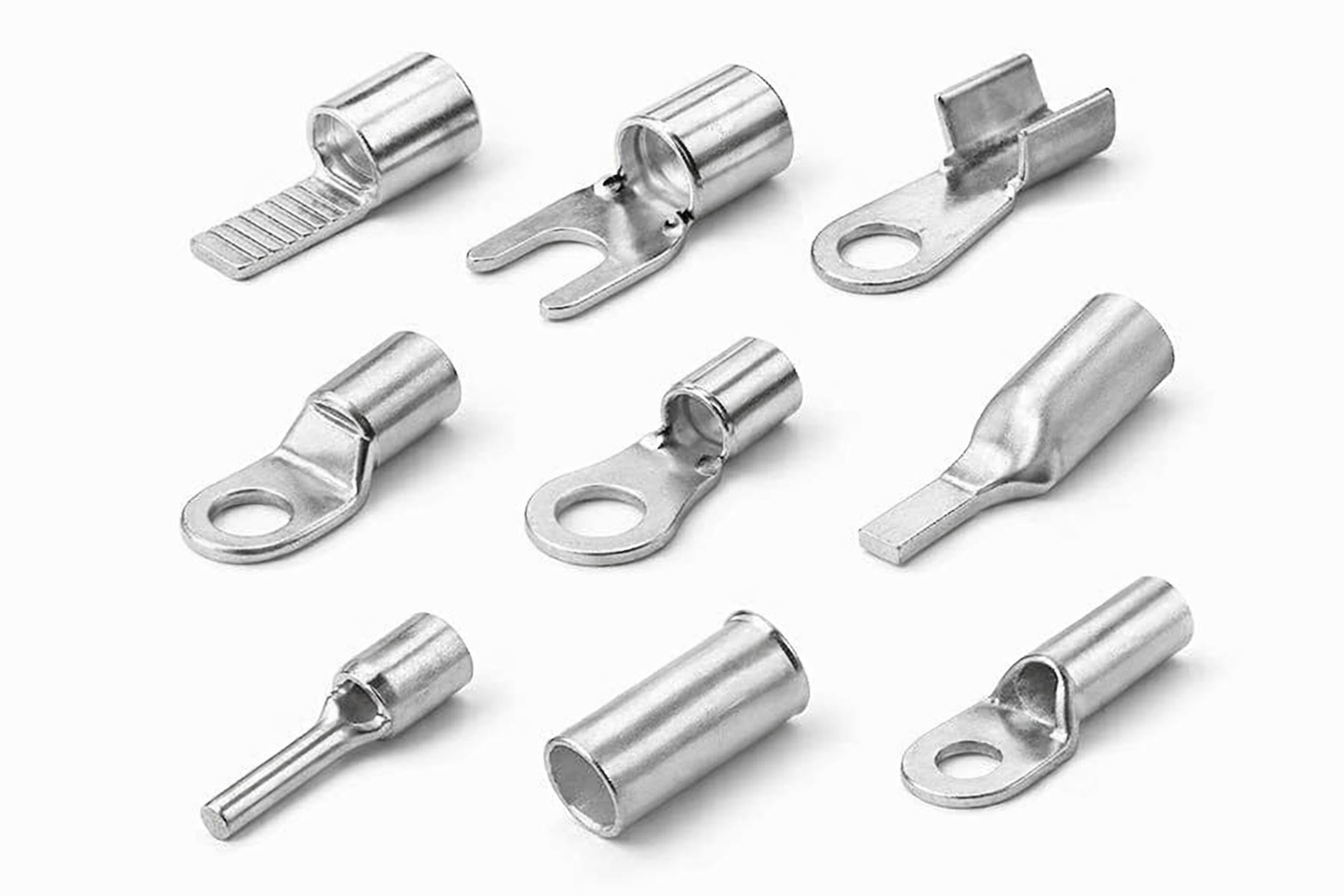
Cable terminals are connectors attached to the ends of wires or cables to create secure electrical connections with components such as studs, connectors, or equipment interfaces.
Common Types of Cable Terminals:
- Ring terminals
- Spade (fork) terminals
- Pin terminals
- Cable lugs
- Ferrules
Key Features:
- Flexible connection via cables
- Easy to install and replace
- Suitable for various wire sizes and applications
Typical Applications:
- Wiring harnesses
- Automotive systems
- Control panels
- Renewable energy systems
Advantages:
- High flexibility for complex routing
- Cost-effective for most applications
- Easy maintenance and replacement
Limitations:
- Lower current capacity compared to busbars
- Requires proper crimping for reliability
- More connection points increase failure risk
Busbar vs Cable Terminals: Key Differences
1. Electrical Performance
Busbars are designed for high-current transmission with minimal resistance, making them ideal for power distribution systems.
Cable terminals, on the other hand, are better suited for moderate current applications where flexibility is required.
2. Mechanical Structure
Busbars are rigid and fixed, offering a clean and compact layout.
Cable terminals rely on flexible wiring, making them suitable for systems that require movement or complex routing.
3. Installation and Assembly
Busbars require:
- Custom design
- Precise mounting
- Professional installation
Cable terminals offer:
- Faster installation
- Simpler tools (crimping tools)
- Easier field replacement
4. Space and Layout Efficiency
Busbars are ideal for:
- Compact, high-power systems
- Organized panel layouts
Cable terminals are better for:
- Distributed systems
- Tight or irregular spaces
5. Cost Considerations
- Busbars: Higher upfront cost but lower energy loss and maintenance
- Cable Terminals: Lower initial cost but may require more maintenance over time
6. Reliability and Maintenance
Busbars:
- Fewer connection points
- Higher long-term reliability
Cable terminals:
- Easier to replace
- More potential failure points if improperly installed
Quick Comparison Table
| Feature | Busbar | Cable Terminals |
|---|---|---|
| Current Capacity | Very High | Medium |
| Flexibility | Low | High |
| Installation | Complex | Easy |
| Cost | Higher | Lower |
| Maintenance | Low | Moderate |
| Best Use | Power distribution | Wiring connections |
When Should You Use Busbars?
Busbars are the best choice when:
- High current transmission is required
- Space optimization is critical
- System layout is fixed
- You need long-term reliability with minimal maintenance
Typical scenarios:
- EV battery systems
- Industrial power distribution
- High-voltage equipment
When Should You Use Cable Terminals?
Cable terminals are ideal when:
- Flexibility is required
- Wiring paths are complex
- Frequent maintenance or replacement is expected
- Cost efficiency is important
Typical scenarios:
- Automotive wiring harnesses
- Control panels
- Solar and energy systems
Using Busbars and Cable Terminals Together
In many real-world systems, the best solution is not choosing one over the other—but combining both.
Hybrid Approach:
- Busbars handle main power distribution
- Cable terminals manage branch connections
This approach is commonly used in:
- Solar power systems
- EV battery packs
- Industrial automation systems
Common Mistakes to Avoid
- Choosing based on cost instead of performance
- Ignoring current load requirements
- Using low-quality terminals or materials
- Improper crimping or installation
- Overlooking environmental factors (heat, moisture, vibration)
How to Choose the Right Solution
To select the optimal connection method, consider:
- Electrical load (current and voltage)
- Mechanical constraints
- Environmental conditions
- Installation complexity
- Maintenance requirements
A well-balanced decision ensures efficiency, safety, and long-term durability.
Conclusion
Both busbars and cable terminals play essential roles in electrical systems, but they are designed for different purposes. Busbars excel in high-current, fixed installations, while cable terminals offer flexibility and ease of use in complex wiring environments.
Understanding their differences allows engineers and buyers to design systems that are both efficient and reliable.
At Qianwei Precision, we specialize in manufacturing high-quality electrical terminals and customized connection solutions for a wide range of applications, including automotive, industrial equipment, and renewable energy systems.
Our product range includes ring terminals, cable lugs, insulated terminals, and custom-designed connectors that meet strict quality and performance standards.
If you are looking for a reliable supplier for your electrical connection needs, contact Qianwei Precision today for expert support and tailored solutions.

