

Introduction
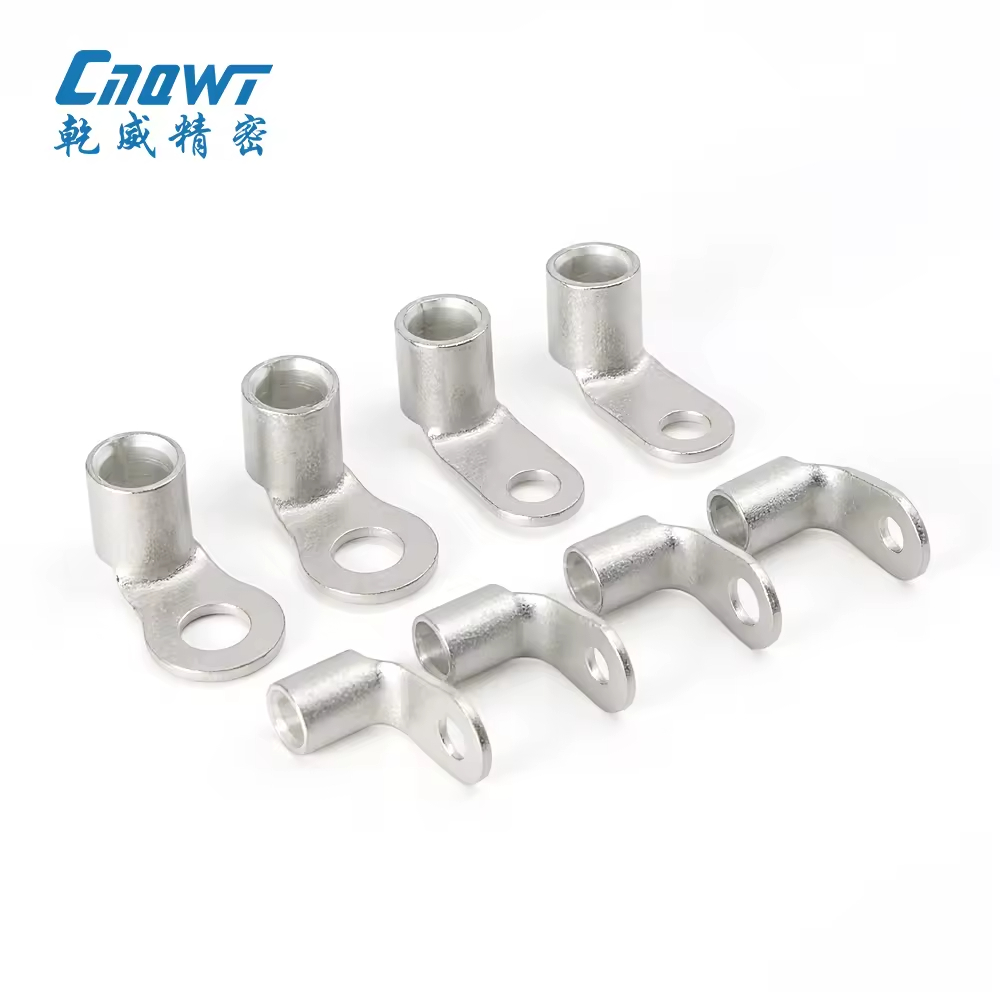
Battery cable lugs may look like simple metal connectors, but they play a critical role in ensuring safe, stable, and efficient electrical connections. Whether you’re working in automotive systems, solar installations, marine equipment, or industrial machinery, the quality of your battery cable lugs directly impacts performance, reliability, and safety.
A poor connection can lead to voltage drops, overheating, or even system failure—issues no engineer or procurement manager wants to deal with.
In this guide, we’ll break down everything you need to know about battery cable lugs, including types, materials, applications, and how to choose the right one for your project.
What Are Battery Cable Lugs?
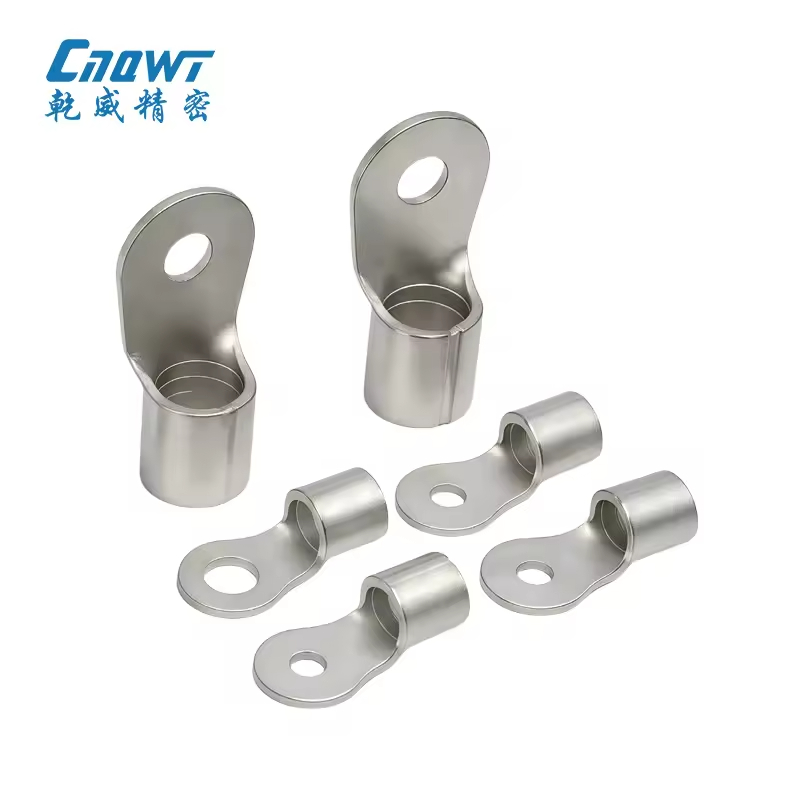
Battery cable lugs are electrical connectors used to terminate the end of a cable, allowing it to be securely connected to a battery, busbar, or electrical device.
Key Components of a Battery Lug
A typical battery cable lug consists of:
- Barrel – The cylindrical section where the cable is inserted
- Palm (Pad) – The flat surface used for mounting
- Stud Hole – The hole that fits onto a bolt or stud
How Do They Work?
Battery lugs create a strong electrical connection through:
- Crimping (most common method)
- Soldering (used in specific applications)
A properly crimped lug ensures:
- Maximum conductivity
- Mechanical strength
- Long-term reliability
Types of Battery Cable Lugs
Choosing the right type of lug depends on your application and installation environment.
1. By Barrel Design
Closed-End Lugs
- Sealed barrel design
- Prevents moisture entry
- Ideal for outdoor and harsh environments
Open-End Lugs
- Easier cable insertion
- Suitable for controlled environments
2. By Angle
Straight Lugs
- Standard design
- Used in most installations
45° and 90° Lugs
- Designed for tight spaces
- Improve cable routing and reduce stress
3. By Application
Automotive Lugs
- Used in cars, trucks, and EV systems
Marine Lugs
- Corrosion-resistant
- Built for saltwater environments
Heavy-Duty Lugs
- Designed for high-current industrial use
4. By Mounting Type
Ring Terminal Lugs
- Most common
- Secure bolt connection
Flared Lugs
- Easier installation
- Improved contact area
Common Materials Used in Battery Cable Lugs
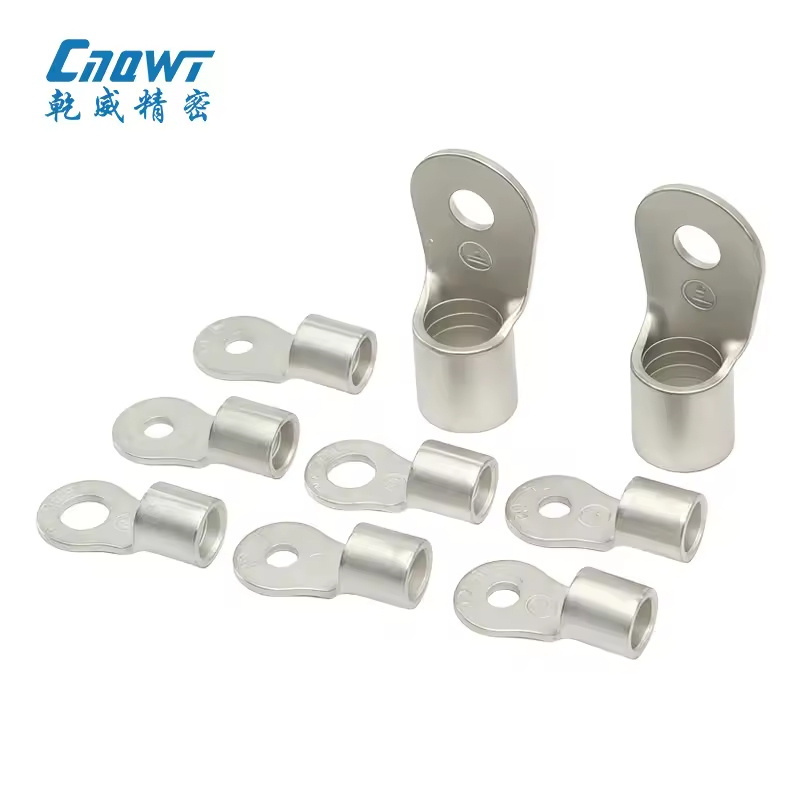
Material selection directly affects conductivity, durability, and cost.
Copper Lugs
- Excellent electrical conductivity
- High strength
- Widely used in most applications
Tinned Copper Lugs
- Copper base with tin plating
- Superior corrosion resistance
- Ideal for marine and outdoor use
Brass Lugs
- Lower conductivity than copper
- More affordable
- Suitable for light-duty applications
Aluminum Lugs
- Lightweight
- Used in specific power distribution systems
Key Specifications You Must Consider
Ignoring specifications is one of the most common causes of connection failure.
1. Wire Size (AWG / mm²)
- Must match cable size precisely
- Oversized = loose connection
- Undersized = difficult installation
2. Stud Hole Size
- Must match the bolt or terminal post
- Common sizes: M6, M8, M10, etc.
3. Current Rating (Ampacity)
- Determines how much current the lug can safely carry
- Underrated lugs can overheat
4. Temperature Resistance
- Important for high-load environments
- Prevents insulation and metal degradation
5. Corrosion Resistance
- Critical for:
- Marine applications
- Outdoor installations
- High-humidity environments
Applications of Battery Cable Lugs
Battery lugs are used across multiple industries.
Automotive Systems
- Battery connections
- Starter motors
- Grounding systems
Solar Power Systems
- Battery banks
- Inverters
- Charge controllers
Marine Applications
- Boats and yachts
- Saltwater-resistant connections
Industrial Equipment
- Forklifts
- Heavy machinery
- Power distribution systems
How to Choose the Right Battery Cable Lug
This is where most buyers make costly mistakes. Here’s a practical selection framework:
1. Match the Cable Size Exactly
Always select a lug that corresponds to your cable’s AWG or mm² rating.
2. Choose the Right Material
- Indoor use → Copper
- Outdoor/marine → Tinned copper
3. Consider the Environment
- High humidity → Anti-corrosion plating
- Vibration → Thick, heavy-duty lugs
4. Verify Current Requirements
Ensure the lug can handle peak load—not just average current.
5. Select Proper Crimping Compatibility
Use lugs compatible with your crimping tools and process.
👉 Internal Link Suggestion:
- How to Crimp Battery Cable Lugs Properly
- Best Materials for Electrical Terminals
How to Install Battery Cable Lugs (Step-by-Step)
Tools Required
- Cable cutter
- Wire stripper
- Crimping tool
- Heat shrink tubing (optional)
Installation Process
Step 1: Strip the insulation
Step 2: Insert the cable into the lug barrel
Step 3: Crimp using the correct die
Step 4: Inspect the connection
Step 5: Apply heat shrink for protection
Common Installation Mistakes
- Using the wrong lug size
- Poor crimping technique
- Skipping insulation protection
- Over-crimping (damaging the conductor)
Common Problems and Troubleshooting
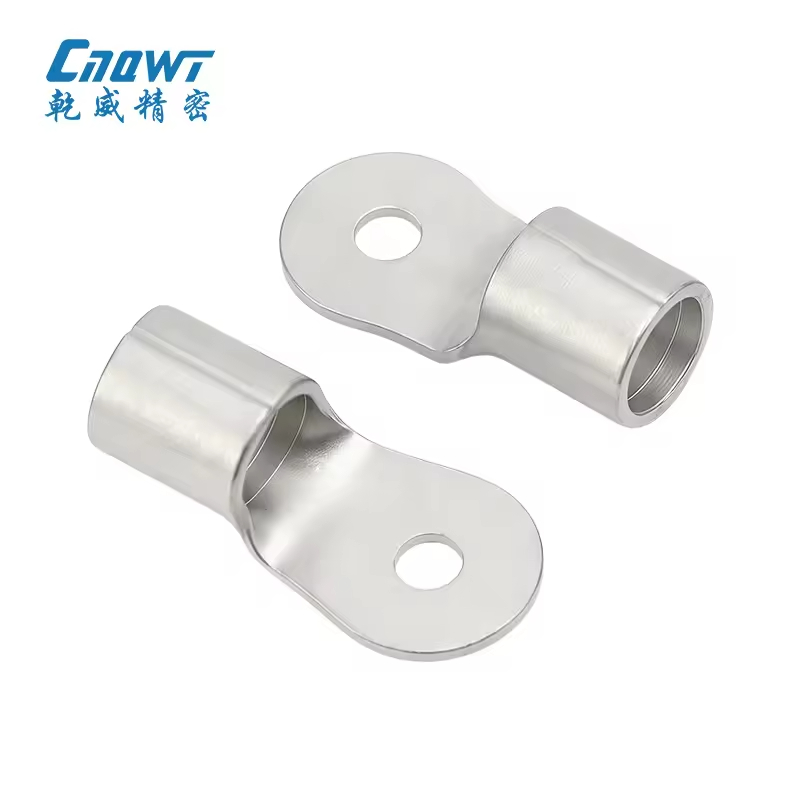
Loose Connections
- Cause: Incorrect lug size or poor crimp
- Solution: Re-crimp with correct tooling
Overheating
- Cause: High resistance connection
- Solution: Use proper material and size
Corrosion
- Cause: Exposure to moisture or chemicals
- Solution: Use tinned copper lugs
Voltage Drop
- Cause: Poor conductivity
- Solution: Upgrade to higher-quality lugs
Battery Cable Lugs vs Other Connectors
| Feature | Battery Lugs | Standard Terminals | Connectors |
|---|---|---|---|
| Current Capacity | High | Medium | Varies |
| Installation | Crimp/Solder | Crimp | Plug-in |
| Reliability | Very High | High | Medium |
Conclusion:
Battery lugs are the best choice for high-current, permanent connections.
Industry Standards and Certifications
Reliable battery cable lugs should comply with:
- UL (Underwriters Laboratories)
- RoHS (Restriction of Hazardous Substances)
- ISO Quality Standards
These ensure:
- Safety
- Environmental compliance
- Consistent quality

Why Quality Battery Cable Lugs Matter
Low-quality lugs may save money upfront—but cost far more in the long run.
Risks of Poor-Quality Lugs
- Electrical failure
- Fire hazards
- Equipment damage
- Increased maintenance costs
Benefits of High-Quality Lugs
- Stable conductivity
- Long service life
- Reduced downtime
Custom Battery Cable Lugs (High-Conversion Section)
Standard lugs don’t always meet real-world requirements—especially in specialized industries.
When You Need Custom Lugs
- Non-standard cable sizes
- Unique installation angles
- Harsh environments
- OEM/ODM requirements
Customization Options
- Material selection (Copper, Brass, etc.)
- Tin or nickel plating
- Custom barrel length
- Special shapes and angles
- Logo branding
Why Choose Qianwei Precision?
At Qianwei Precision, we specialize in high-quality, customized electrical terminals:
- Extensive customization experience
- 1800+ existing stamping and injection molds
- Fast tooling modification and development
- High-precision automated mold processing center
- Stable mass production capability
We help global clients reduce lead time, improve connection reliability, and optimize cost efficiency.
Contact us today
- Send us your drawings or specifications
- Request free samples
- Get a fast quotation within 24 hours
Conclusion
Battery cable lugs are a small component with a big impact on electrical performance and safety. Choosing the right type, material, and size ensures efficient power transfer, long service life, and reduced system failures.
If you’re sourcing battery cable lugs for your business, investing in high-quality or custom solutions is the smartest long-term decision.
FAQs
1. What is a battery cable lug used for?
It connects a cable securely to a battery or electrical component.
2. Are copper lugs better than aluminum?
Yes, copper offers better conductivity and durability.
3. Can you solder battery lugs instead of crimping?
Yes, but crimping is generally more reliable for high-current applications.
4. How do I know what size lug I need?
Match the lug size to your cable’s AWG or mm² rating and stud size.
5. What causes battery lugs to overheat?
Poor connections, undersized lugs, or low-quality materials.
6. Are tinned copper lugs necessary?
They are recommended for outdoor or marine environments.
7. How long do battery cable lugs last?
High-quality lugs can last 10+ years under proper conditions.
8. Can battery lugs be reused?
Not recommended, especially after crimping.
9. What tools are required for crimping?
A professional crimping tool with the correct die.
10. What is the difference between a lug and a terminal?
A lug is a type of terminal specifically designed for high-current connections.


2 thoughts on “What Are Battery Cable Lugs? Types, Materials, Uses & Complete Buying Guide”