

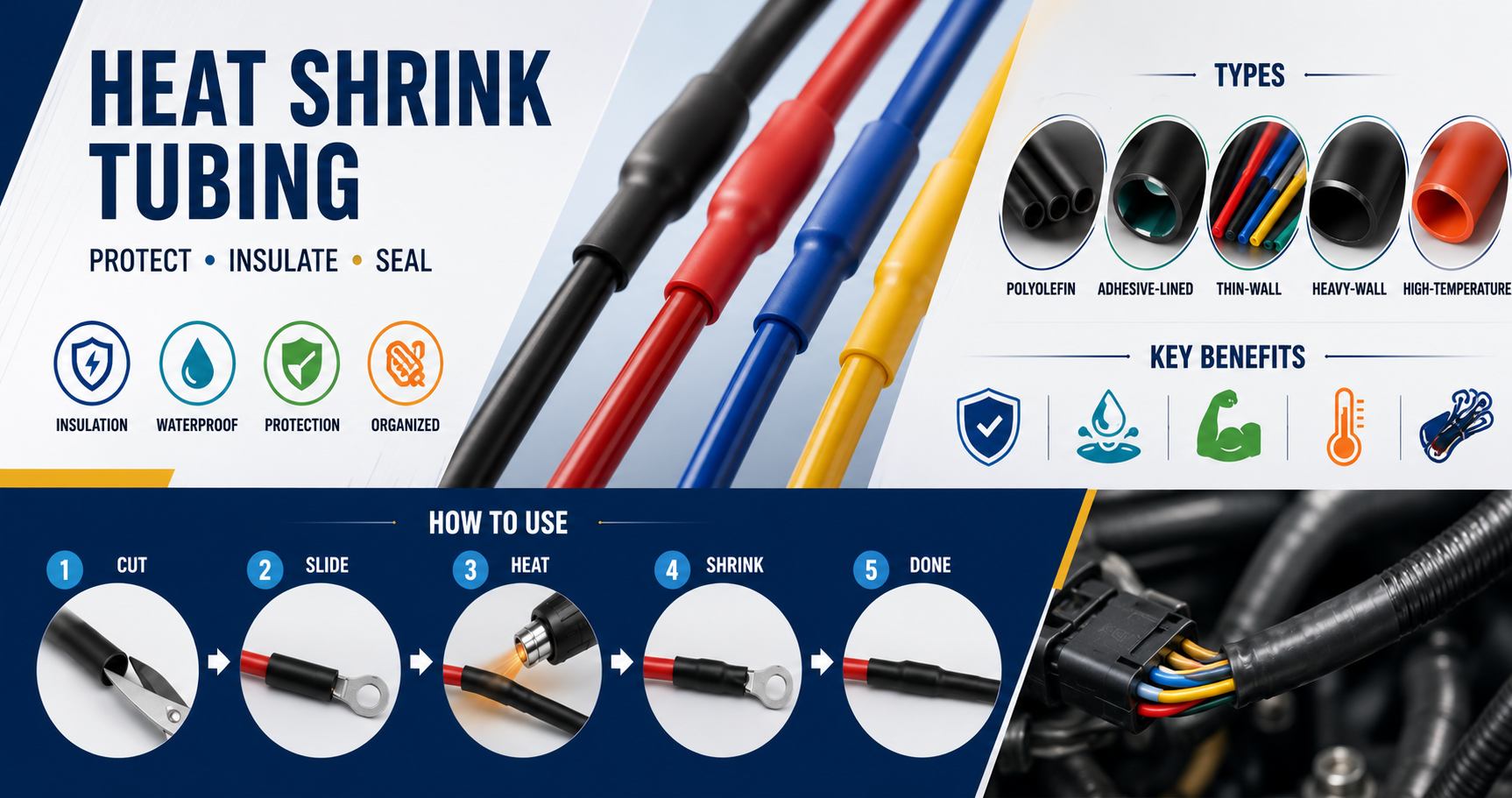
Heat shrink tubing is one of the most widely used insulation and protection solutions in electrical and wiring applications. From automotive wiring harnesses to industrial control systems and consumer electronics, heat shrink tubing helps protect wires, terminals, and electrical connections from environmental damage and mechanical stress.
Modern electrical systems often operate in challenging environments that involve:
- Heat
- Moisture
- Vibration
- Chemicals
- Dust
- Abrasion
Without proper protection, exposed wires and terminals may experience:
- Short circuits
- Corrosion
- Insulation damage
- Connection failure
- Reduced lifespan
Heat shrink tubing provides a simple but highly effective solution for improving electrical safety and long-term reliability.
This article explains:
- What heat shrink tubing is
- How heat shrink tubing works
- Different types of heat shrink tubing
- How to use it properly
- Key benefits and applications
- How to choose the right tubing for your project
What Is Heat Shrink Tubing?
Heat shrink tubing is a specially designed polymer tube that shrinks when heated.
When exposed to heat, the tubing contracts tightly around:
- Wires
- Electrical terminals
- Cable joints
- Connectors
- Splices
This creates a protective insulating layer around the connection.
Heat shrink tubing is commonly used for:
- Electrical insulation
- Waterproof sealing
- Wire bundling
- Mechanical protection
- Strain relief
It is available in many:
- Sizes
- Colors
- Materials
- Wall thicknesses
- Shrink ratios
to suit different applications.
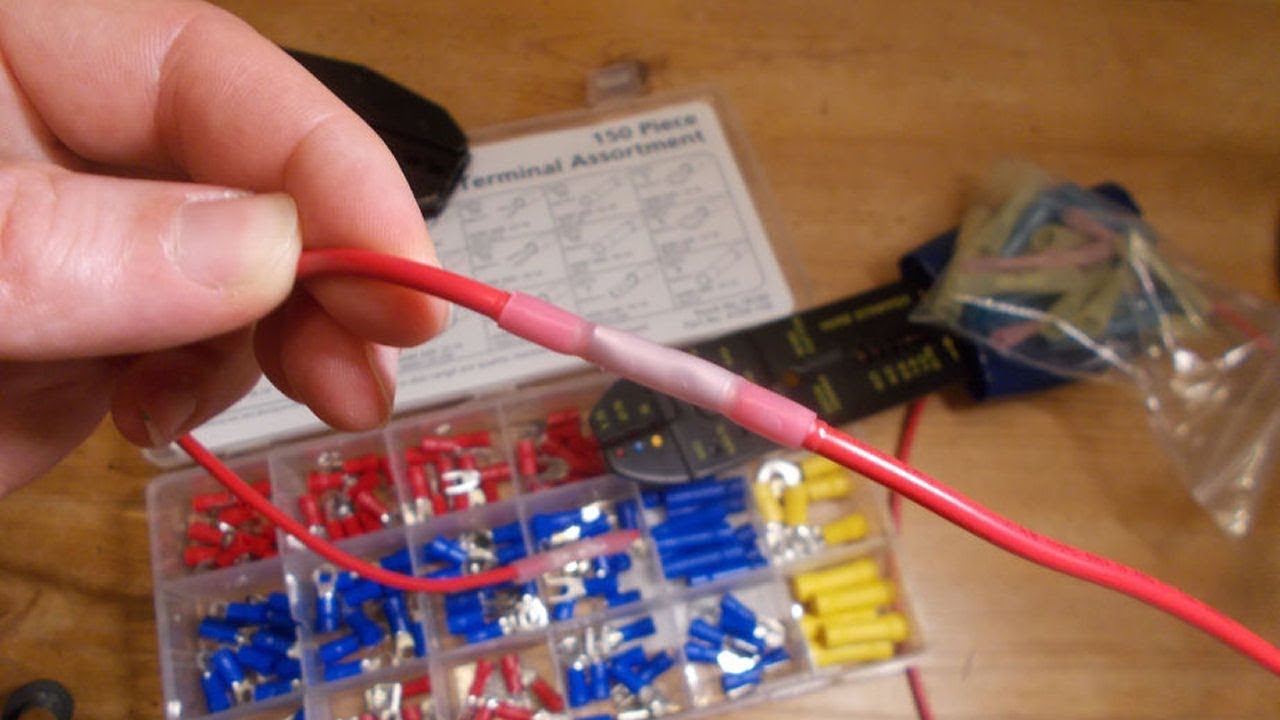
How Heat Shrink Tubing Works
Heat shrink tubing is manufactured through a process that expands the tubing material and gives it “memory.”
When heat is applied, the material returns to its original smaller size.
This shrinking action creates:
- Tight insulation
- Secure sealing
- Improved wire protection
Understanding Shrink Ratios
Shrink ratio refers to how much the tubing can shrink compared to its expanded size.
Common shrink ratios include:
| Shrink Ratio | Description |
|---|---|
| 2:1 | Shrinks to half its original diameter |
| 3:1 | Greater flexibility for varying sizes |
| 4:1 | Large shrink capability for irregular shapes |
Higher shrink ratios are useful for connectors and uneven cable assemblies.
Materials Used in Heat Shrink Tubing
Different materials provide different performance characteristics.
Polyolefin Heat Shrink Tubing
Polyolefin is the most common heat shrink tubing material.
Advantages include:
- Excellent flexibility
- Good insulation performance
- Affordable cost
- Chemical resistance
- Flame retardancy
It is widely used in automotive and industrial wiring systems.
PVC Heat Shrink Tubing
PVC tubing offers:
- Good flexibility
- Bright color options
- Lower cost
It is commonly used in consumer electronics.
Fluoropolymer Heat Shrink Tubing
Fluoropolymer tubing provides:
- High-temperature resistance
- Chemical resistance
- Superior durability
It is often used in aerospace and military applications.
Silicone Heat Shrink Tubing
Silicone tubing provides excellent flexibility and heat resistance.
Why Heat Shrink Tubing Is Important
Heat shrink tubing improves both electrical safety and system reliability.
Electrical Insulation Protection
The tubing prevents accidental contact between conductive surfaces.
This helps reduce:
- Short circuits
- Electrical leakage
- Safety risks
Moisture and Waterproof Protection
Heat shrink tubing seals connections against:
- Water
- Humidity
- Dust
- Contaminants
Adhesive-lined tubing provides especially strong waterproof performance.
Abrasion Resistance
The tubing protects wires from:
- Friction
- Sharp edges
- Mechanical wear
This is important in automotive and industrial systems.
Corrosion Prevention
By sealing exposed metal surfaces, heat shrink tubing helps reduce oxidation and corrosion.
Improved Wire Management
Heat shrink tubing organizes wires and improves cable appearance.
Color-coded tubing also simplifies wire identification.
Main Types of Heat Shrink Tubing
Different applications require different tubing designs.
Polyolefin Heat Shrink Tubing
This is the most commonly used type.
It is suitable for:
- Electrical insulation
- Wire protection
- General-purpose applications
Adhesive-Lined Heat Shrink Tubing
Adhesive-lined tubing is also called dual-wall heat shrink tubing.
Inside the tubing is a layer of adhesive that melts during heating.
This creates:
- Waterproof sealing
- Strong environmental protection
- Better mechanical retention
Best Applications
- Automotive wiring harnesses
- Marine systems
- Outdoor electrical equipment
- Renewable energy systems
Thin-Wall Heat Shrink Tubing
Thin-wall tubing is lightweight and flexible.
It is commonly used in:
- PCB wiring
- Consumer electronics
- Small cable assemblies
Heavy-Wall Heat Shrink Tubing
Heavy-wall tubing provides stronger:
- Mechanical protection
- Abrasion resistance
- Environmental sealing
It is used in industrial and outdoor applications.
High-Temperature Heat Shrink Tubing
Designed for harsh thermal environments such as:
- Engine compartments
- Industrial machinery
- Aerospace systems
Colored Heat Shrink Tubing
Colored tubing helps with:
- Wire identification
- Cable organization
- Maintenance efficiency
How to Use Heat Shrink Tubing
Using heat shrink tubing properly is essential for achieving reliable protection.
Step 1: Select the Correct Tubing Size
Choose tubing with a diameter slightly larger than the wire or terminal before shrinking.
After shrinking, the tubing should fit tightly around the connection.
Step 2: Cut the Tubing to Proper Length
The tubing should fully cover the exposed connection area.
Extra length may improve sealing performance.
Step 3: Slide the Tubing Over the Wire or Terminal
Always position the tubing before making the final connection if necessary.
Step 4: Apply Heat Evenly
Use a heat gun to apply uniform heat around the tubing.
The tubing will gradually shrink around the connection.
Step 5: Allow the Tubing to Cool
Cooling helps stabilize the tubing and adhesive.
Step 6: Inspect the Final Seal
Check for:
- Uniform shrinking
- Complete coverage
- Proper sealing
- No gaps or burns
Best Tools for Heat Shrink Tubing Installation
Heat Guns
Heat guns are the preferred installation tool because they provide:
- Controlled temperature
- Even heat distribution
- Safe operation
Hot Air Tools
Industrial systems often use automated hot air equipment.
Industrial Shrink Equipment
Large-scale manufacturers use automated shrinking machines for mass production.
Common Mistakes When Using Heat Shrink Tubing
Incorrect installation may reduce protection performance.
Using the Wrong Size
Oversized tubing may not seal properly.
Undersized tubing may not fit over the connection.
Overheating the Tubing
Excessive heat may:
- Burn the tubing
- Damage insulation
- Reduce flexibility
Uneven Heating
Uneven heat can create weak sealing areas.
Using Open Flames
Open flames may:
- Damage wires
- Burn insulation
- Create safety hazards
Heat guns are much safer.
Heat Shrink Tubing for Electrical Terminals
Heat shrink tubing is commonly used with crimp terminals and connectors.
Terminal Insulation Protection
The tubing covers exposed conductive areas and improves electrical safety.
Crimp Area Reinforcement
Heat shrink tubing strengthens the crimp area and reduces wire stress.
Waterproof Terminal Connections
Adhesive-lined tubing helps create sealed terminal connections.
Heat Shrink Tubing for Automotive Applications
Automotive wiring systems face:
- Heat
- Moisture
- Oil exposure
- Vibration
Heat shrink tubing improves long-term reliability.
Engine Compartment Protection
High-temperature tubing protects wires near engines and exhaust systems.
EV Battery Wiring
Electric vehicles require reliable insulation and waterproof protection.
Wire Harness Organization
Heat shrink tubing keeps harnesses clean and organized.
Heat Shrink Tubing for Outdoor and Harsh Environments
Outdoor electrical systems require strong environmental protection.
UV Resistance
Special tubing resists sunlight degradation.
Waterproof Protection
Adhesive-lined tubing prevents moisture intrusion.
Corrosion Resistance
Sealed connections reduce oxidation risks.
Heat Shrink Tubing vs Electrical Tape
Many people compare heat shrink tubing with electrical tape.
Durability Comparison
Heat shrink tubing is generally:
- More durable
- More reliable
- Longer lasting
than electrical tape.
Waterproof Performance
Adhesive-lined heat shrink tubing provides superior waterproof sealing.
Appearance and Reliability
Heat shrink tubing offers a cleaner and more professional appearance.
How to Choose the Right Heat Shrink Tubing
Several factors affect tubing selection.
Consider Voltage Requirements
Higher voltage systems may require thicker insulation.
Evaluate Environmental Conditions
Outdoor environments require:
- Waterproof protection
- UV resistance
- Corrosion resistance
Check Temperature Ratings
High-temperature applications require specialized tubing materials.
Select the Proper Shrink Ratio
Complex connector shapes may need higher shrink ratios.
Determine Waterproof Needs
Adhesive-lined tubing is recommended for harsh environments.
Common Applications of Heat Shrink Tubing
Heat shrink tubing is widely used in:
- Electrical wiring
- Wiring harnesses
- PCB assemblies
- Battery systems
- Renewable energy equipment
- Automotive electronics
- Industrial machinery
Why Choose Qianwei Precision
Qianwei Precision provides reliable wiring harness and terminal manufacturing solutions for automotive and industrial applications.
Our Advantages
- Precision terminal manufacturing
- Stable product quality
- Automotive wiring experience
- OEM & ODM support
- Reliable insulation solutions
- Strict quality control systems
Product Applications
We support:
- Electrical terminals
- Wiring harnesses
- Waterproof connectors
- PCB connection systems
- Automotive cable assemblies
Conclusion
Heat shrink tubing is one of the most effective solutions for protecting electrical connections and wiring systems.
Properly selected and installed heat shrink tubing improves:
- Electrical safety
- Waterproof performance
- Corrosion resistance
- Mechanical durability
- Long-term reliability
As automotive, EV, industrial, and renewable energy systems continue advancing, high-quality insulation and wire protection solutions are becoming increasingly important.
Reliable electrical systems begin with reliable connection protection.
Looking for Reliable Wiring & Terminal Solutions?
Qianwei Precision provides professional terminal and wiring harness manufacturing solutions with stable quality and OEM customization support.
- Request free samples
- Get engineering support
- Customize your wiring solution
Contact Qianwei Precision today for high-reliability electrical connection solutions.
FAQs
What is heat shrink tubing used for?
Heat shrink tubing is used to protect and insulate electrical connections, wires, terminals, and cable assemblies.
It helps provide:
- Electrical insulation
- Waterproof sealing
- Abrasion protection
- Corrosion resistance
- Wire organization
It is widely used in automotive, industrial, and electronic applications.
How do you use heat shrink tubing?
To use heat shrink tubing:
- Select the correct tubing size
- Cut the tubing to the required length
- Slide it over the wire or terminal
- Apply heat evenly with a heat gun
- Allow it to cool and inspect the seal
Proper installation ensures reliable insulation and protection.
What is adhesive-lined heat shrink tubing?
Adhesive-lined heat shrink tubing contains an inner adhesive layer that melts during heating.
This creates:
- Waterproof sealing
- Strong environmental protection
- Improved mechanical stability
It is commonly used in automotive, marine, and outdoor electrical systems.
What shrink ratio should I choose?
Common shrink ratios include:
| Shrink Ratio | Typical Use |
|---|---|
| 2:1 | Standard wire insulation |
| 3:1 | Connector and terminal protection |
| 4:1 | Irregular shapes and large connectors |
Higher shrink ratios provide greater flexibility for complex applications.
Is heat shrink tubing waterproof?
Standard heat shrink tubing provides basic moisture protection.
For true waterproof sealing, adhesive-lined heat shrink tubing is recommended because the internal adhesive seals the connection tightly.
Can heat shrink tubing replace electrical tape?
In many applications, yes.
Heat shrink tubing generally provides:
- Better durability
- Stronger insulation
- Improved waterproof performance
- Longer lifespan
- Cleaner appearance
compared to electrical tape.
What temperature is needed for heat shrink tubing?
Most polyolefin heat shrink tubing begins shrinking around:
- 70°C to 125°C
The exact temperature depends on the tubing material and manufacturer specifications.
Can heat shrink tubing be reused?
No. Once heat shrink tubing has been heated and shrunk, it usually cannot return to its original size.
It is generally considered a single-use insulation product.
What are the different types of heat shrink tubing?
Common types include:
- Polyolefin heat shrink tubing
- Adhesive-lined heat shrink tubing
- Thin-wall tubing
- Heavy-wall tubing
- High-temperature tubing
- Colored tubing
Each type is designed for specific applications and environmental conditions.
How do I choose the correct heat shrink tubing size?
Choose tubing that:
- Fits easily over the wire or terminal before shrinking
- Shrinks tightly after heating
You should also consider:
- Shrink ratio
- Wall thickness
- Environmental requirements
- Temperature resistance
Proper sizing ensures effective insulation and sealing.
What is the best tool for heat shrink tubing installation?
A heat gun is the most recommended tool because it provides:
- Controlled temperature
- Even heating
- Safe operation
Open flames should generally be avoided because they may damage the tubing or wires.
Can heat shrink tubing improve terminal durability?
Yes. Heat shrink tubing helps protect terminals from:
- Moisture
- Corrosion
- Mechanical stress
- Vibration
- Abrasion
This improves long-term connection reliability and system lifespan.

