

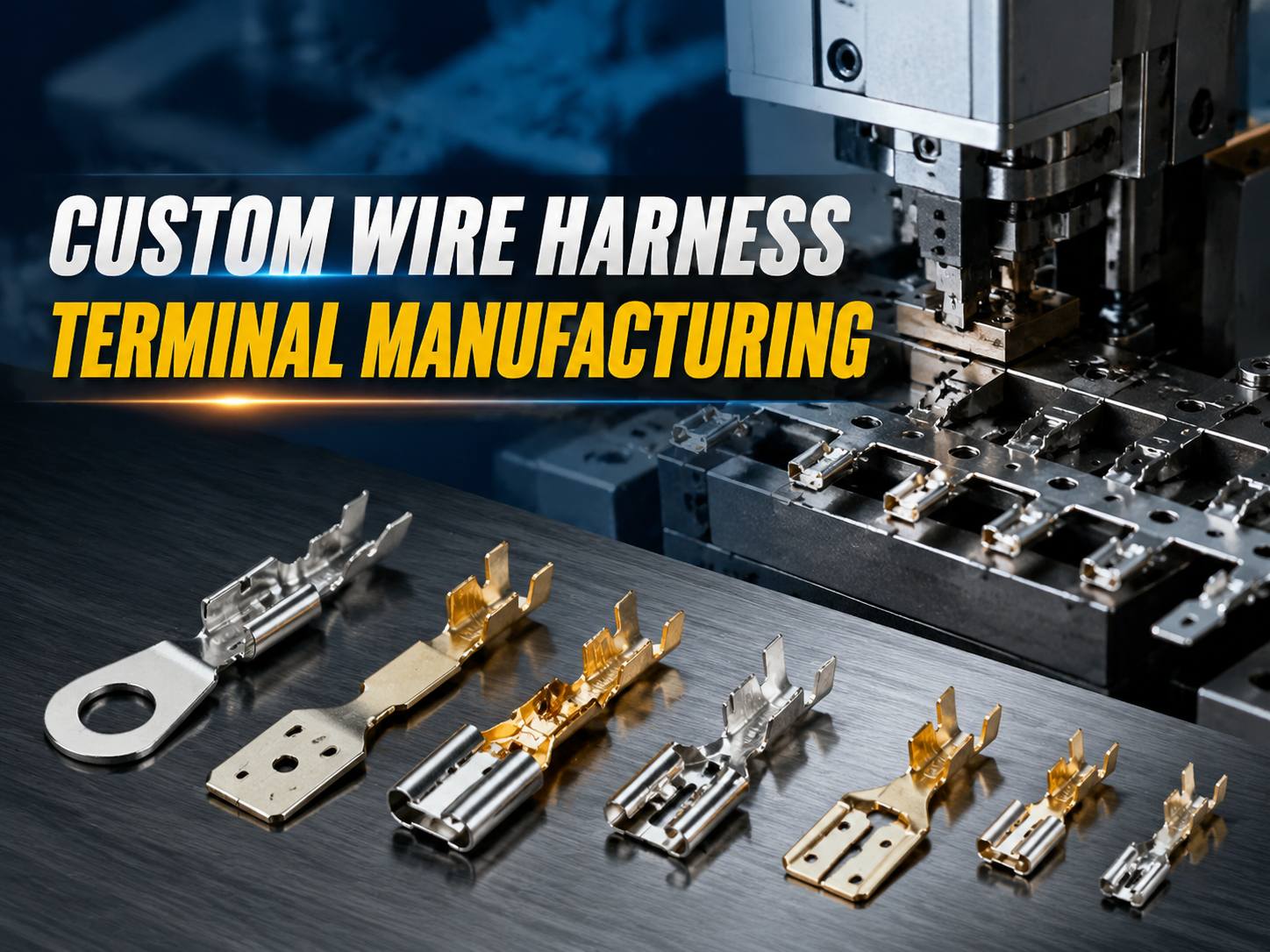
In modern electrical systems, the performance and reliability of a wire harness depend heavily on the quality of its terminals. While wires transmit electrical signals and power, terminals create the critical connection point between wires, connectors, and electrical components.
A poorly designed or low-quality terminal can lead to increased contact resistance, overheating, signal interruption, corrosion, and even complete system failure. These risks become more serious in demanding applications such as automotive electronics, electric vehicles, industrial machinery, energy storage systems, and smart devices.
For manufacturers and OEM buyers, choosing the right custom wire harness terminal manufacturing partner is essential. A professional terminal manufacturer does not only produce metal stamped parts but also provides complete engineering support, material selection, tooling development, surface treatment, and quality control.
Compared with standard terminals, custom wire harness terminals are designed according to specific electrical, mechanical, and environmental requirements. They allow manufacturers to achieve better performance, optimized assembly processes, and improved product reliability.
This guide explains the complete process of custom wire harness terminal manufacturing, including terminal design, material selection, precision stamping, plating technology, testing methods, and how to select a reliable OEM terminal supplier.
What Are Wire Harness Terminals?
Definition of Wire Harness Terminals
A wire harness terminal is a conductive metal component used to connect electrical wires with connectors, circuit boards, batteries, sensors, switches, or other electrical devices.
The primary functions of a terminal include:
- Creating a stable electrical connection
- Providing mechanical retention between wire and connector
- Maintaining low contact resistance
- Supporting reliable current transmission
- Protecting electrical systems from vibration and environmental stress
Although terminals are small components, their performance directly affects the overall reliability of an electrical system.
For example, in automotive applications, thousands of terminals may exist throughout a vehicle wiring system. A single terminal failure could affect critical functions such as power distribution, sensors, communication systems, or safety devices.
Common Types of Wire Harness Terminals
Different applications require different terminal structures. Manufacturers usually customize terminal designs according to wire size, current requirements, installation methods, and environmental conditions.
1. Blade Terminals
Blade terminals feature a flat metal contact area and are commonly used in automotive and industrial electrical systems.
Advantages:
- Simple connection structure
- Easy automated assembly
- Stable electrical contact
- Suitable for high-volume production
Typical applications:
- Automotive wiring harnesses
- Fuse boxes
- Control systems
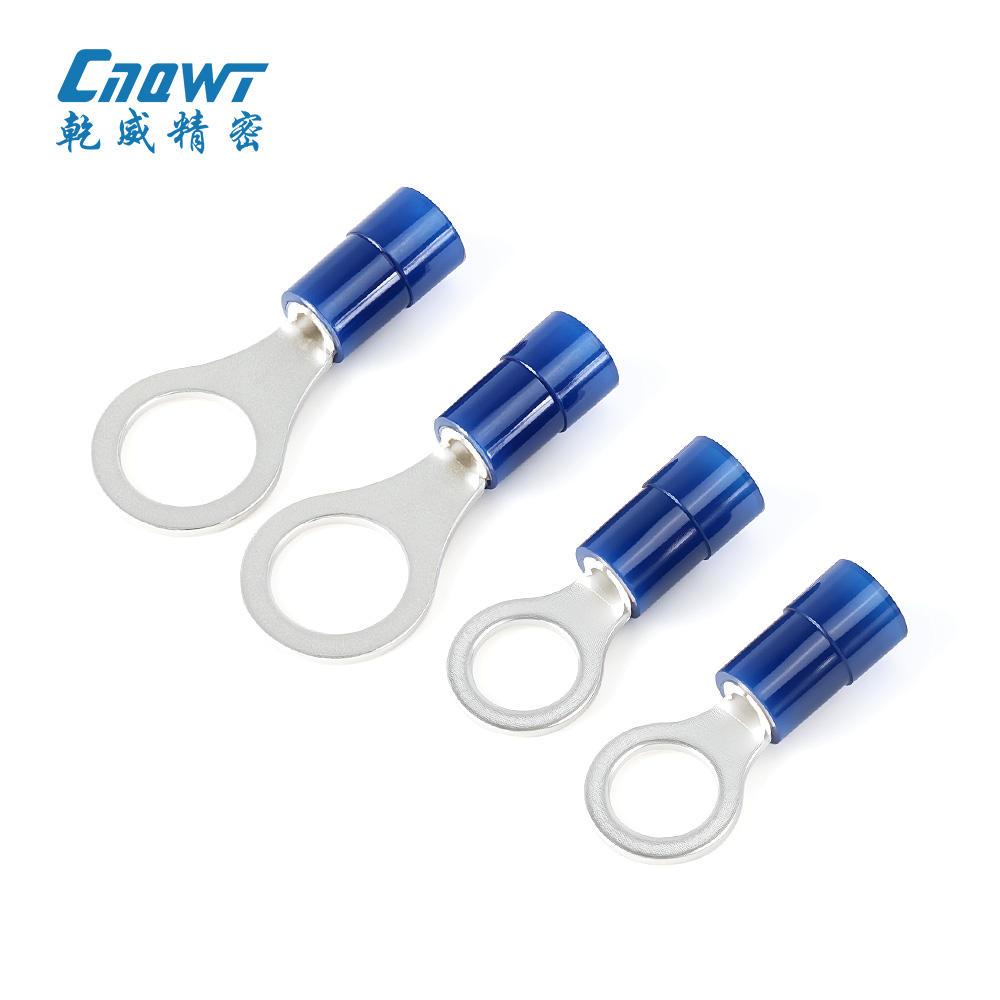
2. Ring Terminals
Ring terminals contain a circular connection hole designed for screw or bolt fastening.
Advantages:
- Strong mechanical fixation
- Excellent vibration resistance
- Suitable for power connections
Common applications:
- Battery connections
- Grounding systems
- Power distribution equipment
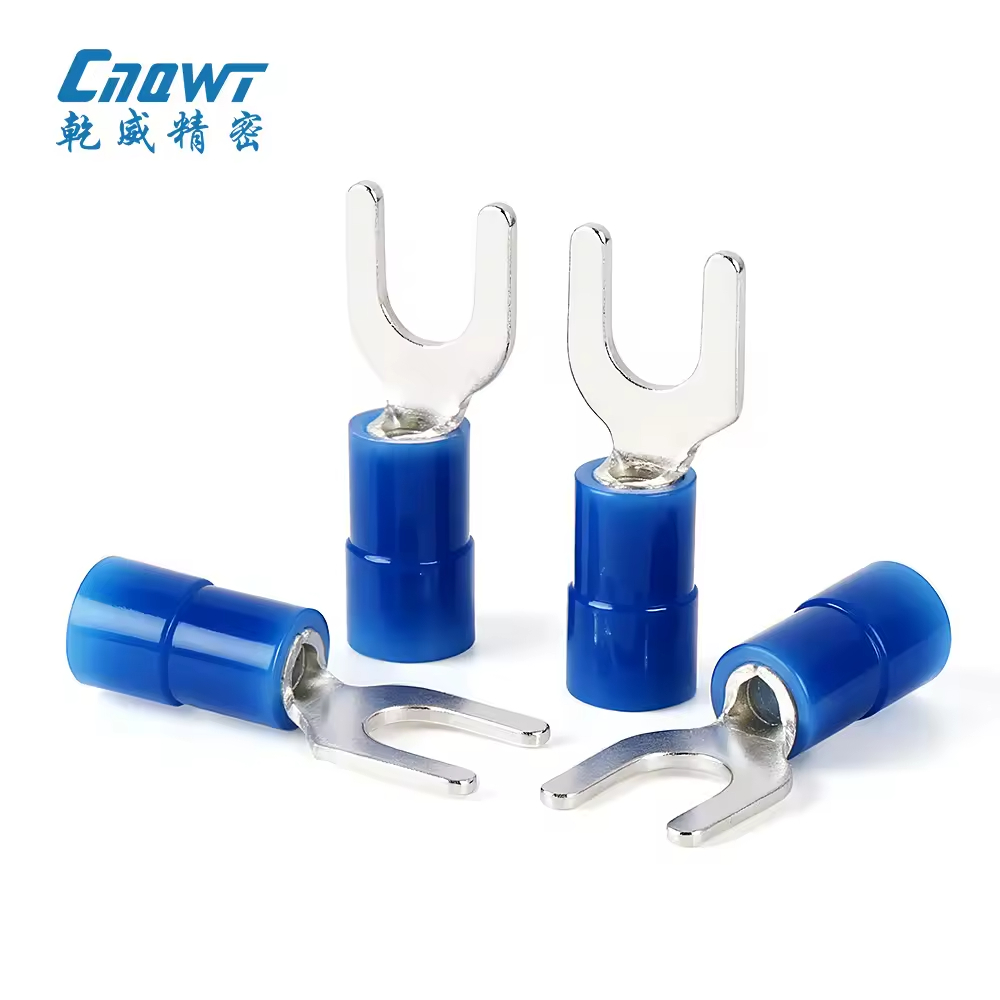
3. Spade Terminals
Spade terminals allow quick connection and disconnection without completely removing fastening components.
Applications include:
- Industrial control systems
- Appliances
- Electrical equipment
4. Male and Female Connector Terminals
These terminals are widely used in connector assemblies.
The male terminal provides the contact pin, while the female terminal provides the receiving socket.
They are commonly found in:
- Automotive connectors
- Sensor wiring
- Electronic control units
- Communication devices
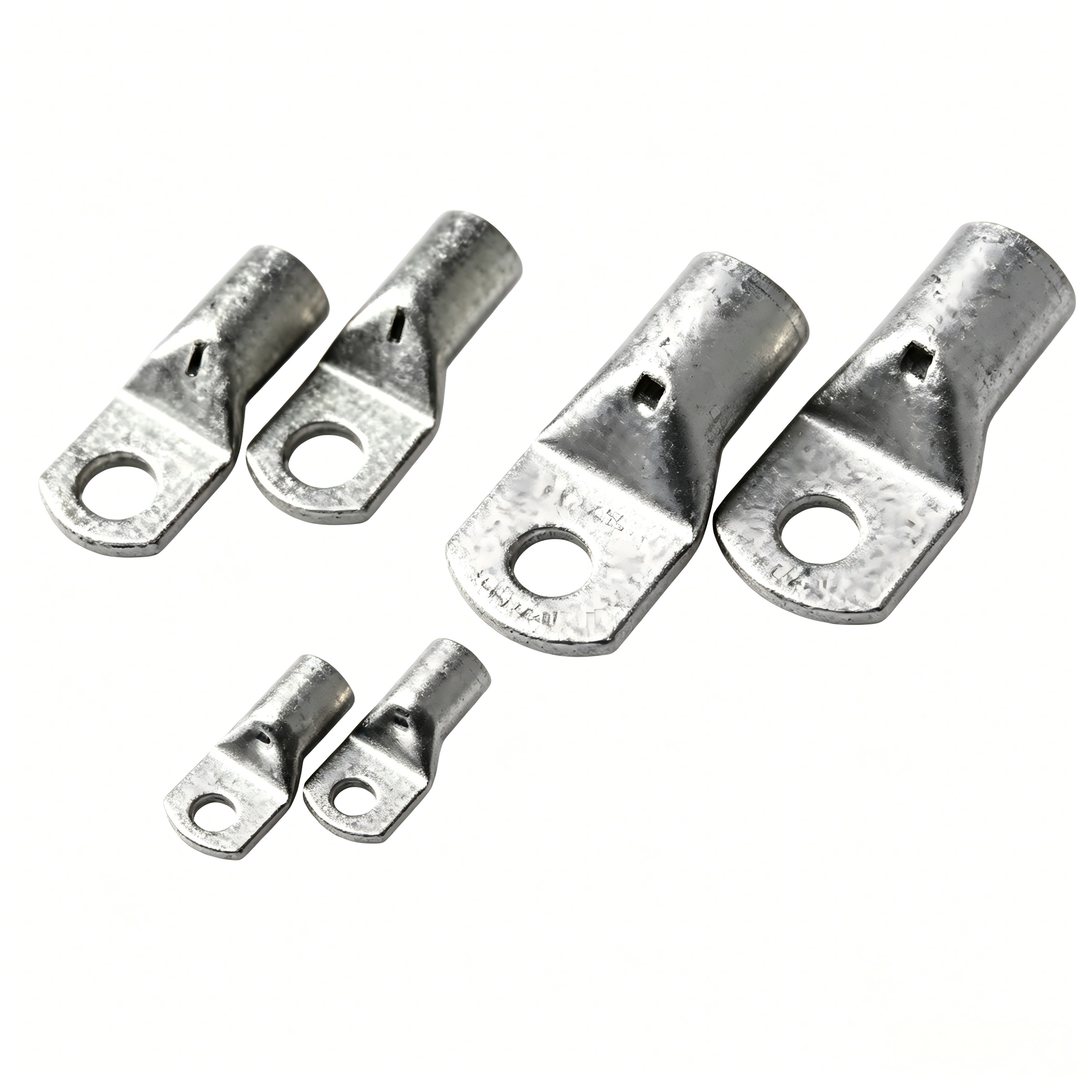
5. High-Current Terminals
With the rapid development of electric vehicles and energy storage systems, high-current terminals have become increasingly important.
These terminals require:
- Higher conductivity
- Stronger mechanical structure
- Better heat resistance
- Lower contact resistance
Typical applications:
- EV battery packs
- Charging systems
- Energy storage equipment
Why Custom Wire Harness Terminals Are Required?
Although standard terminals can meet many basic applications, customized terminals are often necessary when products require specific performance, installation, or environmental requirements.
1. Different Electrical Requirements
Every electrical system has different power and signal requirements.
A custom terminal design allows engineers to optimize:
Current Capacity
Different applications require different current ratings.
For example:
- Automotive sensors may require low-current signal terminals.
- Battery systems require high-current terminals capable of continuous power transmission.
Terminal size, material selection, and contact structure directly influence current performance.
Contact Resistance
Low contact resistance is critical for preventing:
- Heat generation
- Energy loss
- Electrical instability
Professional manufacturers optimize terminal geometry and plating technology to achieve reliable electrical conductivity.
Voltage Requirements
High-voltage applications require:
- Reliable insulation design
- Proper creepage distance
- Stable contact performance
This is especially important in:
- Electric vehicles
- Renewable energy systems
- Industrial equipment
2. Different Mechanical Requirements
Electrical terminals must withstand mechanical stress during assembly and operation.
Custom designs help solve problems related to:
Wire Size Compatibility
Different wire gauges require different crimping structures.
A properly designed terminal ensures:
- Strong wire retention
- Reliable crimp connection
- Reduced risk of wire pull-out
Locking Structure
For connector applications, terminals require precise locking features.
A good terminal design prevents:
- Terminal back-out
- Loose connections
- Assembly failures
Vibration Resistance
Automotive and industrial equipment often operate under continuous vibration.
Custom terminal designs improve:
- Contact stability
- Mechanical strength
- Long-term reliability
3. Different Environmental Conditions
Electrical terminals often work in harsh environments.
A custom solution considers:
Temperature Resistance
Applications such as automotive engines and industrial equipment may experience extreme temperatures.
Terminal materials and plating must maintain performance under:
- High temperatures
- Low temperatures
- Thermal cycling
Corrosion Resistance
Moisture, salt, chemicals, and humidity can damage metal contacts.
Surface treatments such as:
- Tin plating
- Nickel plating
- Gold plating
help improve corrosion resistance and extend service life.
Waterproof Requirements
For outdoor or automotive applications, terminals may need protection against:
- Water exposure
- Dust
- Chemical contamination
Custom terminal designs are often integrated with waterproof connectors and sealing structures.
Custom Wire Harness Terminal Manufacturing Process
The manufacturing process of custom wire harness terminals involves multiple precision steps, from engineering design to mass production.
A reliable terminal manufacturer must have complete capabilities including:
- Product design
- Precision stamping
- Surface plating
- Injection molding
- Assembly
- Quality testing
Each stage directly affects the final terminal performance.
Step 1: Engineering Design and DFM Analysis
Before production begins, engineers analyze customer requirements and optimize the terminal structure.
This stage includes:
Customer Drawing Review
Engineers evaluate:
- Product dimensions
- Material requirements
- Tolerance specifications
- Assembly requirements
Design for Manufacturing (DFM)
DFM analysis helps identify potential production issues before tooling development.
Engineers review:
- Stamping feasibility
- Material thickness
- Bend radius
- Crimp structure
- Production efficiency
Prototype Development
For new terminal designs, prototypes allow customers to verify:
- Mechanical performance
- Electrical performance
- Assembly compatibility
This reduces risks before mass production.
Step 2: Precision Metal Stamping
Metal stamping is one of the most important processes in wire harness terminal manufacturing.
During stamping, metal sheets are formed into precise terminal structures using customized molds.
The process includes:
- Feeding raw material
- Progressive stamping
- Cutting
- Bending
- Forming
Advantages of Precision Stamping
A professional stamping process provides:
High Dimensional Accuracy
Terminal dimensions must meet strict tolerances because even small variations can affect:
- Connector fitting
- Contact force
- Assembly efficiency
Consistent Production Quality
Automated stamping equipment enables stable mass production with consistent performance.
Complex Terminal Structures
Modern stamping technology can manufacture terminals with:
- Multiple bends
- Spring contact structures
- Locking features
- Precision contact areas
Step 3: Terminal Plating Process
After precision stamping, wire harness terminals usually require surface treatment to improve electrical performance, corrosion resistance, and long-term reliability.
The metal surface of a terminal directly affects contact quality. Without proper plating, copper alloys can oxidize over time, increasing contact resistance and reducing electrical performance.
A professional custom wire harness terminal manufacturer selects plating materials based on application requirements, including operating temperature, current capacity, environmental conditions, and cost targets.
Common Terminal Plating Options
Tin Plating
Tin plating is one of the most widely used surface treatments for electrical terminals.
Advantages:
- Good electrical conductivity
- Excellent solderability
- Cost-effective solution
- Suitable corrosion protection
Tin-plated terminals are commonly used in:
- Automotive wiring harnesses
- Household appliances
- Industrial electrical systems
For many general-purpose applications, tin plating provides a good balance between performance and cost.
Nickel Plating
Nickel plating provides better protection in high-temperature and harsh environments.
Advantages:
- Excellent heat resistance
- Strong corrosion protection
- Improved surface durability
Nickel plating is often used in:
- Engine compartments
- Industrial equipment
- High-temperature electrical systems
Gold Plating
Gold plating is selected for applications requiring extremely reliable electrical contact.
Advantages:
- Very low contact resistance
- Excellent oxidation resistance
- Long service life
Typical applications include:
- Medical electronics
- Communication equipment
- Precision electronic devices
Although gold plating has a higher cost, it provides superior reliability for critical applications.
Step 4: Plastic Injection Molding
For connector-based wire harness applications, terminals are often combined with plastic housings to create complete connector assemblies.
Plastic injection molding is used to manufacture terminal housings that provide:
- Electrical insulation
- Mechanical protection
- Waterproof sealing
- Terminal positioning
Common Housing Materials
Nylon (PA)
Advantages:
- High mechanical strength
- Good temperature resistance
- Excellent durability
Common applications:
- Automotive connectors
- Industrial connectors
PBT
Advantages:
- Excellent dimensional stability
- Good electrical insulation
- Strong chemical resistance
Used in:
- Automotive electronic systems
- Precision connectors
Importance of Injection Molding Accuracy
Terminal housings require precise dimensions because incorrect molding tolerances may cause:
- Poor terminal alignment
- Difficult assembly
- Reduced sealing performance
A complete manufacturing capability combining stamping and injection molding allows suppliers to better control the entire connector production process.
Step 5: Wire Harness Assembly and Crimping
After terminals and housings are manufactured, the next step is wire harness assembly.
The terminal is attached to the wire through a process called crimping.
Crimping creates a mechanical and electrical connection between:
- Metal terminal
- Wire conductor
- Wire insulation
Importance of Proper Crimping Quality
A high-quality crimp connection should provide:
Strong Mechanical Retention
The terminal must withstand pulling forces during installation and operation.
Poor crimping may cause:
- Wire separation
- Intermittent connection
- System failure
Stable Electrical Performance
A proper crimp ensures:
- Low electrical resistance
- Reliable current transmission
- Reduced heat generation
Automated Production Compatibility
For high-volume applications, terminals are often supplied in reel packaging for automatic crimping machines.
This improves:
- Production efficiency
- Assembly consistency
- Manufacturing cost control
Step 6: Quality Inspection and Testing
Quality control is a critical part of custom wire harness terminal manufacturing.
Professional manufacturers perform multiple inspections throughout production to ensure every terminal meets customer specifications.
Common Terminal Testing Methods
Dimensional Inspection
Precision measurement equipment verifies:
- Terminal length
- Width
- Thickness
- Contact area dimensions
- Locking structure
Accurate dimensions ensure proper connector assembly.
Contact Resistance Testing
Contact resistance testing evaluates electrical performance.
Low contact resistance helps prevent:
- Voltage loss
- Excessive heat
- Electrical instability
Pull Force Testing
Pull force testing measures the mechanical strength between terminal and wire.
It ensures:
- Secure crimp connection
- Reliable wire retention
- Long-term durability
Salt Spray Testing
Salt spray testing evaluates corrosion resistance.
This is especially important for:
- Automotive applications
- Outdoor equipment
- Marine environments
Temperature Cycling Testing
Electrical terminals may experience repeated temperature changes during operation.
Temperature cycling testing verifies performance under:
- Thermal expansion
- Thermal contraction
- Extreme temperature conditions
Materials Used in Custom Wire Harness Terminals
Material selection directly affects terminal performance, including conductivity, strength, corrosion resistance, and durability.
The most common materials used for custom terminals are copper alloys.
Copper Alloy Materials
Brass (C2680)
Brass is widely used because of its good balance between:
- Electrical conductivity
- Mechanical strength
- Cost efficiency
Advantages:
- Easy stamping performance
- Stable production quality
- Suitable for general electrical applications
Common uses:
- Household appliances
- Industrial equipment
- General connectors
Phosphor Bronze (C5191)
Phosphor bronze is known for excellent spring performance and fatigue resistance.
Advantages:
- High elasticity
- Good corrosion resistance
- Excellent contact force retention
Applications:
- Precision connectors
- Automotive terminals
- Electronic components
Because terminals often require repeated mating cycles, phosphor bronze is a preferred material for high-reliability applications.
Copper Alloy C7025
C7025 copper alloy provides an excellent combination of:
- High strength
- Good conductivity
- Heat resistance
It is widely used in demanding applications such as:
- Automotive electronics
- EV systems
- High-performance connectors
How to Choose the Right Wire Harness Terminal Material
When selecting terminal materials, engineers should consider:
1. Electrical Requirements
Higher current applications usually require materials with:
- Higher conductivity
- Better heat dissipation
2. Mechanical Requirements
If terminals require:
- Strong spring force
- Frequent mating cycles
- Vibration resistance
materials such as phosphor bronze may be more suitable.
3. Environmental Requirements
For harsh environments, consider:
- Corrosion resistance
- Temperature stability
- Surface protection
Key Factors When Choosing a Custom Wire Harness Terminal Manufacturer
Selecting the right manufacturing partner is critical for product quality and supply chain stability.
A qualified terminal supplier should provide more than basic stamping capability.
1. Complete Manufacturing Capability
A professional manufacturer should have integrated production capabilities, including:
Tooling Development
In-house mold manufacturing allows:
- Faster product development
- Better quality control
- Reduced tooling communication costs
Precision Stamping
Advanced stamping equipment ensures:
- Stable dimensions
- High production efficiency
- Consistent terminal performance
Surface Treatment
Reliable plating processes guarantee:
- Conductivity
- Corrosion protection
- Long-term reliability
Assembly Capability
Complete assembly capability supports:
- Wire harness production
- Connector assembly
- Customized solutions
2. Strong Customization Ability
Every application has different requirements.
A capable OEM terminal manufacturer should support:
- Customer drawings
- Prototype development
- Material selection
- Plating customization
- Packaging requirements
This allows customers to develop optimized terminal solutions instead of adapting existing standard products.
3. Quality Certifications and Manufacturing Standards
For global OEM customers, quality systems are essential.
A reliable supplier should have established quality management systems such as:
- ISO9001
- IATF16949
- UL
- RoHS
- REACH
These certifications demonstrate commitment to:
- Manufacturing control
- Product consistency
- Environmental compliance
4. Production Capacity and Supply Stability
Large-scale projects require suppliers with stable production capabilities.
Important factors include:
- Automated production lines
- Experienced engineering team
- Multiple manufacturing processes
- Reliable quality control system
A supplier with strong production capacity can support both prototype projects and mass production requirements.
Applications of Custom Wire Harness Terminals
Custom wire harness terminals are widely used across industries where reliable electrical connections are critical. As electrical systems become more complex, manufacturers increasingly require terminals that can handle higher current, tighter spaces, harsh environments, and automated assembly processes.
A professional custom wire harness terminal manufacturer provides solutions tailored to different industry requirements, from automotive electronics to industrial automation.
Automotive Industry Applications
The automotive industry is one of the largest markets for custom wire harness terminals.
Modern vehicles contain thousands of electrical connections supporting:
- Power distribution
- Sensors
- Lighting systems
- Control modules
- Safety systems
- Infotainment systems
The reliability of these electrical connections directly affects vehicle performance and safety.
Automotive Terminal Requirements
Automotive terminals must withstand challenging conditions, including:
Vibration Resistance
Vehicles experience continuous vibration during operation. Terminals must maintain stable contact performance without loosening.
Temperature Variation
Automotive electrical systems may operate under extreme temperatures.
Typical requirements include:
- Engine compartment heat resistance
- Cold weather reliability
- Thermal cycling durability
Corrosion Protection
Vehicles are exposed to:
- Moisture
- Road salt
- Chemicals
Proper material selection and plating technology help prevent corrosion and maintain electrical reliability.
Common Automotive Applications
Custom terminals are used in:
- Engine wiring harnesses
- Battery systems
- Electronic control units (ECUs)
- Sensors
- Lighting systems
- Charging systems
With the rapid growth of electric vehicles, demand for high-performance automotive terminals continues to increase.
New Energy and EV Applications
The transition toward electric vehicles and renewable energy systems has created new requirements for terminal technology.
Compared with traditional electrical systems, new energy applications require terminals with:
- Higher current capacity
- Better thermal performance
- Improved safety
- Lower contact resistance
EV Battery Terminal Solutions
Battery systems are among the most demanding applications for electrical terminals.
Battery terminals must provide:
High Current Transmission
EV batteries require terminals capable of transmitting large amounts of electrical energy efficiently.
Poor terminal performance may result in:
- Excessive heat generation
- Energy loss
- Reduced system efficiency
Long-Term Reliability
Battery systems are designed for years of operation.
Terminal materials and plating must maintain performance throughout the product lifecycle.
Mechanical Strength
Battery terminals must resist:
- Vehicle vibration
- Mechanical shock
- Repeated thermal expansion
Industrial Equipment Applications
Industrial machines rely on stable electrical connections to maintain continuous operation.
Custom wire harness terminals are commonly used in:
- Automation equipment
- Robotics
- Control cabinets
- Manufacturing machinery
- Testing equipment
Industrial Terminal Requirements
Industrial applications often require:
High Durability
Machines may operate continuously for thousands of hours.
Terminals must maintain:
- Stable contact force
- Reliable conductivity
- Mechanical integrity
Easy Assembly
Manufacturers often require terminals compatible with:
- Automated crimping equipment
- Mass production processes
- Modular connector systems
Environmental Resistance
Industrial environments may include:
- Dust
- Oil
- Humidity
- Temperature fluctuations
Custom terminal solutions help ensure reliable operation under these conditions.
Household Appliance Applications
Household appliances also rely on reliable terminal connections.
Common applications include:
- Refrigerators
- Air conditioners
- Washing machines
- Kitchen appliances
Appliance Terminal Requirements
Terminals used in appliances require:
- Cost-effective production
- Stable quality
- Long service life
- Safety compliance
Large-volume appliance manufacturers often choose customized terminals to optimize assembly efficiency and reduce production costs.
Medical and Electronic Equipment Applications
Precision electronic equipment requires highly reliable terminal connections.
Applications include:
- Medical devices
- Communication equipment
- Testing instruments
- Smart devices
Key Requirements
These applications typically require:
- Low contact resistance
- High dimensional accuracy
- Stable electrical performance
- Reliable materials
For sensitive electronic systems, even small connection failures can affect product performance.
Custom Wire Harness Terminal Manufacturing at Qianwei Precision
As an experienced precision connector manufacturer, Qianwei Precision provides complete custom wire harness terminal manufacturing solutions for global OEM customers.
With more than 10 years of manufacturing experience, Qianwei Precision integrates engineering design, precision stamping, mold manufacturing, injection molding, terminal production, and wire harness assembly.
This integrated capability allows customers to develop customized terminal solutions efficiently from prototype to mass production.
Complete Manufacturing Capability
Precision Metal Stamping
Qianwei Precision specializes in high-precision stamped terminals.
Manufacturing advantages include:
- Advanced stamping equipment
- Stable mass production capability
- Consistent dimensional accuracy
- Customized terminal structures
Through precision stamping technology, complex terminal designs can be produced while maintaining reliable quality.
In-House Mold Manufacturing
Tooling quality directly affects terminal performance.
Qianwei Precision has an internal mold development capability to support:
- Custom terminal tooling
- Progressive stamping dies
- Fast engineering modifications
- Production optimization
Compared with outsourcing tooling development, in-house mold manufacturing improves communication efficiency and project control.
Plastic Injection Molding Capability
For connector-related applications, Qianwei Precision provides plastic injection molding services.
This enables complete solutions including:
- Terminal components
- Connector housings
- Insulating parts
- Customized assemblies
Customers can reduce supplier coordination complexity by working with one integrated manufacturing partner.
Wire Harness Assembly and Testing
Beyond terminal production, Qianwei Precision supports wire harness assembly requirements.
Services include:
- Terminal crimping
- Cable assembly
- Electrical testing
- Functional inspection
This provides customers with ready-to-use electrical connection solutions.
Quality Control System
Quality is critical in electrical terminal manufacturing.
Qianwei Precision applies strict quality control throughout the manufacturing process.
Inspection includes:
- Incoming material inspection
- Mold verification
- Stamping inspection
- Plating inspection
- Dimensional measurement
- Electrical performance testing
- Final product inspection
The company follows international quality management requirements and provides products compliant with:
- ISO9001
- IATF16949
- UL
- RoHS
- REACH
Why Choose Qianwei Precision for Custom Wire Harness Terminal Manufacturing?
1. More Than 10 Years of Manufacturing Experience
With extensive experience in precision connectors and terminals, Qianwei Precision understands the requirements of different industries.
The company supports customers from initial design evaluation to final production.
2. One-Stop Manufacturing Solution
Instead of managing multiple suppliers, customers can obtain complete services including:
- Terminal design
- Tooling
- Stamping
- Injection molding
- Assembly
- Testing
This improves project efficiency and reduces supply chain complexity.
3. OEM and Custom Development Capability
Qianwei Precision supports customized requirements based on:
- Customer drawings
- Application environment
- Performance requirements
- Production volume
Whether developing a new terminal structure or optimizing an existing design, engineering teams provide professional support.
4. Stable Mass Production Capability
For high-volume applications, consistent quality is essential.
Automated production processes help ensure:
- Stable output
- Repeatable quality
- Competitive manufacturing efficiency
How to Start Your Custom Wire Harness Terminal Project
Working with a professional terminal manufacturer is a straightforward process.
Step 1: Share Your Requirements
Provide:
- Product drawings
- Technical specifications
- Application information
- Required quantity
Step 2: Engineering Evaluation
Engineers review:
- Terminal structure
- Material selection
- Manufacturing feasibility
- Cost optimization opportunities
Step 3: Prototype Development
Samples are produced for:
- Design verification
- Assembly testing
- Performance evaluation
Step 4: Mass Production
After approval, production begins with controlled manufacturing processes and quality inspection.
Conclusion
Custom wire harness terminal manufacturing requires advanced engineering knowledge, precision production technology, and strict quality control.
From material selection and terminal design to stamping, plating, assembly, and testing, every manufacturing step affects electrical reliability and product performance.
For OEM customers, choosing an experienced terminal manufacturer ensures better product quality, faster development, and long-term supply stability.
With integrated capabilities in precision stamping, mold manufacturing, injection molding, wire harness assembly, and quality testing, Qianwei Precision provides customized terminal solutions for automotive, industrial, energy, and electronic applications worldwide.
If you are looking for a reliable partner for custom wire harness terminal manufacturing, contact Qianwei Precision to discuss your project requirements and develop the right solution for your application.
FAQs
What is a custom wire harness terminal?
A custom wire harness terminal is a specially designed conductive component manufactured according to customer requirements for specific electrical, mechanical, and environmental applications.
Unlike standard terminals, custom terminals are optimized for factors such as current capacity, wire size, installation method, and operating conditions.
What materials are commonly used for wire harness terminals?
The most common materials include:
- Brass
- Phosphor bronze
- Copper alloys such as C7025
The best material depends on conductivity requirements, mechanical strength, temperature conditions, and application environment.
How long does custom terminal development take?
Development time depends on:
- Terminal complexity
- Tooling requirements
- Testing requirements
- Production quantity
Simple designs may require shorter development cycles, while complex automotive or high-current terminals may require more engineering validation.
Can manufacturers produce terminals according to customer drawings?
Yes.
Professional OEM terminal manufacturers typically support:
- Custom drawings
- Reverse engineering
- Prototype development
- Mass production
Customers can provide their existing designs, or manufacturers can assist with design optimization.
What industries use custom wire harness terminals?
Custom terminals are widely used in:
- Automotive
- Electric vehicles
- Energy storage
- Industrial equipment
- Home appliances
- Medical electronics
- Communication systems

