

What Is Custom Electrical Terminal Manufacturing?
Electrical terminals are small but critical components used to create reliable electrical connections in various industries. From automotive wiring harnesses and energy storage systems to industrial equipment and consumer electronics, terminals ensure stable current transmission between wires, connectors, and electrical components.
While standard terminals can satisfy many general applications, modern electrical systems increasingly require customized terminal solutions. Different industries have unique requirements for current capacity, installation space, mechanical strength, environmental resistance, and product lifetime.
Custom electrical terminal manufacturing is the process of designing and producing terminals according to specific customer requirements. It combines engineering design, material selection, precision tooling, metal stamping, surface treatment, assembly, and quality testing to create reliable connection solutions.
For OEM manufacturers, choosing the right custom terminal supplier is not only about purchasing a component. It is about finding a manufacturing partner who can support product development, improve electrical performance, reduce production risks, and ensure stable long-term supply.
The Importance of Customized Electrical Terminals
Electrical systems are becoming increasingly compact, powerful, and complex.
Applications such as:
- Electric vehicles
- Battery energy storage systems
- Industrial automation equipment
- Renewable energy systems
- Smart appliances
- Medical devices
require terminals that can operate under demanding conditions.
A customized terminal can be optimized for:
Electrical Performance
Different applications require different current capacities and electrical characteristics.
Terminal design affects:
- Contact resistance
- Current carrying capability
- Voltage drop
- Heat generation
For high-current applications such as battery systems, even small improvements in resistance can significantly improve system efficiency.
Mechanical Reliability
Electrical terminals must maintain stable connections throughout the product lifecycle.
Important mechanical factors include:
- Contact force
- Retention strength
- Vibration resistance
- Mating cycle performance
For automotive and industrial applications, terminals may experience thousands of connection cycles and continuous mechanical vibration.
Space Optimization
Modern electrical systems require smaller and more efficient designs.
Custom terminals allow engineers to optimize:
- Terminal dimensions
- Contact structure
- Installation method
- Material thickness
This helps manufacturers achieve higher performance within limited space.
Environmental Durability
Many electrical terminals operate in challenging environments, including:
- High temperatures
- Humidity
- Dust
- Chemical exposure
- Outdoor conditions
Customized terminals can be designed with suitable:
- Base materials
- Plating options
- Protective structures
to ensure long-term reliability.
Custom Terminals vs Standard Terminals
Before starting a custom manufacturing project, engineers need to understand the difference between standard and customized terminals.
| Standard Terminals | Custom Electrical Terminals |
|---|---|
| Fixed specifications | Designed according to application requirements |
| Limited material choices | Multiple material options |
| General performance | Optimized electrical and mechanical performance |
| Suitable for common applications | Suitable for specialized OEM projects |
| Limited design flexibility | Full engineering customization |
Standard terminals are useful for common electrical applications where requirements are simple and predictable.
However, OEM products often have unique requirements that cannot be achieved with standard components.
For example:
- An EV battery manufacturer may need terminals with higher current capacity.
- An energy storage company may require customized busbar connection terminals.
- An automotive supplier may need terminals designed for specific connector housings.
In these cases, custom electrical terminal manufacturing provides a more effective solution.
Overview of the Custom Electrical Terminal Manufacturing Process
A professional custom terminal manufacturing process involves multiple engineering and production stages.
The complete workflow usually includes:
- Customer requirement analysis
- Terminal design and engineering development
- Material selection
- Mold and tooling development
- Precision metal stamping
- Surface treatment and plating
- Injection molding and assembly
- Quality inspection and testing
- Mass production
Each stage directly influences the final product performance.
A reliable manufacturer does not simply produce terminals according to drawings. Instead, they work with customers to optimize the design, materials, and manufacturing process before production begins.
Step 1 – Customer Requirement Analysis and Engineering Consultation
The first step in custom terminal manufacturing is understanding the customer’s application requirements.
Before creating a design, manufacturers need detailed information about:
- Application environment
- Electrical requirements
- Mechanical requirements
- Production volume
- Cost expectations
A professional engineering consultation helps identify potential issues before manufacturing begins.
Understanding Application Requirements
Electrical Requirements
Electrical performance is one of the most important factors in terminal design.
Engineers evaluate:
- Rated current
- Peak current
- Operating voltage
- Contact resistance
- Temperature rise requirements
For example:
A battery energy storage terminal may require high current capacity and excellent thermal performance, while a small electronic terminal may focus more on compact size and precision.
Mechanical Requirements
Mechanical requirements determine the terminal structure and material selection.
Important factors include:
- Mating force
- Retention force
- Pull-out strength
- Vibration resistance
Automotive terminals, for example, must maintain reliable connections under continuous vibration and temperature changes.
Environmental Requirements
Different applications require different protection levels.
Manufacturers consider:
- Operating temperature range
- Humidity exposure
- Corrosion risks
- Chemical resistance
Surface treatment and material selection are adjusted according to the working environment.
Application-Based Terminal Design
A good custom terminal solution begins with understanding the final application.
Automotive Terminal Applications
Automotive electrical systems require terminals that provide:
- High reliability
- Vibration resistance
- Compact structure
- Long service life
.jpg)
Common applications include:
- Automotive wiring harnesses
- Battery connections
- Control modules
- Power distribution systems
Energy Storage Terminal Applications
Energy storage systems require terminals capable of handling high current and continuous operation.
Key requirements include:
- Low contact resistance
- Excellent heat management
- Strong mechanical connection
- Corrosion protection
Applications include:
- Battery modules
- Battery racks
- Energy storage cabinets
- Power conversion systems
Industrial Equipment Terminal Applications
Industrial systems require terminals that can operate reliably under harsh conditions.
Important requirements include:
- Mechanical strength
- Stable electrical performance
- Long service life
- Easy maintenance
Step 2 – Electrical Terminal Design and Engineering Development
After customer requirements are confirmed, the next stage is electrical terminal design and engineering development.
A professional terminal manufacturer does not only produce parts based on customer drawings. Experienced suppliers also provide design optimization support to ensure the terminal can achieve the required electrical performance, mechanical reliability, and manufacturability.
During the engineering development stage, designers evaluate:
- Terminal structure
- Material thickness
- Contact design
- Manufacturing feasibility
- Assembly requirements
A well-designed terminal can improve product performance while reducing manufacturing costs.
3D Modeling and Structural Design
Modern custom terminal development usually begins with 3D modeling and engineering drawings.
Using CAD design tools, engineers create detailed terminal structures based on application requirements.
Key design considerations include:
Current Path Optimization
The terminal structure directly affects electrical efficiency.
Engineers optimize:
- Current flow direction
- Contact area
- Conductor thickness
- Connection points
The goal is to minimize electrical resistance and reduce heat generation.
Contact Structure Design
The contact area is one of the most important parts of an electrical terminal.
Proper contact design ensures:
- Stable electrical connection
- Consistent contact pressure
- Low contact resistance
Depending on the application, terminals may use different contact structures, including:
- Spring contacts
- Blade contacts
- Crimp contacts
- Ring terminals
- Busbar connection structures
Manufacturing Feasibility Analysis
A terminal design must not only perform well but also be suitable for mass production.
Engineers evaluate:
- Stamping process requirements
- Material deformation
- Tooling complexity
- Production efficiency
Design optimization at this stage helps avoid production problems later.
Electrical and Mechanical Simulation
Before entering mass production, advanced terminal manufacturers may perform engineering analysis to validate product performance.
Electrical Performance Simulation
Electrical simulation helps evaluate:
- Current distribution
- Resistance characteristics
- Heat generation
- Temperature rise
This is especially important for:
- Battery terminals
- High-current connectors
- Power distribution components
By identifying potential thermal issues early, engineers can improve terminal design before production.
Mechanical Performance Simulation
Mechanical simulation evaluates:
- Stress distribution
- Contact pressure
- Structural strength
- Deformation risks
This helps ensure terminals can withstand:
- Vibration
- Repeated mating cycles
- Mechanical loads
For automotive and industrial applications, mechanical reliability is essential because terminal failure can cause system downtime or safety issues.
Step 3 – Material Selection for Custom Electrical Terminals
Material selection is one of the most important decisions in custom terminal manufacturing.
The selected material determines:
- Electrical conductivity
- Mechanical strength
- Corrosion resistance
- Manufacturing performance
- Product cost
Common terminal materials include:
- Copper
- Brass
- Phosphor bronze
- Aluminum
Copper-Based Terminal Materials
Copper alloys are widely used in electrical terminals because they provide an excellent balance between conductivity and mechanical performance.
Brass Terminals
Brass is one of the most commonly used materials for electrical terminals.
Advantages include:
- Good electrical conductivity
- Excellent formability
- Good corrosion resistance
- Cost efficiency
Brass terminals are widely used in:
- Automotive connectors
- Household appliances
- Industrial electrical systems
Because brass is easy to process, it is suitable for high-volume precision stamping production.
Phosphor Bronze Terminals
Phosphor bronze is preferred for applications requiring higher mechanical performance.
Advantages include:
- High strength
- Excellent spring properties
- Good fatigue resistance
- Good corrosion resistance
Applications include:
- Precision connectors
- Spring contacts
- High-cycle electrical connections
Phosphor bronze terminals can maintain stable contact force after repeated mating cycles.
Pure Copper Terminals
Pure copper provides the highest electrical conductivity among common terminal materials.
Advantages:
- Excellent current carrying capability
- Low electrical resistance
- Superior thermal performance
Common applications include:
- Battery terminals
- High-current connectors
- Energy storage systems
- Power distribution components
For high-power applications, copper terminals help reduce energy loss and improve system efficiency.
Aluminum Terminal Materials
Aluminum terminals have become increasingly popular in industries where weight reduction and cost control are important.
Advantages include:
- Lightweight design
- Lower material cost
- Good electrical performance with proper design
Applications include:
- Energy storage systems
- Electric vehicles
- Large-scale power systems
Challenges of Aluminum Terminals
Although aluminum offers many advantages, manufacturers must consider several technical challenges:
Oxidation
Aluminum naturally forms an oxide layer when exposed to air.
This oxide layer may increase:
- Contact resistance
- Electrical instability
Solutions include:
- Tin plating
- Nickel plating
- Surface treatment technologies
Mechanical Properties
Compared with copper, aluminum has lower mechanical strength.
Terminal designs must consider:
- Connection structure
- Fastening force
- Material thickness
- Mechanical reinforcement
With proper engineering, aluminum terminals can achieve excellent performance in many applications.
Step 4 – Mold Design and Tooling Development
After the terminal design and material selection are completed, the next stage is tooling development.
For precision electrical terminals, the mold is one of the most important factors affecting product quality.
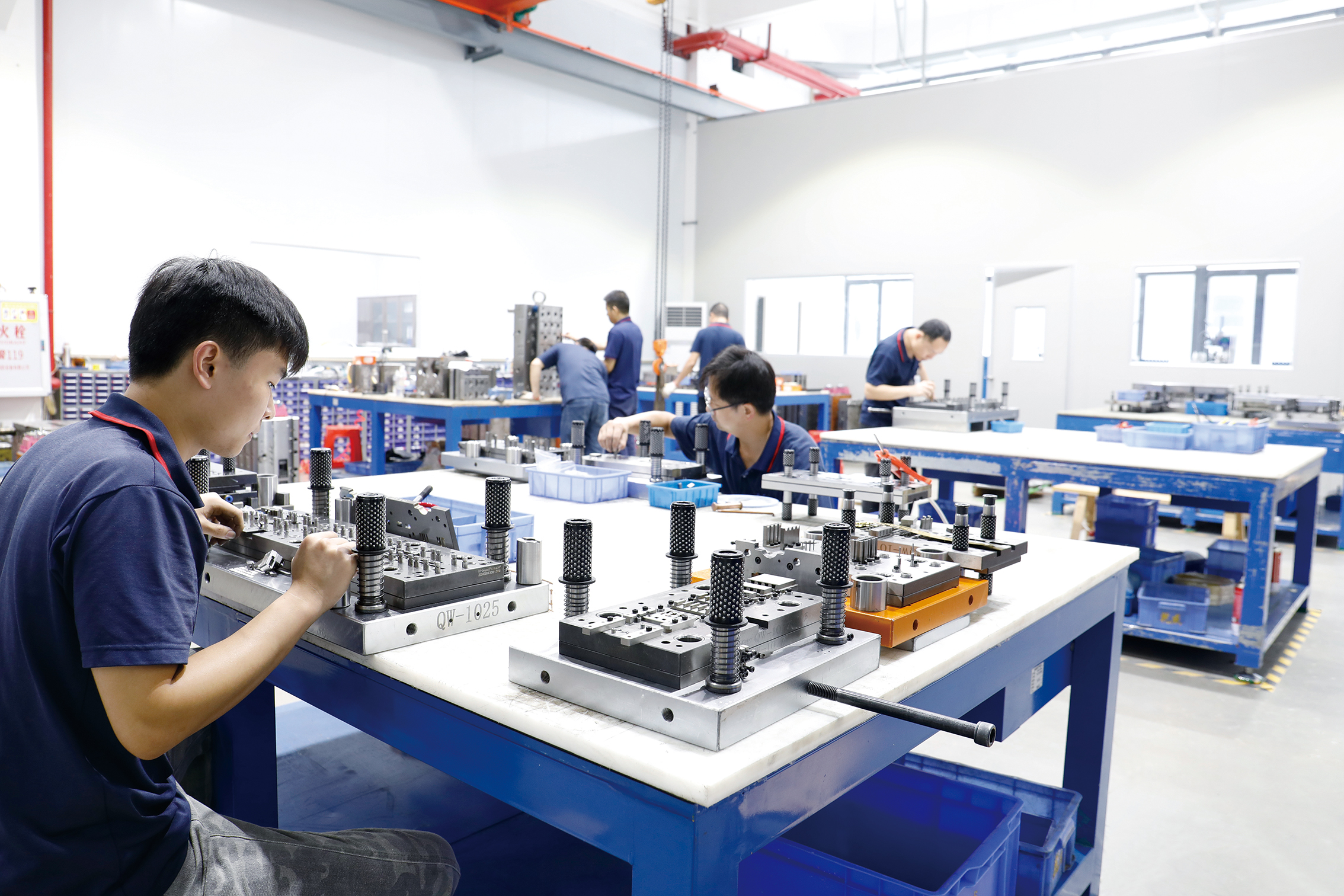
A high-quality mold ensures:
- Accurate dimensions
- Stable production
- Long tooling life
- Consistent terminal performance
Importance of Precision Terminal Molds
Electrical terminals often require extremely tight dimensional control.
Small dimensional differences can affect:
- Connector assembly
- Contact pressure
- Electrical performance
Precision tooling helps maintain:
- Consistent terminal geometry
- Stable production quality
- Reduced material waste
Progressive Stamping Die Manufacturing
Most high-volume electrical terminals are produced using progressive stamping dies.
The tooling development process includes:
Mold Design
Engineers design the stamping die based on:
- Terminal structure
- Material characteristics
- Production requirements
CNC Machining
High-precision machining creates the mold components with accurate dimensions.
EDM Processing
Electrical discharge machining (EDM) is used for complex and precise mold features.
Trial Production and Optimization
Before mass production, manufacturers perform:
- Trial stamping
- Dimensional inspection
- Process adjustment
This ensures the tooling can produce stable and reliable terminals.
Step 5 – Precision Metal Stamping Process
Precision stamping is the core manufacturing process for most custom electrical terminals.
It transforms metal strips into finished terminal components through a series of high-speed forming operations.
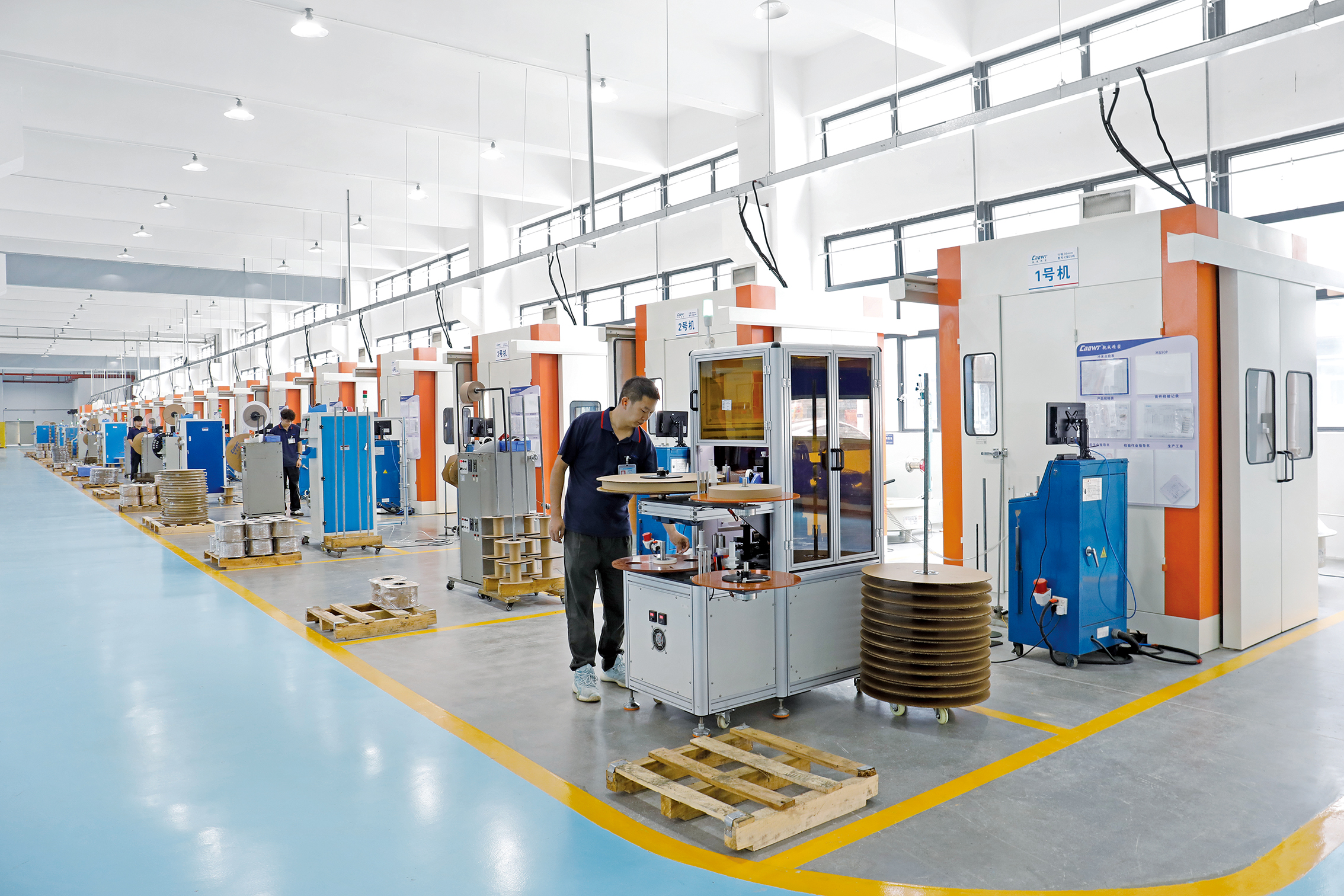
High-Speed Stamping Production
The stamping process typically includes:
- Material feeding
- Punching
- Bending
- Forming
- Cutting
- Inspection
Common raw materials include:
- Copper strips
- Brass strips
- Phosphor bronze strips
- Aluminum strips
Advantages of Precision Stamping
Precision stamping provides several benefits:
High Production Efficiency
Automated stamping equipment can produce large quantities of terminals with consistent quality.
High Dimensional Accuracy
Precision tooling ensures:
- Stable dimensions
- Accurate contact geometry
- Reliable assembly performance
Cost Optimization
For high-volume production, stamping provides:
- Lower unit cost
- Reduced labor requirements
- Better production efficiency
This makes it ideal for automotive, energy storage, and industrial terminal applications.
Step 6 – Surface Treatment and Plating Process
After precision stamping, electrical terminals usually require surface treatment to improve electrical performance, corrosion resistance, and long-term reliability.
The terminal surface directly affects the quality of the electrical connection. Without proper protection, oxidation and environmental exposure may increase contact resistance and reduce product lifetime.
A professional terminal manufacturer selects the appropriate plating process according to:
- Application environment
- Current requirements
- Operating temperature
- Contact performance requirements
- Cost targets
Why Terminal Plating Matters
Surface plating provides several important benefits:
Improved Electrical Conductivity
A suitable plating layer helps maintain:
- Stable current transmission
- Lower contact resistance
- Better electrical efficiency
This is especially important for:
- Battery terminals
- High-current connectors
- Power distribution components
Enhanced Corrosion Resistance
Electrical terminals may operate in environments with:
- Humidity
- Temperature fluctuations
- Chemicals
- Salt exposure
Protective plating prevents oxidation and helps maintain reliable electrical performance over long periods.
Improved Wear Resistance
For terminals that require repeated connection and disconnection, plating improves:
- Contact durability
- Mating cycle performance
- Surface stability
Common Terminal Plating Options
Tin Plating
Tin plating is one of the most widely used surface treatments for electrical terminals.
Advantages include:
- Good electrical conductivity
- Excellent solderability
- Cost-effectiveness
- Reliable corrosion protection
Tin-plated terminals are commonly used in:
- Automotive wiring harnesses
- Industrial connectors
- General electrical applications
Nickel Plating
Nickel plating provides excellent protection in demanding environments.
Advantages include:
- High-temperature resistance
- Strong oxidation protection
- Improved surface durability
Nickel plating is often selected for:
- Energy storage terminals
- Automotive power connections
- Industrial equipment
Gold Plating
Gold plating is used for high-performance electrical contacts where extremely stable conductivity is required.
Advantages include:
- Excellent corrosion resistance
- Very low contact resistance
- Long-term contact reliability
Applications include:
- Medical equipment
- Precision electronics
- High-end communication systems
Step 7 – Injection Molding and Terminal Assembly
Many electrical terminals are not used as independent metal components. They are integrated into complete connector systems with plastic housings, insulation parts, and positioning structures.
Injection molding and assembly processes complete the terminal product.

Plastic Housing Integration
Injection molding provides protective structures around terminals.
The plastic housing helps:
- Prevent electrical short circuits
- Protect terminals from environmental exposure
- Maintain accurate positioning
- Improve connector installation
Common plastic materials include:
- Nylon (PA)
- PBT
- PPS
- Other engineering plastics
Material selection depends on:
- Temperature requirements
- Mechanical strength
- Chemical resistance
Automatic Assembly Process
For high-volume terminal production, automated assembly improves efficiency and consistency.
Assembly processes may include:
- Terminal insertion
- Connector housing assembly
- Wire crimping
- Component integration
- Final inspection
Automation provides:
- Higher production efficiency
- Reduced human error
- Stable product quality
For OEM customers, reliable assembly capability helps shorten supply chains and improve production stability.
Step 8 – Quality Control and Testing
Quality control is one of the most important stages in custom electrical terminal manufacturing.
Because terminals are critical connection components, even small defects can affect system performance.
A reliable manufacturer uses comprehensive inspection procedures from raw materials to finished products.
Electrical Performance Testing
Contact Resistance Testing
Contact resistance directly affects electrical efficiency.
Testing ensures:
- Stable electrical connection
- Low energy loss
- Consistent product performance
Low contact resistance is especially important for:
- Battery terminals
- High-current connectors
- Energy storage applications
Current Carrying Testing
Current carrying tests evaluate whether terminals can safely handle required electrical loads.
Testing focuses on:
- Maximum current capacity
- Temperature rise
- Thermal stability
This helps verify terminal performance under real operating conditions.
Voltage Withstand Testing
Voltage withstand testing evaluates insulation and electrical safety.
It helps ensure terminals can operate safely under specified voltage conditions.
Mechanical Testing
Electrical terminals must maintain reliable mechanical connections during operation.
Common mechanical tests include:
Pull-Out Force Testing
This test evaluates:
- Connection strength
- Terminal retention capability
- Wire crimp reliability
A strong mechanical connection prevents terminal loosening during vibration or movement.
Mating Cycle Testing
For connectors requiring repeated connection and disconnection, manufacturers evaluate:
- Contact wear
- Mechanical durability
- Long-term stability
Vibration Resistance Testing
Automotive and industrial applications require terminals that can withstand continuous vibration.
Testing verifies:
- Contact stability
- Structural reliability
- Resistance to mechanical stress
Environmental Reliability Testing
Electrical terminals often operate in harsh environments.
Environmental testing may include:
Salt Spray Testing
Evaluates:
- Corrosion resistance
- Plating performance
- Environmental durability
Temperature Cycling Testing
Tests terminal performance under repeated temperature changes.
Important for:
- Automotive applications
- Outdoor energy storage systems
- Industrial equipment
Humidity Testing
Evaluates resistance to:
- Moisture exposure
- Oxidation
- Environmental degradation
Step 9 – Mass Production Capability for Custom Terminals
After prototype validation and testing, the project moves into mass production.
A capable terminal manufacturer must provide stable production capacity while maintaining consistent quality.
From Prototype to High-Volume Production
The manufacturing process typically includes:
Prototype Development
During the prototype stage, manufacturers validate:
- Terminal structure
- Material selection
- Production feasibility
- Testing results
Prototype testing helps identify potential improvements before large-scale production.
Mass Production
During mass production, manufacturers focus on:
- Production efficiency
- Quality consistency
- Supply stability
Advanced production systems include:
- Automated stamping equipment
- Precision inspection systems
- Process monitoring
- Quality control checkpoints
Manufacturing Advantages of an Experienced Terminal Supplier
Working with an experienced custom terminal manufacturer provides several benefits:
Faster Product Development
Engineering support helps customers:
- Optimize designs
- Reduce trial-and-error cycles
- Accelerate product launch
Stable Supply Chain
Professional manufacturers provide:
- Reliable raw material sourcing
- Consistent production capacity
- Long-term supply support
Better Cost Control
Manufacturing optimization helps reduce:
- Material waste
- Production costs
- Quality risks
Challenges in Custom Electr ical Terminal Manufacturing
Although modern manufacturing technology has improved terminal production, several challenges remain.
Maintaining Dimensional Accuracy
Electrical terminals often require strict dimensional tolerances.
Challenges include:
- Material deformation
- Stamping variation
- Tool wear
Solutions include:
- Precision tooling
- Automated inspection
- Continuous process improvement
Balancing Performance and Cost
Terminal design requires balancing:
- Material selection
- Manufacturing process
- Plating requirements
- Performance targets
For example:
Copper provides excellent conductivity but higher material costs.
Aluminum reduces weight and cost but requires additional design considerations.
A skilled manufacturer helps customers find the optimal balance.
Ensuring Long-Term Reliability
Terminal failure can lead to:
- Electrical interruption
- Equipment downtime
- Safety risks
Therefore, reliable terminal production requires:
- Proper engineering design
- Suitable materials
- Advanced manufacturing processes
- Comprehensive testing
Why Choose Qianwei Precision as Your Custom Electrical Terminal Manufacturer?
Choosing the right custom electrical terminal manufacturer is an important decision for OEM companies. A reliable supplier should provide more than production capability. They should offer engineering support, manufacturing expertise, quality assurance, and long-term supply stability.
Qianwei Precision specializes in customized electrical terminals, connectors, and precision metal components for industries including automotive, energy storage, industrial equipment, household appliances, and electronics.
From initial design concepts to mass production, Qianwei Precision supports customers with complete terminal manufacturing solutions.
Complete Custom Terminal Manufacturing Capability
Custom terminal projects require close cooperation between customers and manufacturers.
Qianwei Precision provides full-process support, including:
- Product design assistance
- Engineering optimization
- Mold development
- Precision stamping
- Surface treatment
- Injection molding
- Assembly
- Quality inspection
This integrated manufacturing capability allows customers to simplify supplier management and improve product development efficiency.
Engineering Design Support
Before production begins, Qianwei Precision works with customers to evaluate:
- Application requirements
- Terminal structure
- Material selection
- Manufacturing feasibility
- Cost optimization
Our engineering team helps customers improve:
- Electrical performance
- Mechanical reliability
- Production efficiency
By identifying potential issues early in the design stage, we help reduce development risks and shorten time to market.
Precision Metal Stamping Capability
Precision stamping is one of Qianwei Precision’s core manufacturing capabilities.
Our stamping processes support:
- High-volume terminal production
- Complex metal forming
- Tight dimensional requirements
- Consistent product quality
Advanced stamping technology enables production of terminals used in:
- Automotive wiring harnesses
- Battery connection systems
- Industrial connectors
- Electrical equipment
In-House Mold Development
Tooling quality directly affects terminal performance and production stability.
Qianwei Precision has in-house mold manufacturing capabilities, including:
- Progressive stamping die design
- Precision machining
- Mold optimization
- Tool maintenance
Benefits include:
- Faster product development
- Better production control
- Improved dimensional accuracy
Having internal tooling capability allows faster response to customer customization requirements.
Injection Molding and Assembly Integration
Many terminal products require plastic housings, connector bodies, or integrated assemblies.
Qianwei Precision provides:
- Plastic injection molding
- Terminal assembly
- Wire harness integration
- Finished component production
This integrated approach helps customers reduce supply chain complexity and improve production efficiency.
Advanced Manufacturing Facilities
Qianwei Precision operates multiple production workshops to support complete terminal manufacturing.
Our manufacturing capabilities include:
Precision Stamping Workshop
Responsible for:
- Copper terminal stamping
- Brass terminal stamping
- Phosphor bronze terminal production
- High-speed metal forming
Injection Molding Workshop
Supports:
- Connector housing production
- Plastic component manufacturing
- Custom insulation structures
Mold Manufacturing Workshop
Provides:
- Precision tooling development
- Stamping die manufacturing
- Mold maintenance
Wire Harness Assembly Workshop
Supports:
- Terminal crimping
- Wire processing
- Custom harness assembly
This integrated production structure allows Qianwei Precision to control the entire manufacturing process from raw materials to finished products.
Experience Across Multiple Industries
Custom electrical terminals are used across many industries with different performance requirements.
Qianwei Precision provides customized solutions for:
Automotive Industry
Automotive electrical systems require terminals with:
- High reliability
- Vibration resistance
- Stable electrical performance
- Long service life
Applications include:
- Automotive wiring harnesses
- Battery connections
- Electronic control systems
- Vehicle power systems
Energy Storage Industry
Modern energy storage systems require high-performance electrical connections.
Terminal requirements include:
- High current capability
- Low contact resistance
- Thermal stability
- Corrosion resistance
Applications include:
- Battery packs
- Energy storage cabinets
- Power distribution systems
- Renewable energy storage equipment
Industrial Equipment
Industrial applications require terminals that can operate under demanding conditions.
Important requirements include:
- Mechanical strength
- Reliable electrical connection
- Long operating lifetime
Applications include:
- Automation equipment
- Control cabinets
- Industrial machinery
Consumer Electronics and Appliances
Compact electrical products require terminals with:
- Precision dimensions
- Stable contact performance
- Efficient production
Applications include:
- Home appliances
- Electronic devices
- Smart equipment
Quality Certifications and Manufacturing Standards
Quality consistency is essential for global OEM customers.
Qianwei Precision follows strict quality management systems to ensure reliable products.
Our certifications and compliance standards include:
- ISO9001 Quality Management System
- IATF16949 Automotive Quality Management System
- UL certification
- RoHS compliance
- REACH compliance
Comprehensive Quality Control System
Quality control covers every manufacturing stage:
Incoming Material Inspection
Checking:
- Material specifications
- Surface quality
- Chemical composition
Production Process Control
Monitoring:
- Stamping parameters
- Dimensional accuracy
- Surface treatment quality
Final Product Inspection
Testing:
- Electrical performance
- Mechanical strength
- Appearance quality
- Packaging requirements
This complete quality management system ensures every batch meets customer specifications.
Conclusion: Partner with an Experienced Custom Electrical Terminal Manufacturer
Custom electrical terminal manufacturing is a complex process that combines engineering design, material expertise, precision manufacturing, surface treatment, and quality control.
A reliable terminal supplier helps OEM customers achieve:
- Stable electrical performance
- Improved product reliability
- Faster product development
- Consistent mass production
- Reduced manufacturing risks
From initial design consultation to final production, choosing the right manufacturing partner is essential for creating high-quality electrical connection solutions.
Qianwei Precision provides customized electrical terminal manufacturing services for automotive, energy storage, industrial equipment, and electronic applications.
With integrated capabilities in:
- Precision stamping
- Mold development
- Injection molding
- Terminal assembly
- Quality testing
Qianwei Precision supports customers worldwide with reliable OEM terminal solutions.
Looking for a custom electrical terminal manufacturer for your next project? Contact Qianwei Precision to discuss your terminal design requirements and manufacturing solutions.
FAQs
What is the process of manufacturing custom electrical terminals?
The custom electrical terminal manufacturing process typically includes:
- Customer requirement analysis
- Terminal design and engineering
- Material selection
- Mold development
- Precision stamping
- Surface plating
- Injection molding and assembly
- Quality testing
- Mass production
Each stage affects the final electrical performance and reliability of the terminal.
How long does custom terminal development take?
The development timeline depends on:
- Terminal complexity
- Mold requirements
- Material selection
- Testing requirements
- Production volume
Simple terminals may require a shorter development cycle, while complex automotive or energy storage terminals may require additional engineering validation.
Working with an experienced manufacturer can significantly reduce development time.
What materials are commonly used for electrical terminals?
Common terminal materials include:
Copper
Used for:
- High-current applications
- Battery terminals
- Power connections
Advantages:
- Excellent conductivity
- Superior thermal performance
Brass
Used for:
- General electrical terminals
- Automotive connectors
Advantages:
- Good conductivity
- Excellent manufacturability
Phosphor Bronze
Used for:
- Precision contacts
- High-cycle connectors
Advantages:
- Strong mechanical properties
- Excellent spring performance
Aluminum
Used for:
- Lightweight applications
- Energy storage systems
Advantages:
- Low weight
- Cost efficiency
Can terminal manufacturers provide OEM and ODM services?
Yes.
Professional custom terminal manufacturers can provide:
- Product design support
- Engineering optimization
- Prototype development
- Tooling production
- Mass manufacturing
OEM and ODM services allow customers to develop products based on their specific application requirements.
How do manufacturers ensure terminal quality?
Reliable manufacturers use multiple inspection methods, including:
Electrical Testing
- Contact resistance testing
- Current carrying testing
- Voltage testing
Mechanical Testing
- Pull force testing
- Retention testing
- Mating cycle testing
Environmental Testing
- Salt spray testing
- Temperature cycling
- Humidity testing
These tests ensure terminals maintain stable performance throughout their service life.

