

A wiring harness is more than just a collection of wires. It is a complete electrical connection system that ensures power transmission and signal communication between different components. Among all parts of a wiring harness, terminals play one of the most critical roles.
Although terminals are small metal components, they directly affect electrical performance, mechanical reliability, and the service life of the entire wiring system.
From automotive electronics and electric vehicles to industrial equipment, energy storage systems, and household appliances, high-quality wiring harness terminals help ensure stable current transmission, secure connections, and long-term operational reliability.
A poorly designed or low-quality terminal can lead to problems such as increased contact resistance, overheating, signal interruption, and system failure.
This article explains why terminals are important in wiring harnesses, the different types of terminals, material options, manufacturing processes, and how to select the right terminal solution for your application.
What Is a Wiring Harness Terminal?
A wiring harness terminal is a conductive metal component attached to the end of an electrical wire. It creates a connection between the wire and a connector, circuit board, or electrical device.
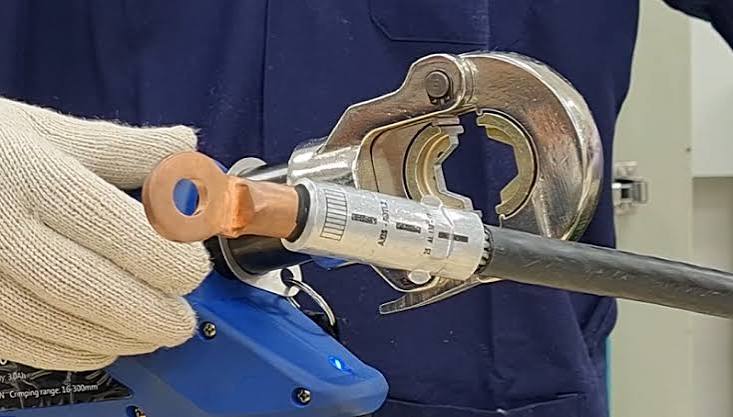
During manufacturing, terminals are usually attached through a crimping process. The terminal mechanically grips the wire conductor and creates a stable electrical connection without requiring soldering.
A complete wiring harness typically includes:
- Electrical wires
- Terminals
- Connector housings
- Seals
- Protective components
Among these components, terminals act as the bridge that transfers electrical power and signals.
The quality of the terminal directly influences:
- Electrical conductivity
- Contact stability
- Mechanical strength
- Temperature resistance
- Overall system reliability
Why Are Terminals Important in Wiring Harnesses?
1. Ensuring Reliable Electrical Connections
The primary function of terminals is to provide a stable electrical connection.
A high-quality terminal reduces contact resistance and ensures efficient current transmission.
Poor-quality terminals may create:
- Increased electrical resistance
- Voltage loss
- Excessive heat generation
- Unstable electrical performance
For applications such as automotive systems, EV batteries, and industrial equipment, reliable electrical connections are essential because even a small connection failure can affect the operation of the entire system.
Professional terminal manufacturers use suitable materials, precise stamping processes, and proper surface plating to maintain stable electrical performance over long periods.
2. Improving Mechanical Strength
Electrical connections must withstand mechanical stress during operation.
Vehicles and industrial machines are exposed to:
- Vibration
- Shock
- Temperature changes
- Continuous movement
A properly designed terminal provides strong mechanical retention between the wire and connector.
The crimping area of the terminal must achieve a balance between:
- Strong wire holding force
- Proper electrical contact
- Protection against conductor damage
Poor crimp quality may result in:
- Wire pull-out
- Intermittent connection
- Electrical failure
Therefore, terminal manufacturing accuracy is essential for long-term reliability.
3. Preventing Electrical Failures
Many electrical problems are caused by connection failures rather than component failures.
Low-quality terminals may cause:
High Contact Resistance
Poor contact surfaces increase resistance and generate additional heat.
Corrosion
Without proper plating protection, metal surfaces may oxidize and reduce conductivity.
Overheating
Incorrect terminal design or insufficient current capacity may damage the wiring system.
Signal Interruption
Sensitive electronic systems require stable signal transmission.
For automotive, medical, and industrial applications, reliable terminals help prevent unexpected downtime and safety risks.
4. Supporting Automated Manufacturing
Modern wiring harness production relies heavily on automation.
Manufacturers use automatic equipment for:
- Wire cutting
- Terminal crimping
- Connector assembly
- Quality inspection
To support automated production, terminals need:
- Accurate dimensions
- Consistent material properties
- Stable quality
- Reel packaging capability
High-precision terminals improve production efficiency and reduce manufacturing costs for high-volume applications.
5. Improving Safety and Service Life
Terminal performance directly affects the safety and durability of electrical systems.
High-quality terminals provide:
- Stable contact force
- Low resistance
- Corrosion protection
- Reliable current capacity
This is especially important in high-power applications such as:
- Electric vehicle battery systems
- Energy storage equipment
- Industrial power systems
A reliable terminal solution helps extend equipment life and reduce maintenance requirements.
Common Types of Wiring Harness Terminals
Different applications require different terminal designs. The correct terminal type depends on current requirements, installation methods, and environmental conditions.
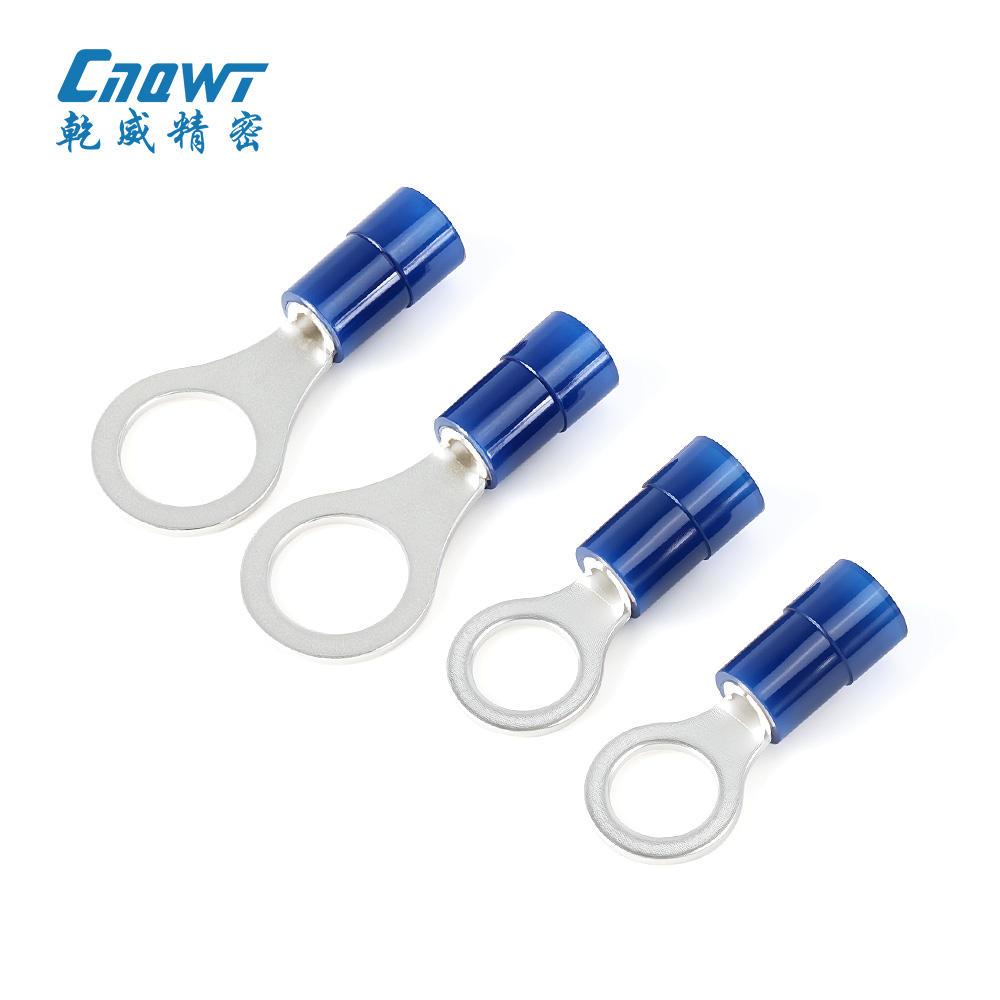
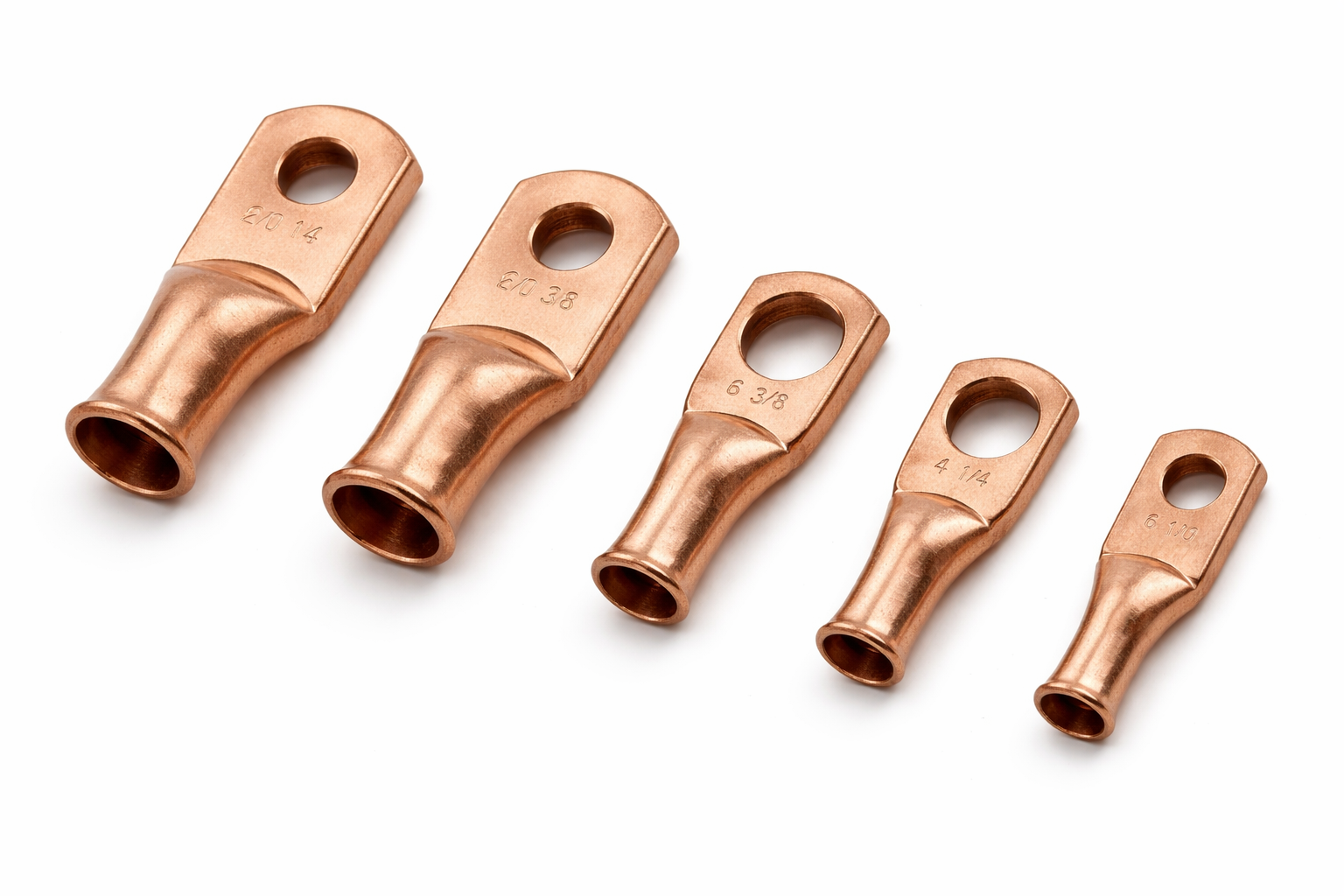
Ring Terminals
Ring terminals feature a circular opening that allows them to be fixed using screws or bolts.
Common applications:
- Battery connections
- Grounding systems
- Power distribution equipment
Advantages:
- Strong mechanical connection
- Good vibration resistance
- Suitable for high-current applications
Blade Terminals
Blade terminals have a flat contact design and are widely used in automotive and electrical systems.
Applications include:
- Fuse boxes
- Automotive wiring
- Household appliances
Advantages:
- Compact design
- Easy assembly
- Suitable for automated production
Pin Terminals
Pin terminals are commonly used inside connector systems.
Applications:
- Automotive electronics
- Control systems
- Signal transmission
Their compact structure makes them suitable for space-limited applications.
Open Barrel Terminals
Open barrel terminals are widely used in automotive wiring harness production.
They include:
- Conductor crimp area
- Insulation support area
Advantages:
- Excellent crimp performance
- High production efficiency
- Strong mechanical retention
Materials Used for Wiring Harness Terminals
Material selection determines terminal performance, including conductivity, strength, and corrosion resistance.
Brass
Brass is widely used because it provides:
- Good conductivity
- Good mechanical strength
- Cost efficiency
It is suitable for general electrical applications.
Phosphor Bronze
Phosphor bronze is a high-performance copper alloy commonly used in precision terminals.
Advantages:
- Excellent spring performance
- High fatigue resistance
- Stable contact force
It is widely used in automotive and high-reliability connectors.
Copper Alloy
Copper alloy terminals provide an excellent balance between:
- Electrical conductivity
- Mechanical strength
- Manufacturing performance
They are commonly used in power connection applications.
Terminal Plating Options
Surface plating improves terminal durability and electrical performance.
Tin Plating
Tin plating is the most common option.
Advantages:
- Good corrosion resistance
- Cost-effective
- Suitable for general applications
Nickel Plating
Nickel plating provides:
- High temperature resistance
- Improved durability
- Better corrosion protection
Gold Plating
Gold plating is mainly used for high-reliability signal connections.
Advantages:
- Excellent oxidation resistance
- Stable contact performance
How to Choose the Right Wiring Harness Terminal?
Selecting the correct terminal requires consideration of several factors.
Current Capacity
The terminal must match the required electrical load.
Important factors include:
- Terminal size
- Material
- Contact area
- Operating temperature
Wire Size Compatibility
The terminal must match the wire specification.
A proper match ensures:
- Strong crimp performance
- Reliable conductivity
- Long-term stability
Operating Environment
Consider:
- Temperature
- Moisture
- Vibration
- Chemical exposure
For harsh environments, terminals require appropriate materials and protective plating.
Quality Standards
For industrial and automotive applications, suppliers should meet relevant quality requirements.
Common standards include:
- ISO 9001
- IATF 16949
- UL
- RoHS
- REACH
Applications of Wiring Harness Terminals
Automotive Industry
Automotive wiring harness terminals are used in:
- Engine systems
- Sensors
- Lighting systems
- Control modules
- Battery systems
Modern vehicles require terminals that can withstand vibration, heat, and long-term operation.
Electric Vehicles
EV applications require high-performance terminals for:
- Battery packs
- BMS systems
- Charging systems
- Power connections
These terminals require:
- High current capability
- Low resistance
- Excellent reliability
Industrial Equipment
Industrial applications include:
- Control cabinets
- Automation systems
- Motors
- Robots
Reliable terminals help maintain stable equipment operation.
Energy Storage Systems
Energy storage applications require terminals with:
- High current performance
- Corrosion resistance
- Long service life
Why Choose Qianwei Precision for Wiring Harness Terminals?
Qianwei Precision specializes in custom electrical terminal manufacturing and precision metal stamping solutions.
With more than 10 years of manufacturing experience, we provide customized solutions for:
- Automotive wiring harnesses
- EV battery connections
- Industrial equipment
- Energy storage systems
- Consumer electronics
Our manufacturing capabilities include:
- Precision stamping
- Mold development
- Plastic injection molding
- Wire harness assembly
- Quality inspection
We support customers from product design and prototyping to mass production.
With advanced manufacturing equipment and strict quality control processes, Qianwei Precision delivers reliable terminal solutions that meet global customer requirements.
Conclusion
Terminals are small but essential components in every wiring harness system. They determine how effectively electrical power and signals are transmitted and directly influence system reliability.
From automotive and electric vehicles to industrial automation and energy storage, choosing the right terminal solution is critical for improving performance, safety, and product lifespan.
By working with an experienced custom electrical terminal manufacturer, companies can achieve reliable connections, consistent quality, and efficient production.
Qianwei Precision provides customized terminal manufacturing solutions with precision stamping, engineering support, and reliable production capabilities for global customers.
Frequently Asked Questions
Why are terminals important in wiring harnesses?
Terminals create reliable electrical and mechanical connections between wires and electrical components. They directly affect conductivity, safety, and system reliability.
What materials are commonly used for terminals?
Common materials include brass, copper alloys, and phosphor bronze.
Why is crimping used for terminal connections?
Crimping provides a strong mechanical and electrical connection while supporting high-speed automated production.
Can wiring harness terminals be customized?
Yes. Professional manufacturers can customize terminal dimensions, materials, plating, and packaging according to customer requirements.

