

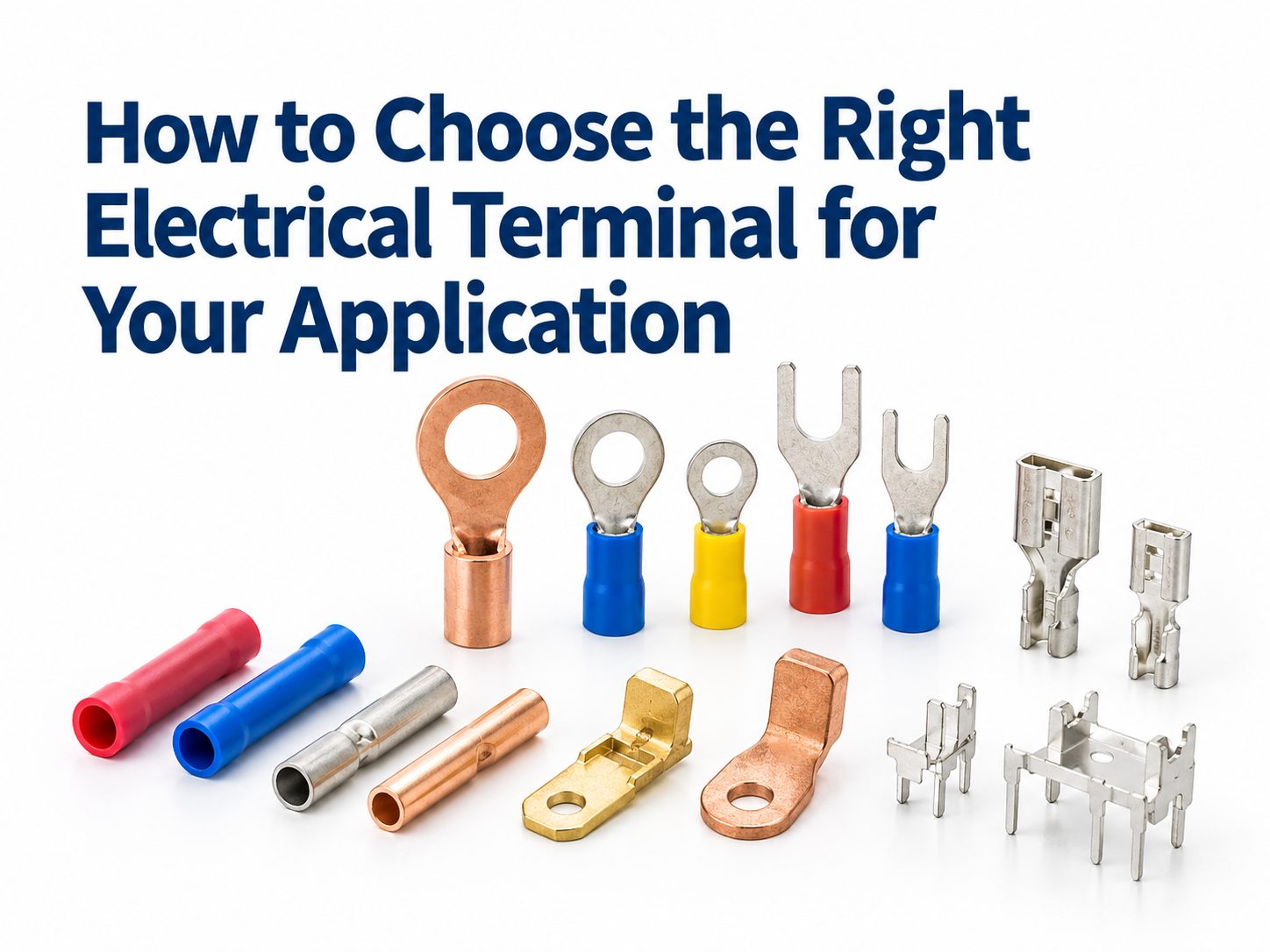
Choosing the right electrical terminal is an important part of designing a reliable wiring system. A terminal may look like a small component, but its electrical performance, mechanical fit, material, and connection method can directly affect the reliability of the entire assembly.
The right choice depends on more than just the wire size. Current, voltage, conductor material, installation method, available space, operating environment, and connection requirements all need to be considered.
For engineers, purchasing teams, and wire harness manufacturers, the selection process can become complicated when there are many terminal types and specifications available.
This guide explains the main factors to consider when choosing an electrical terminal and provides a practical selection process for different applications.
1. Start With the Application
Before selecting a terminal, first understand where and how it will be used.
Different applications place different requirements on the terminal. A terminal used inside a household appliance may have very different requirements from one used in an automotive wiring harness, industrial control cabinet, battery system, or HVAC unit.
Start by answering several basic questions:
- What equipment will the terminal be installed in?
- What type of wire or cable will be connected?
- What is the expected current and voltage?
- Will the connection be permanent or frequently disconnected?
- Is the terminal exposed to vibration, moisture, heat, or chemicals?
- How much installation space is available?
- Will the terminal be assembled manually or automatically?
These answers help narrow down the suitable terminal categories before you compare individual specifications.
For example, a ring terminal may be suitable when a secure bolted connection is required, while a quick-disconnect terminal may be more appropriate when frequent connection and disconnection are necessary.
2. Match the Terminal to the Wire Size
Wire size is one of the first technical parameters to check.
Electrical terminals are normally designed for a specific conductor cross-section or wire gauge range. The terminal must accommodate the conductor properly without excessive clearance or forcing the wire into an undersized barrel.
Common wire sizes are specified using systems such as:
- AWG (American Wire Gauge)
- mm² conductor cross-section
- Manufacturer-specific wire size ranges
The terminal barrel or contact area should match the conductor size specified by the terminal manufacturer.
For example, a terminal designed for a small control wire should not be selected simply because its external dimensions appear suitable. Its conductor-entry and connection area must also match the actual wire.
For multi-strand wires, the terminal must also be compatible with the construction of the conductor.
A correct wire-to-terminal match helps provide:
- Stable electrical contact
- Reliable mechanical retention
- Consistent assembly
- Lower risk of loose connections
- Better long-term performance
When requesting samples or quotations from an electrical terminal manufacturer, always provide the wire size and conductor specification rather than only a general product name.
3. Consider the Required Terminal Type
Once the application and wire size are understood, determine what type of connection is required.
Electrical terminals are available in many forms, including:
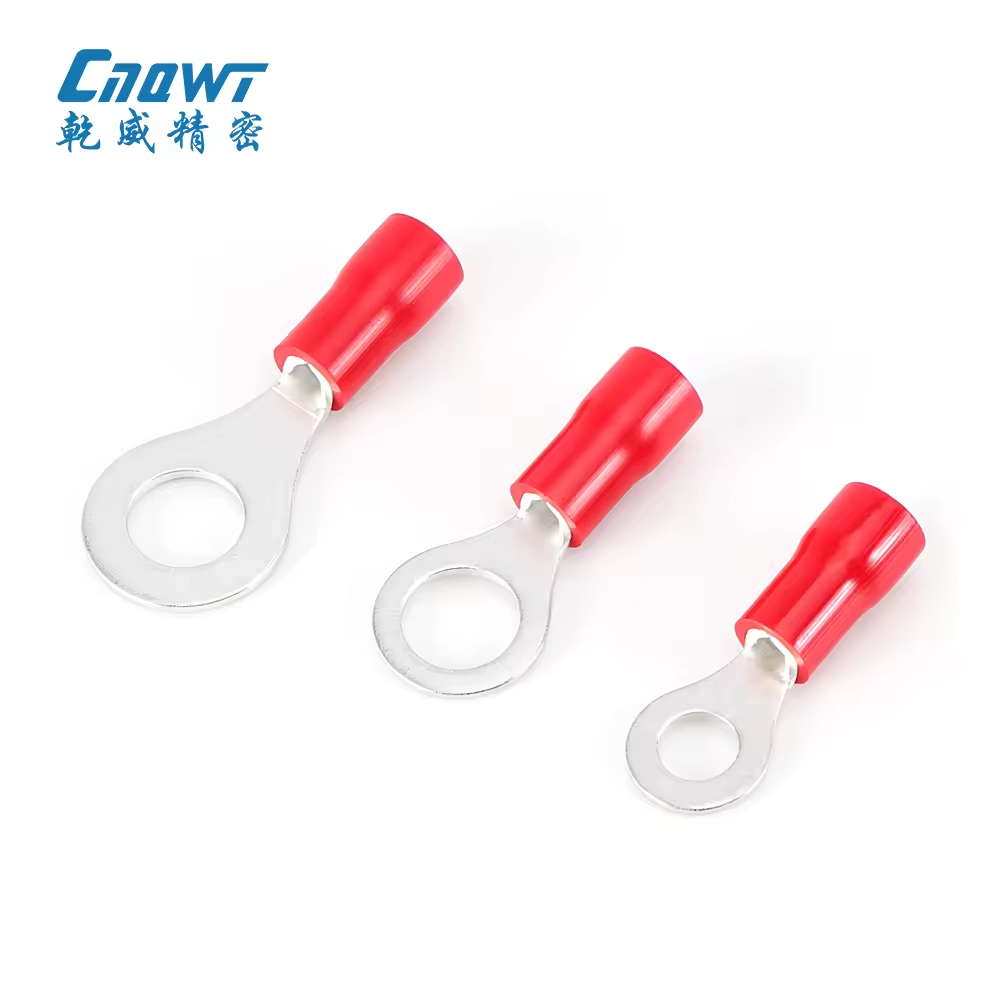
Ring Terminals
Ring terminals are commonly used for connections secured with a screw, bolt, or stud.
They provide a mechanically stable connection and are widely used in:
- Control panels
- Automotive wiring
- Industrial equipment
- Battery wiring
- Electrical distribution systems
The ring size should match the diameter of the mounting stud or bolt.
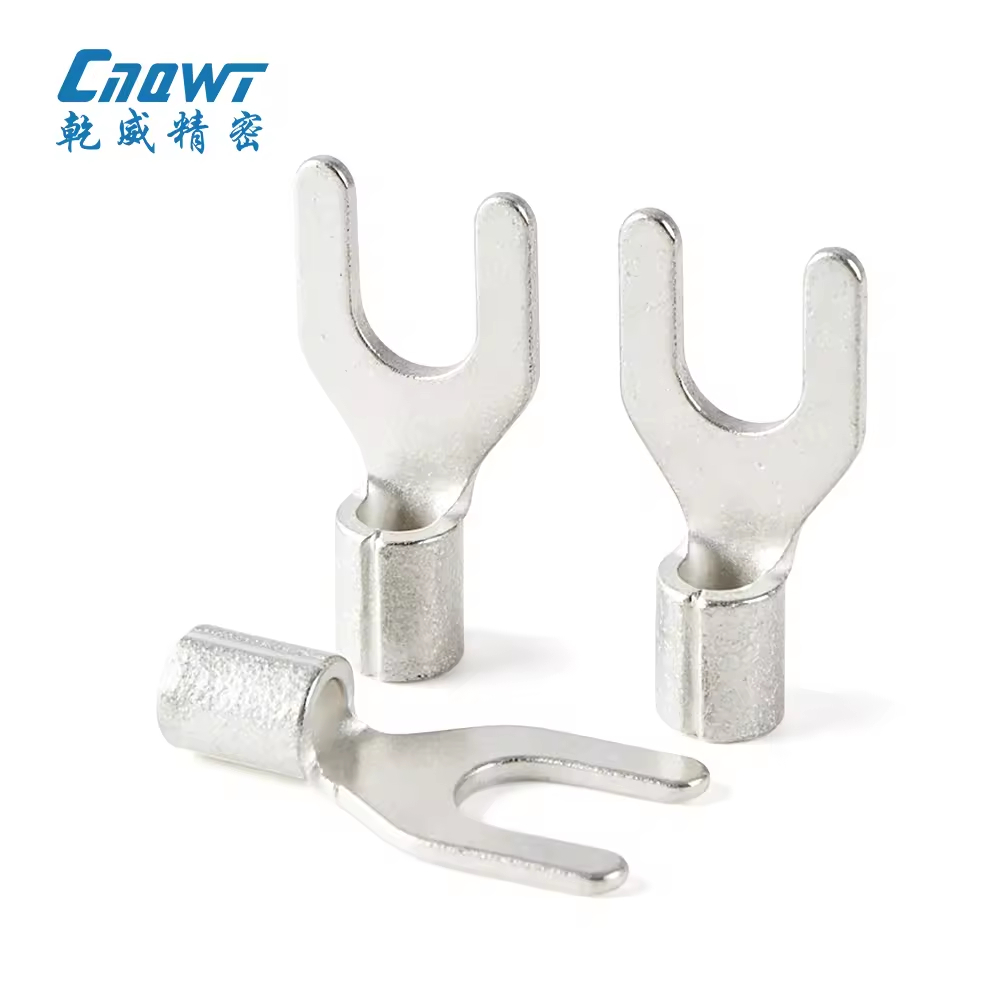
Spade Terminals
Spade terminals provide a convenient connection for screw or stud-based applications while allowing easier installation than a fully enclosed ring.
They are often used where wiring needs to be installed or removed efficiently.
Quick-Disconnect Terminals
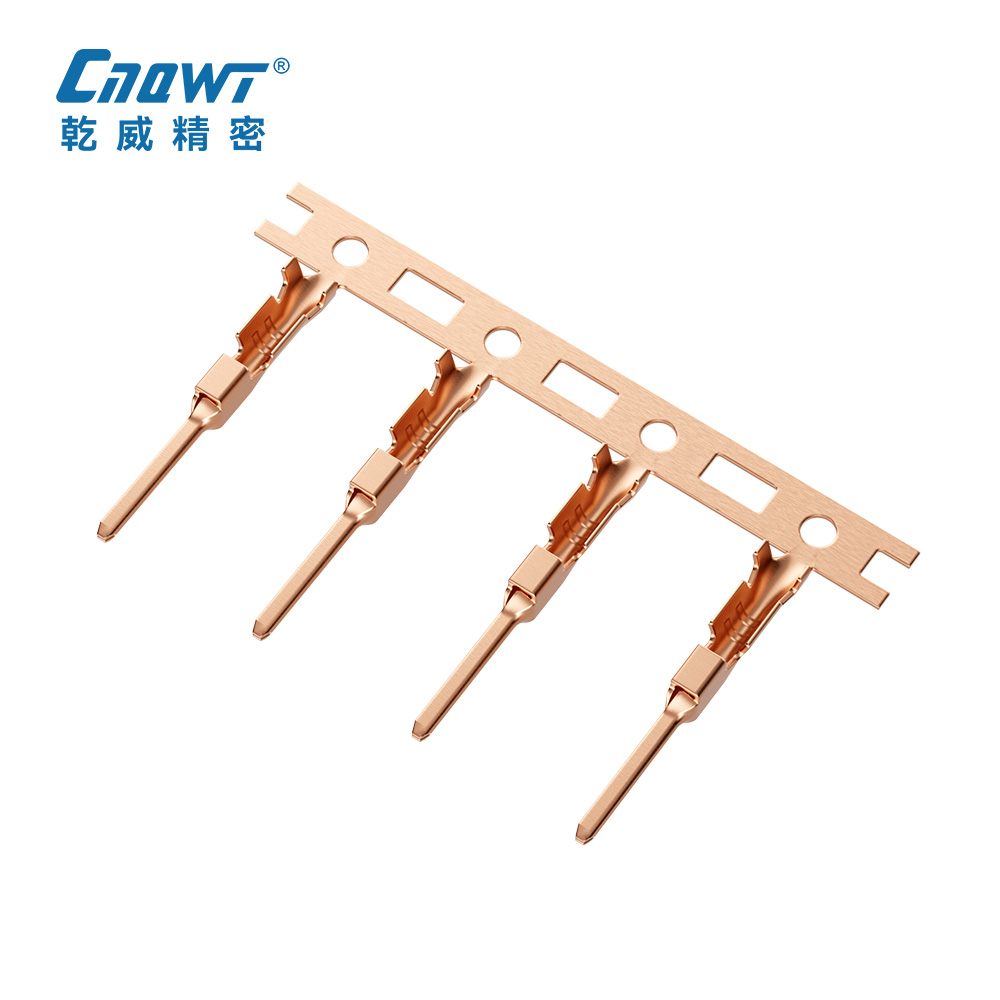
Quick-disconnect terminals, including male and female configurations, are useful when wiring needs to be connected and disconnected during assembly, maintenance, or servicing.
They are commonly found in appliances, automotive systems, HVAC equipment, and industrial electrical assemblies.
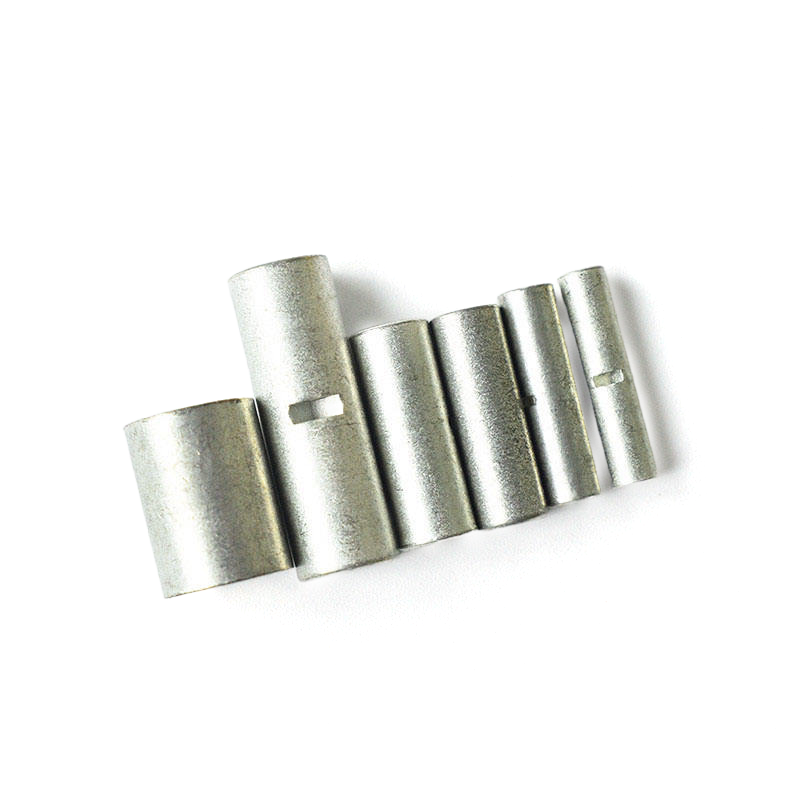
Butt Terminals
Butt terminals are primarily used to join two wires.
They can be useful in wire harness production and field wiring where two conductors need to be connected in-line.
Custom Electrical Terminals
Some applications cannot be adequately served by standard terminal designs.
Custom terminals may be required when the project has specific requirements for:
- Contact geometry
- Mounting dimensions
- Wire entry
- Material
- Plating
- Retention features
- Installation space
- Automated assembly
The key is to select the connection structure based on the actual application rather than choosing a terminal simply because it is commonly available.
4. Check the Current Requirement
Current capacity is another important selection factor.
The terminal must be capable of carrying the required current without excessive temperature rise under the intended operating conditions.
However, current rating should not be considered as an isolated number.
Actual performance can be affected by:
- Conductor size
- Contact area
- Terminal material
- Contact resistance
- Plating
- Connection quality
- Ambient temperature
- Installation conditions
- Duty cycle
For example, a terminal used continuously at a high load may experience different thermal conditions from one carrying the same current intermittently.
For higher-current applications, engineers should request the manufacturer’s technical data rather than relying only on a general product description.
This is particularly important for applications such as power distribution, battery connections, industrial equipment, and electrical systems with continuous loads.
5. Check the Voltage and Electrical Clearance Requirements
Current is not the only electrical parameter.
Voltage requirements should also be considered, especially when terminals are used in assemblies where electrical insulation and spacing are important.
Depending on the design, engineers may need to evaluate:
- Rated voltage
- Insulation material
- Creepage distance
- Clearance
- Contact spacing
- Insulation temperature rating
For terminals used in enclosed electrical equipment, the terminal should be compatible with the insulation and housing system used by the application.
If the terminal will be integrated into a larger assembly, dimensional drawings are especially useful for checking whether the required electrical spacing can be maintained.
6. Select the Appropriate Material
Terminal material influences conductivity, mechanical properties, formability, and corrosion resistance.
Common materials used for electrical terminals include:
- Copper
- Brass
- Phosphor bronze
Copper offers good electrical conductivity and is widely used for electrical connection applications.
Brass provides a combination of electrical performance, mechanical strength, and good manufacturability. It is commonly used for stamped electrical components.
Phosphor bronze can be selected when spring properties and mechanical performance are important.
The best material depends on the function of the terminal.
For example, a terminal that requires a certain level of contact spring force may have different material requirements from a simple stamped conductive component.
When choosing a terminal, consider both the electrical requirements and the mechanical behavior of the material.
7. Choose the Right Surface Plating
The base material is only one part of the terminal’s construction. Surface plating can also affect contact performance and durability.
Common plating options include:
- Tin
- Nickel
- Other application-specific finishes
Tin plating is widely used for electrical terminals because it provides good solderability and electrical contact performance for many applications.
Nickel plating can provide improved resistance to heat and environmental conditions and may be used as part of a plating system depending on the application.
The correct plating should be selected according to the operating environment, electrical requirements, mating conditions, and expected service life.
For example, a terminal operating in a demanding environment may require different surface treatment from one used inside a relatively controlled indoor product.
Instead of specifying plating based only on cost, engineers should discuss the actual application conditions with the terminal manufacturer.
8. Consider the Connection and Assembly Method
The terminal must also fit the way the wiring assembly will be manufactured.
Common connection and assembly methods include:
- Crimping
- Soldering
- Screwing
- Welding
- Insertion into a housing
- Automated wire assembly
A terminal designed for crimping should be compatible with the intended conductor and assembly equipment.
For high-volume wire harness production, terminal geometry can be particularly important because automated equipment requires consistent dimensions and feeding characteristics.
Production teams should consider:
- Terminal orientation
- Reel or strip packaging
- Feeding requirements
- Assembly speed
- Tool compatibility
- Inspection requirements
A terminal that works well in a prototype may not necessarily be the most practical choice for mass production.
This is why terminal selection should involve both engineering and manufacturing considerations.
9. Check the Installation Space
Physical dimensions are often overlooked during the early stage of component selection.
Before approving a terminal, check:
- Overall length
- Width
- Height
- Mounting hole or stud size
- Wire-entry direction
- Contact position
- Insulation clearance
- Mating space
The terminal must fit within the available installation area without interfering with nearby components.
For compact products, the orientation of the wire entry can be particularly important.
A terminal with the correct electrical characteristics may still be unsuitable if the wire exits in the wrong direction or the terminal occupies too much space.
For this reason, engineers should compare the terminal drawing with the actual product layout before final approval.
10. Consider the Operating Environment
The environment in which the terminal operates can significantly influence material and plating selection.
Consider whether the terminal will be exposed to:
- High or low temperatures
- Humidity
- Water
- Salt spray
- Dust
- Vibration
- Chemicals
- Oil
- Frequent temperature cycling
Automotive and industrial applications, for example, may expose terminals to vibration and temperature fluctuations for long periods.
Indoor appliances may have more controlled conditions but can still experience heat, humidity, and repeated electrical loads.
Environmental requirements should therefore be considered during the initial selection rather than after a problem occurs.
If the application has demanding environmental conditions, provide the terminal manufacturer with the actual operating requirements so the material, plating, and construction can be evaluated appropriately.
11. Check Mechanical Requirements
An electrical terminal also needs to provide adequate mechanical performance.
Depending on the application, important characteristics may include:
- Contact retention
- Terminal retention
- Pull-out force
- Mating force
- Unmating force
- Spring force
- Vibration resistance
- Dimensional stability
For terminals inserted into a housing, terminal retention is particularly important because the terminal must remain securely positioned during assembly and operation.
For bolted terminals, the mounting interface must provide reliable mechanical contact under the specified installation conditions.
The mechanical requirements should be evaluated together with the electrical requirements rather than treating them as separate issues.
12. Consider Certification and Compliance
For many commercial and industrial products, the terminal may need to meet specific regulatory or customer requirements.
Depending on the application and market, buyers may need to consider requirements related to:
- RoHS
- REACH
- UL
- ISO-based quality systems
- Customer-specific specifications
Certification requirements vary by product and application, so the correct approach is to confirm which standards actually apply to the finished product and terminal assembly.
When purchasing from an electrical terminal manufacturer, ask for relevant certificates, test reports, material information, and quality documentation where required.
This can help reduce problems during customer audits or product qualification.
13. Standard Terminal or Custom Terminal?
Not every application requires a custom-designed terminal.
Standard terminals are often suitable when the application can use an established configuration and the required dimensions and performance are already available.
Custom terminals become more relevant when the application has specific requirements that standard products cannot meet.
For example, customization may involve:
- Special dimensions
- Unique mounting geometry
- Different wire-entry direction
- Specific contact configuration
- Special material requirements
- Customized plating
- Integration with an existing wire harness
- High-volume production requirements
The decision should be based on technical requirements and production volume rather than assuming that custom terminals are always better.
A good terminal manufacturer should be able to evaluate the application and determine whether an existing design can be adapted or whether a new stamping tool is justified.
14. Work With the Manufacturer Before Finalizing the Design
One of the most effective ways to avoid terminal selection problems is to involve the manufacturer early.
Instead of sending only a product name such as “copper terminal,” provide the manufacturer with as much technical information as possible:
- Wire size
- Conductor material
- Current
- Voltage
- Mounting dimensions
- Operating temperature
- Environmental conditions
- Connection method
- Required quantity
- Application
- Existing drawing or sample
A qualified electrical terminal supplier can then evaluate the requirements and recommend an appropriate construction.
For OEM projects, this early communication can also help identify potential issues with tooling, stamping, plating, assembly, or mass production before the design is finalized.
A Practical Electrical Terminal Selection Checklist
Before placing an order, review the following points:
| Selection Factor | What to Check |
|---|---|
| Application | Where will the terminal be used? |
| Wire size | AWG or mm² |
| Current | Continuous and peak current |
| Voltage | Operating and rated voltage |
| Terminal type | Ring, spade, quick-disconnect, butt, PCB, etc. |
| Material | Copper, brass, phosphor bronze |
| Plating | Tin, nickel, or application-specific finish |
| Connection method | Crimp, solder, screw, welding, insertion |
| Dimensions | Mounting and installation space |
| Environment | Temperature, humidity, vibration, chemicals |
| Mechanical performance | Retention, pull-out, mating requirements |
| Compliance | Applicable certifications and customer standards |
| Production | Manual, semi-automatic, or automated assembly |
| Quantity | Prototype, small batch, or mass production |
| Customization | Standard product or custom design |
Final Thoughts
Choosing the right electrical terminal is a process of matching the terminal to the complete application—not simply selecting a product based on wire size or appearance.
The key factors include the application, wire size, current, voltage, terminal type, material, plating, connection method, installation space, operating environment, and production process.
For standard applications, an existing terminal may provide a practical solution. For OEM and high-volume projects, however, working with an experienced electrical terminal manufacturer can help ensure that the terminal design is compatible with both the product and the manufacturing process.
At Qianwei Precision, we support electrical terminal development and manufacturing for different wire harness and electrical applications. Our capabilities include precision stamping, mold manufacturing, injection molding, plating, inspection, and mass production, allowing terminal requirements to be evaluated from design through production.
If you are looking for a suitable terminal for a new project, send us your wire size, application, drawings, samples, or technical requirements. Our team can evaluate the requirements and discuss a suitable electrical terminal solution for your project.
Contact Qianwei Precision for custom electrical terminal manufacturing and OEM support.
FAQs
1. How do I know which electrical terminal size I need?
The terminal size should match the wire size, conductor type, and connection interface. Check the terminal manufacturer’s specified wire range and confirm the mounting or mating dimensions before selection.
2. What is the difference between a ring terminal and a spade terminal?
A ring terminal provides a fully enclosed connection around a screw or stud, while a spade terminal has an open slot that allows faster installation and removal. The choice depends on the required connection method and installation conditions.
3. How do I choose the right material for an electrical terminal?
Copper, brass, and phosphor bronze are commonly used. The selection depends on conductivity, mechanical strength, spring properties, forming requirements, and the application’s operating environment.
4. Does terminal plating affect electrical performance?
Yes. Surface plating can affect contact resistance, corrosion resistance, solderability, and durability. Tin and nickel are commonly used finishes, but the appropriate plating depends on the application and environmental conditions.
5. Can one electrical terminal be used for different wire sizes?
Some terminals are designed for a defined range of wire sizes, but a terminal should not be used outside the manufacturer’s specified range. For reliable electrical and mechanical performance, the conductor should fit the terminal’s specified wire range.
6. What electrical terminal is suitable for automotive wiring?
Automotive applications typically require terminals designed for the relevant wire size, current, vibration, temperature, and environmental conditions. The terminal must also be compatible with the required housing and wire-harness assembly process.
7. What should I provide to an electrical terminal manufacturer when requesting a quotation?
Provide the application, wire size, conductor material, current and voltage requirements, terminal type, dimensions, material, plating requirements, drawings or samples, estimated quantity, and operating environment. More complete information allows the manufacturer to evaluate the requirement more accurately.
8. When should I choose a custom electrical terminal instead of a standard terminal?
A custom terminal may be appropriate when standard products cannot meet specific requirements for dimensions, mounting geometry, wire entry, contact configuration, material, plating, or assembly. The decision should also consider production volume and tooling costs.
9. Can electrical terminals be supplied on reels for automated assembly?
Yes. Many stamped terminals can be supplied in reel or strip form for automated or semi-automated assembly. Packaging and feeding requirements should be confirmed with the manufacturer before mass production.
10. How can I verify whether an electrical terminal is suitable for my application?
Compare the terminal’s electrical, mechanical, dimensional, material, plating, environmental, and assembly specifications with your application requirements. For OEM projects, providing drawings or samples to an experienced terminal manufacturer for technical review can help confirm compatibility before production.

