


When it comes to sound systems, every little detail affects performance — even the small parts like speaker wire connectors. For manufacturers, choosing the right connector isn’t just about clear sound; it’s also about efficiency, reliability, and ease of assembly. Let’s take a closer look at what makes certain connectors the best for your production needs.
What Are Speaker Wire Connectors?
Speaker wire connectors are small components used to link speaker cables to amplifiers, receivers, or speakers themselves. Instead of twisting bare wires directly, these connectors give you a more secure, durable, and consistent connection.
In manufacturing, they help reduce errors, improve product longevity, and make assembly smoother — especially for large-scale audio systems or high-end speaker setups. Similar to precision manufacturing in the cutting tool industry, connector performance relies on tight dimensional control.
Common Types of Speaker Wire Connectors
There are several types of connectors you’ll encounter, each with its own design, application, and advantages.
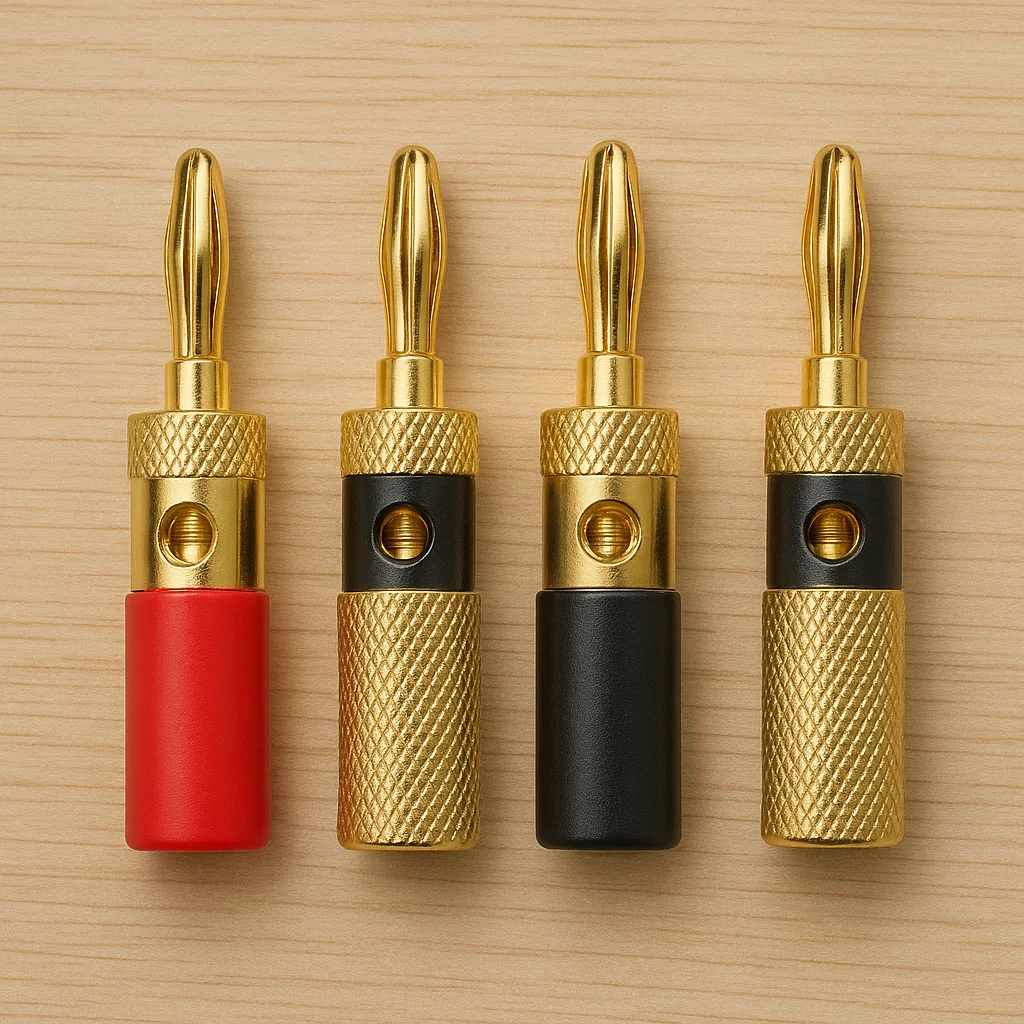
1. Banana Plugs
These are among the most popular connectors for both home and professional audio setups.
They’re easy to insert and remove, making them great for testing and maintenance.
For manufacturers, banana plugs offer a clean look and reliable conductivity — perfect for quick connections.
Key features:
- Easy plug-and-play design
- Compatible with most binding posts
- Great for high-current applications
2. Spade Connectors
Shaped like a fork, spade connectors slide under a binding post and create a tight, stable connection.
They’re ideal for permanent or semi-permanent installations, where vibration resistance and long-term durability matter.
Key features:
- Excellent grip and low resistance
- Works well in high-vibration environments
- Often made with gold- or nickel-plated copper for better conductivity

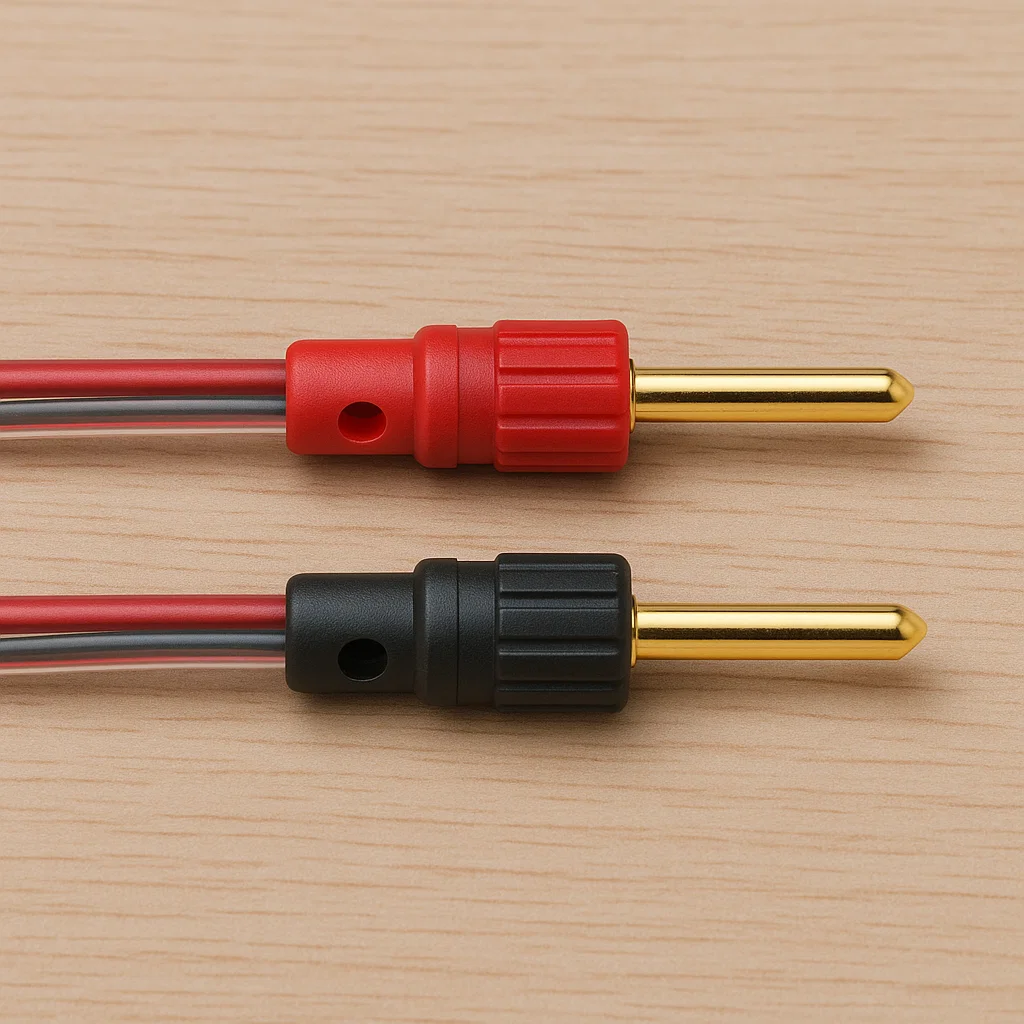
3. Pin Connectors
Pin connectors are simple metal rods that fit into spring clip terminals. They’re less common in modern high-power systems but still widely used for compact or budget audio devices.
Key features:
- Affordable and easy to install
- Suitable for lower-power applications
- Ideal for smaller systems or prototype setups
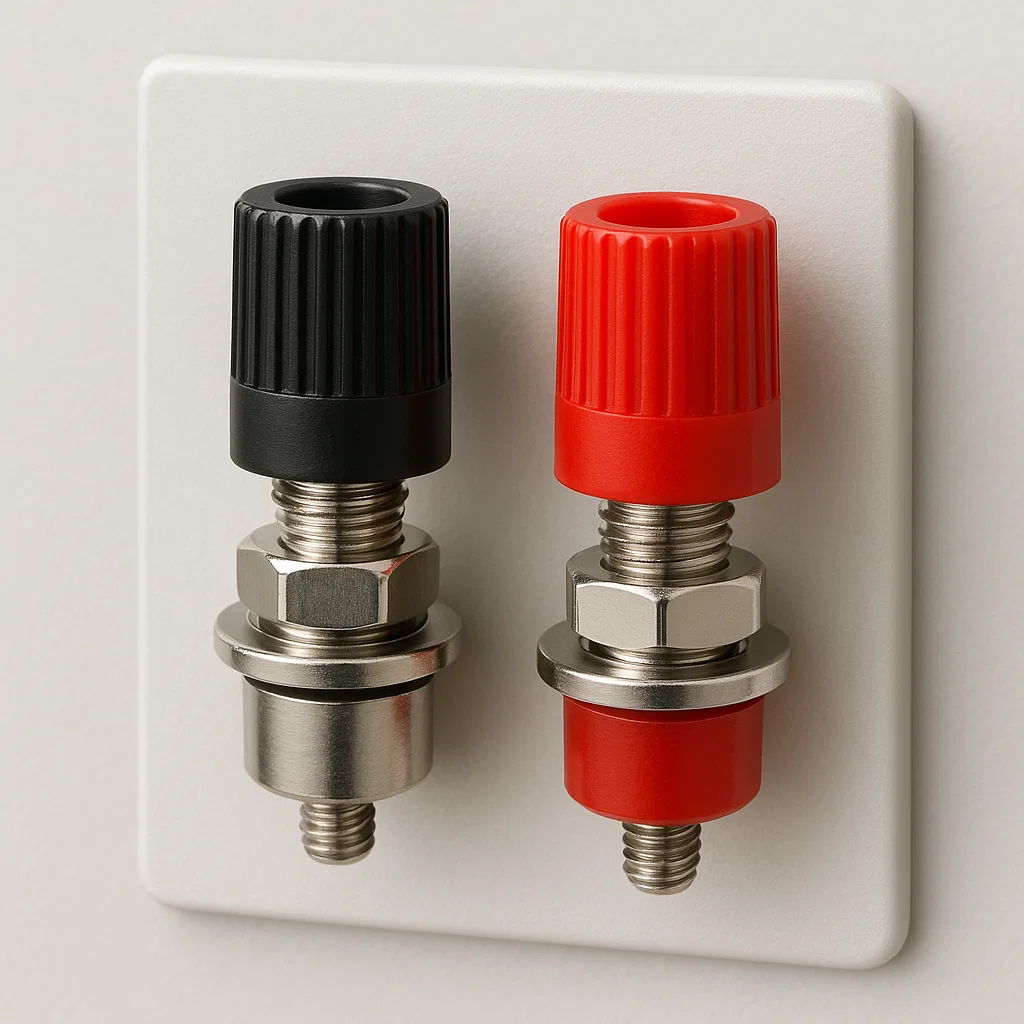
4. Binding Posts
Binding posts are typically found on high-end amplifiers and speakers. They accept banana plugs, spade connectors, or bare wire, offering maximum flexibility.
Key features:
- High-quality materials for better sound transmission
- Very secure and long-lasting connection
- Suitable for premium or professional-grade audio systems
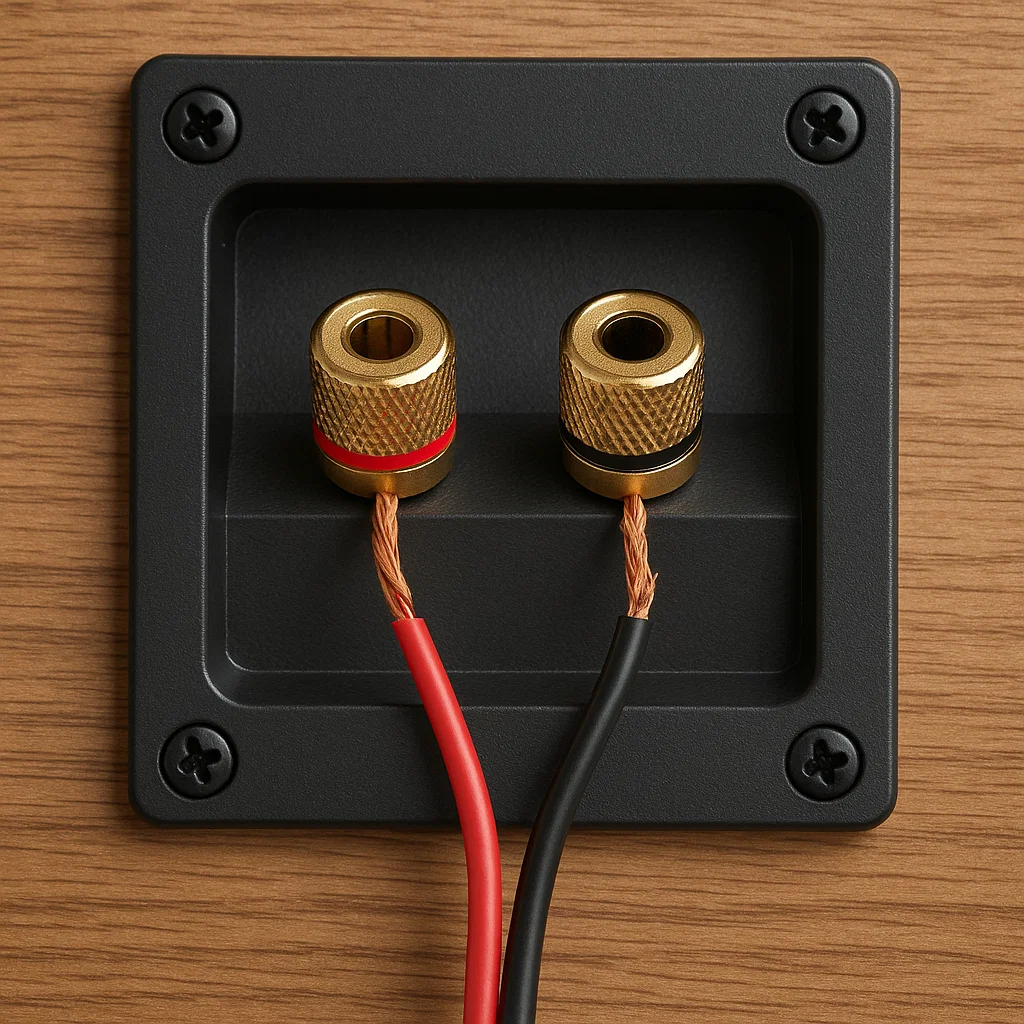
5. Bare Wire Connections
Sometimes, wires are inserted directly into the terminal without any connector. While this can save cost, it’s not always ideal for manufacturers.
Pros: simple, cheap, minimal materials
Cons: prone to corrosion, loose contact, and potential safety risks
How Do Speaker Connectors Work?
Speaker connectors are like “bridges” that help your music travel from the amplifier to your speakers. When you play a song, your amp sends out an electrical signal. The connector’s job is to make sure that signal flows smoothly into the speaker without getting lost or messed up along the way.
Inside, what really happens is that the metal parts of the connector touch the metal wire and speaker terminals tightly. This close contact lets electricity pass easily. The better the connection, the clearer and stronger your sound will be.
Different connectors — like banana plugs, spade lugs, or pin connectors — just have different ways of making that same tight, clean contact. Some are easy to plug in and out, while others are made for a more solid, permanent connection. But in the end, they all do the same thing: carry your sound signal safely and clearly from one point to another.
How to Choose the Best Speaker Wire Connector
If you’re manufacturing speakers or audio equipment, choosing the right connector depends on your product design, target users, and assembly process. Here are some factors to consider:
- Current Load:Make sure the connector can handle the power level of your system.
- Wire Size:Match the connector to your wire gauge for the best conductivity.
- Material Quality:Look for copper, brass, or gold plating to reduce signal loss.
- Ease of Assembly:Consider how easily the connector can be crimped, soldered, or attached during production.
- Durability:Choose connectors that resist vibration, oxidation, and temperature changes.
Manufacturers can benefit from standardizing on a connector type that balances cost, performance, and efficiency — especially when scaling production.
Does the Connector Type Affect Sound Quality?
Most modern speaker connectors are designed to carry the signal cleanly, as long as they’re properly attached and the contact is solid.
What really matters is how good the connection is, not so much the type of connector you use. If the wire is loose, dirty, or corroded, your sound can get weaker or a bit noisy. But if the connection is tight and clean, your music will sound just as good, whether you’re using banana plugs, spade connectors, or bare wire.
Of course, some people prefer certain connectors for convenience. For example, banana plugs make plugging and unplugging super easy, while spade lugs stay firmly in place. But in terms of actual sound difference? It’s almost impossible to tell.
So, instead of worrying too much about the “best-sounding” connector, focus on making sure the connection is strong and secure — that’s what really keeps your sound crisp and clear.
Conclusion
At the end of the day, speaker connectors may look small, but they play a big role in keeping your sound clear and strong. Whether you’re using banana plugs, spade lugs, or just bare wires, what matters most is making a solid and clean connection.
Choose a connector that fits your setup and makes your life easier — not because it promises “better sound,” but because it helps you get a reliable and hassle-free connection every time.
Keep your connectors clean, tighten them properly, and your speakers will do the rest. Great music isn’t about the fanciest connector — it’s about a good connection that lets every note shine through.
FAQs
- Can I use any connector for all speaker wires?
Not exactly. Always match the connector type to your wire gauge and terminal type to ensure a safe, efficient connection. - What’s the most durable connector type?
Spade connectors and binding posts are often the most durable, especially in professional or industrial setups. - Do connectors really change the sound quality?
Only slightly. What matters more is a tight, corrosion-free connection and high-quality materials.

