

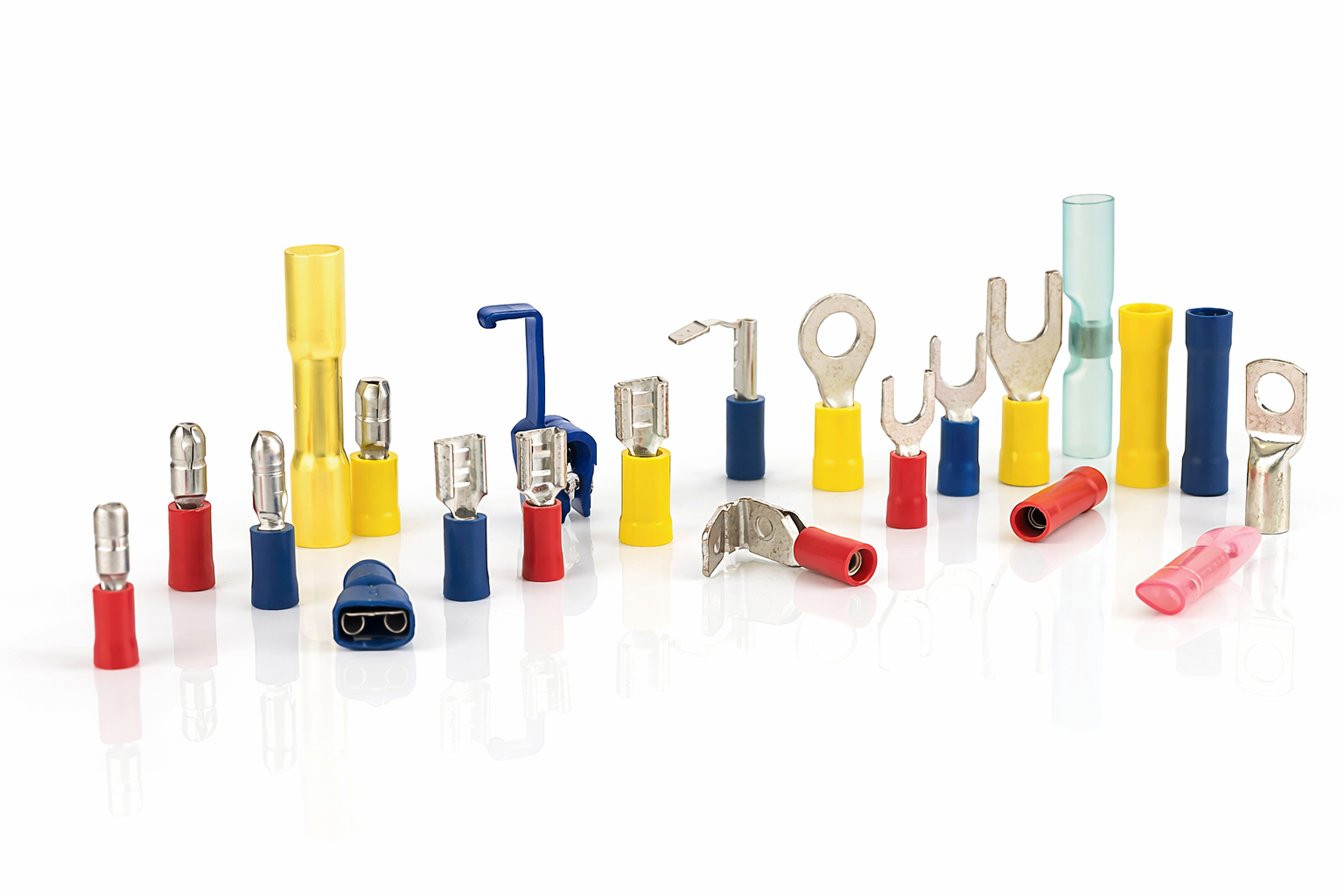
A reliable electrical connection starts with the right terminal. In wiring harnesses, industrial equipment, automotive systems, and electrical products, crimp terminals provide a practical way to connect wires without soldering.
A crimp terminal is a conductive metal component that is mechanically attached to a wire by controlled deformation. During crimping, a terminal barrel is compressed around the conductor to create electrical contact and mechanical retention.
Unlike soldering, crimping does not require heat. When the terminal, wire, tooling, and crimp parameters are correctly matched, the resulting connection can provide consistent electrical performance and resistance to vibration and mechanical stress.
But what exactly happens during a crimp? What types of terminals are available? How do you choose the right one, and what should you look for in a crimp terminal manufacturer?
This guide explains the complete process.
What Is a Crimp Terminal?
A crimp terminal is a metal electrical terminal designed to connect a wire to another electrical component through mechanical crimping.
The terminal normally contains a conductor barrel, where the stripped wire is inserted, and a contact section, which connects to another terminal, connector, screw, stud, or electrical component.
Some terminals also include an insulation support or strain-relief section. Automotive connector terminals may additionally have locking features that secure the terminal inside a plastic connector housing.
Crimp terminals are commonly used in:
- Automotive wiring harnesses
- Industrial control systems
- Electrical control cabinets
- Household appliances
- Battery and energy systems
- Consumer electronics
- Communication equipment
- Industrial automation
The main advantage is repeatability. Once the correct terminal, wire, and crimping process have been established, the connection can be produced consistently across large production volumes.
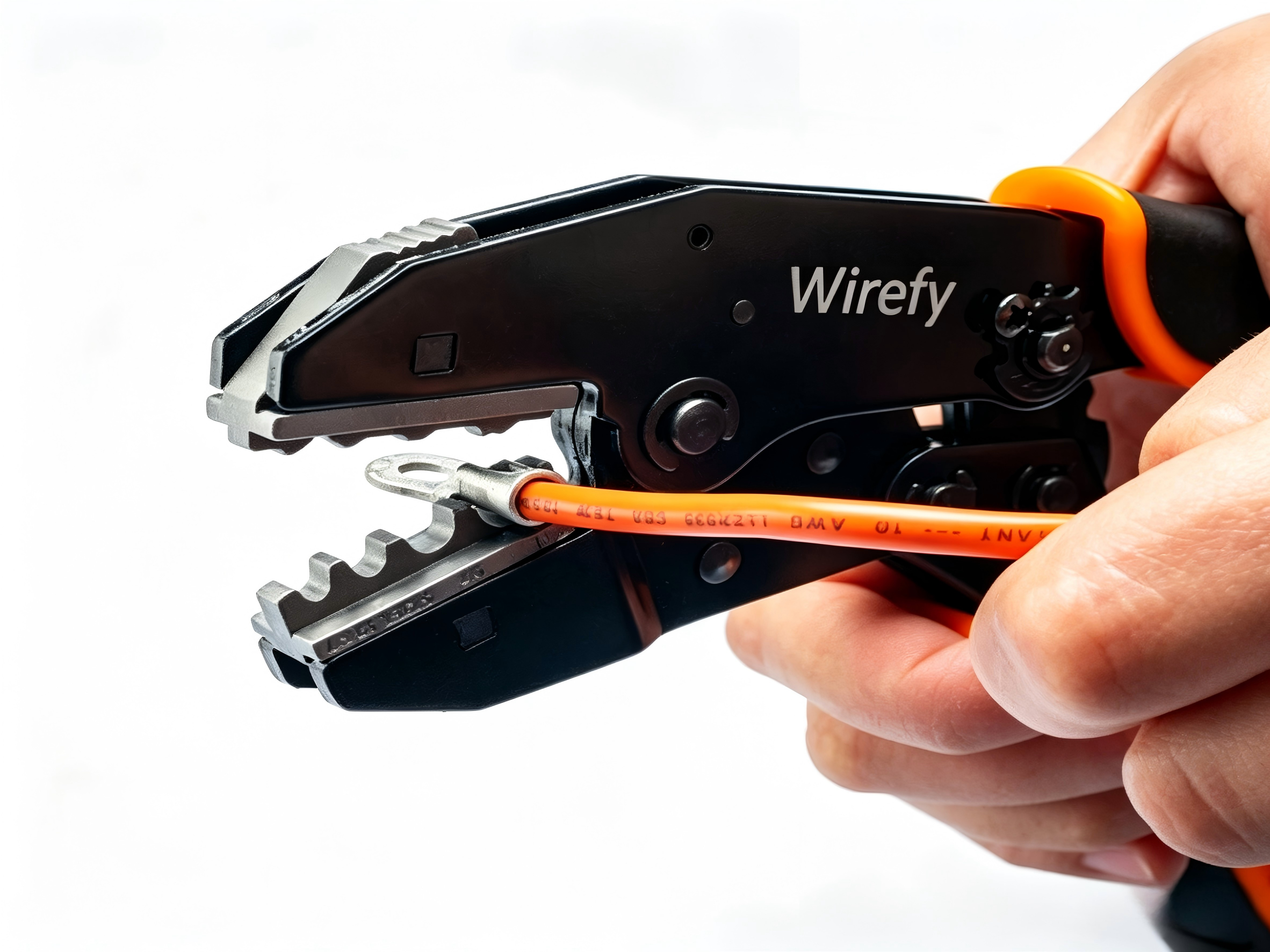
How Does a Crimp Terminal Work?
The basic principle is controlled mechanical deformation.
A terminal barrel is designed with a specific geometry and material thickness. When a crimping tool applies the required force, the barrel deforms around the conductor.
This creates contact pressure between the terminal and wire while mechanically retaining the conductor.
Step 1: Strip the Wire
The wire insulation is removed to expose the conductor.
The stripped length must match the terminal specification. Removing too much insulation can leave excessive exposed conductor, while removing too little can prevent the conductor from reaching the correct position.
The stripping process should also avoid cutting or damaging individual conductor strands.
Step 2: Insert the Wire
The exposed conductor is inserted into the terminal barrel.
The conductor should reach the specified position while the insulation remains supported by the insulation section when applicable.
Correct wire positioning is important because the crimping force must be applied to the intended part of the terminal.
Step 3: Apply Crimping Force
A hand crimper, ratchet crimper, hydraulic tool, or automated crimping machine compresses the terminal.
The metal undergoes controlled plastic deformation and closes around the conductor.
The goal is not simply to apply maximum force. The crimp must achieve the correct geometry and compression for the specific terminal and wire combination.
Step 4: Create Electrical and Mechanical Contact
The compressed terminal creates a stable conductive interface with the conductor while also providing mechanical retention.
A properly designed crimp can maintain low electrical resistance and withstand mechanical forces such as pulling and vibration.
This is especially important in automotive wiring harnesses and industrial equipment where connections may experience continuous movement or vibration.
Step 5: Inspect the Crimp
A finished crimp should be checked for correct wire position, terminal deformation, crimp dimensions, and overall appearance.
Depending on the application, manufacturers may also perform pull-force, electrical resistance, cross-section, or terminal retention testing.
Main Parts of a Crimp Terminal
Understanding the structure of a terminal helps engineers select the correct product and identify potential crimping problems.
Contact Area
The contact area connects the terminal to its mating component.
Its design may include a ring, fork, blade, pin, socket, bullet, or other contact configuration.
Conductor Barrel
The conductor barrel is the section that is compressed around the stripped wire.
Its dimensions must correspond to the conductor size. An incorrectly matched barrel can result in poor mechanical retention or unstable electrical performance.
Insulation Barrel
Some terminals include a separate insulation barrel.
It supports the wire insulation and helps reduce mechanical stress transferred to the conductor.
Locking Feature
Automotive and connector terminals may include locking features that secure the terminal inside a connector housing.
This prevents terminal movement or withdrawal during vibration, assembly, or service.
Common Types of Crimp Terminals
Different electrical systems require different terminal geometries.
Ring Terminals
Ring terminals have a circular opening for a screw, stud, or bolt.
They are commonly used for:
- Battery connections
- Grounding
- Power distribution
- Industrial equipment
Spade and Fork Terminals
Spade or fork terminals provide an open contact area that can be secured under a screw terminal.
They are commonly used in control panels, electrical equipment, and appliances.
Butt Connectors
Butt connectors join two wires together.
They are widely used in wire harness assembly, electrical repairs, and cable connections.
Pin Terminals
Pin terminals have a narrow contact section and are commonly used with terminal blocks and other electrical connection systems.
Blade Terminals
Blade terminals use a flat contact structure and are widely used in automotive and appliance wiring.
Automotive Crimp Terminals
Automotive terminals are designed for applications where vibration, temperature variation, moisture, corrosion, and long service life must be considered.
They may be sealed or unsealed and are normally designed to work with specific connector housings.
For automotive projects, terminal geometry is only one part of the solution. Material selection, plating, dimensional consistency, and production control are equally important.
Crimp Terminal Materials and Plating
The material of a terminal affects conductivity, mechanical strength, corrosion resistance, and forming performance.
Copper and Copper Alloys
Copper offers excellent electrical conductivity and is widely used for electrical terminals.
Copper alloys such as brass, phosphor bronze, and other specialized alloys can provide a balance of conductivity, strength, spring properties, and manufacturability.
For example, phosphor bronze is commonly considered when spring performance and mechanical durability are important.
Terminal Plating
Terminal surfaces may be plated to improve corrosion resistance, contact performance, and long-term durability.
Common options include:
- Tin
- Nickel
- Silver
- Gold
The appropriate plating depends on the application environment, electrical requirements, temperature, mating conditions, and cost target.
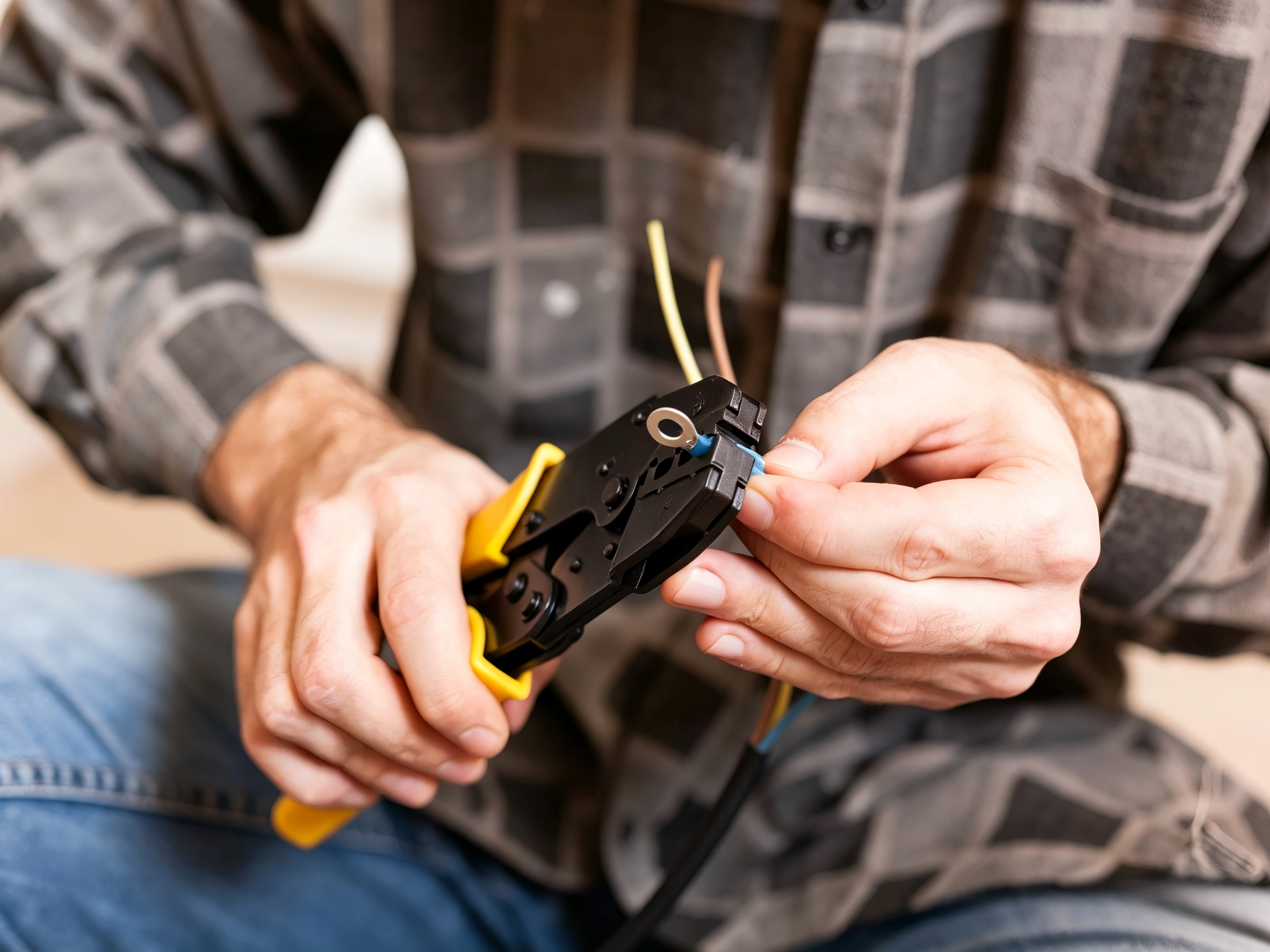
How Qianwei Precision Manufactures Crimp Terminals
The reliability of a crimp connection starts with the terminal itself. A crimping machine cannot compensate for inconsistent terminal dimensions, poor material control, or unstable forming processes.
Qianwei Precision has more than 10 years of experience in precision connector and metal stamping manufacturing. Its manufacturing system integrates high-speed stamping, plastic injection molding, mold manufacturing, and cable assembly. The company moved into a 40,000-square-meter manufacturing park in 2025. (QWTerminals)
Precision Metal Stamping
Crimp terminals require accurate geometry because the conductor barrel, contact area, and locking features must work together during assembly.
Qianwei Precision uses precision high-speed stamping for terminal production and has developed more than 1,800 production tooling sets. In-house tooling capability allows terminal geometry and production tooling to be developed and controlled more closely. (QWTerminals)
Integrated Tooling and Injection Molding
Some terminal projects require more than a stamped metal contact. Connector housings and other plastic components may also be needed.
By combining mold manufacturing, precision stamping, and plastic injection molding, Qianwei can support integrated terminal and connector development rather than relying entirely on separate suppliers.
This can simplify development and improve consistency between the metal terminal and its connector housing.
Cable and Wire Harness Assembly
For customers that need more than loose terminals, Qianwei also operates a cable assembly workshop.
This allows projects to move from individual terminal components toward complete cable and wiring harness solutions when required. (QWTerminals)
Crimp Terminal Quality Control
A good-looking crimp does not necessarily guarantee a reliable electrical connection. Both terminal manufacturing quality and the crimping process need to be controlled.
Important quality checks may include:
- Dimensional inspection
- Material inspection
- Plating inspection
- Crimp height measurement
- Pull-force testing
- Terminal retention testing
- Electrical resistance testing
- Cross-section analysis
- Visual inspection
Qianwei Precision operates under ISO 9001 and IATF 16949 quality management systems. The company obtained IATF 16949 certification in 2018, supporting its manufacturing activities for automotive applications. (QWTerminals)
For automotive terminal production, Qianwei also highlights controls covering material inspection, process monitoring, electrical and mechanical testing, and environmental reliability testing. (QWTerminals)
This process-oriented approach is important for customers purchasing terminals for high-volume production, where consistency from batch to batch can be as important as the initial product specification.
Crimp Terminal vs. Soldered Connection
Crimping and soldering are both established electrical connection methods, but they are suited to different applications.
| Feature | Crimping | Soldering |
|---|---|---|
| Heat required | No | Yes |
| Production speed | High | Generally lower |
| Automation | Highly suitable | Possible but more complex |
| Mechanical retention | Provided by terminal deformation | Depends on solder joint design |
| High-volume harness production | Excellent | Less common |
| Field installation | Convenient | Requires heat source |
Crimping is particularly suitable for high-volume wire harness production because the process can be standardized and automated.
Soldering may still be appropriate when the product design specifically requires it. The correct method depends on the electrical, mechanical, environmental, and manufacturing requirements.
How to Choose the Right Crimp Terminal
Before selecting a terminal, evaluate the complete application rather than choosing based only on shape or price.
1. Wire Size
The terminal must match the conductor size and applicable wire gauge.
2. Current and Voltage
Check the required electrical load and ensure that the terminal and conductor are appropriately rated.
3. Material
Consider conductivity, mechanical strength, corrosion resistance, and crimping characteristics.
4. Plating
Select plating according to the operating environment, contact requirements, corrosion resistance, and service life.
5. Environmental Conditions
Automotive and industrial applications may involve:
- Vibration
- Humidity
- Temperature cycling
- Water
- Chemicals
- Corrosive environments
6. Connector Compatibility
For terminals installed in connector housings, dimensions, locking mechanisms, mating interfaces, and wire size must all be compatible.
How to Crimp a Terminal Properly
A reliable crimp requires the correct combination of terminal, wire, tooling, and process parameters.
Choose the Correct Crimp Tool
Common tools include hand crimpers, ratchet crimpers, hydraulic crimpers, and automatic crimping machines.
The tool should match the terminal design and wire size.
Use the Correct Die
An incorrect die can result in under-crimping, over-crimping, uneven deformation, or conductor damage.
Inspect the Finished Crimp
After crimping, check:
- Wire insertion depth
- Conductor position
- Terminal deformation
- Insulation support
- Crimp dimensions
- Mechanical retention
For production applications, additional pull-force and electrical testing may be required.
Common Crimping Problems
Several common mistakes can reduce connection reliability.
Under-Crimping
Insufficient compression can result in weak mechanical retention and unstable electrical contact.
Over-Crimping
Excessive compression can damage conductor strands or deform the terminal beyond its intended geometry.
Wrong Terminal Size
A terminal that does not match the wire size may produce an unreliable connection even when the crimping tool is used correctly.
Damaged Conductors
Improper wire stripping can reduce conductor cross-section and affect connection performance.
Incorrect Wire Position
If the conductor does not reach the correct location inside the barrel, the crimp may not develop the intended mechanical and electrical characteristics.
How to Choose a Crimp Terminal Manufacturer
For OEM and high-volume projects, choosing a manufacturer is about more than comparing unit prices.
Evaluate the supplier’s:
- Precision stamping capability
- Tooling development capability
- Material and plating options
- Injection molding capability
- Assembly capability
- Quality management systems
- Testing capability
- Production capacity
- Customization experience
- Engineering support
An integrated manufacturer can also reduce communication between separate tooling, stamping, molding, plating, and assembly suppliers.
Qianwei Precision supports customized terminal and connector projects using an integrated manufacturing model covering tooling development, precision stamping, plastic injection molding, cable assembly, and quality control. The company serves automotive, new energy, household appliance, computer, communication, and other industries. (QWTerminals)
For automotive applications, its product portfolio includes precision crimp terminals designed for wiring harnesses, with OEM and ODM customization available for material, plating, dimensions, retention force, and packaging. (QWTerminals)
Get Custom Crimp Terminal Solutions from Qianwei Precision
A crimp terminal may be a small component, but its performance depends on much more than the final crimp.
The terminal geometry, conductor size, material, plating, tooling, manufacturing tolerances, and quality control all contribute to the reliability of the final connection.
Qianwei Precision provides customized terminal and connector manufacturing for customers that require reliable, repeatable production. From terminal design and tooling development to precision stamping, injection molding, cable assembly, inspection, and mass production, our integrated capabilities support both standard and OEM/ODM projects. (QWTerminals)
If you have a terminal drawing, product sample, wire specification, or application requirement, our engineering team can review your project and recommend a suitable manufacturing solution.
Looking for a reliable crimp terminal manufacturer?
Send us your drawing or sample and tell us your wire size, material, plating, application, and annual volume.
FAQs
What is a crimp terminal?
A crimp terminal is a metal electrical component attached to a wire through controlled mechanical deformation rather than soldering.
How does a crimp terminal work?
A crimping tool compresses the terminal around the conductor, creating mechanical retention and electrical contact.
Are crimp terminals better than solder?
Neither method is universally better. Crimping is particularly suitable for repeatable, high-volume wire connections, while soldering can be appropriate for specific designs.
Can crimp terminals be used for high-current applications?
Yes. Properly designed terminals can be used for high-current applications when the terminal, conductor, material, contact area, and crimping process are appropriately specified.
What materials are commonly used for crimp terminals?
Copper and copper alloys such as brass and phosphor bronze are commonly used. Material selection depends on conductivity, strength, spring performance, corrosion resistance, and application requirements.

