

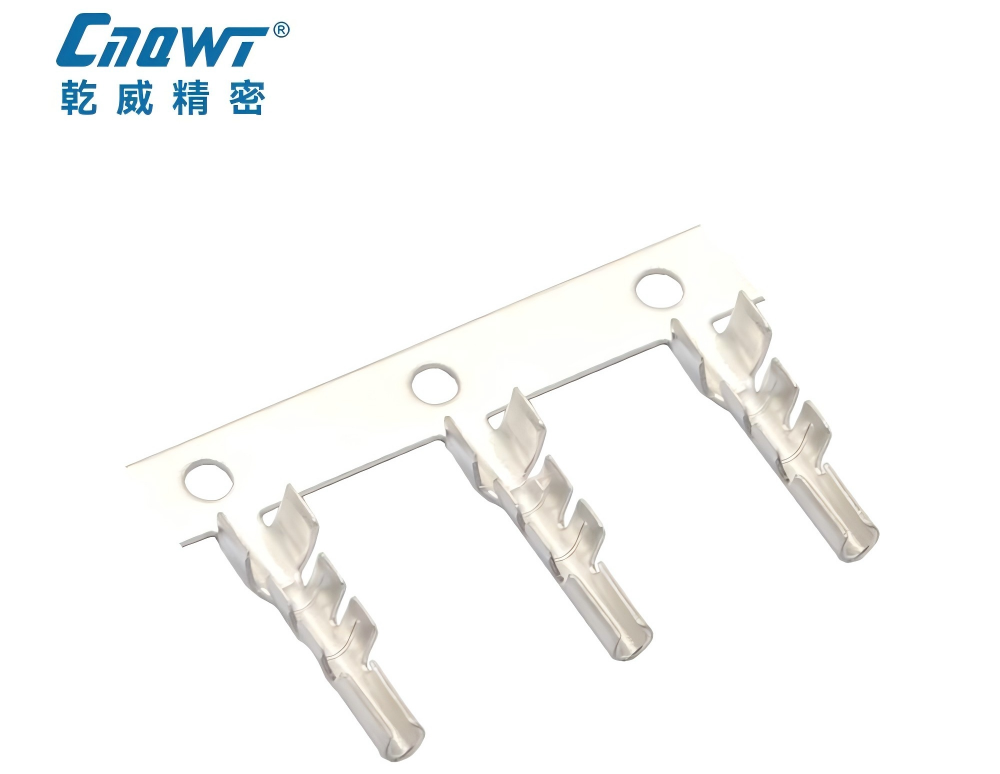
Every reliable electrical connection starts with a well-designed terminal. Whether it’s inside an automotive wiring harness, an industrial control cabinet, a home appliance, or an EV battery pack, the terminal is responsible for transferring current while keeping the wire securely connected. If any part of the terminal is poorly designed or manufactured, the entire electrical system can suffer from increased resistance, overheating, intermittent connections, or even complete failure.
Although electrical terminals come in many shapes and sizes, most share a similar structure. Each section—from the contact area to the crimp barrel and locking feature—is engineered to perform a specific task. Together, these components determine how well the terminal conducts electricity, withstands vibration, resists corrosion, and maintains long-term reliability.
Understanding the anatomy of an electrical terminal is useful for more than just design engineers. It helps purchasing teams evaluate product quality, supports manufacturers in improving assembly consistency, and enables maintenance technicians to identify connection issues more quickly.
In this guide, we’ll break down the key parts of an electrical terminal, explain how each component works, and discuss the design features that contribute to reliable electrical performance.
What Is an Electrical Terminal?
An electrical terminal is a conductive metal component that creates a secure connection between a wire and another electrical device, such as a connector, terminal block, relay, switch, or printed circuit board (PCB). Its job is straightforward: transfer electrical current efficiently while keeping the connection mechanically secure.
Modern electrical systems rely on terminals because they provide a standardized, repeatable, and serviceable connection. Instead of permanently joining wires together, terminals make it possible to assemble, disconnect, replace, or maintain electrical components without damaging the wiring.
Depending on the application, terminals may be attached using crimping, soldering, or screw fastening. Among these methods, crimp terminals have become the preferred solution for high-volume manufacturing thanks to their excellent electrical performance, mechanical strength, and compatibility with automated production.
Electrical terminals are used in almost every industry, including:
- Automotive and EVs
- Industrial automation
- Consumer electronics
- Household appliances
- Telecommunications
- Renewable energy
- Medical devices
- Aerospace systems
Regardless of the application, every terminal is designed to achieve the same goals: provide low-resistance current flow, maintain reliable contact pressure, and withstand the environmental conditions of its operating environment.
Why Understanding Terminal Anatomy Matters
At first glance, most terminals look like simple stamped metal parts. However, every bend, tab, and formed section has a specific purpose. Small differences in geometry can affect contact resistance, insertion force, retention strength, and overall service life.
Understanding terminal anatomy helps different professionals make better decisions throughout a product’s lifecycle.
For design engineers, it makes selecting the right terminal easier. Choosing the correct contact design, spring structure, or crimp style can improve electrical performance and reduce long-term maintenance.
For purchasing teams, understanding terminal construction provides a better way to compare suppliers. Material quality, plating consistency, and manufacturing precision often have a greater impact on reliability than price alone.
For production engineers, knowing how each feature functions helps optimize crimping processes, improve inspection standards, and reduce assembly defects.
Maintenance technicians also benefit from understanding terminal anatomy. Many electrical failures originate at the connection point rather than the wire itself. Identifying a worn contact surface, damaged locking tab, or poorly formed crimp can significantly reduce troubleshooting time.
Simply put, understanding how a terminal is built makes it easier to select the right product, improve assembly quality, and prevent failures in the field.
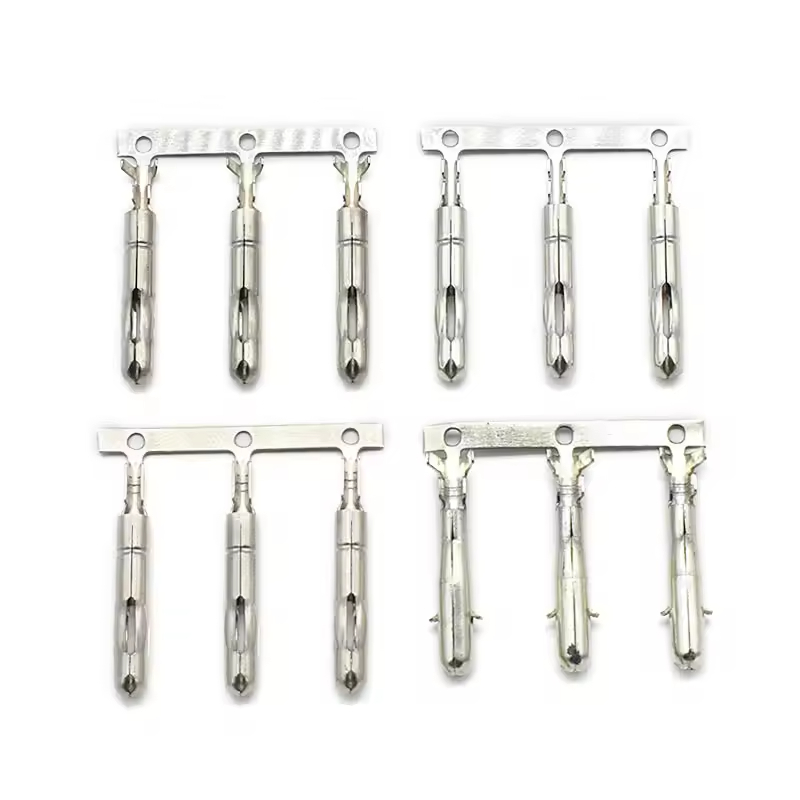
Main Parts of an Electrical Terminal
Although electrical terminals are available in many designs, most crimp terminals share a similar structure. Each section is engineered to perform a specific function, and together they ensure a reliable electrical and mechanical connection.
Understanding the purpose of each component also makes it easier to evaluate terminal quality, identify potential failure points, and select the right terminal for a particular application.
Contact Area (Mating Interface)
The contact area, sometimes called the mating interface, is the portion of the terminal that touches another conductive component to complete the electrical circuit. Since current flows through this interface, its design has a direct impact on electrical performance.
A high-quality contact area should maintain consistent contact pressure while keeping electrical resistance as low as possible. If the contact force is too low, vibration or movement may interrupt the connection. If the force is too high, insertion becomes difficult and the contact surface wears more quickly.
To improve durability and conductivity, manufacturers typically apply a protective plating to the contact area. Tin plating is widely used for general-purpose applications because it provides good corrosion resistance at a reasonable cost. Silver plating is often selected for high-current applications due to its excellent conductivity, while gold plating is preferred for low-voltage signal terminals where stable electrical performance is essential.
The geometry of the contact area is equally important. Engineers carefully design its shape to maximize the effective contact surface while maintaining a balance between insertion force and retention force.
Contact Spring
Many female terminals include a contact spring, which provides the force required to maintain continuous contact with the mating terminal.
Instead of relying on rigid metal-to-metal contact, the spring allows the terminal to compensate for manufacturing tolerances, vibration, thermal expansion, and normal wear during repeated mating cycles.
Several spring designs are commonly used:
- Cantilever Spring – A simple, cost-effective design suitable for many standard connectors.
- Dual-Beam Spring – Uses two contact points to improve electrical stability and reduce contact resistance.
- Box Contact – Surrounds the mating blade on multiple sides, providing higher contact force and better vibration resistance.
Spring performance depends not only on its shape but also on the material used. Copper alloys such as phosphor bronze and beryllium copper are widely chosen because they combine excellent electrical conductivity with long-lasting elasticity.
Crimp Barrel
The crimp barrel is the section that secures the conductor to the terminal. It is one of the most critical parts of the entire design because it must provide both a strong mechanical bond and a reliable electrical connection.
During crimping, the barrel compresses the wire strands to form a gas-tight connection. This prevents air and moisture from reaching the conductor, helping to minimize oxidation and maintain low electrical resistance throughout the terminal’s service life.
Two common crimp barrel designs are used across the industry:
Open Barrel Crimp
Open barrel terminals feature two sets of crimp wings—one grips the conductor, while the other supports the wire insulation. This design is widely used in automotive wiring harnesses because it works well with fully automated crimping equipment and delivers highly consistent results.
Closed Barrel Crimp
Closed barrel terminals use a cylindrical barrel that completely surrounds the conductor. They are commonly found in ring terminals, battery terminals, and heavy-duty power applications where higher mechanical strength and larger wire sizes are required.
Regardless of the design, crimp quality is critical. An incorrect crimp height or insufficient compression can increase contact resistance, reduce pull-out strength, and eventually lead to overheating or connection failure.
Wire Insulation Support
Positioned behind the conductor crimp, the wire insulation support grips the insulation rather than the conductor itself.
Although it does not carry electrical current, this feature plays an important mechanical role by acting as a strain relief. It helps prevent repeated bending forces from being transferred directly to the conductor, reducing the risk of broken wire strands over time.
Insulation support is particularly important in applications exposed to continuous movement or vibration, such as automotive wiring harnesses, industrial machinery, and transportation equipment.
Without adequate strain relief, even a perfectly formed conductor crimp may eventually fail due to mechanical fatigue.
Locking Lance (Locking Tab)
Most crimp terminals are inserted into plastic connector housings. Once installed, they must remain securely in position throughout the product’s service life.
This is the job of the locking lance, also known as the locking tab.
When the terminal is inserted into the housing, the locking lance flexes inward before springing back into place, preventing the terminal from backing out during assembly, vibration, or maintenance.
Many connector systems also incorporate a secondary locking mechanism, providing an additional level of retention for applications where reliability is critical, such as automotive safety systems or industrial automation equipment.
A damaged or improperly formed locking lance is one of the most common causes of terminal push-back during connector assembly.
Transition Area
The transition area connects the contact section to the crimp barrel.
Although it appears to be a simple section of formed metal, it plays an essential role in distributing mechanical stress between the mating end and the wire termination.
A well-designed transition area helps reduce stress concentration caused by vibration, repeated movement, or thermal expansion. This improves fatigue resistance and extends the service life of the terminal.
Poorly designed transition sections are more likely to develop cracks after prolonged mechanical loading, particularly in demanding environments such as automotive or industrial equipment.
Inspection Window (Optional)
Some crimp terminals include a small inspection window located near the conductor barrel.
This opening allows operators or automated vision systems to verify that the conductor has been fully inserted before crimping. Proper wire insertion is essential for achieving the specified crimp height and pull-out strength.
Although not found on every terminal, inspection windows are particularly useful in high-volume manufacturing environments where fast and reliable quality control is required.
Common Structural Variations
While most electrical terminals share the same basic anatomy, their designs vary depending on how they are used. Differences in the contact area, locking features, and wire termination allow terminals to meet the requirements of different electrical systems.
For example, male blade terminals use a flat contact surface that slides into a matching female receptacle. Their simple design makes them suitable for applications requiring quick assembly and reliable electrical contact.
Female receptacle terminals are more complex because they include an internal spring structure that maintains contact pressure throughout repeated mating cycles. This additional feature improves vibration resistance and ensures a stable electrical connection over time.
Ring terminals are designed for permanent fastening to studs or bolts. Since they do not require a spring contact, their structure is relatively simple, with most of the mechanical strength concentrated around the mounting hole and crimp barrel.
Spade (fork) terminals have an open-ended design that allows installation or removal without completely removing the screw. They are commonly used in electrical control panels where maintenance efficiency is important.
Other terminal types, such as pin terminals and bullet terminals, are designed for specific connection methods, but they all rely on the same fundamental principles: a reliable contact area, a secure wire termination, and sufficient mechanical retention.
Understanding these structural differences helps engineers select terminals that best match the electrical, mechanical, and environmental requirements of each application.
Materials Used in Each Part
Material selection has a direct impact on terminal performance. Different sections of a terminal may require different mechanical properties, so manufacturers typically choose copper alloys that balance conductivity, strength, and formability.
Brass is one of the most common materials for general-purpose terminals. It offers good electrical conductivity, excellent stamping performance, and competitive cost, making it suitable for consumer electronics and household appliances.
Phosphor bronze provides greater elasticity and fatigue resistance than brass. Because it maintains consistent spring force over time, it is widely used for female terminals and other applications where reliable contact pressure is essential.
For demanding environments, beryllium copper offers exceptional spring performance while maintaining excellent conductivity. Although more expensive, it is often selected for high-reliability applications in automotive, aerospace, and telecommunications equipment.
Surface plating is equally important. Tin plating remains the industry standard for most applications because it protects against corrosion while keeping manufacturing costs under control. Silver plating is commonly used for high-current power terminals, while gold plating provides superior corrosion resistance and stable signal transmission for low-voltage electronic connectors.
Selecting the right combination of base material and surface finish ensures that a terminal can meet both electrical and environmental requirements throughout its service life.
How Each Component Affects Performance
Every section of a terminal contributes to its overall performance. If one component is poorly designed or manufactured, the reliability of the entire connection can be compromised.
| Terminal Component | Primary Function | Impact on Performance |
|---|---|---|
| Contact Area | Transfers electrical current | Determines contact resistance and conductivity |
| Contact Spring | Maintains contact pressure | Improves vibration resistance and mating reliability |
| Crimp Barrel | Secures the conductor | Affects pull-out strength and electrical continuity |
| Insulation Support | Provides strain relief | Reduces wire fatigue and mechanical stress |
| Locking Lance | Retains the terminal inside the housing | Prevents terminal push-back and disconnection |
| Transition Area | Distributes mechanical stress | Improves fatigue life and structural durability |
| Surface Plating | Protects the metal surface | Enhances corrosion resistance and long-term reliability |
Although each feature performs a different role, they work together as a single system. A terminal made from high-quality materials can still fail if the crimp is poorly formed, while excellent crimping cannot compensate for inadequate contact design or inconsistent plating.
Common Failure Points
Most terminal failures develop gradually rather than occurring suddenly. Identifying the cause early can prevent costly equipment downtime and improve system reliability.
One of the most common problems is an improper crimp. Insufficient compression can increase electrical resistance, while excessive compression may damage the conductor and reduce mechanical strength.
Contact wear is another frequent issue, particularly in connectors that are repeatedly mated and unmated. As the contact surface wears, electrical resistance increases, leading to unstable performance.
Environmental conditions also play a major role. Moisture, chemicals, and salt can attack exposed metal surfaces, eventually causing corrosion that interferes with current flow.
Mechanical damage is equally important. A bent locking lance may prevent the terminal from locking securely inside the connector housing, while repeated vibration can create fatigue cracks in poorly designed transition areas.
Many of these failures can be avoided by selecting high-quality terminals, using the correct crimping tools, and following proper assembly procedures.
Manufacturing Precision Matters
Even the best terminal design depends on consistent manufacturing quality.
Modern electrical terminals are typically produced using high-speed progressive stamping, where multiple forming operations are completed within a single precision die. This process ensures consistent dimensions while supporting high-volume production.
After stamping, terminals may undergo heat treatment to improve mechanical properties, followed by electroplating to enhance corrosion resistance and electrical performance. Every manufacturing step must be carefully controlled to maintain dimensional accuracy and material consistency.
Quality inspection is equally important. Reputable manufacturers verify terminal performance through dimensional measurement, crimp height inspection, pull-out force testing, plating thickness measurement, and electrical resistance testing. These inspections help ensure that every terminal performs consistently before it reaches the customer.
For industries such as automotive, medical devices, and industrial automation, manufacturing precision is not simply a quality advantage—it is essential for product safety and long-term reliability.
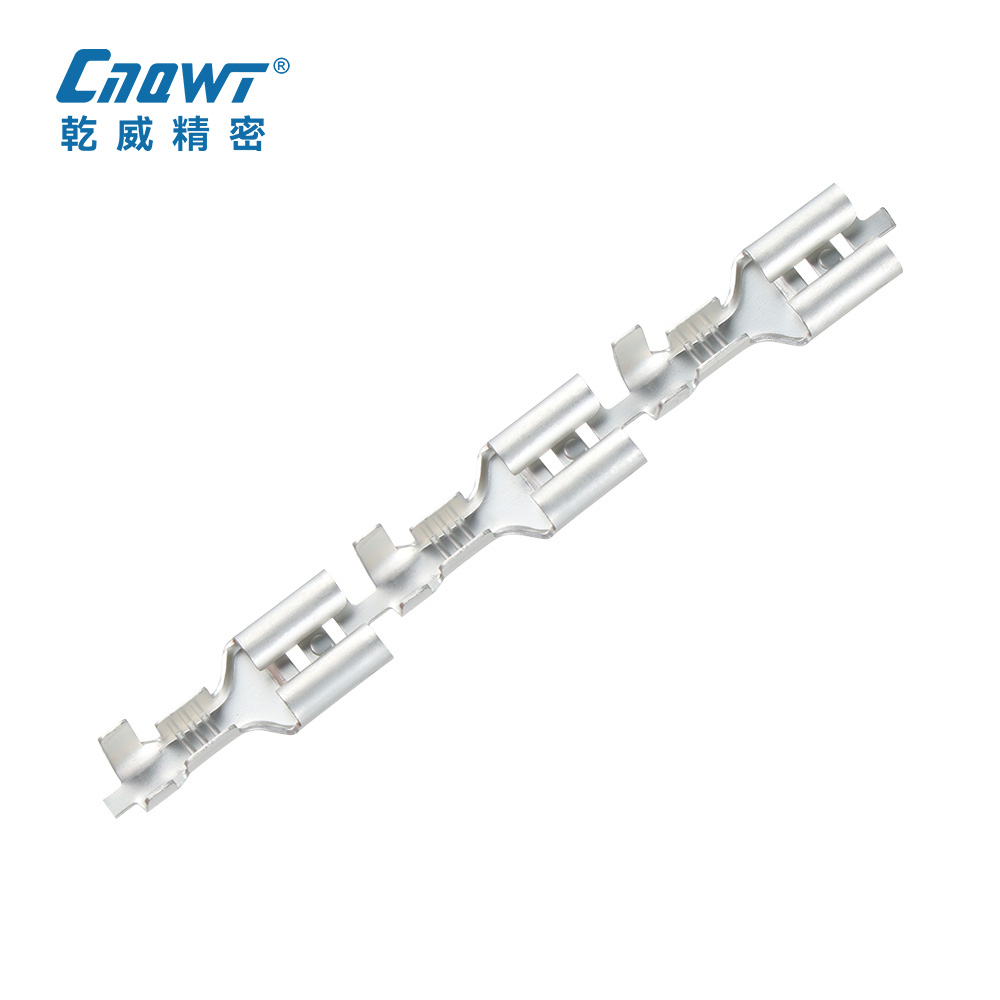
How to Identify a High-Quality Electrical Terminal
Not all electrical terminals are manufactured to the same standard. While two terminals may look nearly identical, differences in materials, tooling, and quality control can have a significant impact on performance and service life.
When evaluating a terminal, consider the following factors:
- Consistent dimensions that ensure proper fit within connector housings.
- Smooth, burr-free edges produced by precision stamping to reduce assembly issues.
- Uniform plating with no exposed base material or visible defects.
- Reliable spring force that maintains stable electrical contact throughout repeated mating cycles.
- Well-formed crimp barrels that create secure, gas-tight wire terminations.
- High-quality copper alloys selected for the intended electrical and mechanical requirements.
- Compliance with industry standards such as UL, RoHS, REACH, or IATF 16949 where applicable.
Choosing a reputable manufacturer is just as important as selecting the right terminal design. Consistent production processes and strict quality control help ensure every terminal performs as expected in real-world applications.
Partner with Qianwei Precision for Precision Electrical Terminal Solutions
At QW Terminals, we manufacture precision electrical terminals for automotive, industrial, consumer electronics, home appliances, and new energy applications. With over a decade of experience in precision metal stamping, mold development, injection molding, and wire harness assembly, we provide OEM and custom terminal solutions that meet the demanding requirements of global manufacturers.
Our production capabilities include high-speed progressive stamping, automated manufacturing, comprehensive quality inspection, and strict process control to ensure consistent product performance. Whether you need standard terminals or custom-designed components, our engineering team can help develop reliable solutions tailored to your application.
If you’re looking for a trusted electrical terminal manufacturer or need support with a custom terminal project, contact QW Terminals to discuss your requirements and discover how our manufacturing expertise can support your next project.
Conclusion
Although an electrical terminal may appear to be a simple metal component, its performance depends on the careful design of every feature. The contact area ensures efficient current transfer, the contact spring maintains reliable electrical contact, the crimp barrel secures the conductor, and the locking features keep the terminal firmly in place throughout its service life.
Understanding the anatomy of an electrical terminal makes it easier to select the right product, improve assembly quality, and troubleshoot connection problems. It also highlights why precision manufacturing, high-quality materials, and rigorous quality control are essential for reliable electrical systems.
Whether you’re designing a new product, sourcing components for production, or maintaining existing equipment, choosing well-engineered terminals is a key step toward improving safety, performance, and long-term reliability.
FAQs
What are the main parts of an electrical terminal?
Most crimp terminals consist of a contact area, contact spring (for female terminals), crimp barrel, insulation support, locking lance, transition area, and, in some designs, an inspection window.
Why is the crimp barrel so important?
The crimp barrel forms the mechanical and electrical connection between the wire and the terminal. A properly crimped barrel creates a gas-tight connection that minimizes resistance, prevents corrosion, and improves pull-out strength.
Why are electrical terminals plated?
Surface plating protects the base metal from corrosion while improving electrical performance. Tin plating is the most common option, while silver and gold plating are typically used for high-current or high-reliability applications.
Which material is best for electrical terminals?
There is no single best material. Brass is suitable for many general-purpose applications, phosphor bronze offers excellent spring properties, and beryllium copper provides superior performance in demanding environments.
What causes electrical terminals to fail?
Common causes include poor crimping, insufficient contact pressure, corrosion, vibration, mechanical fatigue, and the use of incorrect materials for the application.
How can I choose the right terminal?
Consider factors such as current rating, wire size, operating environment, mating cycles, connector compatibility, and applicable industry standards. Working with an experienced terminal manufacturer can also help ensure the right solution is selected.

