

In electrical assemblies, wire harnesses, automotive systems, appliances, industrial controls, and consumer electronics, the quality of a crimp connection directly affects safety, performance, and long-term reliability. A poorly crimped terminal can cause voltage drop, overheating, intermittent failure, warranty claims, or complete equipment shutdown.
That is why professional manufacturers and OEM buyers place strong emphasis on crimp quality standards.
Whether you are sourcing terminals, building wire harnesses, auditing suppliers, or improving production yield, understanding the standards behind a proper crimp connection is essential.
This guide explains the most important crimp quality standards you should know, how crimp quality is measured, common defects to avoid, and how to choose a terminal supplier that consistently meets demanding specifications.
What Is Crimp Quality?
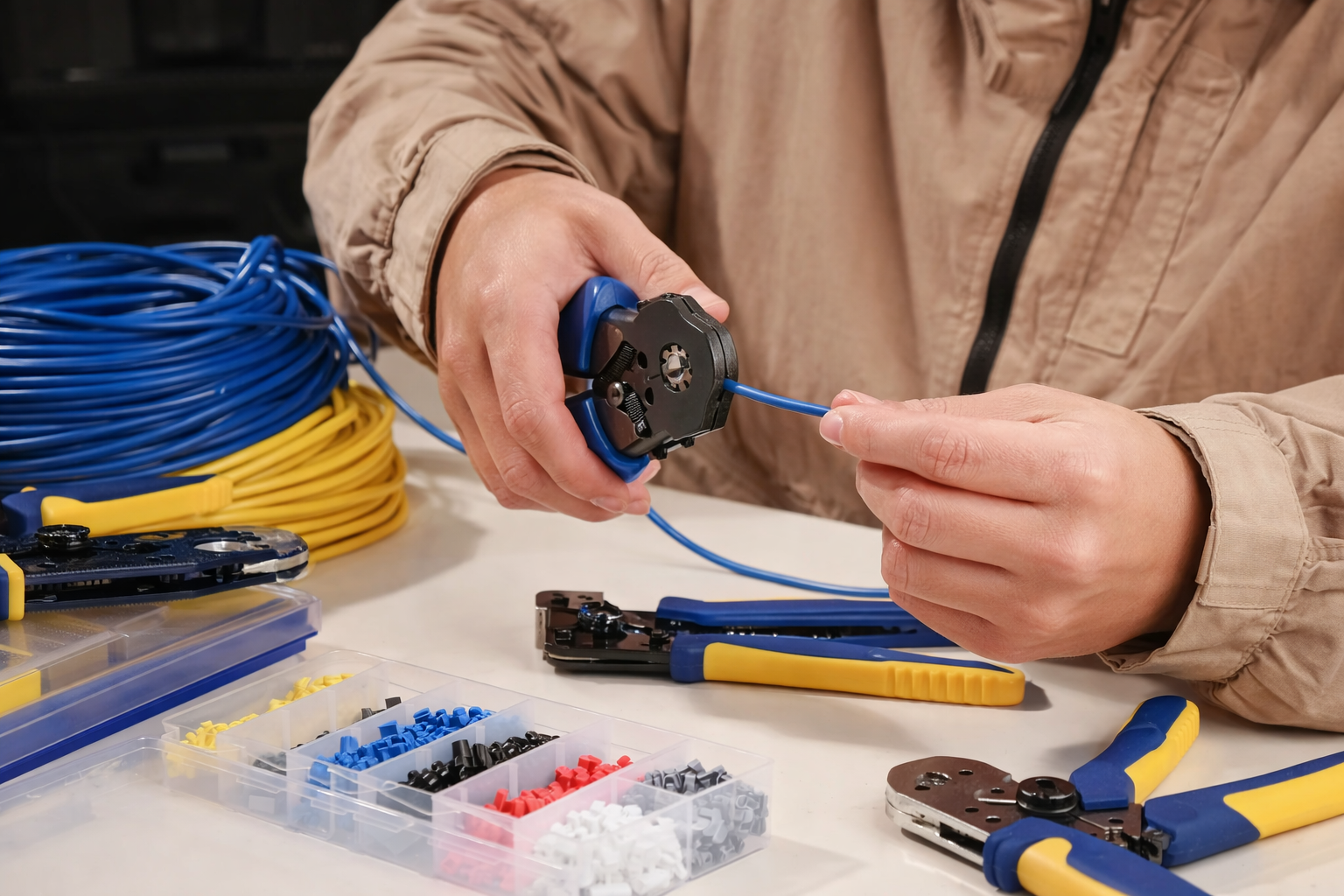
Crimp quality refers to how effectively a wire terminal is mechanically and electrically joined to a conductor through controlled compression.
A high-quality crimp should achieve two critical objectives:
1. Mechanical Strength
The terminal must firmly hold the wire and resist pull-out, vibration, bending, and movement during service.
2. Electrical Performance
The connection must provide low and stable resistance for efficient current flow over time.
When crimp quality is poor, even premium cables and high-end connectors can fail.
Why Crimp Quality Standards Matter
Many connection failures are not caused by the wire itself—they are caused by inconsistent or defective crimping.
Following recognized crimp quality standards helps manufacturers and buyers achieve:
Lower defect rates
Better product safety
Consistent production quality
Reduced rework and scrap
Improved customer satisfaction
Longer service life
Easier supplier qualification
Compliance with OEM requirements
For industries such as automotive, aerospace, medical, industrial automation, and energy storage, crimp quality is often a mission-critical requirement.
Main Crimp Quality Standards You Should Know
Different industries use different standards, but the following are among the most widely recognized.
IPC/WHMA-A-620
IPC and WHMA jointly publish one of the most respected workmanship standards for cable and wire harness assemblies.
IPC/WHMA-A-620 covers:
Acceptable crimp conditions
Visual inspection criteria
Wire preparation requirements
Terminal installation quality
Harness workmanship classes
Many OEMs require suppliers to understand or certify to this standard.
UL Requirements
UL Solutions standards may apply when crimped assemblies are used in certified products such as appliances, control systems, or electronics.
UL typically focuses on:
Safety performance
Material compliance
Temperature rise
Long-term durability
Automotive OEM Standards
Major automotive manufacturers often use internal crimp validation standards that are stricter than public specifications.
These may include:
Pull force thresholds
Micro-section analysis
Salt spray corrosion resistance
Vibration durability
Thermal cycling
IEC Standards
International Electrotechnical Commission publishes international standards used across many global electrical applications.
IEC-related requirements often influence exported products and multinational supply chains.
Internal Factory Quality Standards
Professional terminal manufacturers also develop internal process controls beyond formal standards, such as:
Crimp height control windows
Tool wear limits
SPC monitoring
First article inspection
Batch traceability
This is often where excellent suppliers outperform average suppliers.
Key Measurements Used in Crimp Quality Inspection
Crimp quality is not based on appearance alone. It must be measured.
1. Crimp Height
Crimp height is the compressed height of the conductor barrel after crimping.
It is one of the most important quality indicators because it reflects whether the conductor received the correct compression force.
If crimp height is:
Too high → under-crimped
Too low → over-crimped
Both conditions can cause failure.
2. Pull Force
Pull force testing measures how much tensile force the wire-terminal connection can withstand before separation.
Higher pull force generally indicates stronger mechanical retention, provided the wire strands are not damaged.
This test is especially important in:
Automotive harnesses
Appliances
Vibration environments
Portable devices
3. Bellmouth
Bellmouth is the slight flare at the entry or exit of the conductor barrel.
Proper bellmouth helps prevent sharp edges from cutting wire strands during or after crimping.
4. Brush Length
Brush length refers to the small amount of conductor strands extending beyond the crimp barrel.
Correct brush length helps confirm proper strip length and conductor insertion.
5. Insulation Crimp
For insulated wires, the rear support crimp should secure the insulation without cutting or crushing it.
This provides strain relief and improves durability.
6. Electrical Resistance
Low and stable resistance is essential for current carrying performance.
Poor crimps often create resistance increase over time, leading to heat generation and intermittent issues.
Crimp Quality Inspection Table
| Parameter | Why It Matters |
| Crimp Height | Compression accuracy |
| Pull Force | Mechanical retention |
| Bellmouth | Prevent strand damage |
| Brush Length | Correct insertion depth |
| Insulation Crimp | Strain relief |
| Resistance | Electrical efficiency |
Acceptable vs Unacceptable Crimp Conditions
Understanding visual quality standards is important for operators, inspectors, and buyers.
Acceptable Crimp Characteristics
A good crimp usually has:
Symmetrical compression
Full wire strand capture
No cracks in barrel
Correct crimp height
Proper bellmouth
Stable wire retention
Clean surface without burr interference
Unacceptable Crimp Defects
Common rejection conditions include:
Under-Crimped Terminal
Insufficient compression causes loose strands and weak retention.
Over-Crimped Terminal
Excessive compression may cut strands, crack plating, or deform the barrel.
Missing Wire Strands
Reduces current capacity and strength.
Barrel Cracks
Often caused by wrong tooling or brittle material.
Incorrect Strip Length
Too short or too long conductor exposure.
Damaged Insulation Support
Can reduce cable life under vibration.
Common Causes of Poor Crimp Quality
Even good terminals can fail if the process is uncontrolled.
Worn Applicator Tooling
Punches, anvils, and dies wear over time. Tool wear changes compression geometry.
Wrong Crimp Height Setting
Incorrect setup is one of the most common factory issues.
Incorrect Terminal-Wire Match
Using the wrong wire gauge or insulation diameter creates unstable crimps.
Poor Terminal Dimensions
Inconsistent stamping tolerance can prevent repeatable crimping.
Material Hardness Variation
Unstable brass or copper hardness affects deformation behavior.
Inconsistent Plating Thickness
Excessive or uneven plating may influence fit, conductivity, and corrosion resistance.
Operator Error
Improper reel loading, strip length, or setup verification can create defects.
How Professional Terminal Manufacturers Control Crimp Quality
Buyers should understand that crimp quality begins long before the crimping machine.
The terminal itself must be manufactured precisely.
Precision Stamping
Progressive stamping dies must control:
Barrel width
Seam geometry
Burr direction
Wall thickness consistency
Small dimensional errors can create major crimp variation.
Material Control
High-quality manufacturers verify:
Alloy composition
Tensile strength
Hardness
Surface cleanliness
Common materials include:
Brass
Copper
Phosphor bronze
Each affects conductivity and forming behavior.
Plating Quality Control
Popular finishes include:
Tin plating
Nickel plating
Silver plating (specialized uses)
Stable plating thickness improves solderability, corrosion resistance, and contact performance.
In-Process Inspection
Professional factories monitor:
Crimp height at intervals
Tool wear condition
First-piece approval
Visual inspection sampling
Pull force testing
Statistical Process Control (SPC)
Advanced suppliers use SPC charts to detect drift before defects occur.
This is especially valuable in high-volume automotive and appliance production.
How Buyers Can Evaluate a Terminal Supplier
If you purchase terminals, asking the right questions can prevent costly problems later.
Ask These Questions:
Can you provide pull force test data?
Shows understanding of real crimp performance.
Do you understand IPC or OEM crimp standards?
Indicates technical maturity.
Can you hold stable stamping tolerances?
Critical for repeatability.
Do you perform plating thickness inspection?
Important for corrosion resistance and conductivity.
Can you support custom tooling?
Useful for OEM projects.
Do you offer PPAP or validation samples?
Important for automotive and industrial sourcing.
Choosing the Right Terminal for Better Crimp Results
Different applications require different terminal designs.
For Automotive Use
Choose terminals with:
High vibration resistance
Heat resistance
Stable plating
Tight dimensional tolerances
For Appliances
Focus on:
Cost efficiency
UL compatibility
Reliable pull force
For Industrial Equipment
Prioritize:
Corrosion resistance
Long cycle durability
Secure retention
For Consumer Electronics
Often require:
Miniaturization
Fine pitch precision
High-volume consistency
FAQs
1. What is the most important crimp quality measurement?
Crimp height is one of the most important indicators because it reflects compression accuracy. Pull force is also critical.
2. What standard is commonly used for wire harness crimping?
IPC/WHMA-A-620 is widely recognized in many industries.
3. Can poor plating affect crimp quality?
Yes. It can increase resistance, reduce corrosion resistance, and affect long-term reliability.
4. How often should crimp quality be checked?
Typically during setup, during production intervals, and final inspection.
5. Is pull force testing required for every batch?
It depends on customer requirements, industry, and risk level, but regular validation is strongly recommended.
6. Can a good machine compensate for poor terminals?
No. Poorly stamped or dimensionally inconsistent terminals often produce unstable results even on premium equipment.
Need Terminals That Meet Strict Crimp Quality Standards?
Qianwei Precision manufacture precision stamped terminals designed for stable crimp performance, tight tolerances, and consistent plating quality.
Whether you need standard terminals or custom OEM development, our engineering team can support:
Drawing review
Sample production
Tooling development
High-volume manufacturing
Quality validation support
Contact us today to discuss your terminal project and improve your crimp reliability.

