

Introduction: Why Cable Lug Size Is Critical
In any electrical system—whether in consumer electronics, automotive wiring, or power distribution—the reliability of the connection often determines the reliability of the entire system. While cables and terminals are designed to carry current efficiently, the interface between the cable and the connection point is where most failures occur. This is precisely where cable lugs play a crucial role.
A cable lug, often referred to as a cable terminal or copper lug, is designed to connect a conductor securely to a terminal point such as a busbar, battery post, or electrical equipment. However, selecting the correct lug size is not simply a matter of matching numbers. It involves understanding electrical load, mechanical fit, material compatibility, and installation conditions.
An incorrectly sized cable lug can lead to overheating, voltage drop, loose connections, or even system failure. For engineers and procurement professionals, mastering lug sizing is essential to ensuring long-term performance and safety.
What Is a Cable Lug?
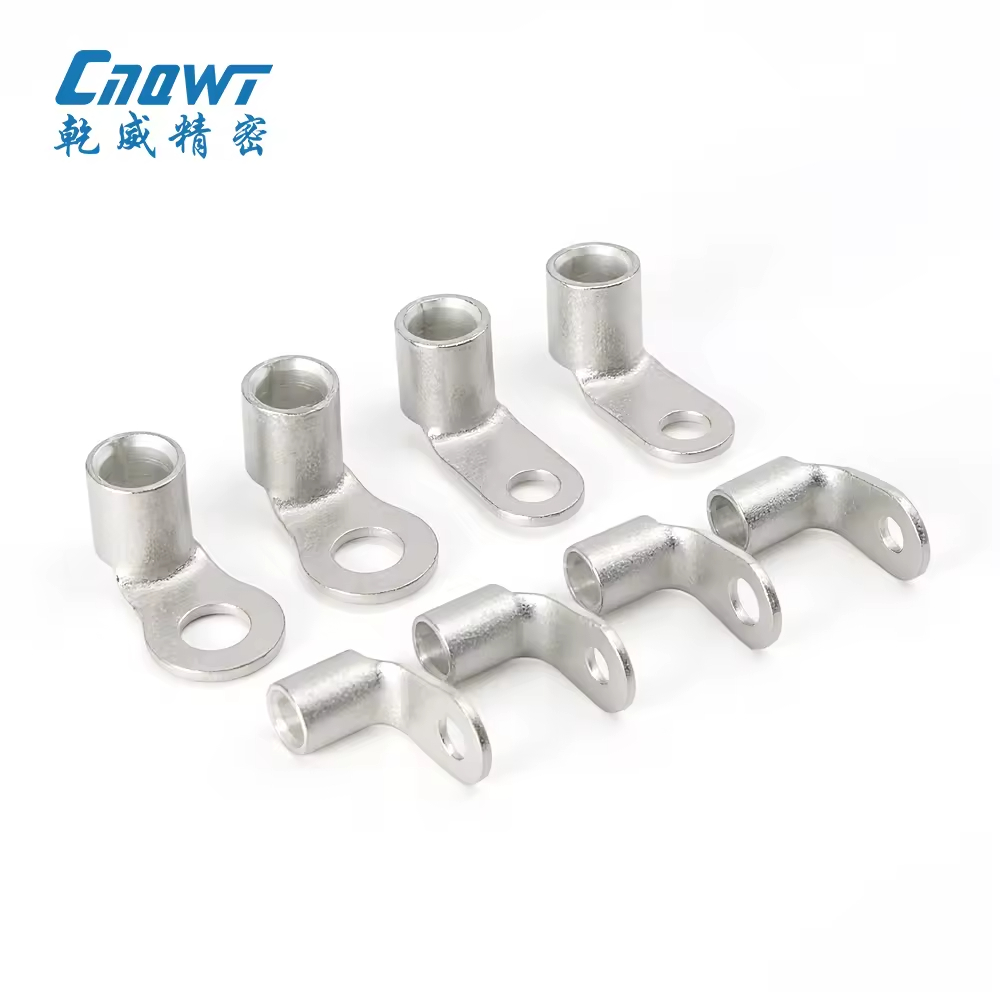
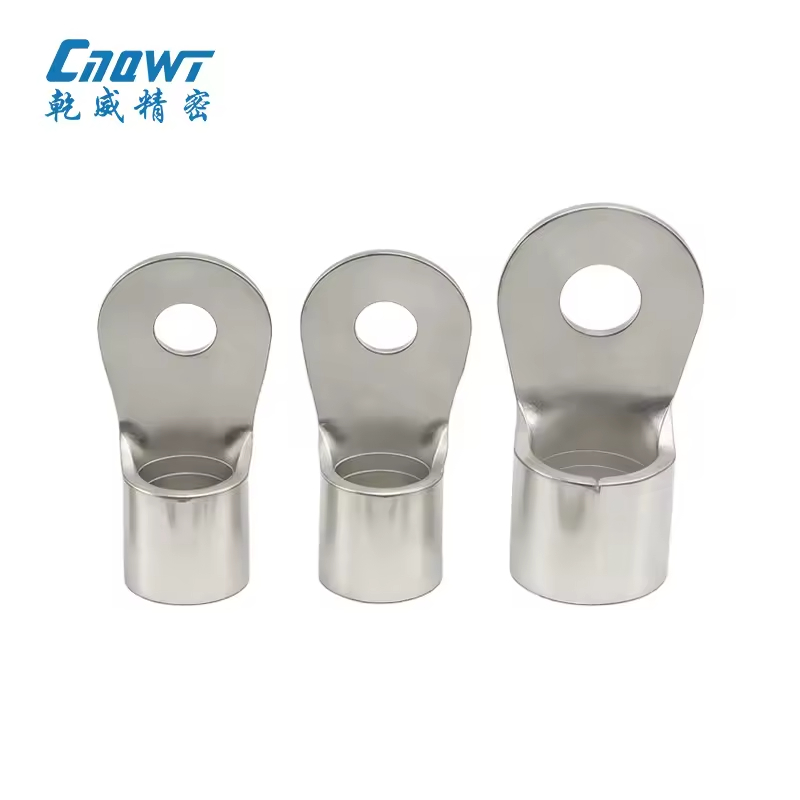
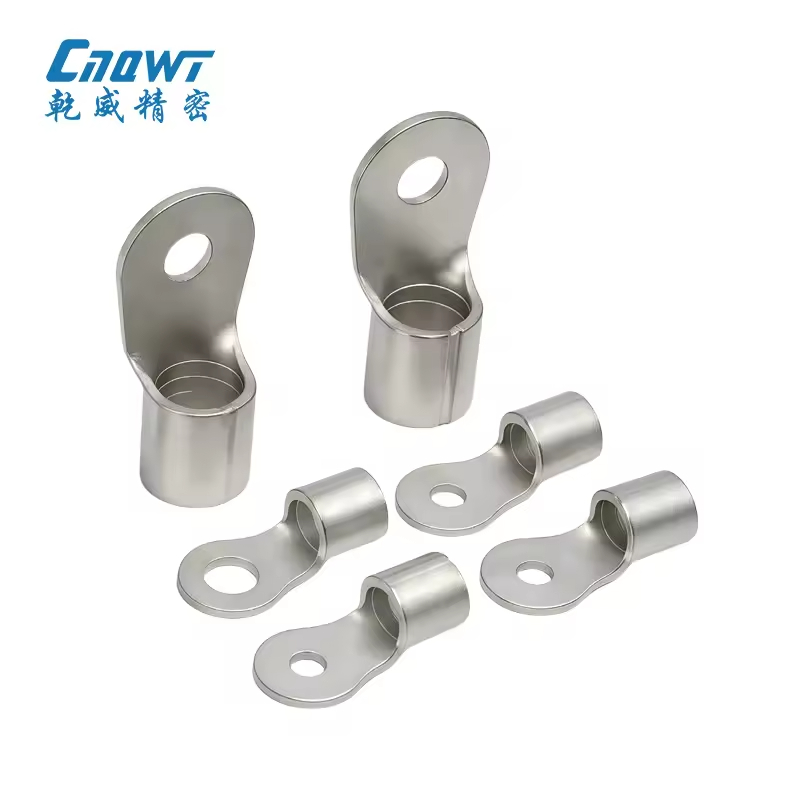
A cable lug is a conductive fitting attached to the end of an electrical cable, allowing it to be connected to a terminal point. It typically consists of three main parts:
- Barrel – where the conductor is inserted and crimped
- Palm (Pad) – the flat area that connects to equipment
- Stud Hole – used for bolting the lug to a connection point
Cable lugs are most commonly made from:
- Electrolytic copper (for high conductivity)
- Aluminum (for lightweight and cost efficiency)
- Bimetallic materials (for copper-to-aluminum transitions)
In consumer electronics and precision applications, tin-plated copper lugs are the most widely used due to their excellent conductivity and corrosion resistance.
Why Correct Cable Lug Sizing Matters
Selecting the correct cable lug size is not optional—it directly affects system safety and performance.
A properly sized lug ensures:
- Maximum conductivity
- Minimal heat generation
- Strong mechanical retention
- Long-term reliability
On the other hand, incorrect sizing can result in:
- Loose crimp connections → leading to resistance and heat buildup
- Over-compression of conductors → damaging wire strands
- Poor fit on studs → causing unstable connections
- Increased maintenance and failure rates
In high-current applications, even a small mismatch can lead to significant energy loss or safety hazards.
Key Factors in Choosing the Right Cable Lug Size
Cable Size (mm² or AWG)
The most critical parameter is the conductor size.
Cable lugs are designed to match specific wire cross-sections. If the barrel is too large, the crimp will be loose. If it is too small, the conductor will not fit properly.
Always match:
- Lug size = cable cross-section
For example:
- 6 mm² cable → 6 mm² lug
- 10 AWG cable → matching AWG lug
Stud Hole Size
The hole in the lug must match the bolt or stud used for installation.
Common sizes include:
- M4, M5, M6, M8, M10, M12
A mismatch here can cause:
- Poor mechanical fastening
- Increased vibration risk
- Uneven contact pressure
Current Rating
The lug must handle the current carried by the cable.
Factors influencing current capacity:
- Cable size
- Material conductivity
- Ambient temperature
Using an undersized lug can result in overheating and failure.
Application Environment
Different applications impose different requirements:
- Consumer electronics → compact, low-to-medium current
- Automotive → vibration and temperature variation
- Industrial → high current and durability
- Renewable energy → long-term outdoor exposure
Crimping Method
Crimping is the most reliable method for attaching lugs.
Common methods:
- Hex crimping (for high current)
- Indent crimping
A proper crimp creates a gas-tight connection, preventing oxidation and ensuring low resistance.
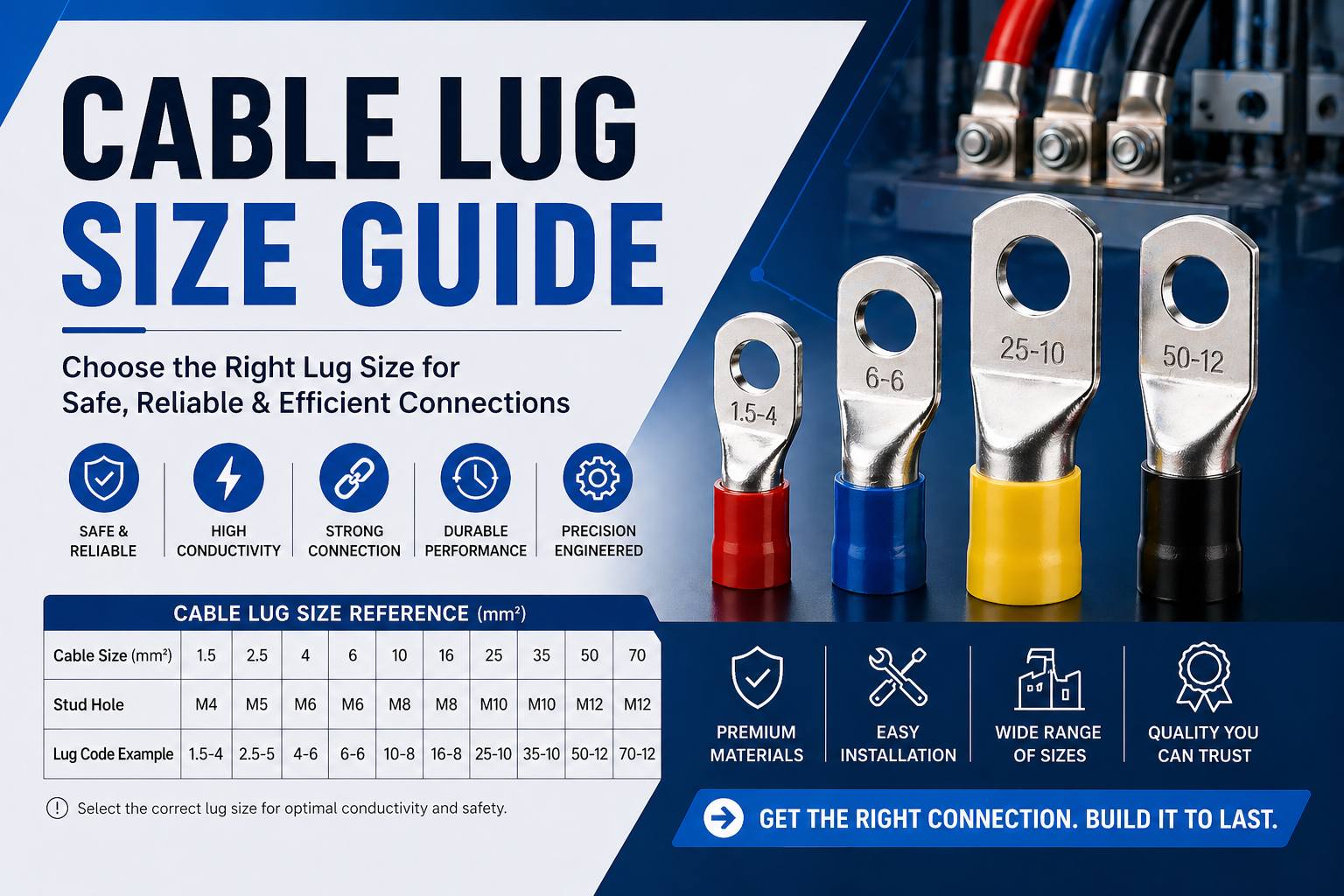
Cable Lug Size Chart (Metric & AWG)
Below is a practical reference chart for common lug sizes:
| Cable Size (mm²) | AWG | Recommended Lug Code | Stud Hole Size |
|---|---|---|---|
| 1.5 mm² | 16 | 1.5-4 | M4 |
| 2.5 mm² | 14 | 2.5-5 | M5 |
| 4 mm² | 12 | 4-6 | M6 |
| 6 mm² | 10 | 6-6 | M6 |
| 10 mm² | 8 | 10-8 | M8 |
| 16 mm² | 6 | 16-8 | M8 |
| 25 mm² | 4 | 25-10 | M10 |
| 35 mm² | 2 | 35-10 | M10 |
| 50 mm² | 1/0 | 50-12 | M12 |
| 70 mm² | 2/0 | 70-12 | M12 |
👉 Example:
“SC25-8” = 25 mm² cable + 8 mm hole
How to Read Cable Lug Markings
Cable lugs typically include a code that identifies size and hole diameter.
Example:
- SC10-6
- 10 → cable size (mm²)
- 6 → hole diameter (mm)
Understanding this coding system helps avoid selection errors during procurement.
Common Types of Cable Lugs
Copper Cable Lugs
- High conductivity
- Best for most applications
- Common in consumer electronics
Aluminum Cable Lugs
- Lightweight
- Lower cost
- Used in power distribution
Bimetallic Lugs
- Combine copper and aluminum
- Prevent galvanic corrosion
- Used in mixed-material systems
Insulated vs Non-Insulated Lugs
- Insulated → added safety
- Non-insulated → better heat dissipation
Step-by-Step: How to Choose the Right Cable Lug
A practical selection process:
- Identify cable size
- Determine current load
- Confirm stud/bolt size
- Select material (copper recommended)
- Choose correct crimping method
- Verify environmental requirements
If any of these steps are overlooked, connection reliability is compromised.
Common Mistakes to Avoid
Even experienced buyers make these errors:
- Selecting based on price alone
- Using oversized lugs
- Ignoring crimp tooling compatibility
- Mixing copper and aluminum without proper design
- Skipping quality inspection
These mistakes often lead to hidden failures that appear only after deployment.
Crimping Best Practices
Crimping quality directly determines performance.
Best practices include:
- Use calibrated crimping tools
- Follow correct crimp height specifications
- Ensure full conductor insertion
- Inspect crimp visually and mechanically
A high-quality crimp should:
- Be tight and uniform
- Show no wire damage
- Provide strong pull-out resistance
Applications of Cable Lugs
Cable lugs are widely used across industries:
- Consumer electronics (power modules, grounding)
- Automotive (battery connections)
- Industrial equipment (motors, panels)
- Renewable energy (solar, battery storage)
Their versatility makes them a fundamental component in modern electrical systems.
How to Choose a Reliable Cable Lug Supplier
A strong supplier should offer:
- High-quality raw materials
- Precision manufacturing
- Consistent plating
- Customization capability
- Stable large-scale production
This is especially critical for OEM and high-volume projects.

Why Choose Qianwei Precision
At Qianwei Precision, we specialize in high-quality cable lugs and electrical terminals designed for reliability and performance.
Our strengths include:
- Over 1800 production molds
- Advanced automated manufacturing
- Strict quality control systems
- Extensive customization experience
We provide:
- Ring terminals
- Lug terminals
- Spade terminals
- Butt connectors
- TE-style terminals
All engineered to meet the demands of modern electrical systems.
Conclusion: Small Component, Critical Impact
Cable lugs may seem simple, but their impact on system performance is significant. Choosing the right size ensures efficient power transfer, reduces failure risks, and improves long-term reliability.
In electrical design and manufacturing, precision in small components leads to stability in large systems. Ready to Get the Right Cable Lug?
If you’re selecting cable lugs for your next project:
Contact Qianwei Precision today and ensure every connection is built to last.
1. How do I know what size cable lug I need?
You need to match the lug size to the cable cross-sectional area (mm² or AWG) and the stud hole size. Both must fit correctly to ensure a secure and low-resistance connection.
2. Can I use a larger cable lug than the cable size?
No. Using a larger lug will result in a loose crimp, leading to poor conductivity, overheating, and potential failure.
3. What happens if a cable lug is too small?
If the lug is too small, the conductor cannot fit properly, or it may get damaged during crimping, resulting in weak mechanical strength and unreliable electrical contact.
4. What is the difference between mm² and AWG in cable lug sizing?
mm² measures the cross-sectional area of the conductor, while AWG (American Wire Gauge) is a standardized wire sizing system. Conversion charts are needed to match them correctly.
5. Do cable lugs have current ratings?
Yes. Cable lugs must be selected based on the current capacity of the cable. The lug should support equal or higher current to avoid overheating.
6. What is the most common material for cable lugs?
Tin-plated electrolytic copper is the most common material due to its excellent conductivity and corrosion resistance.
7. When should I use bimetallic cable lugs?
Bimetallic lugs should be used when connecting copper cables to aluminum conductors or busbars, as they prevent galvanic corrosion.
8. What is the best crimping method for cable lugs?
Hex crimping is preferred for high-current applications because it provides a strong, uniform, and gas-tight connection.
9. Can I solder a cable lug instead of crimping?
While soldering is possible, crimping is recommended because it provides better mechanical strength and long-term reliability, especially in high-current applications.
10. How can I ensure a reliable cable lug connection?
To ensure reliability:
- Use the correct lug size
- Select proper material and plating
- Apply the correct crimping method
- Inspect the connection after installation

