

Introduction
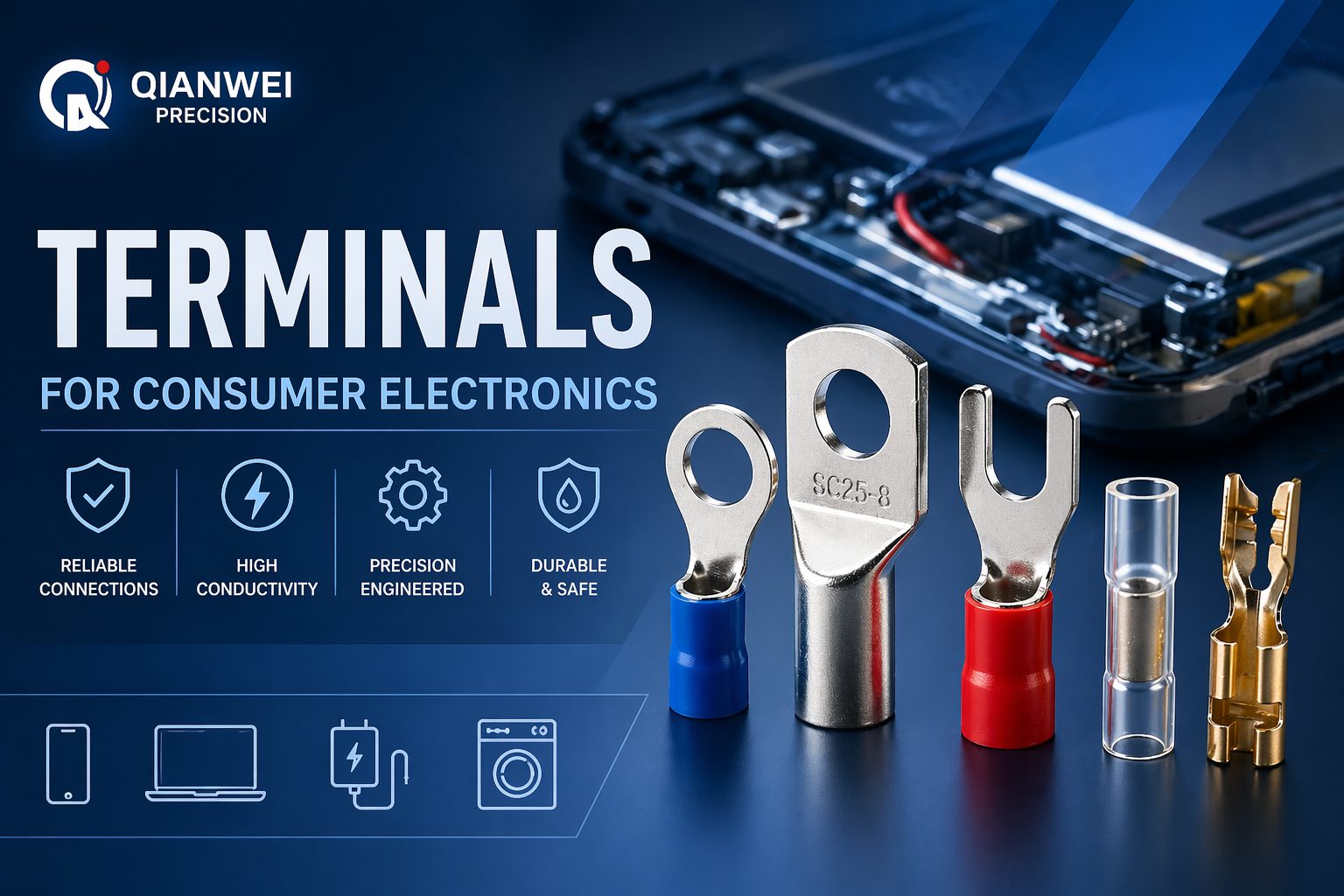
When discussing terminals in consumer electronics, many guides tend to cover every possible connector type on the market. However, for real-world manufacturing—especially in power distribution and internal wiring—the focus is far narrower.
In practice, the most widely used and reliable terminal types in consumer electronics include:
- Ring terminals
- Lug terminals
- Spade terminals
- Butt connectors
- TE-style terminals (open barrel / crimp terminals)
These terminal types form the backbone of power delivery, grounding, and internal wiring systems across a wide range of devices.
For engineers and sourcing managers, the challenge is not choosing from hundreds of options—but selecting the right configuration, material, and process for these core terminal types.
Where These Terminals Are Actually Used in Consumer Electronics
Unlike micro board-level connectors, these terminals are primarily used in power-critical and reliability-critical areas.
In laptops and charging systems, ring and lug terminals are often used for grounding and high-current paths. In home appliances and larger consumer devices, spade terminals are preferred for quick assembly and serviceability. Butt connectors are widely used in internal wire splicing, especially in harness assemblies.
Even in compact devices, TE-style crimp terminals (open barrel) are essential for wire harness connections, ensuring stable electrical performance under repeated use.
In short: these terminals are not always visible—but they are structurally critical.
Why Terminal Selection Directly Affects Product Performance
Power Stability and Heat Management
In consumer electronics, especially devices with batteries or power adapters, current flow must remain stable. Ring and lug terminals are commonly used in these circuits because they provide:
- Secure mechanical fastening
- Large contact area
- Low electrical resistance
A poorly selected terminal can introduce resistance, which leads to heat buildup—one of the most common hidden failure risks in electronics.
Mechanical Reliability Under Real Use
Devices are not static. They are dropped, moved, and repeatedly used.
Spade terminals and TE crimp terminals are often selected because they can:
- Maintain contact under vibration
- Support fast assembly
- Provide consistent retention force
But this only works when material elasticity and crimp quality are properly controlled.
Assembly Efficiency and Cost Control
From a manufacturing standpoint, these terminal types are preferred because they are:
- Compatible with automated crimping
- Easy to integrate into wire harnesses
- Scalable for mass production
Butt connectors, for example, are widely used to simplify wiring processes and reduce assembly time.
Key Engineering Considerations for Each Terminal Type
Rather than treating all terminals equally, each type has its own design logic and selection criteria.
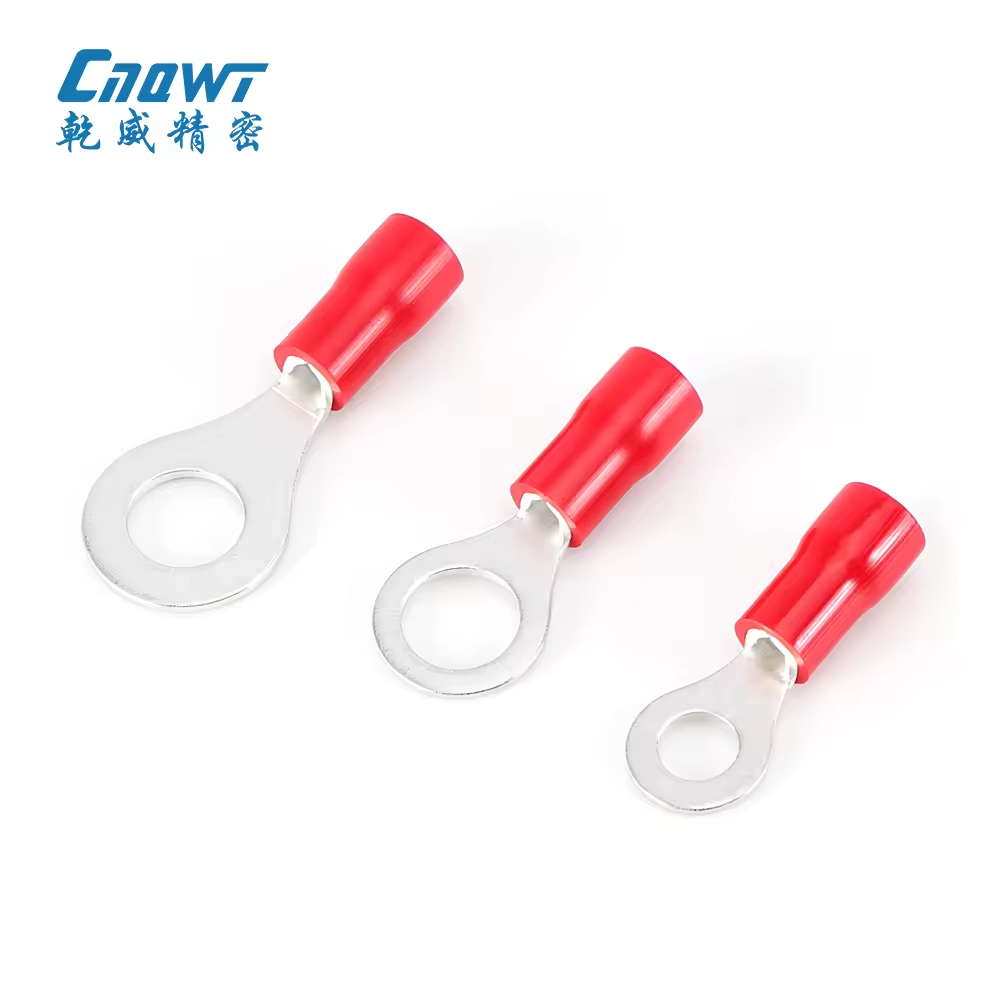
Ring Terminals: Maximum Stability for Grounding and Power
Ring terminals are used where secure, permanent connections are required.
They are ideal for:
- Grounding points
- Power supply connections
- Battery systems
Key considerations:
- Hole size must match screw/bolt
- Material conductivity (prefer copper)
- Plating for corrosion resistance
Best for: high-reliability, fixed connections
Lug Terminals: High Current Handling
Lug terminals are designed for larger conductors and higher current loads.
Common in:
- Power adapters
- Battery packs
- High-power consumer devices
Key considerations:
- Current rating
- Crimping method (hex vs indent)
- Thermal performance
Best for: high-current applications
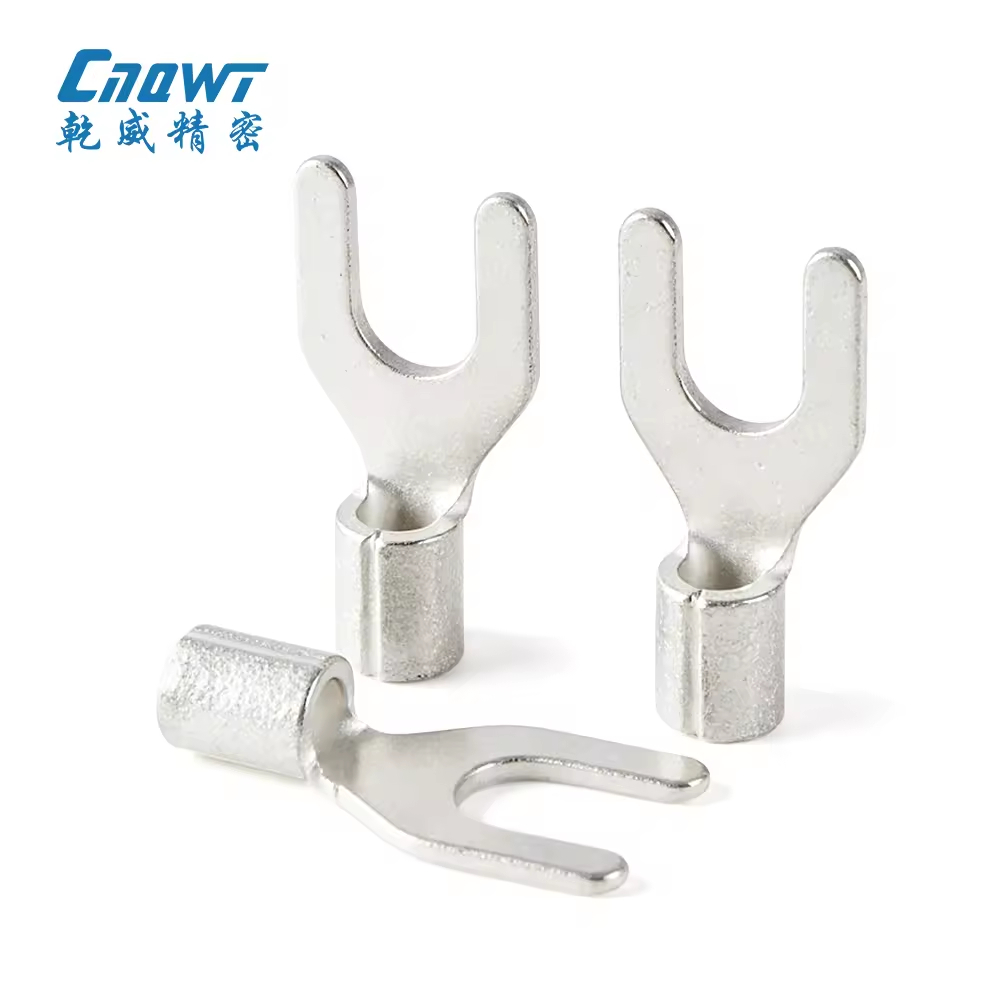
Spade Terminals: Fast Assembly and Maintenance
Spade terminals allow quick connection/disconnection, making them ideal for:
- Home appliances
- Consumer electronics with service needs
They balance:
- Ease of use
- Reliable contact
However, they require:
- Proper retention design
- Vibration resistance
Best for: serviceable and modular designs
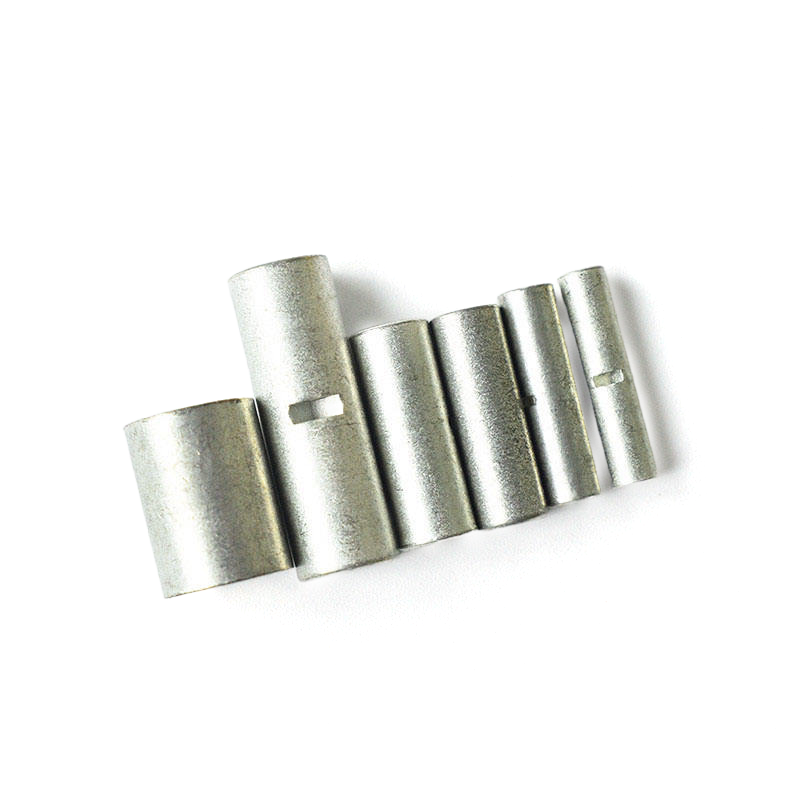
Butt Connectors: Reliable Wire Splicing
Butt connectors are used to join two wires securely.
Advantages:
- Strong mechanical bond
- Simple installation
- Cost-effective
Critical factors:
- Crimp quality
- Insulation support
- Wire compatibility
Best for: internal wiring and harness repair
TE Terminals (Open Barrel Crimp Terminals): Precision and Automation
TE-style terminals are widely used in:
- Wire harness assemblies
- Compact electronic devices
They offer:
- High precision crimping
- Excellent vibration resistance
- Compatibility with automated production
Key considerations:
- Crimp height control
- Tooling accuracy
- Terminal-wire matching
Best for: high-volume, high-precision applications
.jpg)
Materials and Plating: Small Choices, Big Impact
Even within the same terminal type, performance varies significantly based on material and surface treatment.
Material Selection
- Electrolytic copper → best conductivity
- Brass → cost-performance balance
- Phosphor bronze → elastic contact
Plating Options
- Tin plating → standard protection
- Nickel plating → high-temperature environments
- Silver plating → high-performance applications
In consumer electronics, tin-plated copper is often the optimal balance.
Manufacturing Matters More Than You Think
A terminal is only as good as its manufacturing process.
Critical factors include:
- Precision stamping
- Consistent plating thickness
- Controlled crimping process
Poor manufacturing leads to:
- Inconsistent dimensions
- Weak connections
- High defect rates
Common Mistakes Buyers Make
From a procurement perspective, several recurring issues reduce product reliability:
- Choosing terminals based on price only
- Ignoring crimp tooling compatibility
- Overlooking plating requirements
- Using mismatched wire sizes
These mistakes often lead to hidden failures and long-term costs.
How to Choose the Right Terminal Supplier
A reliable supplier should provide:
- Engineering support
- Customization capability
- Tooling expertise
- Stable mass production
This is especially important for:
- OEM projects
- High-volume consumer electronics
Why Qianwei Precision
At Qianwei Precision, we focus on what truly matters in real-world applications.
We specialize in:
- Ring terminals
- Lug terminals
- Spade terminals
- Butt connectors
- TE-style crimp terminals
With:
- 1800+ production molds
- Advanced automated manufacturing
- Extensive customization experience
We support global customers in delivering reliable, scalable connection solutions for consumer electronics and beyond.
Ready to Improve Your Product Reliability?
If you are sourcing terminals for consumer electronics, the difference between a standard component and a well-engineered solution can define your product’s success.
Qianwei Precision — Built for Reliable Connections.
FAQs
1. What types of terminals are most commonly used in consumer electronics?
The most commonly used terminals in consumer electronics include ring terminals, lug terminals, spade terminals, butt connectors, and TE (open barrel) terminals. These are primarily used for power connections, grounding, and internal wiring rather than PCB-level micro connections.
2. Why are ring terminals preferred for grounding applications?
Ring terminals provide a secure, screw-fixed connection that prevents accidental disconnection. Their closed-loop design ensures stable electrical contact, making them ideal for grounding and critical power connections.
3. What is the difference between lug terminals and ring terminals?
Lug terminals are typically designed for higher current and larger cable sizes, while ring terminals are used for more general fastening applications. Lugs often support heavier-duty power transmission.
4. When should spade terminals be used instead of ring terminals?
Spade terminals are ideal when quick installation or maintenance is required, as they can be easily connected and disconnected without removing the screw completely. However, they are less secure than ring terminals in high-vibration environments.
5. What are butt connectors used for in consumer electronics?
Butt connectors are used to join two wires together, commonly in internal wiring and harness assemblies. They provide a simple, cost-effective, and reliable wire-to-wire connection.
6. What are TE terminals (open barrel terminals) used for?
TE-style terminals are widely used in wire harness systems. They are designed for precision crimping, offering excellent mechanical stability and electrical reliability, especially in high-volume automated production.
7. How does crimping quality affect terminal performance?
Crimping directly impacts both electrical conductivity and mechanical strength. A proper crimp creates a gas-tight connection, reducing oxidation and ensuring long-term reliability. Poor crimping can lead to overheating or loose connections.
8. What material is best for consumer electronics terminals?
Electrolytic copper is the preferred material due to its high conductivity. Brass is used for cost-performance balance, while phosphor bronze is suitable for applications requiring elasticity.
9. Why is tin plating commonly used in terminals?
Tin plating provides good corrosion resistance at a reasonable cost, making it the most widely used surface treatment in consumer electronics applications.
10. How do I choose the right terminal supplier?
A reliable supplier should offer:
- Engineering support
- Customization capabilities
- Precision tooling
- Stable mass production
Choosing the right supplier like Qianwei Precision helps ensure consistent quality and reduces long-term risks.

