

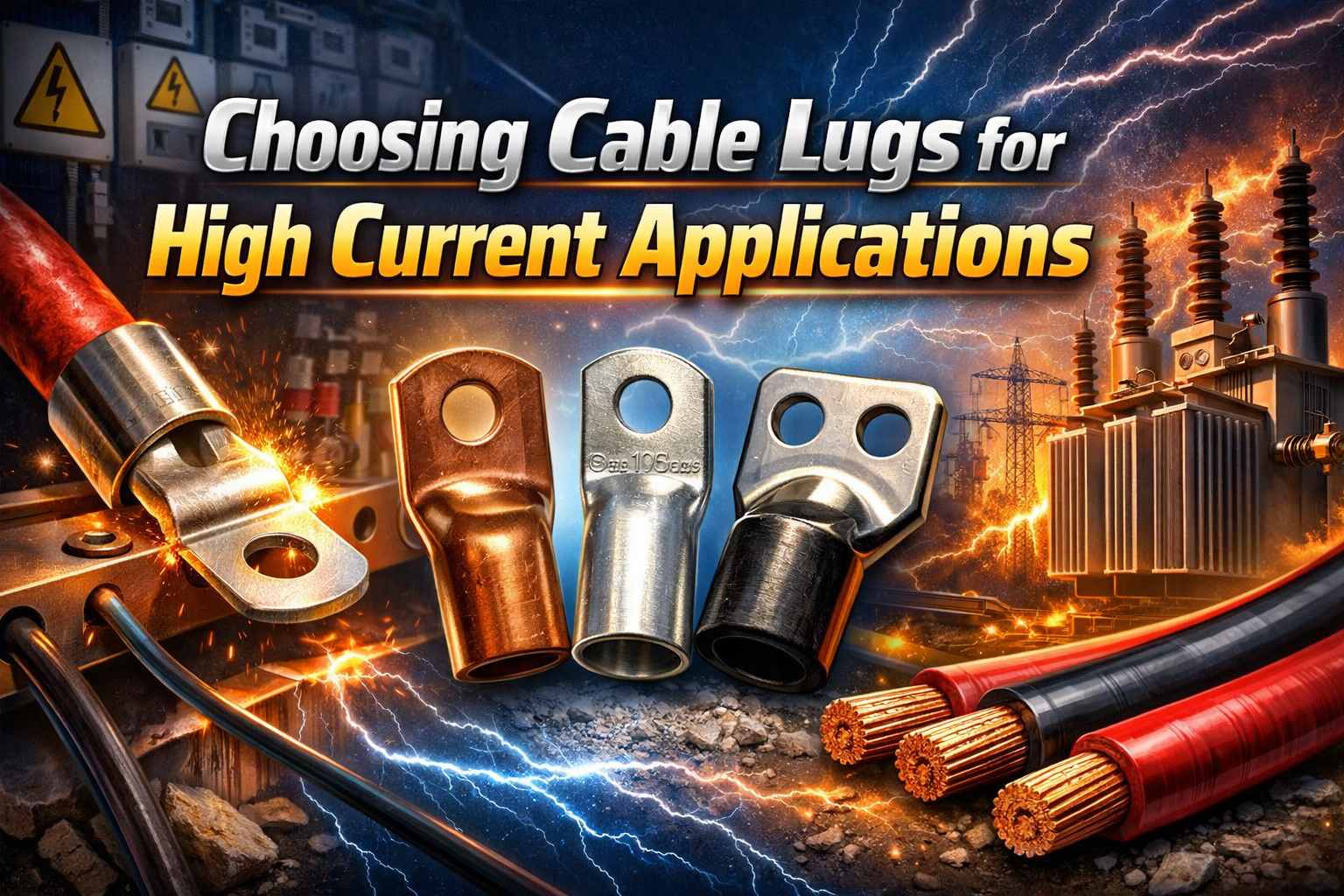
Introduction
When dealing with high current electrical systems, every connection point becomes a potential risk. Among these, cable lugs play a critical role in ensuring safe, stable, and efficient power transmission.
A poorly selected cable lug can lead to:
- Overheating
- Voltage drops
- Equipment failure
- Even fire hazards in extreme cases
Yet many buyers still choose cable lugs based only on price or basic size matching—without considering deeper factors like material conductivity, current rating, or installation quality.
In this guide, you’ll learn:
- How to choose the right cable lugs for high current
- What technical factors actually matter
- Common mistakes that lead to failure
- How to optimize your selection for long-term reliability
 What Are High Current Cable Lugs?
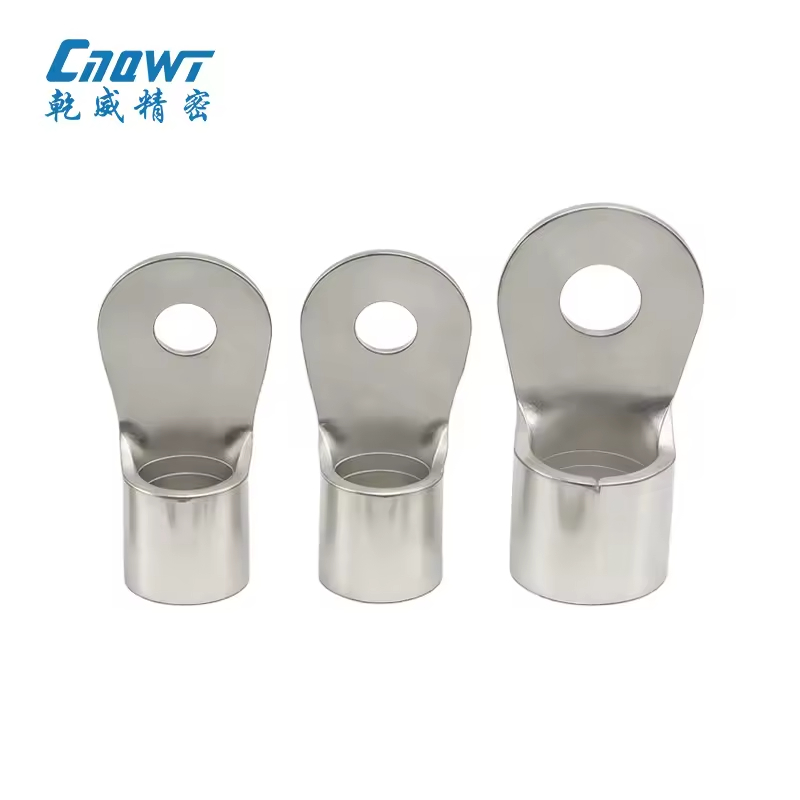 What Are High Current
 High current cable lugs are heavy-duty connectors designed to terminate large electrical cables and connect them securely to equipment, busbars, or terminals.
Unlike standard terminals, they are engineered to:
- Handle 100A to 1000A+ current loads
- Minimize electrical resistance
- Withstand thermal and mechanical stress
Typical Applications
- Battery systems (energy storage, backup power)
- Solar and renewable energy installations
- Electric vehicles (EVs)
- Industrial machinery and power distribution
Why Choosing the Right Cable Lug Matters
1. Prevent Overheating and Energy Loss
Electrical resistance at the connection point generates heat. In high current systems, even a small resistance increase can lead to significant temperature rise.
A poorly fitted lug can:
- Increase contact resistance
- Cause localized overheating
- Accelerate oxidation and degradation
2. Ensure Mechanical Reliability
High current systems often operate in harsh environments:
- Vibration (automotive, machinery)
- Thermal expansion
- Mechanical stress
A weak connection may loosen over time, leading to intermittent failures.
3. Improve System Efficiency
Efficient current transfer reduces:
- Power loss
- Energy costs
- Maintenance frequency
For large-scale systems like solar farms or industrial plants, this directly impacts ROI.
Key Factors When Choosing Cable Lugs for High Current
1. Conductor Material
Material selection is the foundation of performance.
Copper Cable Lugs
- Excellent conductivity
- Low resistance
- Best for high current applications
Aluminum Cable Lugs
- Lightweight and cost-effective
- Lower conductivity
- Suitable for specific applications with proper sizing
Bimetallic Lugs (Cu-Al)
- Designed for connecting copper cables to aluminum conductors
- Prevent galvanic corrosion
Recommendation:
For most high current systems, tinned copper lugs are the safest and most reliable choice.
2. Current Rating (Ampacity)
Always ensure the cable lug can handle more than your system’s operating current.
Best practice:
- Use at least 125%–150% safety margin
Example:
- 200A system → choose lug rated for ≥250A
Factors affecting ampacity:
- Ambient temperature
- Installation method
- Ventilation conditions
3. Cable Size Compatibility
Cable lugs must match the conductor size precisely.
Common sizing standards:
- AWG (American Wire Gauge)
- mm² (metric)
A mismatch can cause:
- Loose connections
- High resistance
- Mechanical instability
Critical Tip:
Never “force fit” a cable into an oversized or undersized lug.
4. Lug Design and Structure
Ring Terminals
- Provide the most secure connection
- Ideal for high current and vibration environments
Fork (Spade) Terminals
- Easier to install
- Not recommended for high current or critical systems
Long Barrel vs Short Barrel
- Long barrel: better conductivity and crimp strength
- Short barrel: compact but less robust
5. Plating and Surface Treatment
Surface finishing directly affects durability.
Tin Plated Lugs
- Corrosion resistant
- Cost-effective
- Widely used in industrial and solar applications
Bare Copper
- Better conductivity
- Prone to oxidation
Silver Plating
- Superior conductivity
- Used in high-end or critical applications
6. Temperature Rating
High current = heat generation.
Check:
- Lug material temperature limits
- Insulation compatibility (PVC, heat shrink, etc.)
Failure to consider temperature can lead to:
- Insulation melting
- Connection failure
7. Standards and Certifications
Reliable cable lugs should comply with:
- UL standards
- IEC standards
- RoHS compliance
This ensures:
- Safety
- Global compatibility
- Buyer confidence
How to Calculate the Right Cable Lug Size
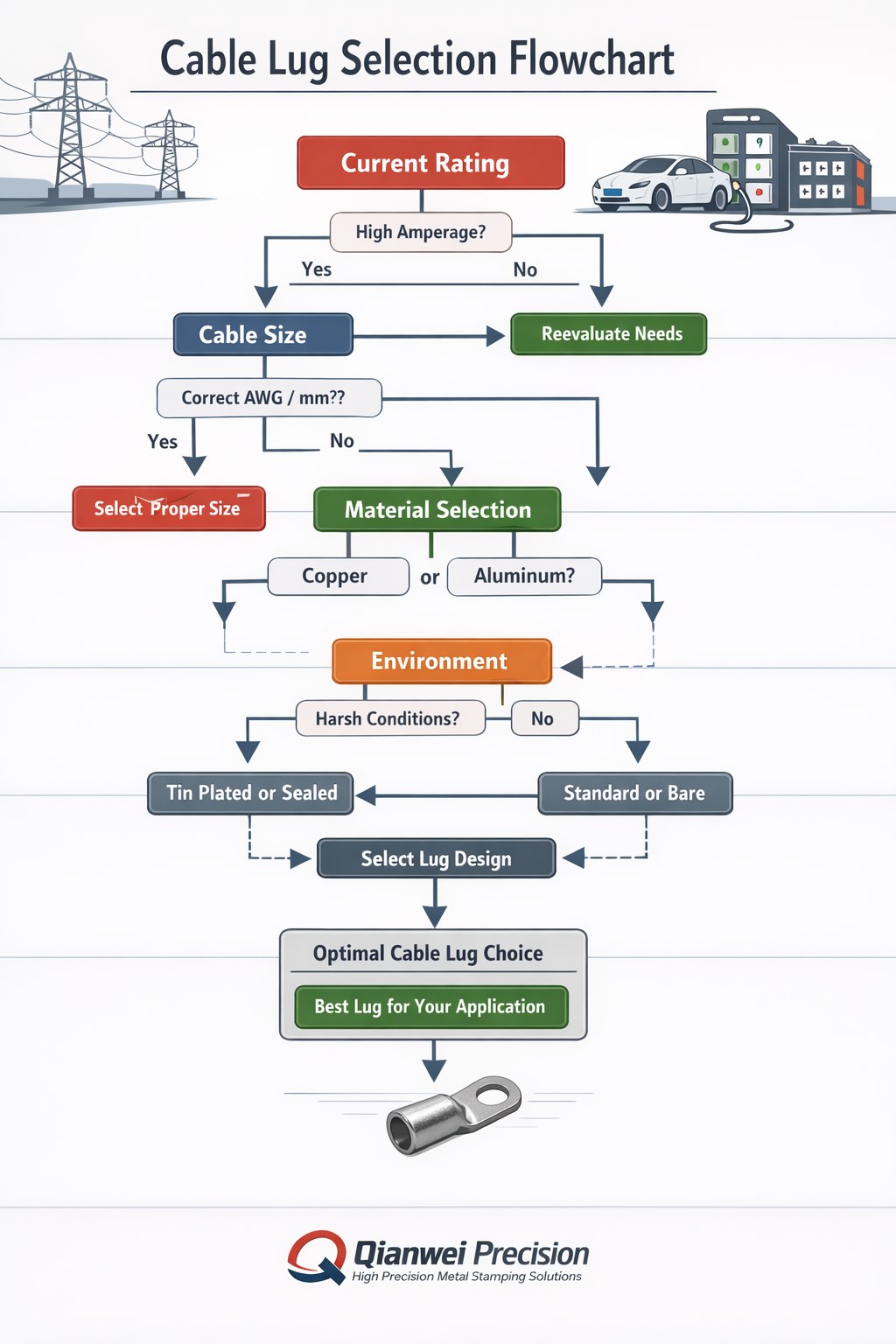
Selecting the correct lug involves a simple but critical process:
Step 1: Determine Current Load
Example: 200A
Step 2: Select Cable Size
Based on standard charts:
- 200A ≈ 70–95 mm² cable (depending on conditions)
Step 3: Match Lug Size
Choose a lug designed specifically for that cable size.
Quick Reference Table
| Current (A) | Recommended Cable Size (mm²) | Lug Type |
|---|---|---|
| 100A | 25–35 mm² | Copper lug |
| 200A | 70–95 mm² | Long barrel lug |
| 500A | 185–240 mm² | Heavy-duty lug |
| 1000A+ | 300 mm²+ | Custom lug |
Common Mistakes to Avoid
1. Using Undersized Lugs
Leads to overheating and failure.
2. Poor Crimping
- Inadequate tools
- Inconsistent pressure
Result: high resistance connection
3. Mixing Copper and Aluminum Improperly
Without bimetallic lugs:
- Causes galvanic corrosion
- Leads to long-term failure
4. Ignoring Surface Treatment
Unplated lugs in humid environments oxidize quickly.
5. Choosing Based on Price Alone
Low-cost lugs often:
- Use inferior materials
- Have poor dimensional accuracy
Best Cable Lugs for Different Applications
Selecting the right cable lug is not a one-size-fits-all decision. Different industries and operating environments impose unique electrical, mechanical, and environmental demands. Choosing a lug optimized for your specific application can significantly improve system reliability, reduce maintenance costs, and extend service life.
Below is a more detailed breakdown of the best cable lug choices for common high current applications:
Battery Systems (Energy Storage & Backup Power)
Battery systems—especially in energy storage and UPS setups—require cable lugs that can handle:
- Continuous high current flow
- Frequent charge/discharge cycles
- Low voltage, high current characteristics
Recommended Features:
- High-conductivity tinned copper lugs
- Long barrel design for maximum contact area
- Thick wall construction for strong crimping
- Closed-end design (optional) to prevent cable strand exposure
Why it matters:
Battery systems are extremely sensitive to resistance. Even minor connection losses can lead to:
- Heat buildup
- Reduced charging efficiency
- Long-term degradation
Best Practice:
Use lugs with tight tolerance barrels to ensure full conductor compression during crimping.
Solar & Energy Storage Systems
Solar installations often operate in harsh outdoor environments, including:
- High humidity
- UV exposure
- Temperature fluctuations
Recommended Features:
- Tin-plated copper lugs for corrosion resistance
- Seamless barrel to prevent moisture ingress
- Compatibility with insulated sleeves or heat shrink tubing
- High temperature rating
Why it matters:
Corrosion is the #1 failure cause in outdoor electrical connections. Poor-quality lugs can oxidize quickly, increasing resistance and causing system inefficiency.
Best Practice:
Pair cable lugs with proper sealing (heat shrink with adhesive lining) to create a moisture-resistant connection.
Automotive & Electric Vehicles (EVs)
Automotive and EV systems introduce additional challenges:
- Constant vibration
- Limited installation space
- High current surges (especially in EV batteries)
Recommended Features:
- Compact but high-strength copper lugs
- Reinforced palm area for secure bolting
- Vibration-resistant crimp design
- Optional insulation for safety
Why it matters:
Loose or poorly crimped lugs in vehicles can lead to intermittent faults, which are difficult to diagnose and potentially dangerous.
Best Practice:
Use precision crimping tools and consider double-crimp designs for critical connections.
Industrial Equipment & Power Distribution
Industrial environments typically involve:
- Very high current loads
- Mechanical stress and vibration
- Long operating hours
Recommended Features:
- Heavy-duty long barrel copper lugs
- High tensile strength for mechanical durability
- Large contact surface for busbar connections
- High ampacity rating with safety margin
Why it matters:
Industrial failures are costly. A single poor connection can result in:
- Equipment downtime
- Production losses
- Safety hazards
Best Practice:
Choose lugs that exceed current requirements and comply with international standards (UL/IEC).
Marine & Offshore Applications
Marine environments are among the harshest due to:
- Saltwater exposure
- High humidity
- Continuous corrosion risk
Recommended Features:
- Heavy tin plating or specialized anti-corrosion coating
- Sealed barrel design
- Use with adhesive-lined heat shrink
- مقا corrosion-resistant materials throughout
Why it matters:
Salt corrosion can rapidly degrade electrical connections, leading to failure even in otherwise well-designed systems.
Best Practice:
Always combine high-quality lugs with sealed terminations to prevent moisture ingress.
Railway & Transportation Systems
Rail and heavy transportation systems require:
- High reliability under vibration
- Resistance to thermal cycling
- Long service life with minimal maintenance
Recommended Features:
- High-strength copper or bimetal lugs
- Vibration-resistant crimp profiles
- High fatigue resistance materials
- Standard-compliant designs (rail-specific specs where required)
Why it matters:
Failure in transportation systems can have serious operational and safety implications.
Best Practice:
Use certified components and avoid non-standard or low-cost alternatives.
Custom High Current Applications
Some projects—especially in:
- Renewable energy systems
- Power infrastructure
- Specialized machinery
—require custom-designed cable lugs.
When to choose custom lugs:
- Non-standard cable sizes
- Unique terminal shapes
- Space-constrained installations
- Extremely high current (>1000A)
Recommended Approach:
Work with an experienced manufacturer to:
- Optimize material selection
- Customize barrel dimensions
- Ensure precise fit and performance
Key Takeaway
Different applications demand different cable lug characteristics. The best choice always balances:
- Electrical performance (conductivity & ampacity)
- Mechanical strength
- Environmental resistance
- Installation reliability
For high current systems, investing in the right cable lug design is not just a technical decision—it’s a long-term cost-saving strategy.
Installation Tips for High Current Cable Lugs
Proper installation is just as important as selection.
Use Professional Crimping Tools
- Hydraulic crimpers recommended
- Ensure uniform compression
Avoid Solder-Only Connections
- Solder can melt under high current heat
- Crimping provides stronger mechanical bonding
Apply Correct Torque
- Prevent loosening
- Avoid over-tightening damage
Inspection Checklist
- No visible gaps
- Clean contact surfaces
- Secure fastening
Why Choose Qianwei Precision for High Current Cable Lugs
When sourcing cable lugs for demanding applications, consistency and customization matter.
Qianwei Precision offers:
- Extensive customization experience across industries
- Over 1800+ mass production molds for stamping and injection
- Fast and efficient tooling development (new molds & modifications)
- High-precision automated manufacturing systems
- Proven solutions for high current applications including energy storage and industrial systems
Whether you need standard products or fully customized designs, Qianwei ensures:
- Stable quality
- Competitive lead times
- Reliable large-scale supply
👉 Contact Us
- Request a quote for your project
- Get expert recommendations for your application
- Customize your cable lug design today
Conclusion
Choosing the right cable lugs for high current applications is not just about matching sizes—it’s about ensuring safety, efficiency, and long-term reliability.
By considering:
- Material
- Current rating
- Design
- Installation quality
—you can significantly reduce system risks and improve performance.
For businesses looking for dependable, scalable solutions, working with an experienced manufacturer like Qianwei Precision can make all the difference.
FAQs
1. What size cable lug do I need for 200A?
Typically, a 70–95 mm² cable with a matching lug is recommended.
2. Are copper lugs better than aluminum?
Yes, copper offers better conductivity and reliability for high current.
3. Can aluminum lugs handle high current?
They can, but require larger sizes and proper installation.
4. What happens if a lug is undersized?
It can overheat, degrade, and potentially fail.
5. How do I prevent overheating?
Use correct sizing, proper crimping, and high-quality materials.
6. What is the best plating for high current lugs?
Tin plating is the most practical and widely used option.
7. Can I solder instead of crimping?
Not recommended for high current applications.
8. What standards should cable lugs meet?
UL, IEC, and RoHS are commonly required.
9. How long do cable lugs last?
With proper selection and installation, they can last many years.
10. Do I need custom cable lugs?
For high current or unique applications, custom solutions are often the best choice.


One thought on “Choosing Cable Lugs for High Current Applications: A Complete Buyer’s Guide”